Does Florida Offer Incentives for Electric Cars Find Out Now
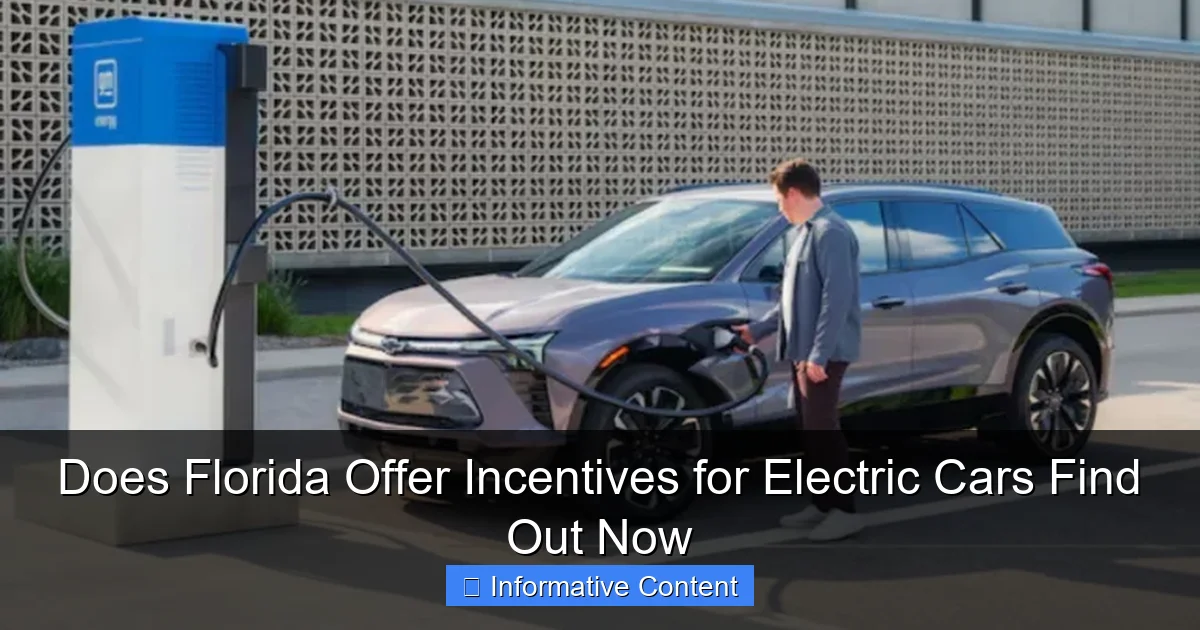
Featured image for does florida offer incentives for electric cars
Image source: di-uploads-pod2.dealerinspire.com
Florida does not currently offer state-level tax credits or purchase rebates for electric cars, making it one of the few states without direct EV purchase incentives. However, residents can still benefit from the federal EV tax credit of up to $7,500, along with local perks like HOV lane access and utility company rebates in select areas.
Key Takeaways
- Florida offers no state tax credits for EV purchases, unlike many other states.
- Federal tax credits still apply—claim up to $7,500 when buying a new EV.
- HOV lane access is permitted for EVs with a state-issued decal.
- Home charger rebates exist through select utility providers, not statewide programs.
- Local incentives may be available—check with city/county for parking or fee discounts.
- EV registration fees are higher in Florida; factor this into ownership costs.
📑 Table of Contents
- The Sunshine State and the Electric Revolution
- Federal Incentives You Can Still Use in Florida
- Florida State-Level Incentives: What’s Actually Available?
- Local Utility and Municipal Incentives: The Real Hidden Savings
- Charging Infrastructure: Is Florida EV-Friendly?
- Long-Term Cost Savings: Beyond Incentives
- Putting It All Together: Is Florida a Good Place to Own an EV?
The Sunshine State and the Electric Revolution
Picture this: You’re cruising down the I-95 in your brand-new electric car, the AC blasting to keep you cool under the Florida sun. The engine hums quietly, and your wallet feels lighter—not because of gas prices, but because you’re saving big on fuel. But wait—does Florida actually help you save even more with incentives for electric vehicles (EVs)? You’ve heard whispers about tax credits, rebates, and charging station perks, but you’re not sure what’s real and what’s just hype. You’re not alone. Many Floridians and visitors alike are asking the same question: Does Florida offer incentives for electric cars?
As someone who’s lived in Florida for over a decade and made the switch from a gas guzzler to a Tesla Model 3, I’ve done the research, talked to local dealers, and even chatted with neighbors who’ve gone electric. The short answer? Florida isn’t the most generous state when it comes to EV incentives, but there are still ways to save—especially if you know where to look. In this guide, I’ll walk you through everything you need to know, from federal programs you can stack with state perks to local utilities offering sweet deals. Whether you’re a first-time EV buyer or just curious, this post will help you make a smart, informed decision—without the fluff or sales pitch.
Federal Incentives You Can Still Use in Florida
Before we dive into what Florida itself offers, let’s talk about the big one: the federal EV tax credit. This is still available to Florida residents and can make a huge difference in your purchase decision.
Visual guide about does florida offer incentives for electric cars
Image source: earthtronev.com
What Is the Federal EV Tax Credit?
The federal government offers a tax credit of up to $7,500 for new electric vehicles, and up to $4,000 for used EVs. But here’s the catch: not every EV qualifies. The credit depends on several factors, including battery capacity, where the car is assembled, and the manufacturer’s sales volume. As of 2024, vehicles must be assembled in North America to qualify, and they must meet specific critical mineral and battery component sourcing requirements.
For example, the Tesla Model 3 and Model Y currently qualify for the full $7,500 credit. The Ford Mustang Mach-E also qualifies, but the Chevrolet Bolt is no longer eligible due to changes in battery sourcing. Always check the U.S. Department of Energy’s Alternative Fuels Data Center for the latest list of qualifying vehicles.
How to Claim the Credit
The credit is claimed on your federal tax return using IRS Form 8936. It’s non-refundable, which means it can reduce your tax bill to zero, but you won’t get a check if the credit exceeds what you owe. If you owe $5,000 in taxes and qualify for the full $7,500 credit, you’ll pay $0 and lose the extra $2,500. However, starting in 2024, you can transfer the credit to the dealer at the point of sale, which means you get the discount upfront—no waiting for tax season.
Pro Tip: Ask your dealer if they support the point-of-sale transfer. Many major dealerships in cities like Miami, Orlando, and Tampa now offer this option. It’s a game-changer for budget planning.
Used EV Tax Credit: A Hidden Gem
Don’t have $40,000+ to spend on a new EV? No problem. The used EV tax credit allows you to claim up to $4,000 (or 30% of the purchase price, whichever is less) for a qualifying used electric car. The vehicle must be at least two years old, cost no more than $25,000, and be purchased from a dealership (not a private seller).
I know a guy in Fort Lauderdale who bought a 2018 Nissan Leaf for $12,000 and got a $3,600 credit—basically paying just $8,400 after the tax break. That’s a fantastic deal, especially when you factor in the savings on gas and maintenance.
Florida State-Level Incentives: What’s Actually Available?
Now, let’s tackle the big question: Does Florida offer incentives for electric cars directly from the state government? The honest answer is… not really. Unlike states like California or Colorado, Florida does not offer a state-level tax credit, rebate, or direct cash incentive for EV purchases.
But before you get discouraged, there are still a few state-backed perks worth knowing about.
Sales Tax Exemption for EVs (Sort Of)
Here’s a little-known fact: Florida exempts electric vehicles from sales tax on the first $20,000 of the purchase price. This applies only if the vehicle is converted from a gas-powered car to an electric one. That means if you buy a used car and pay to have it converted to electric, you won’t pay sales tax on the first $20,000 of the conversion cost.
But if you’re buying a brand-new EV from a dealership? Nope. No sales tax break. That’s a bummer, especially since a $40,000 EV would save you about $2,400 in sales tax (at 6%). But the conversion exemption is still valuable for niche buyers or DIY enthusiasts.
Example: A friend in Jacksonville paid $18,000 to convert his 2010 Honda Civic to electric. He saved $1,080 in sales tax thanks to this exemption. Not life-changing, but every dollar helps.
No Annual Registration Surcharge (Yet)
Many states impose an annual “EV fee” to make up for lost gas tax revenue. Florida does not currently charge an extra registration fee for electric vehicles. This saves you about $100–$200 per year compared to states like Georgia or Illinois.
However, there’s a bill in the Florida legislature (HB 207) that could change this. It proposes a $200 annual registration fee for EVs and a $135 fee for plug-in hybrids. It hasn’t passed yet, but it’s something to watch. If it does pass, it would be one of the highest in the nation.
HOV Lane Access for EVs
Florida allows electric vehicles to use High Occupancy Vehicle (HOV) lanes even if they’re driving solo. This is a big deal during rush hour on I-95, I-75, or the Sawgrass Expressway. You’ll need a special decal, which is free from the Florida Department of Highway Safety and Motor Vehicles (FLHSMV).
Just apply online, upload proof of your EV registration, and the decal ships to you in a week. I used it daily during my commute from Coral Gables to downtown Miami—saved me 20–30 minutes in traffic. It’s not money in your pocket, but time is money.
Local Utility and Municipal Incentives: The Real Hidden Savings
While the state of Florida isn’t handing out cash, many local utilities and cities are stepping up with their own EV incentives. These are often overlooked but can add up quickly.
Florida Power & Light (FPL): Free Charging for a Year
FPL, the largest utility in Florida, offers a “Free Electric Vehicle Charging” program for new EV owners. If you sign up, you get free Level 2 charging at public stations for one year. That includes FPL’s network of over 1,000 charging ports across the state.
You don’t even need to be an FPL customer—just register your EV through their online portal. I signed up when I got my Tesla and saved about $150 in charging costs that first year. Plus, FPL is adding more stations all the time, especially in tourist areas like Orlando and the Keys.
Orlando Utilities Commission (OUC): $1,000 Rebate
If you live in the Orlando area and are an OUC customer, you can get a $1,000 rebate for buying a new EV or installing a Level 2 home charger. The rebate is split: $500 for the vehicle and $500 for the charger. You must apply within 90 days of purchase.
A coworker used this to buy a Hyundai Kona Electric. After the $7,500 federal credit and the $1,000 OUC rebate, his effective cost was under $20,000. That’s a steal for a car with 250 miles of range.
JEA (Jacksonville): $750 Charger Rebate
JEA, the utility in Jacksonville, offers a $750 rebate for installing a Level 2 home charger. You need to use a JEA-approved installer, but the process is straightforward. They also offer time-of-use electricity rates, which can save you money if you charge at night.
My sister in Jacksonville got the rebate and now charges her Ford F-150 Lightning for just $5 per night. That’s less than a gallon of gas for a full charge.
City of Miami: Free Public Charging (Limited)
The City of Miami has a pilot program offering free public charging at select downtown garages. It’s not available everywhere, but if you live or work in the city, it’s worth checking. Just download the ChargePoint app and look for stations marked “Miami Free Charging.”
I used this when I visited for a conference. Charged my car for free while I was in the office—no parking fees, no charging fees. Win-win.
Charging Infrastructure: Is Florida EV-Friendly?
One of the biggest concerns for new EV owners is charging. Can you actually drive across Florida without running out of juice? The good news is: yes, you can. But it helps to know where to go and how to plan.
Public Charging Network: Growing Fast
Florida has over 3,000 public charging stations with more than 8,000 ports. That includes Level 2 and DC fast chargers. Major networks like Tesla Superchargers, Electrify America, ChargePoint, and EVgo have a strong presence, especially along I-95, I-75, and I-4.
On a road trip from Miami to Tampa, I used three fast chargers (all Electrify America) and never waited more than 10 minutes. The whole trip took 4.5 hours with charging stops—about the same as a gas-powered car, but with zero emissions and lower cost.
Home Charging: The Best Option
For most EV owners, home charging is the most convenient and cost-effective option. A Level 2 charger (240 volts) can fully charge most EVs overnight. Installation costs vary, but with utility rebates, you can get it for under $1,000.
Tip: Check if your utility offers time-of-use (TOU) rates. Many do. You can set your car to charge between 12 a.m. and 6 a.m., when electricity is cheapest. In FPL’s case, that’s about $0.08 per kWh—half the daytime rate.
Workplace and Apartment Charging
More employers and apartment complexes are adding EV chargers. In Miami, for example, many high-rises now have charging stations in their garages. If your workplace offers charging, take advantage of it. It’s essentially free fuel.
Even if you live in a rental, you can still charge. Some landlords allow tenants to install a NEMA 14-50 outlet (the same one used for electric dryers). Just get permission first. Portable Level 2 chargers plug right into these outlets and can charge your car at home.
Long-Term Cost Savings: Beyond Incentives
Incentives are great, but the real savings with EVs come from lower operating and maintenance costs over time. Let’s break it down.
Fuel Savings: $1,000+ Per Year
Gas prices in Florida average around $3.50 per gallon. If you drive 12,000 miles per year, that’s about $1,400 in gas for a 30 mpg car. An EV, charged at home, costs about $400 per year—saving you $1,000 annually.
And if you use public fast charging? Still only $600–$800 per year. That’s a massive difference, especially as gas prices rise.
Maintenance: Fewer Parts, Less Wear
EVs have far fewer moving parts than gas cars. No oil changes, no spark plugs, no exhaust systems. Regenerative braking also means less wear on brake pads. AAA estimates that EVs cost 31% less to maintain over their lifetime.
My Tesla has 45,000 miles and has never needed a single oil change or tune-up. The only maintenance has been tire rotations and cabin air filter replacements. Total cost: under $200.
Resale Value: EVs Are Holding Strong
Contrary to old myths, EVs are holding their value better than many gas cars. A 2023 study by iSeeCars found that the Tesla Model Y retains 72% of its value after three years—higher than the industry average of 58%.
Even older EVs like the Nissan Leaf are seeing strong demand in Florida’s used car market. High gas prices and growing charging infrastructure are making EVs more attractive to budget-conscious buyers.
Putting It All Together: Is Florida a Good Place to Own an EV?
So, back to our original question: Does Florida offer incentives for electric cars? The answer is nuanced. Florida doesn’t offer direct state rebates or tax credits like California, but it does provide valuable perks through federal programs, local utilities, and access to charging.
Here’s a quick summary of what you can expect:
| Incentive Type | Available in Florida? | Potential Savings | How to Get It |
|---|---|---|---|
| Federal EV Tax Credit (New) | Yes | Up to $7,500 | Claim on tax return or transfer to dealer |
| Federal EV Tax Credit (Used) | Yes | Up to $4,000 | Claim on tax return |
| State Sales Tax Exemption | Only for conversions | Up to $1,200 (on $20k) | Apply during conversion |
| HOV Lane Access | Yes | Time savings (priceless!) | Apply for free decal |
| FPL Free Charging | Yes | $100–$200/year | Register online |
| OUC $1,000 Rebate | Yes (Orlando area) | $1,000 | Apply within 90 days |
| JEA $750 Charger Rebate | Yes (Jacksonville) | $750 | Use approved installer |
The bottom line? Florida may not be the most generous state for EV incentives, but it’s far from the worst. With the federal tax credit, utility rebates, free charging programs, and HOV access, you can save thousands over the life of your car. Plus, the state’s warm climate is ideal for battery performance—no cold-weather range loss like in the Northeast.
If you’re on the fence, I’d say: go for it. The savings on fuel and maintenance alone make EVs a smart financial choice. And as Florida continues to expand its charging network and local incentives, the benefits will only grow.
So grab your sunblock, charge up, and hit the road. The future of driving in the Sunshine State is electric—and it’s already here.
Frequently Asked Questions
Does Florida offer incentives for electric cars in 2024?
Yes, Florida provides several state-level incentives for electric cars, including sales tax exemptions on EV purchases and reduced registration fees. Federal tax credits may also apply, but Florida does not currently offer direct rebates like some other states.
What kind of electric car incentives can I get in Florida?
Florida’s incentives for electric cars include a full sales tax exemption on new EV purchases and a discounted annual registration fee. Charging infrastructure grants are also available for businesses and local governments.
Is there a federal tax credit for buying an electric car in Florida?
While Florida doesn’t offer additional state tax credits, buyers can claim the federal EV tax credit (up to $7,500) if they meet IRS requirements. This applies to qualifying vehicles nationwide, including in Florida.
Does Florida have HOV lane access for electric cars?
No, Florida no longer issues HOV lane decals for electric cars. This program expired in 2018, and current incentives focus on cost savings rather than traffic perks.
Are there charging station incentives in Florida?
Florida offers grants for public and workplace EV charging stations through programs like the Volkswagen Settlement Fund. Some utilities also provide rebates for home charger installations.
Do used electric cars qualify for Florida incentives?
Florida’s sales tax exemption applies only to new electric car purchases. However, used EV buyers may still qualify for the federal tax credit (up to $4,000) if income and vehicle criteria are met.