Does Ford Have a Fully Electric Car Explore the Future of Driving
Featured image for does ford have a fully electric car
Image source: automacha.com
Yes, Ford offers fully electric vehicles, led by the innovative Mustang Mach-E and the groundbreaking F-150 Lightning, marking a major shift in the brand’s commitment to an electrified future. With advanced battery technology, impressive range, and smart features, these EVs prove Ford is driving the future of sustainable performance and utility.
Key Takeaways
- Yes, Ford offers fully electric cars like the Mustang Mach-E and F-150 Lightning.
- Ford’s EV lineup is expanding rapidly with new models planned through 2025.
- Charging infrastructure support is robust via FordPass and BlueOval Charge Network.
- Electric F-150 Lightning delivers power and utility for work and daily driving.
- Ford targets 50% EV sales by 2030 signaling a major shift to electrification.
📑 Table of Contents
- Does Ford Have a Fully Electric Car? Explore the Future of Driving
- The Rise of Ford’s Electric Vehicle Strategy
- Ford’s Current Lineup of Fully Electric Vehicles
- Charging, Range, and Real-World Performance
- Ford’s Commitment to Sustainability and Innovation
- What’s Next? Ford’s Future Electric Vehicle Roadmap
- Conclusion: Ford Is All In on Electric
Does Ford Have a Fully Electric Car? Explore the Future of Driving
The automotive world is shifting gears, and the transition from fossil fuels to electric propulsion is no longer a futuristic concept—it’s happening now. As governments push for cleaner emissions and consumers demand more sustainable options, legacy automakers are stepping up to the challenge. Among them, Ford Motor Company, one of America’s most iconic car manufacturers, has made a bold commitment to electrification. For decades, Ford has been synonymous with powerful trucks, rugged SUVs, and performance muscle cars like the Mustang. But today, the brand is redefining its identity with a new mission: to lead the electric revolution.
So, does Ford have a fully electric car? The answer is a resounding yes—and it goes far beyond just one model. Ford has launched a full lineup of battery-electric vehicles (BEVs), investing billions into research, development, and infrastructure to support a zero-emission future. From the electrified Mustang to the all-electric F-150 Lightning, Ford is proving that performance, utility, and sustainability can coexist. In this comprehensive guide, we’ll explore Ford’s electric vehicle (EV) strategy, dive into its current lineup, examine charging and range capabilities, and look ahead to what’s coming next. Whether you’re a long-time Ford enthusiast or an EV newcomer, this post will give you the insights you need to understand Ford’s electric evolution.
The Rise of Ford’s Electric Vehicle Strategy
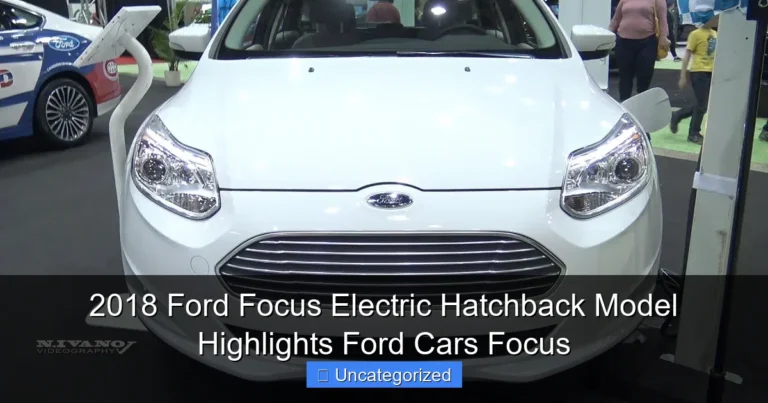
Ford’s journey into the electric vehicle market didn’t happen overnight. While early EVs like the Ford Focus Electric (2011–2018) showed promise, they were limited in range and appeal. The real turning point came in 2020 when Ford announced its “Ford+” plan, a comprehensive strategy to invest $50 billion in electrification through 2026. This ambitious plan signaled a company-wide transformation, with a clear goal: to become a leader in the EV space, not just a follower.
Visual guide about does ford have a fully electric car
Image source: motorbiscuit.com
From Concept to Commitment: Ford’s Electrification Timeline
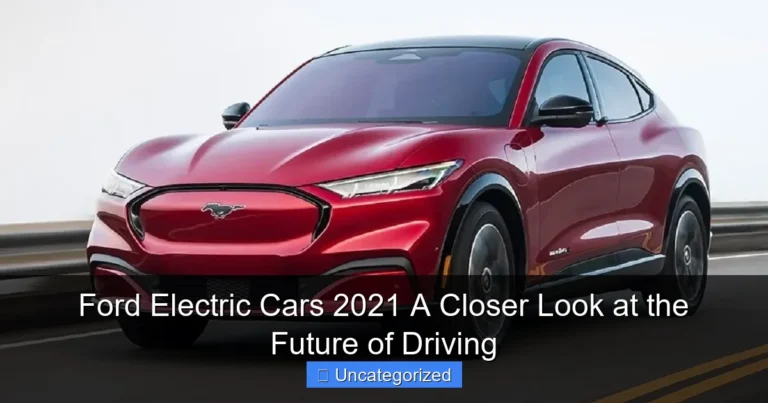
Ford’s EV timeline reflects a strategic and deliberate shift. In 2020, the company unveiled the Mustang Mach-E, its first global all-electric SUV—and a bold move to electrify a legendary nameplate. This was followed in 2021 by the E-Transit, Ford’s fully electric version of its best-selling commercial van. Then, in 2022, Ford shocked the truck world with the F-150 Lightning, an all-electric version of America’s most popular pickup. These launches weren’t just marketing stunts; they were backed by real investments in manufacturing, battery technology, and charging infrastructure.
- 2020: Mustang Mach-E debuts as Ford’s first global BEV
- 2021: E-Transit launches, targeting commercial fleets
- 2022: F-150 Lightning arrives, selling out within days
- 2023–2024: Expansion of battery plants and charging partnerships
- 2025+: Plans for a new generation of EVs, including a 3-row electric SUV and a next-gen electric pickup
Investment in Battery and Manufacturing Infrastructure
Ford isn’t just building electric cars—it’s building the ecosystem to support them. The company has partnered with SK On, a South Korean battery manufacturer, to build three new battery plants in the U.S. (two in Kentucky, one in Tennessee) under the BlueOval SK joint venture. These facilities will produce lithium-ion batteries using a new, more efficient cell chemistry called “Ion Boost”, which promises higher energy density and faster charging times.
Additionally, Ford has retooled existing factories. The Dearborn Truck Plant, where the F-150 Lightning is built, was upgraded with new robotics, assembly lines, and quality control systems. This vertical integration—controlling both vehicle and battery production—gives Ford a competitive edge in cost, scalability, and supply chain resilience.
Ford’s Current Lineup of Fully Electric Vehicles
Ford now offers a diverse range of fully electric vehicles, each tailored to different consumer needs. Whether you’re looking for a sporty SUV, a work-ready van, or a powerful pickup truck, Ford has an EV that fits. Let’s explore each model in detail.
1. Ford Mustang Mach-E: The Electric SUV with Muscle Car DNA
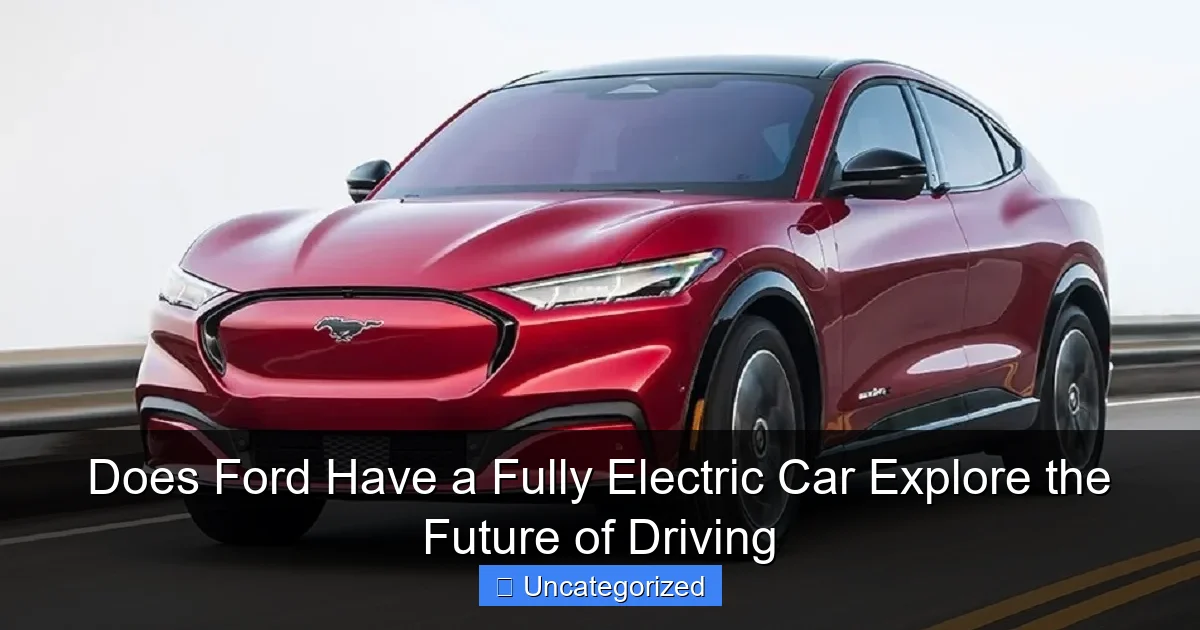
The Mustang Mach-E is Ford’s flagship electric SUV, blending the performance and styling of the Mustang with the practicality of a modern crossover. Available in multiple trims—Select, Premium, GT, and GT Performance Edition—the Mach-E offers a range of 247 to 314 miles (EPA-estimated), depending on configuration.
- Performance: The GT Performance Edition hits 0–60 mph in 3.5 seconds, rivaling high-end sports cars.
- Interior: Features a 15.5-inch vertical touchscreen, Ford’s SYNC 4A infotainment system, and over-the-air updates.
- Charging: Can add up to 61 miles of range in just 10 minutes using DC fast charging (150 kW max).
Pro Tip: For maximum range, opt for the extended-range battery with rear-wheel drive. If you prioritize performance and all-weather traction, go for the all-wheel-drive GT model.
2. Ford F-150 Lightning: The Electric Pickup Revolution
The F-150 Lightning is more than just an electric truck—it’s a game-changer. Built on the same platform as the best-selling F-150, it retains the rugged durability, towing capacity (up to 10,000 lbs), and payload (up to 2,235 lbs) of its gas-powered sibling, but with instant torque and zero emissions.
- Range: Up to 320 miles (EPA-estimated) with the extended-range battery.
- Power: 580 horsepower and 775 lb-ft of torque in the extended-range model.
- Innovation: Features “Intelligent Backup Power” that can power a home for up to 3 days during outages using the truck’s battery.
Real-World Example: A contractor in Texas used his F-150 Lightning to power a job site during a storm, running tools, lights, and a coffee maker—all from the truck’s 9.6 kW Pro Power Onboard system.
3. Ford E-Transit: Electrifying the Workplace
The E-Transit is Ford’s answer to the growing demand for electric commercial vehicles. Designed for delivery fleets, service providers, and small businesses, the E-Transit offers a range of 126 miles (EPA-estimated) on a single charge—ideal for urban routes and daily commutes.
- Payload: Up to 4,290 lbs, depending on configuration.
- Cargo Space: Up to 487.3 cubic feet (high-roof, extended-length model).
- Charging: Can recharge from 15% to 80% in about 34 minutes using a 115 kW DC fast charger.
Tip: Pair the E-Transit with Ford’s “Fleet Electrification” consulting services to optimize routes, charging schedules, and total cost of ownership.
4. Upcoming: Ford Explorer EV and Lincoln Aviator EV
While not yet released, Ford has confirmed plans for an all-electric Explorer and Lincoln Aviator (Lincoln is Ford’s luxury division), both expected to launch by 2025. These three-row SUVs will target families and luxury buyers, offering spacious interiors, advanced driver-assist features, and estimated ranges of 300+ miles.
Charging, Range, and Real-World Performance
One of the biggest concerns for EV buyers is charging—how long it takes, where to do it, and whether the vehicle can handle daily needs. Ford addresses these concerns with a multi-pronged approach.
Charging Options: Home, Work, and Public Networks
Ford offers several charging solutions:
- Ford Connected Charge Station: A Level 2 (240V) home charger that can add up to 29 miles of range per hour. Installation support is available through Ford’s partner, Qmerit.
- BlueOval Charge Network: Ford’s access to over 100,000 public chargers across North America, including Electrify America, EVgo, and ChargePoint. Ford EV owners get free access to Electrify America’s network for two years.
- FordPass Power My Trip: A navigation feature that plans routes with charging stops, estimates charging time, and shows real-time station availability.
Pro Tip: Use the FordPass app to pre-condition your vehicle (heat or cool the cabin) while charging to preserve battery range during drives.
Range Realism: What to Expect
While EPA estimates are helpful, real-world range varies based on driving habits, terrain, temperature, and load. Here’s a breakdown of typical range experiences:
- Mustang Mach-E: 240–300 miles (city driving), 220–280 miles (highway at 70 mph)
- F-150 Lightning: 280–310 miles (light load), 220–260 miles (towing or off-roading)
- E-Transit: 110–120 miles (urban delivery), drops to 80–90 miles with heavy cargo
Winter conditions can reduce range by 20–30%. To combat this, Ford equips its EVs with heat pump systems (available on Mach-E and Lightning), which are more efficient than traditional resistive heaters.
Fast Charging: How Quickly Can You Recharge?
Ford’s EVs support DC fast charging, which is essential for long trips. Here’s a comparison of charging speeds:
- Mustang Mach-E: 10–80% in ~45 minutes (150 kW max)
- F-150 Lightning: 15–80% in ~41 minutes (150 kW max)
- E-Transit: 15–80% in ~34 minutes (115 kW max)
Note: Charging slows significantly after 80% to protect battery health. For daily use, Level 2 charging at home or work is more practical and gentler on the battery.
Ford’s Commitment to Sustainability and Innovation
Ford’s electric vehicles are part of a broader sustainability mission. The company aims to achieve carbon neutrality by 2050, with interim goals of using 100% renewable energy in its manufacturing plants by 2035.
Green Manufacturing and Supply Chain
Ford is investing in eco-friendly production methods:
- Recycled Materials: The Mach-E uses 100% recycled plastic in its seat fabrics and soy-based foam in its headrests.
- Water Conservation: The Rouge Electric Vehicle Center (F-150 Lightning) uses 50% less water than traditional plants.
- Renewable Energy: Ford’s Flat Rock Assembly Plant in Michigan runs on 100% solar power.
Smart Technology and Over-the-Air Updates
Ford’s EVs are more than just cars—they’re connected devices. The SYNC 4A system supports voice commands, wireless Apple CarPlay and Android Auto, and regular over-the-air (OTA) software updates. These updates can improve performance, add new features, and enhance safety—no dealership visit required.
For example, a recent OTA update for the F-150 Lightning introduced “Intelligent Range”, which uses weather, terrain, and driving behavior to provide more accurate range predictions.
Vehicle-to-Everything (V2X) Capabilities
Ford is pioneering V2X (Vehicle-to-Everything) technology, allowing EVs to interact with homes, grids, and other vehicles. The F-150 Lightning’s “Intelligent Backup Power” is a prime example. In the future, Ford plans to enable:
- Vehicle-to-Grid (V2G): Selling excess energy back to the grid during peak demand.
- Vehicle-to-Home (V2H): Powering entire homes during outages or off-grid living.
- Vehicle-to-Load (V2L): Powering tools, appliances, or even other EVs.
What’s Next? Ford’s Future Electric Vehicle Roadmap
Ford isn’t slowing down. The company has outlined a three-phase EV strategy to expand its lineup, improve battery tech, and dominate key market segments.
Phase 1: Current Lineup (2020–2024)
Focus on launching the Mach-E, E-Transit, and F-150 Lightning, building manufacturing capacity, and establishing the BlueOval SK battery plants.
Phase 2: Next-Gen EVs (2025–2027)
Ford plans to launch a new generation of EVs built on a dedicated electric platform called “Ford Global Electric Architecture” (GEA). This platform will enable:
- Longer ranges (400+ miles)
- Faster charging (150–350 kW)
- Lower production costs (up to 30% reduction)
- More compact battery packs
Expected models include a 3-row electric SUV (replacing the Explorer), a next-gen electric pickup (smaller than the Lightning), and a Lincoln electric luxury sedan.
Phase 3: Autonomous and Shared Mobility (2028+)
Looking further ahead, Ford is investing in autonomous driving and mobility-as-a-service (MaaS). The company’s self-driving subsidiary, Argo AI (now integrated into Ford’s Advanced Development team), is developing Level 4 autonomous systems for future EVs.
Ford also plans to launch electric ride-sharing and delivery fleets, targeting urban areas with high traffic and emissions. Imagine a fleet of autonomous E-Transits making deliveries or Mach-Es providing robotaxi services—all powered by renewable energy.
Data Table: Ford’s Current and Upcoming Fully Electric Vehicles
| Model | Type | Range (EPA) | 0–60 mph | Max Charging Speed | Key Feature |
|---|---|---|---|---|---|
| Mustang Mach-E | SUV | 247–314 mi | 3.5–6.1 sec | 150 kW | SYNC 4A, GT Performance |
| F-150 Lightning | Pickup | 240–320 mi | 4.0–4.4 sec | 150 kW | Pro Power Onboard, V2H |
| E-Transit | Van | 126 mi | 6.5 sec | 115 kW | 487 cu ft cargo, fleet-ready |
| Explorer EV (2025) | 3-Row SUV | 300+ mi (est.) | 4.5 sec (est.) | 200 kW (est.) | GEA platform, OTA updates |
| Next-Gen Electric Pickup (2026) | Compact Pickup | 350+ mi (est.) | 4.0 sec (est.) | 250 kW (est.) | Modular battery, off-road mode |
Conclusion: Ford Is All In on Electric
So, does Ford have a fully electric car? Absolutely—and it’s not just one car. Ford has built a robust, innovative, and forward-thinking electric vehicle lineup that spans SUVs, trucks, vans, and soon, luxury and compact models. With the Mustang Mach-E, F-150 Lightning, and E-Transit already on the road, and more EVs on the horizon, Ford is proving that it can lead the electric revolution without sacrificing performance, utility, or American ingenuity.
What sets Ford apart is its holistic approach: investing in battery tech, expanding charging access, embracing sustainability, and leveraging its legacy of innovation. Whether you’re a daily commuter, a fleet manager, or an adventure seeker, there’s a Ford EV that fits your lifestyle. And with plans for longer ranges, faster charging, and smarter technology, the future of driving with Ford looks brighter—and cleaner—than ever.
As the world moves toward a zero-emission future, Ford isn’t just keeping up—it’s accelerating ahead. The era of the electric Ford is here, and it’s only the beginning. So, if you’ve been waiting for the right time to go electric, now might be the perfect moment to explore what Ford’s fully electric vehicles have to offer. The road ahead is electric—and Ford is leading the charge.
Frequently Asked Questions
Does Ford have a fully electric car in its current lineup?
Yes, Ford offers several fully electric vehicles, including the Mustang Mach-E, F-150 Lightning, and E-Transit van. These models highlight Ford’s commitment to electrification and sustainable driving solutions.
What is the most popular Ford fully electric car?
The Ford Mustang Mach-E is one of the brand’s most popular electric vehicles, blending performance, style, and a competitive range of up to 314 miles. It’s a top choice for SUV and crossover buyers seeking an eco-friendly option.
Can I charge a Ford electric car at home?
Absolutely. Ford fully electric cars come with a standard mobile charger for home use, compatible with 120V and 240V outlets. For faster charging, Ford also offers an optional Connected Charge Station for home installation.
Does Ford have a fully electric car with truck capabilities?
Yes, the Ford F-150 Lightning is a fully electric pickup truck that delivers up to 580 horsepower, 775 lb-ft of torque, and a towing capacity of up to 10,000 lbs. It combines the rugged utility of the F-150 with zero-emission driving.
How does the range of Ford electric cars compare to competitors?
Ford fully electric cars offer competitive ranges: the F-150 Lightning reaches up to 320 miles, while the Mustang Mach-E offers up to 314 miles on a single charge. These ranges are on par with or exceed many rivals in their segments.
Are there tax incentives for buying a Ford fully electric car?
Depending on your location, you may qualify for federal, state, or local tax credits when purchasing a Ford electric car. The U.S. federal tax credit offers up to $7,500 for eligible models like the F-150 Lightning and Mustang Mach-E.