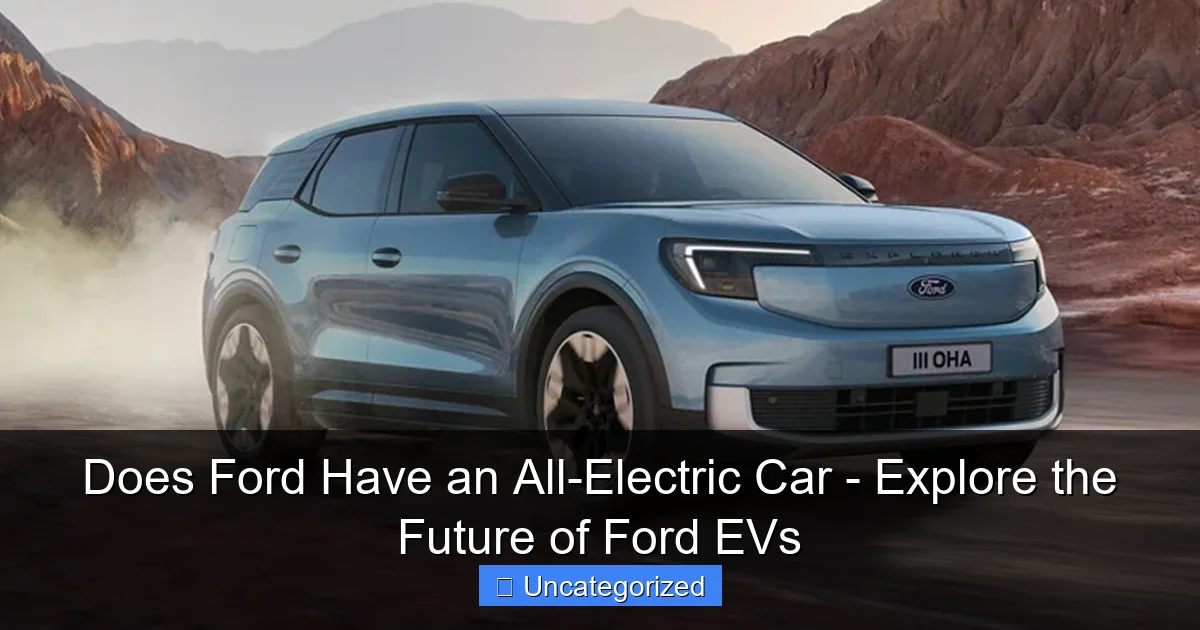
Does Ford Have an All-Electric Car – Explore the Future of Ford EVs
Yes, Ford has fully embraced the electric revolution with a growing lineup of all-electric vehicles, including the popular Mustang Mach-E, the F-150 Lightning, and the E-Transit van. These EVs combine iconic Ford performance with cutting-edge battery technology, offering ranges up to 320 miles and fast-charging capabilities—proving Ford is serious about leading the future of sustainable mobility.
Key Takeaways
- Yes, Ford offers all-electric models like the Mustang Mach-E and F-150 Lightning.
- Ford plans 50% EV sales by 2030, signaling a major shift to electrification.
- Charging infrastructure is expanding with FordPass, easing long-distance travel.
- EV tax credits apply to select models, reducing upfront costs for buyers.
- Ford invests $50B in EVs through 2026, accelerating innovation and production.
📑 Table of Contents
- Does Ford Have an All-Electric Car – Explore the Future of Ford EVs
- Ford’s Commitment to Electrification: A Strategic Shift
- Ford’s Current All-Electric Vehicle Lineup
- Charging Infrastructure and Range: What Ford Offers
- Upcoming Ford Electric Models: The Road Ahead
- Comparing Ford EVs to Competitors: How Do They Stack Up?
- Conclusion: Ford’s Electric Future Is Here
Does Ford Have an All-Electric Car – Explore the Future of Ford EVs
The automotive industry is undergoing a seismic shift as the world pivots toward sustainable transportation, and one of the most frequently asked questions today is: Does Ford have an all-electric car? The answer is a resounding yes. After decades of dominating the American truck and SUV market with internal combustion engines, Ford Motor Company has embraced the electric revolution with bold investments, innovative technology, and a clear vision for the future. From the iconic F-150 to the Mustang nameplate, Ford is reimagining its most beloved vehicles as zero-emission powerhouses.
As climate concerns grow and government regulations tighten, automakers are racing to electrify their fleets. Ford has not only entered the race but is sprinting ahead with a comprehensive electrification strategy. With over $50 billion invested in EV development through 2026, Ford is positioning itself as a leader in the electric vehicle (EV) market. This blog post dives deep into Ford’s all-electric lineup, explores upcoming models, examines charging infrastructure, and analyzes how Ford is redefining performance, utility, and sustainability in the EV era. Whether you’re a long-time Ford fan or a first-time EV buyer, this guide will help you understand what Ford brings to the table in the rapidly evolving world of electric mobility.
Ford’s Commitment to Electrification: A Strategic Shift
The $50 Billion EV Investment
Ford’s journey into all-electric vehicles is backed by one of the largest financial commitments in the industry. In 2021, the company announced a staggering $50 billion investment in electrification through 2026, with plans to build nine new EV plants across North America and Europe. This includes the BlueOval City in Tennessee and the BlueOval SK Battery Park in Kentucky—two massive complexes designed to produce next-generation EVs and lithium-ion batteries. These facilities are expected to create over 10,000 new jobs and support an annual production capacity of 600,000 EVs by 2026.
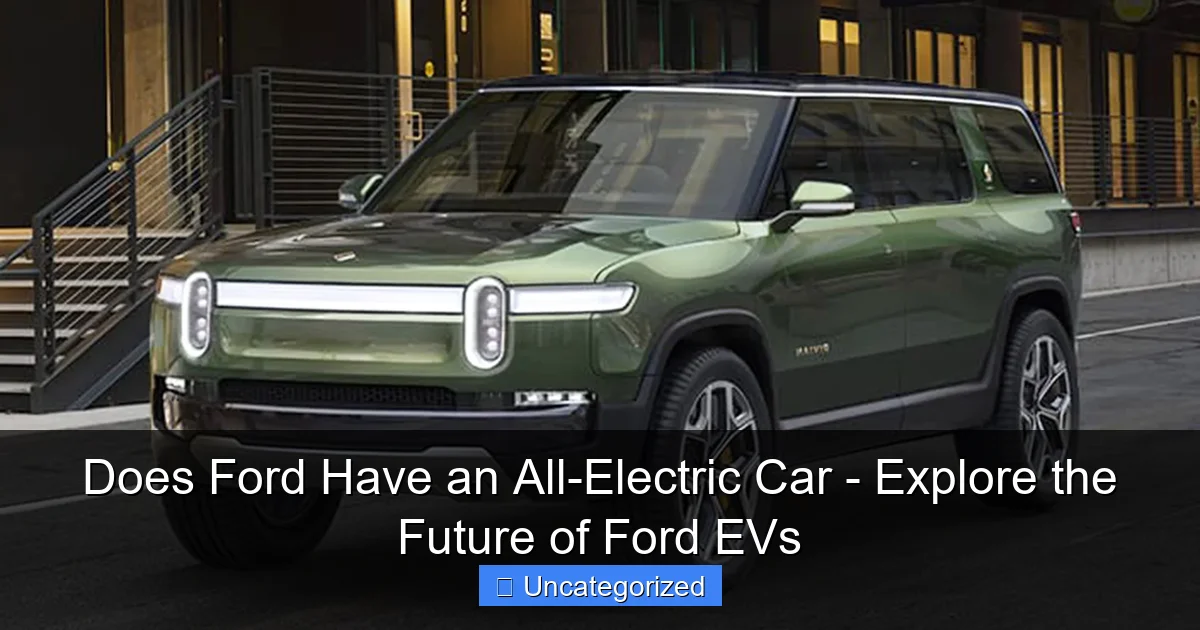
Visual guide about does ford have an all-electric car
Image source: images.hgmsites.net
This investment isn’t just about building cars; it’s about building an entire ecosystem. Ford is vertically integrating battery production through its joint venture with SK On (South Korea), ensuring a stable supply chain and reducing reliance on third-party suppliers. The company is also investing in solid-state battery research and fast-charging technologies to stay ahead of competitors like Tesla, GM, and Rivian.
Ford’s Electrification Timeline
Ford’s EV timeline began in earnest with the 2011 launch of the Ford Focus Electric, one of the first modern EVs from a major U.S. automaker. However, it was the 2021 debut of the Mustang Mach-E that truly signaled Ford’s serious intent. Since then, the pace has accelerated:
- 2022: Launch of the Ford F-150 Lightning, the first all-electric version of America’s best-selling vehicle.
- 2023: Introduction of the E-Transit commercial van, targeting fleet operators and small businesses.
- 2024–2026: Planned rollout of three new electric SUVs, including the Explorer EV and Expedition EV, plus a next-gen electric pickup codenamed “Project T3.”
This aggressive timeline reflects Ford’s goal of selling 2 million EVs annually by 2026, making up 50% of its global volume.
Ford’s Three-Pronged EV Strategy
Ford’s EV approach is built on three pillars:
- Electrify iconic nameplates: Transforming the F-150, Mustang, and Transit into EVs to leverage brand loyalty.
- Target commercial and fleet markets: The E-Transit and future electric vans aim to dominate delivery, logistics, and municipal services.
- Expand into global markets: With EVs launching in Europe and China, Ford is building localized production and charging networks.
This strategy ensures Ford doesn’t just compete with Tesla’s luxury sedans but dominates in segments where it already has a strong foothold—trucks, SUVs, and work vehicles.
Ford’s Current All-Electric Vehicle Lineup
Ford Mustang Mach-E: The Electric Pony
The Mustang Mach-E is Ford’s first dedicated EV and a bold reimagining of the Mustang legacy. Launched in 2021, it’s available in multiple trims, including the high-performance GT and GT Performance Edition, which deliver 480 horsepower and 634 lb-ft of torque, hitting 60 mph in just 3.5 seconds. With a range of up to 314 miles (EPA-estimated), the Mach-E combines sporty handling with practicality.
Key features include:
- A 15.5-inch touchscreen with Ford’s SYNC 4A infotainment system.
- Over-the-air (OTA) software updates for performance, features, and security.
- Available BlueCruise 1.2 hands-free driving on 97% of U.S. highways.
Tip: For city drivers, the Mach-E Select trim offers 247 miles of range at a more affordable price, making it ideal for daily commutes.
Ford F-150 Lightning: The Electric Workhorse
The F-150 Lightning is a game-changer. As the first all-electric F-150, it retains the rugged capability of its gas-powered sibling while adding EV-specific features. With a starting price of $49,995 (before tax credits), it’s competitively priced against the Tesla Cybertruck and Rivian R1T.
Notable specs:
- Dual electric motors (4×4 standard) with 580 horsepower (extended-range model).
- Up to 320 miles of range (EPA-estimated).
- 10,000 lbs of towing capacity and 2,235 lbs of payload.
- “Mega Power Frunk” (front trunk) with 400 liters of storage and 2.4 kW of exportable power.
The Lightning also introduces Pro Power Onboard, turning the truck into a mobile generator—perfect for job sites, camping, or power outages. During Hurricane Ian in 2022, F-150 Lightning owners used their trucks to power homes, showcasing real-world utility.
Ford E-Transit: Electrifying the Workday
For businesses, the E-Transit is a cost-effective and sustainable alternative to gas-powered vans. Available in multiple configurations (cargo, cutaway, and chassis cab), it offers:
- 126 miles of range (EPA-estimated), sufficient for urban delivery routes.
- Up to 325 cubic feet of cargo space.
- Fast charging: 15 minutes for 30 miles (DC fast charging).
- Lower maintenance costs—no oil changes, fewer moving parts.
Example: Amazon has ordered 100,000 E-Transit vans, highlighting its appeal for last-mile delivery fleets.
Ford Explorer EV: Coming Soon
While not yet available, the Explorer EV (expected 2025) will be Ford’s first electric SUV built on the GE1 platform, designed specifically for EVs. It’s expected to offer:
- 300+ miles of range.
- Three-row seating.
- Advanced driver-assist features and a digital cockpit.
This model aims to compete with the Tesla Model Y and Hyundai Ioniq 5 in the midsize SUV segment.
Charging Infrastructure and Range: What Ford Offers
FordPass Charging Network
One of the biggest hurdles for EV adoption is charging anxiety. Ford addresses this with the FordPass Charging Network, which grants access to over 100,000 charging stations across North America—including Tesla Superchargers (via an adapter starting in 2024). The network includes:
- Electrify America: 3,500+ fast chargers.
- EVgo: 850+ fast chargers.
- ChargePoint: 25,000+ Level 2 chargers.
Ford EV owners receive two years of free fast charging on the network, reducing the cost of ownership.
Home Charging Solutions
Ford offers the Ford Connected Charge Station, a Level 2 home charger that:
- Delivers up to 19.2 kW of power (adding 20–30 miles of range per hour).
- Integrates with the FordPass app for scheduling, monitoring, and energy usage tracking.
- Supports Wi-Fi and OTA updates.
Tip: Install the charger on a dedicated 240V circuit to maximize efficiency. Ford partners with Qmerit to provide professional installation services.
Range and Efficiency: Real-World Performance
Ford’s EVs are designed for real-world conditions. The F-150 Lightning’s extended-range battery (131 kWh) achieves 70 MPGe city / 61 MPGe highway. The Mustang Mach-E’s efficiency varies by trim:
- Select (RWD): 100 MPGe city / 93 MPGe highway.
- GT (AWD): 90 MPGe city / 86 MPGe highway.
For comparison, the Tesla Model Y Long Range achieves 123 MPGe city / 111 MPGe highway. While Ford’s EVs may not top the efficiency charts, they excel in utility and towing—areas where many EVs fall short.
Upcoming Ford Electric Models: The Road Ahead
Project T3: The Next-Gen Electric Pickup
Announced in 2023, Project T3 (short for “Trust The Truck”) is Ford’s most ambitious EV yet. Scheduled for 2025, it will feature:
- A new electric truck platform with 15% more range than the Lightning.
- Ultra-fast charging (15 minutes for 150 miles).
- Advanced battery technology (potentially solid-state).
- Autonomous towing capabilities.
This truck aims to surpass the Lightning’s success and compete directly with the Cybertruck and Chevrolet Silverado EV.
Ford Expedition EV and Lincoln Nautilus EV
Expected in 2025–2026, the Expedition EV will be Ford’s largest electric SUV, offering three-row seating and 300+ miles of range. Its luxury counterpart, the Lincoln Nautilus EV, will target premium buyers with:
- Advanced noise-canceling technology.
- AI-powered infotainment.
- Biometric authentication.
Global Expansion: Ford EVs in Europe and China
Ford is not limiting its EVs to the U.S. In Europe, the Ford Explorer EV (based on the Volkswagen MEB platform) will launch in 2024, offering 300+ miles of range. In China, Ford is developing localized EVs through its joint venture with Changan Ford, focusing on compact SUVs and city cars.
Comparing Ford EVs to Competitors: How Do They Stack Up?
Performance and Utility
Ford’s EVs stand out in utility. The F-150 Lightning’s towing capacity (10,000 lbs) rivals gas trucks, while the E-Transit’s cargo space is unmatched by rivals like the Mercedes-Benz eSprinter. The Mustang Mach-E’s performance (0–60 mph in 3.5 seconds) matches the Tesla Model Y Performance.
Price and Value
Ford offers competitive pricing. The Mach-E starts at $42,995 (before tax credits), undercutting the Model Y ($47,740). The Lightning’s $49,995 base price is lower than the Cybertruck ($60,990) and Rivian R1T ($73,000).
Charging and Ecosystem
Ford’s charging network is more accessible than Tesla’s (which is closed to non-Tesla vehicles) and broader than Hyundai’s. However, Tesla still leads in fast-charging speed (250 kW vs. Ford’s 150 kW).
Data Table: Ford EVs vs. Key Competitors
| Model | Starting Price | Range (EPA) | Charging Speed (DC) | Key Advantage |
|---|---|---|---|---|
| Ford Mustang Mach-E | $42,995 | 247–314 miles | 150 kW | Performance + utility |
| Ford F-150 Lightning | $49,995 | 230–320 miles | 150 kW | Towing + frunk power |
| Tesla Model Y | $47,740 | 330 miles | 250 kW | Range + Supercharger network |
| Chevrolet Silverado EV | $79,800 | 400 miles | 350 kW | Range + fast charging |
| Rivian R1T | $73,000 | 328 miles | 220 kW | Off-road capability |
Conclusion: Ford’s Electric Future Is Here
So, does Ford have an all-electric car? Absolutely—and it’s just getting started. From the sporty Mustang Mach-E to the workhorse F-150 Lightning and the versatile E-Transit, Ford has built a diverse and capable EV lineup that caters to drivers, families, and businesses alike. With a $50 billion investment, cutting-edge technology, and a commitment to electrifying its most iconic nameplates, Ford is not merely participating in the electric revolution—it’s leading it.
What sets Ford apart is its focus on real-world utility. While other EVs prioritize range or luxury, Ford delivers practical benefits: a front trunk that powers homes, a van that cuts delivery costs, and a truck that tows like a diesel. The company’s charging network, home charging solutions, and upcoming models like Project T3 ensure that Ford EVs are accessible, reliable, and future-ready.
For consumers, the message is clear: Ford’s electric vehicles are not a compromise—they’re an upgrade. Whether you’re a truck enthusiast, a tech-savvy urbanite, or a small business owner, there’s a Ford EV designed for your needs. As the company continues to expand its lineup and improve battery technology, the future of Ford EVs looks brighter than ever. The electric revolution isn’t coming—it’s already here, and Ford is driving it forward.
Frequently Asked Questions
Does Ford have an all-electric car in its current lineup?
Yes, Ford offers several all-electric vehicles, including the Ford Mustang Mach-E, Ford F-150 Lightning, and the E-Transit van. These models represent Ford’s commitment to electrification and sustainable transportation.
What is the range of Ford’s all-electric vehicles?
Ford’s EVs offer competitive ranges: the Mustang Mach-E gets up to 314 miles, the F-150 Lightning up to 320 miles, and the E-Transit up to 159 miles (varies by configuration). Exact range depends on battery size, driving conditions, and trim level.
Are Ford’s all-electric cars eligible for federal tax credits?
Some Ford EVs, like the F-150 Lightning and Mustang Mach-E, may qualify for federal tax credits of up to $7,500, depending on battery sourcing and buyer eligibility. Check the latest IRS guidelines for current incentives.
Can I charge a Ford all-electric car at home?
Absolutely. All Ford EVs come with a Level 1 charger for standard outlets, and you can install a Level 2 home charger for faster charging. Ford also offers the Ford Connected Charge Station for convenience.
Does Ford plan to expand its all-electric car lineup?
Yes, Ford aims to produce 2 million EVs annually by 2026, including new models like the Ford Explorer EV and Lincoln Nautilus EV. The company is heavily investing in EV technology and infrastructure.
How does Ford’s electric truck, the F-150 Lightning, compare to gas models?
The Ford F-150 Lightning retains the durability and utility of the gas-powered F-150 but adds instant torque, lower maintenance, and lower fuel costs. It also features unique tech like Pro Power Onboard for worksite electricity.