Does Ford Have an Electric Car The Complete Guide to Fords EV Lineup
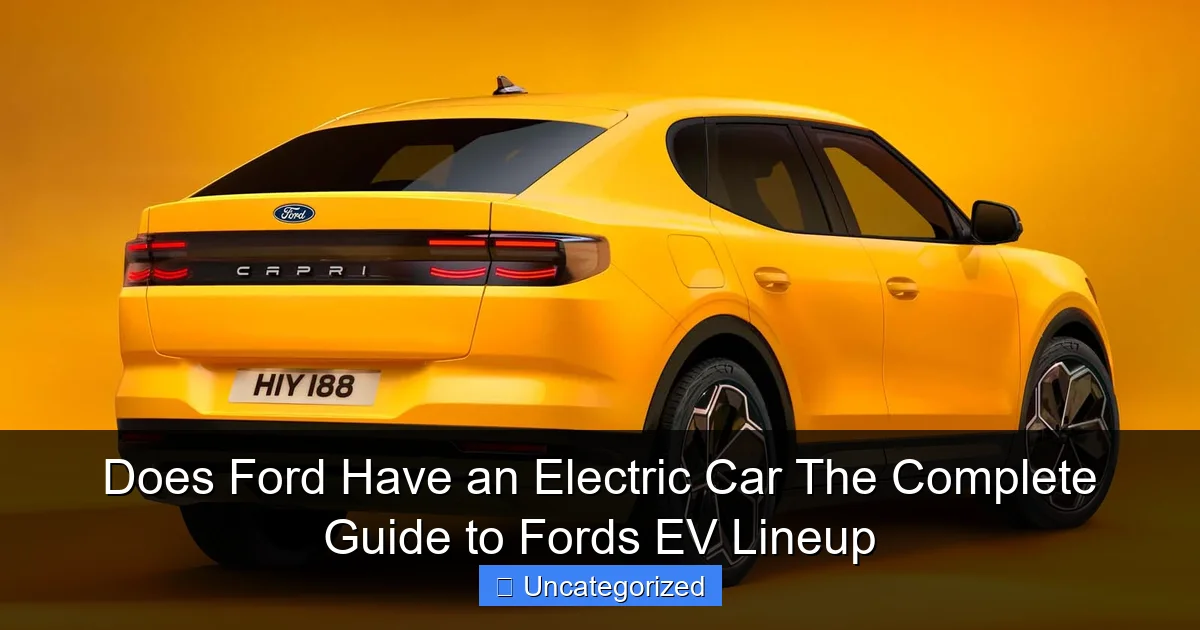
Featured image for does ford have an electric car
Image source: moveelectric.com
Yes, Ford has a growing lineup of electric vehicles (EVs), including the popular Mustang Mach-E, the all-electric F-150 Lightning, and the E-Transit van, proving its commitment to an electrified future. With cutting-edge technology, impressive range, and competitive pricing, Ford’s EVs cater to diverse needs, from performance enthusiasts to commercial fleets.
Key Takeaways
- Ford offers multiple EVs: Explore the Mustang Mach-E, F-150 Lightning, and E-Transit for diverse needs.
- F-150 Lightning impresses: A powerful electric truck with up to 580 hp and 320 miles range.
- Mustang Mach-E excels: Sporty SUV with up to 314 miles range and fast charging capability.
- E-Transit revolutionizes fleets: Electric van perfect for commercial use with 159 miles range.
- Ford invests heavily in EVs: $50 billion committed to electrification through 2026 for future models.
- Charging solutions available: Access Ford’s BlueOval network with 19,500+ charging stations nationwide.
📑 Table of Contents
- Does Ford Have an Electric Car? The Complete Guide to Ford’s EV Lineup
- Ford’s Electric Vehicle Strategy: A Bold Commitment to Electrification
- Ford’s Current Electric Vehicle Lineup: Models You Can Buy Today
- What Sets Ford EVs Apart? Technology, Capability, and Innovation
- Charging and Infrastructure: How Ford Makes EV Ownership Easy
- The Future of Ford EVs: What’s Coming Next?
- Conclusion: Ford’s EV Future Is Here—And It’s Electrifying
Does Ford Have an Electric Car? The Complete Guide to Ford’s EV Lineup
The automotive industry is undergoing a seismic shift, and Ford Motor Company is at the forefront of this transformation. Long known for its iconic Mustang, rugged F-Series trucks, and dependable SUVs, Ford is now making bold moves into the world of electric vehicles (EVs). With climate concerns, government regulations, and consumer demand driving the transition to zero-emission transportation, Ford has committed billions of dollars to electrify its lineup. But does Ford have an electric car? The short answer is: absolutely. And it’s not just one model—it’s an entire family of electric vehicles designed to appeal to a wide range of drivers, from urban commuters to heavy-duty truck users.
Ford’s electric journey began in earnest in 2021 with the launch of the Mustang Mach-E, a bold re-imagining of its legendary pony car as an all-electric SUV. Since then, the automaker has expanded its EV portfolio rapidly, introducing the F-150 Lightning and the E-Transit commercial van, with more models on the horizon. This guide will take you through Ford’s complete electric vehicle lineup, exploring what makes each model unique, how they compare to competitors, what to expect in terms of performance and charging, and what the future holds for Ford EVs. Whether you’re considering your first electric vehicle or looking to upgrade from a gas-powered Ford, this comprehensive guide has everything you need to know.
Ford’s Electric Vehicle Strategy: A Bold Commitment to Electrification
Ford’s $50 Billion EV Investment
Ford has made electrification a cornerstone of its long-term strategy. The company has committed over $50 billion through 2026 to develop electric vehicles, battery technology, and charging infrastructure. This investment is part of Ford’s broader Ford+ Plan, which aims to transform the automaker into a leader in connected, sustainable mobility. By 2025, Ford expects to produce 2 million EVs annually globally, with a significant portion of that capacity dedicated to North American markets.
Visual guide about does ford have an electric car
Image source: images.unsplash.com
This shift is supported by Ford’s creation of Model e, a dedicated EV division focused solely on electric vehicle development, software, and digital experiences. Unlike legacy automakers that treat EVs as an afterthought, Ford is building EVs from the ground up—both in design and manufacturing. The company has also invested in battery gigafactories in Kentucky and Tennessee through its joint venture with SK On, ensuring a stable supply of next-generation lithium-ion and solid-state batteries.
Why Ford Is Betting Big on EVs
Ford’s move into EVs is driven by several key factors:
- Regulatory Pressure: With tightening emissions standards in the U.S., Europe, and China, automakers must reduce their carbon footprint. Ford is aiming for carbon neutrality by 2050, with interim targets set for 2035.
- Consumer Demand: EV sales are growing rapidly, especially in the U.S. and Europe. Ford’s own research shows that over 60% of truck and SUV buyers are considering an electric option within the next five years.
- Brand Reinvention: By electrifying its most iconic vehicles—like the Mustang and F-150—Ford is signaling that EVs can be just as powerful, capable, and exciting as traditional ICE (internal combustion engine) models.
- Fleet and Commercial Opportunities: With the E-Transit and future electric Super Duty trucks, Ford is targeting commercial and municipal fleets, which represent a massive growth market.
Ford’s strategy isn’t just about selling EVs—it’s about creating a complete ecosystem. This includes Ford Pro, a commercial services division offering charging solutions, fleet management software, and energy services to help businesses transition to electric.
Ford’s Current Electric Vehicle Lineup: Models You Can Buy Today
1. Mustang Mach-E: The Electric SUV That Drives Like a Pony Car
The Ford Mustang Mach-E is Ford’s first mass-market EV and a direct challenge to the Tesla Model Y. Launched in 2021, the Mach-E blends the performance and style of the Mustang with the practicality of an SUV. It’s available in several trims, including the entry-level Select, the mid-tier Premium, and the high-performance GT and GT Performance Edition.
Key features include:
- Range: Up to 314 miles (Standard Range RWD) and 270 miles (GT Performance Edition).
- Performance: The GT model delivers 480 horsepower and 634 lb-ft of torque, accelerating from 0-60 mph in 3.5 seconds.
- Technology: A 15.5-inch vertical touchscreen with Ford’s SYNC 4A system, over-the-air updates, and BlueCruise hands-free highway driving (available on select trims).
- Cargo Space: 29.7 cubic feet behind the rear seats, expandable to 59.7 cubic feet with seats folded.
Pro Tip: If you’re considering the Mach-E, opt for the Extended Range battery if you frequently travel long distances. The Standard Range model is great for city driving, but the added range provides peace of mind.
2. F-150 Lightning: The Electric Pickup That’s Changing the Game
The F-150 Lightning is Ford’s answer to the growing demand for electric trucks. Based on the best-selling F-150, the Lightning combines the ruggedness of a pickup with the efficiency and innovation of an EV. It’s available in Pro (fleet), XLT, Lariat, and Platinum trims.
Standout features:
- Range: Up to 320 miles (Extended Range battery).
- Towing: Up to 10,000 pounds (with Extended Range and Max Trailer Tow Package).
- Power Export: The Lightning can power your home during an outage (up to 9.6 kW) or run tools on a job site (up to 7.2 kW).
- Payload: Up to 2,235 pounds, making it competitive with gas-powered F-150s.
- Performance: 452 horsepower (Standard Range) or 580 horsepower (Extended Range), with 0-60 mph in 4.5 seconds.
Real-World Example: A contractor in Colorado uses his F-150 Lightning to power his entire worksite—including a portable welder, air compressor, and lighting—using the truck’s built-in Pro Power Onboard system. He charges the truck overnight using a Level 2 charger and never needs a generator.
3. E-Transit: Electrifying the Commercial Van Market
The Ford E-Transit is Ford’s all-electric version of its best-selling commercial van. Designed for delivery services, tradespeople, and fleet operators, the E-Transit offers zero-emission utility without sacrificing capability.
Key specs:
- Range: Up to 126 miles (Low Roof, Standard Wheelbase).
- Cargo Capacity: Up to 487.3 cubic feet, with multiple roof heights and wheelbases.
- Payload: Up to 3,800 pounds.
- Charging: DC fast charging capability (up to 115 kW) for quick turnarounds.
Ford Pro offers a complete ecosystem for E-Transit owners, including charging hardware, route planning software, and energy management tools. For example, Amazon has ordered 100,000 E-Transit vans as part of its Climate Pledge to achieve net-zero carbon by 2040.
What Sets Ford EVs Apart? Technology, Capability, and Innovation
BlueCruise: Ford’s Hands-Free Driving System
One of the most advanced driver-assist systems in Ford’s EVs is BlueCruise, Ford’s hands-free driving technology. Available on the Mustang Mach-E and F-150 Lightning (on select trims), BlueCruise uses a combination of cameras, radar, and map data to enable hands-free driving on over 130,000 miles of pre-mapped highways in North America.
How it works:
- When activated, BlueCruise controls steering, acceleration, and braking on compatible highways.
- The driver must keep their eyes on the road—a driver-facing camera monitors attention.
- It includes features like lane centering, adaptive cruise control, and automatic lane changes (when safe).
Tip: BlueCruise is offered as a 90-day trial, after which it requires a subscription. Consider whether you frequently drive on highways before opting for the paid plan.
Pro Power Onboard: Turn Your Truck into a Mobile Generator
Exclusive to the F-150 Lightning, Pro Power Onboard is a game-changer for homeowners, contractors, and outdoor enthusiasts. The truck comes with multiple power outlets (120V and 240V), allowing it to power everything from refrigerators to power tools.
Real-world applications:
- Home Backup Power: During a storm, the Lightning can power essential circuits in a home for up to three days (with an average 30 kWh/day usage).
- Job Sites: Contractors can charge tools, run air compressors, or even power a coffee maker on-site.
- Tailgating: Bring a TV, grill, or sound system to your next game—no generator noise or fumes.
To use home backup power, you’ll need a Ford Charge Station Pro (sold separately) and a home integration system like the Home Integration Kit from Ford and Sunrun.
SYNC 4A and Over-the-Air Updates
All Ford EVs come with the SYNC 4A infotainment system, featuring a large touchscreen, wireless Apple CarPlay and Android Auto, voice commands, and cloud-based navigation. But what truly sets it apart is over-the-air (OTA) updates.
Ford regularly pushes software updates to improve performance, add features, and enhance safety—without requiring a trip to the dealership. For example, a recent update added new BlueCruise functionality and improved battery thermal management. This means your Ford EV gets smarter over time, much like a smartphone.
Charging and Infrastructure: How Ford Makes EV Ownership Easy
FordPass Charging Network: Access to 100,000+ Chargers
One of the biggest concerns for new EV owners is charging infrastructure. Ford addresses this with the FordPass Charging Network, which gives drivers access to over 100,000 charging stations across North America—including Tesla Superchargers (starting in 2024 via an adapter).
The network includes:
- DC Fast Chargers: Over 7,500 high-speed chargers (150–350 kW) from Electrify America, EVgo, and ChargePoint.
- Level 2 Chargers: Thousands of public and workplace chargers.
- Home Charging: Ford offers a range of Level 2 home chargers, including the Ford Connected Charge Station.
Using the FordPass app, you can find chargers, check availability, pay for charging, and even schedule charging during off-peak hours to save money.
Charging Times and Battery Management
Here’s a quick breakdown of charging times for Ford’s EVs:
| Model | Charging Type | 10% to 80% Time | Range Added (10 min) |
|---|---|---|---|
| Mustang Mach-E (Extended Range) | DC Fast (150 kW) | 40 minutes | ~60 miles |
| F-150 Lightning (Extended Range) | DC Fast (150 kW) | 41 minutes | ~54 miles |
| E-Transit | DC Fast (115 kW) | 34 minutes | ~48 miles |
| All Models | Level 2 (240V, 11.5 kW) | 8–10 hours (full charge) | ~20–25 miles/hour |
Pro Tip: For daily charging, a Level 2 home charger is ideal. If you don’t have a garage, check if your apartment complex or workplace offers charging. Ford also partners with ChargePoint to provide discounted home charger installations.
Battery Warranty and Longevity
All Ford EVs come with an 8-year/100,000-mile battery warranty, covering defects and capacity loss below 70%. Ford’s battery management system (BMS) uses advanced thermal control to extend battery life, especially in extreme temperatures.
To maximize battery life:
- Avoid frequent DC fast charging (use it only when necessary).
- Keep the battery between 20% and 80% for daily use.
- Use scheduled charging to avoid leaving the battery at 100% for long periods.
The Future of Ford EVs: What’s Coming Next?
Upcoming Models: Electric Explorer, Lincoln EVs, and More
Ford isn’t stopping with the Mach-E, Lightning, and E-Transit. The company has confirmed several upcoming EVs, including:
- All-Electric Explorer: Expected in 2025, based on the next-gen Explorer platform with a focus on family-friendly features and long-range capability.
- Lincoln Electrified SUVs: Lincoln, Ford’s luxury brand, will launch multiple EVs, including a full-size electric SUV and a sedan, built on Ford’s dedicated EV platforms.
- Electric Super Duty Trucks: Ford plans to electrify its F-250, F-350, and larger trucks, targeting commercial and industrial users.
- Affordable EVs: By 2026, Ford aims to launch a sub-$30,000 electric vehicle to compete with the Tesla Model 2 and other budget EVs.
Next-Gen Platforms: The Skateboard Architecture
Ford is developing new dedicated EV platforms called skateboard architectures, which integrate batteries, motors, and electronics into a flat chassis. This allows for more interior space, better weight distribution, and faster development of new models. The first of these platforms, GE1, underpins the Mustang Mach-E and E-Transit. The next platform, TE1, will be used for future trucks and large SUVs, offering higher power, longer range, and advanced towing capabilities.
Autonomous Driving and Software-Defined Vehicles
Ford is investing heavily in autonomous driving technology through its partnership with Argo AI (now integrated into Ford’s internal teams). Future Ford EVs will feature enhanced BlueCruise capabilities, including urban navigation and automated parking. Additionally, Ford is working on software-defined vehicles—EVs that can receive new features and performance upgrades via OTA updates, creating a new revenue stream beyond vehicle sales.
Conclusion: Ford’s EV Future Is Here—And It’s Electrifying
So, does Ford have an electric car? The answer is a resounding yes—and it’s not just one car, but a growing family of electric vehicles designed to meet the needs of every driver. From the sporty Mustang Mach-E to the workhorse F-150 Lightning and the practical E-Transit, Ford’s EV lineup combines performance, technology, and real-world capability in ways that few competitors can match.
What sets Ford apart is its deep understanding of its core customers. By electrifying its most iconic vehicles, offering innovative features like Pro Power Onboard and BlueCruise, and building a robust charging ecosystem, Ford is proving that EVs don’t have to sacrifice utility or excitement. With a bold investment plan, upcoming models, and a commitment to sustainability, Ford is positioning itself as a leader in the electric revolution.
Whether you’re a daily commuter, a weekend adventurer, a contractor, or a fleet manager, there’s a Ford EV that fits your life. And with more models on the way, Ford’s electric future is just getting started. The era of the electric Ford isn’t coming—it’s already here.
Frequently Asked Questions
Does Ford have an electric car in 2024?
Yes, Ford offers a growing lineup of fully electric vehicles (EVs) in 2024, including the Mustang Mach-E, F-150 Lightning, and E-Transit van. These models highlight Ford’s commitment to electrifying its most iconic nameplates.
What are Ford’s most popular electric car models?
The Mustang Mach-E SUV and F-150 Lightning pickup are Ford’s flagship EVs, combining performance, range, and cutting-edge tech. The E-Transit is Ford’s all-electric cargo van designed for commercial fleets.
How does the F-150 Lightning compare to gas-powered F-150 trucks?
The F-150 Lightning delivers instant torque, lower maintenance costs, and up to 320 miles of range, while retaining the towing/hauling capability of gas models. It also features innovative tech like bidirectional charging.
Does Ford have an electric car with over 300 miles of range?
Yes, the extended-range F-150 Lightning and Mustang Mach-E California Route 1 edition both offer EPA-estimated ranges exceeding 300 miles. Most other Ford EVs deliver 200–270 miles on a charge.
Are Ford electric cars eligible for federal tax credits?
As of 2024, the F-150 Lightning and E-Transit qualify for the full $7,500 federal tax credit, while the Mustang Mach-E may have partial eligibility depending on battery sourcing. Always confirm with a tax professional.
What charging network does Ford’s electric car lineup use?
Ford EVs use the BlueOval Charge Network, with access to over 84,000 chargers in North America, including Tesla Superchargers (with adapter). New Ford EVs also come with 250 kWh of complimentary charging via Electrify America.