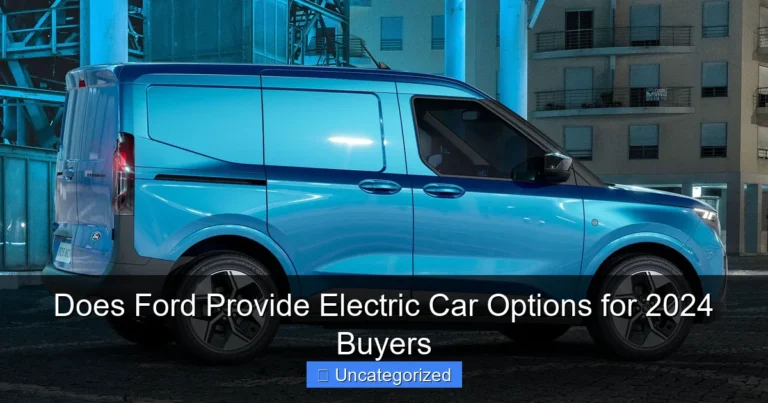
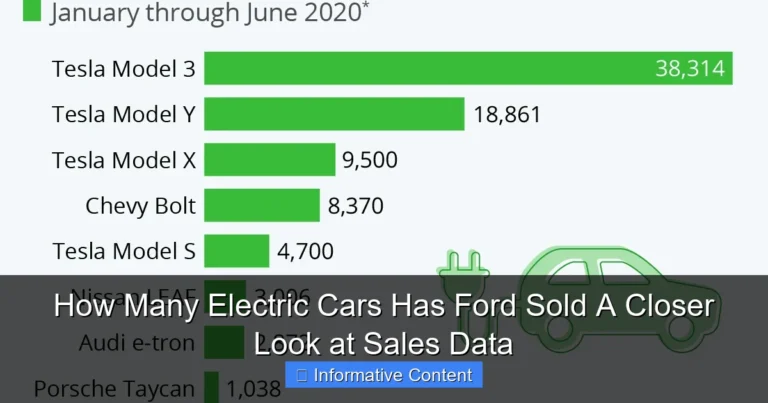
Does Ford Have Any Electric Cars Explore the Future of Ford EVs
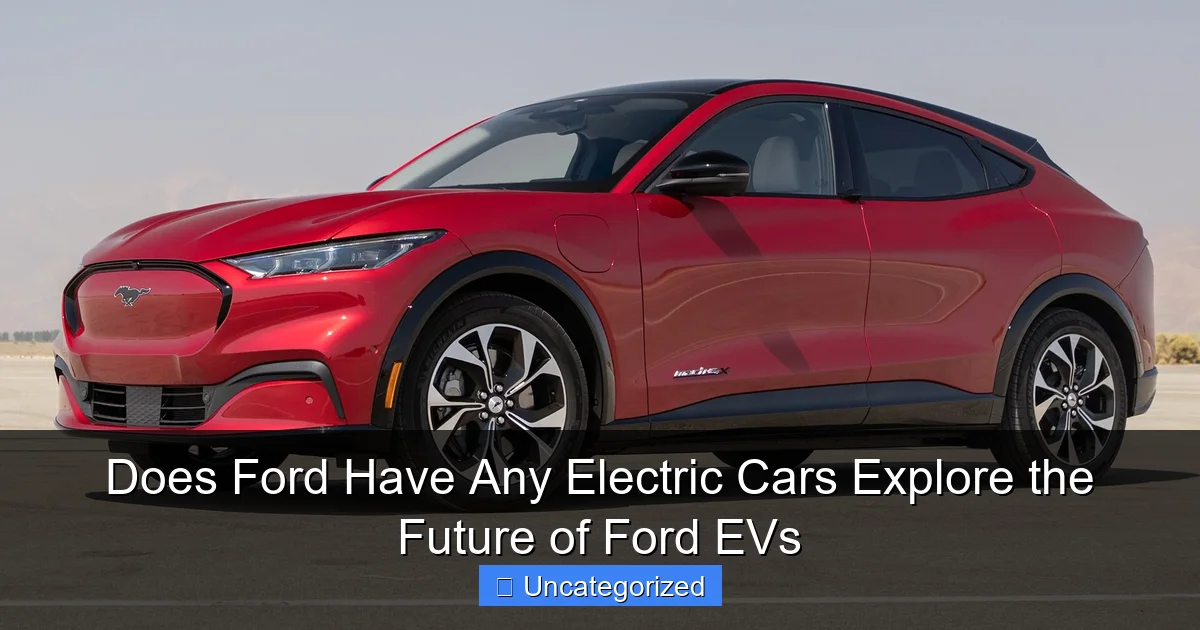
Featured image for does ford have any electric cars
Image source: motortrend.com
Yes, Ford has fully embraced the electric revolution with a growing lineup of innovative EVs, including the popular Mustang Mach-E, the rugged F-150 Lightning, and the E-Transit van. With bold investments in battery technology and charging infrastructure, Ford is accelerating toward an all-electric future by 2030.
Key Takeaways
- Ford offers multiple EVs: Explore the Mustang Mach-E, F-150 Lightning, and E-Transit models.
- Expanding EV lineup: Ford plans to launch 9 new EVs globally by 2025.
- Affordable options available: Competitive pricing with federal tax incentives for select models.
- Charging network access: Ford EVs work with BlueOval Charge Network for easy charging.
- Performance meets sustainability: High-powered electric trucks and SUVs redefine eco-friendly driving.
📑 Table of Contents
- Does Ford Have Any Electric Cars? Explore the Future of Ford EVs
- Ford’s Current Electric Vehicle Lineup: Models You Can Buy Today
- Ford’s Upcoming Electric Vehicles: What’s on the Horizon
- Charging Infrastructure and Ford’s BlueOval Charge Network
- Ford’s Sustainability and Electrification Strategy
- Comparing Ford EVs to Competitors: How Does Ford Stack Up?
- Conclusion: Ford Is All-In on Electric Mobility
Does Ford Have Any Electric Cars? Explore the Future of Ford EVs
When it comes to the automotive industry’s shift toward sustainability and innovation, one question echoes louder than others: Does Ford have any electric cars? The answer is a resounding yes. Once known primarily for its powerful gas-guzzling trucks and muscle cars, Ford has undergone a remarkable transformation in recent years, embracing the electric vehicle (EV) revolution with bold investments, cutting-edge technology, and a clear roadmap for a carbon-neutral future. From the iconic Mustang Mach-E to the all-electric F-150 Lightning, Ford is no longer just playing catch-up—it’s leading the charge in the EV space with a vision that combines performance, practicality, and environmental responsibility.
Ford’s entry into the electric vehicle market is more than just a response to Tesla and other EV pioneers; it’s a strategic pivot rooted in decades of manufacturing expertise and brand loyalty. With a $50 billion global investment in EVs through 2026, Ford is positioning itself as a major player in the electrification movement. This isn’t just about building battery-powered versions of existing models—it’s about reimagining mobility, redefining customer experience, and creating vehicles that appeal to both traditional Ford enthusiasts and environmentally conscious drivers. In this comprehensive guide, we’ll explore Ford’s current and upcoming electric lineup, charging infrastructure, sustainability goals, and what the future holds for the Blue Oval in the age of electrification.
Ford’s Current Electric Vehicle Lineup: Models You Can Buy Today
Ford has rapidly expanded its electric vehicle portfolio, offering a diverse range of EVs that cater to different lifestyles, budgets, and driving needs. Unlike some automakers that started with niche EVs, Ford has taken a bold approach by electrifying its most iconic nameplates—Mustang and F-Series—proving that electric power doesn’t mean sacrificing performance or utility.
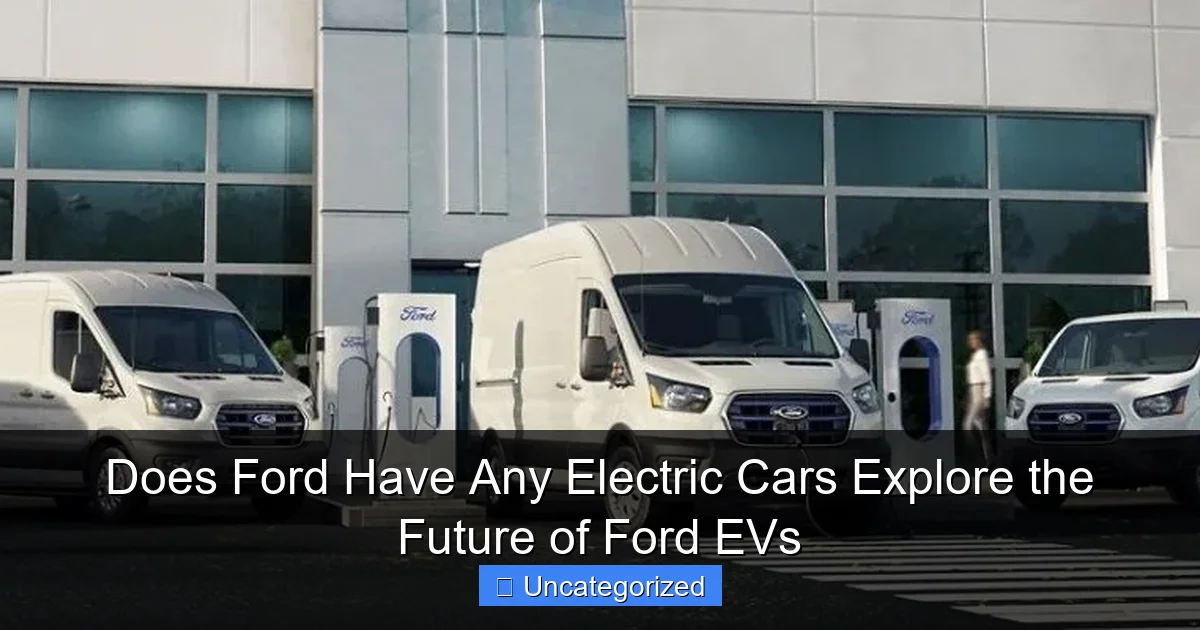
Visual guide about does ford have any electric cars
Image source: blogmedia.dealerfire.com
Mustang Mach-E: The Electric SUV with Muscle Car DNA
Launched in 2020, the Ford Mustang Mach-E marked Ford’s first global all-electric SUV and a bold departure from tradition. Despite the Mustang badge, the Mach-E is a midsize SUV that blends sporty handling with family-friendly practicality. Available in multiple trims—Select, Premium, GT, and GT Performance Edition—the Mach-E offers a range of 247 to 314 miles on a single charge, depending on the configuration.
- Powertrain Options: Rear-wheel drive (RWD) and all-wheel drive (AWD), with up to 480 horsepower in the GT Performance model.
- Charging: DC fast charging can add 61 miles of range in just 10 minutes (using a 150 kW charger).
- Tech Features: SYNC 4A infotainment with a 15.5-inch touchscreen, over-the-air updates, and Ford Co-Pilot360 2.0 driver-assist suite.
Tip: For city dwellers and suburban families, the Premium RWD model with the extended-range battery offers the best balance of range, comfort, and value.
F-150 Lightning: The Electric Pickup That’s Changing the Game
The Ford F-150 Lightning, launched in 2022, is arguably one of the most significant EVs in Ford’s history. Built on the legendary F-150 platform, this all-electric pickup combines rugged capability with zero-emission driving. With a starting MSRP of around $49,995 (before incentives), the Lightning is competitively priced and packed with innovation.
- Range: Up to 320 miles with the extended-range battery (Standard: 240 miles).
- Payload & Towing: 2,000 lbs payload, up to 10,000 lbs towing capacity (with max tow package).
- Power Export: Ford Intelligent Backup Power allows the Lightning to power homes during outages—up to 9.6 kW.
- Pro Power Onboard: Built-in generator with 9.6 kW of power, ideal for job sites or tailgating.
Example: A construction worker in Texas used his F-150 Lightning to power tools at a remote site for three days without needing to plug in—showcasing the vehicle’s versatility beyond transportation.
E-Transit: Electrifying the Workforce
For commercial fleets, Ford introduced the E-Transit, an all-electric version of its best-selling cargo van. With a 126-mile range, the E-Transit is designed for urban delivery, service routes, and last-mile logistics. It supports both Level 2 and DC fast charging, making it ideal for businesses aiming to reduce emissions and operating costs.
- Configurations: Cargo van, cutaway, and chassis cab in multiple roof heights and wheelbases.
- Payload Capacity: Up to 3,800 lbs.
- Fleet Integration: Compatible with Ford Telematics and fleet management software.
Tip: Small businesses can qualify for federal tax credits and state incentives when purchasing E-Transit vans, significantly lowering the total cost of ownership.
Ford’s Upcoming Electric Vehicles: What’s on the Horizon
Ford isn’t stopping at its current lineup. The company has an aggressive product roadmap with several new EVs scheduled to launch between 2024 and 2026. These upcoming models aim to expand Ford’s EV presence across segments, including affordable compact SUVs, luxury crossovers, and even performance-oriented EVs.
Explorer EV: A Family-Friendly Electric SUV
Expected to launch in late 2024, the Ford Explorer EV will be a global electric SUV built on Ford’s new dedicated EV platform (GE2). Unlike the current Explorer, which is gas-powered, the EV version will offer three-row seating, advanced driver assistance, and a targeted range of 300+ miles.
- Target Audience: Families, suburban commuters, and eco-conscious SUV buyers.
- Platform: Built in Cologne, Germany, with a focus on European and North American markets.
- Tech: Next-gen SYNC infotainment, hands-free driving (BlueCruise 2.0), and vehicle-to-everything (V2X) communication.
Insight: The Explorer EV is expected to compete directly with the Tesla Model Y and Hyundai Ioniq 7, but with Ford’s reputation for reliability and towing capacity.
Ford Puma EV: The Compact Crossover for Urban Drivers
Ford is electrifying its popular Puma crossover for the European market, with plans for a global rollout. The Puma EV will be a compact, efficient SUV with a 180–200 mile range, ideal for city driving and short commutes.
- Design: Stylish, aerodynamic, with a focus on urban mobility.
- Charging: Supports 150 kW DC fast charging—10–80% in under 30 minutes.
- Affordability: Expected to be priced competitively with the Volkswagen ID.3 and Peugeot e-208.
Tip: Urban drivers should consider the Puma EV for its low running costs, easy parking, and access to low-emission zones.
Ford Performance EVs: The Future of Electric Muscle
Ford is also investing in high-performance EVs. While the Mustang Mach-E GT is already a powerful contender, Ford has hinted at a dedicated electric performance vehicle—possibly a Mach-E-based track monster or a new EV muscle car. Additionally, Ford has filed patents for an electric F-150 SVT Raptor, signaling its intent to electrify even its most off-road-focused models.
- Technology: Dual-motor setups, torque vectoring, and adaptive suspension systems.
- Sound Design: Simulated engine noise for enthusiasts who miss the roar of a V8.
- Performance Metrics: Sub-4-second 0–60 mph times expected across the performance lineup.
Charging Infrastructure and Ford’s BlueOval Charge Network
One of the biggest concerns for EV owners is charging—where, how fast, and how convenient. Ford has addressed this head-on with the BlueOval Charge Network, a comprehensive charging ecosystem designed to make EV ownership seamless.
BlueOval Charge Network: Access to Over 100,000 Chargers
Ford EV owners gain access to more than 100,000 public charging stations across North America through a single network. This includes partnerships with major providers like:
- Electrify America: 3,500+ DC fast chargers.
- ChargePoint: 100,000+ Level 2 and DC stations.
- EVgo: Fast charging in urban and highway corridors.
Key Benefit: FordPass app integration allows drivers to locate, navigate to, and pay for charging—all from their phone or vehicle touchscreen.
FordPass Power: Home Charging Solutions
Ford offers the FordPass Power home charging station, a 48-amp Level 2 charger that can add up to 28 miles of range per hour. It’s Wi-Fi enabled, allowing remote monitoring and scheduling via the FordPass app.
- Installation: Ford partners with Qmerit for professional home charger installation.
- Incentives: Federal tax credit of up to $1,000 for home charger installation (2023–2032).
- Smart Charging: Schedule charging during off-peak hours to save on electricity costs.
Tip: Use the FordPass app to set a charging schedule that aligns with your utility’s time-of-use rates—potentially saving hundreds per year.
On-the-Road Charging: Ford’s DC Fast Charging Strategy
Ford EVs support DC fast charging up to 150 kW (Mach-E, F-150 Lightning) and 200 kW (future models). This means:
- 10–80% charge: As little as 30–40 minutes.
- Road Trip Ready: Ford’s navigation system pre-plans charging stops based on route, weather, and battery level.
Example: A family driving from Chicago to Detroit (280 miles) can stop at an Electrify America station for 35 minutes, adding enough charge to complete the journey with a 15% buffer.
Ford’s Sustainability and Electrification Strategy
Ford’s EV ambitions are part of a broader sustainability vision. The company has committed to ambitious environmental goals, aligning with global climate targets and consumer demand for greener transportation.
Carbon Neutrality by 2050
Ford has pledged to achieve carbon neutrality across its operations, supply chain, and vehicles by 2050. Interim goals include:
- 100% renewable energy in manufacturing plants by 2035.
- Zero waste to landfill at all facilities by 2030.
- Reduce CO2 emissions per vehicle by 50% by 2030 (vs. 2017).
Data Point: Ford reduced greenhouse gas emissions by 34% between 2017 and 2022—on track for its 2030 goal.
BlueOval SK Battery Plants: Powering the Future
Ford has partnered with SK On to build three BlueOval SK battery plants in Kentucky and Tennessee. These facilities will produce next-generation lithium-ion and solid-state batteries with:
- Higher energy density (longer range).
- Faster charging capabilities.
- Improved recyclability.
Once operational, these plants will support the production of 1.2 million EVs annually by 2026.
Recycling and Circular Economy Initiatives
Ford is investing in battery recycling through partnerships with Redwood Materials and Cirba Solutions. The goal is to recover up to 95% of critical battery materials (lithium, cobalt, nickel) for reuse in new batteries—reducing reliance on mining and lowering environmental impact.
- Closed-Loop System: Old EV batteries can be repurposed for energy storage or recycled into new battery packs.
- Second-Life Batteries: Used in solar farms or backup power systems.
Tip: When your Ford EV reaches end-of-life, check if your dealership offers a battery take-back or recycling program.
Comparing Ford EVs to Competitors: How Does Ford Stack Up?
To understand Ford’s position in the EV market, it’s essential to compare its offerings with key competitors like Tesla, Chevrolet, Hyundai, and Rivian. Below is a data table highlighting key specifications and features.
| Model | Starting MSRP | Range (EPA) | 0–60 mph | DC Fast Charging (10–80%) | Key Advantage |
|---|---|---|---|---|---|
| Ford Mustang Mach-E Premium (RWD) | $45,000 | 314 miles | 5.8 sec | 38 min | SYNC 4A infotainment, spacious interior |
| Tesla Model Y Long Range | $48,990 | 330 miles | 4.8 sec | 25 min | Supercharger network, Autopilot |
| Ford F-150 Lightning (Extended Range) | $69,995 | 320 miles | 4.5 sec | 41 min | Power export, towing, Pro Power Onboard |
| Chevrolet Silverado EV | $72,900 | 450 miles (max) | 4.5 sec | 30 min | Ultra-long range, Multi-Flex Tailgate |
| Hyundai Ioniq 5 | $41,450 | 303 miles | 5.0 sec | 18 min | 800V architecture, ultra-fast charging |
| Ford E-Transit (High Roof) | $53,000 | 126 miles | — | 34 min | Fleet integration, cargo space, low operating cost |
As the table shows, Ford EVs are competitive in range, performance, and value. The F-150 Lightning stands out for its power export and work-ready features, while the Mustang Mach-E offers a more affordable entry into the EV SUV market compared to Tesla. Ford’s strength lies in its brand trust, dealer network, and integration of EV technology into proven platforms.
Conclusion: Ford Is All-In on Electric Mobility
So, does Ford have any electric cars? Absolutely—and it’s not just dabbling in the EV space. Ford has made a full commitment to electrification, backed by billions in investment, a growing lineup of high-performing EVs, and a robust charging and sustainability strategy. From the sporty Mustang Mach-E to the revolutionary F-150 Lightning and the practical E-Transit, Ford is proving that electric vehicles can be powerful, practical, and accessible to a wide range of consumers.
What sets Ford apart is its ability to leverage its legacy of innovation, manufacturing excellence, and customer trust to deliver EVs that resonate with real-world needs. Whether you’re a family looking for a reliable SUV, a contractor needing a workhorse pickup, or an urban commuter seeking an efficient crossover, Ford has an EV that fits your lifestyle. With upcoming models like the Explorer EV and Puma EV, Ford is poised to dominate not just the U.S. market but global EV adoption.
The future of Ford is electric—and it’s arriving faster than anyone expected. As charging infrastructure expands, battery technology improves, and consumer demand grows, Ford is well-positioned to lead the next chapter of automotive history. If you’ve been waiting for a sign to make the switch to electric, Ford’s bold, bold, and boldly electrifying lineup might just be it. The Blue Oval isn’t just keeping pace with the EV revolution—it’s driving it forward.
Frequently Asked Questions
Does Ford have any electric cars available in 2024?
Yes, Ford offers several fully electric vehicles, including the Mustang Mach-E, F-150 Lightning, and E-Transit van. These models highlight Ford’s commitment to expanding its electric lineup.
What is the best Ford electric car for long-range driving?
The Ford Mustang Mach-E Extended Range can travel up to 314 miles on a single charge, making it ideal for long-distance travel. The F-150 Lightning also offers competitive range and utility.
Are Ford electric cars eligible for federal tax credits?
Many Ford EVs, like the F-150 Lightning and Mustang Mach-E, may qualify for federal tax credits up to $7,500, depending on battery sourcing and buyer eligibility. Check current IRS guidelines for details.
Does Ford have any electric cars with fast charging?
Yes, Ford electric vehicles support DC fast charging, with the Mustang Mach-E adding 61 miles of range in just 10 minutes. The F-150 Lightning also features rapid charging for convenience.
How much does a Ford electric car cost on average?
Ford electric cars start around $42,000 for the base Mustang Mach-E, while the F-150 Lightning begins near $50,000. Prices vary by trim, battery size, and available incentives.
Is Ford investing in more electric vehicles in the future?
Absolutely. Ford plans to invest over $50 billion in EVs by 2026, with upcoming models like the electric Explorer and Puma. The brand aims for 50% global EV sales by 2030.