Does Ford Have Electric Car Explore the Future of Ford EVs
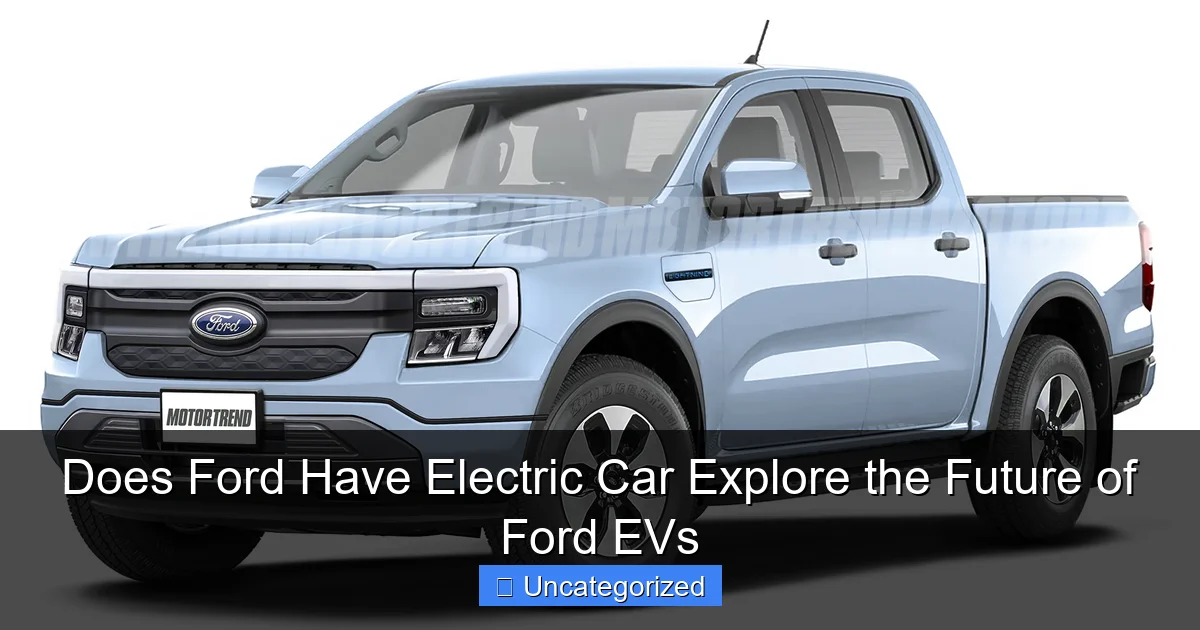
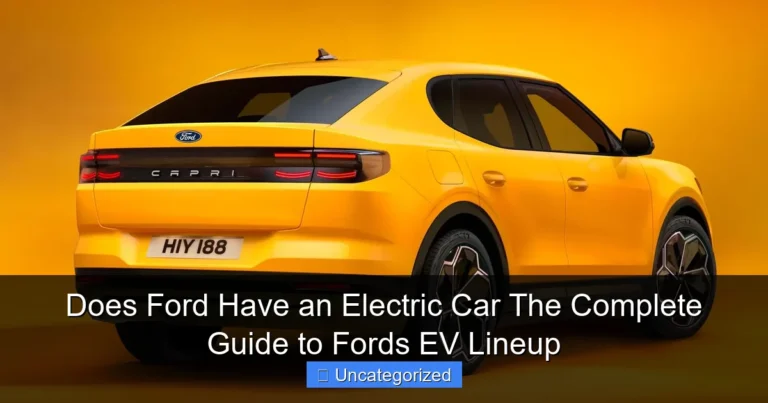
Featured image for does ford have electric car
Image source: motortrend.com
Yes, Ford has fully embraced the electric revolution with a growing lineup of innovative EVs, including the popular Mustang Mach-E, F-150 Lightning, and E-Transit van. With bold investments in battery technology and charging infrastructure, Ford is positioning itself as a major player in the future of sustainable transportation.
Key Takeaways
- Ford offers multiple EVs: Models like Mustang Mach-E and F-150 Lightning lead their electric lineup.
- Expanding EV production: Ford plans to scale EV output to 2 million annually by 2026.
- Strong charging network: Access to 10,000+ stations via BlueOval Charge Network for seamless travel.
- Affordable options coming: New EV platform targets lower prices for broader customer appeal.
- Commercial EVs available: E-Transit van meets business needs with zero-emission efficiency.
- Tech-focused features: Over-the-air updates and Pro Power Onboard enhance EV ownership experience.
📑 Table of Contents
- The Electrifying Evolution of Ford: A New Era of Mobility
- Ford’s Electric Vehicle Lineup: From Mustang to F-150
- Ford’s Electric Platforms and Battery Technology
- Charging Infrastructure and Ownership Experience
- Market Strategy and Sustainability Goals
- Future Outlook: What’s Next for Ford EVs?
- Conclusion: Ford’s Electric Future Is Now
The Electrifying Evolution of Ford: A New Era of Mobility
For over a century, Ford Motor Company has been a cornerstone of the automotive industry, synonymous with innovation, durability, and American engineering. From the iconic Model T to the rugged F-Series trucks, Ford has consistently shaped the way we drive. But as the world shifts toward sustainability and cleaner transportation, one question is on the minds of drivers, investors, and environmental advocates alike: Does Ford have electric cars? The answer is a resounding yes—and Ford is not just dipping its toes into the electric vehicle (EV) market. It is charging full speed ahead, reimagining its legacy for a zero-emission future.
Ford’s journey into the realm of electric vehicles marks a pivotal transformation. With global emissions regulations tightening, consumer demand for sustainable options rising, and competitors like Tesla, GM, and Hyundai accelerating their EV portfolios, Ford has responded with bold investments, new platforms, and a clear roadmap. The company is investing over $50 billion in electrification through 2026, aiming to produce 2 million EVs annually by 2026. This isn’t just about keeping up—it’s about leading. In this comprehensive guide, we’ll explore Ford’s electric vehicle lineup, technological advancements, charging infrastructure, market strategy, and what the future holds for Ford EVs.
Ford’s Electric Vehicle Lineup: From Mustang to F-150
Ford’s foray into electric vehicles began with cautious steps but has evolved into a full-throttle sprint. The automaker now offers a diverse range of EVs that cater to different consumer needs—from performance enthusiasts to commercial fleet operators. Let’s dive into the current and upcoming models that define Ford’s electric revolution.
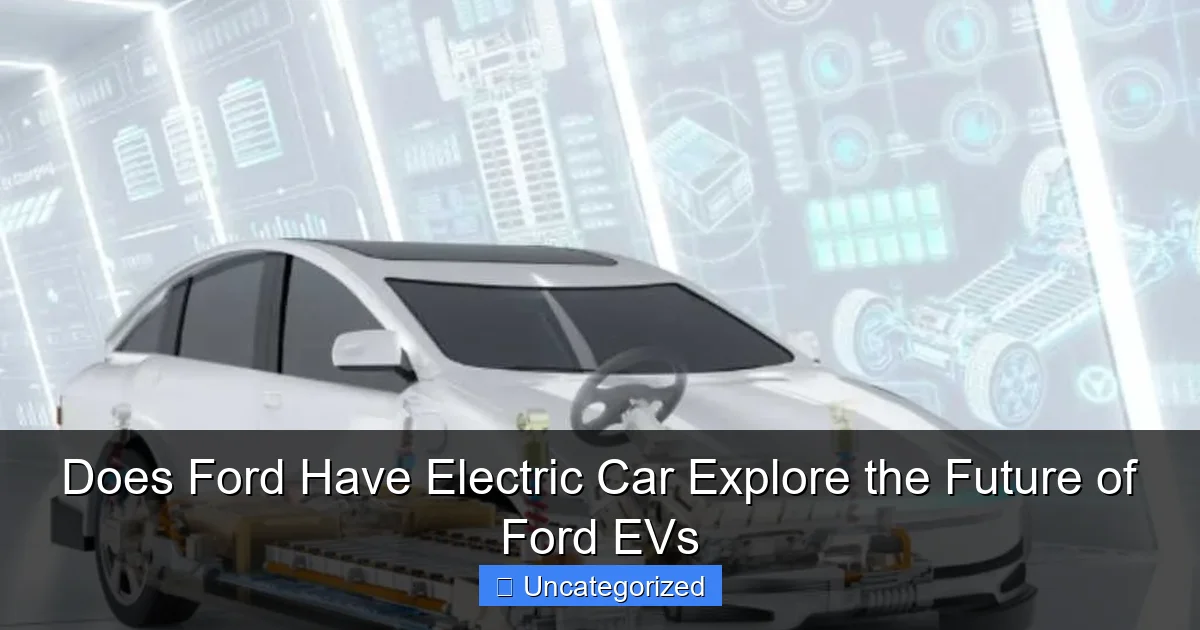
Visual guide about does ford have electric car
Image source: thedailyautomotive.com
The Ford Mustang Mach-E: A Performance SUV with a Legendary Name
Launched in 2020, the Ford Mustang Mach-E was Ford’s first all-electric SUV and a bold statement that the Mustang brand is no longer confined to muscle cars. With a design that echoes the Mustang’s aggressive styling and performance pedigree, the Mach-E delivers up to 314 miles of EPA-estimated range (on the Premium RWD model), 0-60 mph times as low as 3.5 seconds (in GT Performance Edition), and available all-wheel drive.
- Target Audience: Urban professionals, tech-savvy drivers, and performance seekers.
- Key Features: SYNC 4A infotainment with a 15.5-inch touchscreen, Ford Co-Pilot360 driver-assist suite, hands-free driving (BlueCruise), and over-the-air (OTA) updates.
- Real-World Tip: Opt for the Extended Range battery if you frequently travel long distances. The Mach-E’s fast-charging capability adds up to 61 miles in just 10 minutes on a DC fast charger.
The Mach-E has been a commercial and critical success, earning multiple awards including the 2021 North American Utility Vehicle of the Year. It’s available in multiple trims: Select, Premium, GT, and California Route 1, with pricing starting around $43,000 before incentives.
Ford F-150 Lightning: The Electric Workhorse
The Ford F-150 Lightning is perhaps the most significant EV in Ford’s lineup. As the electric version of America’s best-selling vehicle for over 40 years, the Lightning is designed to be a workhorse—not just a commuter. With dual electric motors, the standard model delivers 452 horsepower and 775 lb-ft of torque, while the extended-range version bumps power to 580 hp.
- Range: Up to 320 miles (Extended Range AWD).
- Payload & Towing: 2,235 lbs payload capacity, 10,000 lbs towing (with Max Trailer Tow Package).
- Unique Feature: The Mega Power Frunk—a 14.1 cu. ft. front trunk that can power tools, charge devices, and even serve as an emergency generator (Pro Power Onboard up to 9.6 kW).
Ford has positioned the F-150 Lightning not just as a truck for contractors and tradespeople but also as a family vehicle with advanced tech, including a 12-inch digital instrument cluster and a 15.5-inch SYNC 4A touchscreen. With a starting price of around $50,000 (before incentives), it’s a compelling option for both commercial and personal use.
E-Transit: Electrifying the Workforce
For businesses, Ford’s E-Transit is a game-changer. As the electric version of the best-selling cargo van in the U.S., the E-Transit offers a range of up to 126 miles (on the low-roof, short-wheelbase model), making it ideal for urban delivery, service fleets, and last-mile logistics.
- Payload: Up to 3,800 lbs.
- Charging: 150 kW DC fast charging adds 45 miles in 10 minutes.
- Smart Fleet Integration: Ford Pro Telematics and Ford Pro Charging solutions help businesses manage energy use and reduce downtime.
Ford has already secured major fleet contracts with companies like Amazon, which ordered 100,000 E-Transit vans—the largest single EV order in history. This demonstrates Ford’s commitment to electrifying not just passenger vehicles, but the entire commercial vehicle ecosystem.
Upcoming Models: The Ford Explorer EV and More
Ford is expanding its EV portfolio beyond current offerings. The Ford Explorer EV, expected in 2025, will target the popular midsize SUV segment with a range of over 300 miles and advanced autonomous features. Additionally, Ford plans to launch a next-generation electric pickup (codenamed “Project T3”) by 2025, featuring a new modular EV platform called the Flexible Modular Electric Architecture (FMEA).
Other rumored or confirmed models include:
- An electric version of the Bronco SUV.
- A smaller, affordable EV (possibly under $30,000) to compete with the Chevrolet Equinox EV and Tesla Model 2.
- An electric version of the Transit Connect for compact urban deliveries.
These upcoming models reflect Ford’s strategy to electrify its entire vehicle lineup by 2030 in Europe and 2035 globally.
Ford’s Electric Platforms and Battery Technology
Behind every successful EV is a robust technological foundation. Ford has invested heavily in developing proprietary platforms and battery systems to ensure performance, safety, and scalability.
The Global EV Platforms: FMEA and BEV3
Ford’s future EVs are built on two key platforms:
- Flexible Modular Electric Architecture (FMEA): Designed for next-generation vehicles (starting with the 2025 electric pickup), FMEA supports multiple body styles, wheelbases, and powertrains. It’s optimized for high-volume production and integrates advanced software-defined vehicle capabilities.
- BEV3 (Battery Electric Vehicle 3): A dedicated EV platform used for the Mustang Mach-E and E-Transit. It features a flat battery pack, rear- or all-wheel drive configurations, and supports fast charging and bidirectional power flow.
These platforms allow Ford to scale production efficiently and reduce costs through shared components and manufacturing processes.
Battery Technology: LFP and NCM Cells
Ford is diversifying its battery strategy to reduce reliance on rare materials and improve sustainability:
- Nickel Cobalt Manganese (NCM): Used in high-performance models like the Mach-E GT and F-150 Lightning Extended Range. Offers high energy density and long range.
- Lithium Iron Phosphate (LFP): Adopted for standard-range versions of the Mach-E and F-150 Lightning. LFP batteries are more thermally stable, last longer (up to 400,000 miles), and use no cobalt or nickel—making them safer and more sustainable.
Ford has partnered with SK On to build three battery plants in the U.S. (Kentucky and Tennessee) under the BlueOval SK joint venture. These facilities will produce both NCM and LFP batteries, supporting Ford’s goal of 40 GWh of annual battery production by 2026.
Software and Connectivity: The Brain of Ford EVs
Modern EVs are as much about software as they are about hardware. Ford’s SYNC 4A system offers cloud-connected navigation, voice control via Alexa, and seamless smartphone integration (Apple CarPlay, Android Auto). More importantly, Ford EVs receive over-the-air (OTA) updates, which improve performance, fix bugs, and add new features—just like a smartphone.
For example, Ford has used OTA updates to:
- Increase the Mach-E’s range by 10 miles.
- Improve regenerative braking responsiveness.
- Add new BlueCruise hands-free driving zones.
This continuous improvement model ensures that Ford EVs get better over time, enhancing long-term ownership value.
Charging Infrastructure and Ownership Experience
One of the biggest barriers to EV adoption is charging anxiety. Ford is addressing this with a comprehensive charging strategy that combines home, public, and fleet solutions.
Ford Charge Station Pro: Home Charging Made Easy
Every Ford EV comes with the Ford Charge Station Pro, a Level 2 (240V) home charger that delivers up to 48 amps and can add up to 29 miles of range per hour. Installation is supported by Ford’s partner, Qmerit, which handles site assessment, permitting, and professional installation.
- Tip: Schedule charging during off-peak hours (e.g., 10 PM–6 AM) to save on electricity bills.
- Smart Features: The charger integrates with the FordPass app, allowing you to monitor charging status, set schedules, and receive alerts.
BlueOval Charge Network: Access to 19,500+ Chargers
Ford EV owners gain free access to the BlueOval Charge Network, which includes:
- 19,500+ public charging stations (including 800+ DC fast chargers).
- Partnerships with ChargePoint, Electrify America, EVgo, and others.
- Seamless roaming—no need to download multiple apps or carry RFID cards.
Ford also offers a FordPass Power My Trip feature, which automatically plans charging stops on long journeys based on your vehicle’s range, traffic, and weather.
Bidirectional Charging: Power Your Home and Community
The F-150 Lightning’s Intelligent Backup Power system allows the truck to power your home during outages. With a Ford Charge Station Pro and a Home Integration System, the Lightning can supply up to 9.6 kW of power—enough to run essential appliances for three days (or 10 days with rationing).
- Real-World Example: During Hurricane Ian, Ford tested this system with homeowners in Florida, demonstrating its reliability and life-saving potential.
- Future Use: Ford is exploring vehicle-to-grid (V2G) technology, where EVs can feed electricity back into the grid during peak demand, helping stabilize energy systems.
Market Strategy and Sustainability Goals
Ford’s EV strategy is not just about selling cars—it’s about transforming the company into a sustainable, technology-driven mobility leader.
Investment and Production: The $50 Billion Commitment
Ford’s Model e division (its EV and digital services arm) is central to this transformation. With $50 billion invested through 2026, Ford is:
- Building four new EV assembly plants (including BlueOval City in Tennessee).
- Retooling existing factories (e.g., Rouge Electric Vehicle Center for F-150 Lightning).
- Developing a global supply chain for batteries and raw materials.
The company aims to produce 2 million EVs annually by 2026, capturing a significant share of the global EV market.
Sustainability and Circularity
Ford is committed to carbon neutrality by 2050 and has set interim goals:
- 100% renewable energy for all manufacturing by 2035.
- Use of recycled materials in EV batteries (e.g., recycled cobalt and nickel).
- End-of-life battery recycling through partnerships with Redwood Materials.
Additionally, Ford is exploring sustainable materials like soy-based foam, recycled plastics, and even coffee chaff in interior components.
Consumer Incentives and Government Partnerships
To accelerate adoption, Ford is leveraging federal and state incentives:
- Eligible for the U.S. Federal EV Tax Credit (up to $7,500 for the F-150 Lightning and E-Transit).
- State rebates (e.g., $2,000 in California, $1,000 in Colorado).
- Partnerships with utilities for discounted charging rates.
Ford also offers Ford Credit EV Financing with low APRs and flexible terms, making EVs more accessible to a broader audience.
Future Outlook: What’s Next for Ford EVs?
The future of Ford EVs is bright—and fast-moving. Here’s what to expect in the coming years:
Next-Generation Vehicles (2025–2030)
- Project T3 Pickup: A revolutionary electric truck with a 500-mile range, advanced autonomous driving, and a modular interior.
- Affordable EVs: A $30,000 compact SUV to compete in the mass market.
- Autonomous Fleets: Ford is testing self-driving technology with Argo AI (acquired in 2023) for ride-hailing and delivery services.
Global Expansion
Ford plans to launch EVs in key markets like China, India, and Southeast Asia. The E-Transit, for example, is already available in Europe and will expand to other regions.
Innovation Beyond Cars
Ford is exploring:
- Electric micro-mobility: e-bikes and e-scooters.
- EV-as-a-Service: Subscription models for urban drivers.
- AI and Predictive Maintenance: Using data to prevent breakdowns and optimize performance.
Data Table: Ford EV Models Comparison (2024)
| Model | Starting Price | EPA Range (Max) | Horsepower (Max) | Key Feature |
|---|---|---|---|---|
| Mustang Mach-E | $42,995 | 314 miles | 480 hp (GT) | BlueCruise Hands-Free Driving |
| F-150 Lightning | $49,995 | 320 miles | 580 hp | Intelligent Backup Power (9.6 kW) |
| E-Transit | $51,095 | 126 miles | 266 hp | Pro Power Onboard (2.4 kW) |
Conclusion: Ford’s Electric Future Is Now
So, does Ford have electric cars? Absolutely—and they’re not just catching up; they’re setting the pace. From the sporty Mustang Mach-E to the rugged F-150 Lightning and the versatile E-Transit, Ford has built a compelling EV portfolio that blends performance, utility, and innovation. With cutting-edge battery technology, a growing charging network, and a clear vision for sustainability, Ford is proving that legacy automakers can lead the electric revolution.
Whether you’re a daily commuter, a contractor, a fleet manager, or an eco-conscious driver, Ford’s EVs offer practical, powerful, and future-ready solutions. The company’s $50 billion investment, global expansion plans, and commitment to software-driven experiences signal that Ford is not just adapting to the electric age—it’s helping define it.
The road ahead is electric, and Ford is driving it. As charging infrastructure improves, battery costs decline, and consumer awareness grows, Ford EVs will become even more accessible and desirable. The future of mobility is here, and Ford is at the wheel—charged, ready, and accelerating toward a cleaner, smarter world.
Frequently Asked Questions
Does Ford have electric cars available in 2024?
Yes, Ford offers several fully electric vehicles (EVs) in 2024, including the Mustang Mach-E, F-150 Lightning, and E-Transit van. These models showcase Ford’s commitment to expanding its EV lineup and competing in the growing electric car market.
What is Ford’s most popular electric car?
The Mustang Mach-E is Ford’s best-selling electric car, combining SUV practicality with sporty styling inspired by the iconic Mustang. It offers multiple battery options and ranges up to 314 miles on a single charge.
Does Ford have electric car plans for future models?
Ford has aggressive plans to expand its electric car portfolio, aiming for 2 million global EV production by 2026. Upcoming models include the Ford Explorer EV and a next-gen electric pickup truck built at BlueOval City.
How does the Ford F-150 Lightning compare to gas-powered trucks?
The F-150 Lightning, Ford’s electric truck, delivers instant torque, 580 horsepower, and a range of 240–320 miles. Unlike gas-powered trucks, it doubles as a mobile power source with Pro Power Onboard for tools or emergency backup.
Are Ford electric cars eligible for tax credits?
Yes, select Ford electric cars like the F-150 Lightning and E-Transit may qualify for federal tax credits up to $7,500 in the U.S. Eligibility depends on battery sourcing and MSRP requirements under the Inflation Reduction Act.
Does Ford have electric car charging solutions?
Ford partners with Electrify America to provide 12 months of free fast charging for new EV owners. The FordPass app also helps locate charging stations and manage home charging setups for convenience.