Does Ford Make a Fully Electric Car Explore the EV Lineup
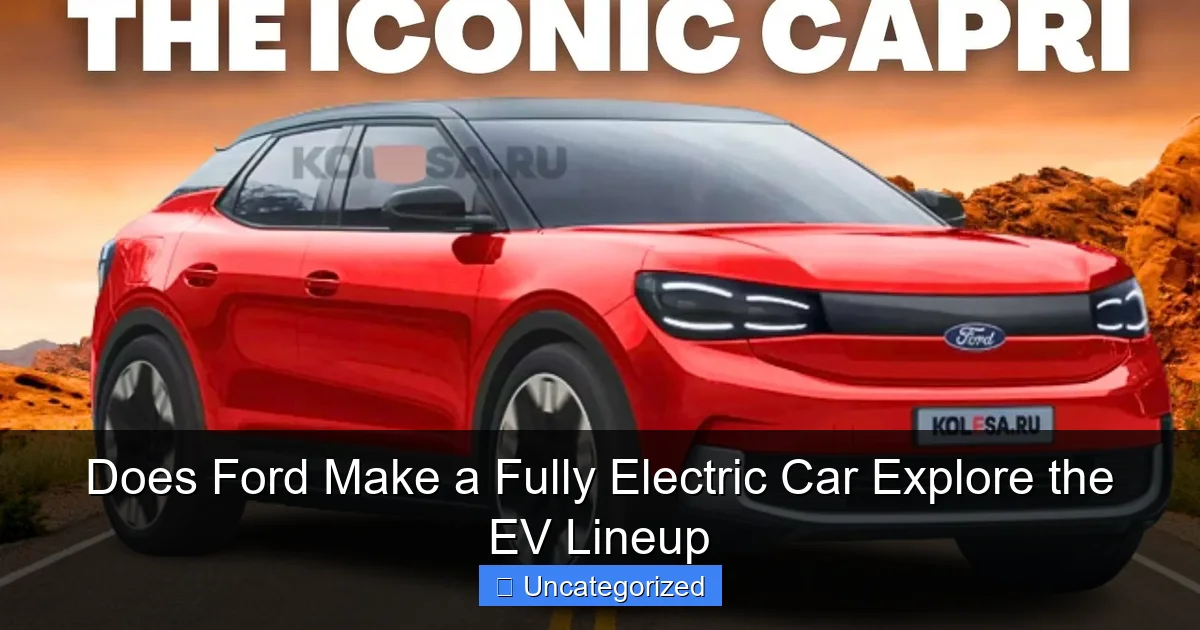
Featured image for does ford make a fully electric car
Image source: i.ytimg.com
Yes, Ford makes fully electric cars, and its EV lineup is growing fast with compelling models like the Mustang Mach-E and F-150 Lightning. These vehicles combine iconic Ford performance with zero-emission driving, offering range, tech, and versatility for modern drivers.
Key Takeaways
- Ford offers multiple fully electric vehicles including the Mustang Mach-E and F-150 Lightning.
- Zero tailpipe emissions with Ford’s EVs, ideal for eco-conscious drivers.
- Competitive range options from 220 to over 300 miles per charge.
- Fast-charging capability available across all models, reducing downtime significantly.
- Advanced tech features like over-the-air updates and driver-assist systems standard.
- Federal tax credits apply to eligible models, lowering overall ownership cost.
📑 Table of Contents
- Does Ford Make a Fully Electric Car? A Deep Dive into Ford’s EV Revolution
- Ford’s Commitment to Electrification: Beyond the Hype
- The Fully Electric Ford Lineup: Models You Can Buy Today
- Charging Solutions: How Ford Keeps You Powered Up
- Technology and Innovation: What Sets Ford EVs Apart
- The Road Ahead: Ford’s Vision for the Future of Electric Mobility
Does Ford Make a Fully Electric Car? A Deep Dive into Ford’s EV Revolution
For decades, Ford Motor Company has been synonymous with American automotive innovation, from the iconic Model T to the rugged F-150. But as the world shifts toward sustainable transportation, many are asking: Does Ford make a fully electric car? The answer is a resounding yes. In recent years, Ford has aggressively expanded its electric vehicle (EV) lineup, signaling a bold commitment to electrification. With a vision to lead the EV market, Ford is investing billions in battery technology, charging infrastructure, and next-generation electric platforms. This transformation is not just a response to market trends—it’s a strategic pivot to ensure Ford remains a dominant force in the 21st-century automotive landscape.
The transition to electric vehicles is no longer a niche experiment; it’s a global imperative. Governments are enacting stricter emissions regulations, consumers are demanding cleaner transportation options, and competitors like Tesla, Rivian, and General Motors are accelerating their own EV programs. Ford, a company with over 120 years of manufacturing expertise, is leveraging its scale, legacy, and innovation to deliver EVs that combine performance, practicality, and affordability. Whether you’re a long-time Ford fan or an EV newcomer, the brand’s electric offerings are designed to meet diverse needs—from daily commuters to adventure-seeking families. In this comprehensive guide, we’ll explore Ford’s fully electric lineup, the technology behind their EVs, their charging solutions, and what sets them apart in a rapidly evolving market.
Ford’s Commitment to Electrification: Beyond the Hype
The $50 Billion Investment and Ford+ Plan
Ford’s electrification strategy is backed by a massive financial commitment. In 2021, the company announced a $50 billion investment in EVs and battery production through 2026, part of its broader Ford+ Plan. This plan aims to double Ford’s annual EV production to 2 million units by 2026. The investment includes:
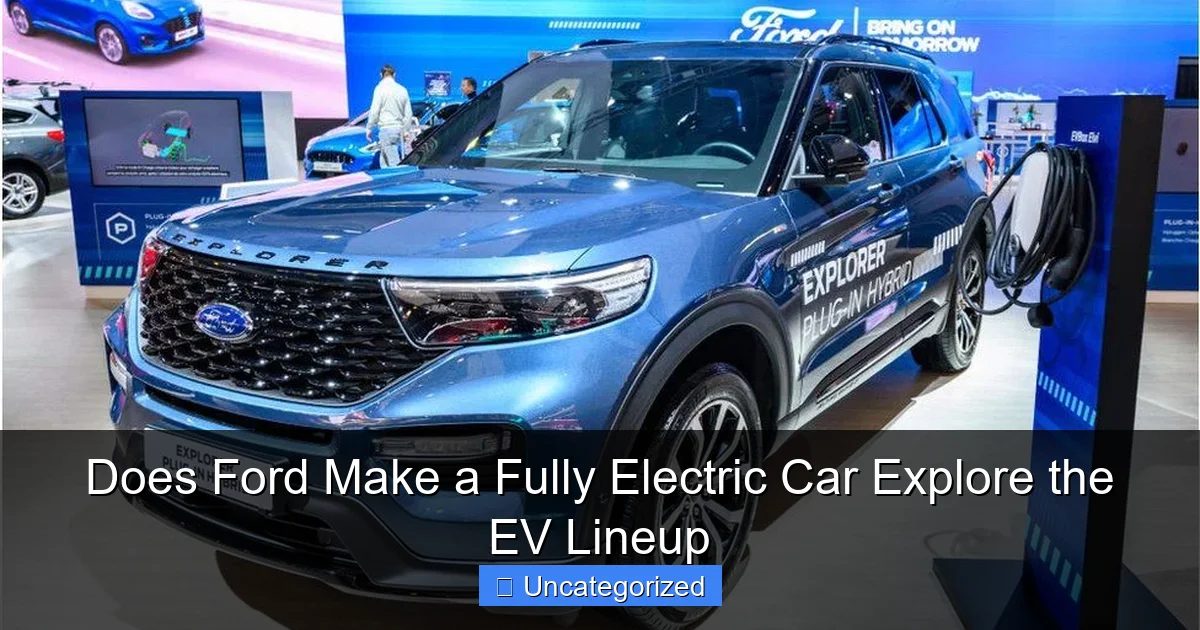
Visual guide about does ford make a fully electric car
Image source: ichef.bbci.co.uk
- Building four new battery plants in the U.S. (Kentucky and Tennessee) through a joint venture with SK On.
- Developing the BlueOval SK battery hub, which will supply batteries for Ford and Lincoln EVs.
- Establishing the BlueOval City mega-campus in Tennessee, a 3,600-acre facility that will produce next-gen EVs and batteries.
These investments are not just about manufacturing—they’re about creating a vertically integrated ecosystem. By controlling battery production, Ford reduces reliance on third-party suppliers and ensures quality and scalability.
Carbon Neutrality Goals and Sustainability
Ford’s electrification is also tied to its environmental commitments. The company aims to achieve carbon neutrality by 2050, with interim goals to reduce manufacturing emissions by 76% per vehicle by 2035 (compared to 2017 levels). Key initiatives include:
- Using 100% renewable energy in global manufacturing by 2035.
- Recycling 95% of manufacturing waste by 2030.
- Designing EVs with recyclable materials, such as the F-150 Lightning’s battery pack, which uses recycled cobalt.
For example, the Mustang Mach-E’s interior incorporates sustainable materials like vegan leather and recycled plastics, appealing to eco-conscious buyers.
Ford’s EV Platforms: Flexible and Scalable
Ford is developing two dedicated EV platforms to underpin its electric lineup:
- Global Electric Flexible (GEF): A modular platform for SUVs and trucks, supporting rear-wheel, all-wheel, and four-wheel drive configurations.
- Advanced Electric Platform: A next-gen platform for future vehicles, promising longer range, faster charging, and advanced software integration.
These platforms allow Ford to scale production efficiently while tailoring vehicles to specific markets and consumer preferences.
The Fully Electric Ford Lineup: Models You Can Buy Today
Mustang Mach-E: The Electric SUV with Muscle Car DNA
The Mustang Mach-E is Ford’s flagship electric SUV, blending the iconic Mustang nameplate with modern EV technology. Launched in 2021, the Mach-E offers:
- Range: Up to 314 miles (EPA-estimated) with the extended-range battery and rear-wheel drive.
- Performance: The Mach-E GT Performance Edition hits 60 mph in 3.5 seconds, rivaling Tesla’s Model Y Performance.
- Tech: SYNC 4A infotainment with a 15.5-inch touchscreen, over-the-air updates, and BlueCruise hands-free driving (on select highways).
Tip: Opt for the California Route 1 trim if range is your priority—it delivers the best efficiency with a minimalist interior.
F-150 Lightning: The Electric Workhorse
The F-150 Lightning is Ford’s electric take on America’s best-selling vehicle. It retains the F-150’s ruggedness while adding EV perks:
- Range: Up to 320 miles (extended-range battery).
- Power: 580 horsepower and 775 lb-ft torque, enabling a 0-60 mph time of 4.0 seconds.
- Innovation: Mega Power Frunk (a 14.1-cubic-foot front trunk), Pro Power Onboard (up to 9.6 kW for tools/gear), and bidirectional charging to power homes during outages.
Example: A contractor can use the Lightning’s Pro Power Onboard to run a circular saw or charge tools on a job site, eliminating the need for a generator.
E-Transit: The Electric Work Van for Businesses
The E-Transit is Ford’s answer to the growing demand for electric commercial vehicles. Key features:
- Range: 126 miles (ideal for urban delivery routes).
- Cargo Space: Up to 487.3 cubic feet, matching the gas-powered Transit.
- Cost Savings: 40% lower maintenance costs than gas vans, with federal tax credits of up to $7,500.
Tip: Pair the E-Transit with Ford’s Ford Pro Telematics to monitor fleet efficiency and optimize charging schedules.
Future Models: What’s Coming Next?
Ford has teased several upcoming EVs:
- Explorer EV: A fully electric version of the popular SUV, expected by 2025.
- Lincoln Nautilus EV: A luxury electric crossover with advanced autonomous features.
- Electric Puma: A compact SUV for European markets.
These models will leverage Ford’s new EV platforms, promising longer range and lower costs.
Charging Solutions: How Ford Keeps You Powered Up
BlueOval Charge Network: Access to 10,000+ Fast Chargers
Ford addresses one of the biggest EV concerns—charging—with the BlueOval Charge Network. This partnership with Electrify America, EVgo, and other providers gives Ford EV owners access to:
- Over 10,000 fast chargers across the U.S. and Canada.
- Seamless payment via the FordPass app (no extra fees).
- Real-time charger availability and navigation.
Example: A Mach-E owner on a road trip can use FordPass to locate a 150 kW charger, plug in, and get 61 miles of range in 10 minutes.
Home Charging Made Easy
Ford offers two home charging options:
- Ford Connected Charge Station: A 48-amp Level 2 charger (installs in 4-6 hours) that adds 28 miles of range per hour.
- Ford Charge Station Pro: An 80-amp charger for F-150 Lightning owners, enabling bidirectional charging to power a home for up to 3 days during outages.
Tip: Install the charger during off-peak hours (e.g., overnight) to save on electricity costs.
Onboard Charging Capabilities
All Ford EVs support:
- DC Fast Charging: Up to 150 kW (Mach-E, Lightning) or 170 kW (future models), adding 50-60 miles in 10 minutes.
- Regenerative Braking: Recaptures energy during deceleration, extending range by up to 10%.
Data Table: Ford EV Charging Times (Extended-Range Models)
| Model | Level 2 (240V) Charging Time (0-100%) | DC Fast Charging (10-80%) | Range Added in 10 Minutes (DC) |
|---|---|---|---|
| Mustang Mach-E | 8.5 hours | 45 minutes | 61 miles |
| F-150 Lightning | 10 hours | 41 minutes | 54 miles |
| E-Transit | 8 hours | 30 minutes | 45 miles |
Technology and Innovation: What Sets Ford EVs Apart
SYNC 4A and Over-the-Air (OTA) Updates
Ford’s SYNC 4A infotainment system is a standout feature, offering:
- A 15.5-inch touchscreen with intuitive controls.
- Natural voice recognition (“Hey Ford” commands).
- OTA updates that add new features (e.g., improved battery management, new BlueCruise capabilities).
Example: A 2023 Mach-E received an OTA update that boosted range by 5% through optimized battery software.
BlueCruise: Hands-Free Driving
Ford’s BlueCruise is a Level 2 autonomous driving system that enables hands-free operation on over 130,000 miles of mapped highways. It includes:
- Adaptive cruise control with lane centering.
- Driver-facing camera to ensure attention (no “driver asleep” issues).
- Automatic lane changes with turn signal activation.
Tip: Activate BlueCruise on highways with clear lane markings and minimal traffic for the best experience.
Bidirectional Charging: Power Your Home or Grid
The F-150 Lightning’s Intelligent Backup Power system can power a home for up to 10 days during outages (with a 131-kWh battery). Key benefits:
- Seamless switch to vehicle power during grid outages.
- Integration with home solar systems.
- Potential revenue by selling excess power back to the grid (vehicle-to-grid, or V2G).
Example: A Texas homeowner used their Lightning to power their house during a winter storm, avoiding a $5,000 generator purchase.
The Road Ahead: Ford’s Vision for the Future of Electric Mobility
Scaling Production and Lowering Costs
Ford aims to make EVs affordable for the masses. By 2026, the company expects:
- EV production costs to drop by 30% through battery innovations (e.g., lithium iron phosphate cells).
- New entry-level EVs priced under $30,000.
- Expansion of the BlueOval Charge Network to 15,000 chargers.
Data Point: Ford’s Tennessee battery plant will produce 43 gigawatt-hours annually—enough for 500,000 EVs per year.
Expanding Global Reach
While Ford’s EV lineup is U.S.-focused now, the company plans to:
- Launch the Explorer EV in Europe by 2025.
- Introduce the Ford Puma EV in the UK and Germany.
- Partner with local charging providers in Asia and South America.
Community and Ecosystem Building
Ford is fostering an EV community through:
- Ford EV Live: Virtual and in-person events to educate owners on charging, maintenance, and technology.
- FordPass Rewards: Loyalty program with points for charging, service, and referrals.
- Ford Pro Solutions: Fleet management tools for businesses adopting EVs.
Ford’s journey into the electric era is more than a product shift—it’s a transformation of the entire brand. From the Mustang Mach-E’s sporty appeal to the F-150 Lightning’s workhorse versatility, Ford is proving that electric vehicles can be powerful, practical, and profitable. With a robust charging network, cutting-edge technology, and a clear roadmap for the future, Ford is not just keeping up with the EV revolution—it’s leading it. Whether you’re a first-time EV buyer or a long-time Ford enthusiast, the brand’s electric lineup offers something for everyone. The question “Does Ford make a fully electric car?” is no longer just answered—it’s demonstrated every day on roads, worksites, and homes across the country. As Ford continues to innovate and expand, one thing is certain: the future of Ford is electric.
Frequently Asked Questions
Does Ford make a fully electric car?
Yes, Ford offers several fully electric vehicles (EVs) as part of its growing EV lineup. Models like the Mustang Mach-E, F-150 Lightning, and E-Transit showcase Ford’s commitment to electrification.
What electric cars does Ford currently sell?
Ford’s current EV lineup includes the Mustang Mach-E SUV, the F-150 Lightning pickup truck, and the E-Transit commercial van. Each model is designed to meet diverse needs, from daily commuting to heavy-duty work.
Is the Ford F-150 Lightning a fully electric car?
Yes, the F-150 Lightning is Ford’s fully electric version of America’s best-selling truck. It delivers impressive power, range, and innovative features like Pro Power Onboard for worksites or emergencies.
How far can Ford’s fully electric cars go on a single charge?
Range varies by model: the Mustang Mach-E offers up to 314 miles, the F-150 Lightning reaches up to 320 miles, and the E-Transit provides up to 159 miles. Actual range depends on driving conditions and battery configuration.
Does Ford plan to expand its EV lineup further?
Absolutely. Ford aims to produce 2 million EVs annually by 2026, with new models like the upcoming all-electric Explorer and Puma Gen-E in development. The brand is heavily investing in its electric future.
Are Ford’s electric vehicles eligible for federal tax credits?
Some Ford EVs, like the Mustang Mach-E and F-150 Lightning, may qualify for federal tax credits under the Inflation Reduction Act. Eligibility depends on battery sourcing, MSRP, and buyer income requirements.