Does Ford Make Electric Cars Explore the Future of Ford EVs
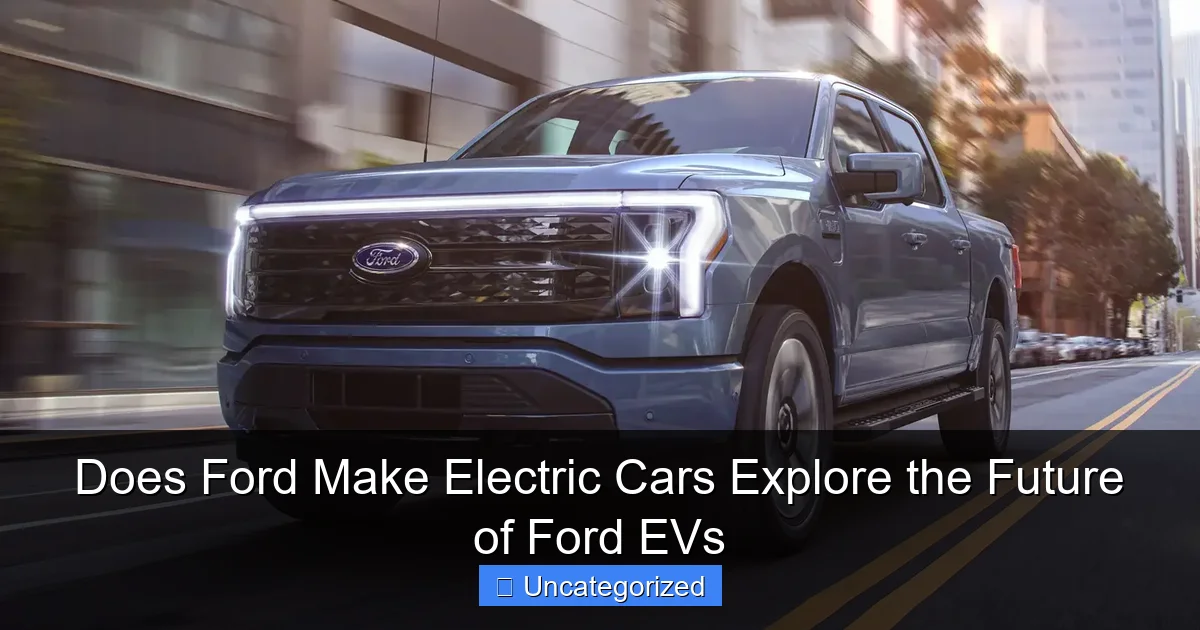
Featured image for does ford make electric cars
Image source: autocar.co.uk
Yes, Ford is fully committed to electric vehicles (EVs), with a bold lineup that includes the Mustang Mach-E, F-150 Lightning, and E-Transit van. The automaker is investing $50 billion in EV development through 2026, aiming to produce 2 million EVs annually and lead the shift toward sustainable transportation. Ford isn’t just making electric cars—it’s redefining its future with innovation, performance, and American-made EV power.
Key Takeaways
- Ford offers multiple EVs: Models like Mustang Mach-E and F-150 Lightning are available now.
- Investing $50B in EVs: Ford plans 2 million annual EV production by 2026.
- Expanding global EV lineup: 9 new electric vehicles launching worldwide by 2024.
- Charging network access: Ford EVs work with Tesla Superchargers via adapter or native NACS.
- Home charging solutions: Ford provides Level 2 chargers and installation support for convenience.
📑 Table of Contents
- Does Ford Make Electric Cars? A Deep Dive Into the Blue Oval’s EV Revolution
- Ford’s Electric Evolution: From Hybrid Pioneers to Full EV Commitment
- Ford’s Current Electric Vehicle Lineup: Power, Performance, and Practicality
- Under the Hood: Ford’s EV Technology and Innovation
- Comparing Ford EVs to the Competition: Where Ford Stands Out
- The Road Ahead: Ford’s Vision for a Sustainable, Electric Future
- Conclusion: Ford Is All In on Electric—And It’s Just Getting Started
Does Ford Make Electric Cars? A Deep Dive Into the Blue Oval’s EV Revolution
In an era defined by climate concerns, technological innovation, and shifting consumer preferences, the automotive industry is undergoing a seismic transformation. One of the most pivotal shifts has been the rise of electric vehicles (EVs), with nearly every major automaker racing to electrify their fleets. Among these industry giants, Ford Motor Company stands out—not just for its century-long legacy of building iconic American vehicles, but for its bold, strategic pivot toward a fully electric future. So, does Ford make electric cars? The answer is a resounding yes, and the company isn’t just dipping its toes into the EV waters—it’s diving in headfirst.
From the groundbreaking Ford Mustang Mach-E to the rugged F-150 Lightning and the versatile E-Transit van, Ford has launched a diverse lineup of electric vehicles that blend performance, utility, and innovation. With a $50 billion investment in electrification by 2026 and plans to produce over 2 million EVs annually by 2026, Ford is positioning itself as a serious contender in the global EV market. This blog post explores Ford’s electric journey, the vehicles leading the charge, the technology behind them, and what the future holds for one of America’s most storied automakers.
Ford’s Electric Evolution: From Hybrid Pioneers to Full EV Commitment
Ford’s foray into electrification didn’t begin with the Mach-E or Lightning. The company has been quietly laying the groundwork for years, starting with hybrid and plug-in hybrid (PHEV) models. However, the turning point came in 2021, when Ford announced its “Ford+” plan, a comprehensive strategy to transform the company into a leader in electric, connected, and autonomous vehicles.
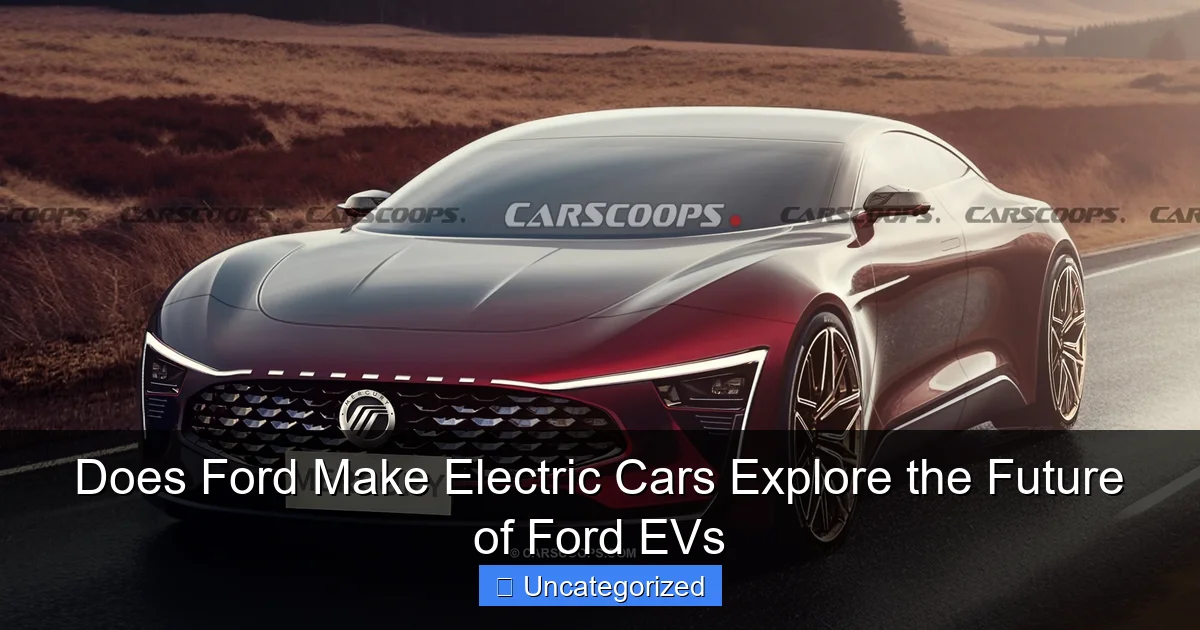
Visual guide about does ford make electric cars
Image source: carscoops.com
Early Steps: Hybrids and PHEVs
Ford’s first major step into electrification was the Ford Escape Hybrid, introduced in 2004—the first hybrid SUV from a major U.S. automaker. This was followed by the Ford Fusion Hybrid and the Fusion Energi (a plug-in hybrid), which gained popularity for their fuel efficiency and reliability. These models proved that Ford could engineer hybrid systems that didn’t compromise performance or practicality.
However, these early efforts were transitional. Ford recognized that hybrids were a bridge to full electrification, not the end goal. By 2018, the company began signaling its intent to go all-in on EVs, culminating in the 2021 announcement of the “Ford+” strategy, which allocated $30 billion (later expanded to $50 billion) toward EV development, battery production, and software integration.
The Ford+ Plan: A Roadmap to 2026
The Ford+ plan is built on three pillars: electrification, connectivity, and autonomy. Under this strategy, Ford aims to:
- Produce 2 million EVs annually by 2026
- Launch 16 new electric models globally by 2025
- Establish battery plants in the U.S. and Europe through its BlueOval SK joint venture with SK On
- Develop its own proprietary battery technology, including LFP (lithium iron phosphate) batteries for cost-effective, long-cycle-life vehicles
This aggressive roadmap underscores Ford’s commitment to not just compete in the EV space, but to lead it—especially in the truck and SUV segments, where the company has traditionally dominated.
Why Now? Market and Regulatory Pressures
Ford’s accelerated EV push isn’t just about innovation—it’s also a response to external forces. Stricter emissions regulations in the U.S., Europe, and China, along with rising consumer demand for sustainable transportation, have made electrification a necessity. Additionally, competitors like Tesla, Rivian, and even General Motors are already capturing market share in key segments. Ford’s response? To leverage its strengths in manufacturing, brand loyalty, and commercial vehicle expertise to build EVs that resonate with real-world users.
Ford’s Current Electric Vehicle Lineup: Power, Performance, and Practicality
Ford’s current EV lineup is designed to appeal to a wide range of consumers—from urban commuters to rural tradespeople and performance enthusiasts. Each model combines Ford’s engineering heritage with cutting-edge electric technology.
Ford Mustang Mach-E: The Electric Pony Car
The Mustang Mach-E (2021–present) was Ford’s first true all-electric vehicle and a bold statement: the Mustang brand is evolving beyond internal combustion. Available in multiple trims—Select, Premium, GT, and GT Performance Edition—the Mach-E offers:
- Range: Up to 312 miles (EPA-estimated for extended-range RWD model)
- Power: Up to 480 horsepower and 634 lb-ft of torque (GT Performance)
- 0–60 mph: As quick as 3.5 seconds (GT Performance)
- Tech: 15.5-inch SYNC 4A touchscreen, BlueCruise hands-free driving (on certain highways), over-the-air (OTA) updates
Practical Tip: For city drivers, the standard-range Mach-E with RWD offers a balance of cost and efficiency. For those needing more range or towing capability, the extended-range AWD model is ideal.
Ford F-150 Lightning: The Electric Workhorse
The F-150 Lightning (2022–present) is arguably Ford’s most significant EV launch. It’s the electric version of America’s best-selling vehicle, the F-150, and it retains the truck’s ruggedness while adding electric perks:
- Range: Up to 320 miles (extended-range battery)
- Power: 580 horsepower and 775 lb-ft of torque (standard on all trims)
- Payload: Up to 2,235 lbs; towing: up to 10,000 lbs (with max towing package)
- Pro Power Onboard: 9.6 kW of exportable power—enough to run tools, appliances, or even power a home during an outage
- Front Trunk (“frunk”): 14.1 cu. ft. of lockable, weatherproof storage
Real-World Example: A contractor in Texas used his F-150 Lightning to power a job site for three days during a power outage—showcasing the truck’s utility beyond just transportation.
Ford E-Transit: Electrifying the Workforce
The E-Transit (2022–present) is Ford’s first all-electric commercial van, targeting fleet operators, delivery services, and tradespeople. Key features include:
- Range: 126 miles (ideal for urban deliveries and short-haul routes)
- Payload: Up to 3,800 lbs (depending on configuration)
- Charging: Full charge in 8 hours with a 240V Level 2 charger; supports DC fast charging
- Connectivity: Ford Pro Intelligence software for fleet management, remote diagnostics, and route optimization
Tip for Fleets: The E-Transit’s lower operating costs (no gas, fewer moving parts) and federal tax incentives make it a financially smart choice for businesses aiming to reduce carbon footprints.
Future Models on the Horizon
Ford has teased several upcoming EVs:
- All-electric Explorer: Expected by 2025, targeting family SUV buyers
- All-electric Expedition: A larger SUV with towing and off-road capabilities
- Electric Super Duty Trucks: Rumored to launch by 2026, with even higher towing and payload specs
- Ford Puma EV: A compact SUV for European and emerging markets
These models will be built on Ford’s new GE1 platform, a dedicated EV architecture designed for scalability and cost efficiency.
Under the Hood: Ford’s EV Technology and Innovation
Ford’s EVs aren’t just about replacing gas with batteries—they’re rethinking how vehicles are built, powered, and connected. The company’s technological advancements are central to its competitive edge.
Battery Technology and Production
Ford is investing heavily in battery innovation:
- BlueOval SK: A joint venture with South Korea’s SK On to build three battery plants—two in the U.S. (Kentucky and Tennessee) and one in Europe. Combined capacity: 129 GWh annually by 2026.
- LFP Batteries: Ford is adopting lithium iron phosphate chemistry for certain models (e.g., base Mach-E and E-Transit), which offer longer cycle life, lower cost, and improved safety compared to traditional NMC batteries.
- Solid-State Batteries: Ford is investing in startups like Solid Power to develop next-gen batteries with higher energy density and faster charging.
Data Insight: LFP batteries can last over 3,000 charge cycles—translating to 300,000+ miles of use—making them ideal for commercial and high-mileage applications.
Charging Infrastructure and Solutions
Ford understands that EV adoption depends on convenient charging. Its solutions include:
- FordPass Charging Network: Access to over 100,000 public charging stations across North America, including partnerships with Electrify America, EVgo, and ChargePoint.
- Ford Pro Charging: A suite of hardware and software for fleet operators, including depot charging, energy management, and load balancing.
- Ford Connected Wallbox: A 240V home charger with Wi-Fi and scheduling features, included with every Mach-E and Lightning.
Tip: Use the FordPass app to pre-condition your vehicle while charging—this saves battery power for the road and improves range in cold weather.
Software and Connectivity: The SYNC 4A and BlueCruise Edge
Ford’s EVs are as much about software as hardware:
- SYNC 4A: A 15.5-inch touchscreen with AI-powered voice assistant, wireless Apple CarPlay/Android Auto, and real-time traffic/weather updates.
- BlueCruise: Ford’s hands-free driving system (Level 2 autonomy) works on over 130,000 miles of pre-mapped highways in North America. It includes adaptive cruise control, lane centering, and automatic lane changes.
- Over-the-Air Updates: Regular software updates improve performance, add features, and enhance security—no dealership visit required.
Example: A 2023 Mach-E received an OTA update that improved regenerative braking efficiency, adding an estimated 5–7 miles of range.
Comparing Ford EVs to the Competition: Where Ford Stands Out
Ford isn’t the only automaker building EVs, but it differentiates itself in key areas. Let’s compare Ford’s offerings to rivals in the same segments.
F-150 Lightning vs. Tesla Cybertruck and Rivian R1T
| Feature | Ford F-150 Lightning | Tesla Cybertruck (AWD) | Rivian R1T |
|---|---|---|---|
| Starting Price | $49,995 | $69,900 (est.) | $73,000 |
| Range (EPA) | 320 miles (extended) | 340 miles (est.) | 314 miles |
| Towing Capacity | 10,000 lbs | 11,000 lbs (est.) | 11,000 lbs |
| Pro Power Onboard | Yes (9.6 kW) | Yes (11.5 kW) | Yes (1.5 kW standard) |
| Frunk Size | 14.1 cu. ft. | 7.1 cu. ft. | 11.2 cu. ft. |
Takeaway: The F-150 Lightning offers the best value for traditional truck buyers, with proven reliability, a massive dealer network, and superior exportable power. While the Cybertruck and R1T have higher towing specs, they’re more expensive and lack Ford’s decades of truck engineering.
Mustang Mach-E vs. Tesla Model Y and Volkswagen ID.4
The Mach-E competes directly with the Tesla Model Y and VW ID.4 in the compact SUV segment:
- Price: Mach-E starts at $42,995 (vs. $47,740 for Model Y, $38,995 for ID.4)
- Performance: Mach-E GT Performance hits 60 mph in 3.5s—faster than base Model Y and ID.4
- Interior: Mach-E has more premium materials and a larger center screen than the ID.4; closer to Model Y in quality
- Dealer Support: Ford’s 3,000+ U.S. dealerships offer test drives, service, and trade-in options—something Tesla and VW can’t match at scale
Tip: If you value brand heritage, performance, and local service, the Mach-E is a compelling alternative to the “tech-first” Tesla.
E-Transit vs. Mercedes eSprinter and Ram ProMaster EV
For commercial fleets, the E-Transit’s lower cost of ownership and Ford Pro ecosystem give it an edge:
- E-Transit’s Ford Pro Fleet Management software includes predictive maintenance, route optimization, and energy usage analytics
- Mercedes and Ram EVs are more expensive and lack integrated fleet solutions
- Ford’s nationwide service network ensures faster repairs and less downtime
The Road Ahead: Ford’s Vision for a Sustainable, Electric Future
Ford’s EV strategy extends beyond vehicles. The company is reimagining its entire business model to thrive in the electric age.
Manufacturing and Sustainability
Ford is committed to carbon neutrality by 2050, with interim goals including:
- 100% renewable energy in all manufacturing by 2035
- Zero waste to landfill at all plants
- Use of recycled materials in EV components (e.g., Mach-E’s interior uses recycled plastic bottles)
The BlueOval City in Tennessee—a $5.6 billion EV and battery megacampus—will be a model of sustainable manufacturing, powered entirely by renewables.
Expanding the EV Ecosystem
Ford is building an ecosystem around EVs:
- Ford Pro: A dedicated business unit for commercial EVs, offering vehicles, charging, financing, and software
- Ford Credit EV Financing: Special loans and leases with lower rates for EV buyers
- Vehicle-to-Grid (V2G) Pilots: Testing how EVs can feed energy back into the grid during peak demand
Challenges and Opportunities
Ford faces hurdles:
- Battery supply chain: Securing raw materials (lithium, cobalt) at scale
- Charging infrastructure: Expanding fast-charging networks in rural areas
- Consumer education: Overcoming “range anxiety” and misconceptions about EVs
But the opportunities are immense. With strong brand loyalty, a vast dealer network, and a focus on practical, high-utility EVs, Ford is uniquely positioned to capture both consumer and commercial markets.
Conclusion: Ford Is All In on Electric—And It’s Just Getting Started
So, does Ford make electric cars? Absolutely. And it’s doing so with a vision that’s as bold as its legacy. From the Mustang Mach-E redefining performance to the F-150 Lightning electrifying America’s favorite truck, Ford is proving that electric vehicles don’t have to sacrifice utility, power, or style. With massive investments in battery production, software innovation, and sustainable manufacturing, Ford isn’t just adapting to the EV revolution—it’s helping lead it.
For consumers, the message is clear: Ford’s EVs offer real-world range, proven reliability, and unmatched dealer support. For businesses, the E-Transit and Ford Pro ecosystem provide a turnkey solution for electrifying fleets. And for the planet, Ford’s commitment to sustainability ensures that its electric future is also a responsible one.
As the automotive world shifts gears, Ford isn’t looking in the rearview mirror. It’s charging full speed ahead—powered by electricity, driven by innovation, and fueled by a century of American engineering. The future of Ford EVs isn’t just bright—it’s electric.
Frequently Asked Questions
Does Ford make electric cars?
Yes, Ford has fully embraced electrification with a growing lineup of all-electric vehicles, including the Mustang Mach-E, F-150 Lightning, and E-Transit van. These models represent Ford’s commitment to an electric future.
What electric cars does Ford currently offer?
Ford’s current EV lineup includes the sporty Mustang Mach-E, the powerful F-150 Lightning pickup truck, and the commercial-focused E-Transit van. Each vehicle combines Ford’s heritage with cutting-edge electric technology.
Is Ford investing in electric vehicles?
Absolutely – Ford plans to invest over $50 billion in EVs through 2026 and aims for 50% of global sales to be electric by 2030. This includes building new battery plants and expanding EV production capacity.
How does the F-150 Lightning compare to gas-powered F-150s?
The all-electric F-150 Lightning delivers instant torque, faster acceleration, and lower maintenance than gas models, while offering similar towing and payload capacity. It also features innovative tech like Pro Power Onboard for worksites.
Are Ford electric cars eligible for tax credits?
Many Ford EVs, including the Mustang Mach-E and F-150 Lightning, qualify for federal tax credits (up to $7,500) and additional state incentives, depending on your location and income. Check current eligibility before purchasing.
What’s Ford’s future EV roadmap?
Ford is expanding its electric vehicle lineup with next-gen EVs built on dedicated platforms, including a new electric pickup and commercial van. The company also plans to introduce more affordable EVs by mid-decade.