Does Kia Have an All Electric Car Explore the EV Lineup
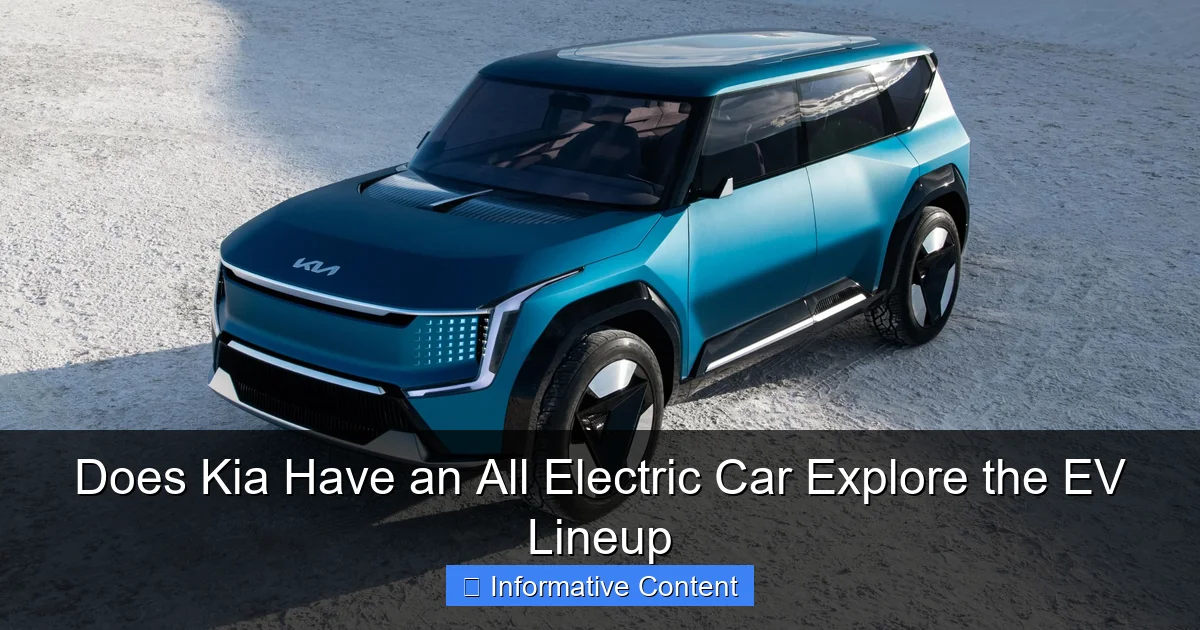
Featured image for does kia have an all electric car
Image source: images.carexpert.com.au
Yes, Kia offers a growing lineup of all-electric vehicles, proving its commitment to sustainable mobility with models like the Kia EV6, a sleek, high-performance crossover, and the spacious, family-friendly Kia EV9. These EVs deliver impressive range, fast charging, and cutting-edge tech, making Kia a serious contender in the electric vehicle market.
Key Takeaways
- Kia offers multiple all-electric models including the EV6 and EV9 with advanced tech.
- EV6 delivers 300+ mile range ideal for long-distance travel and daily commutes.
- EV9 seats up to 7 passengers blending SUV space with zero emissions.
- 800V fast charging enables 10-80% charge in under 20 minutes.
- Kia targets 15 EVs by 2027 signaling strong commitment to electrification.
- Competitive pricing and tax incentives make Kia EVs affordable for more buyers.
📑 Table of Contents
Does Kia Have an All Electric Car? Exploring the EV Lineup
If you’ve been thinking about going electric, you’re not alone. With gas prices fluctuating and climate concerns growing, more people are asking: *Does Kia have an all electric car?* The short answer is a resounding yes—and not just one. Kia has fully embraced the electric revolution, rolling out a growing lineup of all-electric vehicles (EVs) that blend style, practicality, and cutting-edge tech. Whether you’re a city commuter, a road tripper, or a family hauler, Kia now offers EVs that can meet your needs.
I remember when the idea of an electric Kia felt like a futuristic dream. Just a few years ago, their EV offerings were limited, but fast forward to today, and Kia is charging full speed into the EV space. From sleek sedans to spacious SUVs, Kia’s electric lineup is designed with real-world drivers in mind. They’re not just chasing trends—they’re building EVs that make sense for everyday life. So, if you’re curious about what Kia brings to the table, let’s take a closer look at their all-electric models, what makes them stand out, and how they stack up against the competition.
The Rise of Kia’s Electric Ambition
Kia’s journey into the world of all-electric vehicles didn’t happen overnight. It’s been a strategic evolution, driven by global demand for cleaner transportation and stricter emissions regulations. In 2020, Kia announced its “Plan S” strategy, a bold plan to shift toward electrification, digital innovation, and mobility services. A key part of that plan? Launching a robust lineup of all-electric Kia cars by 2027.
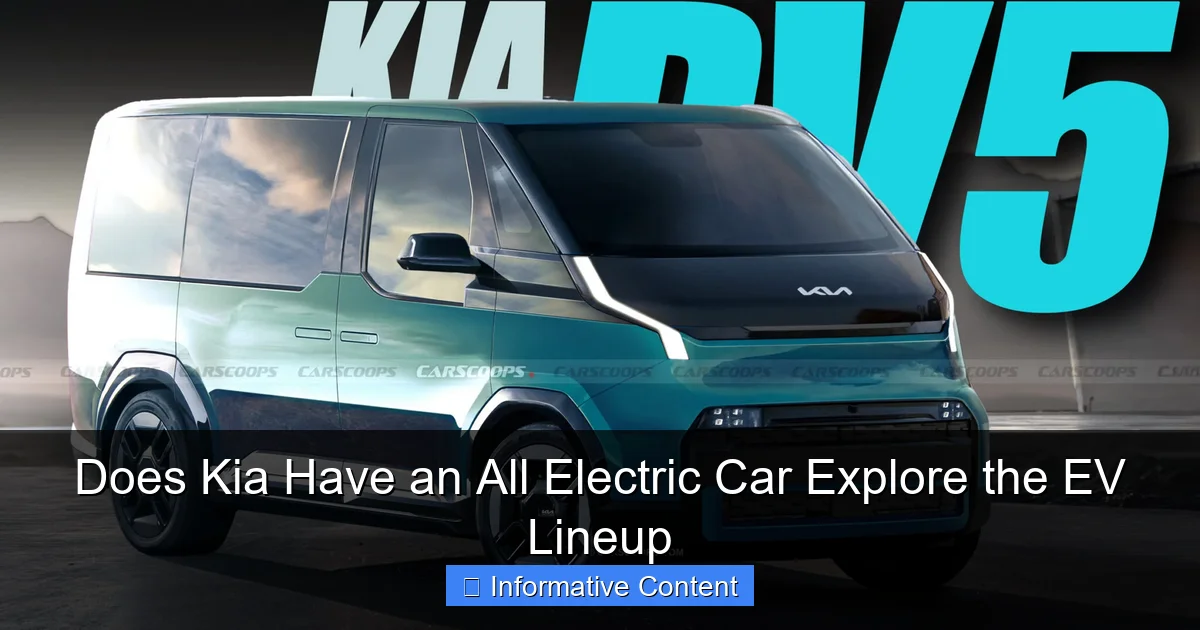
Visual guide about does kia have an all electric car
Image source: carscoops.com
From Hybrid to Full Electric: A Strategic Shift
Kia started with mild hybrids and plug-in hybrids (like the Niro PHEV), but the real turning point came with the introduction of dedicated EV platforms. The Electric-Global Modular Platform (E-GMP) is the backbone of Kia’s modern EVs. This platform was co-developed with Hyundai and is designed exclusively for battery electric vehicles. It allows for better battery placement, faster charging, and improved interior space—no more gas engine compromises.
What’s impressive is how quickly Kia has rolled out EVs using this platform. Instead of retrofitting gas cars into electric ones (a common shortcut), Kia built EVs from the ground up. That means better weight distribution, longer range, and more room for passengers and cargo. It’s a sign that Kia isn’t just dipping its toes in the EV waters—it’s diving in headfirst.
Global Vision, Local Impact
Kia’s EV strategy isn’t just about selling cars in North America. The company is targeting markets worldwide, from Europe to South Korea to Australia. This global approach has helped Kia secure supply chains, invest in charging infrastructure, and tailor vehicles to different driving habits. For example, the Kia EV6 was designed with European drivers in mind—compact, efficient, and built for narrow city streets—while also appealing to U.S. buyers who want a sporty electric SUV.
One practical tip? If you’re in a region with limited fast-charging stations, Kia’s 800-volt architecture in models like the EV6 and EV9 means you can add hundreds of miles in just 18 minutes at a DC fast charger. That’s a game-changer for road trips or long commutes.
Kia’s Current All-Electric Models
So, what are the actual all-electric Kia cars you can buy today? Let’s break down the current lineup, focusing on performance, range, and real-world usability.
Kia EV6: The Sporty Crossover That Started It All
The Kia EV6 is Kia’s first global EV on the E-GMP platform, and it set the tone for what’s to come. It’s a sleek, futuristic crossover that looks like it’s from 2030. But it’s not just about looks. The EV6 comes in several trims, including rear-wheel drive (RWD) and all-wheel drive (AWD), with battery options of 58 kWh and 77.4 kWh.
- Range: Up to 310 miles (RWD, 77.4 kWh)
- 0-60 mph: As quick as 3.5 seconds (in the high-performance GT trim)
- Charging: 10-80% in 18 minutes with 350 kW DC fast charging
- Interior: Minimalist design with dual 12.3-inch curved screens, ambient lighting, and eco-friendly materials
What I love about the EV6 is how it balances performance and practicality. The GT trim is a thrill to drive, but even the base model is zippy and quiet. The cargo space is generous (24.4 cu ft behind the rear seats, 50.2 cu ft with seats folded), making it great for weekend getaways. One minor gripe? The infotainment system can be a bit sluggish, but Kia has been rolling out updates to fix that.
Kia EV9: The 3-Row Electric SUV for Families
If the EV6 is the sporty sibling, the Kia EV9 is the responsible family member. This three-row electric SUV launched in 2023 and is Kia’s first full-size EV. It’s built for families, road trips, and anyone who needs space without sacrificing efficiency.
- Range: Up to 304 miles (RWD, 99.8 kWh)
- Features: Second-row swivel seats, rear entertainment system, and Level 2+ driver assistance (Highway Driving Assist 2)
- Charging: 10-80% in 24 minutes with 350 kW fast charging
< Seating: Up to 7 passengers
The EV9 is a standout for its innovative interior. The swivel second-row seats are a hit with families—they rotate to face each other for conversations or to help with kids. The cabin feels premium, with soft-touch materials and a panoramic sunroof. It’s not as sporty as the EV6, but it’s smooth, quiet, and incredibly comfortable on long drives. One thing to note: the third row is best suited for kids or shorter adults.
Kia Niro EV: The Practical Compact Option
Not everyone needs a high-performance or three-row EV. For city drivers and budget-conscious buyers, the Kia Niro EV is a solid choice. It’s a compact crossover that’s been electrified (unlike the hybrid-only original Niro), offering a balance of affordability and efficiency.
- Range: Up to 253 miles
- Price: Starts around $39,000 (before incentives)
- Charging: 10-80% in 43 minutes (100 kW DC fast charging)
- Interior: Spacious for its size, with recycled materials and a user-friendly infotainment system
The Niro EV won’t win any speed records, but it’s perfect for daily commutes and errands. It’s also eligible for the U.S. federal tax credit (check eligibility, as rules change), making it one of the more affordable new EVs on the market. The only downside? It uses a 400-volt system, so it’s slower to charge than the EV6 or EV9.
What’s Coming Next: Kia’s Future EV Plans
Kia isn’t stopping with the EV6, EV9, and Niro EV. The company has big plans for the next few years, including more affordable models and even electric pickup trucks. Here’s a sneak peek at what’s on the horizon.
Kia EV3: The Compact Crossover for the Masses
Expected to launch in 2024-2025, the Kia EV3 is a subcompact SUV aimed at younger buyers and urban dwellers. Think of it as a smaller, more affordable version of the EV6. It’s expected to have a range of around 250-280 miles and a starting price under $35,000 (before incentives).
Why does this matter? Because one of the biggest barriers to EV adoption is price. The EV3 could be Kia’s answer to the Tesla Model Y or the Chevrolet Equinox EV. If priced right, it could become a top seller in the U.S. and Europe.
Kia EV4: The Electric Sedan That’s (Almost) Here
Kia has teased the EV4, a sleek electric sedan that’s expected to arrive in 2025. It’s rumored to have a range of 300+ miles and a design inspired by the EV6 but with a lower, sportier profile. While details are still limited, the EV4 could fill a gap in Kia’s lineup—there’s currently no all-electric sedan in the U.S. market.
For drivers who prefer sedans over SUVs, this could be a big deal. It’s also a sign that Kia is serious about offering a diverse EV portfolio, not just crossovers and SUVs.
Kia EV5 and Beyond: Global Expansion
The Kia EV5 is already on sale in China and other markets, and there’s speculation it could come to the U.S. It’s a compact SUV with a range of up to 300 miles and a focus on sustainability (think vegan leather, recycled plastics). Kia is also developing a full-size electric pickup truck, though details are still under wraps.
The takeaway? Kia is thinking long-term. By 2027, the company plans to have 14 all-electric vehicles in its global lineup. That’s not just ambition—it’s a commitment to electrification.
How Kia EVs Compare to Competitors
Now that we’ve covered Kia’s lineup, how do these all-electric Kia cars stack up against the competition? Let’s compare them to key rivals like Tesla, Ford, and Hyundai (Kia’s sister brand).
Kia vs. Tesla: Price and Practicality
Tesla dominates the EV market, but Kia offers more value in some areas. For example:
– The EV6 has faster charging (800V) than the Tesla Model Y (400V), meaning less time at charging stations.
– The EV9 offers more interior space and innovative features (like swivel seats) than the Tesla Model X, at a lower price point.
– Kia’s warranty (10 years/100,000 miles on the battery and powertrain) is better than Tesla’s (8 years/100,000 miles).
However, Tesla still has advantages: a larger Supercharger network, longer range in some models, and a more mature software ecosystem. But if you’re looking for a more balanced package (great warranty, innovative design, competitive pricing), Kia is a strong contender.
Kia vs. Ford: Charging and Tech
Ford’s Mustang Mach-E and F-150 Lightning are popular, but Kia holds its own:
– The EV6 has a longer range than the base Mach-E and faster charging.
– The EV9 offers more seating flexibility than the Mach-E, which only has two rows.
– Ford has a growing charging network (BlueOval Charge Network), but Kia’s 800V system is still ahead in charging speed.
One area where Ford wins? The F-150 Lightning is a true electric pickup with towing power and a “frunk” (front trunk). Kia’s pickup is still in development, so Ford has the edge there—for now.
Kia vs. Hyundai: Sibling Rivalry
Hyundai and Kia share the E-GMP platform, so the Hyundai Ioniq 5 and Ioniq 6 are closely related to the EV6 and EV4. But there are differences:
– The Ioniq 5 has a more futuristic, boxy design; the EV6 is sleeker and sportier.
– The Ioniq 6 is a fastback sedan (like the EV4), but it’s already on sale in the U.S.
– Kia tends to offer more standard features at similar price points.
It’s a close race, but Kia’s design language and warranty often give it a slight edge in buyer preference.
Real-World Ownership: What to Expect
Buying an EV isn’t just about specs—it’s about real-world ownership. Here’s what you should know before making the switch to a Kia all-electric car.
Charging at Home: The Basics
Most EV owners charge at home, and Kia makes it easy. You can use a standard 120V outlet (Level 1), but it’s slow—adding about 4-5 miles per hour. For faster charging, install a 240V Level 2 charger (240V, 48-amp). This can add 25-35 miles per hour and fully charge an EV6 overnight.
Pro tip: Check with your utility company for rebates on home charger installation. Some offer $500 or more to help cover costs.
Public Charging: Networks and Compatibility
Kia EVs use the CCS (Combined Charging System) connector in North America, which is compatible with most public chargers. The EV6 and EV9 support 350 kW charging, so they’ll work well with Electrify America, EVgo, and ChargePoint networks.
One thing to watch: Tesla’s Supercharger network. As of 2024, Kia EVs can access Superchargers via adapters (thanks to Tesla opening its network), but it’s not seamless yet. Kia is working with Electrify America to expand fast-charging access, so this should improve.
Maintenance and Ownership Costs
EVs generally cost less to maintain than gas cars—no oil changes, fewer moving parts, and regenerative braking reduces wear on pads. Kia’s warranty covers the battery for 10 years/100,000 miles, which is one of the best in the industry.
However, tires and brakes still wear out. EV tires can be more expensive because they handle more weight and torque. Also, insurance rates for EVs can be higher due to battery repair costs, though this varies by state and insurer.
Data Table: Kia’s All-Electric Lineup (2024)
| Model | Range (EPA) | Starting Price | Charging (10-80%) | Key Feature |
|---|---|---|---|---|
| Kia EV6 | 232–310 miles | $42,600 | 18 min (350 kW) | 800V ultra-fast charging |
| Kia EV9 | 270–304 miles | $54,900 | 24 min (350 kW) | 3-row seating, swivel seats |
| Kia Niro EV | 253 miles | $39,000 | 43 min (100 kW) | Affordable, tax credit eligible |
Final Thoughts: Is a Kia EV Right for You?
So, does Kia have an all electric car? Absolutely—and they’re not just playing catch-up. With the EV6, EV9, and Niro EV, Kia offers a well-rounded lineup that competes with the best in the industry. Whether you want a sporty crossover, a family-friendly SUV, or a practical commuter, there’s a Kia EV for you.
What sets Kia apart? Their commitment to real-world usability. The 800V charging, long-range options, and innovative interior features (like swivel seats in the EV9) show they’re thinking about drivers, not just specs. Plus, their warranty and pricing make EVs more accessible.
Of course, no car is perfect. Charging infrastructure is still growing, and some models (like the Niro EV) have slower charging speeds. But Kia is moving fast—literally and figuratively. With the EV3 and EV4 on the horizon, they’re poised to become a major player in the EV market.
If you’re considering an electric car, don’t overlook Kia. Test drive the EV6 or EV9, talk to current owners, and see how it fits your lifestyle. You might just find that Kia’s all-electric lineup is the perfect blend of innovation, value, and practicality. After all, the future of driving isn’t just electric—it’s exciting, and Kia is leading the charge.
Frequently Asked Questions
Does Kia have an all electric car for the 2024 model year?
Yes, Kia offers several all-electric models for 2024, including the popular EV6 and the three-row EV9 SUV. These vehicles feature long-range batteries, fast-charging capabilities, and advanced tech to meet diverse EV needs.
What is the longest-range all-electric car from Kia?
The 2024 Kia EV6 Long Range RWD boasts an EPA-estimated range of up to 310 miles on a single charge. For larger families, the Kia EV9 offers up to 304 miles, making both models competitive in the EV market.
Can I charge a Kia all-electric car at home?
Absolutely! All Kia EVs, including the EV6 and EV9, come with a standard Level 1 charger for home use, but a Level 2 home charger (240V) is recommended for faster charging. Most owners install a home charging station for convenience.
Are Kia all-electric cars eligible for federal tax credits?
Yes, certain Kia EV models, like the EV6 and EV9, may qualify for the U.S. federal tax credit of up to $7,500, depending on battery sourcing and income eligibility. Check the latest IRS guidelines to confirm current incentives.
How fast can a Kia all-electric car charge?
Kia’s 800-volt ultra-fast charging system (available on EV6 and EV9) can replenish the battery from 10% to 80% in as little as 18 minutes at compatible DC fast-charging stations. Charging times vary based on battery level and charger type.
Is the Kia EV9 a fully electric SUV?
Yes, the Kia EV9 is a fully electric SUV with seating for up to seven passengers. It combines a spacious interior, cutting-edge tech, and an impressive range, making it a top choice for families transitioning to electric.