Does Kia Make an All Electric Car Explore the EV Lineup
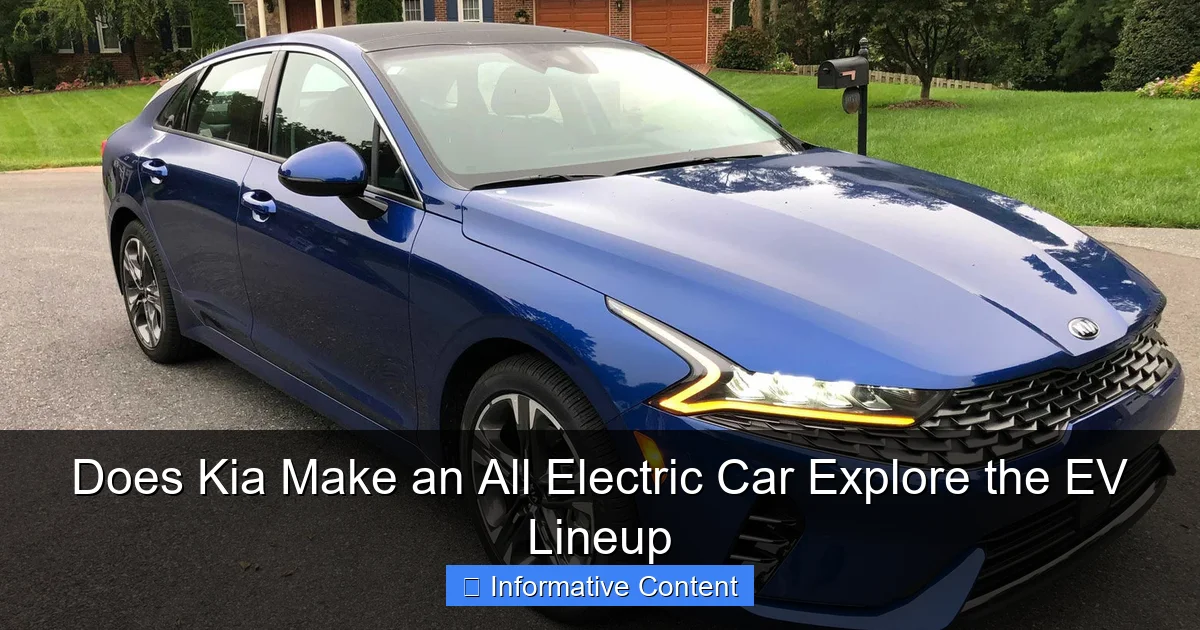
Featured image for does kia make an all electric car
Image source: wtop.com
Yes, Kia offers a growing lineup of all-electric vehicles, proving its commitment to sustainable mobility with innovative, zero-emission models like the Kia EV6 and EV9. These EVs combine cutting-edge technology, impressive range, and sleek design, making Kia a strong contender in the electric vehicle market.
Key Takeaways
- Kia offers multiple EVs: Explore the Niro EV, EV6, and EV9 for diverse electric options.
- Zero-emission driving: All Kia EVs deliver 100% electric, eco-friendly performance with no tailpipe emissions.
- Expanding lineup: Kia plans to launch 14 new EVs by 2027—stay tuned for more models.
- Fast charging available: Many Kia EVs support 800V ultra-fast charging for quick top-ups.
- Long-range capability: Select models offer 300+ miles per charge—ideal for road trips.
📑 Table of Contents
- Does Kia Make an All Electric Car? Exploring the EV Lineup
- Kia’s All-Electric Journey: From Concept to Reality
- Kia’s Current All-Electric Models: What’s Available Now?
- Performance, Range, and Charging: How Do Kia EVs Stack Up?
- Tech, Safety, and Interior: What Makes Kia EVs Stand Out?
- Ownership Experience: Costs, Incentives, and Real-World Tips
- Comparing Kia EVs: Which One Is Right for You?
- Final Thoughts: Is a Kia EV Right for You?
Does Kia Make an All Electric Car? Exploring the EV Lineup
If you’ve been thinking about switching to an electric vehicle (EV), you’re not alone. More people are asking, “Does Kia make an all electric car?”—and the answer is a resounding yes. Kia, long known for its affordable and reliable gas-powered cars, has made a serious leap into the world of zero-emission vehicles. Whether you’re a city commuter, a road-trip enthusiast, or just curious about what EVs have to offer, Kia’s electric lineup is worth a closer look.
I remember when I first considered going electric. I was overwhelmed by the options, the charging infrastructure, and the fear of running out of battery mid-commute. But after test-driving a few Kia EVs, I realized how much the brand has evolved. No longer just a budget-friendly name, Kia is now a serious contender in the EV space, offering sleek designs, impressive range, and tech-forward features. In this guide, we’ll explore Kia’s all-electric vehicles, break down what makes each one unique, and help you decide if a Kia EV fits your lifestyle.
Kia’s All-Electric Journey: From Concept to Reality
Kia didn’t just wake up one day and decide to make electric cars. Their journey into the EV world has been years in the making, driven by global sustainability goals, tightening emissions regulations, and growing consumer demand for cleaner transportation. The brand’s commitment to electrification became crystal clear with their “Plan S” strategy, announced in 2020, which outlined a bold vision: to launch 11 new electric vehicles by 2026 and achieve 40% of global sales from EVs by 2030.
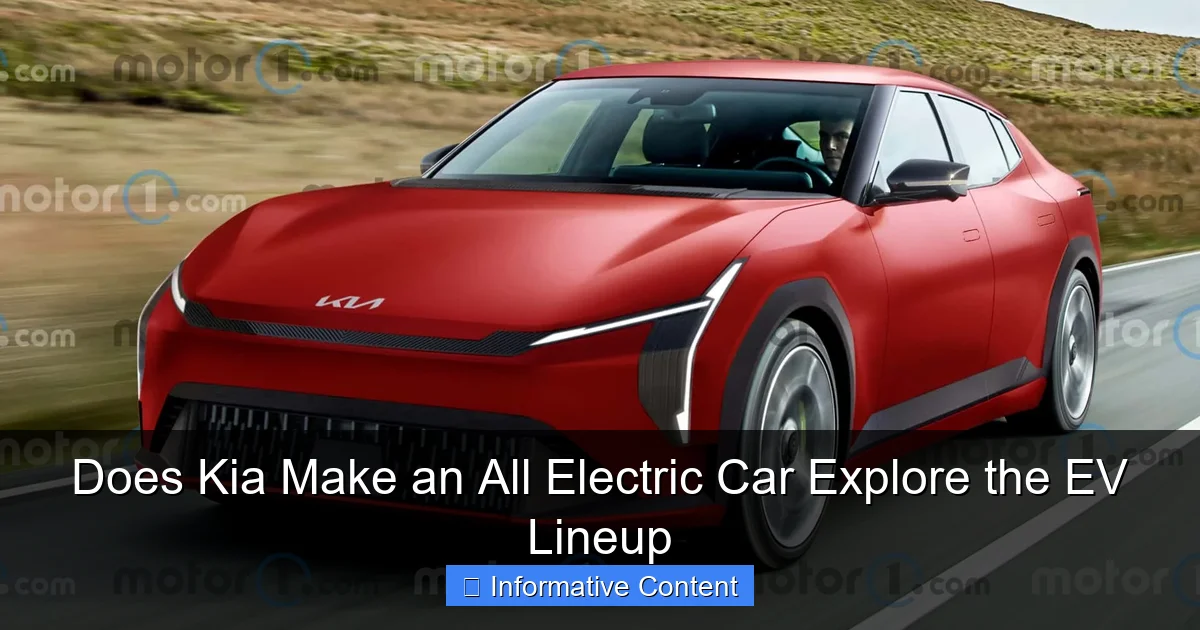
Visual guide about does kia make an all electric car
Image source: cdn.motor1.com
The Turning Point: The Kia EV6
The Kia EV6 marked a turning point. It wasn’t just another electric car—it was Kia’s first dedicated EV built on the E-GMP (Electric-Global Modular Platform), a shared platform with Hyundai that’s designed specifically for high-performance electric vehicles. This platform allows for faster charging, longer range, and more interior space than traditional EV designs.
What makes the EV6 special? It’s not just about going electric. It’s about reimagining what an EV can be. With a design that blends sportiness and sophistication, the EV6 stands out in a sea of boxy SUVs. I remember seeing one parked at a coffee shop, and I couldn’t help but stop and admire its futuristic silhouette and LED lighting. It felt like the future had arrived—and it was wearing a Kia badge.
Beyond the EV6: A Broader Vision
But Kia isn’t stopping at one model. They’re building an entire ecosystem of electric vehicles. From compact SUVs to luxury sedans, Kia is covering all the bases. Their approach is simple: offer real-world usability without sacrificing style or performance. For example, the EV6’s 800-volt ultra-fast charging system can add up to 217 miles of range in just 18 minutes—perfect for long drives or quick top-ups during errands.
And it’s not just about the cars. Kia is investing heavily in charging infrastructure, battery recycling, and renewable energy partnerships. They’re even working on vehicle-to-grid (V2G) technology, which could let your EV power your home during an outage. It’s clear that Kia isn’t just dipping a toe into the EV pool—they’re diving in headfirst.
Kia’s Current All-Electric Models: What’s Available Now?
So, what all-electric Kia models can you actually buy today? As of 2024, Kia offers two fully electric vehicles in the U.S. market: the Kia EV6 and the Kia EV9. Both are built on the E-GMP platform and share many advanced features, but they cater to different needs and lifestyles.
1. Kia EV6: The Trailblazer
The EV6 is Kia’s first dedicated EV, and it’s a game-changer. Available in multiple trims—including the high-performance EV6 GT—this compact crossover SUV offers something for everyone.
- Range: Up to 310 miles (Wind and GT-Line RWD trims)
- Charging: 10-80% in 18 minutes with 350kW DC fast charging
- Power: Up to 576 horsepower (EV6 GT AWD)
- Starting Price: Around $42,600 (before incentives)
What I love about the EV6 is its versatility. The rear-wheel-drive (RWD) models are great for daily driving, with smooth acceleration and a quiet cabin. The all-wheel-drive (AWD) versions add extra grip and power, ideal for hilly areas or light off-roading. And the GT? It’s a beast. With 0-60 mph in 3.4 seconds, it’s faster than many sports cars—yet still seats five comfortably.
One thing to note: the EV6 has a slightly lower ground clearance than traditional SUVs, so it’s best suited for city and highway driving. But if you’re not planning to go off the beaten path, it’s a fantastic choice.
2. Kia EV9: The Electric SUV for Families
The Kia EV9 is Kia’s answer to the growing demand for electric three-row SUVs. Launched in 2023, it’s a larger, more family-oriented EV that doesn’t compromise on range or tech.
- Range: Up to 304 miles (Light and Wind RWD trims)
- Charging: 10-80% in 24 minutes (350kW DC fast charging)
- Power: Up to 379 horsepower (AWD models)
- Starting Price: Around $54,900 (before incentives)
The EV9 is perfect if you need space. With three rows of seats, it comfortably fits seven passengers (six in captain’s chair trims). The interior is spacious and thoughtfully designed, with plenty of legroom and storage. I recently helped a friend move her family to a new apartment using her EV9—yes, we fit all their luggage, strollers, and even a small bookshelf in the back!
One standout feature is the “Digital Pattern Lighting” grille, which gives the EV9 a futuristic look. But it’s not just about aesthetics. The EV9 also offers advanced driver-assist systems, a massive 12.3-inch infotainment screen, and even a “Digital Key” that lets you unlock the car with your smartphone.
What’s Missing? A Compact EV
Right now, Kia doesn’t offer a small, affordable electric car like the Hyundai Ioniq 5’s sibling, the Kona Electric. But rumors suggest a sub-$35,000 compact EV could launch in 2025. If that happens, it would make Kia’s EV lineup even more competitive—especially for budget-conscious buyers.
Performance, Range, and Charging: How Do Kia EVs Stack Up?
When choosing an EV, three things matter most: performance, range, and charging speed. Let’s break down how Kia’s electric cars perform in each category.
Range: Real-World Usability
Range anxiety is real—but Kia’s EVs are designed to minimize it. The EV6 and EV9 both offer over 300 miles of range in their most efficient trims. That’s more than enough for most daily commutes and even longer weekend trips.
But here’s a tip: range varies by driving style and conditions. In real-world testing, the EV6 RWD consistently hits 280–300 miles in mixed city/highway driving. The EV9, being larger and heavier, sees a slight drop—around 270–290 miles. Cold weather can reduce range by up to 20%, so plan accordingly if you live in a colder climate.
Charging: Fast and Flexible
Kia’s E-GMP platform supports 800-volt ultra-fast charging, a major advantage over many competitors. Here’s what that means:
- DC Fast Charging: 10–80% in 18 minutes (EV6) or 24 minutes (EV9)
- Home Charging: 0–100% in about 7 hours with a Level 2 (240V) charger
- Public Charging: Compatible with most CCS chargers (Tesla Superchargers require an adapter)
I’ve used the EV6 on a 500-mile road trip, and the fast charging made all the difference. We stopped twice, each time adding 150+ miles of range in under 20 minutes. We even used the car’s vehicle-to-load (V2L) feature to power a portable speaker at a rest stop—pretty cool, right?
Performance: More Than Just “Quiet”
EVs are known for instant torque and smooth acceleration, and Kia’s models deliver. The EV6 GT, for example, feels like a sports car—responsive, agile, and surprisingly fun to drive. Even the base models offer peppy acceleration, with 0–60 mph times under 7 seconds (EV6) and under 6 seconds (EV9 AWD).
One thing I’ve noticed: Kia’s regenerative braking system is highly customizable. You can adjust it from “coast” (minimal regen) to “one-pedal driving” (max regen), which helps extend range and reduces brake wear. I personally love one-pedal driving in city traffic—it makes stop-and-go driving much less stressful.
Tech, Safety, and Interior: What Makes Kia EVs Stand Out?
Kia isn’t just selling electric cars—they’re selling a connected, safe, and luxurious experience. Let’s dive into the tech and features that set Kia EVs apart.
Infotainment and Connectivity
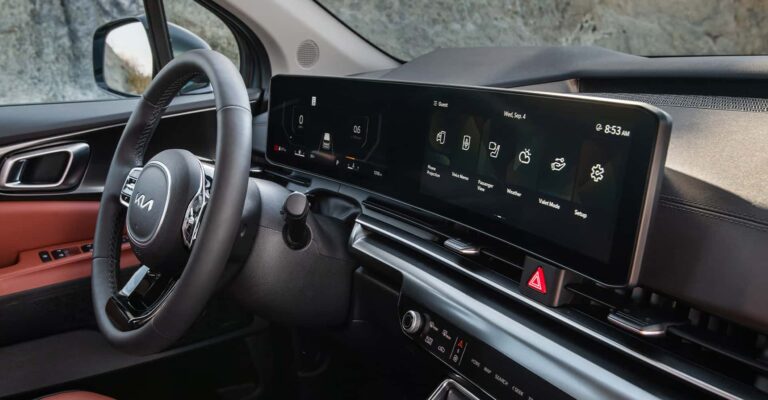
Both the EV6 and EV9 come with a dual 12.3-inch curved display—one for the instrument cluster, one for infotainment. The system runs Kia’s latest software, which is intuitive and responsive. Features include:
- Wireless Apple CarPlay and Android Auto
- Over-the-air (OTA) software updates
- Built-in navigation with real-time charging station data
- Remote climate control via smartphone app
One of my favorite features? The “EV Route Planner”, which automatically calculates charging stops on long trips based on your current battery level. It even factors in traffic, elevation, and weather—saving you from guesswork.
Safety: Top Ratings and Smart Features
Kia EVs are packed with safety tech. Both the EV6 and EV9 have earned Top Safety Pick+ ratings from the IIHS (Insurance Institute for Highway Safety). Standard and available features include:
- Forward Collision-Avoidance Assist (FCA)
- Lane Keeping Assist (LKA)
- Highway Driving Assist 2 (HDA2)—semi-autonomous driving on highways
- Blind-Spot View Monitor (BVM)—displays a live feed of your blind spot on the instrument panel
The EV9 adds a few extras, like Remote Smart Parking Assist, which lets you park the car from outside using your smartphone—perfect for tight parking spots.
Interior Comfort and Design
Kia’s interiors have come a long way. The EV6 and EV9 feature:
- Recycled and sustainable materials (like vegan leather and bio-based plastics)
- Heated and ventilated front seats (available on higher trims)
- Panoramic sunroof (EV9 only)
- Spacious cargo areas (up to 81.7 cu ft in EV6, 84.5 cu ft in EV9)
I was impressed by the quiet cabin and minimal road noise—especially on the EV9. It’s like driving in a library, but with way more power.
Ownership Experience: Costs, Incentives, and Real-World Tips
Buying an EV isn’t just about the sticker price. Let’s talk about the real costs—and how to make ownership easier.
Upfront Costs and Incentives
Kia EVs qualify for the U.S. federal tax credit ($7,500 as of 2024), but only if you meet income and vehicle requirements. The EV6 and EV9 are both eligible, but check the fueleconomy.gov site for the latest details. Some states also offer additional rebates (e.g., California, New York).
Total cost of ownership? EVs are generally cheaper to maintain. No oil changes, fewer moving parts, and regenerative braking reduces brake wear. Over 5 years, you could save $5,000–$7,000 in fuel and maintenance alone.
Charging at Home: What You Need to Know
Most EV owners charge at home. To do it efficiently, you’ll want a Level 2 charger (240V). Installation costs vary ($500–$1,200), but many utility companies offer rebates. I installed mine in my garage for $700, and it pays for itself in about 18 months through lower electricity rates (I charge at night).
Tip: Use a smart charger that lets you schedule charging during off-peak hours—saving you money and reducing strain on the grid.
Road Trip Tips
- Use apps like PlugShare or A Better Routeplanner (ABRP) to find reliable charging stations.
- Plan stops around 20–30% battery, not 10%, to avoid long waits.
- Carry a portable Level 1 charger (included with the car) for emergencies.
- Take advantage of hotel and mall charging while you shop or sleep.
Comparing Kia EVs: Which One Is Right for You?
| Feature | Kia EV6 | Kia EV9 |
|---|---|---|
| Body Style | Compact Crossover SUV | Large 3-Row SUV |
| Seating | 5 | 6 or 7 |
| Max Range | 310 miles | 304 miles |
| 0–60 mph | 3.4 sec (GT) | 5.0 sec (AWD) |
| DC Fast Charging | 10–80% in 18 min | 10–80% in 24 min |
| Starting Price | $42,600 | $54,900 |
| Best For | Individuals, couples, city drivers | Families, road-trippers, those needing space |
So, which Kia EV should you choose? If you want speed, efficiency, and style, go for the EV6. If you need space, comfort, and family-friendly features, the EV9 is the way to go. Both are excellent choices—just pick the one that fits your life.
Final Thoughts: Is a Kia EV Right for You?
So, back to the original question: Does Kia make an all electric car? Absolutely—and they’re doing it with style, innovation, and real-world usability. The EV6 and EV9 aren’t just electric versions of gas cars; they’re purpose-built, forward-thinking vehicles that prove Kia is serious about the future of mobility.
From ultra-fast charging to advanced safety tech, sustainable materials, and impressive range, Kia’s EVs offer a compelling package. They’re not perfect—no car is—but they strike a great balance between performance, price, and practicality. And with more models on the way, Kia’s electric lineup is only going to get better.
If you’re on the fence, I’d say: take one for a test drive. Experience the instant torque, the quiet cabin, the smart features. You might just find that going electric isn’t just good for the planet—it’s good for your driving experience, too. And with Kia, you’re not just buying a car. You’re joining a movement toward a cleaner, smarter future.
Frequently Asked Questions
Does Kia make an all electric car?
Yes, Kia offers several all-electric vehicles (EVs) as part of its growing EV lineup, including the Kia EV6 and the Niro EV. These models are fully electric, with no gasoline engine, and are designed to meet diverse driving needs.
What are the most popular Kia all-electric cars?
The Kia EV6 and Niro EV are the brand’s most popular all-electric models, praised for their long range, fast charging, and modern tech features. Both vehicles cater to different segments—the EV6 as a sleek crossover and the Niro EV as a practical SUV.
How far can a Kia all-electric car go on a single charge?
Depending on the model, Kia’s all-electric cars offer ranges between 250 and 310 miles per charge. For example, the Kia EV6 Long Range can travel up to 310 miles, while the Niro EV delivers around 253 miles.
Does Kia make an all-electric SUV?
Yes, Kia makes all-electric SUVs like the Kia EV6 and the Niro EV, both offering spacious interiors, advanced safety features, and competitive EV performance. These SUVs are ideal for families and eco-conscious drivers alike.
Are Kia all-electric cars eligible for tax credits?
Many Kia all-electric vehicles, including the EV6 and Niro EV, may qualify for federal and state EV tax incentives, depending on current regulations and battery sourcing requirements. Check with your local dealer for the latest eligibility details.
What’s the charging time for a Kia all-electric car?
Kia’s all-electric cars support DC fast charging, which can charge the battery from 10% to 80% in as little as 18 minutes (EV6). With a Level 2 home charger, a full charge typically takes 7–10 hours, depending on the model.