Does Nissan Make an Electric Car Explore the EV Lineup
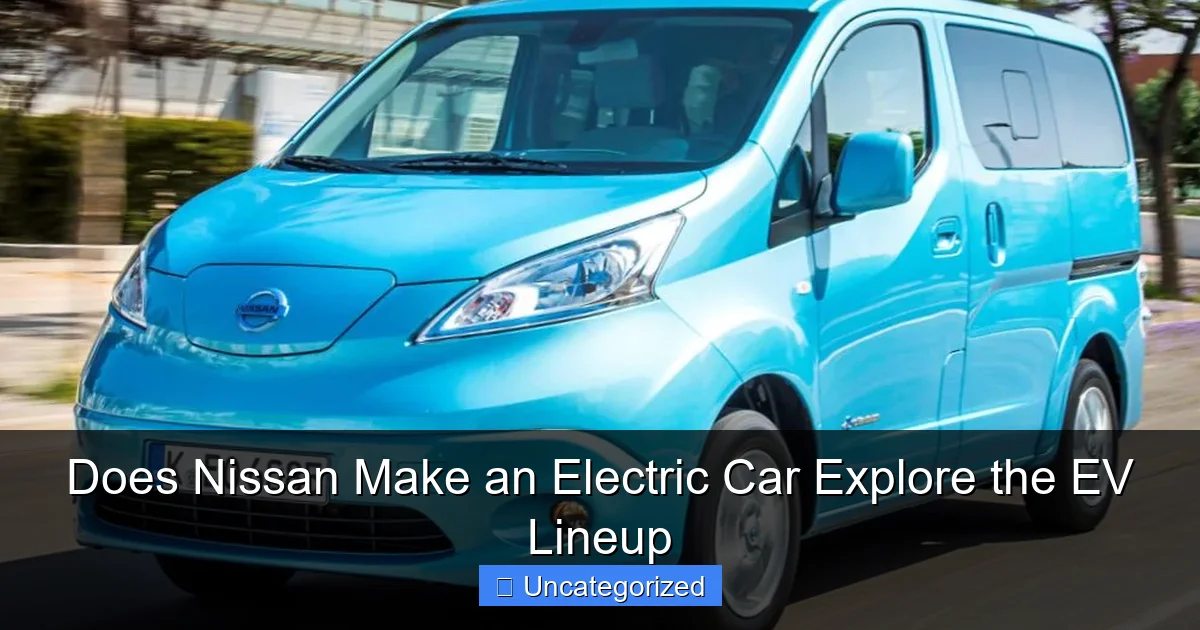
Featured image for does nissan make an electric car
Image source: assets.adac.de
Yes, Nissan makes electric cars, and it’s a pioneer in the EV market with the best-selling Nissan LEAF, offering affordable, zero-emission driving since 2010. The lineup now includes the versatile Ariya SUV, combining cutting-edge tech, impressive range, and Nissan’s signature reliability for a smarter, greener ride.
Key Takeaways
- Nissan leads EV innovation with the popular Leaf and Ariya models.
- Leaf offers affordability for first-time EV buyers with proven reliability.
- Ariya brings premium features like AWD and 300-mile range options.
- Zero emissions, lower costs with Nissan’s EV lineup and tax incentives.
- Expanding fast-charging network reduces range anxiety for Nissan EV drivers.
- ProPilot Assist available for safer, semi-autonomous highway driving.
📑 Table of Contents
- Does Nissan Make an Electric Car? Explore the EV Lineup
- The Birth of a Pioneer: Nissan’s Electric Legacy
- Current Nissan Electric Vehicle Lineup: Models and Specifications
- Advanced Technology and Features in Nissan EVs
- Charging Infrastructure and Range Realities
- Future of Nissan EVs: Beyond the Current Lineup
- Data Table: Nissan EV Lineup Comparison (2023-2024)
- Conclusion: Nissan’s Commitment to a Sustainable Future
Does Nissan Make an Electric Car? Explore the EV Lineup
In an era where sustainability, innovation, and technological advancement are reshaping the automotive industry, one question echoes across eco-conscious drivers, tech enthusiasts, and everyday commuters: Does Nissan make an electric car? The answer is a resounding yes—and not just one model, but a growing lineup of electric vehicles (EVs) that reflect Nissan’s decades-long commitment to electrification. From pioneering the world’s first mass-market electric vehicle to expanding its EV offerings for diverse lifestyles, Nissan continues to lead the charge in the electric revolution.
Nissan’s journey into electrification began long before most automakers even considered EVs viable. With a vision to reduce carbon emissions and offer drivers a smarter, cleaner way to travel, Nissan introduced the Nissan LEAF in 2010—the first globally available all-electric car. Since then, the brand has evolved its EV strategy, incorporating cutting-edge battery technology, intelligent driver-assist systems, and sleek, modern designs. Today, Nissan doesn’t just make electric cars; it’s building a comprehensive ecosystem of zero-emission vehicles designed for city dwellers, families, and adventure seekers alike. In this in-depth guide, we’ll explore Nissan’s electric vehicle lineup, examine its technological innovations, and help you determine which Nissan EV might be the perfect fit for your lifestyle.
The Birth of a Pioneer: Nissan’s Electric Legacy
Nissan’s foray into electric mobility didn’t happen overnight. It was the result of a strategic, long-term vision that began in the early 2000s. As global awareness of climate change and fossil fuel dependency grew, Nissan positioned itself as a forward-thinking automaker ready to embrace the future. The company’s leadership understood that electric vehicles weren’t just a trend—they were the inevitable next step in automotive evolution.
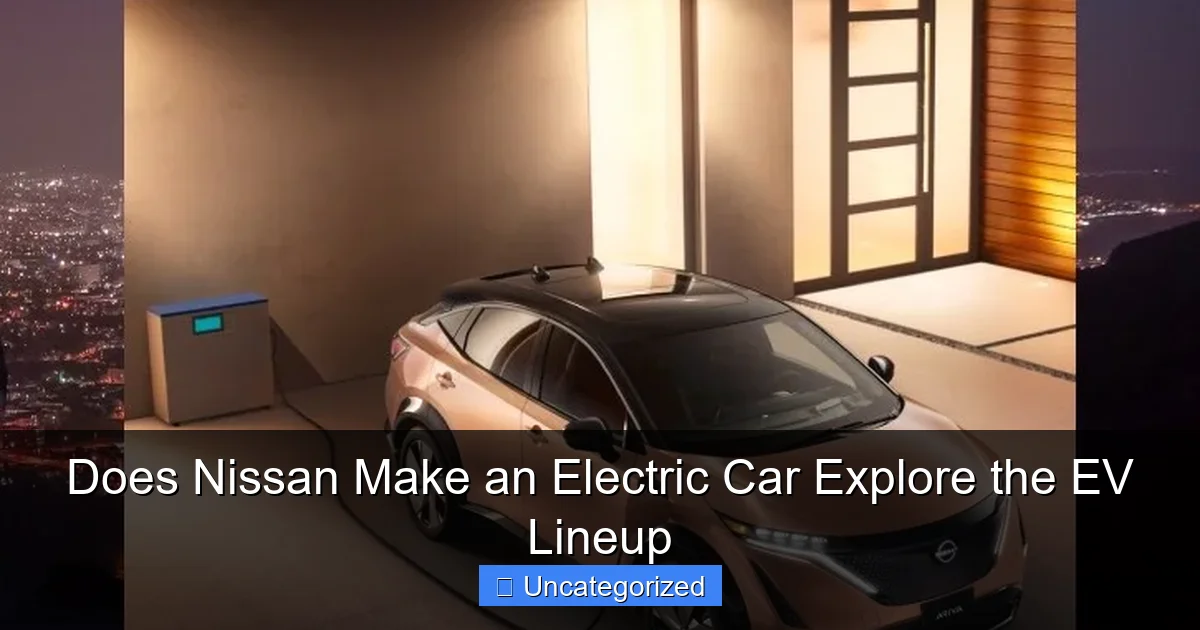
Visual guide about does nissan make an electric car
Image source: nissanusa.com
From Concept to Reality: The Nissan LEAF (2010)
The Nissan LEAF (Leading, Environmentally friendly, Affordable, Family car) debuted in 2010 as the world’s first mass-produced, affordable all-electric vehicle. It wasn’t just a car; it was a statement. With a 100% electric drivetrain, zero tailpipe emissions, and a range of around 73 miles (later improved to over 150 miles), the LEAF quickly became a symbol of accessible sustainability. By 2013, it had become the best-selling electric car in history, surpassing 100,000 units sold—a milestone that underscored Nissan’s leadership in the EV space.
What set the LEAF apart wasn’t just its battery-powered engine, but its practicality. It seated five, offered hatchback versatility, and came with features like regenerative braking and a user-friendly infotainment system. Over the years, Nissan has released multiple generations of the LEAF, each improving on range, performance, and technology. The LEAF PLUS, introduced in 2019, extended the range to up to 212 miles (EPA-estimated), making it a viable option for longer commutes and road trips.
A Decade of Innovation and Learning
The LEAF’s success wasn’t without challenges. Early adopters faced range anxiety, limited charging infrastructure, and higher upfront costs compared to gas-powered cars. But Nissan responded with innovation. It introduced e-Pedal technology, which allows drivers to accelerate, decelerate, and stop using just one pedal—reducing fatigue and increasing energy efficiency. It also partnered with charging networks like EVgo and ChargePoint to expand access to fast-charging stations.
Beyond hardware, Nissan invested in software and connectivity. The NissanConnect EV app enables remote charging, climate control, and route planning based on real-time battery levels. These features transformed the LEAF from a simple commuter car into a smart, connected vehicle. By learning from the LEAF’s real-world performance, Nissan laid the foundation for its next-generation EVs.
Current Nissan Electric Vehicle Lineup: Models and Specifications
Today, Nissan offers a diverse portfolio of electric vehicles tailored to different needs and budgets. While the LEAF remains the cornerstone of its EV strategy, newer models like the Ariya and upcoming Townstar EV demonstrate Nissan’s ambition to electrify every segment of the market.
Nissan LEAF: The Affordable EV Pioneer
The Nissan LEAF is available in two main trims: the standard LEAF with a 40 kWh battery and the LEAF PLUS with a 62 kWh battery. Both models feature a front-wheel-drive layout and a single electric motor.
- LEAF (40 kWh): Up to 149 miles range, 147 horsepower, 236 lb-ft torque. Ideal for city driving and short commutes.
- LEAF PLUS (62 kWh): Up to 212 miles range, 214 horsepower, 250 lb-ft torque. Better suited for highway driving and longer trips.
Both versions come with standard ProPILOT Assist—a semi-autonomous driving system that combines adaptive cruise control with lane centering—making highway driving safer and less tiring. The LEAF also features a 8-inch touchscreen, Apple CarPlay, Android Auto, and a suite of safety features like automatic emergency braking and blind-spot warning.
Nissan Ariya: The Premium Crossover EV
Launched in 2022, the Nissan Ariya marks a bold step into the premium electric SUV segment. With a sleek, aerodynamic design, spacious interior, and advanced tech, the Ariya is Nissan’s answer to rivals like the Tesla Model Y and Ford Mustang Mach-E.
- Battery Options: 63 kWh (standard range) and 87 kWh (extended range)
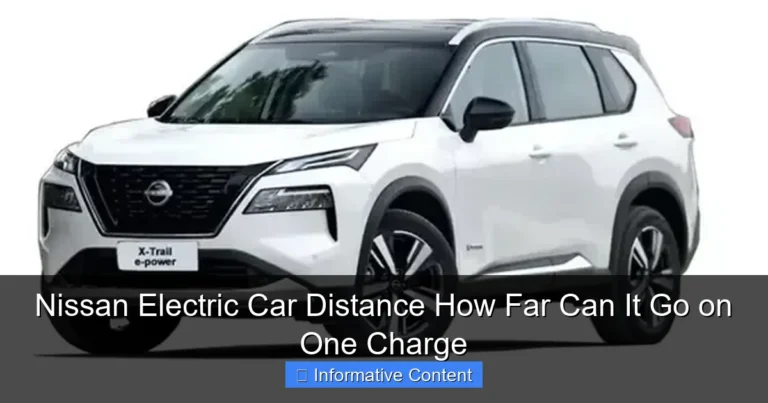
- Range: Up to 304 miles (Ariya e-4ORCE 87 kWh AWD)
- Powertrain: Available in front-wheel drive (FWD) and all-wheel drive (e-4ORCE)
- Performance: Up to 389 horsepower and 442 lb-ft torque in top trims
The Ariya introduces Zero Gravity seats for enhanced comfort and a minimalist interior with a dual-screen dashboard (12.3-inch infotainment + 12.3-inch digital gauge cluster). It also supports vehicle-to-load (V2L) charging, allowing you to power appliances or even another EV using the Ariya’s battery—a game-changer for camping or emergencies.
Coming Soon: Nissan Townstar EV (Commercial & Passenger)
For businesses and families needing more space, Nissan is launching the Townstar EV—a fully electric version of its compact van. Available in cargo and passenger configurations, the Townstar EV targets urban delivery services, small businesses, and eco-conscious families.
- Range: Up to 186 miles (WLTP)
- Payload: Up to 1,500 lbs (cargo version)
- Features: 10-inch touchscreen, wireless charging, and advanced driver aids
With its low floor and wide-opening doors, the Townstar EV is designed for easy loading and unloading—perfect for city logistics or family outings. It’s expected to hit U.S. and European markets in late 2024, further expanding Nissan’s EV footprint.
Advanced Technology and Features in Nissan EVs
Nissan’s electric vehicles aren’t just about zero emissions—they’re packed with intelligent technology designed to enhance safety, convenience, and driving enjoyment. From autonomous driving aids to smart energy management, Nissan is integrating innovation at every level.
ProPILOT Assist and ProPILOT 2.0: Smarter Driving
Nissan’s ProPILOT Assist system is standard on most EVs and offers hands-on semi-autonomous driving. It combines:
- Adaptive cruise control (maintains distance from the car ahead)
- Lane centering (keeps the car in the center of the lane)
- Traffic jam assist (operates at speeds below 30 mph)
For the Ariya, Nissan introduces ProPILOT 2.0—a more advanced system that allows hands-off driving on mapped highways (with driver supervision). It can change lanes, navigate interchanges, and adjust speed based on traffic flow. This system uses cameras, radar, and high-definition 3D maps to deliver a smoother, less stressful driving experience.
e-Pedal: One-Pedal Driving Revolution
One of Nissan’s most unique innovations is the e-Pedal, available on all EVs. When activated, e-Pedal allows you to accelerate, decelerate, and stop using only the accelerator pedal. Lifting off the pedal engages strong regenerative braking, bringing the car to a complete stop—without touching the brake pedal.
This feature is especially useful in stop-and-go traffic. It reduces driver fatigue and increases energy efficiency by capturing kinetic energy during deceleration. Many drivers report that e-Pedal makes city driving feel smoother and more intuitive. Tip: Use e-Pedal in urban areas and deactivate it on highways for a more traditional driving feel.
Smart Charging and V2L: Powering Your Life
Nissan EVs support vehicle-to-load (V2L) functionality, meaning they can power external devices. Using a standard 120V/240V adapter, you can plug in tools, lights, or even a refrigerator—ideal for camping, tailgating, or emergency situations.
The NissanConnect EV app enhances this capability by allowing you to:
- Start or stop charging remotely
- Pre-heat or cool the cabin before driving
- Set charging schedules to take advantage of off-peak electricity rates
- Find nearby charging stations and monitor charging progress
For example, if you work from home, you can schedule your LEAF to charge from 11 PM to 5 AM when electricity is cheapest. Or, before a road trip, use the app to warm up the cabin on a cold morning—saving battery and improving comfort.
Charging Infrastructure and Range Realities
One of the biggest concerns for potential EV buyers is charging infrastructure and range anxiety. Nissan addresses these issues through a combination of vehicle design, partnerships, and education.
Charging Options: Home, Public, and Fast Charging
Nissan EVs support three levels of charging:
- Level 1 (120V): Standard household outlet. Adds ~4-5 miles of range per hour. Best for overnight charging.
- Level 2 (240V): Home or public charger. Adds ~25-30 miles per hour. Recommended for daily use.
- DC Fast Charging (CHAdeMO/CCS): Public stations. Adds ~100 miles in 30 minutes (LEAF) or ~200 miles in 30 minutes (Ariya with CCS).
Nissan includes a portable Level 1/Level 2 charging cable with every EV, so you can charge anywhere there’s an outlet. For faster home charging, Nissan partners with companies like Qmerit to offer professional Level 2 charger installation (often with federal tax credits).
Real-World Range: Tips to Maximize Efficiency
While EPA estimates provide a baseline, real-world range depends on driving habits, climate, and terrain. Here are practical tips to get the most from your Nissan EV:
- Use Eco mode: Reduces acceleration power and HVAC usage to extend range.
- Precondition the cabin: Heat or cool the car while plugged in—saves battery during driving.
- Maintain tire pressure: Underinflated tires increase rolling resistance.
- Avoid aggressive acceleration: Smooth driving maximizes efficiency.
- Use regenerative braking: Maximize e-Pedal or set regen to high.
For example, a LEAF PLUS driven at 65 mph on a flat highway with moderate HVAC use might achieve ~180 miles—close to the EPA estimate. But in stop-and-go city traffic with e-Pedal and preconditioning, it could exceed 200 miles.
Charging Network Access
Nissan has partnered with EVgo to provide Ariya owners with 100 minutes of complimentary DC fast charging. The LEAF, which uses CHAdeMO, can access thousands of stations via networks like Electrify America and ChargePoint (using adapters). The Ariya’s CCS port ensures compatibility with most fast-charging networks in North America.
Future of Nissan EVs: Beyond the Current Lineup
Nissan isn’t resting on its laurels. The company has announced an ambitious “Nissan Ambition 2030” vision, aiming to launch 23 new electrified models by 2030—15 of which will be fully electric. This includes a mix of sedans, SUVs, crossovers, and light commercial vehicles.
Upcoming Models and Concepts
- Nissan Chill-Out (Concept): A sleek, coupe-style EV with AI-powered personalization and advanced autonomy. Expected to enter production by 2025.
- Nissan Max-Out (Concept): A futuristic convertible with a minimalist interior and immersive digital cockpit. Could inspire a new sports EV.
- Solid-State Battery Technology: Nissan plans to introduce solid-state batteries (SSBs) by 2028. These promise faster charging, longer range, and improved safety—potentially doubling the range of current EVs.
The shift to solid-state batteries could be a game-changer. Unlike traditional lithium-ion batteries, SSBs use a solid electrolyte, reducing fire risk and allowing for higher energy density. Nissan claims a 50% reduction in charging time and a 100% increase in range compared to current tech.
Global Electrification Strategy
Nissan is investing $17.6 billion in electrification over the next five years, including:
- New battery plants in the U.S. and Japan
- Development of a global EV charging network
- Partnerships with tech companies for AI and connectivity
The company also aims to make EVs more affordable by standardizing battery platforms and reducing production costs. This could lead to a sub-$25,000 electric car by the late 2020s—making EV ownership accessible to a broader audience.
Data Table: Nissan EV Lineup Comparison (2023-2024)
| Model | Starting Price (USD) | Battery Size (kWh) | Range (EPA) | Horsepower | Charging (DC Fast) | Key Feature |
|---|---|---|---|---|---|---|
| Nissan LEAF (40 kWh) | $28,040 | 40 | 149 miles | 147 | 40 min (10-80%) | e-Pedal, ProPILOT Assist |
| Nissan LEAF PLUS (62 kWh) | $36,040 | 62 | 212 miles | 214 | 45 min (10-80%) | Longer range, enhanced comfort |
| Nissan Ariya (63 kWh FWD) | $43,190 | 63 | 272 miles | 214 | 30 min (10-80%) | Dual-screen cockpit, V2L |
| Nissan Ariya (87 kWh e-4ORCE) | $54,190 | 87 | 304 miles | 389 | 30 min (10-80%) | All-wheel drive, ProPILOT 2.0 |
| Nissan Townstar EV (2024) | $35,000 (est.) | 45 | 186 miles (WLTP) | 122 | 30 min (10-80%) | Commercial utility, spacious interior |
Note: Prices before federal/state incentives. Range estimates vary based on driving conditions.
Conclusion: Nissan’s Commitment to a Sustainable Future
So, does Nissan make an electric car? Absolutely—and it does so with purpose, innovation, and a deep understanding of what drivers need. From the groundbreaking LEAF to the sophisticated Ariya and the versatile Townstar EV, Nissan offers a range of electric vehicles that cater to different lifestyles, budgets, and driving preferences.
Nissan’s journey in electrification is more than just a product lineup—it’s a commitment to a cleaner, smarter, and more connected future. With advanced technologies like e-Pedal, ProPILOT 2.0, and V2L, Nissan is redefining what it means to drive electric. Its investments in solid-state batteries and global charging infrastructure signal a long-term vision that extends far beyond today’s models.
Whether you’re a city commuter looking for an affordable, efficient car, a family seeking a spacious electric SUV, or a business owner needing an eco-friendly van, Nissan has an EV for you. As charging networks expand and battery tech improves, the barriers to EV ownership continue to fall. Nissan is not just keeping pace with the electric revolution—it’s helping to lead it.
If you’ve been wondering whether Nissan makes an electric car, the answer is clear: yes, and they’re just getting started. Explore the lineup, take a test drive, and experience the future of driving—powered by Nissan.
Frequently Asked Questions
Does Nissan make an electric car for the US market?
Yes, Nissan offers the all-electric 2024 Nissan LEAF in the US, available in two battery options: 40 kWh (149-mile range) and 62 kWh (212-mile range). The LEAF remains one of the most affordable EVs in America.
What electric cars does Nissan currently sell worldwide?
Nissan’s global EV lineup includes the Nissan LEAF, Ariya (a crossover SUV with up to 304 miles of range), and the Sakura kei car (Japan-only). The Ariya features e-4ORCE all-wheel drive and advanced driver-assist tech.
Is the Nissan LEAF the only electric car Nissan makes?
While the LEAF was Nissan’s first mass-market EV, the automaker now produces the Ariya electric SUV and has announced plans for 23 new electrified models by 2030. The LEAF remains its longest-running EV nameplate.
Does Nissan make an electric car with long-range capabilities?
The Nissan Ariya offers up to 304 miles of EPA-estimated range (Venture+ trim), making it Nissan’s longest-range EV. The LEAF e+ variant provides a 212-mile range for daily commuting needs.
Are there plans for Nissan to expand its electric car lineup?
Yes, Nissan’s “Ambition 2030” plan includes launching 15 new EVs globally by 2030, including a pickup truck and luxury sedan. The company aims for 40% of US sales to be fully electric by 2030.
Does Nissan make an electric car that qualifies for tax credits?
The 2024 Nissan LEAF may qualify for a $7,500 federal tax credit (as of 2024 guidelines). Eligibility depends on purchase date, battery components, and buyer income limits—check current IRS rules for details.