Driving in Florida Electric Car Tips for a Smooth Ride
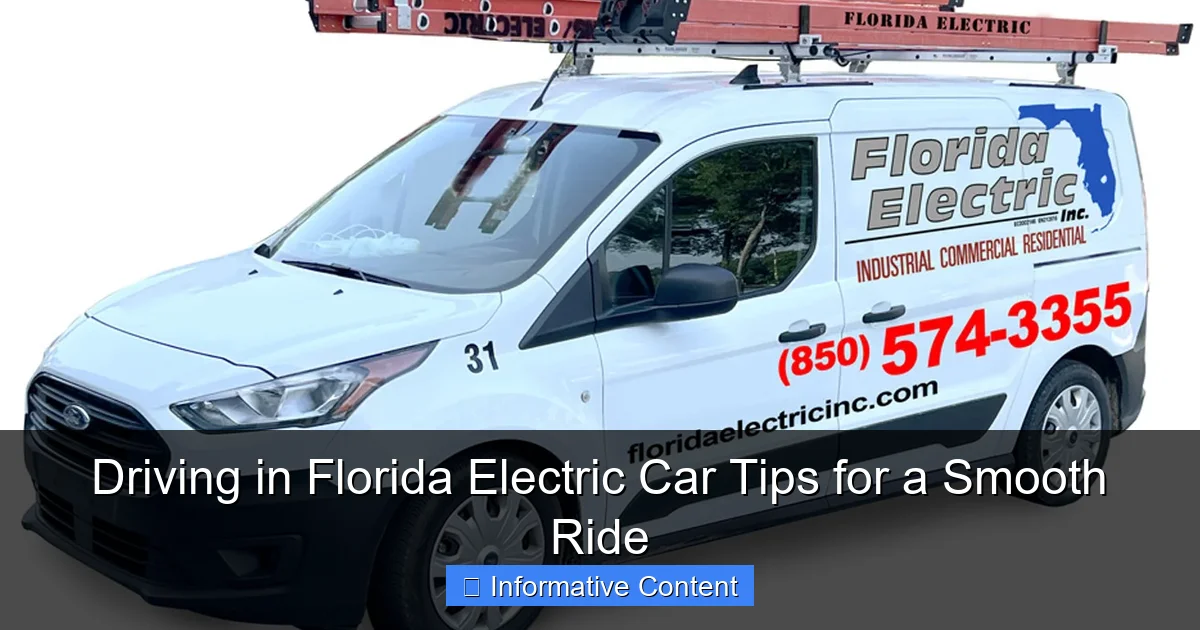
Featured image for driving in florida electric car
Image source: floridaelectricinc.com
Maximize your electric car’s range in Florida by planning around the state’s extensive but unevenly distributed charging network, especially during peak summer heat. Use apps like PlugShare and Tesla’s navigation to locate fast chargers and avoid range anxiety on long coastal or cross-state drives. Stay efficient by preconditioning your battery and leveraging regenerative braking in heavy traffic.
Key Takeaways
- Plan charging stops: Use apps to locate Florida’s abundant Level 3 chargers along highways.
- Pre-cool your car: Save battery by cooling it while plugged in before driving.
- Monitor range closely: Florida’s heat reduces battery efficiency—check estimates often.
- Use regenerative braking: Maximize efficiency in stop-and-go traffic with one-pedal driving.
- Time your drives: Avoid peak heat to reduce AC load and extend range.
- Carry an adapter: Ensure compatibility with all charging networks in remote areas.
📑 Table of Contents
- Why Driving an Electric Car in Florida is a Unique Experience
- Understanding Florida’s EV Infrastructure: Charging Stations and Networks
- Managing Range Anxiety in Florida’s Heat and Humidity
- Navigating Florida’s Long Distances and Rural Areas
- Cost Savings and Incentives for Florida EV Drivers
- Tips for a Comfortable and Safe EV Road Trip in Florida
- Final Thoughts: Embrace the EV Lifestyle in the Sunshine State
Why Driving an Electric Car in Florida is a Unique Experience
Picture this: you’re cruising down I-95 with the windows down, palm trees swaying in the breeze, and the sun shining on your dashboard. But instead of the rumble of an engine, all you hear is the soft hum of your electric motor. Driving an electric car in Florida isn’t just about going green — it’s about embracing a whole new way to explore the Sunshine State.
With over 1,200 public charging stations and a growing network of fast chargers, Florida is one of the most EV-friendly states in the U.S. But let’s be real — driving an electric car here comes with its own quirks. From heat that drains your battery faster than a cold drink on a summer day, to navigating long stretches between cities, there’s more to consider than just plugging in. Whether you’re a Florida resident, a seasonal snowbird, or planning a road trip down the coast, knowing how to drive an electric car in Florida can make all the difference between a smooth ride and a stressful one.
Understanding Florida’s EV Infrastructure: Charging Stations and Networks
One of the first things you’ll notice when driving an electric car in Florida is that charging is *everywhere* — but not always where you need it. The good news? The state has invested heavily in EV infrastructure. The bad news? It’s unevenly distributed. Let’s break down what you need to know.
Visual guide about driving in florida electric car
Image source: floridaelectricinc.com
Public Charging Availability: Where to Plug In
Florida ranks in the top 10 states for public charging stations. According to the U.S. Department of Energy, as of 2024, there are over 1,200 Level 2 and DC fast charging locations. Most are clustered in urban areas like Miami, Orlando, Tampa, and Jacksonville. But if you’re planning a trip to the Everglades or a weekend in Naples, you’ll need to plan ahead.
- Urban hotspots: Miami has the highest density, with chargers at malls, parking garages, and even beachside lots.
- Interstate corridors: I-75, I-95, and I-4 are well-served with fast chargers every 50–70 miles.
- Rural gaps: Smaller counties like Hendry, Glades, and DeSoto have limited options. Always check your route before leaving.
Pro tip: Use apps like PlugShare, ChargePoint, or Electrify America to find real-time charger availability and read user reviews. Nothing’s worse than pulling up to a “available” charger only to find it’s broken or occupied.
Types of Chargers: What’s Best for Your Drive?
Not all chargers are created equal. Here’s a quick breakdown:
- Level 1 (120V): Found at some homes and hotels. Adds about 2–5 miles per hour of charge. Not ideal for long drives, but okay for overnight stays.
- Level 2 (240V): Most common public charger. Adds 10–25 miles per hour. Great for parking at malls, restaurants, or during work hours.
- DC Fast Charging (480V): Adds 60–100 miles in 20–30 minutes. Perfect for road trips. Tesla Superchargers, Electrify America, and EVgo dominate this space.
For example, if you’re driving from Fort Lauderdale to Naples (about 110 miles), a Level 2 charger at a shopping center in West Palm Beach gives you a solid boost. But if you’re in a hurry, a DC fast charger at a rest stop near Port Charlotte will get you back on the road in half the time.
Charging Networks: Membership vs. Pay-as-You-Go
Most charging networks in Florida let you pay per session without a membership. But if you’re a frequent EV driver, consider joining a network. Benefits include:
- Lower per-minute or per-kWh rates
- App-based reservations (especially useful during peak hours)
- Access to premium locations (e.g., Tesla Superchargers for non-Tesla EVs via Magic Dock)
For instance, ChargePoint offers a $10 monthly plan that gives you 10% off charging. If you spend $100/month on charging, that’s $10 back. Electrify America’s Pass+ plan cuts rates by up to 30% — a big deal if you’re doing cross-state trips.
Managing Range Anxiety in Florida’s Heat and Humidity
Let’s talk about the elephant in the room: heat. Florida’s average summer temperature hovers around 90°F (32°C), and humidity can top 80%. That combo is brutal on electric car batteries. But with smart habits, you can drive an electric car in Florida without sweating — literally or figuratively.
How Heat Affects Battery Performance
High temperatures can reduce your EV’s range by up to 30%. Why? Two main reasons:
- Battery cooling systems: EVs use energy to cool the battery pack in hot weather, which drains charge.
- Air conditioning load: Running the A/C uses power. Unlike gas cars, where the engine provides “free” heat, EVs must generate cold air electrically.
For example, a Tesla Model 3 with a 260-mile range might only get 180 miles in peak summer if you blast the A/C nonstop. That’s a big difference when planning a trip from Tampa to St. Augustine (about 150 miles).
Tips to Maximize Range in Hot Weather
- Pre-cool your car while plugged in: Before leaving, set your climate to start cooling 15–20 minutes before departure. This keeps the cabin comfortable without draining the battery on the road.
- Use seat ventilation over A/C: Many EVs (like the Hyundai Ioniq 5 or Ford Mustang Mach-E) have ventilated seats. They use less energy than full A/C.
- Park in shade or garages: A shaded parking spot can be 20–30°F cooler than direct sun. Even better: park underground.
- Drive smoothly: Aggressive acceleration and high speeds (especially on highways) cut range. Try to stay at or below 65 mph on interstates.
Bonus tip: Use your car’s “Eco” or “Comfort” driving mode. These modes reduce power output and optimize energy use. On a 95°F day, switching to Eco mode can extend range by 10–15%.
Humidity and Charging: Is There a Risk?
Good news: humidity doesn’t damage EV batteries or charging systems. But it *can* affect charging speed. In high humidity, some fast chargers may temporarily reduce power to prevent overheating. This is especially common during midday heat waves.
What to do? Try charging in the early morning or late evening when temperatures are cooler. I once charged my Kia EV6 at 3 PM in Orlando and got 120 kW. The same charger at 8 PM gave me 150 kW — a 25% speed boost.
Navigating Florida’s Long Distances and Rural Areas
Florida isn’t just beaches and theme parks. It’s also a state of long highways, remote nature preserves, and small coastal towns. Driving an electric car in Florida means you’ll face stretches with few chargers — and that’s where planning becomes your best friend.
Planning Routes with Charging in Mind
Use route planners like A Better Routeplanner (ABRP) or Google Maps with EV settings to map out charging stops. These tools factor in:
- Your car’s current battery level
- Elevation changes (minimal in Florida, but still relevant)
- Weather conditions (heat, rain)
- Charger availability and type
For example, a trip from Miami to Key West (160 miles one way) requires careful planning. There are no fast chargers on the Overseas Highway. Your best bet? Charge fully in Homestead (last mainland stop), then use Level 2 chargers in Key Largo and Key West. Or, if you’re in a hurry, charge to 90% in Homestead and top up at the Tesla Supercharger in Marathon — the only DC fast charger on the route.
Charging at Rest Stops and Gas Stations
Many Florida rest stops now have EV chargers. The Florida Department of Transportation (FDOT) has installed over 50 fast charging stations along I-75, I-95, and I-10. These are usually Electrify America or EVgo units.
But here’s a reality check: not all rest stop chargers are reliable. Some are poorly maintained or lack shade. Always:
- Check the charger status on PlugShare before arriving
- Bring a portable Level 2 charger (if your car supports it) as a backup
- Carry snacks and water — charging can take 30+ minutes
I once stopped at a rest area near Lake City and found the fast charger offline. The next one was 45 miles away. Lesson learned: always have a Plan B.
Dealing with “Charger Deserts”
Some areas, like the Everglades, Big Cypress, or the Forgotten Coast (Apalachicola to Carrabelle), have few or no public chargers. If you’re exploring these areas, consider:
- Overnight charging at hotels: Many eco-lodges and Airbnb hosts offer Level 2 charging. Call ahead to confirm.
- Portable chargers: Bring a 240V portable EVSE (like the Tesla Mobile Connector or ChargePoint Home Flex). Some RV parks allow you to use their 50-amp outlets.
- Conservative driving: Use regenerative braking, avoid hills (minimal, but still), and drive at 55–60 mph to conserve energy.
For example, if you’re camping in the Everglades, charge fully before entering the park. Use your car’s battery for lights, AC, and devices — but monitor usage. Most EVs can power a small campsite for a night or two.
Cost Savings and Incentives for Florida EV Drivers
Driving an electric car in Florida isn’t just about convenience — it’s also about saving money. From lower fuel costs to tax credits, the financial benefits add up fast.
Electricity vs. Gas: The Price Difference
Let’s compare: the average price of gas in Florida is $3.50/gallon. Electricity? About $0.15/kWh. Here’s how much it costs to drive 100 miles:
| Vehicle | Fuel Type | Cost per 100 Miles |
|---|---|---|
| Toyota RAV4 (30 MPG) | Gas | $11.67 |
| Hyundai Kona Electric (3.5 mi/kWh) | Electricity | $4.29 |
| Chevy Bolt (3.6 mi/kWh) | Electricity | $4.17 |
| Tesla Model Y (4.0 mi/kWh) | Electricity | $3.75 |
That’s a savings of $7–8 per 100 miles. Over a year (12,000 miles), you could save $840–$960. Not bad, right?
Florida-Specific Incentives
While Florida doesn’t offer a state-level EV purchase tax credit, there are other perks:
- HOV lane access: All EVs can use Florida’s high-occupancy vehicle (HOV) lanes, even with one person. Just display your official HOV sticker (free with registration).
- Reduced registration fees: Some counties offer lower registration fees for EVs. Miami-Dade, for example, waives the $225 surcharge for hybrids and EVs.
- Utility rebates: Florida Power & Light (FPL) offers a $1,000 rebate for installing a Level 2 home charger. Duke Energy has a similar program.
Also, don’t forget the federal tax credit: up to $7,500 for new EVs (depending on battery sourcing and income). Used EVs can get up to $4,000. These credits apply at purchase — not as a refund.
Charging at Home: The Ultimate Savings
If you have off-street parking, charging at home is the cheapest option. Most Florida homes have 240V outlets (like for dryers), which work perfectly for Level 2 chargers.
Cost example: Charging a 75 kWh battery at $0.15/kWh = $11.25 for a full charge. That’s enough for 250–300 miles. Compare that to $50+ for a full gas tank.
Pro tip: Charge during off-peak hours (10 PM–6 AM) when electricity rates are lower. Many utilities offer time-of-use plans that cut costs by 30–50%.
Tips for a Comfortable and Safe EV Road Trip in Florida
Ready to hit the road? Whether you’re driving an electric car in Florida for a weekend getaway or a cross-state adventure, these tips will keep you safe, comfortable, and stress-free.
Pre-Trip Checklist
- Check your battery health: Use your car’s app or dashboard to monitor battery degradation. Most EVs lose 1–2% range per year.
- Update your navigation system: Ensure your car’s built-in map (or your phone) has the latest charger data.
- Pack essentials: Bring a portable phone charger, umbrella (for sudden rain), and a small cooler. Florida weather changes fast.
- Charge to 80% before long drives: This reduces battery stress and maximizes fast charging efficiency.
On the Road: Staying Safe and Efficient
- Use regenerative braking: It recovers energy and reduces brake wear. In stop-and-go traffic (like Miami rush hour), it can add 5–10 miles of range.
- Watch for wildlife: Florida has alligators, deer, and armadillos. They don’t care if you’re in a Tesla or a Prius.
- Stay hydrated: Heat exhaustion is real. Keep water in the car and take breaks every 2–3 hours.
- Be mindful of storms: Summer thunderstorms can knock out power. If your car is charging during a storm, it’s safe — but avoid charging in flooded areas.
Post-Trip Maintenance
After a long drive, your EV needs a little love:
- Clean the battery cooling vents: Sand and salt from coastal drives can clog them.
- Check tire pressure: Heat expands air. Underinflated tires reduce range and increase wear.
- Review charging history: Use your car’s app to track efficiency. Did you lose range? Adjust your habits next time.
Final Thoughts: Embrace the EV Lifestyle in the Sunshine State
Driving an electric car in Florida isn’t just practical — it’s a smart, sustainable way to experience everything the state has to offer. From the beaches of Clearwater to the springs of Ocala, your EV can take you there with lower costs, less noise, and zero tailpipe emissions.
Yes, there are challenges: heat, humidity, and rural gaps in charging. But with a little planning, the right tools, and a flexible mindset, those challenges become part of the adventure. Think of it like learning to drive in a new city — it gets easier with practice.
So charge up, plan your route, and hit the road. The open highways of Florida are waiting — and they’re greener than ever. Whether you’re a local or a visitor, driving an electric car in Florida is more than a trend. It’s the future, one smooth, silent mile at a time.
Frequently Asked Questions
Is it easy to find EV charging stations when driving in Florida?
Yes, Florida has a well-developed network of EV charging stations, especially in urban areas like Miami, Orlando, and Tampa. Use apps like PlugShare or ChargeHub to locate fast chargers along major highways and tourist destinations.
What are the best electric car tips for long road trips across Florida?
Plan your route ahead using charging station maps and aim to charge during off-peak hours to avoid delays. Florida’s flat terrain and mild weather help preserve battery life, making long drives more efficient.
Are there any Florida-specific laws or incentives for electric car drivers?
Florida offers HOV lane access for EVs with a special decal, even with a single occupant. While there’s no statewide EV tax credit, some local utilities provide rebates for home charger installation.
How does Florida’s weather affect electric car range?
Humidity and heat can slightly reduce battery efficiency, but Florida’s flat landscape helps offset energy loss. Preconditioning your car while plugged in can help maintain optimal range in summer.
Can I use my electric car to drive to Florida’s beaches and parks?
Absolutely! Many beach towns and state parks, like Clearwater and Everglades National Park, have EV chargers nearby. Just verify availability during peak seasons to avoid wait times.
What’s the average cost of charging an electric car while driving in Florida?
Public charging costs vary, but Level 2 stations average $0.25–$0.40/kWh, while DC fast chargers may cost $0.40–$0.60/kWh. Many hotels and malls offer free or discounted charging for visitors.