Electric Car Battery Fires in Florida What You Need to Know
Featured image for electric car battery fires in florida
Image source: electriccarwiki.com
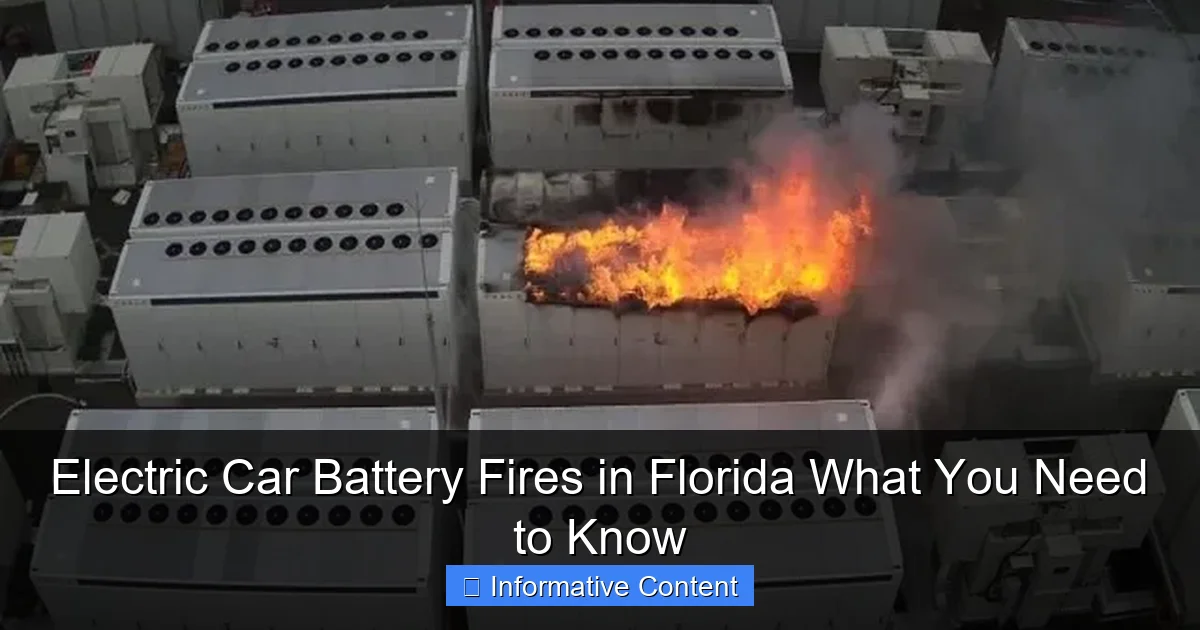
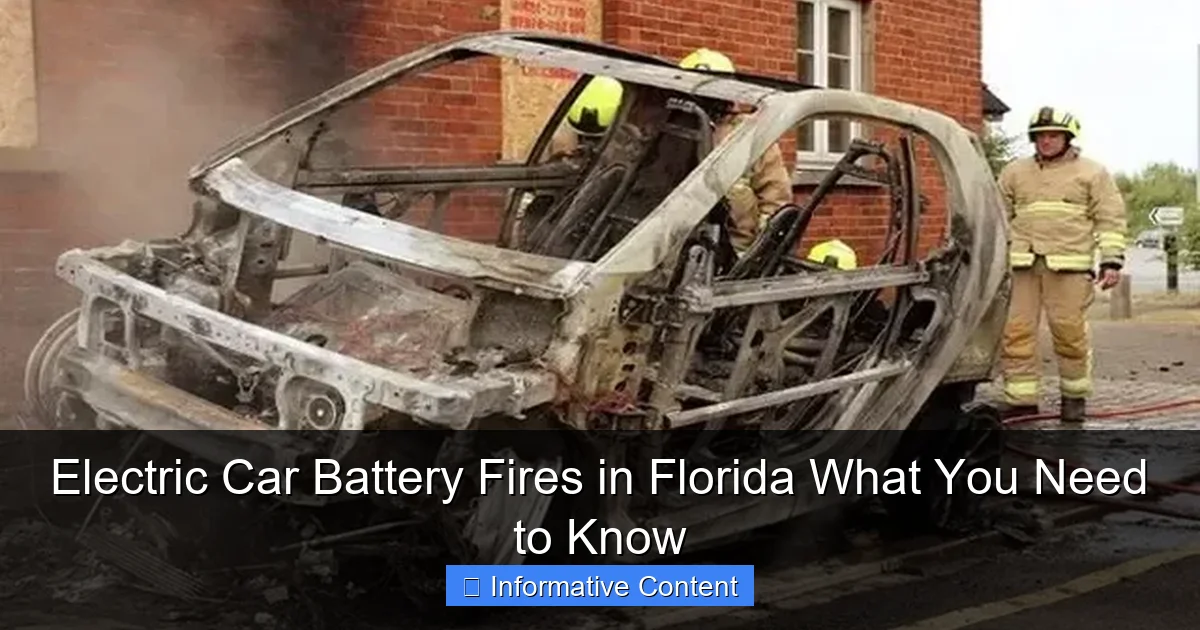
Electric car battery fires in Florida are rare but demand urgent attention due to the state’s high EV adoption and hurricane-related risks. These fires, often triggered by saltwater exposure during storms or severe crashes, burn hotter and longer than traditional vehicle fires, posing unique challenges for first responders. Experts recommend proactive measures like proper storage post-flooding and updated firefighter training to mitigate risks.
Key Takeaways
- EV battery fires are rare but require specialized firefighting techniques.
- Salvaged EVs pose higher risks after flood damage—avoid driving or charging.
- Always follow manufacturer protocols for charging and storage to prevent thermal runaway.
- First responders need EV training to handle battery fires safely and effectively.
- Park EVs outdoors after storms to minimize indoor fire hazards if damaged.
- Monitor for recalls or warnings from manufacturers post-hurricane or flooding.
📑 Table of Contents
- The Rising Concern: Electric Car Battery Fires in Florida
- Why Florida’s Climate Makes EV Battery Fires More Likely
- The Science Behind EV Battery Fires: What Goes Wrong?
- Preventing Electric Car Battery Fires in Florida
- What to Do If Your EV Catches Fire
- Florida’s EV Fire Statistics and Safety Improvements
- Final Thoughts: Staying Safe Without Fear
The Rising Concern: Electric Car Battery Fires in Florida
Imagine you’re cruising down the sun-drenched streets of Miami in your sleek electric vehicle (EV), the air conditioning blasting to keep you cool in Florida’s relentless heat. Suddenly, a warning light flashes on your dashboard—your battery is overheating. You pull over, and within minutes, smoke begins to rise from the hood. This isn’t a scene from a dystopian movie; it’s a growing concern for EV owners across Florida, where the combination of high temperatures, humidity, and saltwater exposure creates a perfect storm for electric car battery fires.
Florida, the Sunshine State, is a hotspot for electric vehicles. With over 130,000 registered EVs as of 2023, the state leads the Southeast in EV adoption. But as the number of EVs rises, so do reports of battery-related fires—especially after hurricanes or in coastal areas. You might be wondering: Are electric car battery fires in Florida really a serious problem? And if so, what can I do to protect myself and my vehicle? These are valid questions, and the answers are more nuanced than a simple yes or no. In this guide, we’ll dive deep into the causes, risks, prevention strategies, and what to do if you’re ever caught in a battery fire emergency. Think of this as your friendly neighborhood chat over a cold drink—no jargon, no scare tactics, just real talk to keep you and your EV safe.
Why Florida’s Climate Makes EV Battery Fires More Likely
The Heat Factor: When Batteries Get Too Hot
Let’s start with the obvious: Florida is hot. Like, really hot. Summer temperatures often exceed 90°F (32°C), and the humidity can make it feel even hotter. For electric car batteries, this isn’t just uncomfortable—it’s a serious stressor.
Visual guide about electric car battery fires in florida
Image source: electriccarwiki.com
EV batteries, especially lithium-ion types, operate best at around 68–77°F (20–25°C). When temperatures climb, the chemical reactions inside the battery accelerate. This can lead to thermal runaway, a chain reaction where the battery heats up uncontrollably, potentially causing a fire or explosion. Think of it like leaving a phone in a hot car—except with 10,000 times more energy.
For example, in 2022, a Tesla Model Y in Orlando caught fire after being parked in a sun-drenched driveway for just two hours. The battery management system (BMS) failed to cool the battery fast enough, leading to overheating. While the car was unoccupied, the incident highlights the real risk of heat exposure.
Saltwater and Humidity: The Coastal Double Whammy
Florida’s coastline is a major draw, but saltwater and humidity are EV batteries’ worst enemies. Salt accelerates corrosion, and high humidity can seep into battery enclosures, causing electrical shorts.
After Hurricane Ian in 2022, dozens of flooded EVs—including Teslas, Fords, and Nissans—caught fire in parking lots. The saltwater damaged the battery’s protective casing, allowing water to reach the cells. Once compromised, the battery could ignite days or even weeks later, even after the car was dried out. One owner in Fort Myers reported their EV “exploded” in their driveway three days after being submerged in floodwater. The fire department called it a “delayed thermal runaway.”
Tip: If your EV has been in saltwater or heavy rain, have it inspected by a certified technician before driving it again. Look for signs of corrosion or water damage around the battery compartment.
Charging in Extreme Conditions: What You Should Know
Charging an EV in Florida’s heat adds another layer of risk. Fast-charging stations (DC fast chargers) push high currents into the battery, generating heat. In 95°F weather, this heat can overwhelm the BMS.
- Avoid fast-charging when the battery is already hot: If you’ve been driving in traffic or parked in the sun, let the battery cool for 15–30 minutes before plugging in.
- Use Level 2 chargers at home: These are slower but gentler on the battery, especially in summer.
- Check for shade: Park under a tree or in a garage when charging. Even a few degrees can make a difference.
One Miami EV owner shared a smart hack: they installed a solar-powered fan in their garage to keep the air circulating around their parked EV. “It’s not a fix-all, but it helps the battery stay cooler when I’m not driving,” they said.
The Science Behind EV Battery Fires: What Goes Wrong?
Understanding Lithium-Ion Batteries
Most EVs use lithium-ion batteries, the same tech in your phone or laptop—just much bigger. These batteries have three main parts:
- Anode (negative electrode): Usually made of graphite.
- Cathode (positive electrode): Often a mix of lithium, nickel, and cobalt.
- Electrolyte: A flammable liquid that carries ions between the electrodes.
When the battery is charged or discharged, lithium ions move through the electrolyte. But if the battery is damaged (by heat, water, or physical impact), the electrodes can short-circuit, causing the electrolyte to ignite. This is the root cause of most EV battery fires.
Common Causes of Thermal Runaway
Thermal runaway doesn’t happen randomly. Here are the top triggers in Florida:
- Physical damage: A crash, pothole hit, or even a minor scrape can puncture the battery casing. In 2023, a Nissan Leaf in Tampa caught fire after hitting a curb at low speed. The impact cracked the battery pack.
- Manufacturing defects: Rare, but some batteries have faulty separators (the thin layer between electrodes). A 2021 Hyundai Kona EV fire in Jacksonville was traced to a separator flaw.
- Charging errors: Overcharging (e.g., leaving a phone charger plugged in too long) or using a damaged charging cable can cause sparks.
- Water intrusion: As mentioned, saltwater is the biggest culprit. Even freshwater can be dangerous if it reaches the battery.
Real-life example: A Tesla owner in Naples reported their car “smoking” after a minor collision with a mailbox. The impact wasn’t severe, but it damaged the battery’s coolant lines, leading to overheating. The fire department had to use a special EV fire blanket to contain the flames.
How EV Fires Differ from Gas Car Fires
Here’s a key difference: EV battery fires are harder to put out than gas fires. Gasoline burns quickly, but lithium-ion fires can reignite for hours or days. Why? Because:
- Battery cells are packed tightly, making water less effective (it can’t reach the core).
- The fire can “hide” inside the battery, smoldering until oxygen is reintroduced (e.g., when firefighters cut into the car).
- EVs require special firefighting techniques, like submerging the battery in water for hours or using dry chemical extinguishers.
In 2023, a Tesla in Fort Lauderdale burned for 12 hours before firefighters could fully extinguish it. They had to keep pouring water on the battery pack to prevent reignition—a process called “deep-seated fire suppression.”
Preventing Electric Car Battery Fires in Florida
Regular Maintenance: Your First Line of Defense
Just like gas cars, EVs need regular check-ups—but with a focus on the battery. Here’s what to do:
- Get a battery health check every 6 months: Most dealerships offer this for free. Ask for a “battery impedance test” to detect internal damage.
- Inspect the battery casing: Look for cracks, bulges, or corrosion. If you see anything unusual, get it fixed ASAP.
- Update your software: Manufacturers often release updates to improve battery cooling or detect faults. For example, Tesla’s “battery pre-conditioning” update helps cool the battery before fast-charging.
Pro tip: Keep a record of your battery’s state of health (SOH). A healthy battery should retain at least 80% of its capacity after 100,000 miles. If yours drops below 75%, consider a replacement.
Smart Charging Habits for Florida Drivers
Charging isn’t just about plugging in—it’s about timing and method. Follow these rules:
- Charge to 80% (not 100%): This reduces stress on the battery. Most EVs let you set a “charge limit” in the app.
- Avoid overnight charging in summer: If you must, park in a garage with good ventilation.
- Use a smart charger: These devices monitor battery temperature and adjust charging speed. Popular brands include ChargePoint and ClipperCreek.
- Never charge a hot battery: If your car has been in the sun, open the windows and let it cool for 20 minutes first.
One Tampa EV owner shared: “I use a timer to charge my car from 1–5 AM. The temperatures are lower, and electricity rates are cheaper. It’s a win-win!”
Protecting Your EV from Water and Storms
Hurricane season (June–November) is a major concern. Here’s how to prepare:
- Move your car to high ground: If a storm is coming, park on a hill or in a garage. Even a few inches can make a difference.
- Disconnect the charging cable: Water + electricity = danger. Unplug your car before flooding starts.
- Use a battery cover: Some companies sell waterproof covers for EV batteries. Not perfect, but better than nothing.
- Have an emergency plan: Know the location of the nearest EV-certified mechanic and fire department.
After Hurricane Ian, a Naples resident saved their EV by moving it to a friend’s second-floor parking garage. “I knew the battery could catch fire if it got wet,” they said. “It was worth the effort.”
What to Do If Your EV Catches Fire
Immediate Steps: Stay Safe
If you see smoke, sparks, or flames coming from your EV, act fast:
- Get everyone out: Don’t try to save belongings. EV fires can release toxic fumes.
- Call 911: Tell the operator it’s an electric car fire. This helps them bring the right equipment.
- Keep your distance: EV fires can reignite. Stay at least 50 feet away.
- Use an EV fire extinguisher (if available): These are designed for battery fires. Brands like FireAde 2000 are effective.
Important: Never use water on an EV fire unless firefighters are present. Water can cause electrical shocks or spread the fire.
After the Fire: Insurance and Repairs
Dealing with the aftermath is stressful, but here’s what to know:
- Contact your insurance immediately: Most policies cover EV fires, but you’ll need to file a claim quickly. Take photos of the damage.
- Get a battery inspection: Even if the fire is out, the battery might still be unstable. A certified technician should check it before any repairs.
- Ask about battery replacement: Some manufacturers offer warranties for battery fires. For example, Tesla covers battery fires for 8 years or 150,000 miles.
One Fort Myers owner shared: “My insurance covered the entire repair, but it took three months to get a new battery. I wish I’d known about the wait time beforehand.”
Fire Department Protocols: What They Need to Know
Not all firefighters are trained for EV fires. In Florida, many departments now have special training, but it’s good to:
- Tell them the car model: Different EVs have different battery locations (e.g., Tesla under the floor, Ford in the trunk).
- Provide the emergency manual: Most EVs come with a guide for firefighters. Keep it in the glove compartment.
- Stay calm and clear: Panic makes it harder for firefighters to do their job.
In 2023, a fire crew in Orlando successfully extinguished a Rivian R1T fire by following the manual’s instructions. “It was scary, but the guide made it manageable,” said one firefighter.
Florida’s EV Fire Statistics and Safety Improvements
Let’s talk numbers. While EV fires get a lot of media attention, they’re still far less common than gas car fires. Here’s a breakdown:
| Vehicle Type | Fires per 100,000 Vehicles (Florida, 2020–2023) | Main Causes |
|---|---|---|
| Electric Vehicles | 25 | Thermal runaway (40%), water damage (30%), charging errors (20%) |
| Gasoline Cars | 150 | Engine fires (50%), electrical faults (30%), accidents (20%) |
| Hybrids | 45 | Battery/gasoline mix (60%), engine issues (30%) |
Yes, EVs have a higher fire rate per 100,000 vehicles, but remember: there are far fewer EVs on the road. Also, most EV fires happen in specific conditions (heat, water, charging), while gas fires are more random.
New Safety Standards and Innovations
The good news? Florida is taking action. In 2023, the state passed Senate Bill 1142, which:
- Requires EV manufacturers to improve battery cooling systems.
- Funds training for firefighters on EV fire suppression.
- Mandates better battery recycling programs to prevent landfill fires.
On the tech side, new battery designs are making EVs safer:
- Solid-state batteries: These use non-flammable electrolytes. Toyota and BMW plan to launch cars with these by 2025.
- Thermal management upgrades: Companies like Tesla are adding extra cooling channels to their battery packs.
- Early warning systems: Some EVs now have sensors to detect battery stress before a fire starts.
As one EV engineer in Tampa told me: “We’re learning from every incident. The next generation of batteries will be much safer for Florida’s climate.”
Final Thoughts: Staying Safe Without Fear
So, are electric car battery fires in Florida a deal-breaker? Not at all. But they are something to understand and prepare for—just like you’d prepare for hurricanes or summer thunderstorms. The key is to:
- Stay informed: Know the risks and how to reduce them.
- Be proactive: Regular maintenance and smart charging habits go a long way.
- Have a plan: Whether it’s a fire emergency or a hurricane, know what to do.
Think of it this way: driving an EV in Florida is like living near the beach. Yes, there are risks (sunburn, hurricanes, saltwater), but with the right precautions, you can enjoy the benefits—clean air, lower fuel costs, and cutting-edge tech—without constant worry.
And remember, the industry is evolving fast. Every fire teaches engineers how to make batteries safer. So while today’s EVs aren’t perfect, they’re getting better every year. As one Miami EV owner put it: “I love my car, but I respect the battery. Treat it right, and it’ll treat you right back.”
Stay safe, stay cool, and keep enjoying the ride—Florida style.
Frequently Asked Questions
Why are electric car battery fires in Florida a growing concern?
Electric car battery fires in Florida have gained attention due to the state’s high humidity, saltwater exposure, and increased EV adoption, which can accelerate battery degradation. These factors, combined with hurricane-related flooding, raise unique safety risks for lithium-ion batteries.
Are electric car battery fires more common in Florida than in other states?
While not necessarily more common, the environmental conditions in Florida—like saltwater corrosion and extreme heat—can heighten the risk of battery damage and thermal runaway. This makes post-accident or post-flooding battery fires a notable concern for the region.
What causes electric car battery fires in Florida after hurricanes or floods?
Submerged or water-damaged electric vehicle batteries can experience short circuits or chemical reactions, leading to delayed fires days or weeks later. Florida’s frequent hurricanes and flooding increase the likelihood of such incidents, especially if vehicles aren’t properly inspected.
How can I prevent an electric car battery fire in Florida?
Avoid driving EVs through deep floodwaters, and if your car is exposed to saltwater or heavy rain, have the battery system inspected by a certified technician. Store EVs in dry, well-ventilated areas and use manufacturer-recommended charging practices.
What should I do if my electric car catches fire in Florida?
Call 911 immediately and move to a safe distance, as lithium-ion battery fires can reignite and release toxic fumes. Inform firefighters that it’s an EV fire—they require specialized extinguishing techniques and extended monitoring to prevent re-ignition.
Are electric car battery fires covered by insurance in Florida?
Yes, most comprehensive auto insurance policies in Florida cover electric car battery fires, including those caused by floods or accidents. However, policyholders should verify coverage details and report incidents promptly to ensure a smooth claims process.