Electric Car Charging Stations in Florida Guide 2024
Featured image for electric car charging stations in florida
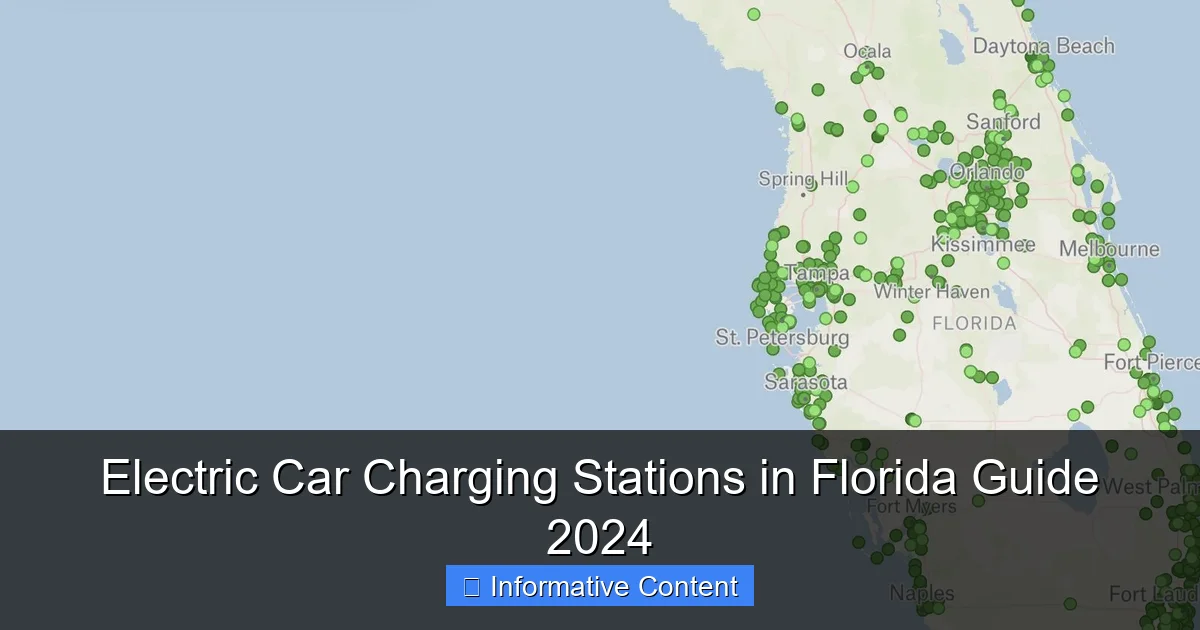
Image source: wfstaticmap.felt.com
Florida now hosts over 3,500 public EV charging stations in 2024, making it one of the most electric vehicle-friendly states in the U.S. With fast-charging hubs along major interstates and expanding networks in cities like Miami, Orlando, and Tampa, drivers can confidently travel across the state with reliable access to Level 2 and DC fast chargers. Strategic investments and tourism demand continue to accelerate infrastructure growth, solidifying Florida’s leadership in sustainable transportation.
Key Takeaways
- Florida has 3,000+ public stations: Easily find chargers statewide via apps like PlugShare.
- Fast-charging networks expanding: Use Tesla Superchargers and Electrify America for quick top-ups.
- Free charging still available: Check malls, hotels, and workplaces for no-cost options.
- Plan for peak rates: Avoid high-demand hours to save on public charging costs.
- Home charging is essential: Install a Level 2 charger for reliable overnight power.
- Check station compatibility: Confirm connector types (CCS, CHAdeMO, Tesla) before traveling.
📑 Table of Contents
- The Sunshine State Is Going Electric: Your 2024 Charging Station Guide
- How Many Charging Stations Are in Florida? (And Where Are They?)
- Best Apps and Tools to Find Charging Stations in Florida
- Cost of Charging: What to Expect in 2024
- Charging at Home vs. Public: What’s Best for Floridians?
- Road Trip Ready: Charging Tips for Long Drives Across Florida
- Data Snapshot: Florida Charging Stations in 2024
- Final Thoughts: Florida Is Ready for Your EV
The Sunshine State Is Going Electric: Your 2024 Charging Station Guide
If you’ve ever driven through Florida, you know it’s a land of endless highways, palm-lined streets, and that unmistakable blend of beach life and urban buzz. But here’s something you might not realize: Florida is quietly becoming one of the most electric car-friendly states in the U.S. Whether you’re zipping from Miami to Orlando, cruising the Gulf Coast, or escaping to the Keys, the infrastructure for electric car charging stations in Florida is growing fast—and it’s getting easier than ever to keep your EV powered up.
I remember my first road trip in my Tesla Model 3. I was excited, but also a little nervous. “What if I run out of juice in the middle of I-75?” I asked myself. Turns out, I had nothing to worry about. From fast chargers at gas stations to Level 2 stations at shopping malls, Florida’s charging network is not just functional—it’s surprisingly convenient. And with more people switching to electric vehicles (EVs) every year, the state is stepping up its game. In this guide, I’ll walk you through everything you need to know about electric car charging stations in Florida in 2024—from where to find them, to how to charge smartly, and even what to do when things don’t go as planned.
How Many Charging Stations Are in Florida? (And Where Are They?)
Let’s start with the big picture. As of early 2024, Florida has over 6,800 public electric car charging ports across more than 2,500 locations. That’s a huge leap from just a few years ago, and it’s one of the highest concentrations in the nation—second only to California and Texas in total numbers. But what makes Florida unique is how well-distributed the network is. Unlike some states where chargers are clustered in big cities, Florida has a surprisingly balanced spread across urban, suburban, and even rural areas.
Visual guide about electric car charging stations in florida
Image source: png.pngtree.com
Top Regions with the Most Charging Stations
The highest density of charging stations is in the South Florida metro area (Miami-Fort Lauderdale-West Palm Beach), which accounts for nearly 30% of all public chargers in the state. This makes sense—South Florida has the highest EV adoption rate in Florida, driven by high incomes, environmental awareness, and strong incentives from local utilities.
- Orlando and Central Florida: Home to over 1,200 charging ports, including clusters around theme parks, shopping centers, and major highways like I-4 and the Florida Turnpike.
- Tampa Bay and the Gulf Coast: With more than 900 chargers, this region has seen rapid growth, especially in cities like St. Petersburg, Clearwater, and Sarasota.
- Jacksonville and Northeast Florida: While slightly behind the south, Jacksonville now has over 700 ports, with new fast chargers popping up along I-95 and US-1.
- Panhandle and Rural Areas: This is where the network gets thinner, but it’s improving. Cities like Tallahassee, Pensacola, and Panama City have growing networks, and Tesla’s Supercharger expansion has helped bridge some gaps.
Types of Chargers: What’s Where?
Not all chargers are created equal. Here’s a quick breakdown of what you’ll find across Florida:
- Level 2 (240V) chargers: These are the most common—found at malls, grocery stores, hotels, and workplaces. They add about 10–25 miles of range per hour. Great for longer stops.
- DC Fast Chargers (Level 3): These are your go-to for road trips. They can add 60–100 miles of range in 20–30 minutes. Florida has over 1,100 of these, with major hubs along I-95, I-75, I-4, and the Turnpike.
- Tesla Superchargers: Over 500 Supercharger stalls are open to non-Tesla EVs now (thanks to the NACS rollout), and Tesla still has exclusive access at many locations. These are strategically placed every 50–100 miles along major routes.
- Destination Chargers: These are slower Level 2 chargers at places like hotels, restaurants, and tourist spots. Think of them as “top-up” points when you’re not in a rush.
Pro tip: Use apps like PlugShare or ChargePoint to see real-time availability and filter by charger type. I once avoided a 45-minute wait at a busy Supercharger in Orlando just by checking PlugShare—ended up using a nearby Electrify America station instead.
Best Apps and Tools to Find Charging Stations in Florida
Let’s be honest: relying solely on your car’s built-in navigation isn’t always the best idea. Sometimes the screen lags, or the system misses a newly installed charger. That’s why I always keep a few trusted apps on my phone when driving around Florida.
Top 3 Apps for Finding Charging Stations
- PlugShare: This is my #1 go-to. It shows every public and private charger in the state, with user reviews, photos, and real-time status. You can filter by connector type (CCS, Tesla, CHAdeMO), power level, and even see if a charger is free. Bonus: it shows nearby amenities (restrooms, food, etc.). I used it to find a hidden Level 2 charger at a Publix in Fort Myers—saved me during a long shopping trip.
- ChargePoint: Owns a large network of chargers in Florida, especially in malls and parking garages. The app lets you reserve a spot, pay with Apple/Google Pay, and even earn rewards. I love using it when I’m downtown and need a quick top-up.
- Electrify America: Great for fast charging on road trips. Their app shows live availability, pricing, and even gives you a “charging forecast” based on your car model. I used it last summer to plan my drive from Miami to Naples—no surprises, no stress.
Built-In Car Navigation: Tesla vs. Non-Tesla
If you drive a Tesla, the built-in navigation is excellent. It automatically plans charging stops along your route, factoring in your battery level, traffic, and even weather. I’ve used it for a 400-mile trip from Miami to Tallahassee—smooth as butter.
For non-Tesla EVs (like Ford Mustang Mach-E, Hyundai Ioniq 5, or Kia EV6), the built-in systems are improving, but they still lag behind Tesla’s. I’ve had moments where my Mach-E’s nav suggested a charger that was out of service. That’s why I always cross-check with PlugShare before committing to a stop.
Offline Maps and Backup Plans
Here’s a tip I learned the hard way: download offline maps of your route before heading out. Cell service can be spotty in rural Florida (looking at you, Alligator Alley). PlugShare lets you save “favorites” and even download regional maps. I once lost signal near Lake Okeechobee but still found a working ChargePoint charger because I’d saved it earlier.
Also, keep a portable Level 1 charger in your trunk. It’s slow (only 3–5 miles per hour), but it’s a lifesaver if you’re stuck with a dead battery and no nearby stations. I keep mine in my car just for emergencies.
Cost of Charging: What to Expect in 2024
Let’s talk money—because charging isn’t always free, and prices can vary wildly depending on where and how you charge.
Level 2 Charging: The Budget-Friendly Option
Most Level 2 stations in Florida charge $0.25–$0.50 per kWh, or sometimes a flat fee of $1–$2 per session. Some places (like public libraries or city parking lots) offer free charging—especially in progressive cities like St. Petersburg and Coral Gables.
Example: Charging a 60 kWh battery from 20% to 80% at $0.35/kWh costs about $12.60. That’s roughly 180 miles of range. Not bad for a 4–5 hour charge while you shop or eat.
DC Fast Charging: Speed Costs More
Fast chargers are pricier. Expect to pay $0.35–$0.60 per kWh, or a flat rate of $5–$10 per session. Some networks (like Electrify America) use a “per minute” pricing model during peak hours, which can be more expensive.
Real-world example: I charged my Tesla Model 3 from 20% to 80% at an Electrify America station in Orlando. It took 28 minutes and cost $18.50 (about $0.52/kWh). That’s about $0.10 per mile—still cheaper than gas, but not as cheap as Level 2.
Tip: Avoid charging to 100% at fast chargers. Batteries charge slower above 80%, and you’re paying for time you don’t need. I usually stop at 80% and save time and money.
Free Charging: Yes, It Exists!
Believe it or not, there are still places offering free charging. Look for:
- New car dealerships (especially Tesla, Hyundai, and Ford) often have free Level 2 chargers.
- Some hotels and Airbnb hosts include charging in your stay.
- Workplaces and apartment complexes with EV incentives.
- Promotional events (like Earth Day) where networks offer free charging for a day.
I once scored a free 2-hour charge at a Hyundai dealership in Naples just by stopping in to ask about a car. The sales rep didn’t mind—and I left with a full battery and a test drive offer.
Subscription Plans: Are They Worth It?
Some networks (like ChargePoint and EVgo) offer monthly plans that reduce your per-kWh cost. For example, ChargePoint’s “Pass” plan gives you $0.10/kWh off, which can save you $10–$20 per month if you charge frequently.
But—and this is a big but—these plans only make sense if you’re a heavy user. I tried the EVgo plan for three months and barely broke even. Now I just pay as I go.
Charging at Home vs. Public: What’s Best for Floridians?
Most EV owners charge at home—it’s cheaper, more convenient, and better for your battery’s long-term health. But not everyone has a garage or driveway. So what’s the best strategy?
Home Charging: The Gold Standard
If you own a home, install a Level 2 home charger. They cost $500–$800 (plus installation), but many utilities offer rebates. For example, Florida Power & Light (FPL) gives up to $500 back for installing a charger. That’s a 50–70% discount!
Charging at home costs about $0.11–$0.15 per kWh—less than half the price of public Level 2 charging. And you can set your car to charge overnight when electricity rates are lowest.
My setup: I have a ChargePoint Home Flex in my garage. I plug in every night and wake up with a full battery. Total monthly cost? About $25 for 1,000 miles.
Apartment and Condo Living: The Struggle Is Real
About 40% of Floridians live in multi-unit buildings, and many complexes still lack charging options. But things are changing. The state now requires new apartment buildings to include EV-ready wiring, and some HOAs are adding chargers.
If your building doesn’t have charging:
- Talk to your landlord or HOA. Suggest a pilot program with a single charger.
- Look into portable Level 2 chargers that can plug into a standard 240V outlet (like the Grizzl-E or Mustart).
- Use public stations strategically. I know one guy in Miami who charges at a nearby Whole Foods twice a week—he calls it his “charging date.”
Workplace Charging: A Growing Perk
More employers in Florida are offering workplace charging as a benefit. Companies like Disney, Publix, and the University of Florida have installed stations for employees. Ask your HR department—it might be available and free!
Even if your company doesn’t have chargers, suggest it. Many utilities offer free installation for workplaces. It’s a win-win: you save on charging, and your employer looks eco-friendly.
Road Trip Ready: Charging Tips for Long Drives Across Florida
Planning a road trip? Whether it’s a weekend getaway to Key West or a cross-state drive from Pensacola to Miami, here’s how to stay powered up.
Plan Your Route (But Be Flexible)
Use apps like PlugShare Trip Planner or A Better Routeplanner (ABRP) to map out your stops. I used ABRP for a trip to the Everglades last winter—it suggested a fast charger in Homestead and a Level 2 at a rest stop in Naples. Worked perfectly.
But always have a backup. Sometimes chargers are full, broken, or under maintenance. I keep a list of “Plan B” stations 10–20 miles off my route.
Time Your Charging Right
Charge when you stop for food, rest, or sightseeing—not just when your battery is low. I always aim to charge at 30–40%, not 10%. This avoids long waits and keeps your battery healthy.
Also, avoid peak hours (4–7 PM) at fast chargers. Lines are longer, and prices may be higher due to demand-based pricing.
Know the Key Routes
Here are the most EV-friendly highways in Florida:
- I-95: From Miami to Jacksonville—dense with fast chargers every 50 miles.
- I-75: Miami to Naples to Tampa—great Supercharger coverage.
- I-4 and Florida Turnpike: Orlando to Tampa/Miami—Electrify America and Tesla stations every 60–80 miles.
- US-1 and Overseas Highway: The Keys have limited fast charging, but Level 2 stations are at most major stops (Key Largo, Marathon, Key West).
Pro tip: The Florida Keys are doable in an EV, but plan carefully. I drove a Model Y from Miami to Key West with no issues—charged in Homestead and Marathon.
Emergency Charging: What to Do If You’re Stranded
It’s rare, but it happens. If you’re low on battery and far from a charger:
- Turn off AC/heat, reduce speed, and enable “Range Mode” (if your car has it).
- Call roadside assistance. Most EVs include towing to the nearest charger (Tesla, Ford, Hyundai, etc.).
- Use PlugShare to find the nearest Level 1 outlet—even a hotel or gas station might let you plug in for a few hours.
Data Snapshot: Florida Charging Stations in 2024
Here’s a quick look at the state of EV charging in Florida this year:
| Metric | Number |
|---|---|
| Total Public Charging Ports | 6,820 |
| DC Fast Charging Ports | 1,150 |
| Tesla Superchargers (Open to All EVs) | 520 |
| Level 2 Public Ports | 5,150 |
| Top Cities by Charger Density | Miami, Orlando, Tampa, Jacksonville, Fort Lauderdale |
| Average Cost (Level 2) | $0.35/kWh |
| Average Cost (DC Fast) | $0.50/kWh |
| EV Adoption Rate (2024) | 7.2% of new car sales |
Source: U.S. Department of Energy, Alternative Fuels Data Center (AFDC), 2024 Q1 update.
Final Thoughts: Florida Is Ready for Your EV
Look, I get it—switching to an electric car can feel like a leap. But when it comes to electric car charging stations in Florida, the state is doing something right. The network is growing, the apps are smart, and the cost is still way below gas. Whether you’re a daily commuter in Miami, a weekend warrior in Tampa, or a road tripper exploring the Panhandle, you’re covered.
The key is to plan smart. Use the right apps, charge at home when you can, and don’t stress over the occasional wait at a busy fast charger. And remember: every time you plug in, you’re helping reduce emissions in a state that desperately needs it.
So go ahead—take that EV for a spin. The Sunshine State is ready to charge you up.
Frequently Asked Questions
How many electric car charging stations are in Florida?
As of 2024, Florida has over 5,000 public EV charging stations, with more than 12,000 individual charging ports statewide. The state ranks among the top 5 in the U.S. for EV infrastructure density, especially along major highways like I-95 and I-75.
Where can I find fast charging stations for electric cars in Florida?
Fast charging stations for electric cars in Florida are widely available at shopping centers, rest areas, and Tesla Supercharger locations. Use apps like PlugShare or ChargePoint to locate DC fast chargers, particularly along tourist corridors like Orlando, Miami, and Tampa.
Are there free electric car charging stations in Florida?
Yes, several businesses, malls, and municipalities in Florida offer free charging as an incentive for EV drivers. However, availability varies by location, and most free stations are Level 2 chargers, so check apps like Google Maps or EVgo for real-time status.
What types of electric car charging stations are available in Florida?
Florida offers Level 2 (240V) and DC fast charging stations for electric cars, with Level 2 being the most common. Tesla Superchargers (compatible with Tesla vehicles) and CCS/CHAdeMO fast chargers for other EVs are increasingly installed at gas stations and highway exits.
Can I charge my electric car in Florida during a hurricane?
Most public charging stations may be unavailable during power outages caused by hurricanes, but backup-equipped stations are growing in number. Always plan ahead by charging fully before storms and consider portable emergency chargers for critical needs.
How do I pay for electric car charging stations in Florida?
Payment methods vary by provider but typically include credit cards, mobile apps (e.g., ChargePoint, Electrify America), or membership subscriptions. Many stations also offer pay-as-you-go options, with pricing displayed per kWh or per minute.