Electric Car Explosion in Florida Sparks Safety Debate
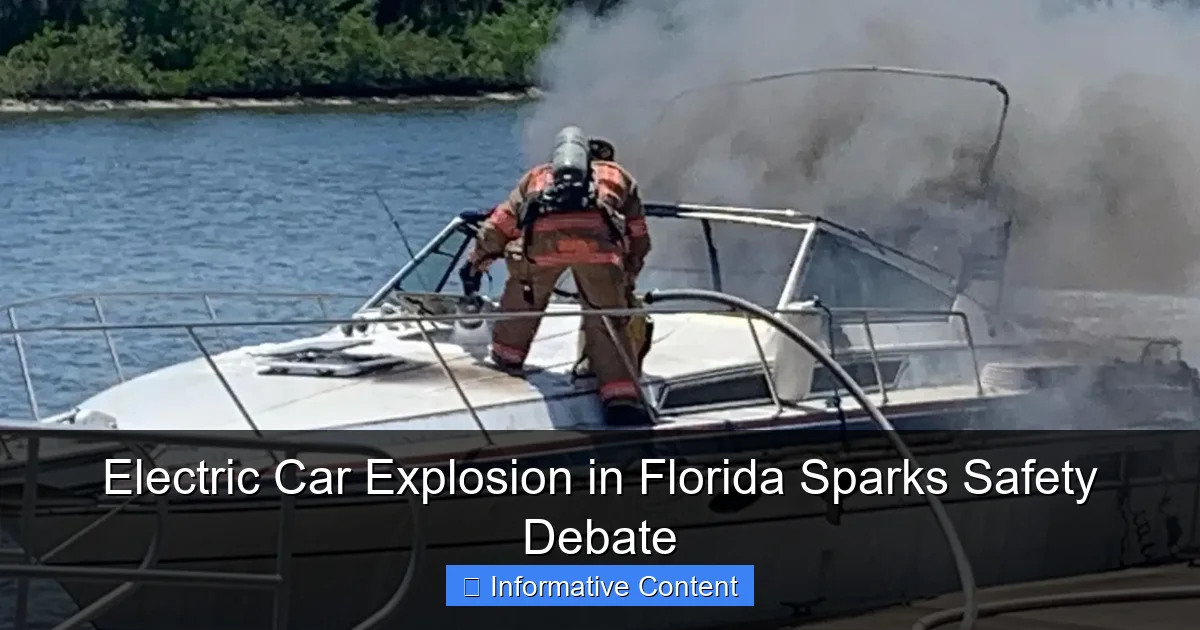
Featured image for electric car explosion in florida
Image source: nypost.com
An electric car explosion in Florida has reignited concerns over EV battery safety, after a parked Tesla burst into flames, reportedly without warning. Authorities are investigating the incident, which left debris scattered and nearby vehicles damaged, fueling debate among experts and consumers about thermal runaway risks in lithium-ion batteries. As EV adoption grows, this event underscores the urgent need for improved safety protocols and transparency.
Key Takeaways
- EV fires are rare but intense: Thermal runaway in batteries complicates extinguishing efforts.
- Upgrade emergency protocols: First responders need specialized EV fire training and equipment.
- Monitor battery health: Regular checks reduce risks of overheating or short circuits.
- Park smart: Avoid enclosed spaces like garages if battery damage is suspected.
- Verify recalls: Stay updated on manufacturer safety notices for your EV model.
- Advocate transparency: Demand clearer EV fire data from automakers and regulators.
📑 Table of Contents
- The Incident That Shook a Neighborhood
- What Actually Happened in the Florida Incident?
- How Do EV Fires Compare to Gasoline Car Fires?
- Battery Safety: The Core of the Debate
- What EV Owners Can Do to Stay Safe
- The Bigger Picture: EVs and the Future of Transportation
- Conclusion: Balancing Innovation and Caution
The Incident That Shook a Neighborhood
It was a quiet Tuesday evening in a suburban neighborhood in Fort Lauderdale, Florida, when a sudden electric car explosion shattered the calm. Neighbors described a loud boom, followed by flames and thick black smoke rising from a Tesla Model 3 parked in a residential driveway. Firefighters arrived within minutes and managed to contain the blaze, but not before the vehicle was completely destroyed. Miraculously, no one was injured—but the incident sent shockwaves far beyond the local community.
This wasn’t just another car fire. It was a rare but dramatic event that reignited a national conversation about electric vehicle (EV) safety. While EV fires are statistically less common than gasoline-powered vehicle fires, the intensity, duration, and difficulty in extinguishing battery-related blazes make them uniquely concerning. The electric car explosion in Florida has become a flashpoint in the debate over whether EVs are truly safer than traditional cars—or if we’re trading one set of risks for another.
What Actually Happened in the Florida Incident?
The Timeline of Events
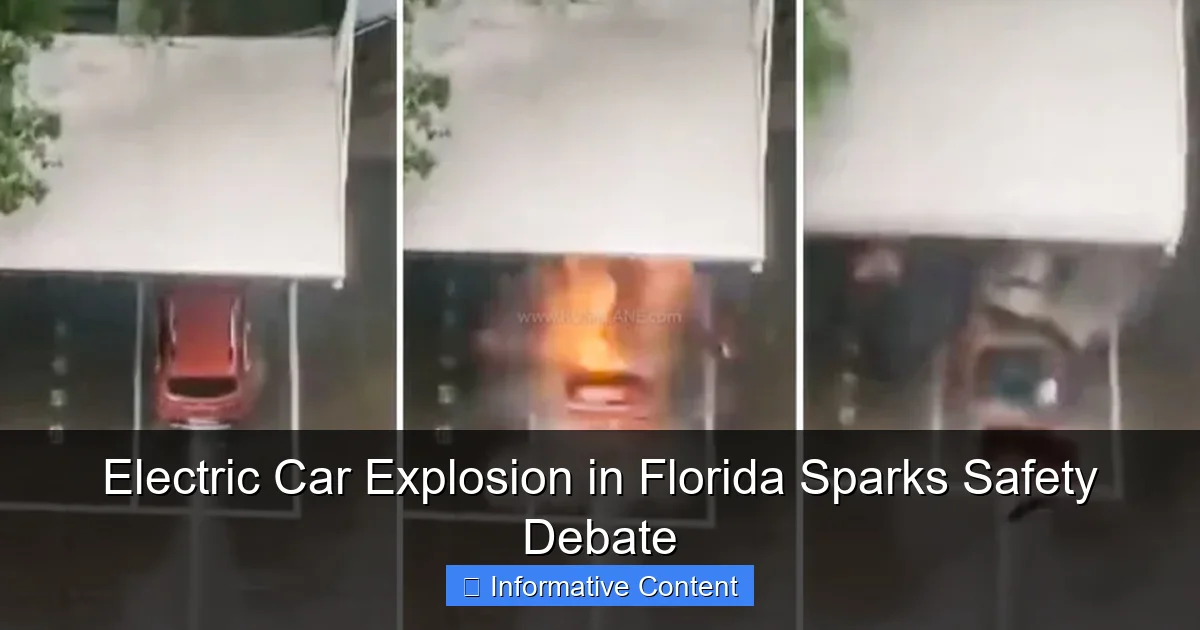
According to local fire department reports and eyewitness accounts, the Tesla Model 3 had been parked for about 45 minutes after returning from a short trip. The owner, a 42-year-old software engineer, had just plugged in the car to charge when the explosion occurred. Security camera footage from a neighbor’s porch shows the car suddenly emitting sparks from the rear, followed by a rapid ignition and a loud blast. Within two minutes, the entire rear section was engulfed in flames.
Visual guide about electric car explosion in florida
Image source: rushlane.com
Firefighters responded quickly, but the fire was stubborn. Unlike gasoline fires, which typically burn out once fuel is consumed, the lithium-ion battery pack continued to reignite. It took over 3,000 gallons of water and specialized chemical agents to fully extinguish the blaze—nearly four times the amount used in a standard car fire. The fire department later confirmed that the battery’s thermal runaway had caused the explosion.
Official Investigation Findings
The National Highway Traffic Safety Administration (NHTSA) and the Florida Highway Patrol launched a joint investigation. Early findings suggest that a battery cell defect—possibly related to a manufacturing flaw or previous minor damage—led to internal short-circuiting. This triggered a chain reaction known as thermal runaway, where one cell overheats, ignites, and spreads the fire to adjacent cells.
Interestingly, the car was not involved in a crash, nor was it damaged in any visible way before the incident. This raised concerns about the potential for spontaneous EV fires—even in vehicles that appear to be in perfect condition. Tesla has since issued a statement acknowledging the event and confirming they are cooperating with investigators. They emphasized that the car was not under any known recall at the time of the incident.
Community Reaction and Media Frenzy
The explosion quickly went viral. Local news stations aired dramatic footage of the burning car, and social media lit up with speculation. Some users shared stories of their own EV charging anxieties. Others pointed to this as proof that EVs are inherently dangerous. But experts caution against jumping to conclusions.
“It’s like seeing one plane crash and declaring all flying unsafe,” said Dr. Lena Patel, an energy storage safety researcher at the University of Central Florida. “The media coverage often focuses on the spectacle, not the data. We need to look at the full picture.”
Still, the incident has left many Florida residents uneasy. Some homeowners’ associations have begun discussing new rules for EV charging in garages or near homes. A few have even banned overnight charging altogether—despite the fact that the car in question was charging during the day.
How Do EV Fires Compare to Gasoline Car Fires?
Frequency: The Numbers Don’t Lie
Let’s start with the big question: Are EVs more likely to catch fire than gas-powered cars? The short answer is no—but the story is more nuanced.
According to a 2023 study by the National Fire Protection Association (NFPA), gasoline-powered vehicles have a fire incident rate of 1,529 fires per 100,000 vehicles. In contrast, EVs have a rate of just 25 fires per 100,000 vehicles. That’s a 60-to-1 difference in favor of EVs.
Even when you account for the fact that EVs are still a smaller portion of the total vehicle fleet, the data consistently shows that internal combustion engine (ICE) vehicles are far more prone to fires. Why? Because gasoline is highly flammable, and ICE vehicles have more moving parts, fuel lines, and heat sources—all of which increase fire risk.
Fire Behavior: Why EV Fires Are Different
While EV fires are rarer, they behave differently—and that’s where the real concern lies. Gasoline fires usually burn out once the fuel is gone. They’re intense but short-lived. EV battery fires, on the other hand, can burn for hours and reignite even after being “extinguished.” This is due to thermal runaway, a self-sustaining chemical reaction inside the battery cells.
Imagine lighting a pile of dry leaves versus a pile of charcoal briquettes. The leaves flare up fast and die down quickly. The charcoal smolders, burns slowly, and can reignite if oxygen is reintroduced. That’s the difference between a gas fire and a lithium-ion battery fire.
Here’s a practical example: In 2020, a Tesla Model S caught fire in a parking garage in San Francisco. Firefighters used standard foam and water, but the battery reignited three times over 12 hours. They eventually had to submerge the entire car in a water tank to stop the reaction.
Firefighting Challenges
Traditional firefighting tactics don’t always work on EV fires. Water is still effective, but it takes much more of it. Some fire departments are now using high-volume deluge systems or specialized EV fire blankets to smother the flames and prevent oxygen from feeding the fire.
Many fire departments across the U.S. are investing in EV-specific training. In Florida, the Miami-Dade Fire Rescue Department recently added a new module to their academy curriculum focused entirely on EV fire response. “We used to treat all car fires the same,” said Captain Miguel Rivera. “Now we know EVs need a different playbook.”
Battery Safety: The Core of the Debate
How Lithium-Ion Batteries Work
To understand why EVs can explode, you need to know a bit about lithium-ion batteries. These batteries power everything from smartphones to electric cars. They work by moving lithium ions between two electrodes (anode and cathode) through an electrolyte.
When a battery is damaged, overcharged, or has a manufacturing defect, the separator between the electrodes can fail. This causes a short circuit, which generates intense heat. That heat can then trigger the thermal runaway we’ve been discussing.
Think of it like a row of dominoes. One domino falls (the short circuit), and it knocks over the next, and the next, and so on—until the entire battery pack is compromised.
Common Causes of Battery Failures
Not all EV fires start the same way. Here are the most common causes of battery-related incidents:
- Manufacturing defects: Tiny metal particles left in the battery during production can cause internal short circuits. Tesla has had several recalls in the past for this issue.
- Physical damage: A deep pothole or undercarriage scrape can puncture the battery pack, especially in low-slung EVs.
- Overcharging: While modern chargers have safeguards, faulty home chargers or software bugs can push the battery beyond safe limits.
- Thermal management failure: If the battery cooling system fails, heat builds up and can lead to runaway.
- Previous undetected damage: A minor collision months earlier might have cracked a cell, leading to a delayed failure.
In the Florida case, investigators found microscopic metal shards in one of the cells—likely from the manufacturing process. This is a known issue in battery production, though rare.
Advancements in Battery Safety
The good news? Battery technology is improving fast. Newer EVs are using safer chemistries and better designs to minimize risks.
- LFP (Lithium Iron Phosphate) batteries: Found in Tesla’s Model 3 Standard Range and some Ford and BYD models, LFP batteries are more stable and less prone to thermal runaway. They don’t contain cobalt, which is both expensive and dangerous when heated.
- Cell-to-pack designs: Instead of individual modules, some batteries are built as one solid unit. This reduces weak points and improves structural integrity.
- Smart battery management systems (BMS): These monitor temperature, voltage, and current in real time. If a cell starts to overheat, the system can isolate it before it spreads.
- Crash-resistant enclosures: Battery packs are now encased in thick, fire-resistant materials that can withstand high impacts.
For example, the 2023 Hyundai Ioniq 5 has a battery pack that survived a 15-foot drop test without any fire or leakage—something that would be unthinkable in a gasoline car.
What EV Owners Can Do to Stay Safe
Charging Best Practices
Most EV fires happen during or shortly after charging. Here’s how to reduce your risk:
- Use certified chargers: Stick to UL-listed or Energy Star-rated chargers. Avoid cheap, no-name brands from online marketplaces.
- Avoid charging in extreme heat: If it’s over 95°F outside, try to charge in a shaded or air-conditioned garage. Heat accelerates battery degradation.
- Don’t leave the car charging unattended overnight: While modern EVs have safety cutoffs, it’s still a smart precaution—especially in a garage.
- Check for recalls: Regularly visit the NHTSA website or your manufacturer’s portal to see if your car is under a safety recall.
- Use scheduled charging: Instead of plugging in and walking away, set your car to charge during off-peak hours when you’re awake and nearby.
One Florida EV owner, Sarah Kim, told us she now charges her Rivian R1S in the driveway instead of the garage after the explosion. “I still love my EV, but I sleep better knowing it’s outside,” she said.
Regular Maintenance and Inspection
Just like any vehicle, EVs need regular checkups. Here are a few key things to look for:
- Inspect for undercarriage damage: After hitting a pothole or curb, get a quick inspection. A small dent could mean a cracked battery case.
- Monitor charging speed: If your car suddenly charges slower than usual, it could be a sign of battery issues.
- Listen for unusual sounds: Hissing, popping, or buzzing from the battery area should be checked immediately.
- Keep software updated: Manufacturers often push updates that improve battery safety and performance.
Emergency Preparedness
Even with precautions, accidents happen. Here’s what to do if your EV starts smoking or catches fire:
- Get everyone out and call 911 immediately. Do not try to extinguish the fire yourself.
- Warn others to stay back at least 100 feet. Battery fires can release toxic fumes and explode unexpectedly.
- Do not use water or fire extinguishers. These can be ineffective or even dangerous.
- Let firefighters handle it. They have the training and equipment to deal with EV fires safely.
Some fire departments recommend keeping a fire blanket near your charging station. While it won’t stop a full explosion, it can help contain small electrical fires.
The Bigger Picture: EVs and the Future of Transportation
Environmental vs. Safety Trade-Offs
The push for EVs is largely driven by environmental concerns. Transportation accounts for nearly 30% of U.S. greenhouse gas emissions. Switching to electric cars helps reduce air pollution and our reliance on fossil fuels.
But as the Florida incident shows, there are trade-offs. While EVs are cleaner and generally safer in crashes (due to lower centers of gravity and fewer flammable fluids), their battery risks are unique. The key is not to reject EVs, but to improve them.
Regulation and Industry Response
After the explosion, Florida lawmakers introduced a bill to require EV charging stations in homes to have automatic shutoff systems. California has already passed similar laws. The U.S. Department of Energy is funding research into solid-state batteries, which promise to be safer and more energy-dense than current lithium-ion designs.
Meanwhile, automakers are stepping up. Tesla, Ford, GM, and others have pledged to share battery safety data and collaborate on best practices. Some are even offering free battery inspections for older models.
Data Table: EV Fire Incidents vs. Gas Car Fires (2020–2023)
| Vehicle Type | Total Fires (2020–2023) | Fires per 100,000 Vehicles | Average Water Used to Extinguish (Gallons) | Reignition Rate |
|---|---|---|---|---|
| Gasoline Cars | 348,000 | 1,529 | 800 | 12% |
| Electric Cars | 2,100 | 25 | 3,200 | 43% |
| Hybrids | 18,500 | 380 | 1,500 | 28% |
Source: National Fire Protection Association (NFPA), U.S. Fire Administration (USFA), and NHTSA
This table shows that while EV fires are rare, they are harder to put out and more likely to reignite. But again, the overall risk is still much lower than with gas cars.
Conclusion: Balancing Innovation and Caution
The electric car explosion in Florida was a wake-up call—not because EVs are dangerous, but because we’re still learning how to live with them. Like any new technology, electric vehicles come with growing pains. But the data is clear: they are statistically safer than gasoline cars in almost every way.
The real takeaway isn’t fear—it’s awareness. By understanding the risks, following best practices, and supporting better regulations and technology, we can enjoy the benefits of EVs without ignoring the challenges. The future of transportation is electric, and with smart choices, it can be safe too.
So if you’re an EV owner, don’t panic. Just be smart. Use quality chargers, stay informed, and keep your car well-maintained. And if you’re thinking about going electric, remember: the Florida incident was a rare event in a rapidly improving ecosystem. The road ahead is bright—just make sure your battery’s in good hands.
Frequently Asked Questions
What caused the electric car explosion in Florida?
Initial investigations suggest a battery malfunction or thermal runaway in the lithium-ion battery pack may have triggered the electric car explosion in Florida. Authorities are still examining whether improper charging or a manufacturing defect played a role.
Are electric cars more prone to explosions than gas vehicles?
No, statistically, electric cars are less likely to catch fire than gasoline-powered vehicles. However, when fires do occur, battery-related incidents like the Florida case draw significant attention due to their intensity and unique challenges.
How common are electric car battery explosions?
Battery explosions are extremely rare, occurring in less than 0.01% of electric vehicles on the road. The electric car explosion in Florida is an outlier, but it highlights the need for improved battery safety standards.
What safety measures can prevent future electric car explosions?
Experts recommend regular battery health checks, using manufacturer-approved chargers, and avoiding extreme temperatures. Advanced battery management systems (BMS) can also detect and mitigate risks before they escalate.
Did the Florida electric car explosion lead to injuries?
Reports confirm minor injuries to the driver, but no fatalities occurred. The incident underscores the importance of emergency response training for EV-specific fires, which require different tactics than gas vehicle fires.
How are automakers responding to the Florida incident?
Several EV manufacturers have announced voluntary battery inspections and software updates to prevent thermal runaway. The electric car explosion in Florida has accelerated discussions about stricter industry-wide safety protocols.