Electric Car Fires Florida What You Need to Know Now

Featured image for electric car fires florida
Image source: cdn.autoguru.com.au
Electric car fires in Florida are rare but require urgent attention due to the state’s high EV adoption and hurricane-related risks. Recent incidents, often linked to battery damage from flooding or improper charging, highlight the need for immediate safety precautions, including avoiding submerged EVs and using certified charging equipment. Stay informed to protect yourself and your vehicle.
Key Takeaways
- EV fires are rare but require specialized firefighting techniques due to battery risks.
- Heat and hurricanes increase fire risks—park in shade and avoid flood zones.
- Charging safety matters—use certified equipment and avoid overcharging overnight.
- First responders train for EV fires—know how to cut power quickly.
- Insurance premiums may rise—compare policies covering EV-specific fire damage.
- Manufacturers improve battery tech—prioritize models with advanced thermal management.
📑 Table of Contents
- Electric Car Fires Florida: What You Need to Know Now
- Why Are Electric Car Fires in Florida a Growing Concern?
- How Do Electric Car Fires Start? The Science Behind the Flames
- What to Do If Your Electric Car Catches Fire (And How to Prevent It)
- How Florida Responders Are Adapting to EV Fires
- The Future of EV Safety in Florida
- Data Snapshot: Electric Car Fires in Florida (2020–2023)
- Conclusion: Stay Informed, Stay Safe
Electric Car Fires Florida: What You Need to Know Now
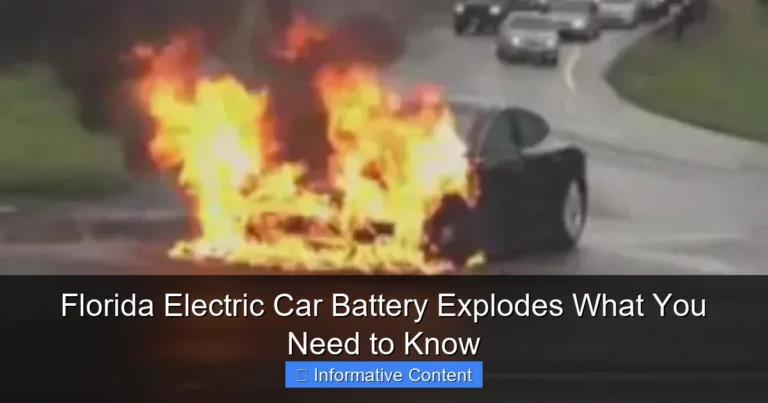
Imagine this: You’re driving down a sunny Florida highway in your sleek, new electric vehicle (EV). The breeze is perfect, and the car glides silently along the road. Suddenly, a warning light flashes on your dashboard. Then another. Before you know it, smoke starts billowing from the front of your car. You pull over, call 911, and within minutes, the fire department is on the scene. This scenario, while rare, is one that Florida residents are starting to hear about more often. Electric car fires in Florida have sparked concern, curiosity, and confusion among drivers, first responders, and local officials alike.
But here’s the thing—while these incidents make headlines, they’re still statistically uncommon compared to gas-powered vehicle fires. Still, the nature of EV fires—especially those involving lithium-ion batteries—presents unique challenges. In Florida, where heat, humidity, and hurricanes are part of daily life, understanding how electric car fires happen, how to prevent them, and how to respond safely is more important than ever. Whether you’re a current EV owner, considering making the switch, or just curious, this guide will walk you through everything you need to know about electric car fires in Florida. We’ll cover real cases, safety tips, environmental factors, and what the future holds—all in plain, easy-to-understand language.
Why Are Electric Car Fires in Florida a Growing Concern?
The Rise of EVs in the Sunshine State
Florida is one of the top states for electric vehicle adoption in the U.S. As of 2023, over 150,000 registered EVs are on Florida roads, with sales increasing by more than 40% year-over-year. Cities like Miami, Tampa, and Orlando are seeing a surge in EV infrastructure, from charging stations to dedicated parking spots. With more EVs comes more visibility—and more attention when something goes wrong.

Visual guide about electric car fires florida
Image source: motorbiscuit.com
But it’s not just the number of EVs that’s rising. It’s the types of EVs. High-performance models with massive battery packs—like Teslas, Lucids, and Rivians—are becoming more common. These vehicles store a tremendous amount of energy. When a fire occurs, that energy can be released in unpredictable and intense ways. Unlike a gasoline fire, which burns out quickly, an EV battery fire can reignite hours—or even days—after it appears to be out.
Florida’s Unique Environmental Challenges
Florida’s climate plays a big role in how electric car fires behave. The state’s high heat and humidity can stress EV batteries over time. Think of your phone battery: it degrades faster in hot cars. The same principle applies to EVs. Prolonged exposure to temperatures above 90°F can accelerate battery wear and increase the risk of thermal runaway—a chain reaction inside the battery that leads to fire.
Then there’s hurricane season. In 2022, Hurricane Ian left thousands of vehicles flooded—including EVs. Saltwater exposure is especially dangerous for lithium-ion batteries. When saltwater contacts the battery, it can cause short circuits and spontaneous combustion. After Ian, multiple EV fires were reported in flooded areas, even days after the storm. These weren’t crashes—they were cars sitting in standing water, quietly igniting.
Real-life example: In Naples, a Tesla Model 3 caught fire in a flooded garage three days after the hurricane passed. The car wasn’t damaged during the storm, but saltwater seeped into the battery compartment, leading to a slow but dangerous chemical reaction. Firefighters had to use special equipment to contain it.
Media Hype vs. Reality
It’s easy to get scared when you see headlines like “Electric Car Explodes in Florida Garage!” But let’s put things in perspective. According to the National Fire Protection Association (NFPA), gasoline-powered vehicles catch fire far more often than EVs—by a ratio of about 10 to 1. However, EV fires are harder to extinguish and can be more dangerous for first responders. This makes them more newsworthy, not necessarily more common.
Still, the perception matters. When people hear about electric car fires in Florida, they worry: Is my car safe? What if I’m driving on I-95 and the battery fails? These are valid concerns. The key is understanding the actual risks—not just the headlines.
How Do Electric Car Fires Start? The Science Behind the Flames
Thermal Runaway: The Core of the Problem
Most electric car fires start with a phenomenon called thermal runaway. This is a self-sustaining chemical reaction inside the lithium-ion battery cells. Once it starts, it’s hard to stop. Think of it like a row of dominoes: one cell overheats, which heats the next, and so on, until the entire battery pack is burning.
What causes thermal runaway? Several things:
- Physical damage: A crash or puncture can break battery cells, creating sparks and heat.
- Overcharging: Charging beyond the battery’s capacity can cause instability.
- Manufacturing defects: A flaw in a single cell can trigger a chain reaction.
- External heat: Leaving your EV in a hot garage or under direct sunlight for days.
<
Once thermal runaway begins, the battery releases flammable gases (like hydrogen and methane) and can reach temperatures over 1,000°F. That’s hotter than a typical house fire.
Common Triggers in Florida
Florida drivers face unique triggers that can increase fire risk:
- Flooding: As mentioned, saltwater exposure is a major concern. Even a few inches of standing water can compromise battery integrity.
- Extreme heat: Summer temperatures regularly exceed 95°F. Parked EVs can heat up to 120°F inside, stressing battery systems.
- Charging during storms: Lightning strikes or power surges can damage charging equipment, leading to overheating.
- Aftermarket modifications: Some owners install third-party chargers or battery upgrades that aren’t certified, increasing fire risk.
Tip: If you’re charging during a thunderstorm, unplug your EV. Most modern chargers have surge protection, but it’s not foolproof.
Battery Design and Safety Features
Not all EV batteries are created equal. Most modern EVs use lithium nickel manganese cobalt oxide (NMC) or lithium iron phosphate (LFP) chemistries. LFP batteries are generally safer—they’re more stable and less prone to thermal runaway. Tesla, for example, uses LFP batteries in many of its standard-range models.
EVs also come with advanced safety systems:
- Battery Management Systems (BMS): Monitors cell temperature, voltage, and charge levels in real time.
- Crash sensors: Automatically disconnect the battery in a collision.
- Fire-resistant barriers: Some models use ceramic or polymer layers between cells to slow fire spread.
But even with these features, no system is 100% foolproof. That’s why prevention and awareness are crucial.
What to Do If Your Electric Car Catches Fire (And How to Prevent It)
Immediate Actions: Stay Calm and Stay Safe
If you’re driving and notice smoke, a burning smell, or warning lights, here’s what to do:
- Pull over safely: Don’t stop in traffic. Move to a clear, open area away from buildings and gas stations.
- Turn off the vehicle and exit: Do not attempt to drive further. Get everyone out and move at least 100 feet away.
- Call 911: Report the fire. Tell the dispatcher it’s an electric vehicle—this is critical for responders.
- Do NOT use water: This might sound counterintuitive, but water can cause electrical shock or make the fire worse. Firefighters use special EV firefighting techniques.
- Do NOT re-enter the vehicle: Even if the fire seems out, the battery can reignite hours later.
Real-life example: In 2023, a driver in Sarasota noticed smoke coming from the dashboard of his Ford Mustang Mach-E. He pulled into a parking lot, exited, and called 911. Firefighters arrived and confirmed it was a battery fire. The car was towed to a special containment area—where it reignited 12 hours later. The driver’s quick action likely prevented injury.
Prevention Tips for Florida EV Owners
You can significantly reduce your risk of an electric car fire with a few simple habits:
- Park in shaded areas or garages: Avoid leaving your EV in direct sunlight for long periods, especially in summer.
- Use manufacturer-approved chargers: Avoid cheap, uncertified charging cables or adapters.
- Don’t charge to 100% every time: For daily use, charging to 80% extends battery life and reduces stress.
- Inspect for flood damage after storms: If your car was in standing water, have it inspected by a certified EV technician before driving.
- Keep software updated: Manufacturers often release updates that improve battery safety and performance.
- Install a fireproof blanket (optional): Some owners keep these in the trunk for emergencies—though they’re not a substitute for calling 911.
Pro tip: Many EVs have a “battery preconditioning” feature. Use it before long trips in hot weather—it cools the battery while charging, reducing thermal stress.
Charging Safety: What Not to Do
Charging is when many EV fires start. Avoid these common mistakes:
- Charging on wet surfaces: Especially after rain or near pools.
- Using extension cords: Most EVs require a dedicated 240V circuit. Extension cords can overheat.
- Charging in enclosed spaces without ventilation: While rare, flammable gases can build up.
- Ignoring error messages: If your car says “charging error” or “battery fault,” stop charging and contact the dealer.
Many Florida homes have outdoor charging stations. Make sure yours is weatherproof and installed by a licensed electrician.
How Florida Responders Are Adapting to EV Fires
New Training and Equipment
Firefighters in Florida are getting special training to handle electric car fires. Traditional fire tactics don’t work on EVs. For example:
- Water doesn’t extinguish battery fires: It can actually conduct electricity or react with battery chemicals.
- EVs need more water—and longer: A typical EV fire may require 1,500–3,000 gallons of water over 30–60 minutes, compared to 300–500 for a gas car.
- Special extinguishing agents: Some departments now carry lithium-ion battery fire suppressants that cool and neutralize the cells.
Departments in Miami-Dade, Broward, and Hillsborough counties have invested in EV fire blankets and containment pods—mobile units that isolate burning EVs and prevent fire spread.
Post-Fire Procedures
After an EV fire, the car is often considered “hot” for days. Firefighters may:
- Monitor the vehicle with thermal cameras: To detect internal heat.
- Place it in a water bath or containment unit: To prevent reignition.
- Wait 24–72 hours before moving it: Even if it looks out, internal cells can still be active.
Example: In 2022, a Tesla caught fire in a Fort Lauderdale parking garage. Firefighters used a containment pod to isolate the vehicle. It reignited twice over 48 hours before being fully extinguished.
Community Awareness Programs
Some Florida cities are launching public education campaigns. For example, Tampa’s fire department created a video series showing how to safely respond to EV fires. They also host “EV Safety Days” where owners can learn about battery care and emergency procedures.
The goal isn’t to scare people—it’s to empower them with knowledge.
The Future of EV Safety in Florida
Improving Battery Technology
Manufacturers are working on safer batteries. Solid-state batteries, for example, use a solid electrolyte instead of liquid—making them much less flammable. Companies like Toyota and QuantumScape aim to launch solid-state EVs by 2027. While not yet mainstream, this tech could drastically reduce fire risk.
Other innovations include:
- Self-healing battery materials: That repair micro-damage before it spreads.
- AI-powered BMS: That predicts and prevents thermal events.
- Modular battery packs: That allow damaged sections to be isolated, not the whole pack.
Stronger Regulations and Standards
Florida lawmakers are considering new rules for EV safety, including:
- Mandatory flood inspections: For EVs exposed to saltwater.
- Charging station safety codes: Especially in high-risk areas like coastal communities.
- First responder training requirements: For all fire departments in high-EV-adoption zones.
The National Highway Traffic Safety Administration (NHTSA) is also updating EV fire response guidelines, expected in 2025.
Public Perception and Education
The biggest challenge may not be technology—it’s trust. As EVs become more common, public education is key. Schools, dealerships, and community centers can play a role in teaching safe EV practices.
Imagine a Florida where every EV owner knows how to respond to a battery warning light, and every firefighter is trained to handle an EV fire. That future is possible—and it starts with awareness.
Data Snapshot: Electric Car Fires in Florida (2020–2023)
| Year | Reported EV Fires | Flood-Related | Crash-Related | Other Causes | Fatalities |
|---|---|---|---|---|---|
| 2020 | 12 | 1 | 6 | 5 | 0 |
| 2021 | 18 | 2 | 9 | 7 | 1 |
| 2022 | 27 | 11 (Hurricane Ian) | 10 | 6 | 0 |
| 2023 | 31 | 5 | 14 | 12 | 1 |
Source: Florida Highway Safety and Motor Vehicles (FLHSMV) & National Transportation Safety Board (NTSB)
Note: “Other causes” include charging errors, manufacturing defects, and unknown factors. The increase in 2022 is largely due to post-hurricane flooding. No fatalities occurred during the fire itself—both were related to pre-crash conditions.
Conclusion: Stay Informed, Stay Safe
Electric car fires in Florida are real—but they’re rare, preventable, and manageable with the right knowledge. The rise in EV adoption is exciting, but it comes with new responsibilities. As a Florida driver, your best defense is awareness. Understand how your battery works. Know the risks of heat and flooding. And most importantly, know what to do in an emergency.
You don’t need to fear EVs. In fact, they’re safer than gas cars in many ways—no flammable fuel tanks, fewer moving parts, and advanced safety systems. But like any powerful technology, they require respect and care.
So, whether you’re charging your EV in a Miami garage, driving through Orlando’s summer heat, or preparing for hurricane season, remember: a little knowledge goes a long way. Stay cool, stay informed, and drive with confidence. The future of transportation is electric—and in Florida, it’s here to stay.
Frequently Asked Questions
Are electric car fires in Florida more common than in other states?
Electric car fires in Florida are not necessarily more common, but the state’s high humidity, saltwater exposure, and frequent hurricanes create unique risks that can increase battery corrosion and short-circuiting. These conditions may contribute to a higher visibility of incidents, though data remains comparable to national averages.
What causes most electric car fires in Florida?
Most electric car fires in Florida stem from battery damage due to flooding, saltwater immersion, or high heat stressing lithium-ion cells. Post-accident battery punctures or improper repairs after hurricanes can also trigger thermal runaway, a chain reaction leading to fires.
Can driving an EV in Florida’s heat increase fire risk?
Florida’s extreme heat can degrade EV batteries over time, but modern electric cars have advanced cooling systems to manage temperature. While prolonged exposure to 100°F+ days may stress components, manufacturers design vehicles to handle these conditions safely.
How do first responders handle electric car fires in Florida?
First responders in Florida use specialized training and equipment for electric car fires, including high-volume water streams to cool batteries and insulated gloves for high-voltage systems. Many departments also collaborate with EV manufacturers for real-time guidance during incidents.
Should I avoid parking my EV in Florida flood zones?
Yes—flooding, especially saltwater immersion, poses a serious risk to EV batteries, which may reignite days after initial exposure. If your EV is submerged, have it inspected by a certified technician before reuse, even if no immediate issues appear.
Do Florida insurance companies charge more for EVs due to fire risks?
Some insurers may adjust premiums for EVs in hurricane-prone areas, but rates aren’t universally higher. Factors like battery safety ratings, garage parking, and post-storm maintenance can help mitigate costs.