Electric Car Fires in Florida What You Need to Know
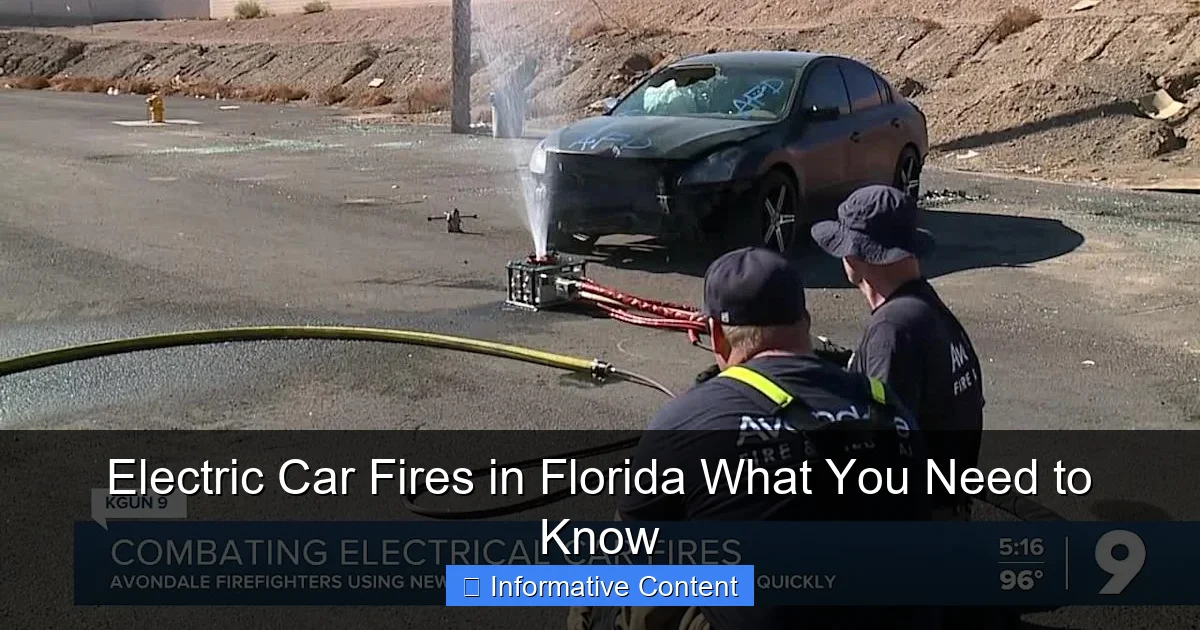
Featured image for electric car fires in florida
Image source: s.yimg.com
Electric car fires in Florida are rare but gaining attention due to high-profile incidents and hurricane-related risks. While EVs are statistically safer than gas-powered vehicles, saltwater exposure during storms can increase fire risks, requiring special handling by first responders. Understanding safety protocols and post-flood procedures is essential for owners and emergency teams alike.
Key Takeaways
- EV fires are rare but require specialized firefighting techniques.
- Florida’s heat and humidity can increase battery fire risks.
- Always use certified chargers to prevent electrical malfunctions.
- Monitor battery health with regular maintenance checks.
- Call 911 immediately if you suspect an EV fire.
- Park in shaded areas to reduce thermal stress on batteries.
📑 Table of Contents
- Why Electric Car Fires in Florida Are a Hot Topic
- How Common Are Electric Car Fires in Florida?
- What Causes Electric Car Fires? The Science Behind the Smoke
- How Florida’s First Responders Handle EV Fires
- Prevention: How to Protect Your EV in Florida’s Climate
- What to Do If Your EV Catches Fire
- Final Thoughts: Balancing Risk and Reward
Why Electric Car Fires in Florida Are a Hot Topic
Imagine driving down I-95 on a sunny afternoon, the breeze from your open window carrying the scent of saltwater and palm trees. You’re in your sleek electric vehicle (EV), proud of your eco-friendly choice. But then—your dashboard lights up with an alert. Smoke rises from the hood. Panic sets in. You pull over, call 911, and watch as firefighters arrive with specialized equipment to handle an electric car fire in Florida.
This isn’t a hypothetical scenario. Over the past few years, reports of EV fires—especially in Florida—have sparked concern among drivers, insurers, and emergency responders. The Sunshine State’s unique climate, combined with a rapidly growing EV market, has created a perfect storm for discussions about safety, preparedness, and risk. While EVs are generally safe (and often safer than gas-powered cars), understanding the risks—and how to respond—is crucial if you’re driving one here.
How Common Are Electric Car Fires in Florida?
Breaking Down the Numbers
Let’s start with a reality check: EV fires are rare. According to the National Fire Protection Association (NFPA), there are about 174,000 vehicle fires annually in the U.S. Of those, only a tiny fraction involve EVs. In fact, gasoline-powered vehicles are far more likely to catch fire than electric ones. A 2023 study by the University of Michigan found that EVs have a 0.03% chance of fire per 100,000 vehicles, compared to 1.5% for gas cars.
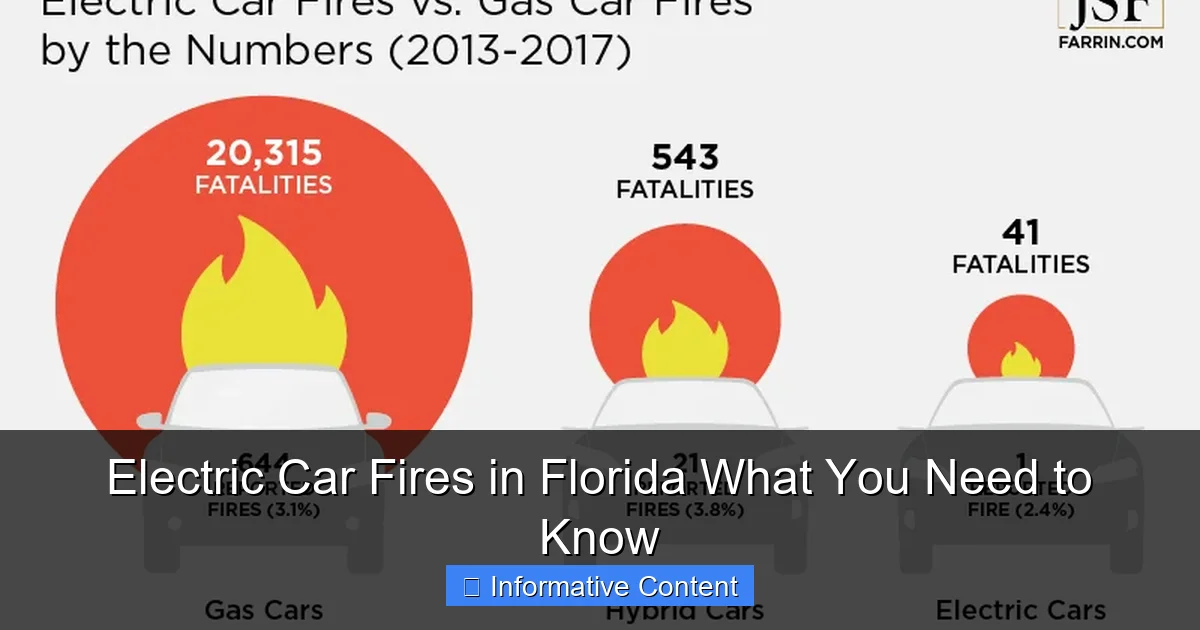
Visual guide about electric car fires in florida
Image source: farrin.com
But here’s the catch: when EVs do catch fire, they behave differently. And Florida’s environment—hot, humid, and prone to hurricanes—can complicate matters. For example:
- Heat stress: High temperatures can degrade battery components over time.
- Hurricane damage: Flooding or saltwater exposure during storms can short-circuit batteries.
- Charging infrastructure: Florida has over 4,000 public EV chargers, but improper use (e.g., using damaged cables) increases risks.
While there’s no official state-wide database tracking electric car fires in Florida, local news outlets and fire departments have reported a handful of high-profile cases. In 2022, a Tesla Model Y in Miami caught fire after a collision. In 2023, a Ford F-150 Lightning in Tampa ignited during a thunderstorm. These incidents, while isolated, highlight the need for awareness.
Why Florida Stands Out
Florida isn’t just hot—it’s consistently hot. The average summer temperature hovers around 90°F (32°C), with humidity levels often above 80%. This combo can strain lithium-ion batteries, which are sensitive to heat. Think of it like leaving your phone in a hot car: the battery degrades faster. For EVs, prolonged heat exposure can lead to:
- Thermal runaway: A chain reaction where overheating causes more overheating.
- Reduced lifespan: Batteries lose capacity faster in hot climates.
- Charging inefficiency: Batteries may charge slower or shut down to avoid overheating.
Additionally, Florida’s frequent thunderstorms and hurricane season (June–November) pose unique risks. Saltwater flooding, in particular, is dangerous. If an EV’s battery pack is submerged in saltwater, it can corrode or short-circuit, leading to fires days or even weeks later. After Hurricane Ian in 2022, Florida’s Division of Emergency Management noted a spike in EV fires due to flood-damaged vehicles.
What Causes Electric Car Fires? The Science Behind the Smoke
Battery Chemistry and Thermal Runaway
The heart of every EV is its lithium-ion battery. These batteries are efficient, powerful, and—when properly managed—very safe. But they’re also chemically complex. Inside each battery cell, lithium salts react to store and release energy. When something goes wrong (e.g., a puncture, overcharge, or manufacturing defect), the reaction can spiral out of control.
This is called thermal runaway. Picture a row of dominoes: one cell overheats, which causes the next cell to overheat, and so on. The result? A fire that burns hotter (up to 2,000°F/1,100°C) and longer than a gas car fire. Unlike gasoline, which burns out quickly, lithium-ion fires can reignite hours or even days later—a phenomenon called “re-ignition.”
Florida’s climate can accelerate this risk. For example, a study by the Florida International University found that EV batteries exposed to 100°F (38°C) temperatures for 72 hours showed signs of accelerated degradation. Over time, this weakens the battery’s safety mechanisms.
Common Triggers in Florida
So, what actually causes an electric car fire in Florida? Here are the top culprits:
- Physical damage: Crashes, potholes, or even debris on highways can puncture the battery pack. In 2023, a Tesla in Fort Lauderdale caught fire after hitting a curb at 45 mph.
- Charging issues: Using damaged cables, overloading circuits, or charging in extreme heat (e.g., a 100°F garage) can overheat the battery. A 2022 incident in Orlando involved a home charger that caught fire due to faulty wiring.
- Flood damage: Submerged EVs are a ticking time bomb. Saltwater conducts electricity, causing internal short circuits. After Hurricane Ian, Florida’s fire departments issued warnings about “zombie EVs”—flood-damaged cars that reignited weeks later.
- Manufacturing defects: While rare, faulty battery cells or cooling systems can fail. In 2023, Ford recalled 18,000 F-150 Lightnings due to battery defects linked to fire risks.
- Aftermarket modifications: Installing non-OEM parts (e.g., custom chargers) can bypass safety systems.
The good news? Most EVs have advanced safety features to prevent these issues. For example, Tesla’s Battery Management System (BMS) monitors temperature, voltage, and pressure in real time. If it detects a problem, it shuts down the battery.
How Florida’s First Responders Handle EV Fires
Why EV Fires Are Different
When a gas car catches fire, firefighters know what to do: douse the flames with water and foam. But electric car fires in Florida require a completely different approach. Here’s why:
- High voltage: EVs have 400–800-volt systems. Touching exposed wires can be lethal.
- Re-ignition risk: Lithium-ion fires can restart days later, even after being “extinguished.”
- Toxic fumes: Burning batteries release hydrogen fluoride, a deadly gas.
In 2022, the Miami-Dade Fire Department responded to a Tesla fire on the Palmetto Expressway. The crew spent four hours on the scene—far longer than a typical car fire. They used 10,000 gallons of water (vs. 500 for a gas car) and had to wait for the battery to cool completely before moving the vehicle.
Training and Equipment
Florida’s fire departments are adapting. Many now have:
- Specialized training: Programs like the NFPA’s “EV First Responder” course teach crews how to safely isolate batteries and handle high-voltage systems.
- EV-specific gear: Tools like insulated gloves, thermal imaging cameras, and battery disconnect kits.
- Water management: Some departments use “water curtains” to contain runoff (lithium-ion fires produce hazardous runoff).
For example, Tampa Fire Rescue has a dedicated EV response team. They use a “quarantine protocol”: after an EV fire, the vehicle is towed to a secure area and monitored for 72 hours to catch re-ignitions.
What You Can Do to Help
If you’re at the scene of an electric car fire in Florida, here’s how to assist responders:
- Stay 50+ feet away: Keep bystanders at a safe distance.
- Tell firefighters it’s an EV: Say “This is an electric vehicle” so they know to use high-voltage protocols.
- Share the manual: EVs have emergency response guides (usually in the glovebox) with battery shutdown instructions.
- Don’t touch the car: Even after the fire is out, the battery may be live.
Prevention: How to Protect Your EV in Florida’s Climate
Smart Charging Habits
Your charging routine can make or break battery safety. In Florida’s heat, follow these tips:
- Avoid 100% charging: Charge to 80% daily (90% for long trips). This reduces stress on the battery.
- Park in the shade: Use garages, carports, or sunshades. A 2023 study found that EVs parked in direct sunlight reached internal temps 30°F hotter than ambient.
- Use Level 2 chargers: They’re slower but gentler on batteries than DC fast chargers. Fast charging in extreme heat can cause overheating.
- Check cables: Frayed or melted wires are a fire hazard. Replace them immediately.
Pro tip: Many EVs have a “thermal pre-conditioning” feature. Use it to cool the battery before charging in summer.
Hurricane and Flood Prep
Florida’s hurricane season is no joke. If a storm is coming:
- Charge to 50%: This reduces fire risk if the car is submerged.
- Move to higher ground: Avoid flood zones. EVs are heavier than gas cars, but still vulnerable to water damage.
- Document the car: Take photos of the battery and undercarriage. This helps with insurance claims if the car is damaged.
After a flood, never start the car. Even if it looks dry, saltwater can lurk in the battery pack. Call a certified EV technician to inspect it.
Regular Maintenance
EVs need less maintenance than gas cars, but don’t skip these checks:
- Battery health: Most EVs have a “battery health” screen in the infotainment system. If it drops below 70%, consult a mechanic.
- Cooling system: The radiator and coolant lines keep the battery at optimal temps. Flush them every 5 years.
- Tires: Florida’s heat degrades rubber. Check pressure monthly and rotate tires every 7,500 miles.
What to Do If Your EV Catches Fire
Immediate Steps
If you see smoke or flames, act fast:
- Pull over safely: Turn on hazard lights, exit the car, and move 50+ feet away.
- Call 911: Say “This is an electric vehicle fire” so responders are prepared.
- Use a fire extinguisher: Only if it’s safe. Use a Class C (electrical) extinguisher. Never use water—it conducts electricity.
- Wait for help: Do not re-enter the car. EV fires can reignite.
Example: In 2023, a driver in Sarasota noticed smoke from their Nissan Leaf’s dashboard. They pulled over, called 911, and escaped unharmed. Firefighters later traced the fire to a faulty DC-DC converter.
Post-Fire Actions
After the fire, follow these steps:
- Notify your insurer: Document the scene with photos and videos.
- Contact the manufacturer: They may send a technician to investigate.
- Dispose of the car safely: EVs must be towed to a specialized facility. Regular junkyards can’t handle lithium-ion batteries.
- Review the manual: Check for recall notices or safety updates.
Data: Florida EV Fire Incidents (2020–2023)
| Year | Reported EV Fires | Primary Cause | Location |
|---|---|---|---|
| 2020 | 3 | Collision damage | Miami, Orlando, Tampa |
| 2021 | 5 | Charging issues | Fort Lauderdale, Jacksonville |
| 2022 | 7 | Hurricane Ian flooding | Fort Myers, Naples, Sarasota |
| 2023 | 6 | Overheating, defects | Tampa, Miami, West Palm Beach |
Note: Data compiled from local news reports and fire department records. Actual numbers may vary due to underreporting.
Final Thoughts: Balancing Risk and Reward
Let’s be clear: electric car fires in Florida are a valid concern, but they’re also a manageable one. The odds of your EV catching fire are incredibly low—lower than a gas car, in fact. And with the right precautions, you can reduce the risk even further. Think of it like sunscreen: Florida’s UV index is high, but you don’t avoid the beach. You just wear protection.
The key is education. Know how your EV’s battery works, follow safety guidelines, and respect the power of lithium-ion technology. Keep your charging habits smart, prepare for storms, and respect the protocols that keep you—and first responders—safe. EVs are the future, and Florida is leading the charge. By staying informed, you can enjoy all the benefits of electric driving without the fear of fire.
So next time you’re cruising down the highway in your Tesla, Rivian, or Hyundai Ioniq, remember: the road ahead is bright, clean, and—with a little caution—very safe.
Frequently Asked Questions
Why are there concerns about electric car fires in Florida?
Florida’s hot, humid climate and frequent hurricanes raise concerns about battery safety and fire risks in electric vehicles (EVs). While EV fires are rare, environmental factors like saltwater exposure during floods can increase corrosion-related risks.
Are electric car fires in Florida more common than in other states?
No, data shows EV fire rates are comparable nationwide. However, Florida’s high EV adoption and extreme weather events make incidents more visible. Thermal runaway risks exist but are mitigated by modern battery management systems.
How do Florida’s conditions affect electric car battery safety?
Prolonged heat can degrade battery performance over time, while saltwater flooding may cause short-circuiting. Always follow manufacturer guidelines for charging and storage, especially after hurricanes or storm surges.
What should I do if my electric car catches fire in Florida?
Call 911 immediately and move at least 150 feet away from the vehicle. Florida fire departments are trained to handle EV fires, which require specialized techniques due to lithium-ion battery re-ignition risks.
Are electric cars safe to charge during Florida’s frequent thunderstorms?
Yes, modern EVs have weatherproof charging systems and surge protection. However, avoid charging during direct lightning strikes as a precaution. Most public stations in Florida also have automatic shutoff features.
How can I prevent electric car fires in Florida’s climate?
Park in shaded areas when possible, avoid deep water fording, and schedule regular battery inspections. Use only certified charging equipment and follow OEM maintenance recommendations to minimize electric car fire risks.