Electric Car Florida Guide Top Models and Charging Tips
Featured image for electric car florida
Image source: thumbs.dreamstime.com
Florida is a top destination for electric car ownership, thanks to its expanding charging network, sunny climate, and state incentives. Discover the best electric car models for Florida’s roads, from efficient compacts to luxury SUVs, along with expert tips to maximize range and locate fast chargers across the Sunshine State.
Key Takeaways
- Choose models with 250+ miles range to handle Florida’s long stretches between charging stations.
- Use Tesla Superchargers and Electrify America for fast, reliable charging across major highways.
- Plan trips with PlugShare app to locate nearby chargers and avoid range anxiety.
- Charge overnight at home to save money and ensure a full battery daily.
- Take advantage of Florida EV incentives like HOV lane access and reduced registration fees.
- Precondition your battery in heat to optimize performance and efficiency in hot weather.
📑 Table of Contents
- Why Florida Is the Perfect Place for Your Next Electric Car
- Top Electric Car Models for Florida Roads
- Charging Your Electric Car in Florida: What You Need to Know
- Navigating Florida’s EV-Friendly Policies and Incentives
- Electric Car Road Trips in Florida: Routes and Charging Stops
- Common Challenges and How to Overcome Them
- Final Thoughts: Making the Switch to an Electric Car in Florida
Why Florida Is the Perfect Place for Your Next Electric Car
Imagine driving down the sun-drenched highways of Florida, the ocean breeze in your hair, the engine silent except for the hum of the electric motor beneath you. It’s not just a dream—it’s a reality that’s becoming more accessible every year. Florida isn’t just a vacation destination; it’s a growing hub for electric car (EV) adoption, thanks to its warm climate, flat terrain, and expanding charging infrastructure. Whether you’re a local or a snowbird escaping the cold, an electric car in Florida can be a game-changer for your daily commute or weekend getaways.
But why Florida, specifically? The Sunshine State offers unique advantages for EV owners. The mild winters mean your battery won’t suffer the range loss common in colder states, and the flat landscape reduces strain on your car’s motor. Plus, with gas prices fluctuating and environmental concerns on the rise, switching to an electric car just makes sense. In this guide, we’ll explore the best electric car models for Florida, charging tips to maximize convenience, and insider advice to help you make the most of your EV experience. Whether you’re a first-time buyer or a seasoned EV enthusiast, this guide is packed with practical insights to get you started.
Top Electric Car Models for Florida Roads
Best All-Rounders: Tesla Model Y and Ford Mustang Mach-E
When it comes to versatility and performance, the Tesla Model Y is a standout choice for Florida drivers. With an EPA-estimated range of 330 miles, it’s perfect for both city errands and long drives to the Keys. The Model Y’s minimalist interior, over-the-air updates, and access to Tesla’s Supercharger network make it a top pick. However, some drivers find the ride a bit stiff on bumpy roads—something to consider if you’re cruising along older coastal highways.
Visual guide about electric car florida
Image source: thumbs.dreamstime.com
The Ford Mustang Mach-E is another excellent option, blending SUV practicality with sporty handling. Its 314-mile range (Extended Range version) and fast-charging capability (10-80% in ~45 minutes) make it a great fit for Florida’s mix of urban and rural driving. The Mach-E’s interior is more traditional than Tesla’s, which some buyers prefer, but the infotainment system can feel a bit cluttered compared to Tesla’s clean interface.
Budget-Friendly Picks: Chevrolet Bolt EV and Nissan Leaf
If you’re looking for affordability without sacrificing range, the Chevrolet Bolt EV is a solid choice. With a 259-mile range and a price tag under $30,000 after federal tax credits, it’s one of the most value-packed EVs on the market. The Bolt’s compact size makes it ideal for Miami’s tight parking spaces, but the interior materials feel a bit dated compared to pricier models.
The Nissan Leaf (212-mile range for the Plus version) is another budget-friendly option. Its proven reliability and lower maintenance costs are big pluses, though the Leaf’s charging speed (40 minutes for 10-80% on a fast charger) lags behind newer models. If you’re mostly driving short distances around Orlando or Tampa, this won’t be an issue, but it’s worth noting for longer trips.
Premium Luxury: Porsche Taycan and Lucid Air
For those who want performance and prestige, the Porsche Taycan delivers. With up to 246 miles of range (though real-world performance may vary), it’s not the longest-range EV, but its 5-second 0-60 mph time and razor-sharp handling make it a thrill to drive. The Taycan’s interior is a masterpiece of craftsmanship, though the price tag (starting at $86,700) puts it out of reach for many.
The Lucid Air (up to 516 miles on the Grand Touring trim) is a revelation for long-distance driving. Its ultra-fast charging (10-80% in ~30 minutes) and spacious interior make it a standout, but the brand’s limited service network in Florida can be a drawback. If you’re willing to travel for maintenance, though, it’s worth the trade-off.
Charging Your Electric Car in Florida: What You Need to Know
Public Charging Networks: Where to Plug In
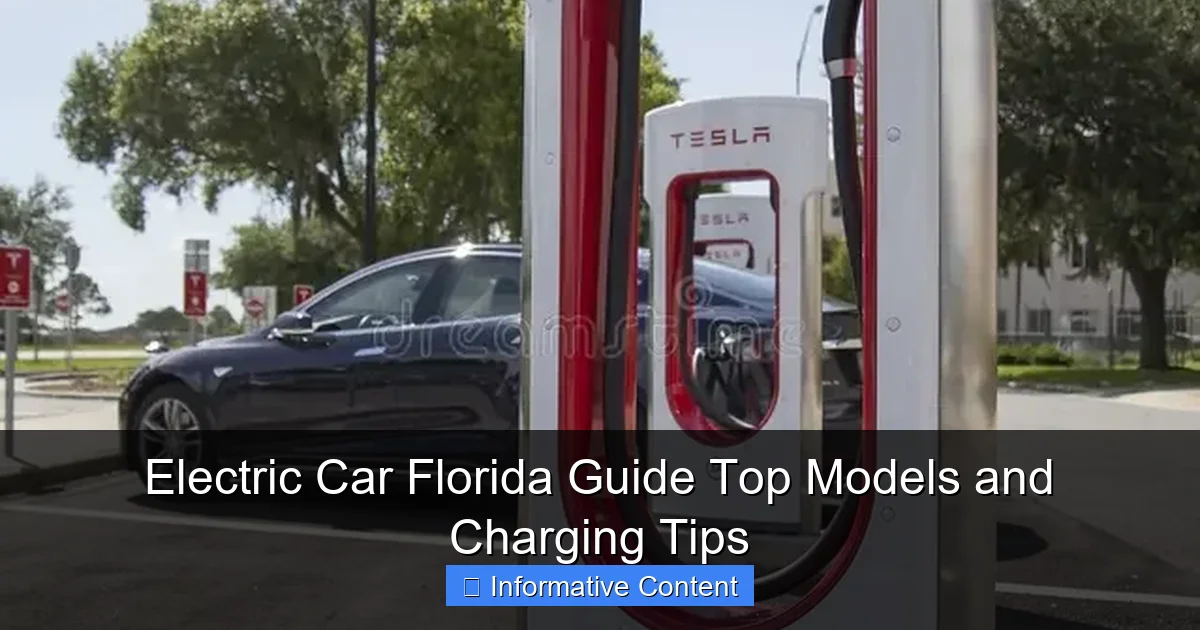
Florida’s charging infrastructure has grown dramatically in recent years. The state now has over 2,500 public charging stations, with Tesla Superchargers and ChargePoint leading the way. For Tesla owners, the Supercharger network is a no-brainer—it’s fast (20-80% in ~30 minutes) and reliable, with locations in major cities like Miami, Orlando, and Tampa. Non-Tesla drivers can use adapters (sold separately) to access some Superchargers, but compatibility varies by location.
ChargePoint and EVgo are great alternatives for non-Tesla owners. ChargePoint’s app is user-friendly, and its stations are often located in shopping centers and parking garages. EVgo focuses on fast chargers (DC fast charging), which is handy for road trips. A quick tip: Use apps like PlugShare to find nearby stations and check their status in real-time—nothing worse than arriving at a broken charger!
Home Charging: The Most Convenient Option
While public charging is great for emergencies, most Florida EV owners charge at home. A Level 2 charger (240 volts) is the best bet, offering 20-30 miles of range per hour—plenty for overnight charging. Installation costs vary (typically $500-$1,500), but many utility companies offer rebates. For example, Florida Power & Light (FPL) provides a $500 rebate for qualifying home chargers.
If you live in an apartment or condo, check with your building manager about shared charging options. Some complexes are now installing chargers in parking garages, but it’s not universal. A portable Level 1 charger (120 volts) can be a backup, but it’s slow—only 3-5 miles of range per hour.
Fast Charging Tips: Save Time and Battery Health
Fast charging is a lifesaver on road trips, but it’s best used sparingly. Charging to 80% (rather than 100%) reduces battery wear, and most EVs automatically adjust charging speed as the battery fills up. For example, the Tesla Model Y charges fastest between 20% and 50%, then slows down to protect the battery.
Here’s a pro tip: Plan your charging stops around meal breaks or sightseeing. Many Florida Superchargers and EVgo stations are near restaurants or shopping centers—perfect for a quick bite while your car powers up.
Navigating Florida’s EV-Friendly Policies and Incentives
State and Federal Tax Credits
Florida doesn’t offer a state-level EV tax credit, but you can still save big with federal incentives. The Inflation Reduction Act (IRA) provides up to $7,500 for new EVs (with income and vehicle requirements) and $4,000 for used EVs. To qualify, the car must be assembled in North America—check the Department of Energy’s website for eligible models.
Used EV buyers should also check out Florida’s Clean Vehicle Rebate Program, which offers $1,000 for qualifying purchases. It’s not as generous as some states, but every dollar helps!
HOV Lane Access and Reduced Fees
Florida allows EV owners to use High-Occupancy Vehicle (HOV) lanes with a special decal, even if you’re driving solo. This is a huge perk in congested areas like I-95 or I-4. The application process is straightforward—just visit the Florida Highway Safety and Motor Vehicles website.
Additionally, many counties offer reduced registration fees for EVs. For example, Miami-Dade County charges a flat $20 fee (vs. $45 for gas cars), and some cities provide free parking for EVs. Always check local ordinances—rules vary by municipality.
Utility Company Incentives
Many Florida utilities offer EV-specific perks. FPL’s “Charge at Home” program provides a $500 rebate for home charger installation, and Tampa Electric offers a $250 credit. Some companies also have time-of-use (TOU) plans, letting you charge during off-peak hours (usually overnight) for lower rates. A smart charger (like the JuiceBox) can automate this—set it to charge between 12 AM and 6 AM, and you’ll never pay peak rates.
Electric Car Road Trips in Florida: Routes and Charging Stops
The Ultimate Florida Road Trip: Miami to Key West
Driving from Miami to Key West is a bucket-list adventure, and an EV makes it even better. The 160-mile route is well-covered with chargers. Start with a full battery in Miami (try the Tesla Supercharger at Dolphin Mall), then hit the EVgo station in Marathon for a quick top-up. The final stretch to Key West has limited options, so charge to 100% in Marathon. Pro tip: Book a hotel with charging—many Keys resorts now offer it!
Orlando to the Gulf Coast: Disney, Beaches, and Beyond
For families, the drive from Orlando to Clearwater Beach (110 miles) is a breeze in an EV. Charge at the Tesla Supercharger near Disney Springs, then hit the ChargePoint station at Clearwater Mall. If you’re extending your trip to Naples, plan for a stop in Fort Myers—the Electrify America station there is reliable and fast.
Charging Stop Checklist
- Plan ahead: Use apps like A Better Routeplanner (ABRP) to map charging stops.
- Pack snacks: Charging takes 20-45 minutes—bring food or explore nearby shops.
- Check weather: Florida’s summer heat can reduce charging speed. Park in the shade if possible.
Common Challenges and How to Overcome Them
Heat and Battery Performance
Florida’s scorching summers can affect EV batteries. High temperatures reduce charging speed and range, but modern EVs (like the Tesla Model Y) have advanced thermal management systems to mitigate this. Still, here’s what to do:
- Precondition the battery: Use your car’s app to cool it before charging.
- Avoid parking in direct sun: Garages or shaded spots are best.
- Limit fast charging: Heat builds up faster during rapid charging—stick to Level 2 when possible.
Charger Availability in Rural Areas
While cities like Miami and Tampa are well-covered, rural areas (e.g., the Panhandle) have fewer stations. For long trips, always:
- Carry a portable charger: A Level 1 charger can save you in a pinch.
- Plan alternate routes: Use PlugShare to find backup stations.
- Check RV parks: Many offer 240-volt outlets for campers—ask if you can use one.
Data Table: Florida Charging Network Overview
| Network | Number of Stations | Charging Speed | Best For |
|---|---|---|---|
| Tesla Supercharger | 150+ | 250 kW (DC) | Road trips, Tesla owners |
| ChargePoint | 800+ | 50 kW (DC) / 9.6 kW (AC) | City driving, shopping stops |
| EVgo | 100+ | 100-350 kW (DC) | Fast charging, long trips |
| Electrify America | 50+ | 150-350 kW (DC) | Highway driving |
Final Thoughts: Making the Switch to an Electric Car in Florida
Switching to an electric car in Florida isn’t just a smart financial move—it’s a lifestyle upgrade. From the quiet hum of the motor to the savings on fuel and maintenance, EVs are reshaping how we think about driving. Sure, there are challenges (like rural charging gaps), but the benefits far outweigh them. With the right model, charging strategy, and a bit of planning, you’ll wonder why you ever drove a gas car.
Whether you’re eyeing a Tesla Model Y for its cutting-edge tech or a Chevrolet Bolt EV for its affordability, Florida’s EV ecosystem is ready to support you. So, what are you waiting for? The open road—and a cleaner, quieter future—is calling.
Frequently Asked Questions
What are the top electric car models available in Florida?
The top electric car models in Florida include the Tesla Model Y, Ford Mustang Mach-E, and Chevrolet Bolt EV, known for their range, performance, and compatibility with the state’s expanding charging network. These models are popular due to Florida’s favorable EV incentives and warm climate, which optimizes battery efficiency.
Where can I find EV charging stations in Florida?
Florida has over 3,000 public EV charging stations, with major hubs in cities like Miami, Orlando, and Tampa. Use apps like PlugShare or ChargeHub to locate Level 2 and DC fast chargers along highways and shopping centers.
Are there tax incentives for buying an electric car in Florida?
Yes, Florida offers a sales tax exemption on new and used electric cars purchased or leased after July 1, 2023. Additionally, federal tax credits up to $7,500 may apply depending on the vehicle and your eligibility.
How does Florida’s weather affect electric car performance?
Florida’s hot climate can slightly reduce battery range, but modern EVs handle heat well thanks to advanced cooling systems. Parking in shade or using pre-conditioning features can help maintain optimal battery performance.
Can I charge an electric car at home in Florida?
Absolutely! Most Florida EV owners charge at home using a standard 120V outlet (Level 1) or a faster 240V Level 2 charger. Many utilities, like FPL, offer rebates for home charger installations.
What’s the average range of an electric car in Florida?
Most new electric cars in Florida offer 200–300 miles per charge, with luxury models like the Tesla Model S exceeding 400 miles. The state’s flat terrain and mild winters help maximize real-world range.