Electric Car Problems in Florida What You Need to Know

Featured image for electric car problems in florida
Image source: youramazingcar.com
Florida’s extreme heat and humidity can significantly impact electric car performance, battery life, and charging speed, making it essential for EV owners to plan for weather-related challenges. Frequent hurricanes and flooding also pose risks to charging infrastructure and vehicle safety, requiring proactive measures like backup power and elevated parking during storms.
Key Takeaways
- Heat impacts battery life: Florida’s heat can reduce EV range by up to 30%.
- Charging infrastructure gaps: Rural areas lack fast chargers; plan long trips carefully.
- Hurricane prep is critical: Charge fully before storms; locate backup charging options.
- Corrosion risks increase: Salt air and humidity demand regular undercarriage cleaning.
- Insurance costs vary: Compare FL-specific EV insurance rates to avoid overpaying.
- Tax incentives apply: Florida offers rebates for home charger installation—claim yours.
📑 Table of Contents
- Electric Car Problems in Florida: What You Need to Know
- 1. Heat and Humidity: The Silent Battery Killers
- 2. Charging Infrastructure Gaps—Especially in Rural Areas
- 3. Hurricane Season: Power Outages and Charging Chaos
- 4. Salt Air and Coastal Corrosion
- 5. Insurance and Repair Costs: The Hidden Price Tag
- 6. The Good News: How Florida Is Improving
Electric Car Problems in Florida: What You Need to Know
Living in Florida comes with its own unique perks—sunny beaches, year-round warm weather, and a growing number of electric vehicle (EV) charging stations. But as more drivers make the switch to electric, they’re also discovering some electric car problems in Florida that aren’t always obvious at first glance. From sweltering heat to hurricane risks and sparse rural charging, the Sunshine State presents a mixed bag for EV owners.
I remember when my neighbor, Sarah, bought her brand-new Tesla Model 3. She was thrilled—no more gas stops, lower maintenance costs, and a sleek ride. But within six months, she was complaining about slow charging at a local station during a heatwave, her battery range dropping unexpectedly, and even a charging station being out of service after a storm. That’s when it hit me: while EVs are a great fit for many, Florida’s environment and infrastructure bring real challenges. If you’re thinking about going electric in the state, it’s important to know what you’re up against. In this post, I’ll walk you through the top electric car problems in Florida—what causes them, how to avoid them, and how to stay prepared.
1. Heat and Humidity: The Silent Battery Killers
Let’s start with the obvious: Florida is hot. And not just “a little warm” hot—think 90°F+ with 80% humidity for months on end. While humans can sweat it out, your EV’s battery isn’t as forgiving. High temperatures can significantly impact performance, longevity, and efficiency.
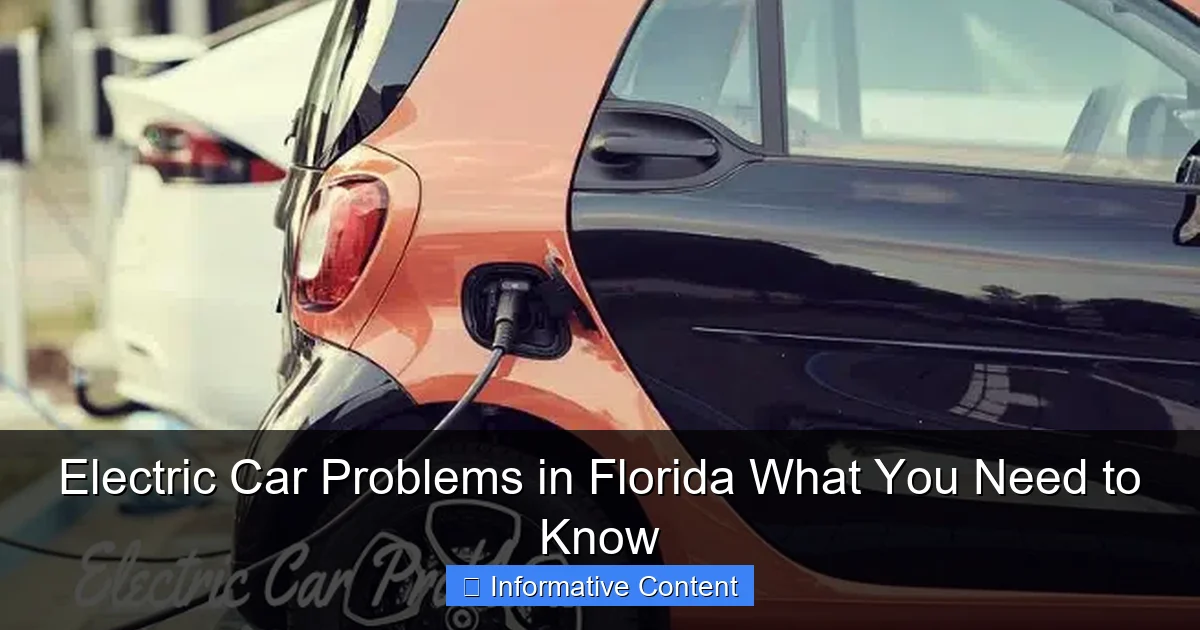
Visual guide about electric car problems in florida
Image source: youramazingcar.com
How Heat Affects EV Batteries
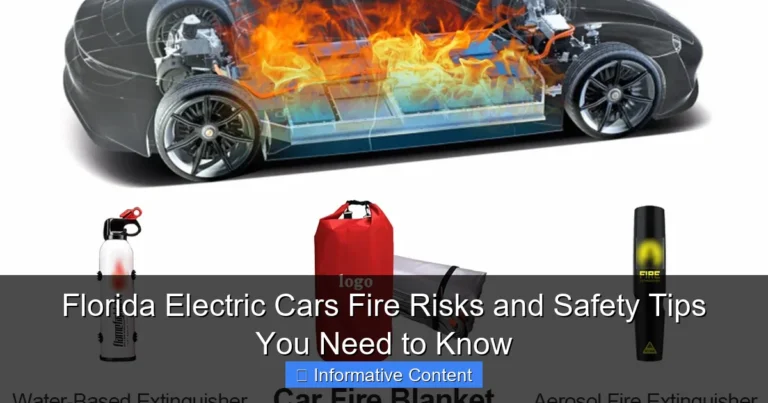
EVs use lithium-ion batteries, which are sensitive to extreme heat. When temperatures climb above 95°F, the battery management system (BMS) kicks in to protect the cells. This often means:
- Reduced charging speed: Charging slows down to prevent overheating, especially on fast chargers.
- Lower range: Heat causes the battery to work harder, leading to faster depletion. Some drivers report losing 10–20% of their expected range on hot days.
- Long-term degradation: Repeated exposure to high heat accelerates wear. Studies show that batteries degrade faster in hot climates, shortening the vehicle’s lifespan.
For example, a 2022 study by Geotab found that EVs in hot states like Florida, Texas, and Arizona lost about 12% more battery capacity over five years compared to those in milder climates.
Real-World Example: The Miami Commute
Take Carlos, a Miami-based EV owner who drives 40 miles round trip daily. In winter, his Chevy Bolt gets around 250 miles per charge. But in July, that drops to 210 miles—even with the same driving habits. He noticed the range dip started around June, and by August, he had to charge every other day instead of every three.
“It’s frustrating,” he said. “I thought I’d never have to worry about gas, but now I’m watching the battery like a hawk in the summer.”
Tips to Beat the Heat
- Park in the shade or a garage: Even a covered spot can reduce cabin and battery temps by 15–20°F.
- Precondition the car: Use your app to cool the cabin while the car is still plugged in. This reduces strain on the battery.
- Avoid charging during peak heat: Charge in the early morning or evening when it’s cooler.
- Keep the battery between 20–80%: This reduces stress and helps preserve long-term capacity.
Some newer models, like the Hyundai Ioniq 5 and Kia EV6, have advanced thermal management systems that help mitigate these issues. But older or budget models may lack these features.
2. Charging Infrastructure Gaps—Especially in Rural Areas
Florida has made big strides in EV charging, with over 4,000 public chargers statewide (as of 2023). But the distribution isn’t even. Most are clustered in urban areas like Miami, Orlando, and Tampa. If you live in a rural part of the state—say, Okeechobee, Arcadia, or even parts of the Panhandle—finding a working charger can feel like a scavenger hunt.
Urban vs. Rural Charging Realities
In cities, you’ll find Level 2 and DC fast chargers at malls, parking garages, and even grocery stores. But drive 30 minutes outside the city, and options thin out fast. Many rural areas have only one or two public chargers—and they’re often Level 2 (slower) and sometimes out of service.
Take a trip from Orlando to Sebring. It’s about 80 miles, well within range for most EVs. But there are only three public fast chargers along the way, and one is often offline due to maintenance or power outages. If that one’s down, you’re left with Level 2 chargers, which can take 4–6 hours to fully charge.
Reliability and Maintenance Issues
Even in cities, charger reliability is a concern. A 2023 study by J.D. Power found that 20% of charging attempts in Florida failed due to:
- Broken screens or payment systems
- Software glitches
- Power outages (common during storms)
- Overuse leading to overheating
One user in Fort Myers shared that he once waited 45 minutes at a busy Electrify America station because three of the four fast chargers were down. “I had to call roadside assistance because I was down to 10% battery,” he said. “Not a fun experience.”
Tips for Charging Success
- Use multiple apps: Don’t rely on just PlugShare or ChargePoint. Use apps like EVgo, Electrify America, and Google Maps to check real-time availability.
- Plan ahead for road trips: Use tools like A Better Routeplanner (ABRP) to map your journey and identify backup charging options.
- Carry a Level 1 charger: A basic 120V cord (included with most EVs) can save you in a pinch—just don’t rely on it for daily use.
- Join local EV groups: Facebook groups like “Florida EV Drivers” often share real-time updates on charger status.
Also, consider installing a home Level 2 charger. It’s a one-time investment (around $500–$1,000) that pays off in convenience and peace of mind.
3. Hurricane Season: Power Outages and Charging Chaos
Let’s be real: Florida’s hurricane season (June–November) is no joke. With storms come power outages, flooding, and disrupted infrastructure—all of which can create major electric car problems in Florida.
Charging During and After Storms
When the power goes out, so do most charging stations. Even if a station is physically intact, it’s useless without electricity. And if your home loses power, you can’t charge at all—unless you have a generator or solar setup.
After Hurricane Ian in 2022, many EV owners in Southwest Florida were stranded. One Naples resident, Lisa, couldn’t charge her Nissan Leaf for four days. “I had 15% battery left, and the nearest working charger was 60 miles away,” she said. “I ended up renting a gas car just to get around.”
Flooding and Water Damage
EVs are designed to be water-resistant, but they’re not waterproof. Driving through deep floodwaters (common in Florida storms) can damage the battery, motor, or electrical systems. Even if the car seems fine, saltwater exposure can lead to corrosion over time.
After Hurricane Nicole in 2022, several EV owners reported battery faults and error codes. One Tesla in Daytona had to be towed after driving through a flooded street. The service center later found water in the battery pack—requiring a $15,000 repair.
Preparing for Hurricane Season
- Keep your battery at 50–80%: This gives you enough range to evacuate if needed, without over-stressing the battery.
- Have a backup power plan: Consider a portable power station (like the EcoFlow or Bluetti) or a solar generator to charge small devices or even your car in emergencies.
- Know your evacuation routes: Identify charging stations along major highways like I-75, I-95, and I-4. Use ABRP to map them in advance.
- Park on high ground: Avoid low-lying areas, parking garages (which can flood), and under trees.
- Check insurance: Make sure your policy covers flood damage to EVs—some standard policies don’t.
Pro tip: Some newer EVs, like the Ford F-150 Lightning, can act as a backup power source for your home using “vehicle-to-load” (V2L) technology. If you’re in a storm-prone area, this could be a game-changer.
4. Salt Air and Coastal Corrosion
Living near the beach? You’re not just battling sun and storms—you’re also fighting salt air. Coastal areas from Key West to Jacksonville expose EVs to a hidden enemy: corrosion.
How Salt Affects EVs
Salt in the air and on roads (especially after storms or sea spray) can corrode metal components, including:
- Charging port connectors
- Battery tray mounts
- Underbody shielding
- Electrical wiring harnesses
While EVs have fewer moving parts than gas cars, they still have vulnerable areas. Corrosion can lead to charging failures, electrical shorts, and even safety hazards.
Real-World Impact
A study by the University of Florida found that EVs in coastal regions had a 30% higher rate of charging port issues compared to inland owners. One Tesla owner in Clearwater reported that his charging port stopped working after two years—diagnosed as salt corrosion. The repair cost $800 and took two weeks.
Protecting Your EV from Salt
- Wash your car regularly: Focus on the undercarriage and wheel wells. Use a pressure washer (but avoid direct spray on the battery or motor).
- Apply undercoating or rust inhibitors: Products like Fluid Film or Krown can help protect metal parts.
- Inspect the charging port: Look for white or green residue (signs of corrosion). Clean with a dielectric grease if needed.
- Park indoors when possible: A garage or carport reduces exposure.
- Use a car cover: Especially during storm season or if you’re away for long periods.
Also, check your owner’s manual—some manufacturers recommend specific maintenance for coastal driving.
5. Insurance and Repair Costs: The Hidden Price Tag
EVs are often more expensive to insure and repair than gas cars—especially in Florida, where labor and parts costs are high.
Why EV Insurance Is More Expensive
- Higher repair costs: EVs have expensive components like battery packs, advanced sensors, and lightweight materials. A simple fender bender can cost thousands to fix.
- Fewer repair shops: Not all mechanics are trained to work on EVs. Specialized labor drives up prices.
- Hurricane risk: Florida’s high storm risk means insurers charge more for comprehensive coverage.
According to Insurify, the average annual EV insurance cost in Florida is $2,400—about 20% higher than for gas vehicles.
Repair Challenges
After a fender bender in Tampa, Mark had to wait three weeks to get his Hyundai Kona repaired. “The shop said they needed to order a special part from Korea,” he said. “And the labor was $120 an hour—way more than a regular mechanic.”
Another issue: battery replacement. If your battery fails, it can cost $10,000–$20,000. Most manufacturers offer 8-year/100,000-mile warranties, but after that, you’re on your own.
How to Save on Insurance and Repairs
- Shop around for insurance: Compare quotes from multiple providers. Some, like Progressive and GEICO, offer EV discounts.
- Look for EV-certified shops: Use the EV Repair Network or AAA’s EV service locator to find qualified mechanics.
- Consider extended warranties: Some third-party companies offer battery coverage beyond the factory warranty.
- Join an EV owners club: Groups like Drive Electric Florida often have partnerships with repair shops for member discounts.
Also, keep detailed maintenance records. This can help with warranty claims and resale value.
6. The Good News: How Florida Is Improving
Despite these challenges, Florida is making real progress. The state has launched initiatives to expand charging, improve grid resilience, and support EV adoption.
State and Federal Funding
The federal NEVI (National Electric Vehicle Infrastructure) Program is funding $198 million to build fast-charging stations every 50 miles along Florida’s major highways by 2026. Projects are already underway on I-75, I-95, and I-10.
Locally, cities like Miami and Orlando are adding chargers to public parking, parks, and transit hubs. Miami plans to have 1,000 public chargers by 2025.
Utility Support
Florida Power & Light (FPL) offers rebates for home Level 2 chargers and off-peak charging programs. They’re also investing in microgrids and solar-powered charging stations to keep the lights on during storms.
Community and Advocacy
Groups like Drive Electric Florida and The Electric Vehicle Association of Greater Orlando are pushing for better policies, education, and infrastructure. They host events, webinars, and even “ride and drive” experiences to help people make the switch confidently.
What You Can Do
- Advocate for local charging: Contact your city council or county commission to request more chargers in your area.
- Take advantage of incentives: The federal tax credit (up to $7,500) and state rebates can save you money.
- Stay informed: Follow updates from FPL, the Florida Department of Transportation, and local EV groups.
Data Table: Florida EV Charging and Climate Stats
| Factor | Statistic | Source |
|---|---|---|
| Public EV chargers in Florida | 4,217 (2023) | U.S. DOE |
| Average EV insurance cost (annual) | $2,400 | Insurify |
| EV battery degradation in hot climates | 12% faster over 5 years | Geotab |
| Charger failure rate in Florida | 20% of attempts | J.D. Power (2023) |
| NEVI funding for Florida | $198 million | U.S. DOT |
| Hurricanes per year (average) | 1–2 direct hits | NOAA |
Florida’s EV journey isn’t perfect. But with smart planning, community support, and a growing infrastructure, the electric car problems in Florida are becoming more manageable every year. The key is to go in with your eyes open—know the risks, prepare for them, and take advantage of the solutions already available.
Whether you’re a new EV owner or thinking about making the switch, remember: every challenge has a workaround. Park in the shade, plan your trips, prepare for storms, and connect with others who’ve been in your shoes. The future of driving in Florida is electric—and with a little know-how, it can be smooth, affordable, and sustainable.
Frequently Asked Questions
What are the most common electric car problems in Florida?
Electric car problems in Florida often stem from extreme heat, humidity, and frequent rain, which can affect battery performance and charging efficiency. Corrosion from salty coastal air and limited fast-charging infrastructure in rural areas also pose challenges.
How does Florida’s weather impact electric car battery life?
Florida’s high temperatures and humidity can accelerate battery degradation, reducing range over time. Parking in shaded areas or using climate preconditioning features helps mitigate these effects.
Are there enough charging stations for electric cars in Florida?
While major cities like Miami and Orlando have robust charging networks, rural areas still lack sufficient fast-charging options. Planning longer trips around charging hubs is essential to avoid “range anxiety.”
Can flooding damage my electric car in Florida?
Yes, floodwaters can damage electrical systems and battery packs, even in EVs designed to be waterproof. Avoid driving through standing water, and inspect your vehicle after heavy storms to check for water intrusion.
Do electric cars overheat in Florida’s climate?
Extreme heat can strain an EV’s cooling system, leading to reduced performance or temporary shutdowns. Modern EVs have thermal management systems, but parking in shade and avoiding peak heat hours helps prevent overheating.
How does saltwater exposure affect electric car problems in Florida?
Salt air near coastal areas can corrode charging ports, connectors, and undercarriage components. Regularly rinsing your EV and applying protective coatings can minimize long-term damage from saltwater exposure.