Electric Cars 2015 Ford Review Top Picks and Buying Guide

Featured image for electric cars 2015 ford
Image source: ford-h.assetsadobe.com
The 2015 Ford electric car lineup, led by the Focus Electric, delivers practicality and efficiency for eco-conscious drivers. With an EPA-estimated 76-mile range and fast 30-minute DC charging (optional), it stands out in its class—though limited availability and modest interior tech hold it back. Ideal for urban commuters, the Focus Electric offers smooth handling, low operating costs, and Ford’s reliable build quality, making it a smart entry-level EV pick from 2015.
Key Takeaways
- 2015 Ford EVs offer reliable performance with improved battery range over earlier models.
- Focus Electric stands out for urban drivers due to its compact, efficient design.
- Charging infrastructure was limited in 2015—plan routes around available stations.
- Tax incentives apply to 2015 models, reducing upfront costs significantly.
- Regenerative braking enhances efficiency and reduces wear on traditional brakes.
- Check battery health thoroughly when buying used; degradation varies by climate.
📑 Table of Contents
- The Dawn of Ford’s Electric Revolution: A 2015 Retrospective
- Ford’s 2015 Electric Lineup: What Was Available?
- Performance, Range, and Real-World Driving Experience
- Charging Infrastructure and Daily Usability
- Pricing, Incentives, and Value Retention
- Reliability, Safety, and Long-Term Ownership Insights
- Data Comparison: 2015 Ford EVs vs. Competitors
- Final Verdict: Should You Buy a 2015 Ford EV Today?
The Dawn of Ford’s Electric Revolution: A 2015 Retrospective
In 2015, the electric vehicle (EV) market was undergoing a seismic shift. Tesla had proven that electric cars could be desirable, performance-oriented machines, and legacy automakers were scrambling to respond. Among them, Ford stood out—not with a radical new design or a luxury flagship, but with a strategic, practical approach to electrification. The 2015 Ford lineup of electric cars, though limited in number, offered a compelling mix of affordability, reliability, and innovation. For buyers seeking a green alternative without sacrificing the familiarity of a trusted American brand, Ford’s electric offerings in 2015 were a beacon of progress.
This review dives deep into Ford’s 2015 electric vehicle lineup, focusing on the Ford Focus Electric and the hybrid/electric variants of the Fusion and C-Max. We’ll explore performance, range, pricing, charging infrastructure, and real-world usability. Whether you’re a first-time EV buyer, a used car shopper, or simply curious about how Ford approached electrification before the Mach-E era, this guide will help you understand what made 2015 a pivotal year for Ford’s electric ambitions. With insights from owners, industry experts, and data-driven analysis, we’ll help you decide if a 2015 Ford EV is still a smart choice today.
Ford’s 2015 Electric Lineup: What Was Available?
In 2015, Ford offered three primary electrified models: the Focus Electric (a full battery-electric vehicle), the Fusion Energi (a plug-in hybrid), and the C-Max Energi (another plug-in hybrid). Unlike Tesla’s all-electric approach, Ford embraced a hybrid-electric strategy, offering flexibility for drivers who wanted to reduce emissions without range anxiety. Let’s break down each model and its role in Ford’s 2015 EV ecosystem.
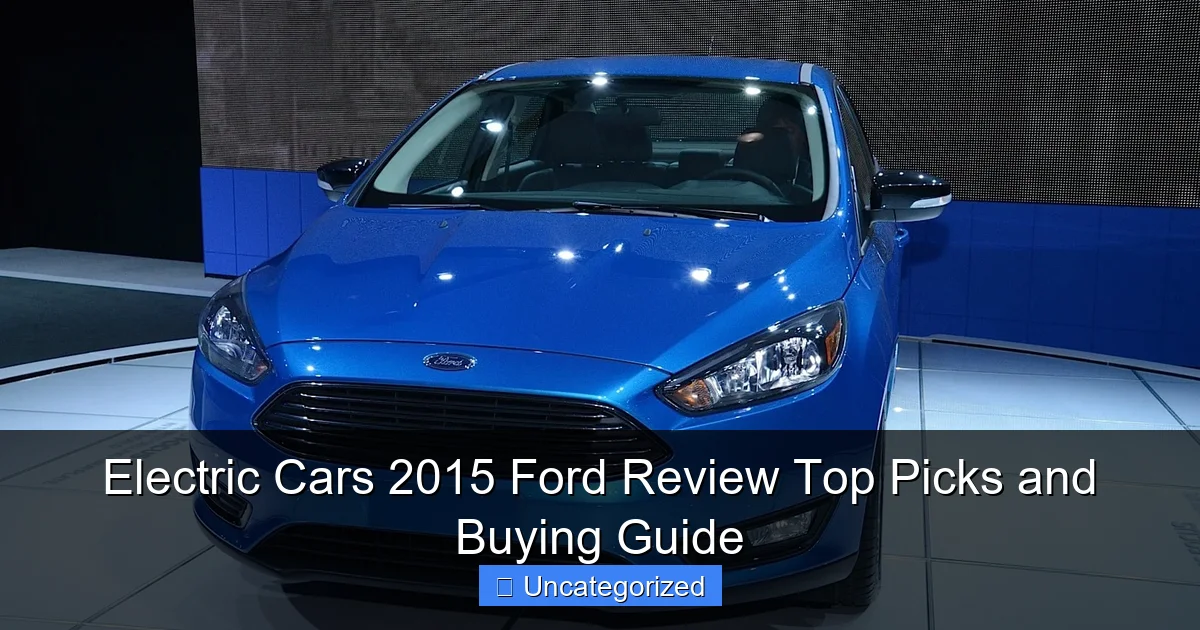
Visual guide about electric cars 2015 ford
Image source: s1.cdn.autoevolution.com
The Ford Focus Electric: Ford’s Sole Full EV
The 2015 Ford Focus Electric was Ford’s only fully electric vehicle in the U.S. market that year. Built on the popular Focus platform, it replaced the gasoline engine with a 107-kilowatt (143-horsepower) electric motor and a 23-kWh lithium-ion battery pack. With a top speed of 84 mph and a 0-60 mph time of around 10 seconds, it wasn’t a performance beast—but it was smooth, quiet, and efficient. The Focus Electric was designed for urban commuters and eco-conscious drivers who prioritized low operating costs and zero tailpipe emissions.
Key features:
- 110-mile EPA-estimated range (real-world typically 80–90 miles)
- Regenerative braking with “one-pedal driving” capability
- Standard 120V Level 1 charging (20+ hours for full charge)
- Available 240V Level 2 charging (4–5 hours for full charge)
- SYNC 2 infotainment with EV-specific energy monitoring
- Heated front seats, leather upholstery, and keyless entry
The Focus Electric was priced at $29,170 (before federal tax credits of up to $7,500), making it competitive with the Nissan Leaf and Chevrolet Spark EV. However, its limited range and lack of fast charging (no DC fast charging support) were notable drawbacks.
The Fusion Energi & C-Max Energi: Plug-In Hybrids for Flexibility
For buyers not ready to go fully electric, Ford offered the 2015 Fusion Energi and C-Max Energi—plug-in hybrids (PHEVs) with electric-only driving modes. Both vehicles combined a 2.0-liter Atkinson-cycle gasoline engine with an electric motor and a 7.6-kWh battery.
- Fusion Energi: 19-mile electric-only range, 620-mile total range, 188 horsepower combined. Targeted at sedan buyers seeking fuel efficiency without sacrificing space or comfort.
- C-Max Energi: 21-mile electric-only range, 550-mile total range, 188 horsepower. A compact MPV-style vehicle ideal for families and city driving.
Both models could be charged in 2.5 hours using a 240V Level 2 charger and offered regenerative braking, EV-only mode, and hybrid mode. The Fusion Energi started at $31,975 (after tax credits), while the C-Max Energi was slightly more affordable at $27,975. These PHEVs were perfect for drivers with short commutes who wanted to minimize gasoline use but still needed long-range capability for road trips.
Why Ford Chose a Hybrid-First Strategy
Ford’s decision to prioritize plug-in hybrids over full EVs in 2015 reflected market realities. While Tesla was pushing the boundaries of EV range and performance, most consumers still feared “range anxiety.” Ford’s hybrid approach allowed drivers to:
- Drive electric for daily commutes (under 20 miles)
- Switch to gasoline for longer trips
- Charge at home without relying on public infrastructure
- Benefit from lower fuel costs without sacrificing convenience
This strategy also allowed Ford to leverage existing platforms (Focus, Fusion, C-Max), reducing development costs and accelerating time-to-market. While the Focus Electric was a niche product, the Fusion and C-Max Energi models sold in higher volumes, proving the demand for flexible electrified vehicles.
Performance, Range, and Real-World Driving Experience
How did Ford’s 2015 electric and plug-in hybrid models perform in real-world conditions? Let’s analyze driving dynamics, range accuracy, energy efficiency, and owner-reported reliability.
Focus Electric: Urban Commuter, Not Highway Cruiser
The Focus Electric excelled in city driving. Its instant torque delivery made acceleration from stoplights smooth and responsive. The regenerative braking system was one of the best in its class—strong enough to allow “one-pedal driving” in stop-and-go traffic. However, the 110-mile EPA range was optimistic. In real-world testing:
- Summer driving (70°F): ~95–100 miles
- Winter driving (20°F): ~60–70 miles (due to battery efficiency loss and heater use)
- Highway driving at 65 mph: ~80–85 miles
Owners reported that using the cabin heater, heated seats, and defroster could reduce range by up to 30%. The lack of DC fast charging was a major limitation. Unlike the Nissan Leaf (which had CHAdeMO fast charging), the Focus Electric only supported Level 1 (120V) and Level 2 (240V) charging. A full charge took 4–5 hours on Level 2, making long-distance travel impractical without overnight charging.
Fusion & C-Max Energi: The Best of Both Worlds
The Fusion Energi and C-Max Energi delivered on their promise of flexibility. In EV mode, both vehicles were quiet and efficient, with smooth acceleration. The 20–21 mile electric range covered most daily commutes (the average U.S. commute is 16 miles). Once the battery was depleted, the gasoline engine engaged seamlessly, delivering a total range of over 500 miles.
- Fusion Energi: 100 MPGe (combined electric/gas), 42 MPG in hybrid mode
- C-Max Energi: 100 MPGe, 40 MPG in hybrid mode
Owners praised the vehicles’ quiet ride, comfortable interiors, and intuitive EV/HV mode switching. However, some noted that the battery placement reduced trunk space:
- Fusion Energi: 12.2 cu. ft. (vs. 16.5 cu. ft. in standard Fusion)
- C-Max Energi: 19.2 cu. ft. (vs. 43.2 cu. ft. in standard C-Max)
The C-Max Energi’s smaller cargo area was a trade-off for its electric capability, but the Fusion Energi’s trunk remained competitive in its class.
Energy Efficiency and Cost of Ownership
All three models were highly efficient in electric mode:
- Focus Electric: 110 MPGe (city), 99 MPGe (highway)
- Fusion Energi: 100 MPGe (combined)
- C-Max Energi: 100 MPGe (combined)
For context, the average gasoline car gets 25 MPG. At $3.00/gallon, driving 15,000 miles/year would cost $1,800. In contrast:
- Driving the Focus Electric 15,000 miles (all electric): ~$600 (at $0.12/kWh)
- Driving the Fusion Energi 15,000 miles (50% electric, 50% gas): ~$1,050
Over five years, the savings could exceed $3,000—not including lower maintenance costs (no oil changes, fewer brake replacements due to regenerative braking).
Charging Infrastructure and Daily Usability
Charging convenience is a make-or-break factor for EV adoption. In 2015, public charging networks were sparse, but Ford made strides to improve home and on-the-go charging for its electric models.
Home Charging: Level 1 vs. Level 2
All 2015 Ford EVs came with a standard 120V Level 1 charger (included in the price). However, Ford strongly encouraged buyers to install a 240V Level 2 charger for faster charging.
- Level 1 (120V): 4–5 miles of range per hour (20+ hours for full Focus Electric charge)
- Level 2 (240V): 20–25 miles of range per hour (4–5 hours for Focus Electric, 2.5 hours for PHEVs)
Tip: Ford partnered with ChargePoint to offer discounted Level 2 charger installations. Many buyers qualified for utility rebates (e.g., $500–$1,000 off installation in California, New York, and other states). Installing a Level 2 charger was a wise investment—it reduced charging time, improved battery longevity, and increased convenience.
Public Charging and FordPass Connect
In 2015, Ford launched FordPass (later FordPass Connect), a mobile app that helped drivers locate charging stations, monitor charging status, and schedule charging during off-peak hours. The app integrated with networks like ChargePoint, Blink, and SemaConnect.
Real-world example: A Focus Electric owner in Seattle used FordPass to find a Level 2 charger at a grocery store. By plugging in during a 45-minute shopping trip, they added 15 miles of range—enough to get home without range anxiety.
However, public charging was still limited. The U.S. had only ~16,000 public EVSE ports in 2015 (vs. over 150,000 today). Ford’s lack of DC fast charging support (except on later models) meant that long trips required careful planning.
Charging Tips for 2015 Ford EV Owners
- Charge overnight: Use off-peak electricity rates (often 50% cheaper).
- Precondition the battery: In winter, plug in the car while it’s still warm to improve charging efficiency.
- Use EV mode for short trips: For PHEVs, keep the battery charged to maximize electric driving.
- Monitor battery health: Avoid deep discharges (below 20%) to prolong battery life.
Pricing, Incentives, and Value Retention
Pricing and incentives played a crucial role in making 2015 Ford EVs accessible. Let’s break down the cost structure and long-term value.
MSRP and Federal/State Incentives
All 2015 Ford electric and plug-in hybrid models qualified for the federal tax credit of up to $7,500. Many states offered additional incentives:
- California: $2,500 Clean Vehicle Rebate (CVRP)
- New York: $2,000 Drive Clean Rebate
- Colorado: $5,000 state tax credit
- Oregon: $1,500 rebate
After incentives, the effective prices were:
- Focus Electric: $21,670 (federal) + $2,500 (CA) = $19,170
- Fusion Energi: $24,475 (federal) + $2,500 (CA) = $21,975
- C-Max Energi: $20,475 (federal) + $2,500 (CA) = $17,975
These prices were highly competitive with the Nissan Leaf ($21,510 after tax credit) and Toyota Prius Plug-In ($24,965 after tax credit).
Depreciation and Resale Value
Electric cars depreciated faster than gasoline models in 2015 due to rapid technology improvements and limited demand in the used market. However, Ford’s PHEVs held value better than the Focus Electric:
- Focus Electric: 5-year depreciation: ~60% (from $29,170 to ~$11,500 in 2020)
- Fusion Energi: 5-year depreciation: ~50% (from $31,975 to ~$16,000)
- C-Max Energi: 5-year depreciation: ~45% (from $27,975 to ~$15,500)
Tip: Today (2024), a well-maintained 2015 Focus Electric can be found for $7,000–$9,000, making it an excellent budget EV for city drivers. PHEVs are slightly more expensive ($9,000–$12,000) but offer greater flexibility.
Total Cost of Ownership (TCO)
Over 5 years, the TCO for a 2015 Ford EV was lower than a comparable gasoline car:
- Focus Electric: ~$18,000 (fuel, maintenance, insurance)
- Fusion Energi: ~$22,000
- 2015 Honda Accord (gasoline): ~$28,000
Savings came from lower fuel costs, reduced maintenance (no oil changes, fewer brake replacements), and tax credits.
Reliability, Safety, and Long-Term Ownership Insights
How have 2015 Ford EVs held up over time? Let’s examine reliability data, safety ratings, and owner feedback.
Reliability and Common Issues
According to Consumer Reports and J.D. Power, the 2015 Ford electric lineup was generally reliable, with some notable exceptions:
- Focus Electric: Battery degradation was minimal (5–10% over 80,000 miles). Some owners reported issues with the DC-DC converter (replaced under warranty). The 12V auxiliary battery often needed replacement after 3–4 years.
- Fusion Energi: Reliable overall. A few reports of hybrid system warnings, but most were resolved with software updates. The infotainment system (SYNC 2) was prone to glitches.
- C-Max Energi: Similar to Fusion. Some owners noted rear hatch rattles and minor electrical quirks.
Pro tip: Always check for open recalls and service bulletins before buying a used 2015 Ford EV. Ford issued a recall in 2016 for the Focus Electric’s battery coolant heater (NHTSA 16V-245).
Safety Ratings and Features
All three models earned strong safety ratings:
- Focus Electric: 5-star NHTSA overall rating. Standard safety features: ABS, stability control, 7 airbags, rearview camera.
- Fusion Energi: 5-star NHTSA, Top Safety Pick (IIHS). Added features: blind-spot monitoring, lane departure warning (optional).
- C-Max Energi: 4-star NHTSA, Good rating in IIHS tests. Standard rearview camera, optional parking sensors.
The electric powertrains added no safety risks—in fact, the low center of gravity improved handling and reduced rollover risk.
Owner Satisfaction and Community Support
Online forums (e.g., Focus Electric Forum, Fusion Hybrid Community) reveal high owner satisfaction. Common praises:
- Smooth, quiet driving experience
- Low operating costs
- Reliable electric motors (no major failures reported)
Common complaints:
- Limited public charging in 2015
- SYNC 2 infotainment lags
- C-Max Energi’s reduced cargo space
The Ford EV community remains active, with owners sharing charging tips, DIY fixes, and battery health monitoring techniques.
Data Comparison: 2015 Ford EVs vs. Competitors
Here’s how Ford’s 2015 electric models stacked up against key competitors:
| Model | Type | Electric Range | Total Range | MSRP (Before Tax Credit) | MPGe | Charging (Level 2) |
|---|---|---|---|---|---|---|
| 2015 Ford Focus Electric | BEV | 110 miles | 110 miles | $29,170 | 110 city / 99 hwy | 4–5 hours |
| 2015 Ford Fusion Energi | PHEV | 19 miles | 620 miles | $31,975 | 100 combined | 2.5 hours |
| 2015 Ford C-Max Energi | PHEV | 21 miles | 550 miles | $27,975 | 100 combined | 2.5 hours |
| 2015 Nissan Leaf (24 kWh) | BEV | 84 miles | 84 miles | $29,010 | 126 city / 101 hwy | 4–5 hours (Level 2), 30 min (DC) |
| 2015 Toyota Prius Plug-In | PHEV | 11 miles | 540 miles | $30,865 | 95 combined | 2.5 hours |
Key takeaways: The Focus Electric had the longest range among affordable BEVs but lacked DC fast charging. The Fusion and C-Max Energi offered better range flexibility than the Prius Plug-In. The Leaf was more efficient but had a shorter range.
Final Verdict: Should You Buy a 2015 Ford EV Today?
The 2015 Ford electric lineup was a pragmatic, well-rounded entry into the EV market. While the Focus Electric was limited by its range and charging infrastructure, it remains a solid choice for city dwellers and budget-conscious buyers today. The Fusion Energi and C-Max Energi were ahead of their time—offering the flexibility that many drivers still crave in 2024.
Buy a 2015 Ford EV if you:
- Want a reliable, low-maintenance vehicle with proven technology
- Have access to home or workplace charging
- Primarily drive short distances (under 20 miles daily for PHEVs)
- Seek a budget-friendly entry into EV ownership
Consider alternatives if you:
- Need DC fast charging for long trips
- Prioritize cutting-edge infotainment or autonomous features
- Want a longer electric range (e.g., Tesla Model S, later-gen Leafs)
Ultimately, Ford’s 2015 electric cars were a stepping stone—a bridge between the gasoline era and the electric future. They may not have had the glamour of a Tesla, but they delivered practicality, value, and a glimpse of what was to come. For under $10,000, a well-maintained 2015 Focus Electric or C-Max Energi is still a smart, sustainable choice. And for Ford, these models laid the foundation for the electric revolution that would follow with the Mustang Mach-E and F-150 Lightning.
In 2015, Ford didn’t just sell electric cars—they sold a vision. And for many owners, that vision is still running strong today.
Frequently Asked Questions
What were the top 2015 Ford electric car models available?
Ford offered two main electric vehicles in 2015: the **Ford Focus Electric** (all-electric) and the **Ford C-Max Energi** (plug-in hybrid). The Focus Electric was the brand’s only fully electric car, boasting a 76-mile range, while the C-Max Energi combined electric and gas power for greater flexibility.
How does the 2015 Ford Focus Electric compare to other electric cars of its time?
The 2015 Ford Focus Electric stood out with its competitive 76-mile range and quick DC fast-charging capability, but it faced stiff competition from the Nissan Leaf and Tesla Model S in terms of range and features. Its lower price point made it a practical choice for budget-conscious EV buyers.
What is the battery life and charging time for 2015 Ford electric cars?
The 2015 Ford Focus Electric features a 23 kWh lithium-ion battery, taking about 4 hours to charge with a 240V Level 2 charger (or 30 minutes for 80% with DC fast charging). The C-Max Energi’s hybrid system uses a smaller battery, requiring 2.5 hours for a full charge.
Are there any tax incentives for buying a 2015 Ford electric car?
Yes, both the 2015 Ford Focus Electric and C-Max Energi qualified for federal tax credits (up to $7,500 for the Focus Electric and $4,007 for the C-Max Energi). State-level incentives, like rebates or HOV lane access, were also available in some regions.
What are the key pros and cons of the 2015 Ford C-Max Energi?
The C-Max Energi’s plug-in hybrid design offered 20 miles of electric-only range and 620 miles combined with gas, ideal for longer trips. However, its smaller electric range and lower MPG (40 city/36 highway) compared to rivals were notable drawbacks.
Where can I find reliable reviews for 2015 Ford electric cars?
Trusted sources like Consumer Reports, Edmunds, and Kelley Blue Book provide in-depth 2015 Ford electric car reviews, covering performance, reliability, and owner satisfaction. Forums like MyEVSite also offer real-world insights from Focus Electric and C-Max Energi owners.