Electric Cars Blowing Up Florida What You Need to Know
Electric cars are catching fire in Florida at an alarming rate due to saltwater exposure from hurricanes and flooding, which can damage batteries and trigger thermal runaway. Experts urge owners in flood-prone areas to take precautions, like avoiding submersion, using battery covers, and monitoring for corrosion—key steps to reduce explosion risks.
Key Takeaways
- EV fires are rare: Proper maintenance reduces risks significantly.
- Hurricane risks: Saltwater exposure can damage batteries post-storm.
- Charging safety: Use certified stations to avoid battery malfunctions.
- Fire response: EV fires require specialized techniques and more water.
- Insurance tips: Review policies for flood and fire coverage gaps.
- Stay updated: Check NHTSA recalls for battery-related fixes.
📑 Table of Contents
- Why the Buzz Around Electric Cars Blowing Up in Florida?
- What Causes Electric Cars to “Blow Up” in Florida?
- How Common Are These Incidents, Really?
- What Should You Do If Your EV Is Flooded?
- How Are Manufacturers and Authorities Responding?
- Tips for Florida EV Owners: Staying Safe and Informed
- The Bottom Line: Are EVs Safe in Florida?
Why the Buzz Around Electric Cars Blowing Up in Florida?
You’ve probably seen the headlines or heard the stories: electric cars (EVs) “blowing up” in Florida. It sounds like something out of a sci-fi movie, right? But this isn’t just clickbait. There’s real concern—and real science—behind these incidents. If you’re an EV owner, thinking about buying one, or just curious, you’ve come to the right place. Let’s break it down in a way that’s easy to understand and actually useful.
Florida isn’t just a hotspot for retirees and tourists; it’s also become a flashpoint in the conversation about electric vehicle safety, especially when it comes to fires after hurricanes or saltwater flooding. The term “blowing up” might sound dramatic, but it usually refers to thermal runaway—a chain reaction in lithium-ion batteries that can lead to intense fires or explosions. And yes, it’s rare, but when it happens, it’s serious. The good news? Most of these incidents are preventable, and understanding the risks can help you stay safe. So, let’s dive into what’s really going on with electric cars blowing up in Florida, why it’s happening, and what you can do about it.
What Causes Electric Cars to “Blow Up” in Florida?
The Role of Saltwater and Flooding
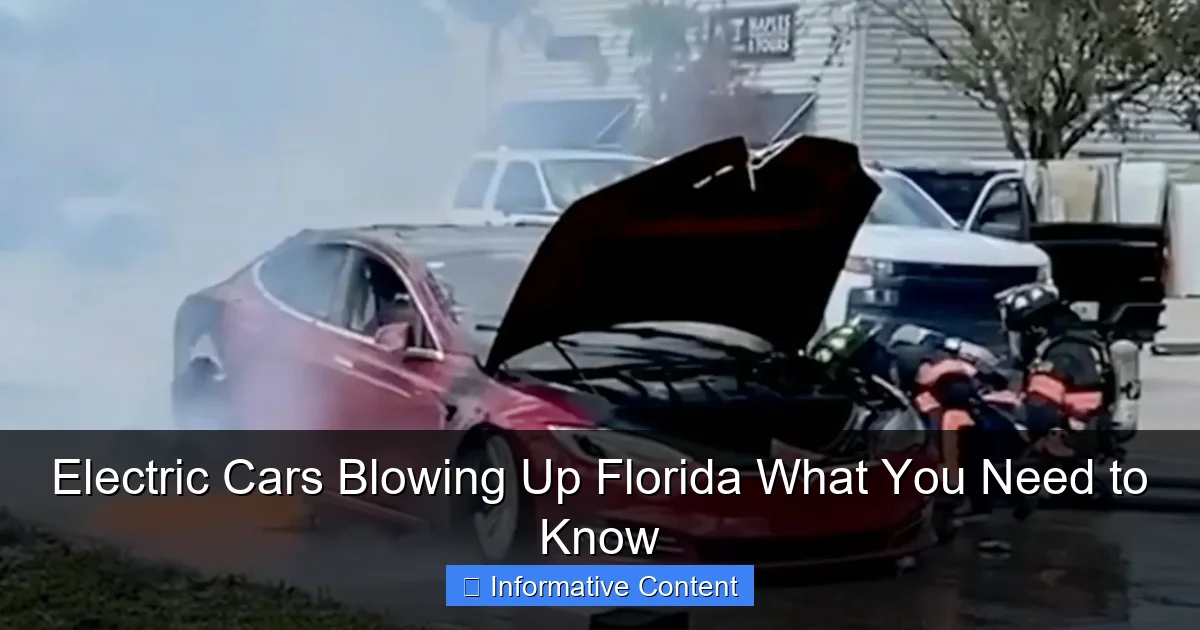
Let’s start with the elephant in the room: Florida’s weather. Hurricanes, storm surges, and flooding are common, especially in coastal areas like Miami, Tampa, and Naples. When saltwater gets into an electric car’s battery pack, it’s like pouring gasoline on a smoldering fire. Saltwater is highly conductive and corrosive. When it seeps into the battery compartment, it can cause short circuits, leading to thermal runaway—a dangerous chain reaction where the battery cells overheat, ignite, and sometimes explode.
Visual guide about electric cars blowing up florida
Image source: the-sun.com
Think of it like this: your EV’s battery is made up of hundreds of small cells, all packed tightly together. If one cell short-circuits due to saltwater intrusion, it can overheat and trigger neighboring cells. This domino effect is what causes the intense fires we’ve seen in some Florida incidents. Unlike gasoline fires, EV fires burn hotter (up to 5,000°F!) and can reignite hours or even days later.
Hurricane Ian: A Real-World Case Study
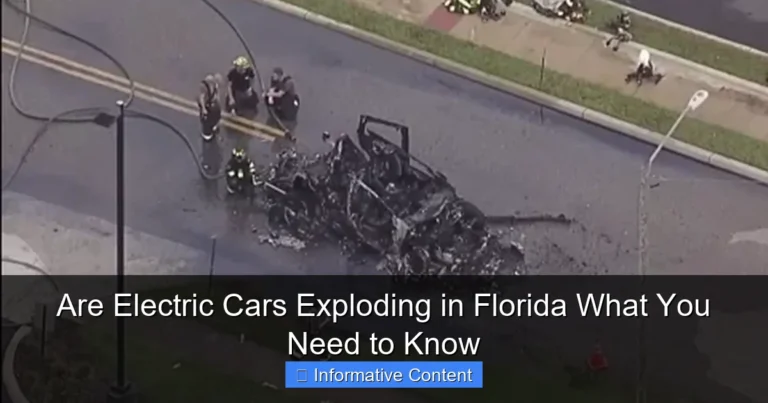
In 2022, Hurricane Ian caused catastrophic flooding across Southwest Florida. After the storm, local fire departments reported multiple EV fires, including one where a Tesla Model 3 caught fire in a flooded garage. The car wasn’t even turned on. The issue? Saltwater had reached the battery pack, corroded connections, and sparked a fire days later. Firefighters had to use thousands of gallons of water to put it out—far more than needed for a traditional car fire.
This wasn’t an isolated case. According to the National Fire Protection Association (NFPA), there were over 20 reported EV fires in Florida following Hurricane Ian. While that’s a small fraction of the thousands of EVs in the state, it’s a wake-up call for anyone living in flood-prone zones.
Battery Design and Vulnerabilities
Not all EVs are created equal when it comes to water resistance. Most modern electric cars have IP67 or IP68 ratings, meaning they can survive short dips in freshwater. But saltwater? That’s a different beast. Salt accelerates corrosion, and even small cracks or seals that seem fine can fail under prolonged exposure.
For example, the Nissan Leaf and older Tesla models have had more reported issues with water intrusion than newer models like the Ford Mustang Mach-E or Hyundai Ioniq 5, which have improved sealing and battery management systems. But no EV is completely immune—especially when submerged for hours or days.
How Common Are These Incidents, Really?
Putting the Risk in Perspective
Let’s be honest: the idea of an electric car “blowing up” is scary. But how common is it? The short answer: very rare. According to the U.S. Department of Energy, the fire risk for EVs is actually lower than for gasoline cars—about 25 fires per 100,000 EVs, compared to 1,530 fires per 100,000 gas vehicles. So, EVs are statistically safer in normal conditions.
But here’s the catch: when EV fires do happen—especially after flooding—they’re harder to extinguish and more dangerous for first responders. That’s why the media often highlights them. It’s not that EVs are inherently unsafe; it’s that their fires are more complex and less familiar to firefighters.
Florida vs. Other States: A Data Snapshot
Florida has more EVs than most states (over 100,000 registered as of 2023), and it’s also the most hurricane-prone state in the U.S. This combination makes it a natural “hotspot” for EV flood-related incidents. But it’s not the only place with risks. Coastal areas in Louisiana, Texas, and even New Jersey have reported similar issues after hurricanes.
What sets Florida apart is the sheer volume of EVs and the frequency of flooding. For example, after Hurricane Nicole in 2022, Palm Beach County reported three EV fires in a single week—all in flooded areas. Compare that to inland states like Colorado or Arizona, where EV fires are almost always due to crashes or charging issues, not flooding.
Data Table: EV Fires in Florida vs. National Average
| Metric | Florida (Post-Hurricane) | National Average (All Causes) |
|---|---|---|
| EV Fires per 100,000 Vehicles | ~30 (flood-related) | ~25 (all causes) |
| Fire Intensity (Gallons of Water Used) | 5,000–10,000 | 1,000–3,000 |
| Reignition Risk | High (due to saltwater corrosion) | Low to Moderate |
| Primary Cause | Flooding/Saltwater Intrusion | Charging, Crashes, Manufacturing Defects |
As you can see, the numbers are close, but the context matters. In Florida, the risk isn’t just about fire—it’s about how hard it is to put out and how long the danger lasts.
What Should You Do If Your EV Is Flooded?
Immediate Steps to Stay Safe
If you’re in a flood zone and your EV gets submerged—even partially—here’s what to do:
- Do NOT attempt to start the car. This is the #1 rule. Even if it looks dry, saltwater could be inside the battery.
- Call emergency services. Report the flooded EV. Fire departments now have protocols for EV incidents and may need to monitor it for days.
- Move it (if possible) but don’t drive it. If the car is in shallow water, you can push it to dry ground—but only if it’s safe. Never start the motor.
- Contact your insurer ASAP. Most comprehensive policies cover flood damage, but you need to document everything.
- Wait for a qualified technician. Only EV-certified mechanics should inspect the battery. DIY checks are dangerous.
Real-Life Example: A Miami Resident’s Story
Take Maria, a Tesla owner in Miami. After a tropical storm, her garage flooded to about 6 inches. She didn’t think much of it—until two days later, she smelled burning plastic. Her Tesla Model Y started smoking in the garage. Firefighters arrived and used over 7,000 gallons of water to control the fire. The battery had short-circuited due to saltwater corrosion.
Maria’s takeaway? “I wish I’d known to call the fire department right away, even if the car seemed fine. They told me the battery could’ve reignited later. I’m lucky it didn’t happen at night.”
Long-Term: What to Do After the Flood
Even if your EV doesn’t catch fire, it may still be unsafe. Here’s what to consider:
- Get a full battery inspection. Many dealerships and repair shops offer flood damage assessments. The battery pack may need partial or full replacement.
- Check for corrosion. Look for white or greenish residue on the battery terminals or undercarriage. This is a sign of salt damage.
- Ask about software updates. Some manufacturers release firmware updates to detect moisture in the battery system.
- Consider a buyback or trade-in. If the battery is compromised, it might not be worth the risk. Some insurers will total the car even if the damage isn’t visible.
How Are Manufacturers and Authorities Responding?
New Safety Features and Design Improvements
The good news? Carmakers are taking this seriously. Tesla, Ford, GM, and others have started adding:
- Improved battery sealing with double gaskets and hydrophobic coatings.
- Moisture sensors that alert owners if water is detected in the battery compartment.
- Flood mode in some models (e.g., Ford F-150 Lightning), which disables the high-voltage system automatically if submerged.
- Better battery cooling systems to reduce thermal runaway risk.
For example, the 2024 Hyundai Ioniq 6 has a new “saltwater detection” feature that shuts down the battery if moisture is sensed. It’s not foolproof, but it’s a step in the right direction.
Government and Fire Department Initiatives
Florida’s fire departments are getting specialized training. The Florida Division of Emergency Management now offers EV firefighting courses, teaching crews how to:
- Use thermal cameras to locate hot spots in batteries.
- Deploy EV-specific fire blankets (yes, they exist!).
- Isolate flooded EVs in containment areas to prevent reignition.
Some counties, like Broward and Palm Beach, have also started requiring EV owners to register their vehicles with emergency services. This helps first responders know where EVs are during floods and storms.
Insurance and Regulatory Changes
Insurance companies are adjusting, too. Some now offer “flood-specific” EV endorsements, while others have raised premiums in high-risk areas. Florida’s Office of Insurance Regulation is also pushing for clearer labeling on EV battery safety standards.
On a federal level, the National Highway Traffic Safety Administration (NHTSA) is studying post-flood EV risks and may introduce new regulations for battery enclosures in coastal states.
Tips for Florida EV Owners: Staying Safe and Informed
Before a Storm: Prevention is Key
You can’t stop a hurricane, but you can reduce your risk:
- Park on higher ground. If you know a storm is coming, move your EV to a garage on a hill or use a parking garage.
- Use a car cover (but not a sealed one). A breathable, water-resistant cover can help, but avoid airtight covers—they can trap moisture.
- Keep your battery at 50% charge. A fully charged battery is more volatile. If flooding is likely, charge to 50% and turn off charging.
- Download your car’s app. Tesla, Rivian, and others let you monitor your car’s status remotely. You might catch a problem before it escalates.
After a Storm: What to Watch For
Even if your EV looks fine, stay alert:
- Smell for burning or plastic odors. This could mean the battery is overheating.
- Check for warning lights. The “check engine” light or a battery warning could indicate moisture damage.
- Listen for unusual noises. Hissing, popping, or crackling sounds near the battery area are red flags.
- Don’t charge it immediately. Wait for a professional inspection. Charging a damaged battery can trigger thermal runaway.
Community and Resources
You’re not alone. Join local EV owner groups (like Florida EV Association or Facebook groups) to share tips. Many have firsthand experience with flood damage and can recommend trusted mechanics.
Also, bookmark these resources:
- NFPA’s EV Safety Guide: Free PDF on handling EV fires and floods.
- Florida’s EV Emergency Protocol: Step-by-step instructions for first responders and owners.
- Manufacturer Hotlines: Tesla, Ford, and others have 24/7 support for flood-related issues.
The Bottom Line: Are EVs Safe in Florida?
Let’s cut to the chase: yes, electric cars are safe in Florida—if you take the right precautions. The idea of EVs “blowing up” is sensationalized, but the real risk isn’t the car itself; it’s the environment. Saltwater flooding is the main culprit, and it’s a solvable problem with awareness and action.
Think of it like owning a boat. You wouldn’t leave it in the water without a cover or bilge pump. Similarly, your EV needs protection in a flood-prone area. The technology is improving fast, and with better design, training, and owner education, these incidents will become even rarer.
So, should you avoid buying an EV in Florida? Not at all. In fact, with lower emissions, cheaper fuel, and great incentives (like the $7,500 federal tax credit), EVs are a smart choice—as long as you’re informed. Know the risks, plan for storms, and don’t panic if you see a headline about “electric cars blowing up in Florida.” Most of the time, the story is more about how it happened than why.
Stay safe, stay charged (but not too charged!), and enjoy the ride. The future of driving is electric—even in hurricane country.
Frequently Asked Questions
Why are electric cars blowing up in Florida?
Reports of electric cars “blowing up” in Florida are often linked to battery fires caused by extreme heat, saltwater damage from hurricanes, or manufacturing defects. While rare, lithium-ion battery fires can be intense and harder to extinguish than traditional vehicle fires.
How common are electric car fires in Florida compared to gas cars?
Despite viral stories, data shows electric vehicles actually catch fire less often than gasoline-powered cars. However, when EVs do ignite—especially after hurricanes—the term “blowing up” may be used due to the dramatic nature of lithium-ion battery combustion.
Can hurricanes cause electric cars to explode in Florida?
Yes, flood-damaged electric cars submerged in saltwater can short-circuit their battery systems, leading to thermal runaway and fires—sometimes days after exposure. This has led to several post-hurricane EV fires in Florida, prompting safety warnings from authorities.
What should I do if my electric car is involved in a Florida flood?
If your EV is flooded, do not charge or start it. Contact the manufacturer or a certified technician immediately to inspect for battery damage. Saltwater exposure greatly increases the risk of electric cars malfunctioning or catching fire.
Are certain EV brands more likely to catch fire in Florida?
No brand is immune, but most major manufacturers have updated safety protocols for high-risk areas like Florida. Always check for recalls and follow hurricane preparedness guides specific to your EV model to reduce risks.
How can I prevent my electric car from blowing up in Florida’s climate?
Avoid leaving your EV in extreme heat or flooded areas. Park in garages or shaded spots, install a battery management system, and follow manufacturer guidelines—especially after storms. Proper maintenance reduces the risk of electric cars overheating or igniting.