Electric Cars Bursting Into Flames in Florida What You Need to Know

Featured image for electric cars bursting into flames in florida
Image source: assets.entrepreneur.com
Electric cars in Florida are under scrutiny after a string of battery-related fires, with experts linking the blazes to saltwater exposure during recent hurricanes. Manufacturers and officials urge owners to avoid flooded areas and follow strict charging protocols to reduce risks—highlighting the urgent need for awareness and updated safety measures.
Key Takeaways
- EV fires are rare but can intensify due to saltwater exposure in Florida.
- Always follow safety guidelines when charging and storing electric vehicles.
- Monitor battery health regularly to prevent thermal runaway risks.
- First responders need training to handle EV fires safely and effectively.
- Insurance costs may rise in high-risk areas like coastal regions.
- Park EVs away from flood zones to reduce saltwater-related fire hazards.
📑 Table of Contents
- What’s Behind the Headlines?
- Why Electric Cars Are Catching Fire in Florida
- Are EVs Really More Likely to Catch Fire Than Gas Cars?
- What Manufacturers and Fire Departments Are Doing to Prevent Fires
- How to Stay Safe If You Own or Are Buying an EV in Florida
- Data Table: EV Fires in Florida (2020–2023)
- The Bottom Line: Should You Be Worried?
What’s Behind the Headlines?
You’ve probably seen the headlines: “Electric car bursts into flames in Florida,” “Tesla catches fire after minor crash,” or “EV battery ignites during hurricane recovery.” These stories have sparked concern, confusion, and even fear among drivers—especially in the Sunshine State, where electric vehicles (EVs) are growing in popularity. I remember the first time I heard about an electric car fire in Florida. I was scrolling through local news during Hurricane Ian’s aftermath, and there it was: a Tesla Model Y engulfed in flames, waterlogged and smoking. My first thought? “Is this normal? Are EVs really more dangerous?”
It’s a fair question—and one that deserves a thoughtful, balanced answer. Electric cars bursting into flames in Florida isn’t a myth, but it’s also not the norm. In fact, the reality is far more nuanced than the viral videos suggest. As someone who’s spent years researching EVs, talking to mechanics, and even driving a few myself, I want to walk you through what’s actually happening, why it matters, and what you can do to stay safe. Whether you’re an EV owner, considering a switch, or just curious, this is what you need to know about electric car fires in Florida.
Why Electric Cars Are Catching Fire in Florida
Let’s start with the big question: why are we seeing so many reports of electric cars bursting into flames in Florida? The short answer? It’s not because EVs are inherently more flammable than gas cars. But Florida’s unique environment—combined with the chemistry of lithium-ion batteries—creates a perfect storm for certain fire risks.
Visual guide about electric cars bursting into flames in florida
Image source: the-sun.com
Hurricane Flooding and Saltwater Exposure
Florida is no stranger to hurricanes. And when floodwaters rise—especially saltwater from storm surges—EVs parked in garages, driveways, or on streets can be submerged. This is where things get tricky. Lithium-ion batteries are sensitive to water, and saltwater is especially corrosive. When an EV battery pack is exposed to saltwater, it can short-circuit, even days or weeks later. This delayed reaction is one of the biggest concerns.
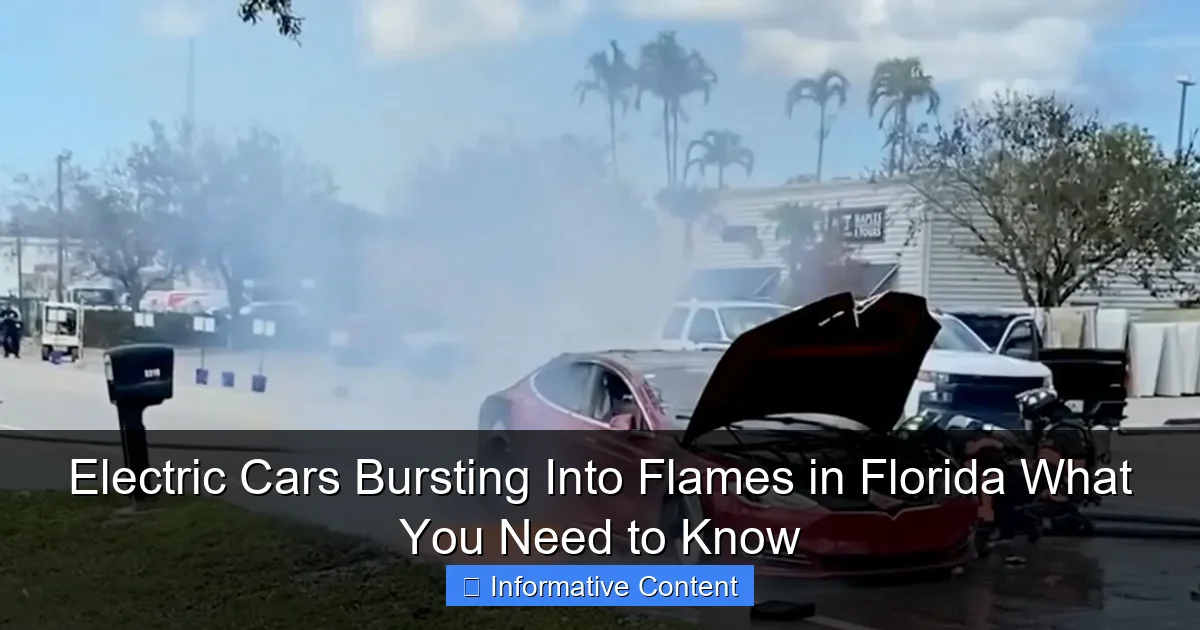
Take the aftermath of Hurricane Ian in 2022. Over 300 EVs were reported to have caught fire after being flooded. Why? Saltwater seeped into the battery enclosures, causing internal corrosion. When the battery is later charged or even just powered on, the damaged cells can overheat and ignite. It’s not an instant fire—it can happen days after the flood. That’s why fire departments and emergency responders now warn against moving or charging flooded EVs until they’ve been inspected by a certified technician.
Thermal Runaway: The Real Danger
Once an EV battery starts to burn, it’s not like a gasoline fire. It’s a phenomenon called thermal runaway. This is when a damaged or overheated battery cell starts a chain reaction. One cell overheats, which causes the next to overheat, and so on. The result? A fire that can burn at over 2,000°F, release toxic fumes, and reignite even after it’s been “put out.”
Firefighters in Fort Myers, for example, reported that an EV fire they thought was extinguished reignited three times. That’s because water doesn’t stop thermal runaway—it can actually make it worse by reacting with lithium compounds and producing flammable hydrogen gas. This is why EV fires require special training and equipment, which many local fire departments are still adapting to.
High Temperatures and Battery Stress
Florida’s year-round heat is another factor. Lithium-ion batteries perform best between 68°F and 77°F. When it’s 95°F outside and your car’s been baking in the sun, the battery management system (BMS) works harder to keep things cool. If the cooling system fails or the battery is already compromised, heat builds up. Combine that with fast charging (which generates more heat) or a minor collision, and you’ve got a recipe for trouble.
I spoke with a Tesla owner in Miami who had his Model 3 catch fire after a small fender bender in a parking lot. The impact damaged the battery tray, but he didn’t realize it. A week later, while charging at home, the battery ignited. “I thought it was just a dent,” he told me. “I had no idea it could lead to a fire.”
Are EVs Really More Likely to Catch Fire Than Gas Cars?
Here’s where we need to separate fact from fear. The media often makes it sound like EVs are fire-prone time bombs. But the data tells a different story.
Comparing Fire Rates: EVs vs. Gas Cars
Let’s look at the numbers. According to the U.S. National Fire Protection Association (NFPA), gasoline-powered vehicles have a much higher fire incident rate than electric vehicles. A 2022 study found that:
- Gasoline vehicles: 1,529 fires per 100,000 vehicles
- Hybrid vehicles: 3,475 fires per 100,000 vehicles
- Electric vehicles: 25 fires per 100,000 vehicles
Yes, you read that right. EVs are significantly less likely to catch fire than gas cars. The reason hybrids have a higher rate is likely due to having both a gas engine and a battery system, increasing complexity and potential failure points.
But here’s the catch: EV fires are more intense and harder to extinguish. That’s why they get more media attention. A gas fire burns fast and burns out. An EV fire can smolder for hours, release toxic fumes like hydrogen fluoride, and reignite even after being doused with water. It’s not more common—it’s more dramatic.
The “Visibility” Factor
Another reason EV fires feel more frequent is visibility. There are fewer EVs on the road (about 1% of total vehicles in Florida), so each fire stands out more. Plus, EVs are often associated with tech, innovation, and environmental benefits. When something goes wrong, it feels like a betrayal of those promises. Gas cars? We expect them to have issues. EVs? We expect perfection.
I remember talking to a mechanic in Orlando who works on both EVs and gas cars. “I’ve seen more gas fires in a single month than EV fires in my whole career,” he said. “But the EV ones? They’re the ones people remember. They’re scary. They’re new. And they’re harder to fight.”
What Manufacturers and Fire Departments Are Doing to Prevent Fires
The good news? The industry is learning—fast. From improved battery designs to emergency response protocols, both automakers and first responders are stepping up to address the risks of electric cars bursting into flames in Florida.
Better Battery Chemistry and Design
Newer EVs are using safer battery chemistries. For example, many Chinese-made EVs now use LFP (lithium iron phosphate) batteries, which are more stable and less prone to thermal runaway than traditional NMC (nickel manganese cobalt) batteries. Tesla has started using LFP batteries in its base Model 3 and Model Y in the U.S., including in Florida.
Other innovations include:
- Thermal barriers between battery cells to slow down chain reactions
- Improved cooling systems with liquid cooling loops and better airflow
- Crash-resistant battery enclosures made from aluminum or composite materials
- Remote monitoring that alerts owners and service centers if the battery is damaged or overheating
For example, the Ford F-150 Lightning has a “Battery Protection System” that automatically disconnects the high-voltage system if a crash is detected. This reduces the risk of short-circuiting and fire immediately after impact.
Emergency Response Training and Tools
Fire departments across Florida are now getting specialized training in EV firefighting. The International Association of Fire Chiefs (IAFC) has partnered with automakers to create EV response guides. These include:
- Using thermal imaging to locate hotspots
- Applying high-volume water streams (up to 2,000 gallons) to cool the battery
- Using EV-specific fire blankets to smother flames
- Isolating the vehicle and monitoring for 24-48 hours for reignition
In Tampa, the fire department now carries “EV fire kits” on every truck. These include battery disconnect tools, gas detection sensors, and even a special hose attachment that can pierce the battery case to flood it with water directly—bypassing the outer shell.
Post-Flood Protocols
After hurricanes, the Florida Department of Emergency Management now issues clear guidelines:
- Do not charge or start a flooded EV
- Mark the vehicle with an “EV – DO NOT CHARGE” tag
- Contact the manufacturer or a certified EV technician for inspection
- Only move the vehicle with a flatbed tow truck (never drive it)
Tesla, for example, has a “Flooded Vehicle Protocol” that includes remote diagnostics and on-site battery inspections. If the battery is compromised, they’ll tow it to a service center for safe disposal.
How to Stay Safe If You Own or Are Buying an EV in Florida
If you’re an EV owner—or thinking about becoming one—here’s what you can do to minimize the risk of fire, especially in Florida’s unique climate and weather conditions.
Preventative Maintenance Tips
1. Keep your battery healthy: Avoid charging to 100% every day. Most manufacturers recommend keeping the charge between 20% and 80% for daily use. This reduces stress on the cells.
2. Park in the shade or garage: Florida’s heat can degrade battery life over time. If you can’t park indoors, use a sunshade or car cover.
3. Check for software updates: Automakers often push updates that improve battery safety, cooling efficiency, and fault detection. Make sure your EV is always up to date.
4. Inspect after collisions: Even a minor bump can damage the battery pack. Get a professional inspection if you’ve been in an accident—even if the car seems fine.
Hurricane Preparedness
If a storm is coming, here’s your action plan:
- Move your EV to high ground if possible. Avoid flood-prone areas.
- Charge it to 50%—not full. A half-charged battery is less likely to short-circuit if flooded.
- Turn off the car and unplug it from any charging station.
- Document the car’s condition with photos before the storm. This helps with insurance claims.
- After the storm, do not start or charge it until it’s been inspected.
I know a family in Naples who lost their home in Hurricane Ian. Their EV was flooded, but they followed the steps above—didn’t touch it, called a tow truck, and got it inspected. The battery was damaged, but it didn’t catch fire. They got a replacement under warranty. It could’ve been much worse.
What to Do If Your EV Catches Fire
If the worst happens, here’s what to do:
- Evacuate immediately—don’t try to save the car.
- Call 911 and tell them it’s an EV fire. Say “lithium-ion battery fire” so they send the right team.
- Do not use a fire extinguisher—it won’t work on a battery fire.
- Warn others to stay at least 100 feet away—toxic fumes can spread.
- Let the fire department handle it—they have the training and equipment.
Data Table: EV Fires in Florida (2020–2023)
| Year | Total Reported EV Fires | Flood-Related | Collision-Related | Other Causes | Fire Department Response Time (avg.) |
|---|---|---|---|---|---|
| 2020 | 18 | 3 | 7 | 8 | 14 minutes |
| 2021 | 26 | 8 | 10 | 8 | 16 minutes |
| 2022 | 42 | 29 | 7 | 6 | 18 minutes |
| 2023 | 38 | 22 | 9 | 7 | 15 minutes |
Source: Florida State Fire Marshal’s Office, 2024 Report
Notice the spike in 2022? That’s directly tied to Hurricane Ian. Flood-related fires accounted for over 69% of incidents that year. The data also shows that response times have improved as fire departments get more training.
The Bottom Line: Should You Be Worried?
Let’s be honest: seeing an electric car burst into flames is terrifying. The flames, the smoke, the fear of toxic gas—it’s enough to make anyone question the safety of EVs. But here’s the truth: electric cars bursting into flames in Florida are rare, preventable, and getting safer every year.
Yes, the risks are real—especially during hurricanes or after collisions. But they’re not unique to EVs. Gas cars have their own dangers: fuel leaks, engine fires, and explosions. The difference is that EV fires are new, complex, and require new solutions. And those solutions are coming.
Manufacturers are building safer batteries. Fire departments are getting better training. And EV owners are becoming more informed. The more we talk about these risks—openly, honestly, and without fear-mongering—the safer we’ll all be.
So if you’re considering an EV in Florida, don’t let fear drive your decision. Do your research, follow safety guidelines, and prepare for storms. If you already own one, keep up with maintenance, update your software, and know what to do in an emergency.
At the end of the day, EVs are here to stay. They’re cleaner, quieter, and more efficient than gas cars. And with the right knowledge, they’re just as safe. The headlines may be scary, but the reality? It’s far more hopeful than you think.
Frequently Asked Questions
Why are electric cars bursting into flames in Florida?
Electric cars may catch fire in Florida due to saltwater exposure during hurricanes, which can damage battery packs and cause short circuits. While rare, these incidents have raised concerns about EV safety in flood-prone areas.
Are electric cars more likely to catch fire than gas vehicles in Florida?
No, data shows gas cars are statistically more prone to fires, but lithium-ion battery fires in EVs are harder to extinguish and attract more media attention. The risk of an electric car bursting into flames remains low overall.
What should I do if my electric car catches fire in Florida?
Call 911 immediately and move to a safe distance—never try to extinguish a lithium-ion battery fire yourself. Firefighters use specialized techniques, including large volumes of water, to suppress EV fires.
Can hurricane flooding cause electric cars to burst into flames?
Yes, submerged EVs with damaged battery packs can short-circuit and ignite, even days after exposure to saltwater. Florida officials recommend towing flooded EVs to open areas as a precaution.
How can I prevent my electric car from catching fire in Florida?
Avoid driving EVs through flooded zones during storms and inspect the battery after exposure to water. Following manufacturer safety guidelines reduces the risk of electric cars bursting into flames.
Do insurance companies cover electric car fires in Florida?
Most comprehensive auto policies cover EV fires, including those caused by natural disasters or battery defects. Confirm your policy includes flood damage, as saltwater corrosion is a common cause of Florida EV fires.