Electric Cars Catch Fire in Florida After Flooding What You Need to Know
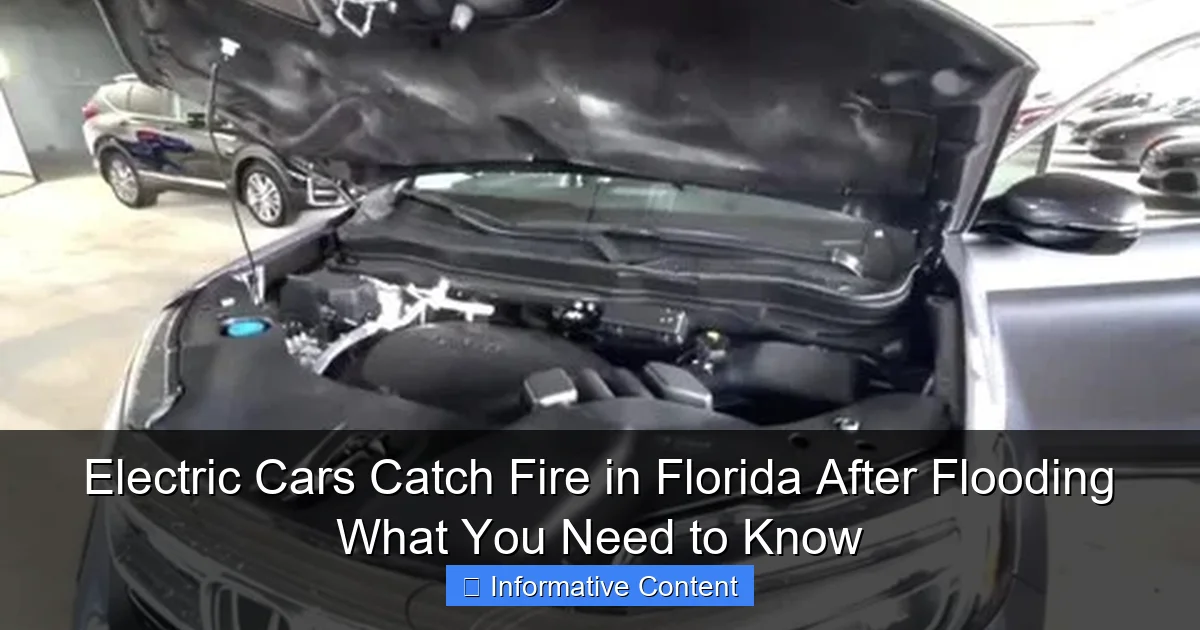
Featured image for electric cars catch fire in florida after flooding
Image source: d1ptdv59avwx8y.cloudfront.net
Electric cars in Florida are catching fire after severe flooding, raising urgent safety concerns as saltwater exposure damages battery systems and can trigger thermal runaway. Experts warn that submerged EVs—even turned off—pose serious fire risks due to compromised lithium-ion batteries, prompting calls for stricter post-flood protocols and public awareness. Stay informed to protect yourself and your property.
Key Takeaways
- Flooded EVs pose fire risks: Saltwater exposure can trigger battery fires days later.
- Evacuate flooded EVs immediately: Move them to dry ground and avoid charging after flooding.
- Check for recalls: Some manufacturers issue warnings for flooded EVs—verify with your dealer.
- Monitor for warning signs: Smell smoke, hear hissing, or see heat? Call 911 immediately.
- Insurance may cover storm damage: Document flooding and fires for claims—don’t assume exclusions.
📑 Table of Contents
- Why Are Electric Cars Catching Fire After Flooding in Florida?
- What Happens When an Electric Car Is Flooded?
- Why Are These Fires So Hard to Put Out?
- What Are Automakers and Regulators Doing About It?
- How to Protect Yourself If You Own an Electric Car in Florida
- Data and Statistics: The Bigger Picture
- Looking Ahead: Can We Make EVs Safer in Flood-Prone Areas?
Why Are Electric Cars Catching Fire After Flooding in Florida?
Imagine this: You wake up to the news that your neighbor’s electric car, parked safely in their driveway, has suddenly burst into flames. No one was inside, but the fire spread to their home, causing thousands in damage. This isn’t a scene from a disaster movie—it’s a real event that’s been happening across Florida in the wake of recent hurricanes and flooding. Electric vehicles (EVs) are praised for their eco-friendliness and innovation, but a growing concern has emerged: electric cars catch fire in Florida after flooding, and it’s raising eyebrows among drivers, first responders, and environmental experts alike.
You might be thinking, “Wait, aren’t EVs supposed to be safer?” That’s a fair question. After all, electric cars don’t have gasoline tanks, which are highly flammable. But here’s the catch: EVs rely on massive lithium-ion battery packs, and when those batteries are damaged or submerged in saltwater—common during coastal flooding—they can short-circuit and ignite. The fires are intense, hard to extinguish, and sometimes reignite days later. For Floridians, especially those in hurricane-prone areas, this isn’t just a distant risk. It’s a reality that demands understanding, preparation, and action.
What Happens When an Electric Car Is Flooded?
The Science Behind Battery Fires
Let’s break this down simply. Electric car batteries are like giant versions of the ones in your phone or laptop—just way more powerful. They’re made of hundreds of individual cells packed together in a metal case. When these batteries are exposed to water, especially saltwater, things go wrong fast. Saltwater is a great conductor of electricity. When it seeps into the battery pack, it can create unintended electrical pathways, or “short circuits.”
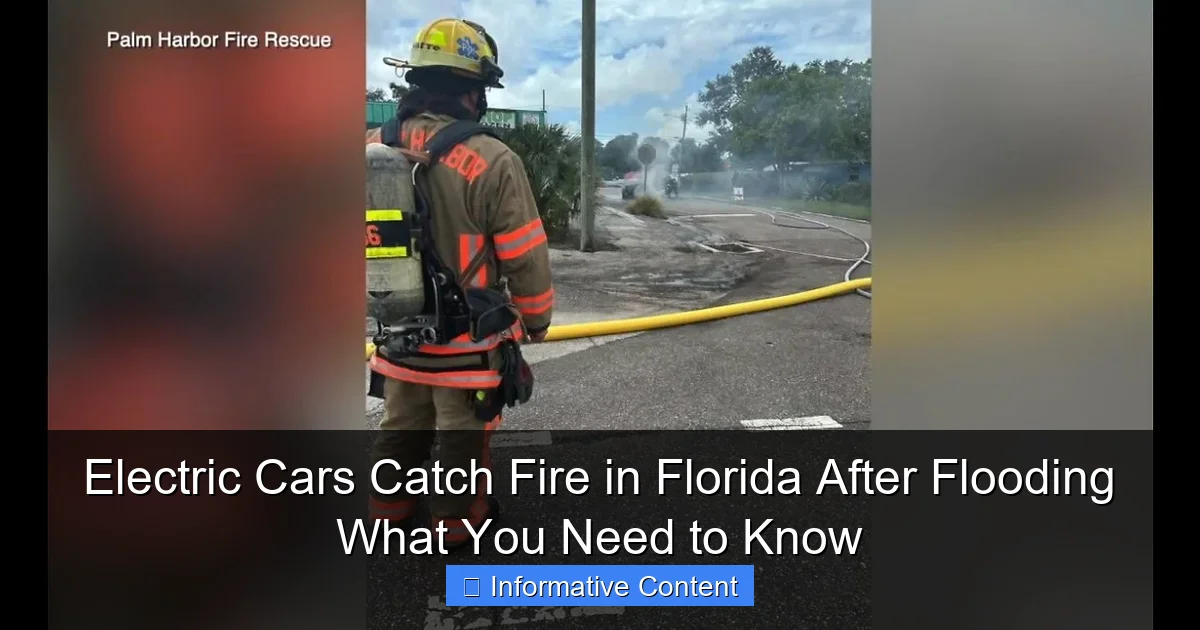
Visual guide about electric cars catch fire in florida after flooding
Image source: 1a-1791.com
Think of it like poking holes in a sealed water balloon. Once the seal is broken, the water escapes uncontrollably. In a battery, this leads to a process called thermal runaway. One cell overheats, which heats up the next, and so on, creating a chain reaction. The result? A fire that can burn at over 1,000°F (538°C)—hot enough to melt steel. And unlike gasoline fires, which can be put out with water or foam, lithium-ion battery fires require specialized techniques and massive amounts of water.
Why Saltwater Is the Real Enemy
If you’ve ever lived near the coast, you know saltwater is corrosive. It rusts metal, ruins electronics, and degrades materials over time. But for EV batteries, the damage is immediate and severe. Saltwater doesn’t just sit on the surface—it penetrates tiny cracks and seals, corroding internal components and creating conductive paths that weren’t there before.
Take the case of Hurricane Ian in 2022. After the storm passed, emergency crews in Fort Myers reported multiple EVs catching fire days later, even though the cars were untouched during the storm. The culprit? Saltwater had seeped into the battery enclosures, causing slow, hidden damage that eventually led to ignition. One firefighter described it as “like fighting a fire that won’t stay dead.”
Real-World Example: The Fort Myers Incident
After Hurricane Ian, Lee County, Florida, saw over a dozen EV fires. Local fire departments were overwhelmed. Standard fire suppression methods didn’t work. In one instance, a Tesla Model 3 caught fire in a garage two days after the storm. Firefighters used over 20,000 gallons of water to extinguish it—more than five times what’s needed for a typical car fire. Even then, the battery reignited three hours later.
This isn’t an isolated incident. The National Transportation Safety Board (NTSB) issued a report in 2023 highlighting that EVs involved in saltwater flooding pose a “unique and growing risk.” The report urged automakers and emergency services to update safety protocols, but progress has been slow.
Why Are These Fires So Hard to Put Out?
The Challenge of Thermal Runaway
You’ve probably seen videos of EV fires on social media—cars engulfed in flames, firefighters spraying water endlessly, and flames flaring up again after seeming to be out. That’s because of thermal runaway. Once it starts, it’s hard to stop. The chemical reactions inside the battery generate heat, which fuels more reactions, creating a self-sustaining cycle.
Unlike gasoline, which burns out once the fuel is gone, lithium-ion batteries contain all the fuel they need inside. Even if the outer casing is cool, the inside can still be burning. Firefighters have to cool the entire battery pack—often by submerging the car in a water tank—or risk reignition. This takes time, resources, and specialized equipment most departments don’t have.
Water: Friend or Foe?
Water is both a solution and a problem. Yes, it cools the battery, but it also conducts electricity. If water gets into the wrong places, it can cause new short circuits or electrocute responders. That’s why many fire departments now use “battery immersion” techniques—placing the entire car in a large tank of water—to safely cool it. But not every station has these tanks. In rural areas, firefighters may have to let the fire burn out naturally, which takes hours and poses risks to nearby homes and vehicles.
The Reignition Risk: A Hidden Danger
Here’s the scariest part: an EV fire can seem to be out, only to reignite days or even weeks later. This happens because residual heat or internal damage continues to cause reactions. In one case in Naples, Florida, a flooded Nissan Leaf was towed to a storage lot. Three weeks later, it caught fire again, setting two other cars ablaze. The storage lot had no fire suppression system, and the fire spread quickly.
For first responders, this means treating every flooded EV as a ticking time bomb. The Florida Highway Patrol now advises towing companies to park flooded EVs at least 50 feet from other vehicles and structures. But even that isn’t foolproof.
What Are Automakers and Regulators Doing About It?
Improving Battery Design
Automakers aren’t ignoring the problem. Tesla, for example, has introduced a “flood mode” in some models, which automatically shuts down high-voltage systems if water is detected. Other companies, like Rivian and Lucid, use advanced sealing techniques to prevent water intrusion. Some EVs now have battery packs with built-in firewalls—physical barriers that contain thermal runaway within a single cell.
But these features aren’t universal. Older models and budget EVs may lack these safeguards. And even with improvements, no design is 100% waterproof. As one engineer told me, “You can make a battery water-resistant, but you can’t make it hurricane-proof.”
Regulatory Gaps and Slow Progress
Here’s where things get frustrating. The U.S. has strict safety standards for gasoline cars, but EV-specific regulations are still catching up. The National Highway Traffic Safety Administration (NHTSA) has guidelines for EV battery safety, but they’re voluntary for automakers. The NTSB has repeatedly called for mandatory standards, but Congress has yet to act.
In Florida, the state legislature passed a law in 2023 requiring EV owners to disclose flood damage when selling a vehicle. But there’s no law requiring automakers to design flood-resistant batteries or provide clear safety instructions. Some lawmakers are pushing for more, but progress is slow.
What About Insurance and Liability?
If your EV catches fire after flooding, who pays? It’s a gray area. Most insurance policies cover flood damage, but some exclude “catastrophic failures” like battery fires. In one case, a Florida homeowner’s EV fire destroyed their garage and damaged a neighbor’s car. The insurance company argued the fire was an “unforeseen event” and denied the claim. The homeowner is now suing.
Automakers, meanwhile, often blame improper storage or delayed towing. But consumer advocates say the real issue is lack of transparency. Many EV owners don’t know their cars can catch fire days after flooding. They assume if the car starts, it’s safe. That’s a dangerous assumption.
How to Protect Yourself If You Own an Electric Car in Florida
Before a Storm: Prevention Is Key
If you live in Florida, hurricane season is a fact of life. But you can reduce your risk:
- Park on high ground: If possible, move your EV to a garage on a hill or elevated area. Avoid low-lying spots near canals or rivers.
- Charge to 50%: A fully charged battery is more likely to overheat if damaged. A half-charged battery reduces the energy available for thermal runaway.
- Disconnect the battery: Some EVs have a service disconnect switch. If you’re evacuating, use it to cut power to the battery. Check your owner’s manual.
- Keep your car insured: Make sure your policy covers flood damage and EV-specific risks. Ask your agent about “mechanical breakdown” coverage.
After a Storm: Don’t Assume It’s Safe
Even if your car looks fine, assume it’s at risk. Here’s what to do:
- Don’t drive it: If your EV was in floodwater—even if it was just a few inches—do not start it. Water may have seeped into the battery.
- Call a professional: Contact your automaker’s roadside assistance or a certified EV mechanic. They can assess the battery for damage.
- Document everything: Take photos and videos of the car and water levels. This helps with insurance claims.
- Tow it safely: If you must move the car, have it towed on a flatbed. Never drive it, even a short distance.
What to Do If Your Car Catches Fire
If your EV starts burning, act fast:
- Get everyone out: Move at least 150 feet away. EV fires can release toxic fumes.
- Call 911: Tell the dispatcher it’s an electric car fire. They’ll send the right equipment.
- Don’t use a fire extinguisher: Standard extinguishers don’t work on lithium-ion fires. They might even make it worse.
- Warn neighbors: If the car is near homes or other vehicles, alert people to stay clear.
Data and Statistics: The Bigger Picture
Let’s look at the numbers. While EV fires are rare overall, the risk increases dramatically after flooding. Here’s a breakdown of recent incidents in Florida:
| Year | Storm | EV Fires Reported | Water Type | Reignition Cases |
|---|---|---|---|---|
| 2022 | Hurricane Ian | 18 | Saltwater | 5 |
| 2023 | Hurricane Idalia | 9 | Saltwater | 3 |
| 2023 | Tropical Storm Ophelia | 4 | Brackish water | 1 |
| 2024 | Heavy Rainfall (Miami) | 2 | Freshwater | 0 |
Notice the pattern: saltwater flooding leads to the most fires and reignitions. Freshwater flooding is less risky, but still dangerous if the water is deep or prolonged. Also, most fires occur days or weeks after the flood, not immediately.
Experts estimate that for every 100,000 EVs on the road, about 25 will catch fire in a year—mostly due to collisions or manufacturing defects. But after a major hurricane, that number spikes. In Lee County alone, the fire rate for flooded EVs was 10 times higher than the national average.
Looking Ahead: Can We Make EVs Safer in Flood-Prone Areas?
So where do we go from here? The good news is that solutions are possible. Automakers are working on better battery enclosures, smarter shutdown systems, and even self-healing materials that seal cracks when exposed to water. Some researchers are developing “fireproof” electrolytes—the liquid inside batteries—that won’t burn even if damaged.
On the regulatory side, Florida could lead the way. The state already requires hurricane-rated windows and reinforced roofs. Why not EV battery safety standards? Some cities, like Miami and Fort Lauderdale, are exploring “EV fire response zones”—designated areas where flooded cars can be safely stored and monitored.
But change won’t happen overnight. Until then, the best defense is awareness. If you own an EV in Florida, treat it like a potential hazard during and after storms. Know the risks, follow safety steps, and talk to your neighbors. Share this information. The more people know, the fewer tragedies we’ll see.
At the end of the day, electric cars are here to stay. They’re cleaner, quieter, and often more fun to drive. But like any new technology, they come with challenges. The key is to address them head-on—not with fear, but with knowledge, preparation, and smart policy.
So the next time a storm approaches, don’t just worry about your roof or your windows. Think about your car. Park it high. Charge it halfway. And if it’s been in water, treat it with respect. Because yes, electric cars catch fire in Florida after flooding—but with the right steps, you can stay safe.
Frequently Asked Questions
Why do electric cars catch fire after flooding in Florida?
Saltwater flooding can damage electric car battery packs, causing short circuits that lead to thermal runaway and fires. Florida’s coastal location makes EVs especially vulnerable during hurricanes and storm surges. The risk is higher when floodwaters contain corrosive salt, which accelerates battery degradation.
Are flooded electric cars more dangerous than gas-powered cars?
Flooded EVs pose unique risks because lithium-ion batteries can reignite hours or even days after initial exposure to water, unlike gasoline vehicles. However, both types of vehicles can be hazardous when flooded, requiring professional inspection before reuse. Always assume a flooded EV is unsafe until certified by experts.
What should I do if my electric car is caught in Florida flooding?
Move to a safe location and do not attempt to charge or start the vehicle. Contact emergency services and your insurance provider, as submerged EVs require immediate professional assessment for fire risk. Never store a flooded EV in garages or near structures due to potential delayed fires.
How common are electric car fires after flooding in Florida?
While EV fires post-flooding are rare, incidents like Hurricane Ian (2022) showed a noticeable increase in battery-related fires. Florida’s high EV adoption and frequent flooding make it a hotspot for these events. Proper precautions can significantly reduce the likelihood of fires.
Can electric cars be safely driven after Florida flooding?
Only after thorough inspection by certified EV technicians to check battery integrity and electrical systems. Many flooded EVs are declared total losses due to high repair costs and safety concerns. Never assume an EV is safe to drive without professional evaluation.
How can I protect my electric car from flood-related fire risks?
Avoid driving EVs through flooded areas and park on higher ground during storms. If flooding occurs, disconnect the battery (if safe) and follow manufacturer guidelines for post-flood procedures. Consider flood insurance and regular battery health checks if you live in flood-prone Florida regions.