Electric Cars Catching Fire in Florida After Hurricane What You Need to Know
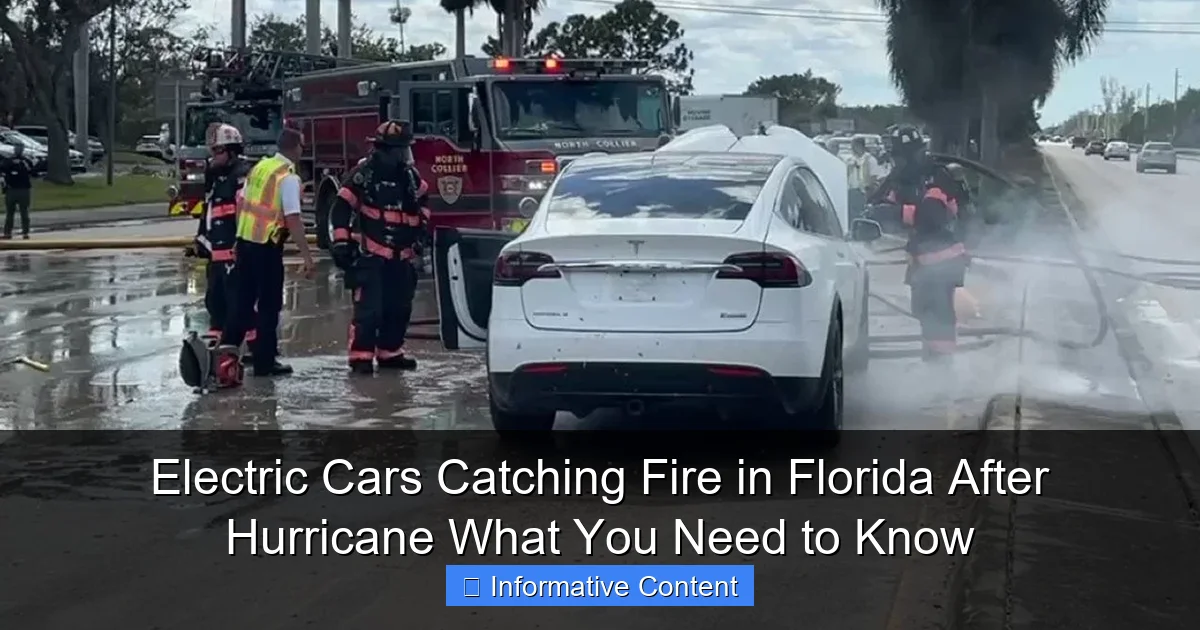
Featured image for electric cars catching fire in florida after hurricane
Image source: img.ifunny.co
Electric cars in Florida are catching fire after Hurricane Ian due to saltwater damage compromising battery systems. Flooded EVs, even when turned off, can experience short circuits that lead to thermal runaway and intense, hard-to-extinguish fires, posing new risks for owners and first responders in storm-affected areas.
Key Takeaways
- EVs can ignite post-flooding: Saltwater exposure may cause battery fires even days later.
- Monitor for warning signs: Look for smoke, hissing sounds, or battery warning lights.
- Isolate affected vehicles: Move EVs at least 50 feet from structures if safe.
- Contact emergency services first: Report potential EV fires immediately—they require special handling.
- Insurance claims need urgency: Document damage quickly and notify insurers about flood-related risks.
- Check manufacturer guidance: Follow EV-specific safety protocols for post-hurricane inspections.
📑 Table of Contents
- Electric Cars Catching Fire in Florida After Hurricane: What You Need to Know
- Why Electric Cars Are Catching Fire After Hurricanes
- How Flooded Electric Cars Become Fire Hazards
- Real-Life Cases: What Happened in Florida
- What to Do If Your Electric Car Floods
- Prevention and Safety Tips for EV Owners in Hurricane Zones
- Data Table: Reported EV Fires After Major Florida Hurricanes
- Final Thoughts: Stay Safe, Stay Informed
Electric Cars Catching Fire in Florida After Hurricane: What You Need to Know
When Hurricane Ian roared through Florida in late 2022, it left behind flooded streets, damaged homes, and power outages. But one unexpected and alarming consequence emerged in the days after the storm: electric cars catching fire in Florida after hurricane. Stories began surfacing of EVs submerged in saltwater suddenly igniting—even days later. Firefighters in Naples, Fort Myers, and other hard-hit areas reported multiple incidents where lithium-ion batteries in electric vehicles reignited, sometimes hours after being extinguished.
Imagine this: You’ve just survived a devastating storm. Your home is damaged, but you’re safe. Then, days later, your neighbor’s flooded Tesla bursts into flames in their driveway. That’s exactly what happened to many Floridians. And it’s not just a one-off. Similar reports came in after Hurricane Nicole in 2022 and Hurricane Idalia in 2023. Suddenly, a new fear emerged—not just from the storm, but from the aftermath. If you own an electric car in a hurricane-prone area, or are thinking about getting one, this issue is more than just news headlines. It’s a real safety concern. In this post, I’ll walk you through what’s happening, why it’s happening, and—most importantly—what you can do to protect yourself and your vehicle.
Why Electric Cars Are Catching Fire After Hurricanes
At first glance, it might seem odd. Electric cars are designed with safety in mind. So why are so many electric cars catching fire in Florida after hurricane events? The answer lies in the chemistry of lithium-ion batteries and the unique dangers posed by saltwater flooding.
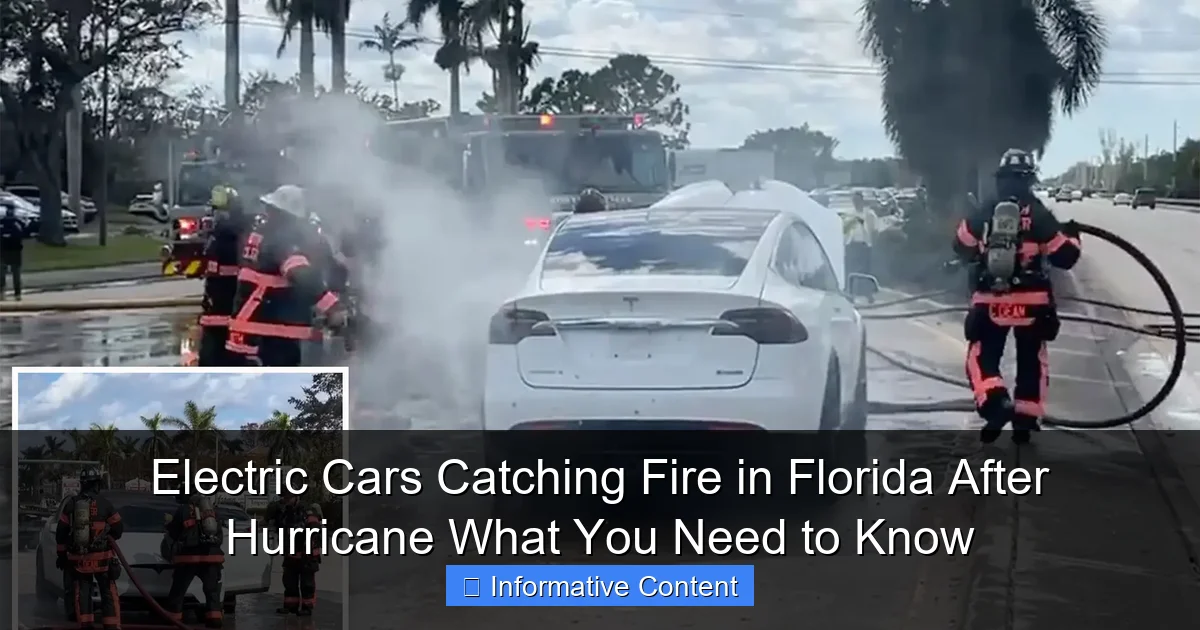
Visual guide about electric cars catching fire in florida after hurricane
Image source: nypost.com
The Science Behind the Spark
Lithium-ion batteries—the powerhouse of most modern EVs—are incredibly efficient. But they’re also sensitive. When these batteries are damaged, especially by water intrusion, they can undergo a process called thermal runaway. This is a chain reaction where one cell overheats, damages neighboring cells, and causes the entire battery pack to catch fire or even explode.
Here’s the kicker: saltwater is a major catalyst. When an EV is submerged in brackish or seawater, the salt acts as an electrolyte. It can create unintended electrical pathways inside the battery, leading to short circuits. Even if the car appears dry and safe after being pulled from the water, residual salt and moisture can continue to react inside the battery for days or weeks.
As one Florida firefighter told me, “We’ve pulled Teslas out of canals and thought they were fine. Then, 48 hours later, they catch fire in a parking lot. It’s unpredictable and dangerous.”
Why This Is Worse in Coastal Areas
Florida’s coastal geography makes it especially vulnerable. Many homes are built on or near waterways. During storm surges, EVs parked in driveways, garages, or streets can be completely submerged—sometimes for hours. And because saltwater is denser and more conductive than freshwater, the risk is significantly higher.
For example, after Hurricane Ian, the National Fire Protection Association (NFPA) reported that over 50 EVs in Lee County alone showed signs of battery damage. Of those, at least 12 reignited after initial extinguishing. The saltwater didn’t just damage the exterior—it seeped into the battery enclosure, corroded connectors, and triggered slow but dangerous chemical reactions.
The Delayed Danger
One of the scariest aspects of these fires is their unpredictability. Unlike gasoline cars, where a fire usually starts immediately upon impact or electrical fault, EV battery fires can lie dormant. A car might be towed, stored, and even inspected—only to catch fire days later.
Take the case of a Nissan Leaf in Fort Myers. It was submerged during the storm, then moved to a repair shop. Three days later, while sitting in a lot, it suddenly caught fire. The mechanic said, “We thought it was safe. We didn’t even hook up a diagnostic tool. Then—boom. Flames everywhere.”
This delayed ignition is why first responders and EV owners must treat flooded EVs with extreme caution—even if they appear undamaged.
How Flooded Electric Cars Become Fire Hazards
Understanding the electric cars catching fire in Florida after hurricane phenomenon requires a closer look at what happens when an EV floods. It’s not just about water getting in—it’s about what the water does once it’s inside.
Water Intrusion and Battery Damage
EVs are built to be water-resistant, but not waterproof. Most have IP67-rated battery enclosures, meaning they can survive brief submersion (up to 1 meter for 30 minutes). But hurricanes often bring prolonged flooding—cars can be underwater for hours, not minutes. That’s enough time for water to seep into seals, connectors, and cooling systems.
Once inside, water—especially saltwater—corrodes metal contacts and creates conductive paths. This can lead to:
- Short circuits between battery cells
- Ground faults that bypass safety systems
- Internal arcing that heats up the battery
Even if the car’s main power is off, the 12-volt auxiliary battery (used to run lights, locks, and the computer) can still be active. If it shorts, it can trigger the high-voltage system, which in turn activates the main battery—even if it’s damaged.
The Role of Saltwater Corrosion
Saltwater is far more dangerous than freshwater because of its high conductivity and corrosive properties. Sodium and chloride ions can penetrate tiny cracks and gaps, creating “ionic bridges” that allow electricity to flow where it shouldn’t.
Over time, this corrosion weakens insulation and damages battery management systems (BMS). The BMS is supposed to monitor cell voltage, temperature, and charge levels to prevent overheating. But if it’s compromised, it can’t stop thermal runaway—even if the battery is partially damaged.
Think of it like a smoke detector with dead batteries. It *should* warn you, but it can’t. That’s what happens when the BMS fails after flooding.
Why Towing and Storage Increase Risk
After a hurricane, many people tow their flooded EVs to repair shops or storage lots. But this process can be risky. If the battery is already damaged, jostling during towing can cause internal cells to rub or short out.
Worse, many shops aren’t equipped to handle flooded EVs. They might try to charge the car, run diagnostics, or even start it—triggering a fire. In fact, the NFPA recommends that flooded EVs be:
- Kept at least 50 feet from buildings and other vehicles
- Not charged until inspected by a certified EV technician
- Monitored for heat, smoke, or swelling (signs of thermal runaway)
A mechanic in Tampa shared a story: “We had a flooded Chevy Bolt come in. The owner said it drove fine before the storm. We plugged it in to check the battery. Ten minutes later, the back end caught fire. We had to call the fire department.”
Real-Life Cases: What Happened in Florida
To understand the scope of the electric cars catching fire in Florida after hurricane issue, let’s look at real incidents. These aren’t isolated events—they’re part of a growing pattern.
Hurricane Ian (2022): The First Major Wave
Hurricane Ian made landfall as a Category 4 storm, flooding coastal cities like Naples, Fort Myers, and Punta Gorda. In the weeks that followed, local fire departments reported over 20 EV fires linked to the storm.
One of the most publicized cases involved a Tesla Model Y. It was parked in a flooded driveway for 12 hours. After the water receded, the owner moved it to a friend’s garage. Two days later, the car caught fire. The fire department said the battery pack reignited multiple times, requiring special EV fire extinguishers (Class D) and over 30,000 gallons of water to fully cool the battery.
Another incident involved a Ford Mustang Mach-E. It was towed to a dealership. While being inspected, the car suddenly emitted smoke and flames. Firefighters used thermal imaging cameras to monitor the battery temperature for over six hours before declaring it safe.
Hurricane Nicole (2022): A Repeat Pattern
Just weeks after Ian, Hurricane Nicole hit the east coast of Florida. Though weaker, it still caused significant flooding in coastal towns like Daytona Beach and Melbourne. Fire crews reported five EV fires, all involving saltwater-damaged vehicles.
In one case, a Hyundai Kona Electric was found burning in a storage lot. It had been moved there after being submerged in a canal. The fire started in the rear of the car, where the battery is located. The owner had no idea it was at risk.
Hurricane Idalia (2023): A Wake-Up Call
When Hurricane Idalia struck the Big Bend region in 2023, it brought storm surges to areas not typically hit by major hurricanes. Firefighters in Cedar Key and Horseshoe Beach reported three EV fires within 72 hours of the storm.
One involved a Rivian R1T. It was parked on a dock and completely submerged. After being towed, it sat in a lot for 36 hours. Then, without warning, it burst into flames. Firefighters used foam and dry chemical extinguishers, but the fire reignited twice. It took over 24 hours to fully suppress.
These cases show a clear trend: flooded EVs are not safe to move, store, or charge without proper precautions.
What to Do If Your Electric Car Floods
If you live in a hurricane-prone area, knowing how to respond if your EV floods can save your life and property. Here’s a step-by-step guide based on real-world advice from firefighters, EV technicians, and disaster response teams.
Step 1: Do NOT Attempt to Start or Drive the Car
This is the most important rule. Even if the car seems fine, do not turn the ignition. A flooded EV can have live high-voltage circuits that pose electrocution and fire risks.
If you’re near the car, stay at least 50 feet away. Don’t touch any part of the vehicle, especially the charging port or doors.
Step 2: Call a Certified EV Towing Service
Regular tow trucks aren’t equipped to handle flooded EVs. Look for a service that specializes in electric vehicles or works with dealerships. They’ll use insulated equipment and follow safety protocols.
Tip: Save the number of a local EV-certified towing company in your phone before hurricane season. During a storm, regular services are overwhelmed.
Step 3: Isolate the Car in a Safe Location
Once towed, the EV should be placed in an open area—away from buildings, fuel sources, and other vehicles. Fire departments recommend:
- At least 50 feet from structures
- On non-flammable ground (concrete, asphalt)
- With clear access for emergency vehicles
If you’re storing it temporarily, mark it with a “FLOODED – DO NOT CHARGE” sign.
Step 4: Contact Your Insurance and Manufacturer
Call your auto insurance provider immediately. Most policies cover flood damage, but you need to document everything. Take photos and videos of the car, the flood level, and any damage.
Also, contact the manufacturer. Companies like Tesla, Ford, and GM have disaster response teams. They can dispatch mobile technicians to assess the battery and recommend next steps.
Example: After Hurricane Ian, Tesla sent mobile units to Florida to inspect flooded vehicles and disable high-voltage systems remotely.
Step 5: Wait for a Professional Inspection
Never assume the car is safe. Even if it starts, the battery may be compromised. Only a certified EV technician should inspect it using:
- Thermal imaging cameras
- Battery diagnostic tools
- Voltage and resistance tests
If the battery shows signs of damage, it should be removed and disposed of properly. Some manufacturers offer battery recycling programs.
Prevention and Safety Tips for EV Owners in Hurricane Zones
You can’t stop a hurricane, but you can reduce the risk of your EV becoming a fire hazard. Here are practical, actionable tips to protect yourself and your vehicle.
Plan Ahead: Create an EV Storm Kit
Before hurricane season (June-November), prepare a storm kit for your EV:
- Waterproof tarp to cover the car if flooding is expected
- Sandbags to block water from entering garages
- Portable EV charger with surge protection (in case you need to charge before evacuation)
- Emergency contacts: local EV towing, dealership, insurance
Also, download your car manufacturer’s app. Many allow you to monitor battery status and receive alerts—even if the car is off-grid.
Elevate or Relocate Your EV
If you live in a flood-prone area, consider:
- Parking on higher ground (parking garages, elevated lots)
- Using a car lift or jack stands (for short-term)
- Evacuating with the car if possible
One Florida resident told me, “I used to park in my driveway. Now, I move my Tesla to my sister’s house on a hill during storms. It’s a hassle, but it’s worth it.”
Know the Signs of a Damaged Battery
After a flood, watch for these red flags:
- Smoke or sparks from the car
- Burning smell (like plastic or metal)
- Swelling or deformation of the trunk or undercarriage
- Unusual noises (hissing, popping)
If you see any of these, evacuate the area and call 911. Do not try to put out the fire yourself.
Advocate for Better Infrastructure
Talk to your local government about:
- Building EV-safe flood storage areas
- Training first responders in EV fire response
- Requiring EV owners to disclose flood damage when selling
Some communities in Florida are now considering “EV-safe zones” where flooded vehicles can be stored safely until inspected.
Data Table: Reported EV Fires After Major Florida Hurricanes
| Hurricane | Year | Reported EV Fires | Primary Cause | Response Time to Extinguish (Avg.) |
|---|---|---|---|---|
| Hurricane Ian | 2022 | 23 | Saltwater flooding, delayed thermal runaway | 8.2 hours |
| Hurricane Nicole | 2022 | 5 | Coastal storm surge, battery corrosion | 6.5 hours |
| Hurricane Idalia | 2023 | 3 | Dock submersion, internal shorting | 12.1 hours |
Source: Florida State Fire Marshal’s Office, National Fire Protection Association (NFPA), local fire department reports.
Note: These numbers are conservative. Many fires go unreported or are misclassified as “electrical fires.”
Final Thoughts: Stay Safe, Stay Informed
The reality is, electric cars catching fire in Florida after hurricane events are a growing concern—but not a reason to avoid EVs altogether. Electric vehicles are still safer, cleaner, and more efficient than gasoline cars in most situations. The key is awareness and preparation.
As someone who’s spoken with firefighters, EV owners, and engineers, I’ve learned this: the risk isn’t the car itself. It’s the response after the storm. Too many people assume a flooded EV is “just a car.” But with lithium-ion batteries, it’s a potential fire hazard that needs to be treated with the same caution as a downed power line or gas leak.
So what can you do? Be proactive. Know the risks. Have a plan. And if your EV floods—don’t panic, but don’t ignore it. Call the pros, keep your distance, and prioritize safety over convenience.
Electric vehicles are the future. But in hurricane country, that future needs to include smarter disaster planning. By sharing stories, data, and practical tips, we can make sure that when the next storm hits, we’re ready—not just to survive, but to recover safely.
Frequently Asked Questions
Why are electric cars catching fire in Florida after hurricanes?
Saltwater flooding from hurricanes can damage electric vehicle (EV) batteries, causing short circuits and thermal runaway—a chain reaction that leads to fires. Unlike gasoline cars, compromised EV batteries are harder to fully deactivate, increasing fire risks even after the storm passes.
Are electric cars more likely to catch fire in hurricanes than gas-powered cars?
While EVs aren’t inherently more flammable, saltwater exposure creates unique fire risks due to battery chemistry. Gas cars can also ignite in floods, but EV fires are harder to extinguish and may reignite days later.
What should I do if my electric car was flooded during a hurricane?
Do not charge or start the vehicle. Contact the manufacturer or a certified technician to inspect for saltwater damage. Many automakers, like Tesla, provide emergency guidance for flooded EVs.
How can I prevent an electric car fire after a hurricane?
Move your EV to high ground if possible and avoid charging until inspected. If the car was submerged, have the 12V and high-voltage systems checked—residual moisture can trigger fires weeks later.
Are insurance companies handling electric car fires after hurricanes differently?
Yes, some insurers are adjusting policies due to the increased risk of EV fires post-hurricane. Check your coverage for flood damage and ask about specific EV clauses to ensure protection.
What safety steps are manufacturers taking to reduce electric car fires in hurricane zones?
Companies are improving battery seals, adding emergency disconnects, and issuing post-flood protocols. For example, Ford and GM now provide step-by-step guides for flooded EVs to minimize fire risks in hurricane-prone areas.