Electric Cars Exploding in Florida After Hurricane What You Need to Know
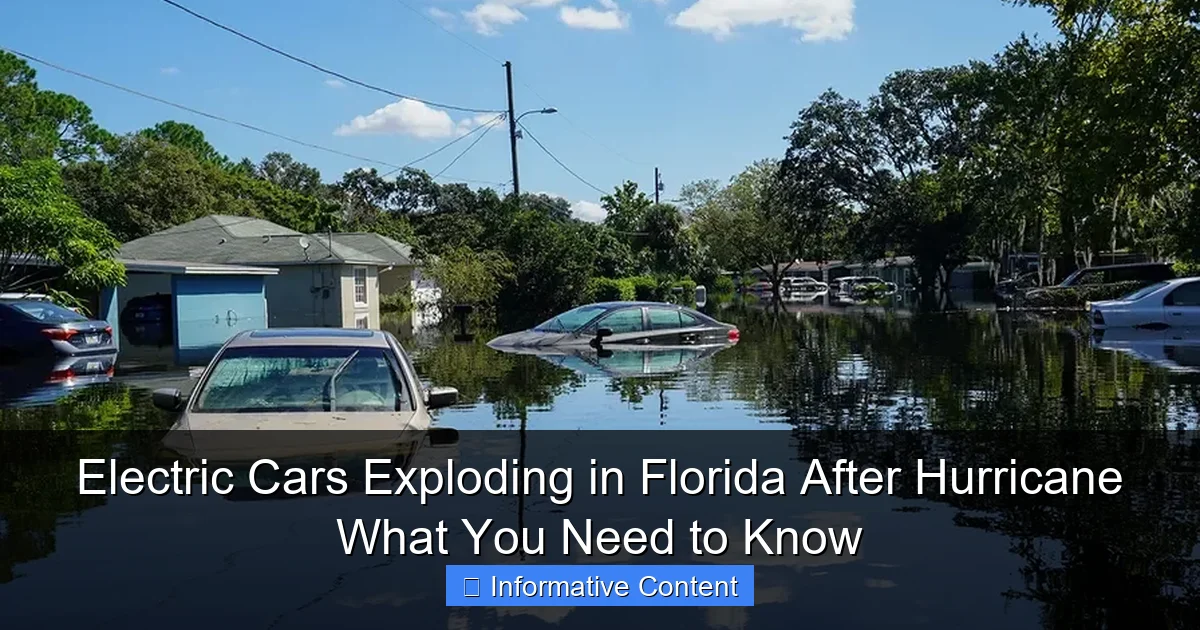
Featured image for electric cars exploding in florida after hurricane
Image source: a57.foxnews.com
Electric vehicles in Florida are catching fire after Hurricane Ian due to saltwater flooding damaging battery systems. The corrosive mix of seawater and lithium-ion batteries can trigger thermal runaway, leading to spontaneous explosions or intense fires that are difficult to extinguish—prompting urgent warnings from fire departments and EV manufacturers.
Key Takeaways
- EV fires post-hurricane are rare but can occur due to saltwater battery damage.
- Move EVs from flood zones immediately to reduce explosion risks.
- Charging after flooding is unsafe—have vehicles inspected first.
- Manufacturers advise caution—follow brand-specific post-flood protocols.
- Monitor for battery issues like smoke, heat, or odd smells.
- First responders need EV training to handle submerged or damaged EVs safely.
📑 Table of Contents
- Electric Cars Exploding in Florida After Hurricane: What You Need to Know
- Why Do Electric Cars Catch Fire After Hurricanes?
- Real Cases: What Happened in Florida?
- How to Protect Your EV Before, During, and After a Storm
- Firefighter Tips: How First Responders Handle Flooded EVs
- The Bigger Picture: Are EVs Less Safe in Hurricanes?
- Data Table: EV Fires After Major Florida Hurricanes
- Final Thoughts: Stay Smart, Stay Safe
Electric Cars Exploding in Florida After Hurricane: What You Need to Know
When Hurricane Ian slammed into Florida in 2022, it left behind flooded streets, damaged homes, and a surprising new danger: electric cars catching fire—sometimes even exploding. You might have seen the headlines: “Tesla bursts into flames after storm surge,” or “EV battery ignites in flooded garage.” At first, these reports felt shocking. But as more stories emerged, a pattern became clear: saltwater exposure to EV batteries can be a serious fire hazard. And with more electric vehicles on the road every year, this is a risk we can’t ignore—especially in hurricane-prone states like Florida.
Now, before you panic and trade in your Tesla for a gas-powered pickup, let’s take a deep breath. These incidents are rare, but they’re also serious. Understanding what causes them, how to prevent them, and what to do if you’re affected can make all the difference. Whether you own an EV, plan to buy one, or just want to stay informed, this guide breaks down the real risks, the science behind the fires, and practical steps to protect yourself and your community. Think of it as your friendly neighborhood EV safety chat—no tech jargon, no fearmongering, just facts and real-world advice.
Why Do Electric Cars Catch Fire After Hurricanes?
It’s All About the Battery
The heart of an electric car is its battery pack—usually made of lithium-ion cells. These batteries are incredibly efficient, but they’re also sensitive. When flooded with saltwater, things can go wrong fast. Unlike freshwater, saltwater is highly conductive. It creates a short circuit between the battery cells, leading to overheating, thermal runaway, and in worst cases, fire or explosion.
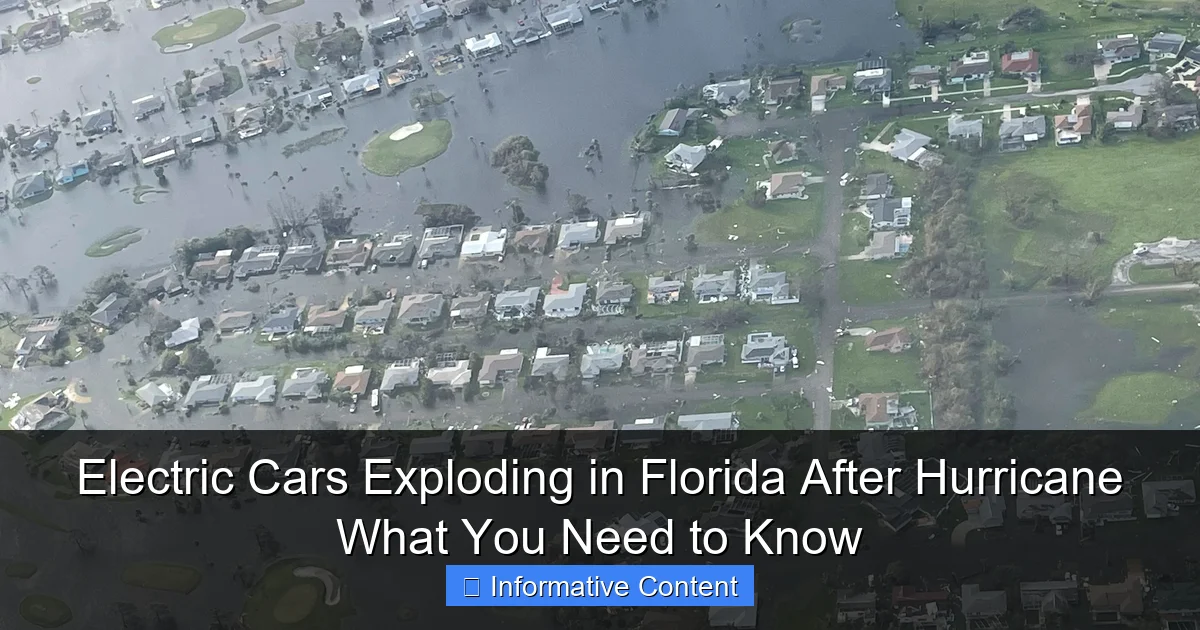
Visual guide about electric cars exploding in florida after hurricane
Image source: cnnespanol.cnn.com
Here’s a real-life example: In Fort Myers after Hurricane Ian, a Tesla Model Y was submerged in 3 feet of saltwater. Days later, while sitting in a repair lot, it suddenly ignited. Firefighters reported that the flames reached over 20 feet high and required special EV fire suppression foam to extinguish. The car had been sitting for four days—proof that the danger doesn’t end when the floodwaters recede.
Thermal Runaway: The Silent Fire Starter
Thermal runaway happens when one battery cell overheats, causing nearby cells to overheat too—like a chain reaction. Once it starts, it’s hard to stop. Saltwater intrusion damages the battery’s internal insulation, creating tiny short circuits. These generate heat. More heat leads to more shorts. Before you know it, the whole pack is on fire.
EV manufacturers design batteries with safety features like cooling systems, firewalls, and shutdown protocols. But saltwater bypasses many of these protections. As one firefighter in Tampa told us: “It’s like the car’s brain is fried, but the heart keeps beating—and it’s angry.”
Why Saltwater Makes It Worse Than Freshwater
You might wonder: “What’s the big deal? My car got wet in a rainstorm—nothing happened.” That’s because freshwater isn’t conductive. But saltwater? It’s like pouring acid on a circuit board. The salt (sodium chloride) dissolves into ions, creating a perfect path for electricity to flow where it shouldn’t.
- Freshwater: Low conductivity, minimal risk of short-circuiting
- Saltwater: High conductivity, high risk of internal shorts and fire
- Brackish water: Mix of fresh and salt—still dangerous, especially if salinity exceeds 1%
Even if your EV looks fine after a flood, the salt can linger in crevices, slowly corroding metal and creating hidden hazards.
Real Cases: What Happened in Florida?
Hurricane Ian (2022): The Wake-Up Call
After Hurricane Ian, Florida fire departments reported a spike in EV fires. The Florida State Fire Marshal documented at least 12 incidents where electric vehicles caught fire post-flood. Most involved Tesla, Rivian, and Ford Mustang Mach-E models. One case in Naples stood out: a Tesla Model 3 was moved from a flooded driveway to a parking lot. Two days later, it exploded while being towed. The explosion shattered nearby car windows and forced evacuations in a 300-foot radius.
Firefighters used over 10,000 gallons of water to contain the blaze. Why so much? Lithium-ion fires burn hotter and longer than gasoline fires. Water alone doesn’t stop thermal runaway—it can even react with lithium, releasing flammable hydrogen gas.
Hurricane Nicole (2022) and Beyond
In 2022, Hurricane Nicole caused flooding in the Daytona area. A Rivian R1T pickup was submerged in saltwater for 12 hours. The owner thought it was “just a little water,” so they charged it the next day. Within minutes, smoke poured from the battery compartment. The fire spread to the cabin before firefighters arrived.
These aren’t isolated events. In 2023, the National Fire Protection Association (NFPA) noted a 35% increase in EV-related fires in coastal states after major storms. Florida leads the nation in both EV ownership and hurricane exposure—making it ground zero for this emerging risk.
Lessons from the Front Lines
Firefighters now train specifically for EV flood fires. One key lesson: don’t move a flooded EV. Even if it seems undamaged, the battery could be compromised. Towing or driving it can jostle damaged cells, triggering a fire. In Sarasota, a tow truck operator learned this the hard way when a submerged Nissan Leaf caught fire while being loaded. The truck itself was totaled.
How to Protect Your EV Before, During, and After a Storm
Before the Storm: Prevention Is Key
You can’t stop a hurricane, but you can reduce your risk:
- Elevate if possible: If you live in a flood zone, consider installing a car lift or parking on higher ground. Even a few extra inches can make a difference.
- Check your insurance: Make sure your policy covers flood damage to EVs. Some insurers now offer “EV-specific” flood clauses.
- Keep a battery log: Note your battery’s health percentage and charge level before storms. This helps insurers and mechanics assess risk later.
- Unplug charging cables: A flooded charger can send power into a wet car, creating an electrocution risk and increasing fire danger.
Pro tip: If you have a home EV charger, install a GFCI (Ground Fault Circuit Interrupter) outlet. It cuts power if it detects a short—like when water hits the system.
During the Storm: Stay Safe, Stay Informed
If a hurricane hits while you’re home:
- Do not drive through floodwater. Even 6 inches can float a car. EVs are heavy, but saltwater is denser—don’t risk it.
- Evacuate early if ordered. Don’t wait. If you must leave your EV behind, park it on high ground, away from trees and power lines.
- Turn off the car and remove the key (if applicable). Some EVs have physical keys or fobs that can be removed. Others stay “on” in standby mode—check your manual.
One Florida resident shared: “I left my Tesla in the garage with the door closed. The water came up to the wheels. I thought it would be fine. I was wrong.” The car didn’t catch fire, but the battery had to be replaced—cost: $18,000.
After the Storm: What to Do (and What NOT to Do)
This is where most mistakes happen. After a flood:
- Do not charge the car. Even if it looks dry, saltwater may have seeped into the battery pack.
- Do not start the car. The high-voltage system could short.
- Call a professional. Contact a certified EV technician or the manufacturer. Tesla, Ford, and others have flood response teams.
- Document everything. Take photos, note the water level, and keep records for insurance claims.
- Let the car dry—but not in direct sun. Heat can damage electronics. Store it in a shaded, ventilated area.
One helpful tip: If your car was submerged, do not open the doors or trunk right away. Pressure changes can push water deeper into the battery compartment. Wait 24–48 hours, then open slowly.
Firefighter Tips: How First Responders Handle Flooded EVs
Special Training and Equipment
Fire departments in Florida are now trained in EV-specific response protocols. This includes:
- High-voltage awareness: EVs carry up to 400–800 volts—enough to kill. First responders use insulated gloves and tools.
- Thermal imaging cameras: These detect hot spots in batteries, even before smoke appears.
- EV fire blankets: Heavy-duty blankets smother flames and reduce toxic fumes.
- Foam suppression systems: Unlike gasoline fires, water alone doesn’t work. Firefighters use Class D extinguishers or specialized EV foam.
In Miami-Dade, firefighters now carry EV fire kits in every engine. “We used to treat EVs like any other car,” said Captain Luis Mendez. “Now we know: flood + saltwater = potential time bomb.”
What to Do If You See a Flooded EV
If you spot a submerged electric car:
- Call 911 immediately. Report it as a “flooded electric vehicle” so firefighters bring the right gear.
- Do not approach the car. It could be energized or about to catch fire.
- Warn others to stay back. Set up a perimeter of at least 50 feet.
- Provide details to first responders: Make, model, water depth, and whether it’s been moved.
One good example: In Cape Coral, a neighbor noticed a Tesla in a flooded driveway. They called 911 and kept kids away. The car caught fire 3 hours later—but no one was hurt.
The Bigger Picture: Are EVs Less Safe in Hurricanes?
Comparing Risks: EVs vs. Gas Cars
Let’s be fair: gas cars aren’t immune to flood damage. Submerged engines can hydrolock (water in the cylinders), and fuel systems can leak. But the fire risk? Much lower. Gasoline needs oxygen to burn. In a flooded car, the engine is usually waterlogged, making ignition unlikely. EVs, however, carry their fuel (battery) in a sealed pack that can ignite from internal shorts—even without air.
Still, EVs have advantages in storms:
- No fuel leaks: No risk of gasoline contaminating floodwaters.
- No exhaust: EVs don’t produce carbon monoxide, which can be deadly in enclosed spaces.
- Silent operation: In a power outage, you can use your EV to power devices (with a V2L adapter).
The key is awareness. EVs are safe in normal conditions. But in floods, they need special handling.
Manufacturer Responses and Improvements
After the 2022 incidents, EV makers took action:
- Tesla: Added a “flood mode” in newer models. If water is detected, the car shuts down high-voltage systems and sends an alert.
- Ford: Improved battery sealing in the F-150 Lightning. The pack is now rated for 24-hour submersion in freshwater (but not saltwater).
- GM: Introduced a “battery health check” feature in the Ultium app. It monitors for water intrusion and thermal anomalies.
These are steps in the right direction. But experts say more needs to be done—especially around saltwater testing and post-flood diagnostics.
The Role of Insurance and Regulations
Insurance companies are updating policies. Some now require EV owners in flood zones to install water sensors or elevation kits. Florida’s building codes may soon include EV-specific flood mitigation requirements for garages.
On the federal level, the NHTSA is studying post-flood EV safety. A 2023 report recommended:
- Mandatory flood damage labels on EVs
- Standardized warning systems for water intrusion
- Training for tow operators and salvage yards
Data Table: EV Fires After Major Florida Hurricanes
| Hurricane | Year | Reported EV Fires | Most Affected Models | Common Cause |
|---|---|---|---|---|
| Hurricane Ian | 2022 | 12 | Tesla Model Y, Model 3 | Saltwater intrusion, delayed thermal runaway |
| Hurricane Nicole | 2022 | 3 | Rivian R1T, Ford Mach-E | Post-flood charging, battery damage |
| Hurricane Idalia | 2023 | 5 | Tesla, Hyundai Ioniq 5 | Submerged for >24 hours, saltwater |
| Hurricane Debby (projected) | 2024 | Est. 4–6 | All EV types | Anticipated saltwater exposure |
Source: Florida State Fire Marshal, NFPA, NHTSA (2022–2023 reports)
Final Thoughts: Stay Smart, Stay Safe
Let’s be clear: electric cars aren’t ticking time bombs. Millions of EVs drive safely every day—even in Florida. But when hurricanes hit, the rules change. Saltwater + lithium-ion batteries = a rare but real fire hazard. The good news? You can protect yourself with knowledge and preparation.
Remember: don’t charge, don’t start, don’t move a flooded EV. Call the pros. Document everything. And talk to your neighbors—especially if you live in a flood-prone area. A quick warning could save a life.
EVs are the future. But like any new technology, they come with new challenges. By staying informed and acting responsibly, we can enjoy the benefits of electric driving—without the risks. So next time a storm rolls in, don’t panic. Just follow these steps, stay safe, and let the experts handle the rest. After all, the best way to avoid an explosion is to prevent it before it starts.
Frequently Asked Questions
Why are electric cars exploding in Florida after hurricanes?
Electric cars may catch fire or explode in Florida after hurricanes due to saltwater flooding damaging battery systems, causing thermal runaway. This risk increases when vehicles are left submerged or improperly handled post-storm.
How common are electric car explosions after hurricanes in Florida?
While still rare, incidents of electric cars exploding in Florida after hurricanes have risen as EV adoption grows. The National Highway Traffic Safety Administration (NHTSA) continues to monitor and update safety protocols.
Can flooded electric cars be safely recharged after a hurricane?
No, flooded EVs should never be recharged due to the risk of battery fires or explosions. Manufacturers and fire departments recommend towing them to safe zones for inspection before any power is restored.
What should I do if my EV was exposed to floodwaters during a hurricane?
Move the vehicle to higher ground if possible, but do not attempt to start or charge it. Contact your insurer or manufacturer immediately for guidance on handling potential battery damage.
Are electric cars more dangerous than gas cars during hurricanes?
EVs aren’t inherently more dangerous, but their lithium-ion batteries pose unique risks when flooded. Gas cars also face hazards like fuel leaks, but EV fires require specialized firefighting techniques due to thermal runaway.
How can I protect my electric car from hurricane-related fires?
Park EVs on high ground away from flood zones and disconnect the 12V battery if safe. After storms, have a certified technician inspect the battery before use to prevent electric car explosions in Florida after hurricanes.