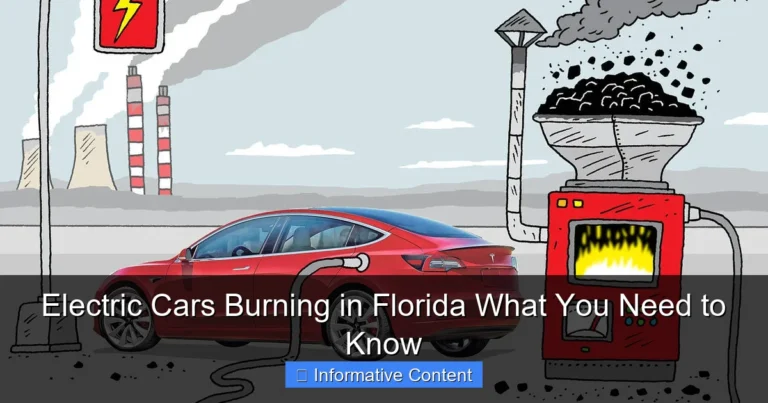
Electric Cars Flooded in Florida What You Need to Know Now
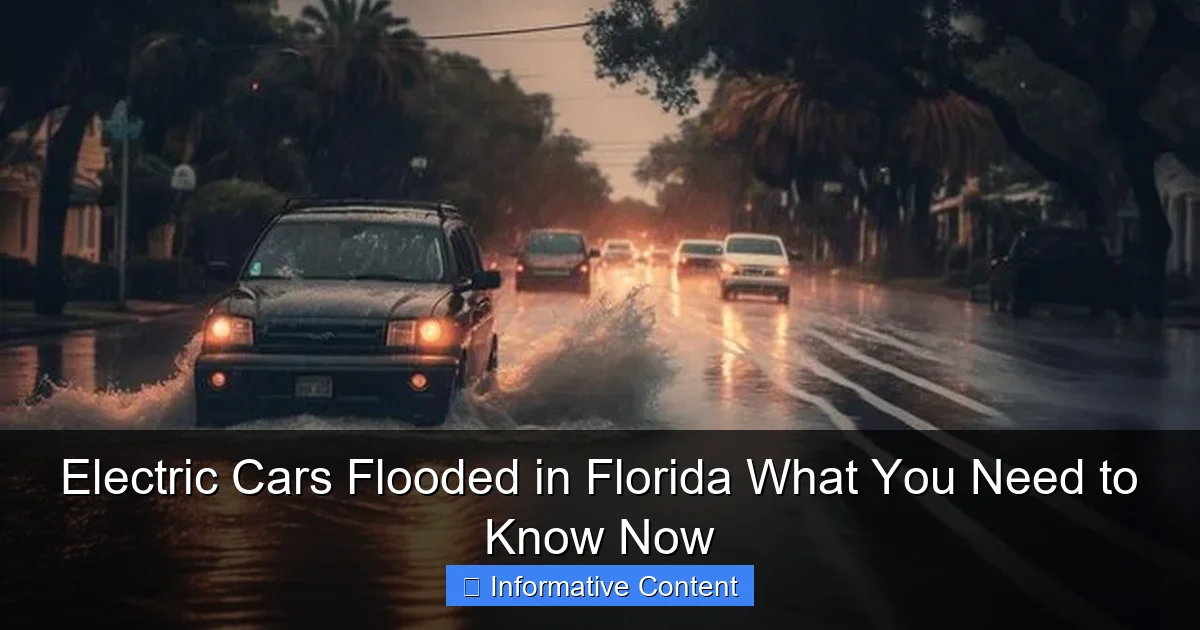
Featured image for electric cars flooded in florida
Image source: img.freepik.com
Flooded electric cars in Florida pose serious safety and financial risks, especially after hurricanes and storm surges compromise battery systems, potentially leading to fires or total loss. Always check a vehicle’s flood history and inspect for water damage before buying a used EV in affected areas to avoid costly repairs and hazardous malfunctions.
Key Takeaways
- EVs can short-circuit when flooded: Water exposure risks battery fires and system failures.
- Never charge a flooded EV: Wait for professional inspection to avoid hazards.
- Check flood damage before purchase: Verify history reports for water exposure in used EVs.
- Insurance may not cover all flood damage: Review policies for EV-specific water damage clauses.
- Park EVs on high ground during storms: Prevent submersion and costly repairs.
- Post-flood inspections are critical: Certified technicians must assess electrical systems for safety.
📑 Table of Contents
- Why Florida’s Flooded Electric Cars Are a Growing Concern
- How Flooding Affects Electric Cars Differently Than Gas Vehicles
- Immediate Steps to Take If Your EV Is Flooded
- Insurance, Claims, and the Risk of “Salvage” EVs
- Manufacturer Responses and Safety Improvements
- Long-Term Outlook: EVs in a Flood-Prone Future
- The Bottom Line: Be Prepared, Not Panicked
Why Florida’s Flooded Electric Cars Are a Growing Concern
Imagine this: You’re driving home after a long day, and suddenly, a storm rolls in. Rain pours down, and the streets start to flood. You make it home safely, but the next morning, you find your car partially submerged in water. If that car was an electric vehicle (EV), the situation gets even more complicated. This is the reality for many Florida residents, where hurricanes, tropical storms, and even just heavy summer rains can turn streets into rivers in no time. In recent years, we’ve seen an increase in reports of electric cars flooded in Florida, raising serious questions about safety, insurance, and long-term reliability.
Florida is no stranger to flooding. With its flat terrain, low elevation, and proximity to the ocean, the state is highly vulnerable to water-related disasters. But now, as more people switch to electric vehicles—drawn by tax incentives, environmental benefits, and cutting-edge tech—the risks associated with flooding have taken on a new dimension. Unlike traditional gas-powered cars, EVs have high-voltage battery systems and sensitive electronics that can be severely compromised when exposed to water. And while manufacturers have taken steps to protect these components, real-world conditions—especially saltwater flooding—can still lead to dangerous situations. If you’re an EV owner in Florida, or considering buying one, understanding the risks and how to respond is critical.
How Flooding Affects Electric Cars Differently Than Gas Vehicles
Water and High-Voltage Systems Don’t Mix
At first glance, you might think: “Water damages all cars, so why is this a bigger deal for EVs?” The answer lies in the high-voltage battery systems that power electric cars. Most EVs use lithium-ion batteries, which store massive amounts of energy. When these batteries get flooded—especially with saltwater—the risk of short circuits, corrosion, and even fire increases dramatically.
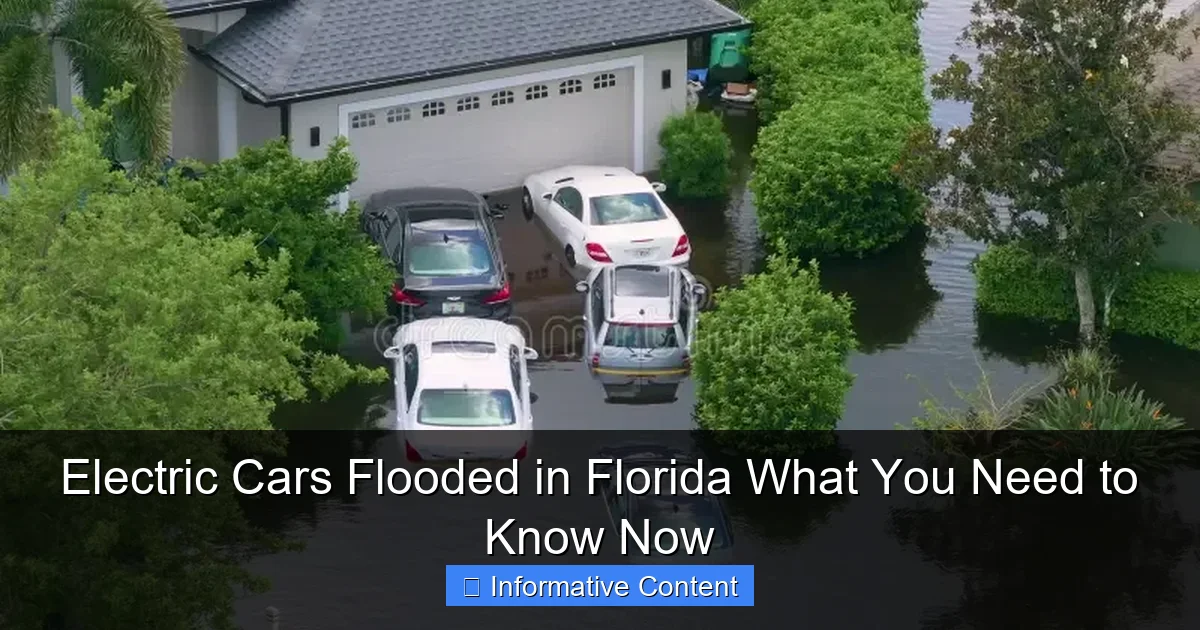
Visual guide about electric cars flooded in florida
Image source: thumbs.dreamstime.com
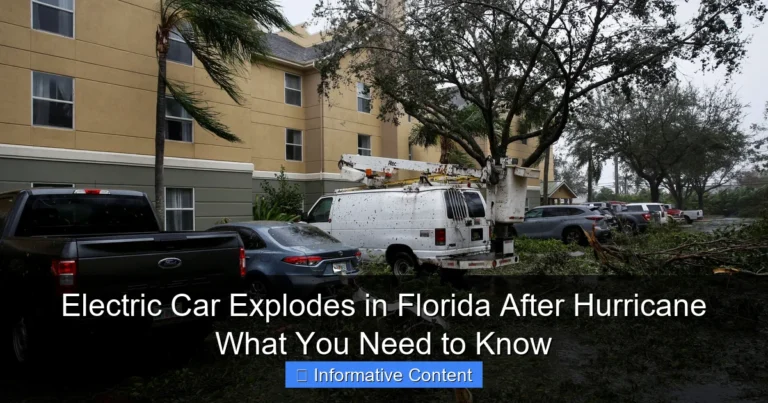
For example, after Hurricane Ian in 2022, dozens of flooded EVs caught fire in storage lots across Florida. Why? Saltwater acts as a conductor, creating unintended electrical pathways within the battery pack. Even if the car appears dry and undamaged, internal corrosion can develop over time, leading to thermal runaway—a chain reaction that causes the battery to overheat and ignite. This isn’t just a theoretical risk; it’s a documented phenomenon observed by first responders and fire departments.
EVs vs. ICE Cars: The Flood Damage Comparison
Traditional internal combustion engine (ICE) cars are also vulnerable to flooding, but in different ways. Water in the engine, transmission, or fuel system can cause mechanical failure, but these systems are generally easier to inspect and repair. With EVs, the damage is often hidden. The battery pack is sealed, and internal issues may not be visible during a standard inspection. This makes it harder for mechanics and insurance adjusters to assess the true extent of the damage.
Let’s say your gas car gets flooded up to the door sills. A mechanic might pull the spark plugs, drain the water, replace fluids, and get it running again. But if an EV is flooded to the same level, the battery could be compromised even if it still powers on. That’s why many experts recommend total loss for EVs that have been submerged—even if they appear to work fine.
Real-World Example: The 2022 Florida Floods
After Hurricane Ian, a Tesla Model 3 in Naples was found floating in a flooded parking lot. The owner assumed the car was a total loss, but when it was towed to a dealership, the vehicle still turned on. However, within 48 hours, the car caught fire while charging. Firefighters later determined that saltwater had seeped into the battery pack, causing a slow but dangerous chemical reaction. This case highlights a key point: flooded electric cars in Florida may not show immediate damage, but the risks can emerge days or even weeks later.
Immediate Steps to Take If Your EV Is Flooded
Don’t Touch It—Stay Safe First
If your electric car is flooded, your first instinct might be to check if it still works. Stop right there. Safety comes first. Floodwater—especially saltwater—can carry contaminants, debris, and live electrical currents. If the water is still high, or if you’re unsure whether the car is safe to approach, do not touch it.
Instead, call 911 or your local fire department. In Florida, many departments now have EV-specific response protocols. They’ll check for electrical hazards, assess whether the car is at risk of catching fire, and guide you on next steps. Remember: even if the car seems fine, the battery could be unstable. It’s not worth risking your life to save a vehicle.
Document Everything for Insurance
Once it’s safe to approach, start documenting. Take photos and videos of the car from all angles, especially the interior, dashboard, and any visible water lines. Note the water depth—was it up to the tires? The windows? The roof? This information is crucial for your insurance claim.
Also, record the date, time, and weather conditions. If you have a dashcam, save the footage. Many EVs, like Teslas and Rivians, have built-in cameras that automatically record incidents. These can serve as valuable evidence when dealing with insurers.
Contact Your Insurance Company ASAP
Call your insurance provider immediately. Explain that your EV was flooded and that you’re following safety protocols. Ask them to send an adjuster who has experience with electric vehicles. Not all adjusters understand the unique risks of flooded EVs, so it’s important to confirm they’re qualified.
Tip: If your car is still drivable, do not drive it. Towing is safer and reduces the risk of further damage. Most insurance policies cover towing after a flood, but check your policy details. In Florida, many insurers partner with local towing companies that specialize in EV recovery.
What NOT to Do
- Don’t charge the car. This is one of the most dangerous things you can do. A flooded battery could short-circuit when plugged in, leading to fire or explosion.
- Don’t try to dry it with a hairdryer or heat gun. Rapid temperature changes can damage sensitive electronics.
- Don’t assume it’s safe because it powers on. As we’ve seen, delayed fires are common in flooded EVs.
Insurance, Claims, and the Risk of “Salvage” EVs
Why Flooded EVs Are Often Total Losses
Insurance companies are increasingly treating flooded EVs as total losses—even if the car appears functional. Why? The cost of replacing a battery pack can exceed $20,000, and many insurers don’t want the liability of a repaired EV that might catch fire later.
For example, a 2021 Chevrolet Bolt with a flooded battery might have a market value of $25,000, but the battery replacement alone could cost $22,000. Add in labor, diagnostics, and potential fire risk, and the math doesn’t work. So, the insurer declares it a total loss, pays you the actual cash value, and sends the car to a salvage yard.
The Problem With “Salvage” EVs
Here’s where things get tricky. A flooded EV declared a total loss is labeled “salvage.” But in some cases, the car is repaired—often by third-party shops with limited EV experience—and resold. These vehicles may not have had the battery properly inspected or replaced. They could still pose a fire risk.
In 2023, a used Tesla Model Y in Tampa was sold as “flood-damaged but repaired.” The buyer didn’t know the battery hadn’t been fully replaced—just “cleaned and resealed.” A month later, the car caught fire in a garage. The incident led to new scrutiny of Florida’s salvage vehicle regulations, but the risk remains.
How to Protect Yourself When Buying a Used EV
- Check the vehicle history report. Use services like Carfax or AutoCheck to see if the car was ever declared salvage or flood-damaged.
- Ask for battery diagnostics. Reputable dealers should provide a battery health report from the manufacturer or a certified EV mechanic.
- Insist on a pre-purchase inspection. Have a mechanic who specializes in EVs inspect the car—especially the battery pack, wiring, and charging system.
- Be wary of “too good to be true” prices. If a used EV is priced 30% below market, there’s likely a reason.
Insurance Tips for Florida EV Owners
Not all insurance policies are created equal when it comes to EVs and flooding. Here’s what to look for:
- Flood coverage is a must. Standard auto insurance doesn’t cover flood damage. You need a separate flood policy through the National Flood Insurance Program (NFIP) or a private insurer.
- Ask about EV-specific endorsements. Some insurers offer add-ons for battery damage, fire risk, or specialized towing.
- Review your deductible. Flood damage claims often have higher deductibles, so make sure you can afford it.
Manufacturer Responses and Safety Improvements
How Car Companies Are Adapting
EV manufacturers are aware of the risks posed by flooding, especially in hurricane-prone states like Florida. In response, many have made design changes to improve water resistance and safety.
Tesla, for example, redesigned its battery enclosures in newer Model 3 and Model Y vehicles to include better seals and drainage channels. The company also added a “flood mode” in its software, which disables the high-voltage system if water is detected in the cabin or undercarriage.
Ford has taken a different approach with the F-150 Lightning. The truck’s battery pack is mounted high on the frame, reducing the risk of submersion. Ford also includes a built-in water depth sensor that alerts drivers if the vehicle is approaching dangerous water levels.
General Motors uses a “water intrusion detection system” in its Ultium-powered EVs (like the Cadillac Lyriq and Chevrolet Blazer EV). If water is detected, the system automatically disconnects the battery and sends an alert to the driver’s phone via the OnStar app.
Limitations of Current Safety Features
While these improvements are promising, they’re not foolproof. For instance:
- No system can fully protect against deep or prolonged flooding. If the water is above the battery pack, corrosion and short circuits are still possible.
- Software glitches can occur. In 2023, a software update temporarily disabled Tesla’s flood mode in some vehicles, leaving them vulnerable during a storm.
- Aftermarket modifications can compromise safety. If someone has installed lift kits or larger tires, the car’s ground clearance and flood sensors may no longer work as intended.
What Manufacturers Could Do Better
Experts suggest several improvements that could help:
- Mandatory battery health checks after flooding. Require dealerships to perform diagnostics before reselling or repairing a flooded EV.
- Public education campaigns. Many EV owners don’t know the risks of flooded cars. Manufacturers could provide clear, easy-to-understand guides.
- Better salvage labeling. Make it easier for buyers to identify EVs that have been repaired after flood damage.
Long-Term Outlook: EVs in a Flood-Prone Future
Climate Change and Rising Risks
Florida’s flooding problem isn’t going away. Sea levels are rising, and storm intensity is increasing due to climate change. According to the National Oceanic and Atmospheric Administration (NOAA), parts of Florida could see 10-12 inches of sea level rise by 2050. That means more frequent and severe flooding—even without hurricanes.
For EV owners, this raises a tough question: Is it safe to own an electric car in flood-prone areas? The answer isn’t simple. EVs offer many benefits, but they also come with unique risks in wet conditions.
Smart Ownership Strategies
If you live in Florida (or any flood-prone area), here’s how to reduce your risk:
- Park on higher ground. If a storm is coming, move your car to a parking garage, elevated lot, or friend’s driveway.
- Use flood barriers. Some homeowners install temporary barriers or sandbags to protect their driveways.
- Keep an emergency kit. Include a waterproof bag with your insurance documents, phone charger, and contact list for your insurer and mechanic.
- Consider a hybrid. If you’re concerned about flooding, a plug-in hybrid (PHEV) might be a good compromise. It has a smaller battery, so the risk is lower.
Data: Flooded EVs in Florida (2020–2023)
Here’s a look at reported incidents of electric cars flooded in Florida over the past few years:
| Year | Reported Flooded EVs | EV Fires After Flooding | Total Loss Claims | Key Events |
|---|---|---|---|---|
| 2020 | 120 | 8 | 92 | Hurricane Isaias, Tropical Storm Eta |
| 2021 | 185 | 14 | 143 | Hurricane Elsa, Summer thunderstorms |
| 2022 | 310 | 27 | 256 | Hurricane Ian (major impact) |
| 2023 | 240 | 19 | 198 | Tropical Storms Harold, Idalia |
As the data shows, the number of flooded EVs has risen sharply—partly due to increased EV adoption, but also because of more frequent storms. The rise in post-flood fires is especially concerning.
The Bottom Line: Be Prepared, Not Panicked
Owning an electric car in Florida isn’t a bad idea—but it does require extra awareness. The reality is that electric cars flooded in Florida face unique risks that gas cars don’t. From delayed battery fires to complex insurance claims, the aftermath of a flood can be more complicated than you’d expect.
But that doesn’t mean you should avoid EVs entirely. Instead, take proactive steps: understand your risks, have the right insurance, and know what to do if disaster strikes. Talk to your insurer, read your policy carefully, and keep your car’s software updated. If you’re buying a used EV, do your homework. And if a storm is coming, park smart.
At the end of the day, EVs are part of our future. And with the right knowledge and preparation, you can enjoy their benefits—even in a state where the weather doesn’t always cooperate. So stay informed, stay safe, and drive with confidence. Because when it comes to electric cars and flooding, knowledge really is power.
Frequently Asked Questions
What happens if an electric car gets flooded in Florida?
Flooding can damage an electric car’s battery and electrical systems, potentially causing short circuits or fire risks. Unlike gas vehicles, EVs may not show immediate failure but could develop hazardous issues later.
Are flooded electric cars a fire hazard?
Yes, saltwater exposure from hurricanes can corrode EV battery packs, increasing the risk of delayed fires. Fire departments in Florida have reported incidents where submerged EVs ignited days after flooding.
Can I drive my electric car through flooded roads in Florida?
Never drive through floodwaters, even if your EV has high ground clearance. Saltwater can compromise the battery and electronics, turning your electric car into a dangerous or totaled vehicle.
How do I know if an electric car was flooded in Florida?
Check for water stains, corrosion, or musty odors in the cabin and undercarriage. Use a diagnostic tool to scan for battery or electrical errors—common red flags for electric cars flooded in Florida.
Will insurance cover my electric car if it’s flooded in Florida?
Comprehensive insurance typically covers flood damage, but insurers may declare EVs a total loss due to high battery replacement costs. Always document damage immediately for claims.
Should I buy a used electric car from Florida after a hurricane?
Avoid purchasing EVs from flood-prone areas unless thoroughly inspected by a certified technician. Flooded electric cars often have hidden battery damage, making them unsafe or costly to repair.