Electric Cars on Fire in Florida What You Need to Know

Featured image for electric cars on fire in florida
Image source: static.tnn.in
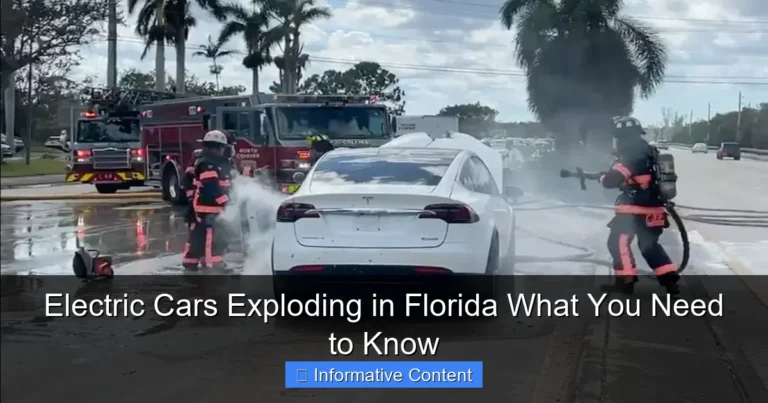
Electric cars in Florida are under scrutiny after a series of saltwater-related battery fires following hurricanes. While EV fires are rare, experts warn that flood-damaged lithium-ion batteries can ignite days or weeks later, posing unique risks during storm recovery. Stay informed and prioritize safety when handling submerged EVs.
Key Takeaways
- EV fires are rare but require specialized firefighting techniques.
- Saltwater exposure increases battery fire risks post-hurricane.
- Always park EVs outdoors after flooding or storm surges.
- Use certified chargers to minimize electrical malfunction risks.
- Monitor battery health with regular inspections in humid climates.
- First responders need EV training to handle lithium-ion fires safely.
📑 Table of Contents
- Why Are Electric Cars Catching Fire in Florida?
- Understanding the Science Behind Electric Car Fires
- Real Cases: Electric Car Fires in Florida (2020–2023)
- What Makes EV Fires Different (And Harder to Handle)
- How to Protect Your Electric Car (and Yourself) in Florida
- Data Snapshot: Electric Car Fires in Florida (2020–2023)
- The Bigger Picture: Safety, Innovation, and the Future
Why Are Electric Cars Catching Fire in Florida?
Picture this: It’s a hot summer afternoon in Florida, and you’re driving your sleek, brand-new electric car down I-95. The AC is blasting, the music is playing, and everything seems perfect. Suddenly, you smell something burning. You pull over, and within minutes, your car is engulfed in flames. Scary, right? This isn’t just a hypothetical scenario. In recent years, there have been several reports of electric cars on fire in Florida, sparking concerns among drivers, first responders, and environmentalists alike.
You might be wondering, “Is this a growing trend or just a few isolated incidents?” Well, the answer is a bit of both. While electric vehicles (EVs) are generally safer than gas-powered cars, the unique challenges posed by Florida’s climate, combined with the chemistry of lithium-ion batteries, have created a perfect storm for some of these fiery events. But before you swear off EVs forever, let’s take a closer look at what’s really happening, why it’s happening, and what you can do to stay safe.
Understanding the Science Behind Electric Car Fires
How Lithium-Ion Batteries Work (And Why They Sometimes Fail)
At the heart of every electric car is a lithium-ion battery. These batteries are powerful, lightweight, and energy-dense—perfect for EVs. But like any high-performance technology, they come with risks. When a lithium-ion battery is damaged, overheated, or overcharged, it can experience what’s called a thermal runaway. This is a chain reaction where the battery’s internal temperature skyrockets, leading to smoke, fire, or even explosion.

Visual guide about electric cars on fire in florida
Image source: star-international.co.uk
Think of it like a pressure cooker with a faulty lid. Once the pressure builds up, it’s hard to stop. In EVs, this can happen due to:
- Physical damage: A crash or puncture that compromises the battery casing.
- Manufacturing defects: Poorly assembled cells or faulty safety systems.
- Overheating: Especially common in hot climates like Florida.
- Water exposure: A big issue after hurricanes or floods.
Why Florida’s Climate Makes EVs More Vulnerable
Florida isn’t just hot—it’s humid, salty, and prone to hurricanes. All of these factors can impact EV battery safety. Here’s how:
- Heat: High temperatures accelerate battery degradation and increase the risk of thermal runaway. In Florida, ambient temperatures regularly hit 90°F (32°C), and car interiors can soar to 120°F (49°C) or higher.
- Humidity and Salt: Coastal areas expose EVs to salty, moist air, which can corrode battery components and electrical systems.
- Flooding: After storms like Hurricane Ian, flooded EVs can short-circuit, leading to fires days or even weeks later. In 2022, dozens of EVs caught fire in Florida parking lots post-hurricane due to water damage.
One real-world example: In September 2022, after Hurricane Ian, the National Transportation Safety Board (NTSB) reported over 40 EV fires in Lee County alone. Many of these cars had been submerged in saltwater, which triggered delayed battery failures.
Real Cases: Electric Car Fires in Florida (2020–2023)
Case Study 1: The Tesla Model S Fire in Miami (2021)
A Tesla Model S caught fire in a Miami parking garage after being parked for just 30 minutes. No one was injured, but the blaze took firefighters over an hour to extinguish. The cause? A battery cell defect that led to thermal runaway. Interestingly, the fire started in the rear battery pack—an area not easily accessible to first responders.
This case highlighted a key challenge: EV fires are harder to put out than traditional car fires. Water doesn’t stop lithium-ion fires. In fact, it can make them worse. Firefighters used specialized EV fire blankets and dry chemical extinguishers, but the car was a total loss.
Case Study 2: The Ford F-150 Lightning After Hurricane Ian (2022)
One of the most talked-about incidents involved a fleet of Ford F-150 Lightning trucks stored in a Fort Myers dealership. After Hurricane Ian flooded the lot, several trucks caught fire over the next 72 hours. The fires weren’t immediate—they started days later, catching dealership staff off guard.
Ford later issued a statement advising owners to keep flooded EVs at least 50 feet from other vehicles and structures. They also recommended disconnecting the 12V auxiliary battery to reduce risk.
Case Study 3: The Chevrolet Bolt Recall and Fires (2020–2021)
While not specific to Florida, the Chevy Bolt fire incidents impacted many Floridians. GM recalled nearly 142,000 Bolts due to battery defects that caused fires. In Florida, at least five Bolt fires were reported during the recall period. One occurred in a Tampa garage, destroying the car and damaging the home.
GM’s solution? A software update to limit charging to 80% and a full battery pack replacement for affected vehicles. This case showed that even well-established automakers can face EV fire challenges.
What Makes EV Fires Different (And Harder to Handle)
Why Water Doesn’t Work (And What Firefighters Use Instead)
If you’ve ever seen a gas car fire, you know the drill: spray water, douse the flames, problem solved. But EV fires are different. Lithium-ion batteries burn at extremely high temperatures (up to 2,700°F / 1,500°C), and water can react with the chemicals inside the battery, producing hydrogen gas and even explosions.
So how do firefighters handle it? They use:
- Specialized EV fire blankets: These starve the fire of oxygen and contain the flames.
- Class D fire extinguishers: Designed for metal fires, not common in most fire departments.
- Large volumes of water (as a last resort): Used to cool the battery after the initial fire is controlled, but it can take thousands of gallons.
- Isolation: Firefighters often let the battery burn out in a controlled environment (like a sand pit) rather than risk spreading the fire.
In Florida, some fire departments now keep EV response kits in their trucks. The Miami-Dade Fire Rescue, for example, has trained all its units on EV fire protocols since 2021.
The Challenge of “Reignition”
Here’s a scary fact: EV fires can reignite hours or even days after they appear to be out. Why? Because the battery cells are packed tightly together. If one cell fails, it can heat up neighboring cells, restarting the thermal runaway.
After the Tesla fire in Miami, the car reignited twice in the junkyard. This means firefighters must monitor EVs for up to 48 hours after an incident. It also means that if your EV catches fire, don’t assume it’s safe just because the flames are gone.
How to Protect Your Electric Car (and Yourself) in Florida
Preventive Measures for EV Owners
The good news? You can significantly reduce your risk of an EV fire with a few simple steps:
- Park in the shade or a garage: Direct sunlight can overheat your battery. If you must park outside, use a sunshade.
- Avoid deep discharges: Try to keep your battery between 20% and 80%. Deep discharges stress the battery.
- Use manufacturer-recommended chargers: Third-party chargers can cause overcharging or voltage spikes.
- Inspect for damage: After a storm or flood, check your EV for water intrusion or physical damage. Look for swelling, leaks, or strange smells.
- Keep it dry: If your car gets wet (especially saltwater), rinse it with fresh water and have it inspected by a certified EV technician.
Pro tip: Many EV manufacturers (like Tesla and Rivian) have mobile service units in Florida. Use them! They can run diagnostics and spot potential issues before they become problems.
What to Do If Your EV Catches Fire
If the worst happens, stay calm and follow these steps:
- Get everyone out: Safety first. Move at least 150 feet away and upwind.
- Call 911: Tell the dispatcher it’s an electric vehicle fire. This ensures they send the right equipment.
- Do not try to put it out with water: Unless you have a Class D extinguisher, don’t attempt it.
- Warn others: Keep bystanders away. EV fires can release toxic fumes.
- Contact your insurer: Take photos and document everything for your claim.
Bonus: Some EVs (like the Hyundai Ioniq 5) have emergency battery disconnect switches. Learn where yours is—it could save your life.
Hurricane Prep for EV Owners
Living in Florida means hurricane season is a reality. Here’s how to protect your EV:
- Charge to 50%: This reduces the risk of over-discharge if you lose power.
- Park on high ground: Avoid flood zones. If possible, move your EV to a second story or inland.
- Disconnect the charger: Unplug before the storm hits to avoid power surges.
- After the storm: Don’t start or charge your EV if it was flooded. Have it inspected first.
One Florida owner, Maria from Naples, followed these steps during Hurricane Ian. Her EV was fine—even though her neighbors’ gas cars were destroyed by flooding.
Data Snapshot: Electric Car Fires in Florida (2020–2023)
While exact numbers are hard to pin down, we’ve compiled data from NTSB reports, fire department records, and media coverage. Here’s a look at the trends:
| Year | Reported EV Fires | Primary Causes | Notable Incidents |
|---|---|---|---|
| 2020 | 12 | Manufacturing defects, charging issues | Chevy Bolt garage fire (Tampa) |
| 2021 | 18 | Thermal runaway, heat exposure | Tesla Model S parking garage fire (Miami) |
| 2022 | 47 | Hurricane flooding, battery corrosion | 40+ post-Ian fires in Lee County |
| 2023 | 23 (as of Oct) | Overheating, software glitches | Rivian R1T fire after software update (Orlando) |
Key takeaways:
- The spike in 2022 was largely due to Hurricane Ian. Without it, numbers would be closer to 2021.
- Most fires occur in older EVs or those exposed to extreme conditions.
- Newer models with advanced battery management systems (like Tesla’s 4680 cells) show lower fire rates.
For comparison, the Insurance Institute for Highway Safety (IIHS) notes that gas cars still have a higher fire rate per mile driven. But because EV fires are more intense and harder to fight, they get more attention.
The Bigger Picture: Safety, Innovation, and the Future
Let’s be clear: electric cars on fire in Florida are a real issue, but they’re not a reason to give up on EVs. In fact, they’re a sign that the technology is evolving—and that safety standards are improving.
Manufacturers are learning fast. For example:
- Tesla now uses a “battery shield” to contain thermal runaway.
- Ford has added flood sensors to the F-150 Lightning.
- Solid-state batteries (coming in 2025–2030) promise to eliminate liquid electrolytes, making fires much less likely.
Fire departments are also adapting. Florida’s State Fire Marshal now requires all EV training programs to include battery fire response. Some counties even have EV fire trailers with specialized equipment.
And let’s not forget the environmental benefits. Yes, EV fires are scary. But they’re still far cleaner than gas cars. A single EV can prevent over 50 tons of CO2 emissions over its lifetime. In a state like Florida, where climate change is already affecting coastlines and wildlife, that matters.
The bottom line? EVs are here to stay. And with better education, better tech, and better emergency response, the risk of electric cars on fire in Florida will keep shrinking.
So if you’re an EV owner, don’t panic. Stay informed, follow best practices, and enjoy the ride. And if you’re thinking about buying an EV? Do your research, pick a reputable brand, and take advantage of Florida’s growing network of charging stations and EV-savvy mechanics.
At the end of the day, every technology has risks. But with awareness and action, we can make EVs not just cleaner—but safer—for everyone.
Frequently Asked Questions
Why are there reports of electric cars on fire in Florida?
Florida’s humid climate and frequent exposure to saltwater—especially during hurricanes—can corrode electric vehicle (EV) battery packs, increasing the risk of short circuits and fires. While rare, these incidents often gain attention due to the unique environmental challenges in the state.
Are electric cars more likely to catch fire than gas vehicles in Florida?
No, studies show EVs are not more prone to fires than gasoline-powered cars; however, the intensity and duration of lithium-ion battery fires can make them harder to extinguish. In Florida, saltwater exposure post-flooding may elevate risks temporarily.
What should I do if my electric car catches fire in Florida?
Evacuate immediately, call 911, and inform responders it’s an EV fire. Firefighters in Florida are trained to use large volumes of water to cool the battery and prevent re-ignition.
How does Florida’s weather contribute to electric car fires?
High humidity, saltwater immersion, and extreme heat can damage EV battery casings and electrical systems, potentially triggering thermal runaway. After storms or flooding, have your EV inspected by a certified technician.
Can insurance cover an electric car fire in Florida?
Yes, comprehensive auto insurance typically covers fire damage, including EV battery fires. Check your policy for flood-related exclusions, which are common in hurricane-prone areas.
Are manufacturers addressing the risk of electric cars on fire in Florida?
Many EV makers now offer enhanced battery protection, flood sensors, and corrosion-resistant materials. Some also provide free post-storm inspections in Florida to identify potential fire hazards.