Flooded Electric Cars in Florida What You Need to Know
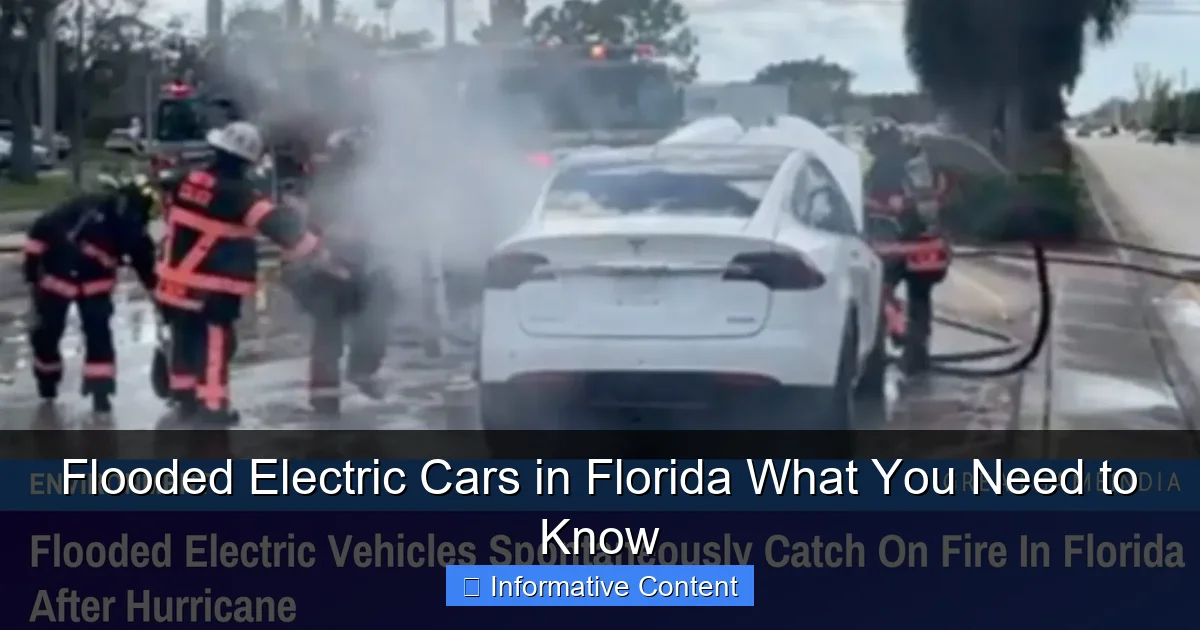
Featured image for flooded electric cars in florida
Image source: i0.wp.com
Flooded electric cars in Florida pose serious safety and financial risks, especially after hurricanes or storm surges, as water damage can trigger battery fires, electrical failures, and long-term corrosion. Never attempt to charge or start a flooded EV—contact a certified technician immediately to inspect the high-voltage system and avoid potential hazards. Being proactive can prevent costly repairs and ensure your safety.
Key Takeaways
- Never drive through floodwaters: Even shallow flooding can damage EV batteries and electrical systems.
- Inspect before charging: Flood-exposed EVs require professional inspection to prevent fire or battery risks.
- Document flood damage immediately: Photos and reports are essential for insurance claims and resale value.
- Salvage titles impact value: Flood-damaged EVs often get branded titles, lowering resale significantly.
- Check for corrosion: Saltwater exposure accelerates degradation; inspect battery trays and wiring thoroughly.
- EVs aren’t more dangerous: Modern designs handle floods better than gas cars if properly maintained.
📑 Table of Contents
- The Storm After the Storm: Flooded Electric Cars in Florida
- Why Flooded Electric Cars Are Different (And More Dangerous)
- What Happens When an EV Gets Flooded? A Real-World Timeline
- Insurance, Repairs, and Resale: The Financial Reality
- How to Protect Your EV from Flooding (Before It’s Too Late)
- The Future of EVs in Flood-Prone Areas: What’s Changing?
- Data Table: Common EVs and Flood Risk Factors
- Final Thoughts: Living with EVs in Florida’s Flood Zones
The Storm After the Storm: Flooded Electric Cars in Florida
When Hurricane Ian swept through Florida in 2022, it didn’t just leave behind flooded streets and damaged homes. It left behind something far more unsettling: hundreds of electric vehicles (EVs) quietly sitting in saltwater, their batteries submerged, their futures uncertain. If you’ve ever driven through Miami after a heavy rain, you’ve probably seen it — a Tesla or a Nissan Leaf parked on a flooded street, water lapping at its undercarriage. You might’ve thought, “It’s just water. It’ll dry out.” But with EVs, that’s not always the case.
Flooded electric cars in Florida are more than just a headline. They’re a growing concern for residents, insurance companies, and mechanics alike. Unlike traditional gas-powered cars, EVs have high-voltage battery packs and complex electrical systems that react unpredictably to water. And when saltwater — the kind common in Florida’s coastal areas — gets involved, the risks skyrocket. This isn’t just about losing a car. It’s about safety, resale value, and the long-term reliability of EVs in one of the most flood-prone states in the U.S. Whether you’re an EV owner, a used car shopper, or just curious about how hurricanes impact modern vehicles, this guide will walk you through what you need to know about flooded electric cars in Florida.
Why Flooded Electric Cars Are Different (And More Dangerous)
The Hidden Risks of Water and High-Voltage Batteries
Most people assume that if a car gets wet, it just needs time to dry. But with electric cars, that’s not true. EVs run on lithium-ion battery packs that can carry hundreds of volts — sometimes over 400 volts — and these systems are incredibly sensitive to moisture. When water, especially saltwater, seeps into the battery compartment, it can cause short circuits, corrosion, and even thermal runaway (a fancy term for “the battery starts on fire”).
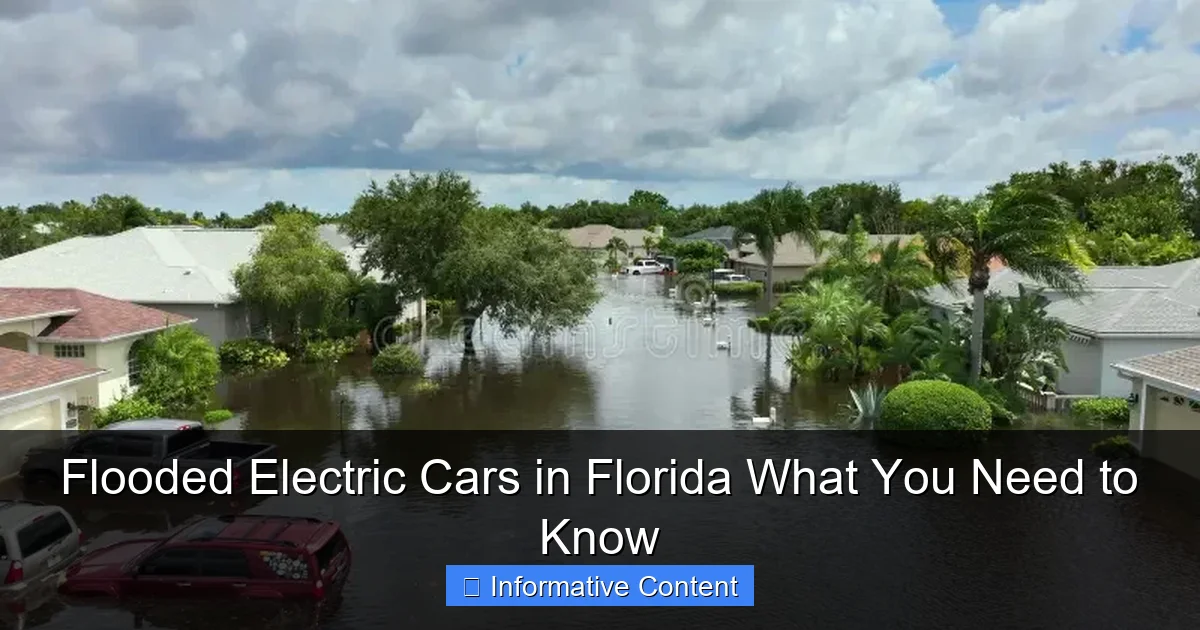
Visual guide about flooded electric cars in florida
Image source: thumbs.dreamstime.com
Take the example of a Tesla Model Y parked in Fort Myers during Hurricane Ian. The car was submerged in 2 feet of saltwater for over 12 hours. When the owner tried to start it a week later, the dashboard lit up with error messages. Mechanics later found that salt crystals had formed inside the battery cooling system, corroding the connectors. The battery had to be replaced — a $20,000 fix. And worse? The car caught fire while it was being towed to the shop.
Saltwater vs. Freshwater: A Critical Difference
Not all flooding is equal. In Florida, coastal flooding often involves saltwater, which is far more destructive than freshwater. Salt is a powerful conductor of electricity. When it mixes with water and enters an EV’s electrical system, it creates unintended pathways for current. This can lead to:
- Short circuits in control modules and wiring harnesses
- Corrosion of battery terminals and connectors (even months after drying)
- Electrolysis, where metal components slowly dissolve due to chemical reactions
A freshwater flood might cause temporary glitches. A saltwater flood? It can silently destroy an EV from the inside out — sometimes without immediate symptoms.
The “Time Bomb” Factor: Delayed Failures
One of the scariest things about flooded EVs is that problems don’t always show up right away. A car might start fine after being dried out, but months later, the battery pack could fail — or worse, catch fire while charging. In 2023, the National Highway Traffic Safety Administration (NHTSA) issued a safety alert after several post-flood EVs spontaneously combusted during charging. The common factor? All had been submerged in saltwater for more than 4 hours.
What Happens When an EV Gets Flooded? A Real-World Timeline
Immediate Aftermath: The First 24 Hours
If your EV gets flooded, time is critical. Here’s what happens in the first day:
- Water enters the battery enclosure: Even if the car appears sealed, water can seep through vents, gaskets, or damaged body panels.
- High-voltage system shuts down: Most EVs have automatic cutoff switches to prevent electrocution, but this doesn’t mean the system is safe.
- Corrosion begins: Saltwater starts eating away at metal contacts and circuit boards.
Pro tip: Never try to start or charge a flooded EV. Call a certified EV technician or your dealer immediately. Attempting to drive or charge it could trigger a fire or electric shock.
Days 2-7: The Inspection Phase
During this window, professionals should assess the damage. Here’s what they look for:
- Water level: If the water reached above the battery pack (usually under the floor), the risk is extremely high.
- Water type: Saltwater damage is more severe and harder to reverse.
- Electrical continuity: Technicians use specialized tools to check for shorts or resistance changes in wiring.
In one case in Naples, a dealership inspected a flooded Chevrolet Bolt and found that the battery management system (BMS) had failed due to moisture. The car hadn’t been driven since the flood, but the BMS was already sending erratic voltage readings — a sign of internal damage.
Weeks to Months: The Waiting Game
Even if the car seems fine, owners should be on high alert. Delayed failures are common. For example:
- A Hyundai Kona EV in Jacksonville started smoking 3 weeks after a storm. The cause? A corroded ground wire in the traction battery.
- A Rivian R1T in Tampa wouldn’t charge after 6 weeks. The onboard charger had shorted due to salt residue.
Bottom line: Just because a flooded EV starts doesn’t mean it’s safe. It could be a ticking time bomb.
Insurance, Repairs, and Resale: The Financial Reality
Insurance Claims: What You Need to Know
If your EV is flooded, your first call should be to your insurance company. But here’s the catch: not all policies cover flood damage the same way. In Florida, standard auto insurance doesn’t include flood protection — you need comprehensive coverage (also called “full coverage”).
- Comprehensive coverage: Covers flood damage, including saltwater submersion. This is essential if you live in a flood zone.
- Deductibles: Can range from $500 to $2,000. For a $40,000 EV, even a $1,000 deductible can hurt.
- Total loss thresholds: If repairs exceed 70-80% of the car’s value, insurers often declare it a total loss.
One Miami resident filed a claim after a flash flood. His Tesla was repaired, but the insurance company later flagged it as a “flood-damaged vehicle” on the Carfax. The car’s value dropped by 30% — even though it ran perfectly.
Repair Costs: Can It Even Be Fixed?
EV repairs after flooding are expensive — and not always possible. Key components that often need replacement:
- Battery pack: $10,000-$20,000 (often not repairable)
- Power electronics: Inverter, DC-DC converter ($2,000-$5,000)
- Wiring harnesses: Full replacement due to corrosion ($1,500-$3,000)
- Onboard charger: $1,200-$2,500
Some manufacturers, like Tesla, don’t allow third-party repairs on battery packs. You’re locked into using their service centers — which can have long wait times.
Resale and Disclosure: The Long-Term Impact
Even if your flooded EV is repaired, it will never be “like new.” Buyers and dealerships are wary of flood-damaged EVs for good reason. When selling or trading in:
- You must disclose the flood history (in most states, it’s illegal not to).
- Expect a 20-40% reduction in value.
- Many lenders won’t finance a car with a flood title.
Real example: A 2022 Ford Mustang Mach-E in Sarasota was flooded during a storm. After repairs, it was listed for $35,000 — down from its original $52,000 price. No takers. After 6 months, the seller dropped it to $28,000 and still struggled to find a buyer.
How to Protect Your EV from Flooding (Before It’s Too Late)
Pre-Storm Prep: Your Action Plan
Florida’s hurricane season runs from June to November. If a storm is coming, don’t wait. Here’s what to do:
- Move to higher ground: Park on elevated streets, parking garages, or hills. Avoid low-lying areas.
- Charge to 80%: A full battery is heavier and more prone to short-circuiting if water enters. An 80% charge reduces risk.
- Unplug charging cables: Water near the charger can backfeed into the car.
- Document the car’s condition: Take photos and videos of the interior, exterior, and odometer.
One EV owner in Orlando used a portable car lift to raise his Tesla off the ground before a storm. It cost $300 — a small price to protect a $60,000 car.
Post-Flood Inspection: Don’t Skip This Step
If your EV was near floodwater (even if it wasn’t submerged), get it checked. Here’s what to look for:
- Water stains or residue on the floor, under seats, or in the trunk.
- Musty or salty smell — a sign of hidden moisture.
- Warning lights on the dashboard (even if they disappear).
- Corrosion on battery terminals or connectors.
Use a moisture meter to check for dampness in the cabin. Many auto shops in Florida now offer EV flood inspections for $100-$200.
Long-Term Maintenance Tips
After any exposure to water, follow these steps:
- Flush and dry the undercarriage with fresh water (especially if it was saltwater).
- Run diagnostics using the manufacturer’s app or a scan tool.
- Check battery health every 3 months for the first year.
- Keep a fire extinguisher in the car — and know how to use it.
The Future of EVs in Flood-Prone Areas: What’s Changing?
Manufacturers Are Responding — Slowly
EV makers are starting to adapt. For example:
- Ford now offers a “Flood Mode” on the F-150 Lightning, which disables high-voltage systems if water is detected.
- Lucid Motors uses sealed battery enclosures rated for deeper submersion (up to 3 feet for 30 minutes).
- GM is testing self-sealing connectors that close when moisture is sensed.
But these features are still rare — and not standard on most EVs sold in Florida.
New Regulations and Safety Standards
The NHTSA is working on updated safety rules for flooded EVs. Potential changes include:
- Mandatory flood sensors in all EVs.
- Standardized repair protocols for water-damaged batteries.
- Clearer labeling of flood-damaged vehicles in the used market.
In 2024, Florida lawmakers introduced a bill requiring EVs to have automatic battery disconnects if submerged. It’s still under debate — but it shows the issue is gaining attention.
What This Means for Buyers
If you’re shopping for an EV in Florida, ask these questions:
- Does it have a flood detection system?
- Is the battery pack sealed against saltwater?
- Can the manufacturer’s service center handle flood repairs?
And if you’re buying a used EV, run a Carfax or AutoCheck report to check for flood damage — even if the seller says it’s clean.
Data Table: Common EVs and Flood Risk Factors
| EV Model | Battery Location | Water Resistance Rating | Flood Risk Level (Saltwater) | Estimated Repair Cost (Submerged 24+ hrs) |
|---|---|---|---|---|
| Tesla Model 3 | Underfloor | IP67 (1m for 30 min) | High | $18,000 |
| Ford Mustang Mach-E | Underfloor | IP67 | High | $16,500 |
| Chevrolet Bolt EV | Underfloor | IP67 | High | $15,000 |
| Rivian R1T (Truck) | Underfloor + sealed | IP68 (1.5m for 30 min) | Medium | $14,000 |
| Hyundai Ioniq 5 | Underfloor | IP67 | High | $17,000 |
| Lucid Air | Underfloor (sealed) | IP68 | Medium | $22,000 |
Note: Water resistance ratings (IP67, IP68) are for fresh water, not saltwater. Real-world performance in storms may be lower.
Final Thoughts: Living with EVs in Florida’s Flood Zones
Flooded electric cars in Florida aren’t just a problem — they’re a wake-up call. EVs offer incredible benefits: lower emissions, cheaper fuel, and cutting-edge tech. But when hurricanes hit, they face unique challenges that gas cars don’t. The truth is, no EV is truly “flood-proof.” Even the most advanced models can be crippled by saltwater.
But that doesn’t mean you should avoid EVs entirely. Instead, it means you need to be smarter. Protect your car before storms. Get it inspected after any flood exposure. Understand your insurance. And when buying used, do your homework. The more informed you are, the safer — and more cost-effective — your EV ownership will be.
Florida’s climate isn’t changing. Hurricanes and flooding will keep coming. But with the right knowledge, you can keep your electric car on the road — and out of the fire department’s emergency calls.
Frequently Asked Questions
Can electric cars survive flooding in Florida?
Most electric vehicles (EVs) are designed with waterproof battery enclosures and high-voltage safety systems, but prolonged submersion—common during Florida floods—can still cause irreversible damage. Always check manufacturer flood guidelines before driving in flooded areas.
What happens if a flooded electric car gets waterlogged?
Water intrusion into the battery or motor can lead to short circuits, corrosion, or even thermal runaway. Even if the car appears functional, hidden electrical issues may pose fire risks or require costly repairs.
How do I know if a used EV in Florida was flood-damaged?
Look for a branded title (e.g., “flood” or “salvage”), inspect for water stains, musty odors, or corrosion under the hood. Run a vehicle history report using services like Carfax to check for flood records.
Are flooded electric cars in Florida a fire hazard?
Yes, water-damaged EV batteries can spontaneously ignite days or weeks later due to internal short circuits. Firefighters often submerge flooded EVs in water tanks to prevent delayed combustion.
Should I drive my EV through standing water in Florida?
Never drive through flooded roads—just 12 inches of water can float your car, and saltwater (common in coastal areas) accelerates electrical damage. EV motors and batteries are sealed but not fully submersible.
Can insurance cover a flooded electric car in Florida?
Comprehensive auto insurance typically covers flood damage, but claims may depend on your policy details. Document damage immediately and contact your insurer—some EVs require specialized salvage handling due to battery risks.