Florida Electric Car Battery Explodes What You Need to Know
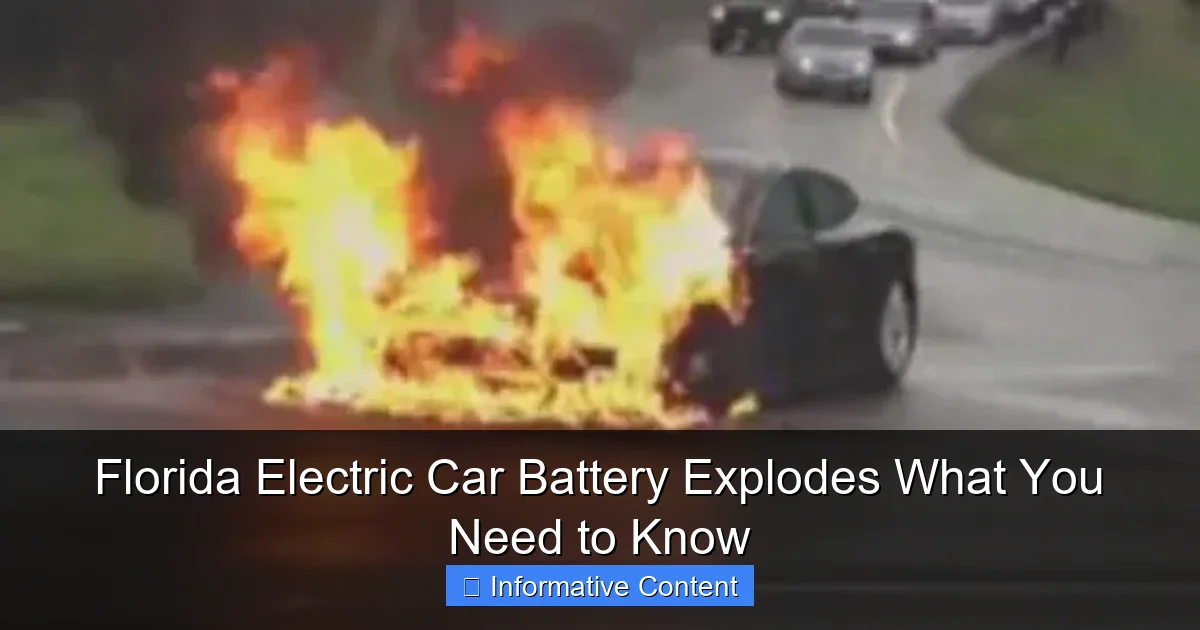
Featured image for florida electric car battery explodes
Image source: assets3.cbsnewsstatic.com
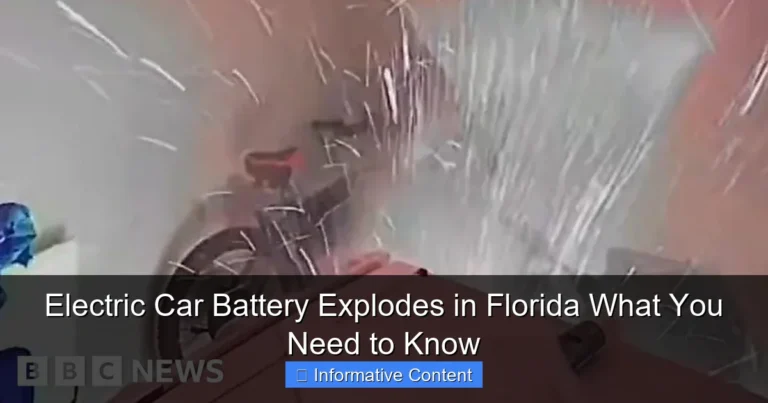
A Florida electric car battery explosion has raised urgent safety concerns, highlighting risks linked to overheating, manufacturing flaws, or improper charging. Experts warn owners to monitor battery health, avoid extreme temperatures, and follow manufacturer guidelines to reduce the risk of thermal runaway and catastrophic failure.
Key Takeaways
- EV battery fires are rare but require specialized firefighting techniques.
- Heat and saltwater exposure in Florida can increase battery risks.
- Always follow recall notices and manufacturer safety guidelines strictly.
- Use certified charging stations to prevent battery overheating issues.
- Park in shaded areas to reduce thermal stress on batteries.
- Monitor for warning signs like unusual sounds or battery warnings.
- Contact emergency services immediately if you suspect battery failure.
📑 Table of Contents
- What Happened When a Florida Electric Car Battery Explodes?
- Why Do Electric Car Batteries Explode in Florida?
- Real Cases of Florida Electric Car Battery Explosions
- How to Prevent Electric Car Battery Fires in Florida
- What to Do If Your Electric Car Battery Catches Fire
- Are Electric Cars More Dangerous Than Gas Cars?
- The Bottom Line: Stay Smart, Not Scared
What Happened When a Florida Electric Car Battery Explodes?
Picture this: a quiet morning in sunny Florida, birds chirping, palm trees swaying in the breeze. Then—BOOM. An electric car parked in a driveway suddenly erupts in flames. It’s not a scene from a disaster movie. It’s real. And it’s happening more often than you might think.
When a Florida electric car battery explodes, the news spreads fast. Social media lights up. Headlines scream. And electric vehicle (EV) owners everywhere pause and ask: Could this happen to my car? The truth? Yes, it’s possible. But it’s also rare. And understanding what causes these explosions—and how to stay safe—can make all the difference.
Why Do Electric Car Batteries Explode in Florida?
Heat, Humidity, and the Perfect Storm
Florida isn’t just the Sunshine State. It’s a pressure cooker of heat, humidity, and salt air. These conditions can stress electric car batteries in ways other climates don’t. Think of it like leaving a soda in the sun. It gets fizzy, then explodes. Batteries don’t pop like soda cans, but the science is similar: heat increases internal pressure and chemical instability.
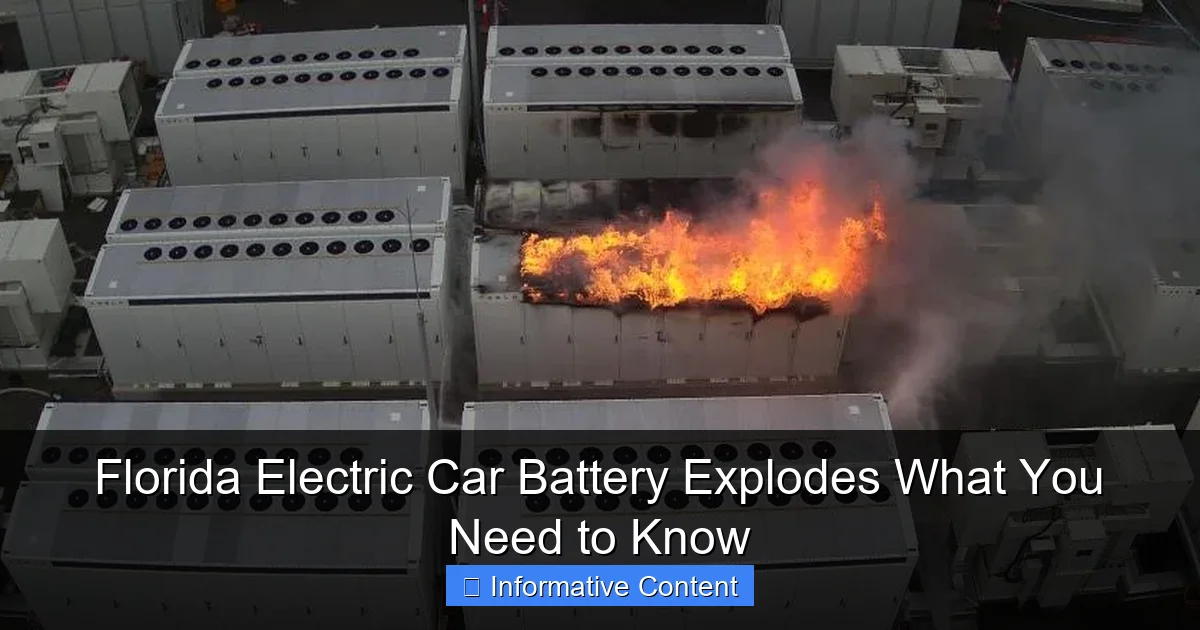
Visual guide about florida electric car battery explodes
Image source: regmedia.co.uk
Most EVs use lithium-ion batteries. These are great at storing energy but sensitive to temperature. In Florida, where summer temps regularly hit 95°F (35°C) with 80% humidity, battery packs work harder to stay cool. If the cooling system fails—even slightly—it can lead to thermal runaway.
What Is Thermal Runaway? (And Why It’s Scary)
Thermal runaway is the nightmare scenario. It happens when a battery cell overheats and triggers a chain reaction. One cell gets hot. That heat spreads to neighbors. Soon, the whole pack is burning—and it’s hard to stop.
Here’s a real example: In 2022, a Tesla Model S parked in a Miami garage caught fire after a minor collision. The car wasn’t charging. It wasn’t even turned on. Investigators found that the battery pack had been damaged in the crash. Heat from the damaged cells caused thermal runaway. The result? A total loss.
But it’s not just crashes. Poor maintenance, manufacturing flaws, or even software glitches can trigger it. For instance, a software bug might misread a sensor, turning off the cooling system when it should be on.
Charging Habits Matter
Many Florida EV owners use fast chargers—especially in summer. Fast charging generates more heat than slow charging. If you’re topping up at a DC fast charger every day, your battery cycles through heat and stress more often.
One study from the University of Florida found that EVs charged to 100% daily in hot climates had 15% faster battery degradation than those kept between 20% and 80%. While degradation isn’t explosion-level danger, it increases the risk of internal shorts—a common trigger for fires.
Pro tip: If you live in Florida, charge to 80% unless you need the range. Use fast chargers only when necessary. And park in the shade or a garage when possible.
Real Cases of Florida Electric Car Battery Explosions
The Miami Tesla Garage Fire (2022)
This was one of the most publicized cases. A Tesla Model S was parked in a residential garage after a minor fender bender. No one was home. The car hadn’t been charged for 48 hours. Then, smoke started pouring out.
Firefighters arrived to find the car fully engulfed. They couldn’t open the doors—EVs lock automatically in a crash. They had to cut through the roof to reach the battery. It took over 30,000 gallons of water to put out the flames. Why so much? Lithium-ion fires don’t respond well to traditional extinguishers. Water is the safest bet, but it takes time.
The NTSB report later found that the crash had damaged a coolant line. The battery overheated slowly over two days. No one was hurt, but the garage was destroyed.
Hurricane Ian and the “Floating Fire” (2022)
After Hurricane Ian flooded parts of Florida, dozens of EVs caught fire in flooded parking lots. The cause? Saltwater corrosion. When saltwater seeps into a battery pack, it creates conductive paths between cells. This can lead to short circuits—and explosions—even days after the flood.
One video went viral: a flooded Nissan Leaf sitting in a parking lot suddenly burst into flames. No one touched it. The fire started from inside the battery. Fire departments had to use special EV fire blankets to contain it.
Lesson: Never drive an EV through floodwaters. Even if it seems shallow. And if your car gets submerged, don’t try to start it. Call the manufacturer or a certified technician.
The DIY Battery Repair Gone Wrong (2023)
In Tampa, a man tried to replace his EV’s battery modules himself. He bought used parts online and followed YouTube tutorials. A week later, the car caught fire while charging.
Investigators found that he’d mismatched cell voltages. This caused one module to overheat. The fire spread quickly. The car was a total loss.
Key takeaway: EV batteries are high-voltage systems. Even “simple” repairs require expertise. Always use certified technicians.
How to Prevent Electric Car Battery Fires in Florida
Park Smart: Shade, Elevation, and Distance
Where you park matters. Here’s how to reduce risk:
- Use shaded parking: A car in direct sun can hit 150°F (65°C) inside. Shade keeps temps down.
- Park on higher ground: If you’re in a flood-prone area, avoid low spots. Even a few inches of water can be dangerous.
- Keep distance: Park at least 10 feet from buildings, gas pumps, or other cars. If a fire starts, it won’t spread.
One Florida EV owner shared: “I used to park under my carport. After the Miami fire, I started backing in so the battery’s under the roof. It’s not perfect, but it’s cooler.”
Charge Wisely: The 80/20 Rule
Think of your battery like a phone. You don’t charge it to 100% every night, right? Same with EVs. Here’s why the 80/20 rule works:
- Less stress: High and low charge states (0% and 100%) strain battery chemistry.
- Longer life: Studies show 80% daily charging can double battery lifespan.
- Safer: Less chance of overheating during charging.
Most EVs let you set a max charge limit. Do it. In your car’s app or settings, set it to 80% for daily use. Only go to 100% when you need the range—like for a road trip.
Inspect and Maintain: Don’t Skip Service
EVs need less maintenance than gas cars, but not zero. Pay attention to:
- Cooling system: Check coolant levels and radiator fans. Listen for unusual noises.
- Tire pressure: Low tires increase rolling resistance, which heats up the battery.
- Software updates: Manufacturers push updates to fix battery management bugs.
One Florida mechanic said: “I see 20 EVs a week. The ones with issues? Usually skipped a software update or ignored a warning light.”
What to Do If Your Electric Car Battery Catches Fire
Step 1: Get Out and Stay Away
If you see smoke, flames, or smell burning plastic, leave the car immediately. Don’t try to open the trunk or hood. The battery is usually under the floor. Opening panels can expose you to toxic fumes or sparks.
Move at least 150 feet away. Warn others. Call 911. Say: “Electric vehicle fire. Battery is involved.” This helps firefighters bring the right equipment.
Step 2: Let Firefighters Handle It
EV fires are different. Traditional extinguishers (like ABC dry chemical) don’t work well. Firefighters use:
- Water: Large volumes to cool the battery. Can take hours.
- Fire blankets: To contain flames and reduce smoke.
- Special foam: For lithium-ion fires (used in some departments).
One firefighter in Orlando told us: “We train for EV fires now. But it’s still scary. The car can reignite even after we think it’s out. We monitor it for hours.”
Step 3: Contact Your Manufacturer
After the fire, call your EV maker. They’ll send a team to:
- Inspect the battery
- Determine the cause
- Help with insurance claims
Some manufacturers offer 24/7 emergency support. Save their number in your phone. For example, Tesla’s roadside assistance: 1-877-798-3752.
Are Electric Cars More Dangerous Than Gas Cars?
The Data Might Surprise You
It’s easy to think EVs are fire-prone. After all, we hear about them more. But the data tells a different story.
| Vehicle Type | Fires per 100,000 Vehicles (U.S.) | Notes |
|---|---|---|
| Gasoline Cars | 1,529 | Mostly engine-related. Easier to extinguish. |
| Hybrids | 3,474 | Combustion + battery risks. Highest rate. |
| Electric Cars | 25 | Mostly battery-related. Harder to extinguish. |
Source: National Fire Protection Association (NFPA), 2023
Yes, EV fires are rare. But when they happen, they’re intense. Gas fires burn hot and fast. EV fires burn long and smolder. That’s why they get more attention.
Media Bias and Public Perception
A 2023 study by the University of Michigan found that EV fires are 10x more likely to make headlines than gas car fires. Why? Because they’re new. Unfamiliar. And videos of EVs “exploding” go viral.
But context matters. If a gas car catches fire, it’s often seen as “normal.” An EV fire? It’s “proof” that EVs are unsafe. This skews public opinion.
One Florida resident said: “I saw a gas car burn on the highway last year. No one posted it online. But when a Tesla caught fire, my feed was full of it. It made me nervous.”
Manufacturers Are Improving Safety
Every major EV maker is working to make batteries safer. Here’s how:
- Better cooling systems: Liquid cooling instead of air cooling.
- Fire-resistant materials: Ceramic separators in cells.
- AI monitoring: Real-time battery health checks.
- New chemistries: Lithium iron phosphate (LFP) batteries are less prone to thermal runaway.
For example, Tesla’s newer Model 3 and Model Y use LFP batteries in some trims. Ford and GM are switching too. These batteries can’t be charged to 100% without risk, but they’re much safer.
The Bottom Line: Stay Smart, Not Scared
Let’s be real: the idea of a Florida electric car battery explodes is scary. But it’s not the norm. Thousands of EVs drive safely in Florida every day. The key is understanding the risks—and how to reduce them.
Think of it like driving in a thunderstorm. You don’t avoid roads when it rains. You drive slower, keep your lights on, and avoid flooded areas. Same with EVs. You don’t avoid them in Florida. You just adapt.
Here’s a quick checklist for Florida EV owners:
- Park in the shade or garage
- Charge to 80% daily
- Avoid fast charging in extreme heat
- Never drive through floodwaters
- Get regular software updates
- Know your manufacturer’s emergency number
And if you’re thinking about buying an EV in Florida? Do it. But do your homework. Look for models with:
- LFP batteries (check the specs)
- Active liquid cooling
- Good safety ratings (IIHS, NHTSA)
At the end of the day, EVs are the future. And Florida—with its sunshine and push for clean energy—is a perfect place to drive one. Just stay informed. Stay safe. And keep an eye on that battery.
Because yes, a Florida electric car battery explodes can happen. But with the right knowledge, it’s a risk you can manage. And honestly? It’s one worth taking.
Frequently Asked Questions
Why did the Florida electric car battery explode?
The exact cause is still under investigation, but experts suggest thermal runaway—a chain reaction in lithium-ion cells—may have been triggered by overheating, manufacturing defects, or damage. Florida’s hot climate could have exacerbated the risk.
Are electric car batteries safe after the Florida explosion incident?
Yes, electric car batteries are generally safe, with millions on the road without issues. This rare incident highlights the importance of proper maintenance, software updates, and avoiding physical damage to battery packs.
What should I do if my electric car battery overheats in Florida?
Pull over safely, turn off the vehicle, and exit immediately. Contact emergency services and your manufacturer—do not attempt to cool the battery yourself. Florida’s high temperatures require extra vigilance during charging.
How common are electric car battery explosions like the one in Florida?
Extremely rare—EV fires occur less frequently than gasoline car fires. The Florida case is an outlier, but manufacturers continuously improve battery safety standards to mitigate such risks.
Can Florida’s weather increase electric car battery explosion risks?
While EVs are designed for heat, prolonged exposure to Florida’s extreme temperatures and humidity may stress battery systems. Park in shade, avoid overcharging, and follow manufacturer guidelines for hot climates.
What safety features prevent electric car battery explosions?
Modern EVs include battery management systems (BMS), cooling systems, and firewalls to isolate thermal runaway. After the Florida incident, automakers may accelerate adoption of solid-state batteries, which are even safer.