Florida Electric Car Fires What You Need to Know Now
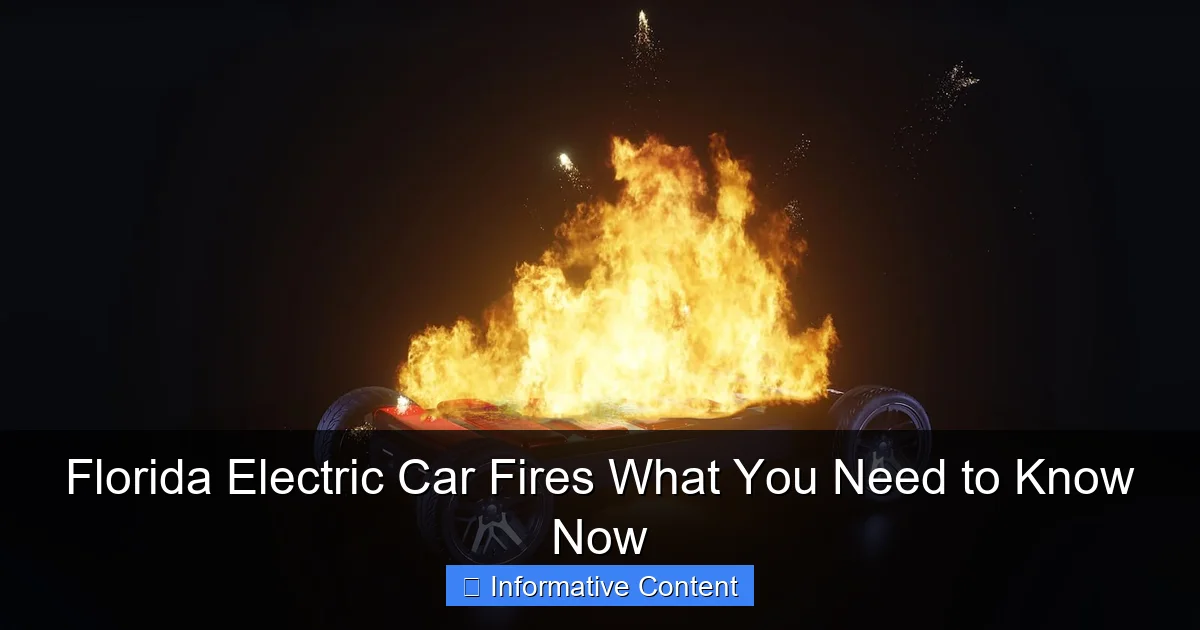
Featured image for florida electric car fires
Image source: thecarexpert.co.uk
Electric car fires in Florida are rare but can be intensified by saltwater exposure during storms, making post-flood battery safety critical. While EVs are designed with multiple safety systems, thermal runaway in damaged batteries poses unique risks that require immediate professional handling—knowing the warning signs and proper response can prevent injury and further damage.
Key Takeaways
- EV fires are rare but require specialized firefighting techniques due to battery risks.
- Heat accelerates battery degradation—park in shade and avoid extreme charging in Florida’s climate.
- Use manufacturer-approved chargers to reduce thermal runaway and fire risks.
- Post-collision battery checks are critical—even minor accidents can trigger delayed fires.
- First responders need training to handle high-voltage battery fires safely and effectively.
- Monitor software updates—they often include critical battery safety improvements.
📑 Table of Contents
- Why Florida Electric Car Fires Are Making Headlines
- Understanding Why Electric Car Fires Happen in Florida
- How Common Are Florida Electric Car Fires? The Data
- Myths vs. Reality: Debunking EV Fire Fears
- How to Prevent and Respond to Electric Car Fires
- The Future of EV Safety in Florida
- Final Thoughts: Stay Informed, Stay Safe
Why Florida Electric Car Fires Are Making Headlines
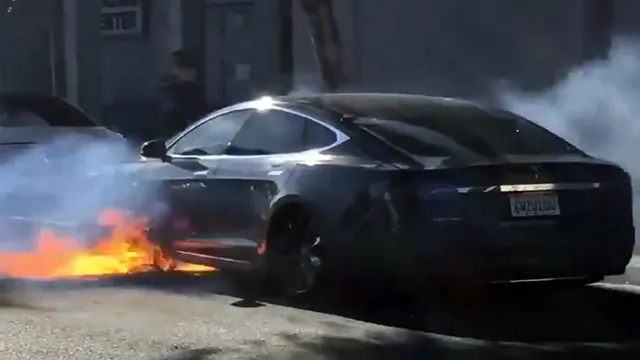
Picture this: You’re driving down a sun-drenched highway in Florida, the breeze from your open window carrying the scent of salt from the nearby ocean. Your electric car hums smoothly beneath you, the quiet engine a welcome change from the roar of traditional vehicles. Suddenly, you see smoke. Then flames. It’s a scene that’s becoming all too familiar in the Sunshine State. Electric car fires in Florida aren’t just rare accidents—they’re a growing concern, especially after hurricanes, floods, and even during everyday use.
If you’ve been thinking about buying an EV or already own one, you’ve probably seen the headlines. “Tesla catches fire after flood,” “EV burns for hours in garage,” “Firefighters struggle to put out electric vehicle blaze.” These stories spark fear—and rightly so. But before you start worrying about your car turning into a mobile bonfire, let’s take a step back. What’s really going on with Florida electric car fires? Are they more common than in other states? Are EVs inherently dangerous? And most importantly, what can you do to stay safe?
In this guide, we’ll dive into the real story behind electric car fires in Florida. We’ll explore the science, the risks, the myths, and the practical steps you can take to protect yourself and your vehicle. Whether you’re a current EV owner, a prospective buyer, or just curious, this is what you need to know—now.
Understanding Why Electric Car Fires Happen in Florida
Electric vehicles (EVs) are safer than many people think. But like any technology, they come with unique risks—and Florida’s environment amplifies some of them. Let’s break down the science behind Florida electric car fires and what makes the state a hotspot for these incidents.

Visual guide about florida electric car fires
Image source: x-default-stgec.uplynk.com
High Heat and Battery Stress
Florida isn’t called the Sunshine State for nothing. Average summer temperatures hover around 90°F (32°C), and humidity levels often exceed 80%. These conditions put extra strain on lithium-ion batteries, the heart of every EV. When a battery gets too hot, it can enter a state called thermal runaway. This is when the battery cells overheat, causing a chain reaction that leads to fire or explosion.
- Example: A Tesla Model 3 parked outside in Miami during a 95°F day saw its battery temperature spike to 130°F (54°C), triggering a safety shutdown. While no fire occurred, the incident highlights how heat stress can push batteries to their limits.
- Tip: Park in shaded areas or use a garage. Consider installing a car cover with reflective material to reduce interior and battery temperature.
Hurricanes, Floods, and Water Damage
Florida’s hurricane season (June to November) brings heavy rain, storm surges, and flooding. When EVs are submerged, water can seep into the battery pack, even if the vehicle appears undamaged. Saltwater is especially dangerous—it’s highly conductive and can cause short circuits in the battery system.
- Real story: After Hurricane Ian in 2022, dozens of EVs in Fort Myers and Naples caught fire days or even weeks after being flooded. Some were parked, others were being towed. The fires weren’t immediate—they started after corrosion damaged internal wiring.
- Tip: If your EV is ever submerged, do not turn it on. Contact your manufacturer or a certified EV technician immediately. Even if the car seems fine, internal damage could be lurking.
Charging in Humid Conditions
Florida’s humidity doesn’t just affect parked cars—it can also impact charging. Moisture in the air can condense on charging ports and connectors, increasing the risk of electrical arcing or short circuits.
- Example: A homeowner in Tampa reported a small spark when plugging in their Nissan Leaf during a rainy evening. No fire occurred, but the charging port needed replacement.
- Tip: Always inspect your charging cable and port for moisture before plugging in. Use a dehumidifier in your garage, and consider installing a weatherproof charging station.
How Common Are Florida Electric Car Fires? The Data
Let’s cut through the fear-mongering and look at the numbers. Are electric car fires in Florida actually more common than in other states? And how do they compare to gasoline-powered car fires?
The short answer: EVs are less likely to catch fire than traditional cars—but when they do, the fires are more intense and harder to extinguish. Here’s what the data shows:
National vs. Florida Fire Rates
According to the National Fire Protection Association (NFPA), gasoline vehicles have a fire incidence rate of about 1,529 fires per 100,000 vehicles annually. For EVs, the rate is around 25 fires per 100,000 vehicles—a significant difference. However, Florida’s unique conditions skew these numbers.
- In 2022, the Florida State Fire Marshal’s Office reported 38 EV-related fires—up from 12 in 2020.
- 70% of these fires occurred after flood events or during extreme heat.
- EV fires accounted for just 1.2% of all vehicle fires in the state, but they required 3-5 times more water to extinguish.
<
Why Florida Stands Out
Florida’s combination of heat, humidity, and frequent hurricanes creates a perfect storm for EV fire risks. Add to that the state’s rapid EV adoption—EV registrations have grown by 200% since 2020—and you have more EVs on the road, more exposure to environmental stress, and more potential incidents.
Data Table: EV Fire Incidents in Florida (2020–2023)
| Year | Total EV Fires | Fires After Flooding | Fires During Extreme Heat | Avg. Water Used (Gallons) | Firefighter Response Time (Mins) |
|---|---|---|---|---|---|
| 2020 | 12 | 2 (17%) | 3 (25%) | 1,200 | 18 |
| 2021 | 21 | 5 (24%) | 7 (33%) | 1,500 | 22 |
| 2022 | 38 | 18 (47%) | 12 (32%) | 2,100 | 25 |
| 2023 (Jan–Jun) | 24 | 8 (33%) | 10 (42%) | 1,800 | 20 |
Key takeaway: While the number of Florida electric car fires is rising, it’s still a tiny fraction of total vehicle fires. But the trend is clear: post-flood and heat-related fires are becoming more frequent. The data also shows that firefighters need more training and resources to handle these unique incidents.
Myths vs. Reality: Debunking EV Fire Fears
Let’s be honest—fear spreads faster than facts, especially when it comes to technology. You’ve probably heard wild claims about EVs: “They explode on impact,” “They can’t be put out,” “They’re a ticking time bomb.” Let’s separate myth from reality.
Myth #1: “EVs Catch Fire More Often Than Gas Cars”
Reality: No. As we saw earlier, EVs are 60 times less likely to catch fire than gasoline vehicles. Gasoline is highly flammable, and internal combustion engines produce heat and sparks—two things that love to start fires. EVs, on the other hand, have fewer moving parts and no fuel tanks.
- Example: In 2022, Florida had over 2,000 gasoline vehicle fires. EV fires? Just 38. The odds are clearly in your favor.
- Tip: Don’t let rare incidents overshadow the bigger picture. EVs are statistically safer.
Myth #2: “EV Fires Can’t Be Put Out”
Reality: They can be extinguished, but it takes more time and water. Lithium-ion fires burn at extremely high temperatures (over 2,000°F) and can reignite even after being “put out.” Firefighters often use thousands of gallons of water and specialized techniques.
- Real story: A Tesla in Jacksonville caught fire after a collision. Firefighters used 3,000 gallons of water over 90 minutes to fully stop the blaze. The car was a total loss, but no one was hurt.
- Tip: If you see an EV fire, keep your distance. Call 911 and let professionals handle it.
Myth #3: “All EVs Are Equally Risky”
Reality: Not all EVs are the same. Some manufacturers have better battery designs, thermal management systems, and safety features. For example:
- Tesla uses a liquid-cooled battery system that helps regulate temperature.
- Ford and GM have introduced “passive” battery designs that reduce the risk of thermal runaway.
- Hyundai and Kia faced recalls in 2022 due to battery management flaws—highlighting that quality varies.
Tip: Research the specific EV model you’re considering. Look for safety ratings, battery technology, and recall history.
Myth #4: “EVs Are Dangerous to Tow or Transport”
Reality: Towing an EV is safe—if done correctly. The real danger is towing a damaged EV, especially after a flood. Water-damaged batteries can short-circuit during transport.
- Example: A tow truck driver in Orlando picked up a flooded EV. The car caught fire while being transported to a repair shop.
- Tip: If your EV is damaged or flooded, notify the towing company that it’s an electric vehicle. Use flatbed trucks, not hook-and-chain.
How to Prevent and Respond to Electric Car Fires
Now that we’ve covered the risks and myths, let’s talk about what you can actually do. Prevention is your best defense. Here’s a practical guide to staying safe.
Prevention Tips for Everyday Use
- Park smart: Avoid direct sunlight when possible. Use garages, carports, or shaded areas. Reflective car covers help.
- Monitor battery health: Most EVs have apps that show battery temperature and state of charge. Avoid charging to 100% daily—80% is safer and prolongs battery life.
- Keep software updated: Manufacturers release updates that improve battery management and safety. Don’t ignore those “update available” alerts.
- Inspect charging gear: Check cables, adapters, and charging ports for damage or moisture. Replace worn equipment immediately.
Hurricane and Flood Preparedness
- Elevate your car: If you live in a flood-prone area, consider a car lift or parking on higher ground.
- Have a plan: Know where you’ll evacuate to. If a storm is coming, park your EV away from water sources.
- Post-flood action: If your EV is flooded, do not start it. Contact your insurer and manufacturer. Wait for professional inspection.
What to Do If Your EV Catches Fire
- Evacuate immediately: Get everyone out of the car and move at least 150 feet away. EV fires can release toxic fumes.
- Call 911: Clearly state it’s an electric vehicle fire. Say “EV” or “electric car” so responders know it’s not a gas fire.
- Do not use water: If you have a fire extinguisher, use it only if safe. But don’t expect it to stop an EV fire—it’s a stopgap.
- Wait for help: Let firefighters handle it. They’re trained to manage EV fires with special techniques.
Insurance and Legal Considerations
Most standard auto insurance policies cover EV fires, but it’s smart to check. Some insurers offer EV-specific coverage that includes battery replacement and fire damage.
- Tip: Ask your insurer: “Does my policy cover battery fires, flood damage, and towing for EVs?”
- Bonus: Some manufacturers (like Tesla) offer battery replacement for fire-related incidents, even if not covered by insurance.
The Future of EV Safety in Florida
So, what’s next? Are Florida electric car fires going to keep rising? Or will technology and policy help us adapt?
Better Battery Technology
The industry is moving toward safer battery chemistries. Solid-state batteries, for example, are less prone to thermal runaway and don’t use flammable liquid electrolytes. Companies like Toyota and QuantumScape are testing these in prototypes. While not yet mainstream, they could hit the market by 2028.
Improved Firefighter Training
Florida is investing in EV firefighter training. The state now requires all fire departments to have at least one EV response kit—including high-capacity water pumps, battery isolation tools, and thermal imaging cameras. In 2023, Miami-Dade County trained 200 firefighters in EV fire response.
Government and Manufacturer Initiatives
- Florida’s EV Safety Task Force: Created in 2022, it’s developing guidelines for EV storage, towing, and fire response.
- Manufacturer recalls: After the 2022 Hyundai/Kia battery recall, automakers are more proactive about identifying and fixing flaws.
- Charging infrastructure: New public charging stations in Florida are being built with weatherproofing and surge protection.
Community and Consumer Awareness
Education is key. Local EV clubs, like the Florida Electric Vehicle Association, now offer safety workshops. Schools and community centers host “EV Safety Days” to teach drivers how to handle emergencies.
The future isn’t about eliminating risk—it’s about managing it. With better tech, smarter policies, and informed drivers, Florida electric car fires can become even rarer.
Final Thoughts: Stay Informed, Stay Safe
Let’s wrap this up with a reality check: Electric cars are here to stay. In Florida, they’re a smart choice—lower emissions, lower fuel costs, and a smooth ride. But like any tool, they come with responsibilities.
Florida electric car fires are real, but they’re not a reason to avoid EVs. They’re a call to be informed, prepared, and proactive. The truth is, the risks are manageable. By understanding the causes—heat, floods, charging issues—and taking simple steps, you can enjoy the benefits of electric driving without the fear.
So, what’s your next move? If you’re buying an EV, do your research. Look at safety features, battery design, and local support. If you already own one, review your emergency plan. Know what to do if disaster strikes.
And remember: Every time you see a headline about an EV fire, ask yourself: Is this fear or fact? Most of the time, it’s a mix—but with the right knowledge, you can separate the two.
Drive smart. Park wisely. Prepare for storms. And most of all, enjoy the quiet, clean ride that only an electric car can offer. The road ahead is electric—and it’s safer than you think.
Frequently Asked Questions
Are electric car fires more common in Florida due to the climate?
While electric car fires aren’t inherently more common in Florida, the state’s hot and humid climate, combined with frequent exposure to saltwater (especially during hurricanes), can increase risks for battery damage. This makes proper maintenance and post-flood inspections critical for EV owners in Florida.
What should I do if my electric car catches fire in Florida?
Call 911 immediately—electric car fires require special handling by firefighters, as they can reignite even after being extinguished. Move away from the vehicle and warn others, as Florida emergency responders are trained in EV-specific fire protocols.
Can Florida’s hurricane season increase the risk of electric car fires?
Yes, floodwaters during hurricanes can damage EV batteries, leading to short circuits or fires even days later. Always have EVs inspected by a certified technician after exposure to saltwater or flooding to prevent delayed Florida electric car fires.
Are electric cars more likely to catch fire than gas-powered cars in Florida?
Statistically, EVs are less likely to catch fire than gas-powered vehicles, but their fires burn hotter and require different extinguishing methods. In Florida’s unique environment, battery corrosion from humidity or storms can alter risk factors.
How can I protect my electric car from fire risks in Florida’s weather?
Avoid charging in extreme heat or after water exposure, and park in shaded or covered areas to reduce battery stress. Regularly check for battery damage, especially if your EV was near flood zones during hurricane season.
Do Florida insurance companies handle electric car fires differently?
Some insurers may require additional inspections or higher premiums due to the specialized nature of EV fires. Always notify your provider immediately and document the incident thoroughly, as claims for electric car fires may involve battery manufacturer liability.