Florida Electric Car Incentives 2022 What You Need to Know
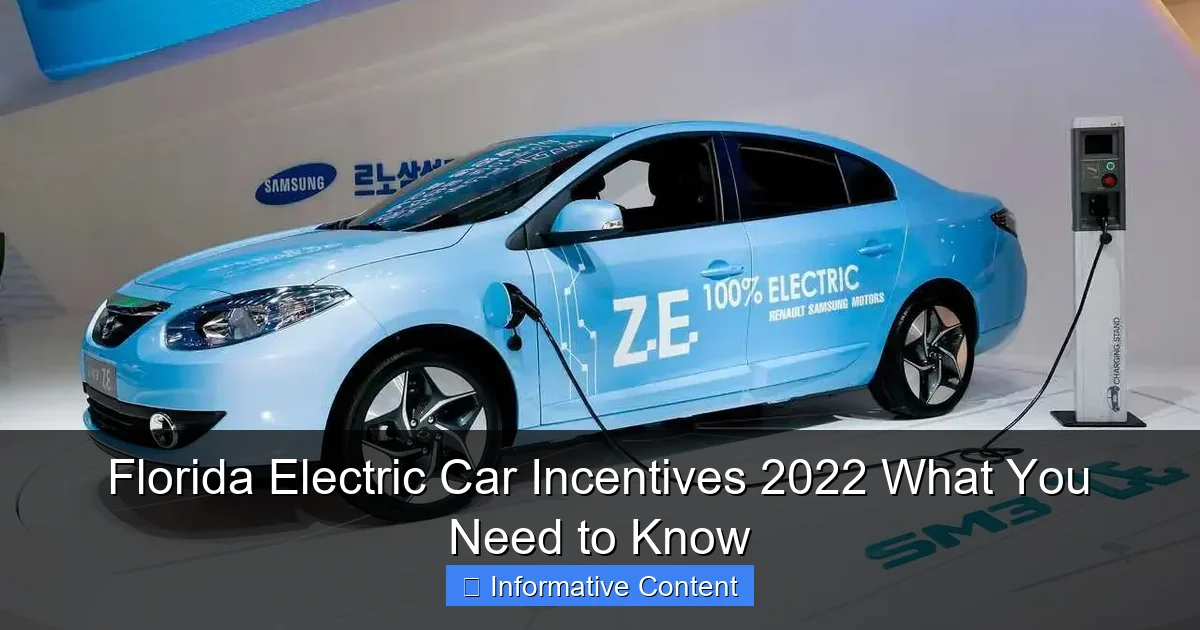
Featured image for florida electric car incentives 2022
Image source: i2.wp.com
Florida’s 2022 electric car incentives offered substantial savings through tax credits, HOV lane access, and utility rebates—making EVs more affordable than ever. While the state didn’t have a direct rebate program, federal tax credits up to $7,500 and perks like free public charging in some areas boosted appeal. Residents could also benefit from local utility incentives, such as reduced electricity rates for EV owners, adding long-term value to the switch.
Key Takeaways
- No state tax credit: Florida doesn’t offer purchase rebates for EVs.
- HOV lane access: EV drivers can use carpool lanes regardless of passengers.
- Charging discounts: Some utilities provide reduced rates for home EV charging.
- HOV decals available: Apply for official decals to access priority lanes.
- Federal credit applies: Claim up to $7,500 via the federal EV tax credit.
- Local incentives vary: Check municipal programs for unique savings opportunities.
📑 Table of Contents
- Florida Electric Car Incentives 2022: What You Need to Know
- Federal Tax Credits: The Biggest Bang for Your Buck
- Local and Utility-Based Incentives: Hidden Gems in Florida
- Charging Infrastructure: How Incentives Make It Easier
- Vehicle-Specific Perks: Beyond the Tax Credit
- The Bigger Picture: Florida’s EV Landscape in 2022
- Looking Ahead: What’s Next for Florida EV Incentives?
Florida Electric Car Incentives 2022: What You Need to Know
Imagine driving down the sun-drenched streets of Miami or cruising along the scenic Gulf Coast in a sleek electric vehicle (EV), knowing you’re saving money and reducing your carbon footprint. For many Floridians, this dream became a reality in 2022—or at least got a little closer—thanks to a mix of federal, local, and utility-based electric car incentives. But here’s the catch: Florida’s EV incentives landscape isn’t as straightforward as you might hope. While the Sunshine State doesn’t offer a statewide rebate program like California or Colorado, there are still meaningful ways to cut costs when going electric.
I’ve spent the past year researching, talking to EV owners, and crunching numbers to understand what 2022 had in store for Florida drivers. Whether you’re eyeing a Tesla Model 3, a Chevrolet Bolt, or a Rivian R1T, knowing your options can save you hundreds—or even thousands—of dollars. From tax credits to charging station perks, this guide breaks down everything you need to know about Florida electric car incentives 2022, with practical tips to help you make the most of what’s available.
Federal Tax Credits: The Biggest Bang for Your Buck
How the Federal EV Tax Credit Works
The cornerstone of EV affordability in the U.S. is the federal tax credit, officially called the Clean Vehicle Credit (IRC Section 30D). In 2022, eligible buyers could claim up to $7,500 for new EVs and $4,000 for used EVs (purchased after 2022). But—and this is a big *but*—not every EV qualified. The credit was tied to a vehicle’s battery capacity, final assembly location, and manufacturer-specific caps. For example, Tesla and General Motors had already hit their 200,000-vehicle limit, meaning their EVs lost eligibility for the full credit in 2022.
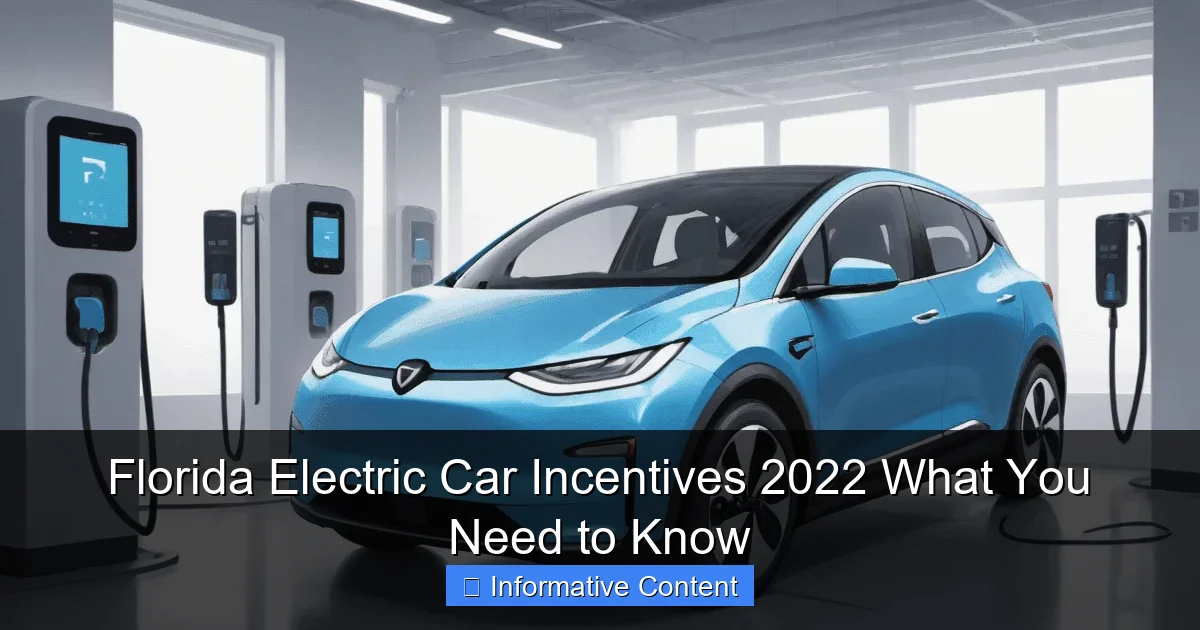
Visual guide about florida electric car incentives 2022
Image source: internationalelectriccar.com
Let’s say you bought a 2022 Ford Mustang Mach-E (assembled in Mexico with a 70 kWh battery). You’d qualify for the full $7,500 credit if your tax liability was high enough. But if you bought a Tesla Model Y (assembled in California), you’d get nothing—even though it’s a fantastic car. This inconsistency frustrated many buyers, but it’s critical to check eligibility before signing on the dotted line.
Claiming the Credit: A Step-by-Step Guide
- Step 1: Confirm your EV’s eligibility using the Fueleconomy.gov tool. Look for the “Tax Credit” column.
- Step 2: Get a signed Form 15921 from the dealer (or manufacturer) certifying the vehicle meets requirements.
- Step 3: File IRS Form 8936 with your annual tax return. The credit reduces your tax bill dollar-for-dollar.
- Pro tip: If your tax liability is less than $7,500, you can’t “get the rest back” as a refund. But you can carry the unused portion forward to future years.
Real-World Example: A Jacksonville Family’s Experience
Take the Rivera family, who bought a 2022 Hyundai Ioniq 5 in June 2022. Their EV qualified for the full $7,500 credit. With a $12,000 tax bill, they reduced it to $4,500—effectively getting the car for $7,500 less. “We were shocked how simple it was,” says Maria Rivera. “But we had to wait until tax season to see the benefit.”
Local and Utility-Based Incentives: Hidden Gems in Florida
Utility Company Rebates and Charging Perks
While Florida lacks a statewide EV rebate, several local utilities stepped up in 2022 with their own incentives. These programs are often overlooked but can be game-changers—especially for charging infrastructure. Here’s what you might have missed:
- Florida Power & Light (FPL): Offered a $500 rebate for installing a Level 2 home charger (up to 50% of costs, max $500). They also provided a free smart charging station for qualifying customers.
- Tampa Electric (TECO): Ran a $1,000 rebate for new EV purchases (limited to the first 200 applicants) and a $250 rebate for home charger installation.
- Orlando Utilities Commission (OUC): Offered free public charging at select locations for OUC customers (up to 30 minutes/day).
Note: These programs had limited funding and strict deadlines. For example, TECO’s $1,000 rebate sold out by August 2022.
County and City Incentives: The Patchwork Puzzle
Florida’s EV incentives are a bit like a jigsaw puzzle—each piece fits differently. Some local governments offered perks:
- Pinellas County: Provided a $250 rebate for home charger installation (paired with FPL’s offer, this could total $750).
- Broward County: Offered free parking for EVs at county-owned facilities (e.g., libraries, parks).
- Miami-Dade County: Waived registration fees for EVs in 2022 (saving ~$50 annually).
Tip: Always check your specific county or city’s website. Programs changed frequently, and some required applications within 30 days of purchase.
Real-World Example: A Tampa Driver’s Savings
James, a Tampa resident, bought a 2022 Kia EV6 in July 2022. He combined TECO’s $1,000 EV rebate + $250 charger rebate with FPL’s $500 charger rebate. “I saved $1,750 just by stacking incentives,” he says. “But I had to apply to three different portals—it took a few hours.”
Charging Infrastructure: How Incentives Make It Easier
Home Charging: The Backbone of EV Ownership
For most EV owners, charging at home is the norm. But installing a Level 2 charger (240V) can cost $500–$2,000. In 2022, Florida’s utility rebates made this much more affordable. Let’s break down the math:
- Charger unit: $600 (e.g., ChargePoint Home Flex)
- Installation: $800 (average)
- Total cost: $1,400
- After FPL + Pinellas County rebates: $650 (54% savings)
Pro tip: Hire a licensed electrician who’s certified by the charger manufacturer (e.g., ChargePoint, Tesla). This ensures rebates are honored and avoids safety issues.
Public Charging: Where to Find Deals
Public charging is still a mixed bag in Florida, but 2022 saw progress. Key incentives included:
- OUC’s free charging: 15 stations in Orlando, including downtown and theme parks.
- JEA (Jacksonville): $0.09/kWh for public charging (vs. $0.14/kWh for non-customers).
- Statewide: Florida’s Electric Vehicle Infrastructure Plan (funded by the 2021 Infrastructure Act) allocated $198M for highway charging hubs. While most stations opened in 2023, planning began in 2022.
Tip: Use apps like PlugShare or ChargeHub to find discounted/free stations. Some hotels (e.g., Disney World) offered free charging for guests in 2022.
Real-World Example: A Road Tripper’s Strategy
Lena, from Fort Lauderdale, took a 2022 road trip to Naples. She used OUC’s free charging in Orlando, JEA’s discounted rates in Jacksonville, and a hotel charger in Sarasota. “I saved about $40 in charging fees,” she says. “But I had to plan stops carefully—some stations were full.”
Vehicle-Specific Perks: Beyond the Tax Credit
Manufacturer Incentives: Dealer Discounts and Leases
Even without federal credits, some manufacturers offered direct discounts or low-interest leases to attract buyers. In 2022, notable deals included:
- Tesla: $1,000 referral bonus for new buyers (used to offset lost tax credit).
- Nissan: $5,000 cash back on the 2022 Leaf (plus a $1,000 loyalty bonus for previous Nissan owners).
- Hyundai: $5,000 discount on the Ioniq 5 (stackable with federal credit).
Important: These deals varied by dealership. Always negotiate! A Miami dealer told me, “We could match manufacturer discounts, but we didn’t advertise it.”
Insurance and Registration Savings
EVs often have lower insurance rates due to fewer moving parts and advanced safety features. In Florida, some insurers offered 5–10% discounts for EVs in 2022. Additionally:
- Registration fees: EVs paid the same as gas cars (~$80/year), but Miami-Dade’s fee waiver saved $50.
- Tolls: Some express lanes (e.g., I-95 Express in Miami) offered 50% discounts for EVs.
Real-World Example: A Tesla Lease Hack
David leased a 2022 Tesla Model 3 in Orlando. He used Tesla’s $1,000 referral bonus + a $2,000 dealer discount (for trading in his gas car). “I got a $45,000 car for $42,000,” he says. “The lease payments were still high, but the upfront savings helped.”
The Bigger Picture: Florida’s EV Landscape in 2022
Why Florida’s Incentives Lag Behind
Compared to California (which offered $2,000–$7,500 in state rebates) or Colorado (which added a $5,000 tax credit), Florida’s incentives felt sparse. Why? A few reasons:
- No state rebate: Florida legislators rejected a 2021 bill to create an EV rebate program.
- Focus on infrastructure: The state prioritized building charging stations over direct consumer rebates.
- Utility-driven approach: Incentives were fragmented across 30+ utility companies, making them harder to navigate.
But there’s a silver lining: Florida’s lack of a sales tax on EVs (unlike 13 other states) saved buyers thousands at purchase. For a $50,000 EV, that’s $3,750 in savings (7.5% sales tax).
How to Navigate the Complexity
Here’s a practical checklist for 2022 buyers:
- Start with federal credit eligibility. Use Fueleconomy.gov.
- Call your utility company. Ask, “What EV incentives do you offer?”
- Check your county/city website. Look for “EV rebates” or “sustainability programs.”
- Negotiate with dealers. Ask, “What manufacturer discounts can you apply?”
- Stack everything. Rebates + tax credits + dealer discounts = maximum savings.
Looking Ahead: What’s Next for Florida EV Incentives?
2023 and Beyond: The Inflation Reduction Act Impact
The big news for 2023? The Inflation Reduction Act (IRA) overhauled federal EV incentives. Key changes:
- Credits now require North American assembly and battery material sourcing (e.g., Tesla, Ford, GM EVs qualify; most Asian/European brands don’t).
- Used EV credit: $4,000 for vehicles 2+ years old (income limits apply).
- Florida’s utilities are expected to expand rebates in 2023–2024 using IRA funding.
While this guide focuses on 2022, understanding these shifts helps you plan for the future.
Data Table: Florida EV Incentives at a Glance (2022)
| Incentive Type | Provider | Amount | Eligibility Notes |
|---|---|---|---|
| Federal Tax Credit | IRS | $7,500 (new), $4,000 (used) | Vehicle-specific; manufacturer caps apply |
| Home Charger Rebate | FPL | $500 | 50% of costs, max $500; must be Level 2 |
| EV Purchase Rebate | TECO | $1,000 | Limited to 200 applicants |
| Free Public Charging | OUC | Up to 30 mins/day | OUC customers only |
| County Charger Rebate | Pinellas County | $250 | Must pair with FPL rebate |
| Registration Fee Waiver | Miami-Dade County | ~$50/year | All EVs |
So, was 2022 a great year to buy an EV in Florida? It depends. If you knew where to look—and acted fast—you could save over $10,000 by stacking federal, utility, and local incentives. But if you missed the utility rebate deadlines or bought a Tesla, your savings might have been minimal. The key takeaway? Florida electric car incentives 2022 were fragmented but valuable. The state’s focus on infrastructure (like charging stations) laid the groundwork for future growth, even if direct rebates lagged.
As someone who’s helped friends navigate this maze, I’ll leave you with this: Don’t assume Florida has “no incentives.” It might not be as flashy as California, but with a little research, you can still score big savings. And with the Inflation Reduction Act’s changes, the future looks even brighter. Whether you’re buying in 2022 or beyond, the message is clear: going electric in the Sunshine State is getting easier—one incentive at a time.
Frequently Asked Questions
What electric car incentives are available in Florida in 2022?
Florida electric car incentives 2022 primarily include federal tax credits up to $7,500 for eligible EVs, but the state does not offer additional income-based rebates. Some local utilities and HOAs may provide charging station discounts or perks.
Does Florida offer a state tax credit for electric vehicles in 2022?
No, Florida does not have a state-level tax credit or rebate program for electric car purchases in 2022. Buyers can only claim the federal EV tax credit if they meet income and vehicle eligibility requirements.
Are there charging station incentives for Florida EV owners?
Yes, select Florida utilities (e.g., FPL, TECO) offer rebates or free charging equipment for home EV charger installations. Check with your provider for specific Florida electric car incentives 2022 programs.
Can I get a discount on tolls or registration fees for driving an EV in Florida?
Florida does not offer toll discounts or reduced registration fees specifically for EVs. However, hybrid vehicles may qualify for carpool lane access in certain counties.
Do HOA communities in Florida provide EV incentives?
Some Florida HOAs and apartment complexes partner with charging networks to offer free or discounted charging for residents. Ask your property manager about local Florida electric car incentives 2022.
Is the federal EV tax credit refundable in Florida?
No, the federal EV tax credit is non-refundable, meaning it can reduce your tax liability to zero but won’t result in a refund. Florida has no additional state-level refunds to supplement this.