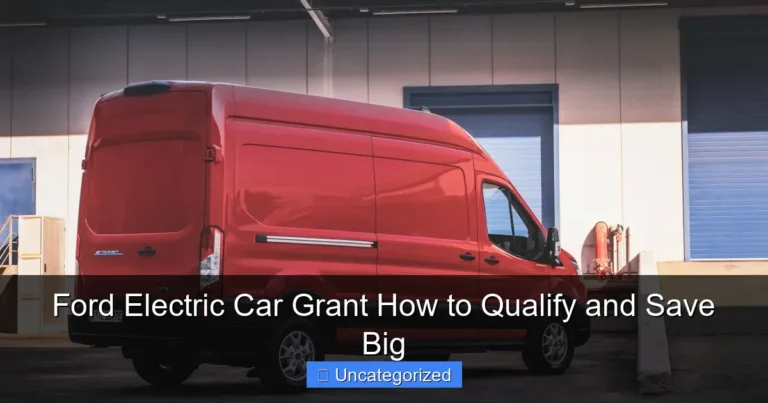
Ford All Electric Car Plan Revealed What You Need to Know

Featured image for ford all electric car plan
Image source: tickernews.co
Ford has unveiled an ambitious all-electric car plan, aiming to go fully electric in Europe by 2030 and invest $50 billion globally in EVs through 2026. This bold strategy includes launching nine new electric models, from the F-150 Lightning to the E-Transit van, to dominate the EV market. With cutting-edge tech and aggressive production targets, Ford is charging hard toward a sustainable, zero-emissions future.
Key Takeaways
- Ford plans 100% electric lineup in Europe by 2030, phasing out ICE vehicles completely.
- Invest $50B through 2026 to scale EV production, including F-150 Lightning and new models.
- New battery plants launching in Kentucky and Tennessee to boost U.S. supply chain.
- Mustang Mach-E and E-Transit lead current offerings, with 6 EVs by 2024.
- BlueOval Charge Network expands access to 10,000+ fast chargers across North America.
- Fleet electrification focus targets commercial customers with tailored EV solutions.
📑 Table of Contents
- The Electric Revolution Is Here: Ford’s All-Electric Car Plan Unveiled
- Ford’s Electrification Timeline: From Concept to Full Production
- Investment and Infrastructure: Powering the Future
- New Electric Models: What’s Coming and When
- Technology and Innovation: The Brains Behind the Brawn
- Challenges and How Ford Is Addressing Them
- Data Table: Ford’s Key Electric Models and Specifications
- Conclusion: The Road Ahead for Ford’s Electric Future
The Electric Revolution Is Here: Ford’s All-Electric Car Plan Unveiled
The automotive world is undergoing its most significant transformation since the invention of the internal combustion engine. At the forefront of this revolution stands Ford Motor Company, an American icon that’s betting big on an all-electric future. In a series of bold announcements, Ford has revealed its comprehensive plan to electrify its entire vehicle lineup, signaling a definitive departure from gasoline-powered vehicles. This isn’t just about adding a few electric models to the lineup—it’s a full-scale reimagining of what Ford stands for in the 21st century.
From the F-150 Lightning to the Mustang Mach-E, Ford’s electric vehicle (EV) strategy is ambitious, well-funded, and deeply integrated into its global operations. With over $50 billion invested in electrification through 2026, Ford is not merely dipping its toes into the EV market—it’s diving in headfirst. This Ford all electric car plan is more than a product roadmap; it’s a cultural and industrial shift aimed at sustainability, innovation, and long-term competitiveness. Whether you’re a current Ford owner, an EV enthusiast, or someone considering your first electric vehicle, understanding Ford’s electrification strategy is essential to navigating the future of personal transportation.
Ford’s Electrification Timeline: From Concept to Full Production
Key Milestones in Ford’s EV Rollout
Ford’s journey toward an all-electric future began in earnest around 2020, but the real momentum started in 2021 with the launch of the Mustang Mach-E—a bold move that put a beloved American performance nameplate on an electric SUV. Since then, the company has accelerated its timeline dramatically. By 2025, Ford aims to produce 2 million EVs globally per year, a staggering number that positions it as a top-tier competitor to Tesla and other EV leaders. The company has set a target of 50% all-electric vehicle sales by 2030, with plans to phase out internal combustion engine (ICE) models in Europe by 2030 and globally by 2035.

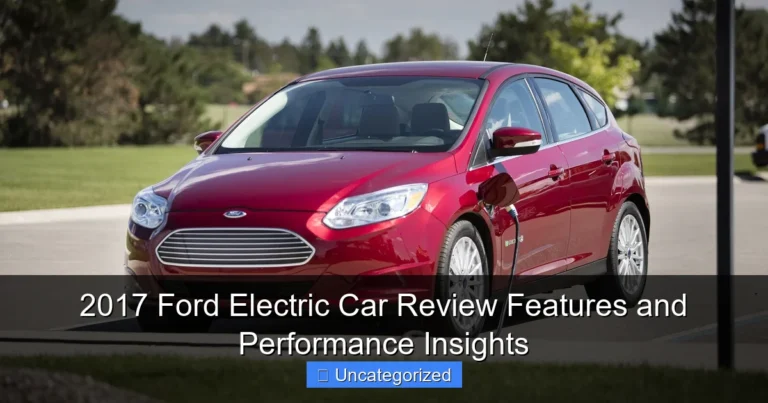
Visual guide about ford all electric car plan
Image source: cdn.hiconsumption.com
Here are the key milestones in Ford’s electrification timeline:
- 2021: Launch of the Mustang Mach-E and E-Transit van
- 2022: Introduction of the F-150 Lightning, the first electric version of America’s best-selling vehicle
- 2023: Expansion of the F-150 Lightning lineup with extended-range battery options and fleet-specific trims
- 2024: Launch of the next-generation “Project T3” electric truck (codenamed “Truck of Tomorrow”)
- 2025: Full production of Ford’s new electric SUV, the Explorer Electric, and the Expedition Electric
- 2026: Introduction of Ford’s first electric compact car, based on the new Ford EV Platform
Regional Rollout Strategy
Ford’s all electric car plan is being implemented regionally, with different timelines and priorities. In North America, the focus is on trucks and SUVs—segments where Ford dominates. The F-150 Lightning has been a major success, with over 150,000 reservations within weeks of launch. In Europe, Ford is moving faster, with a commitment to sell only electric passenger vehicles by 2030. The company is investing heavily in its Cologne, Germany plant, which will become a dedicated EV manufacturing hub.
In China, Ford is partnering with local suppliers and leveraging joint ventures to accelerate EV development. The Mustang Mach-E is already available in China, and Ford plans to launch at least five new electric models there by 2025. Meanwhile, in South America and Africa, Ford is taking a more measured approach, focusing on commercial EVs like the E-Transit and hybrid models as transitional technologies.
Real-World Example: The F-150 Lightning Success Story
The F-150 Lightning is a prime example of Ford’s strategic brilliance. By electrifying the best-selling vehicle in America, Ford has tapped into a massive customer base that might otherwise have been hesitant to switch to electric. The Lightning retains the rugged, utilitarian design of the F-150 while offering instant torque, lower operating costs, and a “frunk” (front trunk) with 14.1 cubic feet of space. It also features Pro Power Onboard, a built-in power generator that can run tools, appliances, or even a home during outages.
Tip: If you’re considering an electric truck, the F-150 Lightning offers the best of both worlds—familiarity and innovation. Its starting price of around $55,000 (before incentives) makes it competitive with high-end ICE trucks, and federal tax credits can reduce the effective price by up to $7,500.
Investment and Infrastructure: Powering the Future
Massive Capital Commitment
Ford’s all electric car plan is backed by one of the largest corporate investments in automotive history. The company has committed $50 billion to electrification and autonomous vehicle development through 2026, with a significant portion dedicated to EV manufacturing, battery R&D, and software development. This includes $30 billion specifically for EVs and $10 billion for battery production.
Key investments include:
- BlueOval SK: A joint venture with SK Innovation to build three battery plants in the U.S., creating over 10,000 jobs and producing enough battery cells for 1.2 million EVs annually
- BlueOval City: A $5.6 billion mega-campus in Tennessee, set to open in 2025, that will produce the next-generation electric F-Series trucks and batteries
- BlueOval Battery Park Michigan: A $3.5 billion plant in Marshall, Michigan, focused on lithium iron phosphate (LFP) batteries, which are cheaper and more sustainable than traditional nickel-based cells
Charging Infrastructure and Partnerships
One of the biggest hurdles to EV adoption is charging infrastructure. Ford is addressing this head-on with a multi-pronged strategy:
- FordPass Charging Network: Access to over 100,000 charging stations across North America, including partnerships with Electrify America, ChargePoint, and EVgo
- Ford Connected Home Charging: Free installation of a 240V Level 2 charger for F-150 Lightning and Mach-E buyers (up to $1,310 value)
- Onboard Navigation with Charging Stops: Real-time route planning that includes charging stations, estimated wait times, and battery usage
Ford has also joined the Charge Ahead Partnership, a coalition of automakers, utilities, and charging providers working to standardize and expand public charging infrastructure.
Tip: Maximize Your Charging Efficiency
To get the most out of your Ford EV, consider these practical tips:
- Use FordPass app to monitor battery level, locate nearby chargers, and schedule charging during off-peak hours
- Opt for LFP batteries (available on select models) for longer battery life and reduced degradation
- Install a smart home charger that integrates with solar panels or time-of-use electricity rates
- Take advantage of free charging promotions—some Ford EVs come with 250 kWh of free charging at Electrify America stations
New Electric Models: What’s Coming and When
The Next-Generation Electric Truck: Project T3
Ford’s most anticipated upcoming EV is the Project T3 (Truck of Tomorrow), a next-generation electric pickup set to launch in 2024. Built on Ford’s new Skateboard EV Platform, T3 will feature:
- Up to 500 miles of range on a single charge
- Advanced autonomous driving capabilities (Level 3+)
- Bidirectional charging (vehicle-to-home and vehicle-to-grid)
- Modular interior with swappable seating and cargo configurations
This truck is designed to be not just a vehicle, but a mobile power station and productivity hub—ideal for contractors, outdoor enthusiasts, and remote workers.
Electric SUVs: Explorer and Expedition Go Electric
By 2025, Ford will launch fully electric versions of its popular SUVs:
- Explorer Electric: A midsize SUV with three rows of seating, expected range of 300–350 miles, and advanced driver-assist features
- Expedition Electric: A full-size SUV with towing capacity up to 10,000 lbs, ideal for large families and adventure seekers
Both models will be built at Ford’s Chicago Assembly Plant, which is being retooled for EV production.
Compact and Commercial EVs
Ford isn’t just focusing on large vehicles. By 2026, it plans to launch:
- Ford Electric Compact Car: A small, affordable EV (~$30,000) targeting urban commuters and first-time EV buyers
- Next-Gen E-Transit: An upgraded version of the electric van with longer range (up to 200 miles) and enhanced telematics for fleet management
- Ford Pro Electric Chassis Cab: A modular platform for delivery vans, shuttle buses, and service vehicles
Tip: If you’re a small business owner, consider the E-Transit for last-mile delivery. Its low operating cost (about $0.04 per mile vs. $0.15 for gas vans) can lead to significant savings over time.
Technology and Innovation: The Brains Behind the Brawn
Next-Gen Battery Technology
Battery innovation is central to Ford’s all electric car plan. The company is investing in multiple battery chemistries to meet diverse customer needs:
- Nickel-Manganese-Cobalt (NMC): High energy density, ideal for long-range vehicles like the Mach-E and Lightning
- Lithium Iron Phosphate (LFP): Lower cost, longer lifespan, and safer—perfect for fleet vehicles and base trims
- Solid-State Batteries (R&D phase): Ford is partnering with SK Innovation and Solid Power to develop solid-state batteries with 2x the energy density and 50% faster charging
Ford aims to reduce battery pack costs by 40% by 2025 through economies of scale and new manufacturing techniques.
Software and Connectivity
Ford’s EVs are more than just vehicles—they’re rolling computers. The SYNC 4A infotainment system features:
- 15.5-inch touchscreen with voice control
- Over-the-air (OTA) software updates
- Integration with Amazon Alexa and Google Assistant
- Ford BlueCruise hands-free driving (available on select models)
BlueCruise, Ford’s answer to Tesla Autopilot, allows hands-free driving on over 130,000 miles of pre-mapped highways in North America.
Real-World Example: BlueCruise in Action
During a 200-mile highway trip, a Ford Mach-E owner enabled BlueCruise on I-75. The system maintained lane position, adjusted speed for curves, and even handled construction zones. The driver reported reduced fatigue and a smoother ride. While not fully autonomous, BlueCruise represents a major leap in driver assistance technology.
Challenges and How Ford Is Addressing Them
Battery Supply Chain and Raw Materials
One of the biggest challenges in scaling EV production is securing raw materials like lithium, cobalt, and nickel. Ford is tackling this through:
- Long-term supplier agreements: Partnerships with lithium producers in Australia and Canada
- Battery recycling: Collaboration with Redwood Materials to recycle 95% of battery materials
- Diversified sourcing: Reducing reliance on China for critical minerals
Consumer Adoption Barriers
Despite growing interest, many consumers still have concerns about EVs. Ford is addressing these through:
- Education campaigns: Explaining total cost of ownership, charging options, and environmental benefits
- Flexible ownership models: Leasing options, battery subscriptions, and trade-in programs
- Test drive incentives: Free weekend loans of EVs to potential buyers
Competition and Market Positioning
Ford faces fierce competition from Tesla, GM, Rivian, and international players like BYD. To differentiate itself, Ford is emphasizing:
- Heritage and trust: Leveraging its 120-year legacy in truck and SUV manufacturing
- Work-focused features: Tools like Pro Power Onboard and fleet management software
- Affordability: Offering EVs at price points competitive with ICE vehicles
Tip: If you’re comparing EVs, look beyond range. Consider total cost of ownership, warranty coverage, and available incentives. Ford’s 8-year/100,000-mile battery warranty is among the best in the industry.
Data Table: Ford’s Key Electric Models and Specifications
| Model | Launch Year | Estimated Range (miles) | Starting Price | Key Features |
|---|---|---|---|---|
| Mustang Mach-E | 2021 | 224–314 | $42,995 | SYNC 4A, BlueCruise, GT performance package |
| F-150 Lightning | 2022 | 240–320 | $55,974 | Pro Power Onboard, frunk, 10,000-lb towing |
| E-Transit | 2022 | 126 | $47,185 | Fleet telematics, cargo van configurations |
| Explorer Electric | 2025 | 300–350 | $50,000 (est.) | Three-row seating, OTA updates, LFP battery option |
| Project T3 | 2024 | Up to 500 | $60,000 (est.) | Bidirectional charging, autonomous driving, modular design |
Conclusion: The Road Ahead for Ford’s Electric Future
Ford’s all electric car plan is one of the most ambitious and well-executed strategies in the automotive industry. By combining massive investments, cutting-edge technology, and a deep understanding of customer needs, Ford is positioning itself as a leader in the EV era. From the rugged F-150 Lightning to the futuristic Project T3, Ford’s electric lineup is diverse, innovative, and accessible.
For consumers, this means more choices, better value, and a smoother transition to electric mobility. For the planet, it means reduced emissions and a step toward sustainable transportation. While challenges remain—supply chain constraints, charging infrastructure gaps, and consumer skepticism—Ford’s proactive approach suggests it’s ready to meet them head-on.
As we move toward a zero-emission future, Ford’s electrification journey serves as a blueprint for legacy automakers. It proves that tradition and innovation can coexist, and that the future of driving is not just electric—it’s exciting, empowering, and inevitable. Whether you’re a die-hard Ford fan or a first-time EV buyer, the road ahead is bright, charged, and waiting for you.
Frequently Asked Questions
What is the Ford all electric car plan?
The Ford all electric car plan outlines the automaker’s strategy to transition to a fully electric lineup by 2030, focusing on sustainable innovation and new EV models like the F-150 Lightning and Mustang Mach-E. This initiative includes investments in battery technology, charging infrastructure, and manufacturing upgrades.
When will Ford stop making gas-powered cars?
Ford plans to phase out most gas-powered vehicles by 2030, with some markets like Europe potentially going fully electric even sooner. The Ford all electric car plan emphasizes a gradual shift, ensuring customers have time to adapt while expanding EV options.
How many electric models will Ford release under this plan?
Ford aims to launch at least 20 all-electric models globally by 2025, with more to follow as part of its Ford all electric car plan. These will span segments from trucks and SUVs to commercial vans, catering to diverse customer needs.
Does Ford’s plan include affordable electric vehicles?
Yes, Ford is developing more affordable EVs, including a $25,000 compact SUV expected by 2026, to make electric mobility accessible to a broader audience. This aligns with the Ford all electric car plan’s goal of democratizing EV ownership.
How is Ford improving charging infrastructure for its EVs?
Ford is expanding access to over 10,000 public charging stations in North America and Europe, including partnerships with networks like Electrify America. The Ford all electric car plan also includes home charging solutions and fast-charging tech for convenience.
Will Ford’s electric vehicles be made in the U.S.?
Many of Ford’s EVs, including the F-150 Lightning and E-Transit, are built in U.S. factories like the Rouge Electric Vehicle Center. The company’s plan prioritizes domestic production, with new battery plants in Tennessee and Kentucky to support future models.