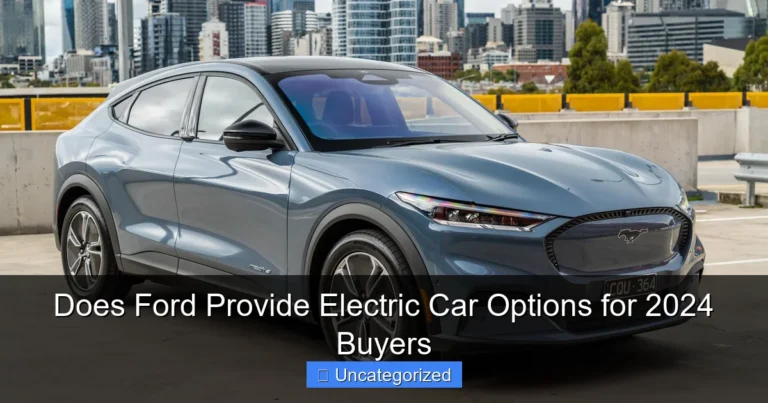
Ford All Electric Car Range How Far Can You Go
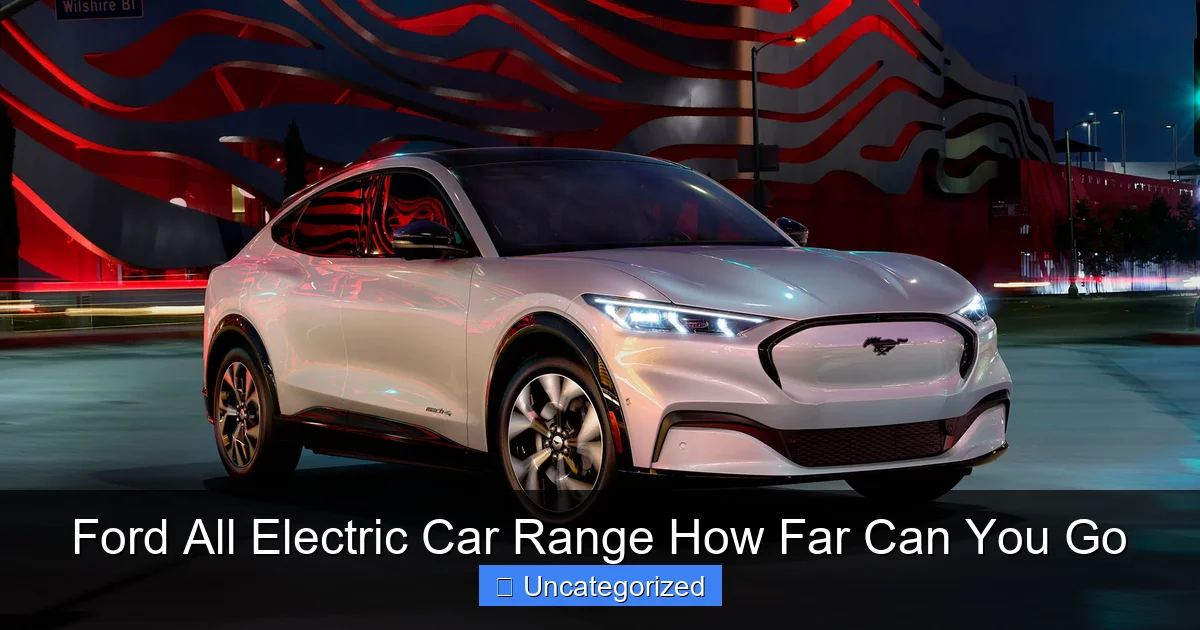
Featured image for ford all electric car range
Image source: d2cdo4blch85n8.cloudfront.net
Ford’s all-electric car range delivers impressive real-world performance, with models like the Mustang Mach-E and F-150 Lightning offering up to 320 miles on a single charge. Whether you’re commuting or road-tripping, Ford combines cutting-edge battery tech and smart energy management to maximize range without compromising power or comfort.
Key Takeaways
- Ford’s EVs offer 200-300+ miles per charge: Choose models like Mustang Mach-E or F-150 Lightning for long-range needs.
- Real-world range varies: Driving habits, terrain, and weather significantly impact actual mileage.
- Fast charging saves time: DC fast charging adds 50-100 miles in ~15-20 minutes.
- Home charging is convenient: Level 2 chargers fully recharge overnight for daily use.
- Compare EPA estimates: Use official ratings to compare models and plan trips effectively.
📑 Table of Contents
- Ford All Electric Car Range: How Far Can You Go?
- Ford’s All-Electric Lineup: Models and Their Official Range
- Factors That Impact Ford EV Range: What You Need to Know
- Charging Infrastructure and Strategies for Maximizing Range
- Real-World Range: What Owners Are Experiencing
- Comparing Ford’s Range to Competitors: How Does It Stack Up?
- Conclusion: Is Ford’s All-Electric Car Range Right for You?
Ford All Electric Car Range: How Far Can You Go?
The automotive world is undergoing a seismic shift, and Ford is at the forefront of the electric revolution. With gas prices fluctuating and climate concerns mounting, drivers are increasingly turning to electric vehicles (EVs) for their daily commutes, road trips, and everything in between. Ford, a brand historically synonymous with American muscle and innovation, has embraced the future with a robust lineup of all-electric vehicles. From the iconic Mustang Mach-E to the groundbreaking F-150 Lightning, Ford is redefining what it means to drive electric.
But one question looms large for potential EV buyers: How far can you really go? Range anxiety remains a top concern, and rightfully so. Unlike refueling a gas tank in minutes, charging an EV requires planning, patience, and understanding. Ford’s all-electric car range varies significantly across models, battery options, and driving conditions. This comprehensive guide dives deep into Ford’s EV lineup, exploring their real-world range capabilities, factors that influence efficiency, and practical tips to maximize your miles. Whether you’re considering a sleek SUV, a practical sedan, or a rugged electric truck, we’ll help you determine if Ford’s electric offerings can meet your lifestyle and driving needs.
Ford’s All-Electric Lineup: Models and Their Official Range
Mustang Mach-E: The Electric Pony with a Kick
The Mustang Mach-E is Ford’s first all-electric SUV, blending the Mustang’s sporty heritage with modern EV technology. It’s available in several trims, each offering different battery sizes and drivetrain configurations, which directly impact its range.
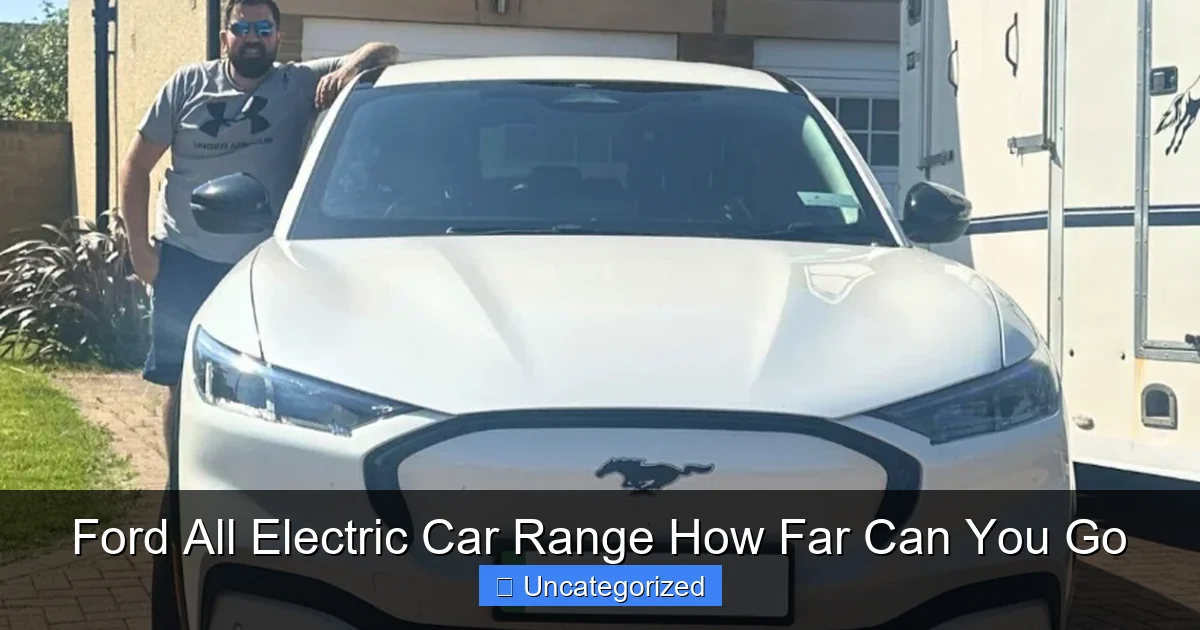
Visual guide about ford all electric car range
Image source: images.squarespace-cdn.com
- Select RWD (Standard Range): 247 miles (EPA-estimated) – ideal for city driving and short commutes.
- Select AWD (Standard Range): 224 miles – slightly reduced due to the added weight of all-wheel drive.
- Premium RWD (Extended Range): 314 miles – the sweet spot for most buyers seeking a balance of range and cost.
- Premium AWD (Extended Range): 312 miles – nearly identical to RWD thanks to efficiency improvements.
- GT (Extended Range, AWD): 270 miles – prioritizes performance (0-60 mph in 3.5 seconds) over maximum range.
- GT Performance Edition: 260 miles – even more focused on track-ready acceleration.
Practical Example: A driver with a 30-mile round-trip commute could go over 10 days without charging on the Premium RWD model, assuming no other trips. For a weekend getaway 150 miles away, the Mach-E Premium RWD would require just one charging stop (or none, if charging at the destination).
F-150 Lightning: Electrifying America’s Best-Selling Truck
The F-150 Lightning is a game-changer, proving that electric trucks can be both powerful and practical. Its range is heavily influenced by battery choice and payload.
- Pro (Standard Range): 240 miles – designed for fleet buyers and light-duty work.
- XLT and Lariat (Standard Range): 240 miles.
- XLT and Lariat (Extended Range): 320 miles – the most popular choice for personal and heavy-duty use.
- Platinum (Extended Range): 300 miles – slightly lower due to added luxury weight.
Key Insight: The F-150 Lightning’s range can drop significantly when towing. Ford estimates a 50% reduction when towing a 10,000-lb trailer, bringing the Extended Range model down to around 160 miles. For a 200-mile trip with heavy cargo, plan for a charging stop.
E-Transit: The Electric Workhorse for Businesses
Ford’s E-Transit van targets commercial fleets, offering a reliable electric solution for deliveries and service vehicles. Its range is optimized for urban routes.
- All trims (Standard Range): 126 miles – sufficient for most city-based businesses with predictable daily routes.
Tip for Businesses: The E-Transit’s low roofline and compact battery pack ensure it can navigate tight city streets while still offering a competitive range for its class. A delivery driver covering 50 miles per day could go over two days without charging.
Upcoming Models: The Future of Ford’s EV Range
Ford is expanding its EV lineup with the Explorer Electric (2025) and Capri Electric (Europe-focused, but may influence U.S. models). While official EPA ratings aren’t yet available, Ford targets:
- Explorer Electric: 350+ miles (estimated).
- Capri Electric: 300+ miles (estimated).
These models will leverage Ford’s next-generation battery technology, potentially offering faster charging and improved efficiency.
Factors That Impact Ford EV Range: What You Need to Know
1. Driving Habits and Conditions
Your driving style has a huge impact on real-world range. Aggressive acceleration, high speeds, and frequent braking can drain batteries faster than smooth, steady driving.
- Speed: Driving at 75 mph vs. 60 mph can reduce range by 20-30% due to increased aerodynamic drag.
- Acceleration: Rapid starts (especially in the Mach-E GT) consume more energy. Use “One-Pedal Driving” mode for smoother, more efficient stops.
- Traffic: Stop-and-go traffic is less efficient than highway driving at a constant speed.
Tip: Use Ford’s built-in “Efficiency Coach” (in the Mach-E and F-150 Lightning) to track your driving efficiency and get real-time tips.
2. Weather and Temperature
Extreme temperatures are the nemesis of EV batteries. Cold weather (below 32°F/0°C) reduces range by 30-40% due to:
- Reduced battery efficiency.
- Increased energy use for cabin heating.
- Thickened lubricants in drivetrains.
Hot weather (>90°F/32°C) can also reduce range slightly (10-15%) due to battery cooling systems working harder.
Winter Survival Tip: Pre-condition your Ford EV while it’s still plugged in. This heats the battery and cabin using grid power, preserving battery charge for driving.
3. Terrain and Elevation
Hilly or mountainous terrain requires more energy to climb and reduces the effectiveness of regenerative braking on descents.
- Uphill: A 1,000-foot elevation gain can cost 10-15 miles of range.
- Downhill: Regenerative braking can recover up to 20% of the energy used going up, but not all of it.
Example: A Mach-E traveling from Denver (5,280 ft) to the Rocky Mountains (8,000 ft) might lose 20-30 miles of range on the ascent but could recover 5-10 miles on the descent.
4. Tires, Cargo, and Aerodynamics
- Tires: Low rolling resistance tires (like those on the Mach-E) improve range. Wider or all-terrain tires reduce it.
- Cargo: Every 100 lbs of added weight reduces range by 1-2%. The F-150 Lightning’s range drops 15-20 miles when carrying 1,500 lbs.
- Roof Racks/Accessories: Add wind resistance, cutting range by 5-10% at highway speeds.
Pro Tip: Remove roof racks and cargo carriers when not in use. For the F-150 Lightning, use the “Frunk” (front trunk) for lightweight items to minimize drag.
Charging Infrastructure and Strategies for Maximizing Range
Ford’s Charging Network: BlueOval™ Charge Network
Ford is investing heavily in charging infrastructure through its BlueOval™ Charge Network, which gives Ford EV owners access to:
- Over 10,000 charging stations across North America (including Tesla Superchargers via a NACS adapter).
- 150 kW DC fast chargers at select stations, enabling 10-80% charges in as little as 30-40 minutes.
- FordPass App integration for locating chargers, checking availability, and initiating payments.
Example: A Mach-E driver on a 400-mile road trip can use the FordPass app to find a 150 kW fast charger halfway, adding 150-200 miles of range in 30 minutes.
Home Charging: Level 1 vs. Level 2
- Level 1 (120V): Adds 3-5 miles of range per hour – suitable for overnight charging if you drive <50 miles daily.
- Level 2 (240V): Adds 25-30 miles of range per hour – recommended for most Ford EVs. A full charge on a Mach-E takes 8-10 hours.
Tip: Install a Level 2 charger at home (cost: $500-$2,000 after incentives). Many states offer rebates for charger installation.
Public Charging: Planning for Road Trips
For long-distance travel, use apps like A Better Routeplanner (ABRP) or PlugShare to:
- Map charging stops based on your Ford EV’s current range.
- Filter for high-speed chargers (100+ kW) to minimize downtime.
- Check charger reliability and user reviews.
Road Trip Strategy: Charge to 80% (not 100%) for faster charging times. Most fast chargers slow down after 80% to protect the battery.
Battery Health and Longevity
Ford EVs use advanced battery management systems to preserve battery life. To maximize long-term range:
- Keep the battery between 20-80% for daily use.
- Avoid frequent DC fast charging (use it only for road trips).
- Use Ford’s “Charge Limit” feature to set a maximum charge level (e.g., 80% for daily charging).
Data Point: Ford guarantees the Mach-E’s battery will retain at least 70% capacity after 8 years/100,000 miles.
Real-World Range: What Owners Are Experiencing
Mustang Mach-E Owner Experiences
Real-world range varies, but owners report:
- Premium RWD (Extended Range): 280-300 miles in summer, 180-220 miles in winter.
- GT Performance Edition: 230-250 miles in mixed driving.
Owner Tip: “I use the Mach-E’s ‘Wh/mi’ display to monitor efficiency. Driving smoothly at 65 mph on the highway gets me 3.8 mi/kWh – close to EPA estimates.” – John, California
F-150 Lightning Owner Experiences
- Extended Range (no towing): 290-310 miles.
- Towing a 7,000-lb trailer: 180-200 miles.
- Winter driving (20°F): 190-210 miles (Extended Range).
Owner Tip: “The F-150 Lightning’s ‘Pro Power Onboard’ (9.6 kW generator) is a lifesaver for camping. But using it reduces range by 20-30 miles per day.” – Sarah, Colorado
E-Transit Owner Experiences
- City delivery routes (50-60 miles): 110-120 miles range.
- Heavy urban traffic: 90-100 miles range.
Owner Tip: “We charge our E-Transits overnight and use them for two shifts. The 126-mile range is perfect for our downtown deliveries.” – Mike, Fleet Manager, NYC
Comparing Ford’s Range to Competitors: How Does It Stack Up?
Ford vs. Tesla
| Model | Ford Range (EPA) | Tesla Range (EPA) | Notes |
|---|---|---|---|
| Mustang Mach-E Premium RWD | 314 miles | Model Y Long Range: 330 miles | Tesla has a slight edge, but Mach-E offers more cargo space. |
| F-150 Lightning (Extended Range) | 320 miles | Cybertruck (est.): 340 miles | Cybertruck’s range is TBD; Lightning has proven real-world performance. |
| E-Transit | 126 miles | Model X: 348 miles | E-Transit is a van, not a direct comparison. |
Ford vs. Chevrolet and Hyundai
| Model | Ford Range (EPA) | Competitor Range (EPA) | Notes |
|---|---|---|---|
| Mustang Mach-E GT | 270 miles | Chevrolet Blazer EV RS: 320 miles | Blazer EV has more range, but Mach-E GT is faster. |
| F-150 Lightning | 320 miles | Chevrolet Silverado EV (est.): 400 miles | Silverado EV targets higher range but isn’t widely available. |
| E-Transit | 126 miles | Hyundai Staria EV (est.): 150 miles | Staria EV is smaller; E-Transit has more payload capacity. |
Key Takeaway: Ford’s range is competitive, especially when considering value, features, and brand trust. The Mach-E and F-150 Lightning offer a compelling mix of range, performance, and utility.
Conclusion: Is Ford’s All-Electric Car Range Right for You?
Ford’s all-electric car range has evolved from a curiosity to a serious contender in the EV market. Whether you’re drawn to the Mustang Mach-E’s blend of style and efficiency, the F-150 Lightning’s rugged capability, or the E-Transit’s practicality for business, Ford offers an EV that can meet diverse needs. The key takeaways:
- Range is sufficient for most drivers: Even the shortest-range models (E-Transit) cover typical daily commutes.
- Plan for real-world conditions: Winter, towing, and aggressive driving reduce range – but Ford’s tech (like pre-conditioning) helps mitigate this.
- Charging infrastructure is growing: The BlueOval™ network and home charging make long trips feasible.
- Future models will push boundaries: The upcoming Explorer Electric and Capri Electric could offer 300+ miles of range with faster charging.
Ultimately, Ford’s electric lineup proves that range anxiety is becoming a thing of the past. With careful planning, smart charging habits, and an understanding of how to maximize efficiency, you can confidently drive a Ford EV for years to come – whether you’re commuting, towing a trailer, or exploring the open road. So, how far can you go? With Ford’s electric cars, the answer is: further than you think.
Frequently Asked Questions
What is the range of Ford’s all-electric car lineup?
The Ford all-electric car range varies by model, with the Mustang Mach-E offering up to 314 miles, the F-150 Lightning reaching 320 miles (extended range), and the E-Transit van providing 159 miles per charge. Exact range depends on battery size, driving conditions, and trim.
How does the Ford all-electric car range compare to gas-powered vehicles?
While most Ford EVs offer 150–320 miles per charge, this is comparable to a gas tank’s range, especially for daily driving. However, EV range can fluctuate with temperature, speed, and terrain, unlike consistent gas mileage.
Can the Ford F-150 Lightning tow without losing much range?
Towing can reduce the F-150 Lightning’s range by up to 50%, depending on load and speed. For lighter loads, expect a 20–30% drop, making planning essential for long trips with heavy trailers.
How long does it take to charge a Ford EV to full range?
Using a DC fast charger, most Ford EVs recharge from 10% to 80% in 30–45 minutes. Level 2 home charging takes 8–14 hours for a full charge, depending on battery capacity and charger power.
Does cold weather affect the Ford all-electric car range?
Yes, cold temperatures can reduce range by 20–40% due to battery inefficiency and cabin heating demands. Preconditioning the battery while plugged in helps minimize this impact.
Which Ford electric car has the longest range for road trips?
The F-150 Lightning (extended-range battery) and Mustang Mach-E (California Route 1 trim) lead Ford’s EV lineup, offering 320 and 314 miles respectively. Both support fast charging for convenient long-distance travel.