Ford All Electric Cars The Future of Driving is Here
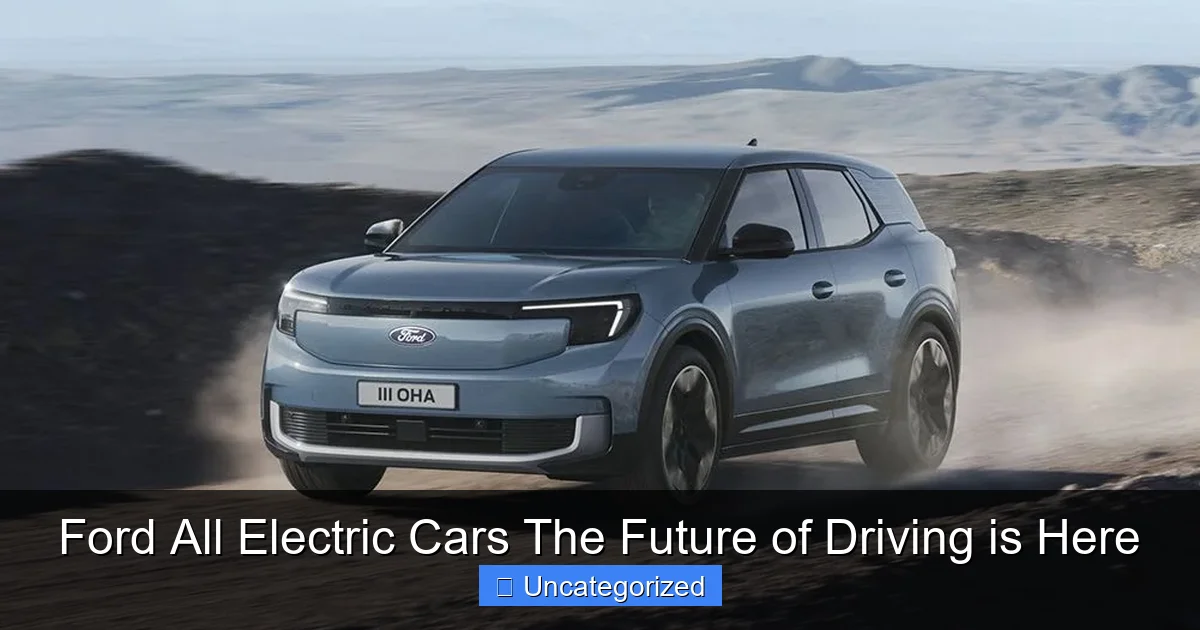
Featured image for ford all electric cars
Image source: carsguide-res.cloudinary.com
Ford all electric cars are redefining the future of driving with cutting-edge technology, impressive range, and sustainable performance across their rapidly expanding lineup. From the best-selling F-150 Lightning to the sporty Mustang Mach-E, Ford delivers powerful, zero-emission vehicles designed for real-world needs. With fast-charging capabilities, smart connectivity, and bold American engineering, Ford is accelerating the shift to an electric future.
Key Takeaways
- Ford’s electric lineup includes the Mustang Mach-E and F-150 Lightning, redefining performance and utility.
- Zero emissions driving is now accessible with Ford’s expanding EV charging network and home solutions.
- Advanced tech features like BlueCruise and over-the-air updates enhance safety and convenience.
- Lower operating costs make Ford EVs a smart financial choice over time.
- Long-range options deliver up to 320 miles, easing range anxiety on road trips.
- Federal tax credits and incentives can significantly reduce your purchase price.
📑 Table of Contents
- The Dawn of a New Era: Ford’s All-Electric Revolution
- Ford’s Electric Lineup: A Closer Look at the Models
- Technology and Innovation: The Brains Behind Ford’s EVs
- Charging and Range: Making EV Ownership Practical
- Sustainability and Environmental Impact
- The Future of Ford Electric: What’s Next?
- Data Snapshot: Ford All-Electric Cars at a Glance
- The Road Ahead: Ford Leads the Electric Charge
The Dawn of a New Era: Ford’s All-Electric Revolution
The automotive world is undergoing one of the most significant transformations in its history, and Ford all electric cars are at the forefront of this revolution. As the global demand for sustainable, eco-friendly transportation surges, Ford Motor Company—once known for its iconic gas-guzzling trucks and muscle cars—has boldly pivoted toward an all-electric future. With a century of engineering excellence and a renewed commitment to innovation, Ford is redefining what it means to drive in the 21st century. The shift isn’t just about swapping combustion engines for batteries; it’s about reimagining mobility, performance, and ownership in an era where climate consciousness and technological advancement go hand in hand.
From the groundbreaking Ford Mustang Mach-E to the rugged F-150 Lightning and the versatile E-Transit, Ford’s all-electric lineup is not only expanding but also challenging the very notion of what an electric vehicle (EV) can be. These vehicles combine cutting-edge battery technology, intelligent software, and the brand’s legendary durability to deliver a driving experience that’s as exhilarating as it is sustainable. Whether you’re a city commuter, a weekend adventurer, or a fleet manager, Ford’s electric vehicles are designed to meet the diverse needs of modern drivers. This blog explores the full spectrum of Ford’s electric offerings, their technological innovations, real-world performance, and what they mean for the future of driving.
Ford’s Electric Lineup: A Closer Look at the Models
Ford’s transition to an all-electric future is marked by a strategic and diverse portfolio of vehicles that cater to different lifestyles, professions, and preferences. Each model in the lineup brings unique strengths, blending Ford’s heritage with the latest in EV technology. Let’s dive into the core models that define Ford’s electric ambitions.
1. Ford Mustang Mach-E: The Electric Muscle SUV
The Mustang Mach-E is Ford’s boldest statement in the EV space. Breaking away from tradition, this all-electric SUV carries the Mustang name—but not the engine roar. Instead, it delivers instant torque, blistering acceleration (up to 480 horsepower in the GT Performance Edition), and a sleek, coupe-like silhouette. With a range of up to 314 miles (EPA-estimated for the Extended Range RWD model), the Mach-E is ideal for both daily commutes and long-distance road trips.
- Performance: 0–60 mph in as little as 3.5 seconds (GT Performance Edition)
- Range: 247–314 miles depending on configuration
- Interior: 15.5-inch touchscreen with SYNC 4A, wireless Apple CarPlay and Android Auto, and a hands-free driving system (BlueCruise)
- Charging: Up to 59 miles of range in 10 minutes on a DC fast charger
Tip: Opt for the California Route 1 Edition if you prioritize maximum range and efficiency—ideal for eco-conscious drivers who still want a touch of luxury.
2. Ford F-150 Lightning: The Electric Workhorse
Perhaps the most anticipated electric vehicle in Ford’s lineup, the F-150 Lightning proves that EVs can be tough, capable, and practical. Built on the best-selling F-150 platform, this all-electric pickup delivers up to 580 horsepower and 775 lb-ft of torque, making it one of the most powerful F-Series trucks ever made. With a maximum towing capacity of 10,000 lbs and a payload of 2,000 lbs, the Lightning is ready for work and play.
- Range: 240–320 miles (Standard vs. Extended Range battery)
- Pro Power Onboard: Up to 9.6 kW of exportable power—perfect for job sites, camping, or power outages
- Interior: Spacious cabin with a 12-inch digital instrument cluster and a 15.5-inch SYNC 4A touchscreen
- Charging: 15–80% in about 41 minutes using a 150 kW DC fast charger
Real-world use case: A construction contractor in Texas uses the F-150 Lightning to power tools on-site, saving thousands in generator fuel costs annually while reducing emissions.
3. Ford E-Transit: The Electric Work Van
For fleet operators and small business owners, the E-Transit is a game-changer. This all-electric cargo van offers the same versatility as its gas-powered sibling but with zero tailpipe emissions and lower operating costs. With a range of up to 159 miles (ideal for urban delivery routes), the E-Transit is perfect for last-mile logistics, service fleets, and mobile businesses.
- Configurations: Available in three roof heights, three body lengths, and multiple wheelbases
- Payload: Up to 4,290 lbs
- Charging: 15–80% in about 34 minutes with a 115 kW DC fast charger
- Connectivity: Ford Telematics and Ford Data Services for real-time fleet monitoring
Tip: Pair the E-Transit with a Level 2 charger at your depot for overnight charging and seamless daily operations.
4. Upcoming Models: The Next Wave
Ford isn’t stopping with current models. The company has announced several upcoming EVs, including:
- Explorer EV: A family-oriented electric SUV with three rows, targeting the popular mid-size segment.
- Lincoln Nautilus EV: A luxury electric crossover with advanced comfort and driver-assist features.
- Next-Gen F-Series Electric Truck: A fully redesigned electric pickup expected in 2025, with enhanced range and off-road capabilities.
These models will be built on Ford’s new GE2 platform, designed specifically for electric vehicles and offering greater flexibility, efficiency, and scalability.
Technology and Innovation: The Brains Behind Ford’s EVs
What sets Ford all electric cars apart isn’t just their design or performance—it’s the sophisticated technology that powers them. From intelligent battery systems to advanced driver assistance, Ford is investing heavily in R&D to ensure its EVs are not only competitive but also future-ready.
BlueCruise: Hands-Free Driving
Ford’s BlueCruise system is one of the most advanced hands-free driving technologies available today. Available on the Mustang Mach-E and F-150 Lightning, BlueCruise allows drivers to take their hands off the wheel on over 130,000 miles of pre-mapped highways across North America. The system uses a combination of radar, cameras, and GPS to maintain lane position, adjust speed, and respond to traffic—all while keeping the driver engaged through infrared monitoring.
- Features: Lane centering, adaptive cruise control, automatic lane changes, and traffic jam assist
- Safety: Driver-facing camera ensures eyes-on-the-road awareness
- Subscription: Free for 90 days, then $600/year or $19.99/month
Tip: Use BlueCruise during long highway drives to reduce fatigue—but always stay alert and ready to take control.
SYNC 4A: The Smarter Infotainment System
The SYNC 4A infotainment system is the digital heart of Ford’s electric vehicles. It features a massive 15.5-inch vertical touchscreen (in most models), over-the-air (OTA) updates, and seamless smartphone integration. Unlike older infotainment systems, SYNC 4A learns driver preferences over time and offers predictive suggestions—like pre-heating the cabin on cold mornings or suggesting charging stations when the battery is low.
- Voice Assistant: “Hey Ford” natural language commands
- OTA Updates: Software improvements delivered wirelessly, just like smartphones
- Navigation: Real-time traffic, charging station availability, and route planning
Real-world example: A Mach-E owner in Colorado uses SYNC 4A to find the nearest fast charger during a ski trip, avoiding range anxiety on mountain roads.
Battery and Powertrain: Built for Longevity and Performance
Ford’s electric vehicles use advanced lithium-ion battery packs with nickel-manganese-cobalt (NMC) chemistry, designed for high energy density and thermal stability. The batteries are liquid-cooled and protected by a rugged aluminum case. Ford offers an 8-year/100,000-mile warranty on battery and electric components, reflecting confidence in long-term durability.
- Cell Design: Modular architecture allows for easy repair and replacement
- Thermal Management: Active cooling system prevents overheating and extends battery life
- Regenerative Braking: Adjustable levels help recapture energy during deceleration
Tip: To maximize battery life, avoid frequent deep discharges (below 20%) and minimize exposure to extreme temperatures.
Charging and Range: Making EV Ownership Practical
One of the biggest concerns for potential EV buyers is charging infrastructure and real-world range. Ford has addressed these challenges with a comprehensive charging strategy, smart technology, and partnerships to make Ford all electric cars as practical as their gas-powered counterparts.
FordPass Power My Trip: Smart Route Planning
The FordPass app includes a feature called Power My Trip, which automatically plans your route and integrates charging stops. It considers your vehicle’s current charge level, weather conditions, traffic, and elevation changes to provide accurate arrival times and charging recommendations. The app syncs with your vehicle and can even pre-condition the battery for optimal charging speed.
- Integration: Works with over 100,000 charging stations across North America
- Charging Network: Ford partners with Electrify America, EVgo, and ChargePoint
- Home Charging: Ford offers a 80-amp Connected Charge Station (Level 2) with smart scheduling and usage tracking
Tip: Use FordPass to schedule charging during off-peak hours (e.g., 10 PM–6 AM) to save on electricity costs.
Home and Public Charging Options
Ford makes it easy to charge at home and on the go:
- Level 1 Charging (120V): Standard household outlet; adds ~4–5 miles of range per hour—best for occasional use
- Level 2 Charging (240V): Recommended for daily charging; adds 20–30 miles of range per hour
- DC Fast Charging (150–350 kW): Available at public stations; can add 50–70 miles of range in 10 minutes
Ford also offers a free charging program for new EV buyers: 250 kWh of free charging at Electrify America stations for the first year.
Real-World Range Tips
While EPA estimates are a good starting point, real-world range can vary. Here’s how to get the most out of your Ford EV:
- Use Eco mode for city driving to conserve energy
- Pre-condition the cabin while plugged in to avoid draining the battery
- Keep tire pressure at recommended levels (check monthly)
- Avoid aggressive acceleration and high speeds (above 70 mph reduces efficiency)
- Use One Pedal Driving mode to maximize regenerative braking
Example: An F-150 Lightning owner in Arizona reports 280 miles of range in summer (with AC) and 310 miles in spring—close to the EPA estimate.
Sustainability and Environmental Impact
Ford’s move to electric vehicles isn’t just about innovation—it’s a commitment to sustainability. The company has set ambitious goals to reduce its carbon footprint and promote a circular economy.
Carbon-Neutral Manufacturing
Ford plans to achieve carbon neutrality by 2050, with interim goals of 50% emissions reduction by 2035. Its electric vehicles are built at factories powered by renewable energy, including the Dearborn Truck Plant (home of the F-150 Lightning), which uses solar and wind power.
- Raw Materials: Ford is working to source cobalt and lithium responsibly, with traceability programs
- Recycling: The company is developing a battery recycling network to recover up to 95% of critical materials
- Water Reduction: EV plants use 30% less water than traditional manufacturing facilities
Life Cycle Emissions
Studies show that over their lifetime, Ford’s electric vehicles emit 50–70% less CO2 than comparable gasoline models—even when accounting for battery production and electricity generation. As the grid becomes cleaner, this gap will widen.
Example: A Mustang Mach-E driven in California (with a high renewable energy mix) has a lifetime emissions footprint 75% lower than a gas-powered Mustang GT.
Community and Grid Benefits
The F-150 Lightning’s Pro Power Onboard feature can serve as a mobile power source during blackouts. Ford has partnered with utilities to pilot vehicle-to-grid (V2G) technology, allowing EVs to feed energy back into the grid during peak demand—helping stabilize power and reduce strain.
The Future of Ford Electric: What’s Next?
Ford’s electric journey is just beginning. With over $50 billion invested in electrification through 2026, the company is laying the foundation for a fully electric future. The roadmap includes not only new models but also advancements in battery technology, autonomous driving, and mobility services.
Next-Gen Battery Technology
Ford is developing solid-state batteries in partnership with SK On and Solid Power. These batteries promise:
- Higher energy density (up to 2x current lithium-ion)
- Faster charging (10–80% in under 15 minutes)
- Improved safety (no flammable liquid electrolyte)
- Longer lifespan (over 1,000 charge cycles)
Expect solid-state-powered Ford EVs by 2027.
Autonomous and Connected Vehicles
Ford’s long-term vision includes fully autonomous EVs. The company’s Argo AI (now integrated into Ford’s in-house team) is developing self-driving technology for ride-hailing and delivery services. Future Ford EVs may offer Level 4 autonomy, allowing hands-off driving in most conditions.
Global Expansion
While Ford’s current EVs are focused on North America and Europe, the company plans to launch affordable electric models in emerging markets by 2030. These will be smaller, lower-cost vehicles designed for urban environments and high-density cities.
Data Snapshot: Ford All-Electric Cars at a Glance
| Model | Range (EPA) | 0–60 mph | Max Charging Speed | Starting Price (MSRP) | Key Feature |
|---|---|---|---|---|---|
| Mustang Mach-E | 247–314 miles | 3.5–6.1 sec | 150 kW | $42,995 | BlueCruise hands-free driving |
| F-150 Lightning | 240–320 miles | 4.0–4.5 sec | 150 kW | $49,995 | Pro Power Onboard (9.6 kW) |
| E-Transit | 159 miles | 6.8 sec | 115 kW | $47,185 | Fleet telematics integration |
| Explorer EV (2025) | 300+ miles (est.) | 5.0 sec (est.) | 200 kW (est.) | $45,000 (est.) | Three-row seating, SYNC 5 |
The Road Ahead: Ford Leads the Electric Charge
The future of driving is not just electric—it’s intelligent, sustainable, and accessible. Ford all electric cars embody this vision, combining the brand’s century-old legacy of durability and innovation with the cutting-edge technology needed for a greener, smarter world. From the adrenaline-pumping Mustang Mach-E to the work-ready F-150 Lightning and the practical E-Transit, Ford has created a lineup that appeals to a broad spectrum of drivers.
What truly sets Ford apart is its holistic approach: it’s not just selling EVs—it’s building an ecosystem. With robust charging support, over-the-air updates, advanced driver assistance, and a commitment to sustainability, Ford is making the transition to electric ownership seamless and rewarding. As battery technology improves and charging infrastructure expands, the barriers to EV adoption will continue to fall.
For anyone considering the switch to electric, Ford offers a compelling package: performance, practicality, and purpose. The future isn’t just coming—it’s already here, and it’s wearing a Ford badge. Whether you’re a tech enthusiast, a family driver, or a business owner, there’s a Ford electric vehicle that’s ready to take you into the next era of mobility. The road ahead is electric, and Ford is leading the charge.
Frequently Asked Questions
What are the current Ford all electric cars available in 2024?
Ford’s current all-electric lineup includes the Mustang Mach-E, F-150 Lightning, and E-Transit van. These models offer zero-emission driving with advanced tech and impressive range capabilities.
How far can Ford all electric cars go on a single charge?
Depending on the model, Ford electric vehicles offer ranges between 230–320 miles. The F-150 Lightning Pro has an EPA-estimated 240 miles, while the Mach-E Premium RWD reaches up to 320 miles.
Are Ford all electric cars eligible for tax credits?
Yes, select Ford all-electric models like the F-150 Lightning and Mach-E may qualify for federal tax credits up to $7,500, depending on battery sourcing and your tax liability.
How long does it take to charge a Ford all-electric car?
With a DC fast charger, you can replenish 10%-80% in 30-45 minutes. A Level 2 home charger (240V) typically takes 8-10 hours for a full charge, depending on the model and battery size.
Can Ford all electric cars power your home during an outage?
Yes! The F-150 Lightning features Intelligent Backup Power, allowing it to power your home for up to 10 days when paired with the 80-amp Ford Charge Station Pro and home integration system.
Do Ford all electric cars require less maintenance than gas vehicles?
Absolutely. With fewer moving parts and no oil changes, Ford electric cars have lower maintenance costs. Brake wear is also reduced thanks to regenerative braking technology.