Ford Batteries for Electric Cars Powering the Future
Featured image for ford batteries for electric cars
Image source: cdn.vox-cdn.com
Ford batteries for electric cars are revolutionizing sustainable mobility with next-gen lithium-ion and solid-state technology designed for longer range, faster charging, and enhanced durability. Built in the U.S. through strategic partnerships, these cutting-edge battery systems power Ford’s EV lineup—from the F-150 Lightning to the Mustang Mach-E—while supporting the company’s goal of 2 million annual EV productions by 2026.
Key Takeaways
- Ford batteries deliver long-range performance for modern electric vehicles.
- Fast-charging tech reduces downtime and boosts convenience.
- Recyclable materials support Ford’s sustainability goals in battery production.
- Advanced thermal management enhances safety and battery lifespan.
- Proprietary battery software optimizes efficiency and driving experience.
- Scalable designs enable future innovation across EV models.
📑 Table of Contents
Ford Batteries for Electric Cars: Powering the Future
The automotive industry is undergoing a seismic shift, and at the heart of this revolution are Ford batteries for electric cars. As one of the most storied names in American manufacturing, Ford is no stranger to innovation. From the Model T to the F-150 Lightning, the company has consistently pushed the boundaries of what’s possible on the road. Today, Ford is channeling its legacy into a new era—electric mobility—by investing heavily in next-generation battery technology. With climate change concerns, rising fuel costs, and government mandates pushing automakers toward zero-emission vehicles, Ford’s battery strategy is more than just a product line—it’s a commitment to a sustainable future.
But what sets Ford apart in the crowded EV battery landscape? It’s not just about producing batteries; it’s about reimagining how they’re made, used, and recycled. From cobalt-free lithium iron phosphate (LFP) chemistries to massive battery plant investments in the U.S., Ford is building an end-to-end ecosystem that supports long-range performance, affordability, and environmental responsibility. Whether you’re considering the Mustang Mach-E for daily commutes or the F-150 Lightning for work and play, understanding how Ford batteries work, what they offer, and where they’re headed will help you make informed decisions about your next electric vehicle. In this deep dive, we’ll explore everything from battery chemistry to real-world performance, charging infrastructure, and the future of Ford’s electrified vision.
Understanding Ford’s EV Battery Technology
Dual-Chemistry Strategy: NMC vs. LFP
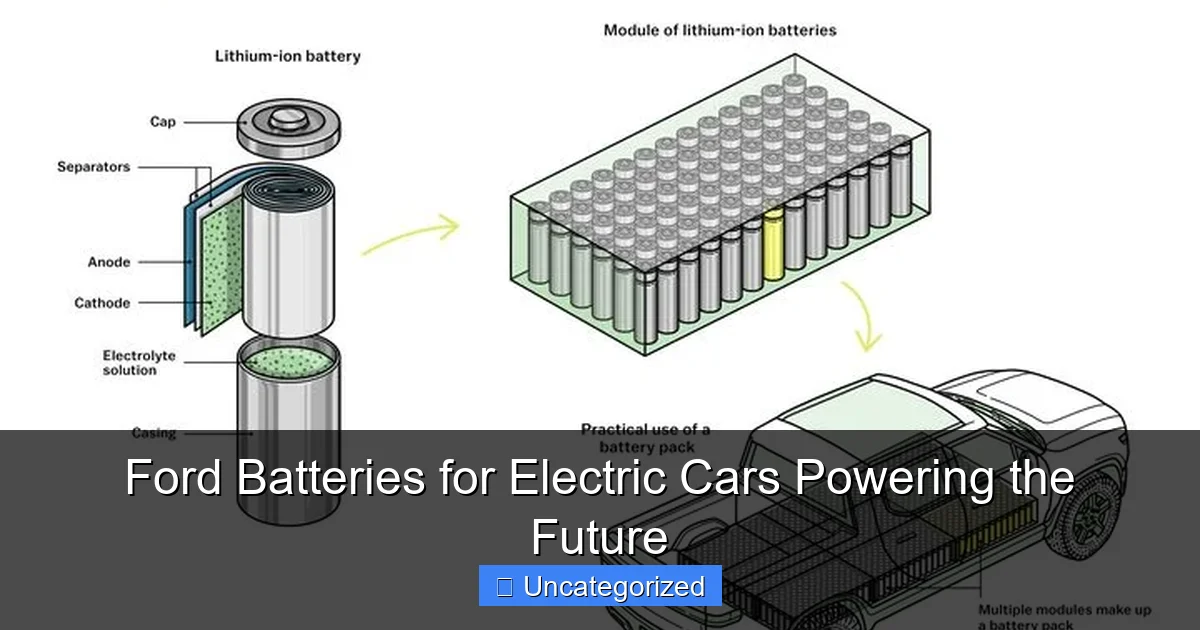
One of Ford’s most strategic moves in the electric vehicle space is its adoption of a dual-chemistry battery strategy. Unlike many competitors who rely solely on a single battery type, Ford uses two primary chemistries: Nickel Manganese Cobalt (NMC) and Lithium Iron Phosphate (LFP). This approach allows Ford to tailor battery performance to different vehicle needs, price points, and consumer preferences.
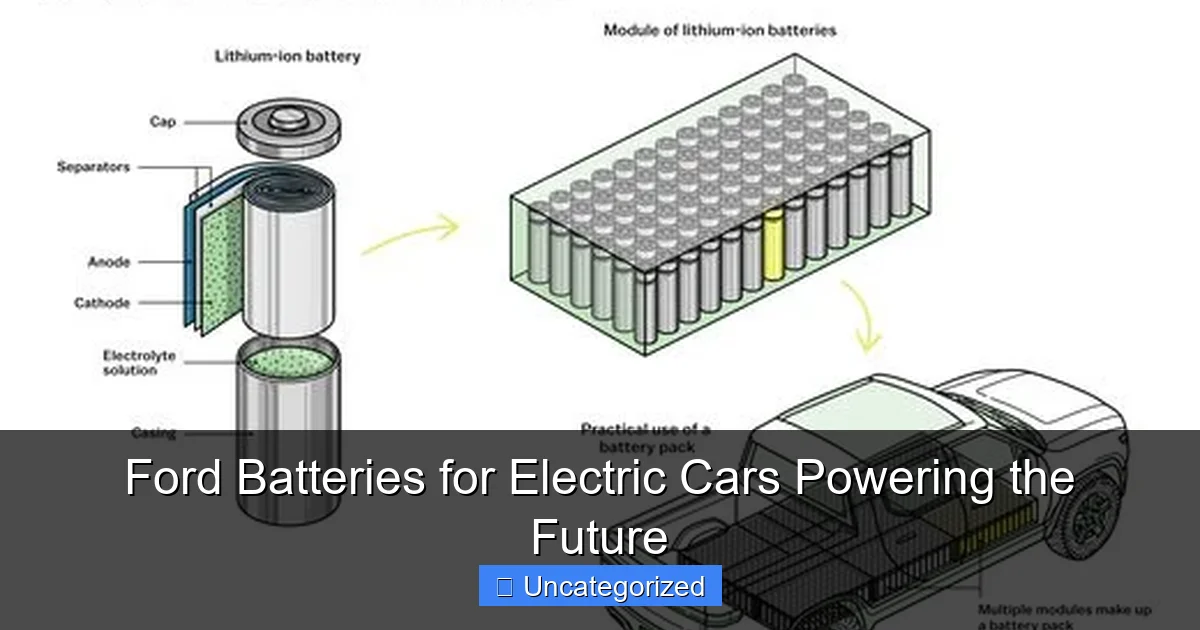
Visual guide about ford batteries for electric cars
Image source: cdn.vox-cdn.com
- NMC Batteries: Used in high-performance models like the Mustang Mach-E GT and premium trims of the F-150 Lightning, NMC batteries offer higher energy density, enabling longer range and faster acceleration. These batteries typically provide 250–300 miles on a single charge, depending on the configuration. However, they rely on cobalt, a mineral associated with ethical mining concerns and price volatility.
- LFP Batteries: Starting with the 2023 F-150 Lightning Pro and expanding to the base Mach-E, Ford introduced LFP batteries for entry-level and fleet models. LFP offers several advantages: it’s cobalt-free, more thermally stable (safer), longer-lasting in terms of cycle life (up to 3,000–5,000 cycles), and less expensive to produce. The trade-off? Slightly lower energy density, resulting in about 10–15% less range compared to NMC equivalents.
Ford’s decision to offer both chemistries is a game-changer. For example, a delivery fleet might prioritize cost and durability (LFP), while a performance enthusiast might opt for maximum range and power (NMC). This flexibility positions Ford as a leader in scalable, customer-centric battery solutions.
Battery Cell Sourcing and Manufacturing
Ford isn’t just designing batteries—it’s building the infrastructure to produce them at scale. In 2021, Ford announced a $11.4 billion investment to construct two massive battery manufacturing campuses in the U.S. under its BlueOval SK joint venture with SK Innovation. The first plant, BlueOval SK Battery Park in Glendale, Kentucky, is set to produce 43 gigawatt-hours (GWh) of batteries annually—enough to power over 500,000 EVs per year. A second facility in Stanton, Tennessee, will add another 43 GWh, bringing the total to 86 GWh by 2026.
These facilities will produce both NMC and LFP cells, with LFP production beginning in 2026. By localizing battery production in the U.S., Ford aims to:
- Reduce reliance on overseas supply chains (especially China)
- Lower logistics costs and carbon emissions
- Meet federal incentives under the Inflation Reduction Act (IRA), which require battery materials to be sourced or processed in North America
Additionally, Ford is working with Redwood Materials, founded by Tesla co-founder JB Straubel, to create a closed-loop recycling system. Up to 95% of battery materials—including lithium, cobalt, nickel, and copper—can be recovered and reused in new batteries, reducing waste and environmental impact.
Modular Battery Architecture: The “Battery on Frame” Design
Ford’s EVs use a modular battery pack design that integrates the battery directly into the vehicle’s chassis—what Ford calls the “battery on frame” architecture. This design, similar to Tesla’s structural battery pack, improves vehicle rigidity, lowers the center of gravity (enhancing handling), and frees up cabin and cargo space.
The modular approach allows Ford to:
- Scale battery capacity across vehicle platforms (e.g., Mach-E vs. Lightning)
- Easily replace or upgrade battery modules during service or aftermarket modifications
- Optimize thermal management by using liquid-cooled systems that maintain ideal operating temperatures (20–35°C), extending battery life
For example, the F-150 Lightning offers two battery options: the Standard Range (98 kWh) and the Extended Range (131 kWh). The modular design allows Ford to swap in LFP cells for the standard range version while retaining NMC for the extended range, maximizing flexibility without redesigning the entire platform.
Performance and Range: Real-World Data and Comparisons
EPA-Rated Ranges Across Ford’s EV Lineup
Range anxiety remains a top concern for EV buyers, and Ford addresses this with transparent, EPA-certified range data. Below is a comparison of Ford’s current electric vehicles and their battery configurations:
| Model | Battery Chemistry | Capacity (kWh) | EPA Range (mi) | 0–60 mph (sec) | Charging Speed (DC Fast, 10–80%) |
|---|---|---|---|---|---|
| F-150 Lightning Pro | LFP | 98 | 240 | 4.5 | 41 min (150 kW max) |
| F-150 Lightning Extended Range | NMC | 131 | 320 | 4.0 | 41 min (250 kW max) |
| Mustang Mach-E Select | LFP (2024+) | 70 | 250 | 5.2 | 38 min (150 kW max) |
| Mustang Mach-E GT | NMC | 88 | 270 | 3.5 | 38 min (150 kW max) |
| E-Transit (Cargo Van) | NMC | 68 | 126 | 6.5 | 30 min (115 kW max) |
Note: LFP batteries are gradually rolling out across 2024 models. The F-150 Lightning Extended Range offers the best combination of range and charging speed, while the Mach-E GT delivers sports-car performance. The E-Transit, while limited in range, is optimized for urban delivery routes and frequent stop-and-go driving.
Real-World Range vs. EPA Estimates
While EPA ratings provide a baseline, real-world range depends on several factors:
- Temperature: Cold weather reduces battery efficiency. In winter, LFP batteries can lose up to 30% of their range due to slower ion movement, while NMC batteries are slightly more resilient. Ford’s thermal management system helps mitigate this by pre-conditioning the battery when plugged in.
- Driving Style: Aggressive acceleration and high speeds drain batteries faster. For example, highway driving at 75 mph can reduce range by 15–20% compared to city driving.
- Payload and Terrain: The F-150 Lightning, when towing a trailer or carrying heavy loads, can see range drop by 40–50%. Ford recommends using the Intelligent Range feature, which adjusts estimates based on current conditions.
Pro Tip: Use Ford’s FordPass App to monitor real-time battery usage, set charging schedules, and pre-condition the cabin while the vehicle is plugged in—this preserves battery power for driving.
Charging Performance and Compatibility
All Ford EVs use the CCS (Combined Charging System) connector in North America, ensuring compatibility with most public DC fast chargers, including Electrify America, EVgo, and ChargePoint. The F-150 Lightning Extended Range, for instance, can add up to 54 miles of range in just 10 minutes when charging at a 250 kW station.
Ford also supports:
- Ford Charge Station Pro: A 19.2 kW Level 2 home charger (available as an accessory) that can fully charge the Extended Range battery in ~10 hours.
- FordPass Power My Trip: An in-vehicle navigation feature that plans routes with charging stops, factoring in battery state, terrain, and weather.
- Plug & Charge: Automatically authenticates and bills at compatible stations, eliminating the need to swipe a card or app.
For fleet operators, Ford offers Ford Pro Charging, a suite of software tools that monitor battery health, optimize charging schedules, and provide energy cost analysis across multiple vehicles.
Battery Lifespan, Warranty, and Maintenance
How Long Do Ford EV Batteries Last?
Ford EV batteries are designed for long-term durability. The company guarantees that batteries will retain at least 70% of their original capacity after 8 years or 100,000 miles (whichever comes first)—the standard warranty for most U.S. EVs. However, real-world data and Ford’s internal testing suggest much longer lifespans, especially with LFP batteries.
- LFP Batteries: Can last 200,000+ miles with proper care. Their flat discharge curve and thermal stability reduce stress on the battery.
- NMC Batteries: Typically last 120,000–150,000 miles before significant degradation. However, Ford’s advanced thermal management and charge-limiting software help extend their life.
Example: A 2022 Mustang Mach-E owner in California reported only 8% battery degradation after 45,000 miles—well within Ford’s warranty terms. The owner credited this to avoiding full charges (keeping the battery between 20–80%) and using home charging instead of frequent fast charging.
Battery Care Tips to Maximize Lifespan
To get the most out of your Ford EV battery, follow these best practices:
- Avoid Full Charges: Keep the battery between 20% and 80% for daily use. Reserve 100% charges for long trips.
- Limit DC Fast Charging: Use Level 2 chargers for routine charging. Reserve fast charging for when you’re in a hurry—frequent high-current charging accelerates degradation.
- Pre-Condition in Cold Weather: Use the FordPass App to warm the battery before driving in winter. This improves efficiency and reduces strain.
- Store at 50% Charge: If parking for more than a month, set the battery to 50% to prevent deep discharge or overcharging.
- Update Software Regularly: Ford releases over-the-air updates that improve battery management algorithms and thermal controls.
Ford also offers a 10-year/150,000-mile extended battery warranty as an optional add-on, providing peace of mind for long-term owners.
Recycling and Second-Life Applications
When Ford EV batteries reach the end of their automotive life, they’re not discarded. Instead, they’re repurposed or recycled:
- Second-Life Use: Batteries with 70–80% capacity can be used in stationary energy storage systems, such as backup power for homes or grid stabilization.
- Closed-Loop Recycling: Through Redwood Materials, Ford recycles retired batteries to extract raw materials for new batteries. This reduces mining demand and cuts production emissions by up to 70%.
Ford’s goal is to achieve a zero-waste-to-landfill battery production process by 2035, aligning with its broader sustainability targets.
Cost, Incentives, and Total Ownership Value
Battery Cost Trends and Vehicle Pricing
Battery costs have dropped dramatically over the past decade—from $1,100/kWh in 2010 to around $130/kWh in 2023 (BloombergNEF data). Ford’s dual-chemistry strategy further reduces costs, especially with LFP batteries, which are 20–30% cheaper to produce than NMC.
As a result, Ford has been able to lower EV prices. For example:
- The 2024 F-150 Lightning Pro starts at $49,995, down from $55,974 in 2023.
- The Mustang Mach-E Select with LFP battery starts at $42,895, making it one of the most affordable premium EVs.
These price drops, combined with improved range and features, make Ford EVs increasingly competitive with Tesla, Hyundai, and Kia.
Federal and State Incentives
Ford EV buyers may qualify for significant incentives:
- Federal Tax Credit: Up to $7,500 for new EVs, but only if the vehicle meets IRA battery sourcing requirements. As of 2024, the F-150 Lightning and Mach-E with U.S.-made batteries qualify for the full credit.
- State Incentives: California offers a $2,000 rebate; Colorado provides $5,000; New York offers $2,000–$4,000 depending on income.
- Utility Discounts: Many local utilities offer reduced electricity rates for EV charging during off-peak hours.
Tip: Use Ford’s Build & Price tool to calculate your total out-the-door cost, including incentives, trade-ins, and financing.
Lower Operating and Maintenance Costs
EVs have fewer moving parts than gas vehicles, leading to lower maintenance costs:
- No oil changes, spark plugs, or exhaust systems
- Regenerative braking reduces brake pad wear
- Ford estimates that F-150 Lightning owners save $6,000–$10,000 in fuel and maintenance over 5 years compared to a gas-powered F-150.
With rising gas prices, the total cost of ownership for Ford EVs is now highly competitive—even without incentives.
The Future of Ford EV Batteries: What’s Next?
Solid-State Batteries and Beyond
Ford is investing in next-generation battery technologies to maintain its leadership. The company has partnered with Solid Power, a Colorado-based startup, to develop solid-state batteries (SSBs). SSBs use a solid electrolyte instead of liquid, offering:
- Higher energy density (up to 500 Wh/kg vs. 250–300 Wh/kg for NMC)
- Faster charging (10–15 minutes for full charge)
- Improved safety (no risk of thermal runaway)
Ford aims to launch a solid-state-powered EV by 2030, potentially offering 400+ miles of range and 10-minute charging times.
Vehicle-to-Everything (V2X) Integration
Ford’s batteries aren’t just for driving—they’re becoming mobile energy hubs. The F-150 Lightning already supports Vehicle-to-Load (V2L), allowing owners to power tools, homes, or even other EVs via built-in outlets. Future models may support:
- Vehicle-to-Grid (V2G): Selling excess battery power back to the grid during peak demand
- Vehicle-to-Home (V2H): Using the truck as a backup power source during outages (available on the Lightning with the optional Intelligent Backup Power system)
This transforms Ford EVs from transportation tools into energy assets.
Expanding the EV Lineup
Ford plans to launch 16 new EVs globally by 2025, including:
- An electric Explorer SUV (2025)
- An electric Puma (Europe, 2024)
- A next-generation electric pickup (codenamed “Project T3”)
All will leverage Ford’s modular battery platform, ensuring consistency, scalability, and innovation across the lineup.
Ford’s journey into electric mobility is more than a product shift—it’s a transformation of its entire ecosystem. From cutting-edge battery chemistries to U.S.-based manufacturing, recycling programs, and future-ready technologies, Ford is building a sustainable, customer-focused EV future. Whether you’re a first-time EV buyer or a fleet operator, Ford batteries offer a compelling mix of performance, affordability, and longevity. As the company continues to innovate, one thing is clear: the future of driving is electric, and Ford is powering it—one battery at a time.
Frequently Asked Questions
What type of batteries does Ford use in its electric cars?
Ford primarily uses lithium-ion battery packs in its electric vehicles (EVs), including the Mustang Mach-E and F-150 Lightning. These Ford batteries for electric cars are designed for high energy density, longevity, and fast charging capabilities.
How long do Ford EV batteries last before needing replacement?
Ford EV batteries are engineered to last 8–10 years or 100,000–150,000 miles, with many retaining up to 80% capacity after that period. The exact lifespan depends on usage, charging habits, and climate conditions.
Can I upgrade the battery in my Ford electric car?
Ford currently doesn’t offer battery upgrades for existing EVs, as packs are integrated into the vehicle’s design. Future models may support modular battery systems, but this feature isn’t available yet.
Are Ford EV batteries covered under warranty?
Yes, Ford provides an 8-year/100,000-mile warranty on EV batteries, covering defects and capacity loss below 70%. Some states offer extended warranty terms for added peace of mind.
How does Ford recycle or reuse old EV batteries?
Ford partners with recycling firms to repurpose or reclaim materials like lithium, nickel, and cobalt from retired Ford batteries for electric cars. Damaged packs may be reused for energy storage projects.
What charging options are compatible with Ford EV batteries?
Ford EVs support Level 1 (120V), Level 2 (240V), and DC fast charging. The automaker also provides access to the BlueOval Charge Network for seamless public charging nationwide.