Ford Building Electric Cars The Future of Auto Innovation
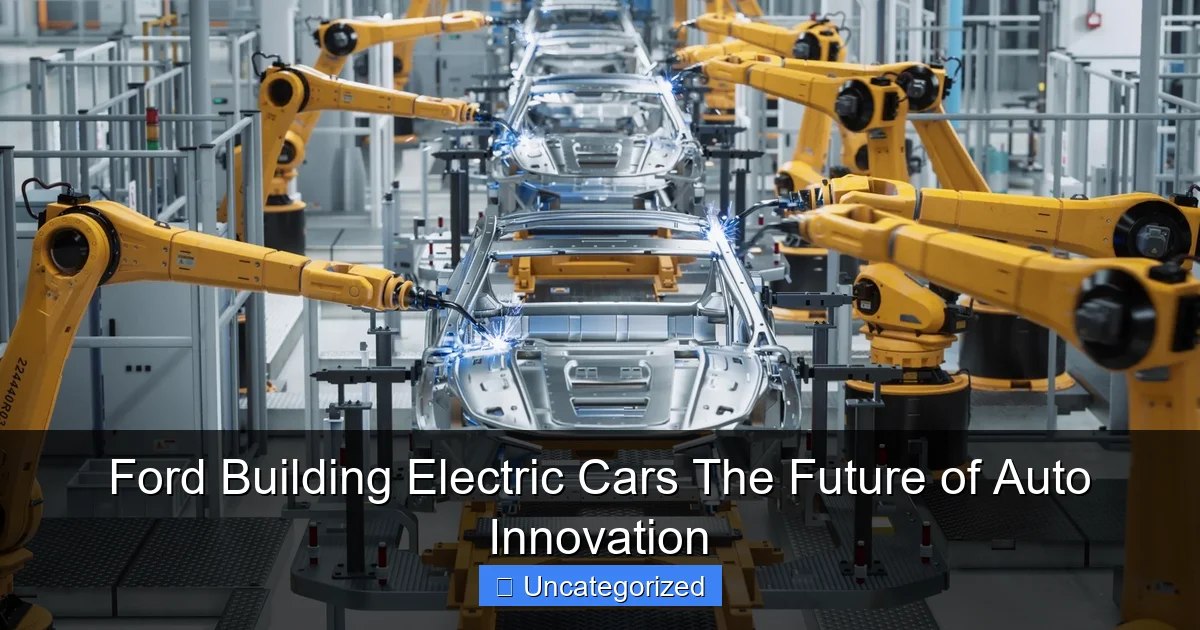
Featured image for ford building electric cars
Image source: slashgear.com
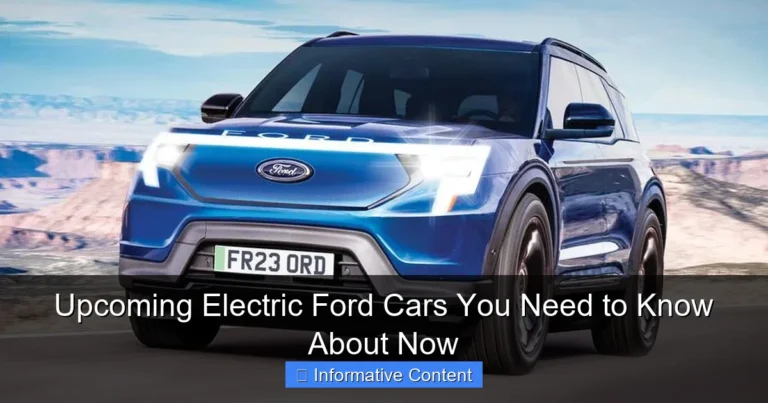
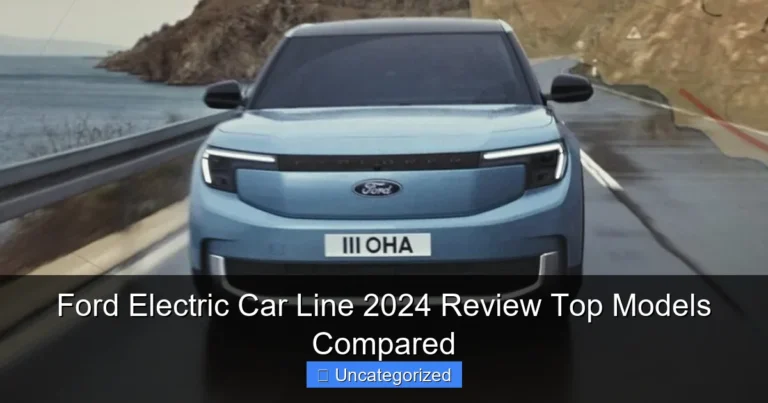
Ford is revolutionizing the automotive industry with its aggressive push into electric vehicles, investing billions to expand its EV lineup and build state-of-the-art battery plants across North America. With models like the F-150 Lightning and Mustang Mach-E leading the charge, Ford is positioning itself as a major contender in the race toward sustainable, high-performance electric mobility.
Key Takeaways
- Ford invests $50B+ in EV development through 2026 to dominate the electric market.
- New EV platforms enable longer range, faster charging, and lower production costs.
- Mustang Mach-E and F-150 Lightning prove Ford’s commitment to electrifying iconic models.
- BlueOval Charging Network expands access to 10,000+ fast chargers for seamless travel.
- Partnerships with SK On secure battery supply and boost U.S. manufacturing capacity.
- Over-the-air updates keep Ford EVs technologically advanced throughout ownership.
📑 Table of Contents
- Ford Building Electric Cars: The Future of Auto Innovation
- From Model T to Mustang Mach-E: Ford’s Electrification Journey
- Ford’s Electric Lineup: Power, Performance, and Practicality
- Manufacturing Revolution: BlueOval and Beyond
- Battery Breakthroughs: Powering the Future
- Challenges and Opportunities in the EV Race
- The Road Ahead: Ford’s Vision for 2030 and Beyond
Ford Building Electric Cars: The Future of Auto Innovation
The automotive landscape is undergoing a seismic shift. For over a century, the internal combustion engine (ICE) reigned supreme, but a new era is dawning—one defined by sustainability, digital integration, and electrification. At the forefront of this transformation stands Ford Motor Company, a legacy automaker with roots stretching back to the Model T. In recent years, Ford has boldly pivoted from its ICE-dominated past, embracing electric vehicles (EVs) with the same pioneering spirit that once revolutionized mass production. The company’s commitment to building electric cars isn’t just a trendy pivot; it’s a strategic, multi-billion-dollar investment in the future of transportation.
Ford’s journey into electrification is more than a technological upgrade—it’s a cultural and industrial reinvention. With iconic models like the Mustang Mach-E, the F-150 Lightning, and the E-Transit, Ford is proving that electric vehicles can deliver the power, performance, and practicality that American drivers expect. But Ford’s ambitions go beyond individual models. The company is investing in battery technology, charging infrastructure, and manufacturing innovation to position itself as a global leader in the EV revolution. As governments push for carbon neutrality and consumers demand cleaner, smarter vehicles, Ford is not just keeping up—it’s leading the charge. This blog post explores how Ford is building electric cars, why it matters, and what it means for the future of auto innovation.
From Model T to Mustang Mach-E: Ford’s Electrification Journey
The Legacy of Innovation
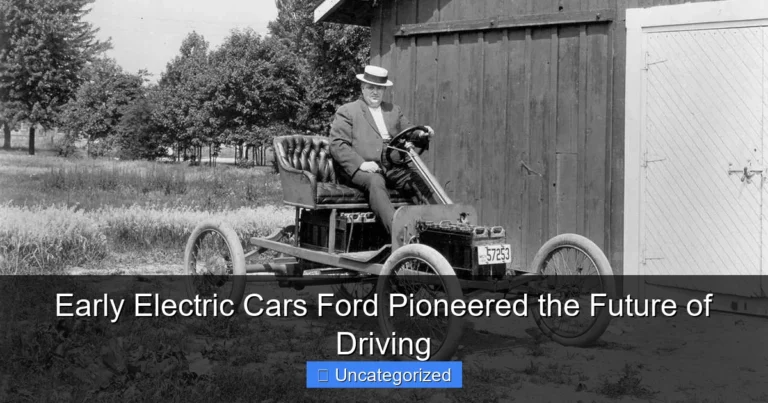
Ford’s history is built on innovation. In 1908, the Model T transformed personal mobility by making cars affordable for the average American. Fast forward over a century, and Ford is again at a pivotal moment. The company’s shift to electric vehicles isn’t a departure from its roots—it’s a continuation of its legacy. Just as the Model T disrupted horse-drawn carriages, Ford’s electric lineup aims to disrupt the fossil fuel era. The company’s leadership, including CEO Jim Farley, has emphasized that electrification is not optional; it’s essential for survival and growth in the 21st century.
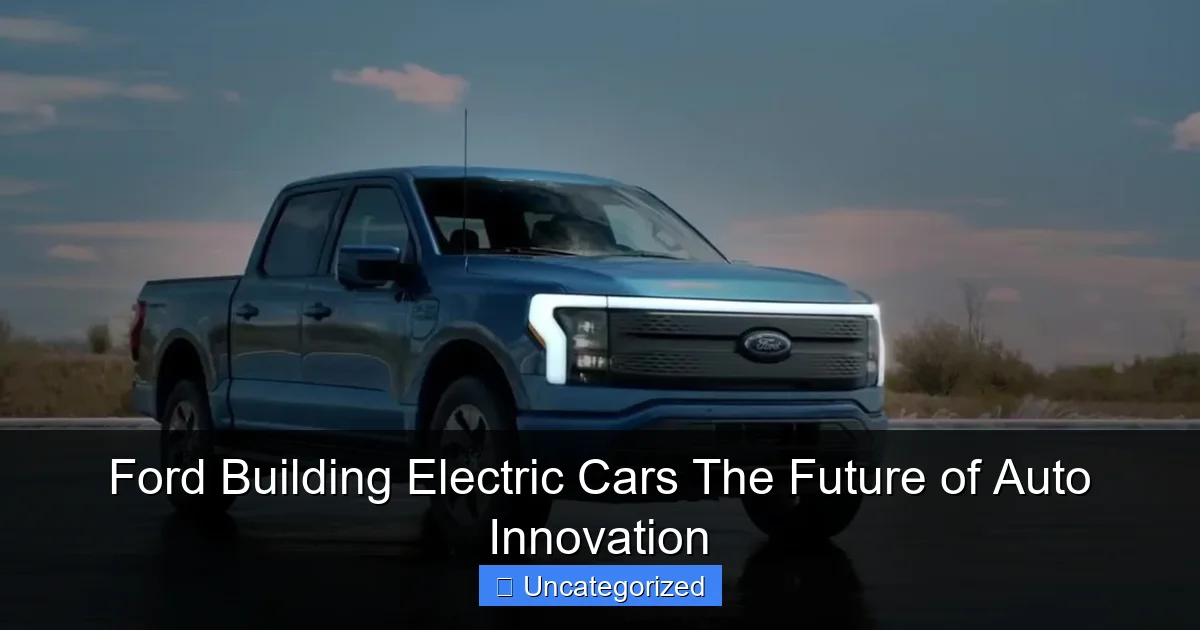
Visual guide about ford building electric cars
Image source: 2025ford.com
Key Milestones in Ford’s EV Timeline
Ford’s electric journey has been marked by strategic milestones:
- 2010: Launch of the Ford Focus Electric, one of the first mass-market EVs from a legacy automaker.
- 2019: Announcement of a $11.5 billion investment in EVs and hybrids over five years.
- 2020: Unveiling of the Mustang Mach-E, Ford’s first all-electric SUV, blending performance with sustainability.
- 2021: Introduction of the F-150 Lightning, an electric version of America’s best-selling vehicle for 45 years.
- 2022: Launch of the E-Transit, Ford’s first all-electric commercial van, targeting fleet operators and delivery services.
- 2023: Announcement of the BlueOval City in Tennessee and BlueOval SK Battery Park in Kentucky, signaling a massive manufacturing overhaul.
Why Ford Chose This Path
Ford’s decision to go electric wasn’t driven by trends alone. Market data shows that EV sales are growing at a compound annual growth rate (CAGR) of over 25%, with global EV sales surpassing 10 million in 2022. Ford recognized that:
- Consumer demand for EVs is rising, especially among younger demographics.
- Regulatory pressure is increasing, with the U.S. EPA and EU setting strict emissions standards.
- Competitors like Tesla, GM, and Volkswagen are investing heavily in EVs, raising the stakes.
By building electric cars, Ford isn’t just future-proofing its business—it’s reclaiming its identity as a leader in automotive innovation.
Ford’s Electric Lineup: Power, Performance, and Practicality
Mustang Mach-E: The Electric Pony
The Mustang Mach-E is Ford’s boldest EV statement. Unlike traditional Mustangs, the Mach-E is a crossover SUV with a 0-60 mph time of 3.5 seconds (GT Performance Edition) and up to 314 miles of range. It’s designed to appeal to both performance enthusiasts and eco-conscious families. Key features include:
- SYNC 4A infotainment system with a 15.5-inch touchscreen and over-the-air updates.
- BlueCruise hands-free driving on over 130,000 miles of pre-mapped highways.
- Dual-motor all-wheel drive for improved traction and handling.
Pro tip: For buyers prioritizing range, the extended-range RWD model offers the best value. For thrill-seekers, the Mach-E GT delivers track-ready performance.
F-150 Lightning: The Electric Workhorse
The F-150 Lightning is a game-changer. Built on the same platform as the gas-powered F-150, it retains all the utility of America’s favorite pickup while adding electric advantages:
- 563 horsepower and 775 lb-ft of torque (more than any F-150 ever built).
- 230–320 miles of range depending on the battery pack.
- Pro Power Onboard: A 9.6 kW generator that can power tools, homes, or even entire neighborhoods during outages.
- Frunk (front trunk): A 14.1 cubic-foot storage space with power outlets.
For contractors, farmers, and off-road adventurers, the Lightning proves that electric vehicles can be rugged, capable, and practical. Ford even partnered with Sunrun to offer solar panel installation, enabling homeowners to charge their Lightning using renewable energy.
E-Transit: Electrifying the Workday
The E-Transit is Ford’s answer to the growing demand for electric commercial vehicles. With a 126-mile range, it’s perfect for urban deliveries, tradespeople, and fleet operators. Benefits include:
- Lower operating costs (electricity vs. diesel).
- Reduced maintenance (no oil changes, fewer moving parts).
- Quiet operation, ideal for early-morning or late-night deliveries.
Ford offers the E-Transit in multiple configurations, including cargo van, cutaway, and chassis cab, ensuring versatility for businesses of all sizes.
Future Models: What’s Next?
Ford has hinted at several upcoming EVs, including:
- An electric Explorer and Expedition (expected by 2025).
- A smaller, more affordable EV (potentially under $30,000).
- Electric versions of the Bronco and Ranger.
These models will leverage Ford’s Global Electrification Platform, a modular architecture designed to reduce costs and accelerate production.
Manufacturing Revolution: BlueOval and Beyond
BlueOval City: A $5.6 Billion Bet on the Future
Ford’s most ambitious manufacturing project is BlueOval City, a 3,600-acre campus in Stanton, Tennessee. Slated to open in 2025, it will include:
- An integrated EV and battery manufacturing complex producing up to 430,000 electric trucks annually.
- BlueOval SK Battery Park, a joint venture with SK On, producing enough batteries for 600,000 EVs per year.
- Advanced recycling facilities to recover and reuse battery materials.
This “ecosystem approach” ensures that Ford controls the entire EV supply chain—from raw materials to finished vehicles.
Retooling Legacy Plants
Ford isn’t building EVs from scratch. Instead, it’s retooling existing factories, like the Dearborn Truck Plant (home of the F-150 Lightning) and the Kansas City Assembly Plant (E-Transit). This strategy has several advantages:
- Cost savings: Reusing infrastructure reduces capital expenditure.
- Workforce retention: Retraining employees for EV production keeps jobs local.
- Faster time-to-market: Existing supply chains can be adapted for EVs.
For example, the F-150 Lightning uses many of the same tools, jigs, and processes as the gas-powered F-150, minimizing disruption.
Sustainability in Manufacturing
Ford’s EV plants are designed with sustainability in mind:
- 100% renewable energy: BlueOval City will run on wind, solar, and hydro power.
- Water recycling: Closed-loop systems reduce water usage by up to 40%.
- Carbon-neutral operations: Ford aims for carbon neutrality across its global footprint by 2050.
These efforts align with Ford’s “Achieving Zero” initiative, which targets zero emissions, zero waste, and zero water waste in manufacturing.
Battery Breakthroughs: Powering the Future
Next-Gen Battery Technology
Batteries are the heart of any EV, and Ford is investing heavily in innovation. The company is transitioning from traditional nickel-manganese-cobalt (NMC) batteries to lithium-iron-phosphate (LFP) batteries for certain models. Benefits of LFP include:
- Lower cost: 20–30% cheaper than NMC.
- Longer lifespan: 4,000+ charge cycles (vs. 2,000 for NMC).
- Improved safety: Less prone to thermal runaway.
Ford is also exploring solid-state batteries, which promise even higher energy density, faster charging, and longer range. A partnership with SK On aims to bring solid-state batteries to market by 2030.
Charging Infrastructure: The FordPass Network
Range anxiety remains a barrier to EV adoption, but Ford is tackling it head-on. The FordPass Charging Network provides access to over 84,000 charging stations across North America, including:
- DC fast chargers: Capable of adding 54 miles of range in 10 minutes.
- Home charging solutions: Ford offers Level 2 chargers for residential use.
- Workplace charging: Partnerships with employers to install chargers at offices.
Pro tip: Ford EV owners can use the FordPass app to locate chargers, pay for sessions, and monitor battery levels remotely.
Recycling and Second-Life Batteries
Ford is pioneering battery recycling through its “Battery Lifecycle Management” program. Used EV batteries are repurposed for:
- Grid storage: Stabilizing renewable energy systems.
- Backup power: For hospitals, data centers, and emergency services.
- Material recovery: Extracting cobalt, lithium, and nickel for new batteries.
This circular economy approach reduces waste and lowers the environmental impact of EVs.
Challenges and Opportunities in the EV Race
Supply Chain Hurdles
The EV transition isn’t without challenges. Ford faces:
- Raw material shortages: Lithium, cobalt, and nickel demand is soaring.
- Semiconductor shortages: EVs require more chips than ICE vehicles.
- Logistical bottlenecks: Shipping delays and port congestion.
To mitigate these, Ford is diversifying suppliers, investing in domestic mining, and building buffer stocks of critical components.
Consumer Adoption Barriers
Despite growing interest, many consumers still hesitate to switch to EVs due to:
- Upfront cost: EVs are often more expensive than comparable ICE vehicles.
- Charging accessibility: Rural areas lack public chargers.
- Perceived range limitations: Even though most EVs exceed daily driving needs.
Ford is addressing these with:
- Leasing and financing options: Lowering the entry price.
- Expanded charging networks: Partnering with ChargePoint, Electrify America, and others.
- Education campaigns: Highlighting real-world range and cost savings.
Competition and Market Positioning
Ford isn’t alone in the EV race. Competitors like Tesla, GM, and Rivian are also investing billions. However, Ford has unique advantages:
- Brand trust: The F-Series has been America’s best-selling vehicle for decades.
- Dealer network: Over 3,000 U.S. dealerships provide local service and support.
- Commercial vehicle expertise: The E-Transit fills a gap in the market.
By leveraging these strengths, Ford aims to capture 10% of the global EV market by 2025.
The Road Ahead: Ford’s Vision for 2030 and Beyond
Ambitious Sales Targets
Ford’s “Ford+” plan sets clear goals:
- 2 million EVs sold annually by 2026.
- 40% of global sales to be EVs by 2030.
- 100% zero-emission vehicles in Europe by 2035.
To achieve this, Ford is doubling its EV investment to $50 billion through 2026.
Beyond Cars: Electrifying Everything
Ford’s electrification strategy extends beyond passenger vehicles. The company is exploring:
- Electric motorcycles: A potential revival of the Harley-Davidson LiveWire partnership.
- Electric tractors: For agricultural use.
- Electric aircraft: Through investments in startups like Joby Aviation.
This diversification ensures Ford remains relevant in a rapidly changing mobility landscape.
Data Table: Ford’s Key EV Models and Specifications
| Model | Range (miles) | 0-60 mph (seconds) | Starting Price (USD) | Key Feature |
|---|---|---|---|---|
| Mustang Mach-E | 247–314 | 3.5–6.1 | $42,895 | SYNC 4A, BlueCruise |
| F-150 Lightning | 230–320 | 4.4 | $49,995 | Pro Power Onboard, Frunk |
| E-Transit | 126 | 6.8 | $47,185 | Low operating costs |
| Explorer EV (2025) | 300+ (est.) | 5.0 (est.) | $50,000 (est.) | Three-row SUV |
Ford’s journey into electric vehicles is a testament to the company’s ability to adapt, innovate, and lead. From the iconic Mustang Mach-E to the revolutionary F-150 Lightning, Ford is proving that electric cars can be powerful, practical, and desirable. The company’s massive investments in manufacturing, battery technology, and charging infrastructure signal a long-term commitment to sustainability and customer satisfaction. While challenges remain, Ford’s vision for 2030 and beyond is clear: to dominate the EV market while staying true to its legacy of innovation. As the auto industry continues to evolve, one thing is certain—Ford is not just building electric cars; it’s building the future of auto innovation. Whether you’re a performance enthusiast, a small business owner, or an eco-conscious consumer, Ford’s electric lineup has something to offer. The road ahead is electric, and Ford is leading the way.
Frequently Asked Questions
Why is Ford building electric cars now?
Ford is building electric cars to meet growing consumer demand for sustainable transportation and comply with global emissions regulations. The shift aligns with their “Ford+” strategy to lead in electrification, targeting 50% all-electric vehicle sales by 2030.
What electric models is Ford currently building?
Ford is building electric cars like the Mustang Mach-E, F-150 Lightning pickup, and E-Transit van. These models combine performance, utility, and advanced tech, with more EVs planned across segments by 2025.
How does Ford plan to scale EV production?
Ford building electric cars at scale involves $50+ billion in investments, new battery plants (like BlueOval City), and retooling factories. They aim to produce 2 million EVs annually by 2026 through partnerships and vertical integration.
Are Ford’s electric cars affordable?
Yes, Ford offers electric cars at multiple price points, from the $30,000 (after tax credits) F-150 Lightning to the Mach-E. Federal incentives and lower maintenance costs make them competitive against gas-powered vehicles.
What charging network does Ford use for its EVs?
Ford EVs work with the BlueOval Charge Network, featuring 84,000+ chargers in North America, including Tesla Superchargers. Owners also get access to FordPass for navigation and charging station reservations.
How does Ford ensure battery sustainability?
Ford building electric cars with sustainable practices includes recycling batteries via Redwood Materials and sourcing materials responsibly. Their new lithium iron phosphate (LFP) batteries also reduce reliance on scarce minerals.