Ford Commitment to Electric Cars Drives Future Innovation
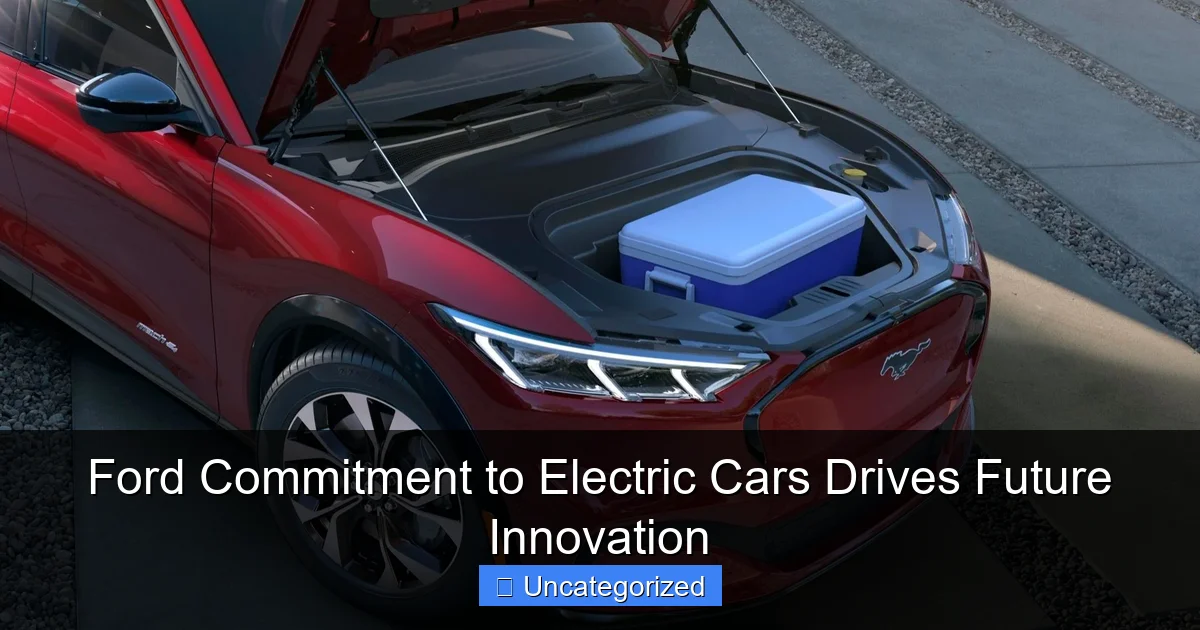
Featured image for ford commitment to electric cars
Image source: cimg0.ibsrv.net
Ford’s bold $50 billion commitment to electric vehicles by 2026 underscores its aggressive push to dominate the EV market, with plans to produce 2 million EVs annually. This strategic shift includes next-gen battery tech, expanded charging networks, and iconic electrified models, positioning Ford as a key innovator in the automotive industry’s electric future.
Key Takeaways
- Ford invests $50B+ in EVs through 2026, signaling long-term commitment.
- New EV plants in U.S. and Europe boost production capacity.
- Solid-state batteries in development for longer range and faster charging.
- Ford Pro solutions streamline fleet electrification for businesses.
- BlueOval Charging Network expands access to 10,000+ fast chargers.
- Retooling legacy factories ensures sustainable, cost-effective EV manufacturing.
📑 Table of Contents
- The Electric Revolution: Ford’s Bold Leap into the Future
- Ford’s Electrification Vision: A $50 Billion Investment
- Expanding the Electric Lineup: From Mustangs to Vans
- Building the EV Ecosystem: Charging, Software, and Partnerships
- Overcoming Challenges: Supply Chain, Costs, and Consumer Trust
- Ford’s Global Impact: Sustainability and Market Leadership
- Conclusion: Why Ford’s Commitment to Electric Cars Matters
The Electric Revolution: Ford’s Bold Leap into the Future
The automotive industry is undergoing a seismic shift, and Ford commitment to electric cars stands as a testament to its vision for a cleaner, smarter, and more sustainable future. For over a century, Ford has been synonymous with American innovation—from the Model T to the F-Series trucks. Today, the company is channeling that legacy into an electrified transformation, aiming not just to participate in the EV market but to lead it. With billions invested, new manufacturing plants rising, and a lineup of electric vehicles (EVs) that blend performance, affordability, and cutting-edge tech, Ford is redefining what it means to be an automaker in the 21st century.
But this isn’t just about swapping gas tanks for batteries. Ford’s strategy is holistic, touching every aspect of its business—from supply chain ethics to consumer education and infrastructure development. As climate concerns intensify and governments worldwide push for zero-emission mandates, Ford’s aggressive pivot to electrification isn’t just a business decision; it’s a cultural statement. In this deep dive, we’ll explore how Ford is turning its commitment to electric cars into actionable progress, the challenges it faces, and why this matters for drivers, investors, and the planet.
Ford’s Electrification Vision: A $50 Billion Investment
At the heart of Ford’s electric ambitions is a staggering financial commitment: $50 billion allocated through 2026 to develop electric vehicles, batteries, and charging solutions. This isn’t a vague promise—it’s a roadmap backed by concrete milestones, including plans to produce 2 million EVs annually by 2026 and achieve carbon neutrality across its global operations by 2050 (with interim targets for 2035).
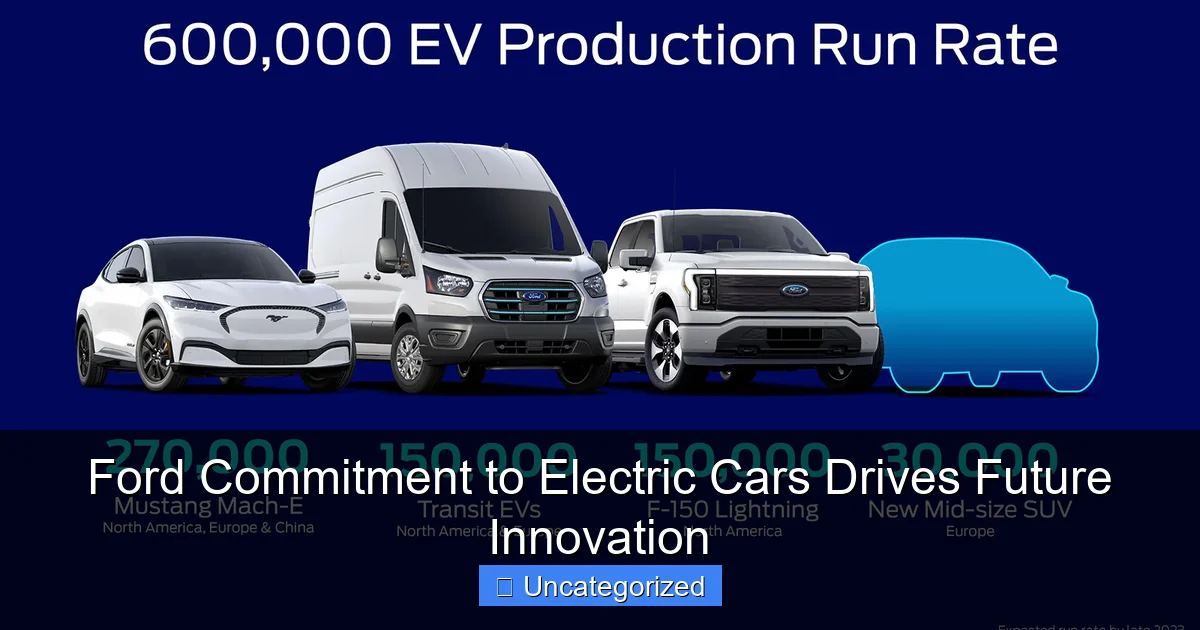
Visual guide about ford commitment to electric cars
Image source: motortrend.com
Breaking Down the $50 Billion Strategy
- EV Production: Ford is expanding factories like the Rouge Electric Vehicle Center in Michigan and building new facilities such as the BlueOval City in Tennessee, a $5.6 billion “mega-campus” for EV and battery production.
- Battery Technology: Partnering with SK On, Ford is investing in BlueOval SK, a joint venture to build three U.S. battery plants. These will produce lithium-ion batteries with 120 GWh of annual capacity—enough for 1.2 million EVs per year.
- Research & Development: Ford’s Advanced EV division focuses on next-gen battery chemistries (e.g., solid-state) and lightweight materials to extend range and reduce costs.
- Charging Infrastructure: Through the Ford Pro Charging network, the company is deploying commercial EV charging stations for fleet customers, addressing a critical pain point for businesses.
Real-World Impact: The Ford F-150 Lightning
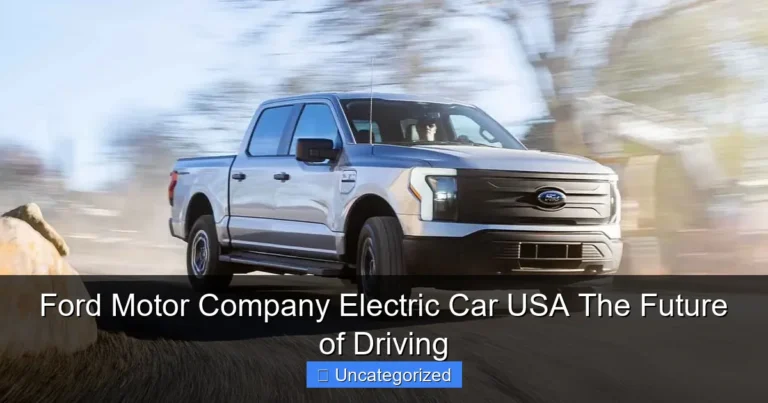
The F-150 Lightning exemplifies Ford’s investment philosophy. As the electric version of America’s best-selling truck, it’s not a niche product—it’s a mainstream vehicle with a starting price under $50,000, a 320-mile range, and features like “Intelligent Backup Power” that can power homes during outages. Ford has already sold over 200,000 Lightnings, proving that EVs can compete on utility and value.
Tip for buyers: If you’re considering an F-150 Lightning, explore Ford’s Home Integration System, which lets you use your truck’s battery as a home energy source. It’s a game-changer for off-grid living or emergency preparedness.
Expanding the Electric Lineup: From Mustangs to Vans
Ford’s commitment to electric cars extends far beyond the F-150 Lightning. The company is electrifying its entire product line, targeting diverse markets with vehicles that blend performance, practicality, and innovation.
Mustang Mach-E: Performance Meets Practicality
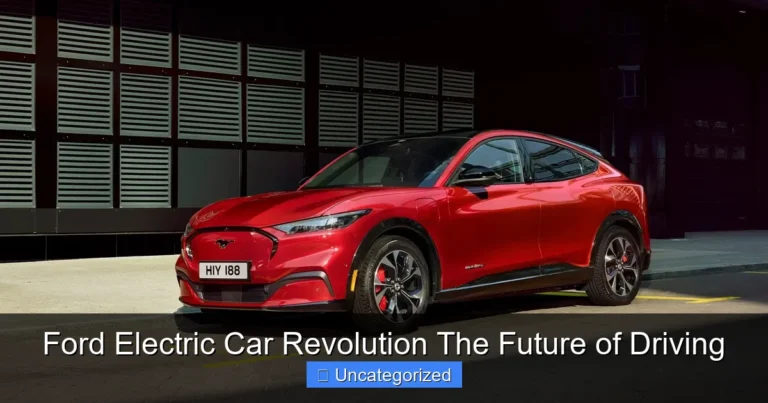
The Mustang Mach-E redefines the iconic Mustang for the EV era. With a range up to 314 miles, 480 horsepower (in GT trim), and a 0–60 mph time of 3.5 seconds, it’s a performance SUV that doesn’t sacrifice space. Ford has sold over 100,000 Mach-Es globally, with a 2024 refresh adding improved battery efficiency and a hands-free driving system (BlueCruise 1.2).
Practical tip: Use FordPass app to pre-condition the Mach-E’s battery in cold weather—this can add 20–30 miles of range during winter commutes.
E-Transit: Electrifying Commercial Fleets
The E-Transit is Ford’s answer to the commercial EV market. With a 126-mile range (ideal for last-mile deliveries) and a 68 kWh battery, it’s already used by companies like Amazon, UPS, and Walmart. Ford’s Ford Pro division offers integrated fleet management software, telematics, and charging solutions, making it easier for businesses to transition to EVs.
- Cost savings: E-Transit owners report 45% lower maintenance costs vs. gas-powered vans.
- Charging: Ford Pro’s “Charging as a Service” includes site design, installation, and maintenance for commercial clients.
Future Models: The 2025 Explorer EV and Beyond
Ford plans to launch a next-gen Explorer EV in 2025, using a new “skateboard” platform designed specifically for EVs. This platform will underpin future models, including a compact SUV (targeting Europe) and a performance sedan. Key features:
- Modular design for faster production
- 800-volt architecture for ultra-fast charging (15–80% in 15 minutes)
- Vehicle-to-grid (V2G) capabilities
Building the EV Ecosystem: Charging, Software, and Partnerships
Ford understands that selling EVs isn’t enough—it must build an ecosystem to support them. This means tackling range anxiety, charging accessibility, and user experience head-on.
Expanding Charging Access: The BlueOval Charge Network
Ford’s BlueOval Charge Network integrates over 100,000 public charging stations (including Tesla Superchargers via a 2023 partnership). Key features:
- Plug & Charge: Automatically authenticates and pays for charging (no app required).
- Route Planner: FordPass app suggests optimal charging stops based on battery level and traffic.
- Home Charging: Ford offers 240V home chargers with professional installation ($799, including a $500 federal tax credit).
Pro tip: Use the FordPass Power My Trip feature to plan long-distance drives. It calculates charging stops and estimates total trip time.
Software-Driven Innovation: Ford’s “BlueCruise” and Over-the-Air Updates
Ford’s EVs are “computers on wheels.” The BlueCruise 1.2 hands-free driving system uses LiDAR and camera data to navigate highways safely. Meanwhile, over-the-air (OTA) updates let Ford push new features remotely—like the 2023 update that added a “One-Pedal Driving” mode to the Mach-E.
Ford is also investing in vehicle-to-everything (V2X) technology, enabling EVs to:
- Power homes (V2H)
- Stabilize the grid (V2G)
- Communicate with other vehicles (V2V)
Strategic Partnerships: From SK On to Google
Ford’s ecosystem relies on collaboration:
- SK On: Battery cell production for U.S. plants
- Google: Android Automotive OS for infotainment (no more “dumb” screens)
- Tesla: Supercharger access for Ford EVs starting in 2024
- Redwood Materials: Battery recycling to close the sustainability loop
Overcoming Challenges: Supply Chain, Costs, and Consumer Trust
Ford’s commitment to electric cars faces hurdles, but the company is tackling them with transparency and innovation.
Supply Chain Resilience: The “Ford+ Plan”
Ford’s Ford+ strategy focuses on vertical integration to avoid battery shortages. This includes:
- Direct contracts with lithium, nickel, and cobalt miners
- Recycling partnerships to recover 95% of battery materials
- Localized battery production to reduce shipping costs
In 2023, Ford secured a deal with Redwood Materials to recycle 120,000 tons of EV batteries annually—equivalent to 250,000 vehicles per year.
Affordability: Slashing Costs Without Sacrificing Quality
EVs remain expensive, but Ford is cutting costs through:
- Economies of scale: High-volume production at BlueOval City
- Battery innovation: Switching to lithium iron phosphate (LFP) batteries for base models (cheaper, longer-lasting)
- Federal incentives: F-150 Lightning and Mach-E qualify for the $7,500 tax credit (if assembled in the U.S.)
Tip for buyers: Check if your state offers additional EV rebates. For example, California’s Clean Vehicle Rebate Project offers up to $7,500.
Building Consumer Trust: Education and Transparency
Ford combats “range anxiety” and misinformation with:
- Test drives: “Electric Experience” events at dealerships
- Education campaigns: Explaining charging times, battery lifespan, and total cost of ownership
- Warranties: 8-year/100,000-mile battery coverage on all EVs
In a 2023 survey, 78% of Ford EV owners said they’d buy another EV—higher than the industry average (65%).
Ford’s Global Impact: Sustainability and Market Leadership
Ford’s electrification isn’t just about profits—it’s a sustainability mission with global implications.
Carbon Reduction: From Factories to the Road
Ford’s carbon neutrality plan includes:
- Renewable energy: 100% renewable electricity at all factories by 2035
- Waste reduction: Zero waste to landfill at 100% of facilities (achieved in 2022)
- EV emissions: F-150 Lightning produces 60% fewer lifecycle emissions than its gas counterpart
Market Position: Competing with Tesla and Legacy Rivals
Ford is the second-best-selling EV brand in the U.S. (after Tesla), with a 7.5% market share in 2023. Key advantages:
- Brand trust: 120 years of automotive expertise
- Dealer network: 3,000+ U.S. dealerships for service and support
- Product diversity: EVs for trucks, SUVs, and commercial use (unlike Tesla)
Data Table: Ford’s Key Electric Vehicles (2023–2025)
| Model | Range (miles) | Starting Price | Key Feature | Production Status |
|---|---|---|---|---|
| F-150 Lightning | 240–320 | $49,995 | Home power backup | In production |
| Mustang Mach-E | 247–314 | $42,995 | BlueCruise 1.2 | In production |
| E-Transit | 126 | $51,095 | Ford Pro fleet management | In production |
| Explorer EV (2025) | 300+ | $45,000 (est.) | 800-volt charging | Pre-production |
| Compact SUV (2025) | 250+ | $35,000 (est.) | LFP battery | Pre-production |
Conclusion: Why Ford’s Commitment to Electric Cars Matters
Ford’s commitment to electric cars is more than a corporate pivot—it’s a blueprint for the future of transportation. By investing $50 billion, expanding its EV lineup, and building a robust charging ecosystem, Ford is proving that legacy automakers can lead the electric revolution. The F-150 Lightning’s success shows that EVs don’t have to be niche; they can be mainstream, practical, and affordable. Meanwhile, initiatives like BlueOval City and battery recycling demonstrate a long-term vision for sustainability.
For consumers, Ford’s approach offers a compelling choice: EVs backed by decades of engineering expertise, a vast service network, and real-world utility. For the planet, it means fewer emissions, cleaner factories, and a model for other automakers to follow. As Ford CEO Jim Farley stated, “We’re all in on electric—not because it’s trendy, but because it’s the right thing to do.”
The road ahead isn’t easy. Supply chain disruptions, charging infrastructure gaps, and consumer skepticism remain challenges. But Ford’s strategy—rooted in innovation, partnerships, and transparency—positions it as a true leader in the EV era. Whether you’re a driver, investor, or environmental advocate, Ford’s electric journey is one worth watching. The future isn’t just electric; it’s Ford-powered.
Frequently Asked Questions
What is Ford’s commitment to electric cars?
Ford’s commitment to electric cars centers on investing $50 billion globally by 2026 to expand its EV lineup, including iconic models like the F-150 Lightning and Mustang Mach-E. The automaker aims to produce 2 million EVs annually by 2026, signaling a bold shift toward electrification.
How is Ford supporting EV infrastructure alongside its electric car push?
Ford is partnering with charging networks like Electrify America and introducing the Ford Pro Charging system for commercial fleets. This ensures seamless access to charging solutions, reinforcing its commitment to electric cars and reducing range anxiety for customers.
Which new electric vehicles is Ford releasing in the next few years?
Ford plans to launch several EVs, including an electric version of the Explorer SUV, a next-gen F-150 Lightning, and three-row electric SUVs. These models highlight Ford’s dedication to innovation and meeting diverse consumer needs.
Is Ford phasing out gas-powered vehicles due to its EV commitment?
While Ford is prioritizing EVs, it hasn’t announced a full phase-out of gas-powered vehicles yet. The company is focusing on dual offerings, ensuring customers can transition to electric at their own pace while still providing ICE options.
How does Ford’s electric car strategy compare to other automakers?
Ford’s strategy stands out with its focus on high-volume, affordable EVs like the F-150 Lightning and its aggressive production targets. Unlike some rivals, Ford’s commitment to electric cars includes repurposing existing factories to reduce costs and speed up scaling.
What sustainability goals does Ford have for its electric vehicles?
Ford aims to achieve carbon neutrality by 2050, with EVs playing a key role. The company is also investing in battery recycling and renewable energy for manufacturing, aligning its sustainability goals with its EV ambitions.