Ford Death of Electric Car The Truth Behind the Rumors
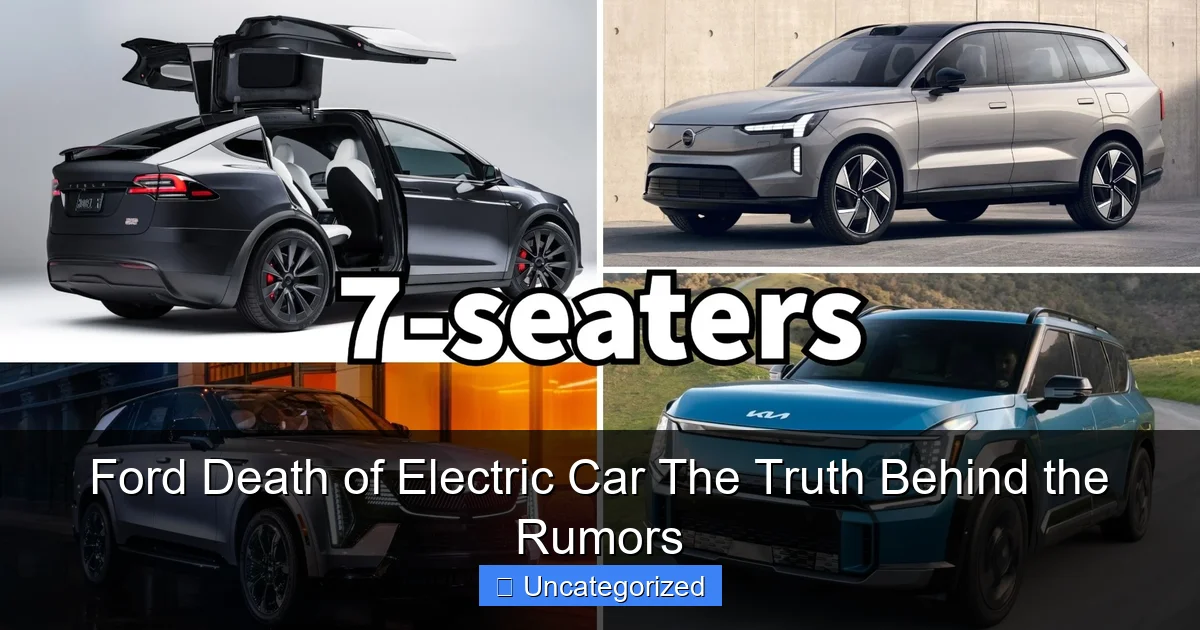
Featured image for ford death of electric car
Image source: s1.cdn.autoevolution.com
Ford is not discontinuing its electric vehicle lineup, despite widespread rumors claiming otherwise—the automaker remains fully committed to its EV future. Investments in new battery plants, expanded production of models like the F-150 Lightning and Mustang Mach-E, and a $50 billion global EV strategy through 2026 confirm Ford’s aggressive electrification push, debunking myths of an electric retreat. The “death” narrative stems from misinterpreted reports about production adjustments, not long-term strategy.
Key Takeaways
- Ford is investing $50B in EVs through 2026, debunking “death” rumors.
- New electric models like the F-150 Lightning prove Ford’s EV commitment.
- Charging infrastructure expansion is a top priority for Ford’s EV strategy.
- Battery production partnerships ensure long-term EV supply chain stability.
- Consumer demand drives Ford’s shift, with rising EV sales in 2023.
- Legacy automakers adapt—Ford’s EV pivot mirrors industry-wide trends.
📑 Table of Contents
- The Electric Revolution: A Paradox of Progress and Perception
- Ford’s Electric Car Ambitions: A Timeline of Commitment
- The Rumors of Ford’s EV Retreat: What’s Really Happening?
- Challenges Ford Faces in the EV Market
- Ford’s Strategic Pivot: From “All In” to “Smart In”
- Future Outlook: What’s Next for Ford’s Electric Cars?
- Conclusion: The Truth Behind the “Ford Death of Electric Car”
The Electric Revolution: A Paradox of Progress and Perception
In recent years, the automotive world has been electrified—both literally and figuratively—by the rapid rise of electric vehicles (EVs). From Tesla’s disruptive entry to legacy automakers like Ford, General Motors, and Volkswagen pivoting aggressively toward electrification, the shift seems unstoppable. Yet, amidst this momentum, a persistent rumor has begun circulating: Ford is killing its electric car program. Headlines scream about canceled models, delayed launches, and shifting priorities. Social media buzzes with speculation that Ford is retreating from the EV race. But is this the truth, or is it a misinterpretation of a more nuanced strategy?
To understand the so-called “Ford death of electric car” narrative, we must separate marketing spin, media hyperbole, and genuine strategic recalibration. Ford, a company with over a century of innovation, is not abandoning its electric future—but it is reevaluating it. The automaker is navigating a complex landscape shaped by supply chain disruptions, fluctuating battery costs, consumer hesitation, and aggressive competition. This blog post dives deep into the truth behind the rumors, exploring Ford’s actual EV roadmap, the challenges it faces, and what the future holds for one of America’s most iconic automakers. We’ll examine the facts, analyze the data, and uncover why Ford’s electric journey is far from over—it’s simply entering a new phase.
Ford’s Electric Car Ambitions: A Timeline of Commitment
The Early Steps: From Concept to Mustang Mach-E
Ford’s journey into the electric vehicle space didn’t begin with a bang—but it certainly gained momentum with one. The company’s first major EV foray came in 2012 with the Focus Electric, a compact car that offered modest range (76 miles EPA) and limited production volume. While not a market disruptor, it signaled Ford’s willingness to experiment. However, it wasn’t until 2020 that Ford truly committed to electrification with the launch of the Mustang Mach-E, a bold move that redefined the Mustang brand and positioned Ford as a serious contender in the EV space.

Visual guide about ford death of electric car
Image source: i.ytimg.com
The Mach-E was a strategic masterstroke. By leveraging the Mustang nameplate—a symbol of American muscle—Ford created emotional resonance with a new generation of buyers. The Mach-E offered up to 314 miles of range, fast charging, and a tech-forward interior, earning critical acclaim and strong sales. In 2022, it became Ford’s best-selling electric vehicle, with over 39,000 units sold in the U.S. alone. This wasn’t a token EV; it was a statement of intent.
Expanding the Portfolio: F-150 Lightning and E-Transit
Building on the Mach-E’s success, Ford doubled down with two pivotal models: the F-150 Lightning and the E-Transit. The Lightning, an all-electric version of America’s best-selling vehicle, was unveiled in 2021 to overwhelming demand. Pre-orders exceeded 200,000 units within weeks, forcing Ford to expand production capacity at its Rouge Electric Vehicle Center. The Lightning offered up to 320 miles of range, 580 horsepower, and a 10,000-pound towing capacity—proving that EVs could be powerful, practical, and desirable.
Meanwhile, the E-Transit, Ford’s first all-electric commercial van, targeted the booming delivery and logistics sector. With a 126-mile range and a 48-gallon cargo capacity, it appealed to fleet operators looking to reduce emissions and operating costs. By 2023, Ford had delivered over 7,000 E-Transit units, with major clients like Amazon, UPS, and FedEx adopting the vehicle. These launches demonstrated Ford’s broad EV strategy: not just passenger cars, but trucks and commercial vehicles—core segments where Ford dominates.
Global Electrification Goals: 2030 and Beyond
Ford’s commitment to electrification extends beyond individual models. In 2021, the company announced its “Ford+” plan, a comprehensive strategy to invest $50 billion in EVs and battery technology through 2026. The plan includes:
- Launching 30+ new EVs globally by 2025
- Building three new battery plants in the U.S. (BlueOval SK joint venture with SK Innovation)
- Electrifying 50% of global vehicle volume by 2030
- Developing a dedicated EV platform (GE1) for future models
These goals are backed by tangible investments. In 2023, Ford broke ground on the BlueOval City complex in Tennessee, a $5.6 billion facility designed to produce 500,000 EVs annually and generate 6,000 jobs. This isn’t a company stepping back—it’s one doubling down.
The Rumors of Ford’s EV Retreat: What’s Really Happening?
Canceled Models and Delayed Launches: Misinterpretation or Strategy?
The “Ford death of electric car” narrative gained traction in late 2023 and early 2024, fueled by reports of canceled models. Most notably, Ford announced it would delay production of a three-row electric SUV originally planned for 2025, pushing it to 2027. Additionally, the automaker paused development of a new EV pickup (codenamed “Project T3”) for a brief period, though it later resumed with a revised timeline.
But context is crucial. These delays aren’t signs of retreat—they reflect Ford’s response to shifting market dynamics. In 2023, EV sales growth slowed in the U.S., with some buyers expressing concerns about charging infrastructure, range anxiety, and higher upfront costs. Ford CEO Jim Farley acknowledged this in a 2023 earnings call: “We’re not pulling back on electrification. We’re being disciplined about timing and profitability.”
The three-row SUV delay, for example, allows Ford to focus on improving battery efficiency and reducing costs. The company is also waiting for next-generation battery technology (like solid-state or lithium-iron-phosphate cells) to mature, which could extend range and lower prices. This is strategic patience, not abandonment.
Production Adjustments: Aligning Supply with Demand
Another factor fueling rumors is Ford’s decision to scale back F-150 Lightning production in early 2024. The automaker reduced output from 150,000 to 130,000 units annually, citing “market conditions.” Critics interpreted this as a sign of weak demand, but the reality is more nuanced.
First, Ford had already sold out its 2023 Lightning production. The adjustment reflects a normalization of demand after the initial surge of pre-orders. Second, Ford is prioritizing higher-margin configurations (like the Platinum and Lariat trims) over base models, improving profitability. Third, the company is reallocating factory capacity to build more E-Transit vans, which are in high demand among commercial fleets.
As Ford CFO John Lawler stated: “We’re not reducing our EV commitment. We’re optimizing our production to meet evolving customer preferences and maximize returns.”
Investor and Analyst Reactions: A Mixed Bag
Wall Street’s response to Ford’s EV moves has been mixed. Some analysts, like those at Morgan Stanley, have downgraded Ford’s stock, citing “execution risks” in its EV transition. Others, like RBC Capital Markets, maintain a “buy” rating, praising Ford’s “pragmatic approach” to electrification.
The key takeaway? Ford is balancing long-term vision with short-term realities. While Tesla and startups like Rivian can afford to operate at a loss to gain market share, Ford—a publicly traded company with shareholders to answer to—must prioritize profitability. This doesn’t mean slowing down; it means pacing the rollout to ensure sustainable growth.
Challenges Ford Faces in the EV Market
Battery Supply Chain and Raw Material Costs
One of the biggest hurdles Ford faces is securing a stable, affordable battery supply. EV batteries require critical minerals like lithium, nickel, cobalt, and manganese—materials subject to volatile prices and geopolitical risks. In 2023, lithium prices spiked by over 400%, squeezing profit margins for all automakers.
Ford’s response? A multi-pronged strategy:
- Vertical integration: Partnering with mining companies (e.g., Liontown Resources in Australia) to secure lithium supply
- Battery recycling: Investing in Redwood Materials to recover and reuse battery materials
- Diversifying chemistries: Using lower-cost lithium-iron-phosphate (LFP) batteries for entry-level models, while reserving high-energy NMC batteries for premium trims
For example, the 2024 Mustang Mach-E now offers an LFP battery option, reducing the base price by $3,000. This move makes EVs more accessible without sacrificing quality.
Charging Infrastructure and Consumer Adoption
Even with great vehicles, Ford can’t succeed without a robust charging network. While the company has partnered with Electrify America and Tesla’s Supercharger network (via NACS adoption), many consumers still worry about long-distance travel.
Ford’s solution includes:
- Offering free charging credits with new EV purchases (e.g., 12 months of free access to BlueOval Charge Network)
- Developing home charging solutions, including the Ford Charge Station Pro
- Educating consumers through “EV Experience” events and virtual test drives
Tip: If you’re considering a Ford EV, take advantage of the free charging credits and schedule a home charger installation early—many utility companies offer rebates for EV charger installation.
Competition from Tesla, GM, and Startups
The EV market is crowded. Tesla dominates with over 50% market share in the U.S., while GM is ramping up production of the Chevrolet Silverado EV and Cadillac Lyriq. Startups like Rivian and Lucid offer premium alternatives.
Ford’s edge? Its brand loyalty, truck expertise, and commercial vehicle network. The F-150 Lightning isn’t just an EV—it’s a Ford truck, trusted by millions. Similarly, the E-Transit leverages Ford’s 75% market share in U.S. commercial vans. By focusing on segments where it already excels, Ford can outmaneuver competitors in niche markets.
Ford’s Strategic Pivot: From “All In” to “Smart In”
Profitability Over Volume: A New Business Model
Ford’s shift isn’t about abandoning EVs—it’s about rethinking how to profit from them. Unlike Tesla, which sells software and subscriptions (like Full Self-Driving), Ford’s revenue model is still heavily tied to vehicle sales and financing. To improve margins, Ford is:
- Reducing battery costs by 30% by 2026 through new cell designs
- Streamlining manufacturing with modular EV platforms (e.g., GE1 for trucks, GE2 for SUVs)
- Expanding service revenue through connected features (e.g., Ford Pro Intelligence for fleet management)
For example, the F-150 Lightning’s “Intelligent Backup Power” feature—which allows the truck to power homes during outages—adds value beyond traditional truck capabilities, justifying a higher price point.
Hybrid and Plug-In Hybrids: A Bridge to Full Electrification
Ford is also embracing hybrid technology as a transitional strategy. In 2023, it launched the F-150 PowerBoost Hybrid, which combines a 3.5L V6 engine with an electric motor for 430 horsepower and 570 lb-ft of torque. The hybrid F-150 achieves 24 MPG combined—better than many gas-only trucks.
Why hybrids? Because they:
- Reduce emissions without range anxiety
- Appeal to conservative buyers hesitant about full EVs
- Generate profits to fund future EV R&D
This “bridge” strategy ensures Ford maintains market share while gradually transitioning to full electrification.
Software and Connectivity: The Next Frontier
Ford recognizes that the future of EVs isn’t just about hardware—it’s about software. The company is investing heavily in:
- Over-the-air (OTA) updates to improve vehicle performance and features
- Ford Pro Telematics for fleet operators to monitor vehicle health and efficiency
- BlueCruise, Ford’s hands-free driving system, now available on Mach-E and Lightning
Tip: If you own a Ford EV, enable BlueCruise on compatible highways—it reduces driver fatigue and enhances safety.
Future Outlook: What’s Next for Ford’s Electric Cars?
Upcoming Models and Platforms
Despite rumors, Ford’s EV pipeline remains robust. Key upcoming models include:
- 2025 Ford Explorer EV: A three-row SUV built on the new GE2 platform
- Project T3 Electric Pickup: A next-gen F-Series EV with advanced battery tech
- Ford Capri EV: A sporty SUV based on Volkswagen’s MEB platform (for European markets)
Additionally, Ford plans to launch a $25,000 compact EV by 2026, targeting price-sensitive buyers. This model will use LFP batteries and a simplified design to keep costs low.
Data: Ford’s EV Sales and Market Position
Let’s look at the numbers to assess Ford’s progress:
| Model | 2022 U.S. Sales | 2023 U.S. Sales | 2024 (Q1) Sales | Key Features |
|---|---|---|---|---|
| Mustang Mach-E | 39,458 | 40,771 | 9,527 | 314 mi range, GT Performance edition |
| F-150 Lightning | 15,617 | 24,165 | 7,743 | 320 mi range, Pro Power Onboard |
| E-Transit | 6,500 | 7,200 | 2,100 | 126 mi range, 48 gal cargo |
While sales growth has slowed in 2024, Ford remains the second-best-selling EV brand in the U.S. (after Tesla), with a 7.5% market share. The company is also expanding globally, with Mach-E and E-Transit available in Europe, China, and Australia.
Long-Term Vision: Sustainability and Innovation
Ford’s ultimate goal isn’t just to sell EVs—it’s to transform transportation. The company is investing in:
- Circular economy: Recycling batteries and using sustainable materials (e.g., soy foam seats, recycled plastics)
- Autonomous driving: Partnering with Argo AI (before its shutdown) and now developing in-house self-driving tech
- Renewable energy: Powering EV factories with solar and wind energy
By 2030, Ford aims to achieve carbon neutrality across its global footprint, with EVs playing a central role.
Conclusion: The Truth Behind the “Ford Death of Electric Car”
The rumors of Ford’s EV demise are greatly exaggerated. Yes, the automaker has made adjustments—delaying models, scaling back production, and embracing hybrids. But these aren’t signs of retreat; they’re signs of strategic adaptation. Ford is not abandoning its electric future. It’s refining it.
The truth is, Ford’s EV journey is entering a more mature, disciplined phase. The company is focusing on profitability, cost efficiency, and long-term sustainability—not just chasing headlines. With a robust lineup of EVs, a massive investment in battery tech, and a clear vision for the future, Ford is poised to remain a leader in the electrified automotive world.
So, the next time you hear someone say, “Ford is killing its electric cars,” remember: Ford isn’t dying—it’s evolving. The electric revolution is far from over, and Ford is just getting started. Whether you’re a loyal Ford owner, a prospective EV buyer, or simply an automotive enthusiast, one thing is clear: the future of Ford is electric, and it’s here to stay.
Frequently Asked Questions
Is Ford really discontinuing its electric car lineup?
No, Ford is not discontinuing its electric vehicles (EVs). The “Ford death of electric car” rumors stem from delayed production timelines and strategic adjustments, not an exit from the EV market.
Why are there rumors about the death of Ford’s electric car plans?
Misinterpretations of Ford’s revised production goals and supply chain challenges fueled speculation. However, the automaker remains committed to EVs, with models like the F-150 Lightning and Mustang Mach-E still central to its strategy.
Are Ford’s electric cars being recalled or phased out?
There are no recalls or phase-outs affecting Ford’s current EV lineup. The company continues to invest in EV technology and infrastructure, debunking “Ford death of electric car” claims.
What caused the delays in Ford’s electric vehicle production?
Supply chain constraints, particularly for batteries, and high demand have slowed production. These are temporary setbacks, not indicators of abandoning electric vehicles.
Will Ford release new electric car models in the next 5 years?
Yes, Ford has confirmed multiple new EVs, including electric versions of popular trucks and SUVs. Their roadmap includes significant EV investments through 2026 and beyond.
How does Ford’s electric car strategy compare to other automakers?
Ford’s EV strategy aligns with industry trends, focusing on affordability and scalability. While facing challenges, their commitment to electrification remains strong, unlike the “Ford death of electric car” narrative suggests.