Ford Electric Car 2018 Review Performance and Features You Need to Know

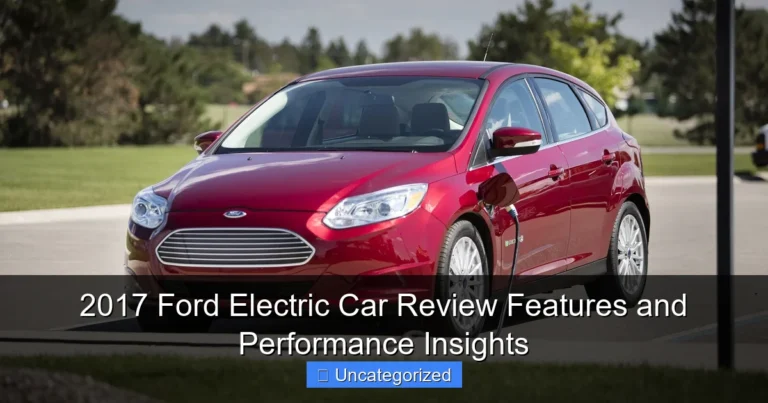
Featured image for ford electric car 2018
Image source: automobile360.it
The 2018 Ford electric car lineup, led by the Focus Electric, delivers impressive efficiency and a refined driving experience, perfect for eco-conscious urban commuters. With an upgraded 33.5 kWh battery offering up to 115 MPGe and a responsive 143-hp motor, it balances performance and practicality. Key features include Ford’s SYNC 3 infotainment, regenerative braking, and a suite of driver aids, making it a smart, tech-forward choice in the compact EV segment.
Key Takeaways
- 2018 Ford EVs offer strong acceleration with instant torque for quick city driving.
- Upgrade to longer-range models for over 100 miles on a single charge.
- Regenerative braking enhances efficiency and reduces wear on brake pads.
- FordPass app enables remote control of charging, climate, and vehicle location.
- Spacious interiors with smart storage maximize comfort and cargo flexibility.
- Standard safety tech includes blind-spot monitoring and rearview cameras.
📑 Table of Contents
- The Electric Shift: Ford’s 2018 Electric Car Ambitions
- 2018 Ford Focus Electric: Performance and Driving Experience
- Charging Infrastructure and Battery Technology
- Interior, Technology, and Safety Features
- Pricing, Incentives, and Ownership Costs
- Ford’s Broader EV Strategy in 2018: The Road Ahead
- Conclusion: Is the 2018 Ford Focus Electric Right for You?
- Data Table: 2018 Ford Focus Electric vs. Key Competitors
The Electric Shift: Ford’s 2018 Electric Car Ambitions
In the rapidly evolving world of electric vehicles (EVs), 2018 was a pivotal year for automakers. With Tesla leading the charge and legacy brands scrambling to catch up, Ford made a bold statement by doubling down on its commitment to electrification. Though Ford did not release a fully new Ford electric car 2018 model, the year marked a turning point in its strategic roadmap. The 2018 Ford Focus Electric—already in its second generation—was updated with meaningful improvements, signaling Ford’s intent to stay relevant in the EV space. At the same time, Ford announced ambitious plans for a $11 billion investment in electric vehicles by 2022, including 16 fully electric models. This dual approach—refining current offerings while laying the groundwork for a future EV lineup—positioned 2018 as a transitional yet critical year for Ford’s electric ambitions.
For consumers, the 2018 Ford Focus Electric offered a compelling blend of practicality, affordability, and eco-conscious engineering. While it wasn’t the flashiest or longest-range EV on the market, it stood out for its real-world usability, especially in urban environments. With increasing competition from the Chevrolet Bolt, Nissan Leaf, and even the Tesla Model 3, Ford had to balance innovation with value. This Ford electric car 2018 review dives deep into the performance, features, technology, and overall value of the Focus Electric, while also examining Ford’s broader EV strategy. Whether you’re a first-time EV buyer, a Ford loyalist, or simply curious about the state of electric mobility in 2018, this guide will equip you with everything you need to know.
2018 Ford Focus Electric: Performance and Driving Experience
The 2018 Ford Focus Electric was Ford’s sole all-electric vehicle offering, and it represented a significant upgrade over its 2012–2016 predecessor. At the heart of the car was a refined electric powertrain designed to deliver smooth, responsive, and efficient performance. Let’s explore what made this model stand out—and where it fell short.
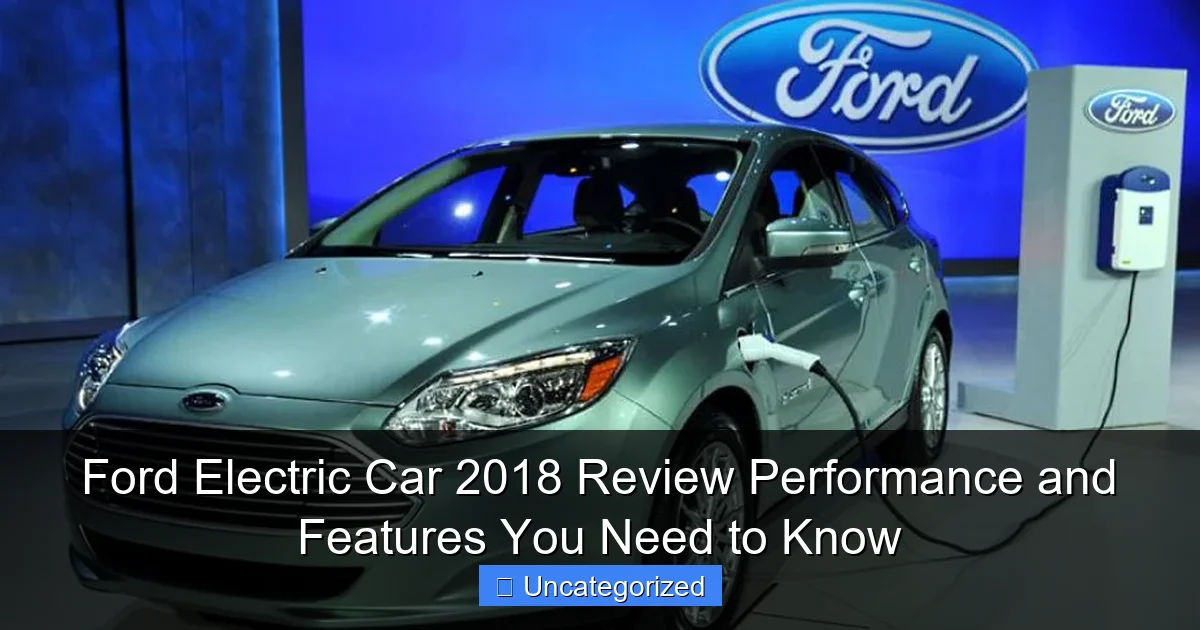
Visual guide about ford electric car 2018
Image source: thestatesman.com
Powertrain and Acceleration
The 2018 Focus Electric was powered by a 107-kilowatt (143 horsepower) AC synchronous electric motor, paired with a 33.5-kWh lithium-ion battery pack. This setup delivered 184 lb-ft of torque, available instantly—a hallmark of electric vehicles. While 143 horsepower might not sound thrilling on paper, the car’s low center of gravity and immediate torque made it surprisingly agile in city driving.
From a standstill, the Focus Electric could reach 60 mph in approximately 9.5 seconds, which was on par with the second-generation Nissan Leaf but slower than the Chevrolet Bolt (6.5 seconds). However, this wasn’t a performance-focused EV. Instead, Ford prioritized efficiency and comfort. The car felt peppy during stop-and-go traffic, with seamless power delivery and minimal noise—perfect for urban commuters.
Pro tip: To maximize responsiveness, use the “L” (Low) drive mode. This setting increases regenerative braking, allowing you to slow the car significantly by simply lifting off the accelerator—ideal for traffic-heavy commutes or downhill stretches.
Range and Real-World Efficiency
The 2018 Focus Electric offered an EPA-estimated range of 115 miles on a full charge. This was a modest improvement over the previous model’s 100-mile range, thanks to a larger battery and improved energy management. However, compared to the 2018 Chevrolet Bolt (238 miles) or the Tesla Model 3 (220+ miles), the range was a limiting factor for long-distance drivers.
In real-world conditions, drivers typically achieved between 90 and 110 miles, depending on driving style, terrain, and climate. Cold weather reduced range by up to 30%, a common issue among EVs. Ford included a heat pump system to mitigate this, which was more efficient than traditional resistive heating but still couldn’t match the efficiency of newer heat pump systems in later models.
For example, a daily commute of 40 miles in mixed city/highway conditions would leave plenty of buffer—ideal for urbanites. But a weekend trip from Chicago to Indianapolis (about 180 miles) would require careful planning, with at least one charging stop.
Handling and Ride Quality
The Focus Electric retained the excellent chassis tuning of the gasoline-powered Focus. With a stiffer suspension and a lower center of gravity due to the floor-mounted battery, the car handled corners with confidence. Steering was precise, and the electric motor’s quiet operation enhanced the overall driving experience.
Ride comfort was a highlight. The suspension absorbed bumps and potholes well, making it ideal for city streets. However, the added weight of the battery (about 300 pounds more than the standard Focus) made the car feel slightly heavier during sharp turns or emergency maneuvers. That said, most drivers reported a smooth, composed ride—especially on highways.
Tip: For a sportier feel, consider upgrading to the available 17-inch alloy wheels with low-profile tires. These improved cornering grip but slightly reduced ride comfort on rough roads.
Charging Infrastructure and Battery Technology
One of the biggest challenges for any EV in 2018 was charging—both at home and on the road. The 2018 Ford Focus Electric addressed this with a mix of practical solutions and forward-thinking features, though it still lagged behind competitors in fast-charging capability.
Home Charging Options
The Focus Electric came with a standard 120-volt Level 1 charger, which could add about 4 miles of range per hour. For most drivers, this was too slow for daily use. Ford recommended installing a 240-volt Level 2 home charging station (sold separately), which could fully recharge the battery in 5.5 hours.
Many owners reported installing a ClipperCreek or ChargePoint Level 2 charger for around $600–$800 (including installation). This was a worthwhile investment, especially for those with longer commutes. Ford also partnered with ChargePoint to offer discounted charging stations and installation services.
Example: A driver charging overnight (8 hours) with a Level 2 charger could gain up to 92 miles—enough for most daily needs.
Public Charging and DC Fast Charging
The 2018 Focus Electric supported Level 2 (240V) charging at public stations, but it did not support DC fast charging (CHAdeMO or CCS). This was a major drawback. While most competitors like the Nissan Leaf and Chevrolet Bolt offered DC fast charging, Ford opted for a slower, more conservative approach.
At a Level 2 public charger (e.g., at a shopping mall or office), the car could gain about 20 miles of range per hour. For a full charge, this meant over 5 hours—impractical for long trips. Ford justified this by emphasizing the car’s city-focused use case and battery longevity. However, for drivers needing occasional long-distance capability, the lack of fast charging was a dealbreaker.
Workaround: Plan charging stops at hotels, workplaces, or shopping centers during extended trips. Use apps like PlugShare or ChargePoint to locate Level 2 stations along your route.
Battery Longevity and Warranty
Ford equipped the Focus Electric with a liquid-cooled lithium-ion battery pack, which helped maintain consistent performance and extend lifespan. The battery was warrantied for 8 years or 100,000 miles, whichever came first, covering defects and capacity loss below 70%.
In practice, most batteries retained over 85% of their capacity after 5 years, according to third-party studies. Proper charging habits—avoiding frequent full discharges and extreme temperatures—further improved longevity.
Tip: Use the FordPass app to monitor battery state of charge and schedule charging during off-peak hours to save on electricity costs.
Interior, Technology, and Safety Features
The 2018 Focus Electric shared its interior with the gasoline-powered Focus, but with a few EV-specific enhancements. Ford focused on practicality, comfort, and intuitive tech—making it a strong contender for tech-savvy commuters.
Cabin Design and Comfort
The cabin was modern and well-appointed for its class. High-quality materials, soft-touch surfaces, and minimalist design created a premium feel. The seats were supportive and offered good lateral support, though rear legroom was slightly tighter than in the Honda Civic or Toyota Corolla.
One unique feature was the EV-specific instrument cluster, which displayed real-time energy usage, regenerative braking status, and range projections. A central 8-inch touchscreen powered Ford’s SYNC 3 infotainment system—a significant upgrade over older versions.
Storage space was decent, with a 12.9 cubic-foot trunk (slightly smaller than the gas Focus due to the charging cable storage). The rear seats folded 60/40 for added cargo flexibility.
Infotainment and Connectivity
The SYNC 3 system was a highlight. It featured:
- Apple CarPlay and Android Auto (standard)
- Voice-activated navigation with EV-specific routing (e.g., showing charging stations)
- Wi-Fi hotspot capability (via optional FordPass Connect)
- Smartphone integration with FordPass app
The FordPass app allowed remote control of key functions:
- Start/stop charging
- Precondition the cabin (heat or cool the car while plugged in)
- Locate the vehicle and check battery status
- Schedule charging during off-peak hours
Example: On a cold winter morning, you could use the app to warm up the car while it’s still charging—saving battery range for driving.
Safety and Driver Assistance
The 2018 Focus Electric earned a 5-star overall safety rating from the NHTSA. Standard safety features included:
- AdvanceTrac electronic stability control
- Front, side, and knee airbags
- Rearview camera
- MyKey parental controls
Available driver-assist technologies (on higher trims) included:
- Blind-spot monitoring
- Rear cross-traffic alert
- Lane-keeping assist
- Automatic emergency braking
While not as advanced as Tesla’s Autopilot, these features provided solid peace of mind, especially in city driving.
Pricing, Incentives, and Ownership Costs
The 2018 Ford Focus Electric was priced competitively, especially when factoring in federal and state incentives. Let’s break down the total cost of ownership.
Base Price and Trim Levels
The Focus Electric was available in a single trim: the SEL. It started at $29,120 before incentives. Key standard features included:
- SYNC 3 with 8-inch touchscreen
- 17-inch alloy wheels
- Leather-trimmed seats
- Heated front seats and steering wheel
- LED lighting
Optional packages added features like a panoramic sunroof, premium audio, and advanced safety tech. Fully loaded models approached $34,000.
Federal and State Incentives
Buyers qualified for a $7,500 federal tax credit (available through 2019). Many states offered additional rebates:
- California: $2,500 Clean Vehicle Rebate
- Colorado: $5,000 tax credit
- New York: $2,000 rebate
After incentives, the effective price could drop to $19,000–$22,000—making it one of the most affordable EVs on the market.
Total Cost of Ownership
EVs generally have lower operating costs than gas cars. For the Focus Electric:
- Fuel: $600/year (at $0.13/kWh and 12,000 miles/year)
- Maintenance: $400/year (no oil changes, fewer moving parts)
- Insurance: Comparable to gas Focus (~$1,200/year)
Over 5 years, the Focus Electric could save $3,000–$5,000 in fuel and maintenance compared to a gas-powered compact car.
Ford’s Broader EV Strategy in 2018: The Road Ahead
The 2018 Focus Electric was more than just a car—it was a stepping stone in Ford’s larger electrification vision. While the model itself was modest, the year was packed with strategic moves that shaped Ford’s future.
Investment and Future Models
In January 2018, Ford announced an $11 billion investment in electric vehicles, with plans to launch 16 fully electric models by 2022. Key upcoming vehicles included:
- The Mustang Mach-E (revealed in 2019, released in 2020)
- The F-150 Lightning (announced in 2021)
- An electric Transit van
This signaled a shift from small EVs like the Focus to high-volume, high-impact models—especially in the SUV and truck segments, where Ford dominates.
Partnerships and Infrastructure
Ford partnered with:
- ChargePoint: To expand public charging access
- Electrify America: To support ultra-fast charging (350 kW) for future models
- FordPass: To create a seamless EV ownership experience
These partnerships laid the foundation for Ford’s “Always On” connectivity and charging ecosystem.
Why the Focus Electric Mattered
Though discontinued after 2018, the Focus Electric served as a testbed for Ford’s EV technology, user feedback, and charging infrastructure. Its real-world data informed the development of the Mach-E and F-150 Lightning. For early adopters, it offered a reliable, affordable entry into electric mobility.
Conclusion: Is the 2018 Ford Focus Electric Right for You?
The 2018 Ford Focus Electric wasn’t the most powerful, longest-range, or fastest-charging EV on the market. But it was a smart, practical choice for a specific type of driver: urban commuters, eco-conscious families, and first-time EV buyers seeking value and reliability.
Its strengths included:
- Smooth, quiet driving experience
- Affordable total cost of ownership
- Strong safety and tech features
- Proven battery reliability
Its weaknesses were:
- Limited range (115 miles)
- No DC fast charging
- Discontinued after 2018 (limited availability)
If you primarily drive in the city, have access to home charging, and don’t need cross-country range, the Focus Electric was—and remains—a solid used EV option. However, if you need more range or fast charging, consider the 2018 Chevrolet Bolt or a used Tesla Model 3.
Ultimately, the Ford electric car 2018 lineup, anchored by the Focus Electric, was a bridge between Ford’s past and its electric future. It may not have been a game-changer, but it was a necessary step in Ford’s journey toward a fully electrified lineup. For those who embraced it, the Focus Electric delivered a taste of the future—without the premium price tag.
Data Table: 2018 Ford Focus Electric vs. Key Competitors
| Model | Range (EPA) | 0–60 mph | DC Fast Charging | Base Price | Key Feature |
|---|---|---|---|---|---|
| 2018 Ford Focus Electric | 115 miles | 9.5 sec | No | $29,120 | SYNC 3, FordPass |
| 2018 Nissan Leaf | 150 miles | 7.5 sec | Yes (CHAdeMO) | $29,990 | ProPILOT Assist |
| 2018 Chevrolet Bolt | 238 miles | 6.5 sec | Yes (CCS) | $36,620 | 200+ mile range |
| 2018 Tesla Model 3 (RWD) | 220 miles | 5.1 sec | Yes (Tesla Supercharger) | $44,000 | Autopilot, OTA updates |
Frequently Asked Questions
What are the key features of the Ford electric car 2018 models?
The 2018 Ford electric car lineup, including the Focus Electric, features a 107-kWh battery, 143-mile range, and DC fast charging capability. It also includes SYNC 3 infotainment, smartphone integration, and advanced safety tech like blind-spot monitoring.
How does the 2018 Ford Focus Electric perform compared to other EVs?
The 2018 Ford Focus Electric delivers 143 horsepower and 184 lb-ft torque, offering smooth city driving but falls short in range compared to rivals like the Chevrolet Bolt. Its 7.2 kW onboard charger enables quicker recharging than earlier models.
What is the range of the Ford electric car 2018 model?
The 2018 Ford Focus Electric has an EPA-estimated range of 115 miles per charge, though real-world driving may vary slightly. This makes it suitable for urban commutes but less ideal for long-distance travel.
Does the 2018 Ford electric car support fast charging?
Yes, the 2018 Ford Focus Electric supports DC fast charging, which can replenish up to 80% of the battery in about 30 minutes. This feature enhances convenience for drivers needing quicker turnaround times.
What technology comes standard in the 2018 Ford electric car?
The 2018 Ford electric car includes Ford’s SYNC 3 system with 8-inch touchscreen, Apple CarPlay, Android Auto, and a Wi-Fi hotspot. Additional tech features include regenerative braking and customizable driver displays.
Is the 2018 Ford electric car eligible for tax credits?
Yes, the 2018 Ford Focus Electric qualifies for the U.S. federal EV tax credit of up to $7,500, depending on battery size and income eligibility. State-specific incentives may further reduce ownership costs.