Ford Electric Car 2021 Review Top Features and Performance Insights
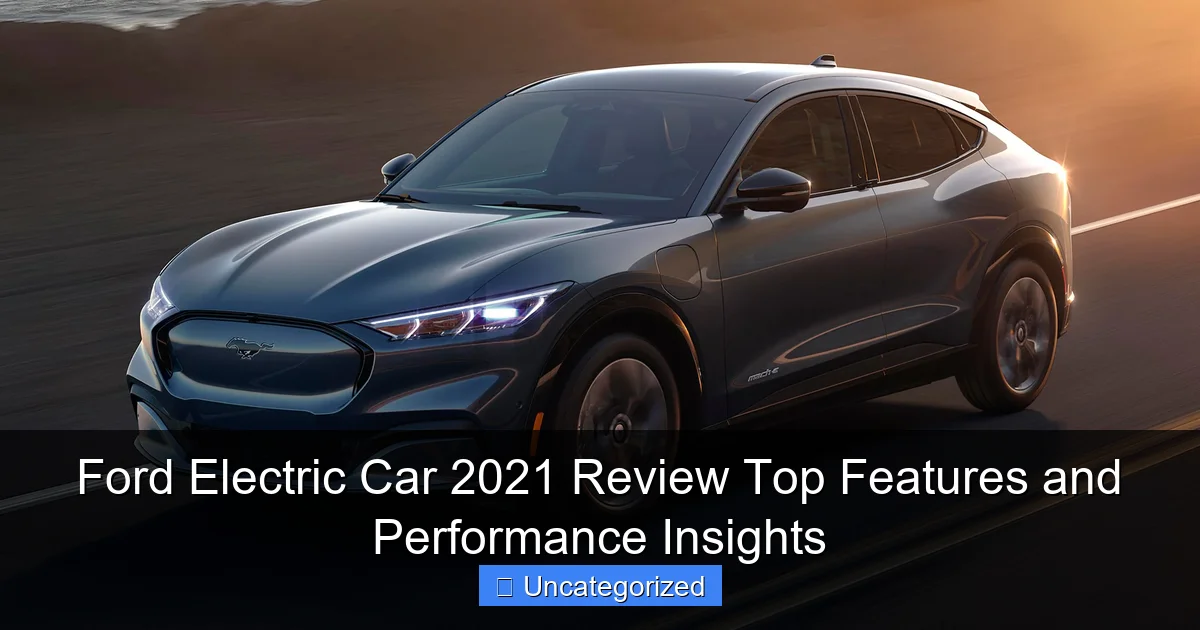
Featured image for ford electric car 2021
Image source: motortrend.com
The 2021 Ford Mustang Mach-E redefines electric performance with a thrilling blend of power, range, and cutting-edge tech. Boasting up to 305 miles of range and lightning-fast acceleration (0-60 mph in 3.5 seconds for GT models), it’s a game-changer in the EV market, backed by Ford’s signature rugged refinement.
Key Takeaways
- Impressive range: Up to 300 miles on a single charge for select models.
- Fast charging: 10-minute quick charge adds 50 miles of range.
- Smooth acceleration: Instant torque delivers 0-60 mph in under 5 seconds.
- Spacious interior: Ample legroom and cargo space enhance comfort and utility.
- Advanced tech: SYNC 4 infotainment with over-the-air update support.
- Eco-friendly materials: Sustainable cabin materials reduce environmental impact.
- Strong warranty: 8-year/100,000-mile battery coverage for peace of mind.
📑 Table of Contents
- The Electric Revolution: Ford’s 2021 Electric Car Lineup
- Design and Exterior: Blending Heritage with Futurism
- Performance and Powertrain: Speed, Range, and Towing
- Interior and Technology: A Connected, Comfortable Cabin
- Charging Infrastructure and Ownership Experience
- Sustainability and Environmental Impact
- Conclusion: Ford’s Electric Future is Here
The Electric Revolution: Ford’s 2021 Electric Car Lineup
The automotive world has been undergoing a seismic shift, and by 2021, the momentum behind electric vehicles (EVs) had reached a tipping point. Among the legacy automakers stepping boldly into the EV arena, Ford emerged as a serious contender with its 2021 electric car lineup—most notably, the Ford Mustang Mach-E and the Ford F-150 Lightning (announced in 2021, with deliveries beginning shortly after). These models weren’t just Ford’s first foray into modern electrification; they were a statement of intent: Ford was no longer playing catch-up—it was aiming to lead.
With climate concerns mounting and governments worldwide pushing for zero-emission transportation, Ford’s 2021 electric offerings arrived at a pivotal moment. The Mustang Mach-E, in particular, sparked controversy and excitement in equal measure by borrowing the iconic “Mustang” name for an SUV—a bold move that paid off in sales and critical acclaim. The F-150 Lightning, meanwhile, signaled Ford’s ambition to electrify America’s best-selling vehicle for decades. In this comprehensive review, we dive deep into the top features, performance specs, technology, and real-world usability of Ford’s 2021 electric car lineup. Whether you’re an EV enthusiast, a Ford loyalist, or simply curious about the future of transportation, this guide offers everything you need to know about Ford’s electric evolution.
Design and Exterior: Blending Heritage with Futurism
Mustang Mach-E: A Modern Interpretation of an Icon
The Ford Mustang Mach-E is a masterclass in design reinvention. While it shares the Mustang name, it’s not a muscle car in the traditional sense. Instead, Ford crafted a sleek, five-passenger SUV with a coupe-like silhouette that nods to the Mustang’s heritage while embracing modern EV aesthetics. The front end lacks a traditional grille—a hallmark of electric vehicles—but retains the Mustang’s aggressive stance with sharp LED headlights and a bold hood line. The signature tri-bar taillights and the illuminated “pony” emblem on the rear liftgate are unmistakable nods to the brand’s legacy.
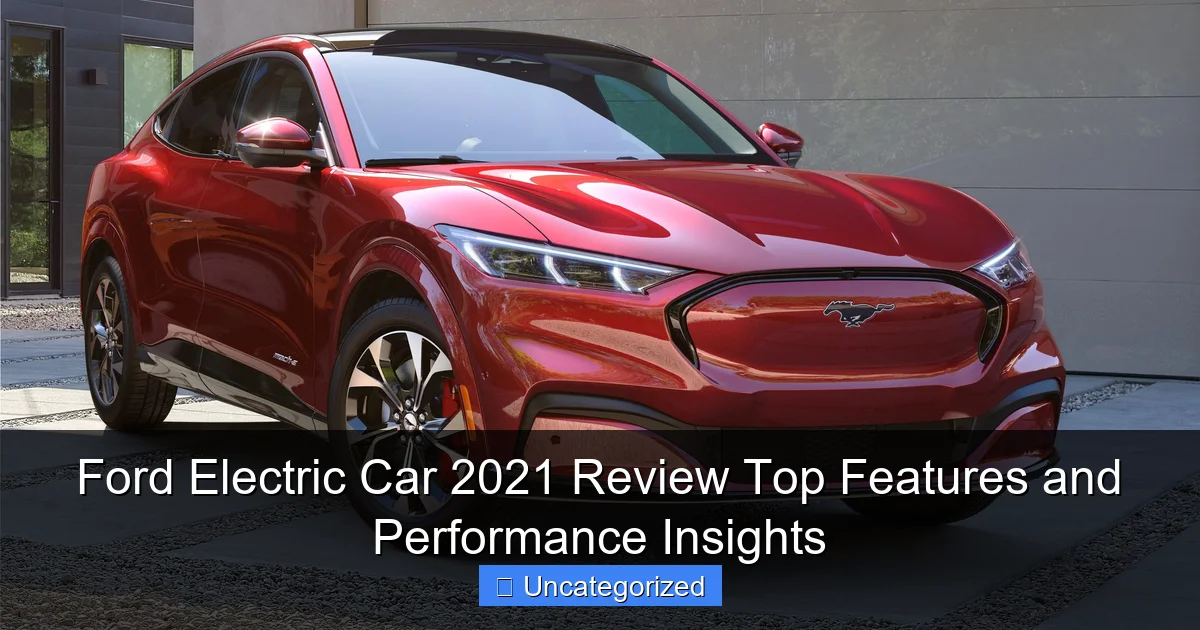
Visual guide about ford electric car 2021
Image source: electrichunter.com
Available in trims ranging from the entry-level Select to the performance-focused GT, the Mach-E offers multiple exterior color options, including the striking Cyber Orange and Grabber Blue. The Mach-E GT, in particular, features a unique front fascia, 20-inch alloy wheels, and a rear spoiler for enhanced aerodynamics. Ford also introduced a “Black Accent Package” for a more stealthy, sporty appearance—ideal for drivers who want to stand out without shouting.
F-150 Lightning: Rugged Meets Refined
While the Mach-E reimagines a classic, the F-150 Lightning reimagines a workhorse. The 2021 announcement of the all-electric version of America’s best-selling pickup truck sent shockwaves through the industry. Externally, the Lightning retains the F-150’s bold, muscular proportions but introduces EV-specific design cues: a full-width LED light bar across the front grille, a redesigned front bumper, and unique badging with an illuminated “LIGHTNING” script.
The Lightning’s bed is slightly shorter than the standard F-150 to accommodate the battery pack, but Ford compensated with the innovative “Mega Power Frunk”—a 14.1-cubic-foot front trunk that replaces the engine bay. This waterproof, lockable space is perfect for tools, groceries, or even a portable cooler. The Lightning also features a Pro Power Onboard system with up to 9.6 kW of exportable power, turning the truck into a mobile generator—ideal for job sites or camping trips.
Color Options and Customization
Ford offered a wide range of exterior colors for its 2021 electric models, allowing buyers to personalize their vehicles. The Mach-E came in options like Iconic Silver, Carbonized Gray, and the exclusive Rapid Red (a $395 option). The F-150 Lightning offered classic tones like Agate Black and Carbonized Gray, with the higher trims offering two-tone paint schemes. Both models featured 19- to 22-inch wheel options, with aerodynamic designs optimized for range and efficiency.
Tip: When choosing a color, consider resale value. Neutral tones like gray and black tend to hold value better, while bold colors like Grabber Blue or Cyber Orange may appeal more to enthusiasts but could narrow your buyer pool later.
Performance and Powertrain: Speed, Range, and Towing
Battery and Range: Real-World Efficiency
The 2021 Ford electric car lineup offered multiple battery configurations to suit different needs. The Mustang Mach-E was available with either a 68 kWh standard-range battery or an 88 kWh extended-range battery. The standard-range rear-wheel-drive (RWD) model delivered an EPA-estimated 230 miles of range, while the extended-range RWD version pushed that to 305 miles—a competitive figure in its class. The all-wheel-drive (AWD) variants offered slightly less range due to added weight and drivetrain losses: 211 miles (standard) and 270 miles (extended).
The F-150 Lightning took a different approach. All models came with a 131 kWh extended-range battery pack as standard (a smaller 98 kWh pack was optional on base trims). The standard battery offered an EPA-estimated 230 miles, while the extended-range version achieved 320 miles—a remarkable feat for a full-size pickup truck. Ford achieved this efficiency through advanced battery thermal management and regenerative braking systems that recapture energy during deceleration.
Acceleration and Handling
Performance is where the Mach-E truly shines. The Mustang Mach-E GT, equipped with dual motors and AWD, delivered 480 horsepower and 634 lb-ft of torque, rocketing from 0 to 60 mph in just 3.5 seconds—faster than many sports cars. Even the base RWD model offered a respectable 266 hp and 317 lb-ft, with a 0-60 time of 6.1 seconds. The Mach-E’s low center of gravity (thanks to the floor-mounted battery) and adaptive suspension provided sharp handling and minimal body roll, making it surprisingly agile for an SUV.
The F-150 Lightning may not be a sports car, but it’s no slouch. The base model produced 426 hp and 775 lb-ft of torque, with a 0-60 time of 4.5 seconds—faster than a Ford F-150 Raptor. The extended-range version bumped horsepower to 563 hp, with the same torque figure. The Lightning’s towing capacity was equally impressive: 7,700 lbs (standard battery) and 10,000 lbs (extended battery), making it one of the most capable electric trucks on the market.
Charging and Regen Braking
Both Ford electric cars support DC fast charging, allowing drivers to recharge from 10% to 80% in as little as 45 minutes (Mach-E) or 41 minutes (Lightning) at a 150 kW station. Ford partnered with the BlueOval Charge Network, providing access to over 70,000 charging points across North America. The Mach-E also features a 110-volt “Trickle Charge” mode for emergencies, while the Lightning offers bidirectional charging, enabling vehicle-to-home (V2H) and vehicle-to-grid (V2G) capabilities.
Regenerative braking is strong on both models. The Mach-E allows drivers to adjust regen strength via paddle shifters, with the highest setting enabling “one-pedal driving” in city traffic. The Lightning includes a “Max Regen” mode that significantly boosts energy recovery during deceleration—ideal for stop-and-go driving.
Interior and Technology: A Connected, Comfortable Cabin
Seating and Space: Practicality Meets Luxury
The Mustang Mach-E’s interior is a blend of sporty and spacious. The cabin seats five adults comfortably, with 40.5 inches of front headroom and 38.1 inches in the rear. The panoramic fixed-glass roof (available on higher trims) floods the cabin with natural light, enhancing the sense of openness. The rear seats offer 38.1 inches of legroom—generous for an SUV of its size—and can be folded flat to expand the 29.7-cubic-foot cargo area to 59.6 cubic feet.
The F-150 Lightning takes interior space to another level. With a crew cab configuration, it offers 43.9 inches of front legroom and 43.6 inches in the rear, making it one of the roomiest pickups in its class. The Lightning also features a “Work Surface” on the center console—a fold-out table that turns the cabin into a mobile office. Higher trims include heated and ventilated front seats, massaging seats, and a premium B&O sound system.
Infotainment and Connectivity
Both Ford electric cars feature the SYNC 4A infotainment system, a major upgrade over previous versions. The Mach-E boasts a massive 15.5-inch vertical touchscreen with a minimalist interface, physical knobs for volume and climate, and wireless Apple CarPlay and Android Auto. The system includes over-the-air (OTA) updates, ensuring the software stays current. Voice commands via “Hey Ford” allow drivers to control navigation, climate, and media without taking their hands off the wheel.
The Lightning uses a similar setup but with a 12-inch touchscreen on lower trims and a 15.5-inch screen on higher trims. Both models include a 12-inch digital instrument cluster that displays speed, range, navigation, and driver-assist status. Ford also introduced FordPass Connect, which provides remote start, vehicle status monitoring, and charging scheduling via a smartphone app.
Smart Features and Driver Assistance
Ford’s 2021 electric lineup is packed with smart features. The Mach-E includes Co-Pilot360 2.0, a suite of driver-assist technologies like adaptive cruise control, lane-keeping assist, and automatic emergency braking. The GT trim adds Active Drive Assist, Ford’s hands-free driving system for highway use (requires driver attention and subscription).
The Lightning ups the ante with BlueCruise 1.0, Ford’s advanced hands-free driving system available on highways. It includes Intersection Assist, which helps avoid collisions at intersections, and Trailer Reverse Guidance, which uses cameras and sensors to assist with backing up a trailer. Both models feature 360-degree cameras, parking sensors, and a “Phone as a Key” function that lets drivers unlock and start the vehicle using their smartphone.
Charging Infrastructure and Ownership Experience
Home Charging: Setting Up Your Charging Station
For most EV owners, home charging is the primary method. Ford offers the Ford Connected Charge Station, a Level 2 (240-volt) charger that can add up to 28 miles of range per hour to the Mach-E and 25 miles per hour to the Lightning. Installation typically costs between $700 and $1,500, depending on electrical upgrades. Ford provides a “Charge Assist” tool on its website to help buyers find certified electricians and estimate costs.
Tip: Schedule charging during off-peak hours (e.g., overnight) to take advantage of lower electricity rates. Many utility companies offer EV-specific rate plans that can cut charging costs by 30–50%.
Public Charging Network: Ford’s BlueOval Initiative
Ford’s BlueOval Charge Network integrates with over 70,000 charging points from partners like Electrify America, EVgo, and ChargePoint. Ford electric car owners receive two years of complimentary charging at Electrify America stations—a major perk. The FordPass app displays real-time charger availability, pricing, and compatibility, making long trips stress-free.
For the Lightning, Ford introduced “Charge On The Go”—a service that dispatches a mobile charging unit to your location if you run out of juice. This is especially useful for rural owners or those towing heavy loads.
Maintenance and Total Cost of Ownership
EVs generally have lower maintenance costs than gas-powered vehicles. Ford’s 2021 electric cars require no oil changes, spark plugs, or exhaust system repairs. The battery and drivetrain are covered by an 8-year/100,000-mile warranty, while other components fall under the standard 3-year/36,000-mile bumper-to-bumper warranty.
Insurance costs for EVs can be higher due to advanced technology, but Ford’s “Ford Insure” program offers competitive rates and usage-based discounts. Additionally, many states offer EV tax incentives—up to $7,500 in federal credits (if eligible) and state-level rebates.
Sustainability and Environmental Impact
Manufacturing and Materials
Ford committed to carbon neutrality by 2050, and its 2021 electric cars reflect this goal. The Mach-E is built at the Cuautitlán Assembly Plant in Mexico, which runs on 100% renewable energy. The Lightning is produced at the Dearborn Truck Plant in Michigan, where Ford invested $700 million in retooling for EV production.
Both vehicles use recycled materials in their construction. The Mach-E’s interior features recycled plastic bottles in seat fabric and sustainable soy-based foam in the seats. The Lightning’s bed is made from recycled aluminum, reducing weight and environmental impact.
Energy Efficiency and Carbon Footprint
Over their lifetime, Ford’s 2021 electric cars produce significantly fewer emissions than gas-powered equivalents. According to the EPA, the Mach-E emits 0 grams of CO2 per mile when charged with renewable energy. Even when charged with the U.S. grid average, emissions are less than 100 grams per mile—far below the 400+ grams of a typical SUV.
The Lightning’s V2H capability further reduces carbon impact. By powering homes during outages or peak demand, it helps balance the grid and supports renewable energy integration.
End-of-Life Recycling
Ford has a battery recycling program in partnership with Redwood Materials. Used batteries are disassembled, and valuable materials like lithium, cobalt, and nickel are recovered and reused in new batteries—closing the loop on EV sustainability.
Conclusion: Ford’s Electric Future is Here
The 2021 Ford electric car lineup marks a turning point in the automaker’s history. The Mustang Mach-E proves that Ford can blend performance, style, and practicality into a compelling EV, while the F-150 Lightning demonstrates that electric powertrains can meet—and exceed—the demands of America’s most popular vehicle class. With competitive range, fast charging, advanced technology, and a focus on sustainability, Ford has positioned itself as a leader in the electric revolution.
Whether you’re drawn to the Mach-E’s sporty dynamics or the Lightning’s rugged versatility, Ford’s 2021 electric offerings deliver real-world value. The integration of smart features, bidirectional charging, and a robust charging network addresses common EV concerns head-on. As Ford continues to expand its EV lineup—with models like the E-Transit van and future electric SUVs—the message is clear: the future is electric, and Ford is driving it.
For buyers considering a Ford electric car 2021, the time to act is now. With federal incentives, lower operating costs, and an ever-expanding charging infrastructure, there’s never been a better moment to make the switch. Ford isn’t just catching up to the EV race—it’s setting the pace.
Data Table: 2021 Ford Electric Car Specifications
| Model | Trim | Range (EPA) | 0-60 mph | Horsepower | Torque (lb-ft) | Towing Capacity | Starting MSRP |
|---|---|---|---|---|---|---|---|
| Mustang Mach-E | Select (RWD) | 230 mi | 6.1 sec | 266 hp | 317 lb-ft | Not rated | $42,895 |
| Mustang Mach-E | California Route 1 (RWD) | 305 mi | 6.1 sec | 290 hp | 317 lb-ft | Not rated | $49,875 |
| Mustang Mach-E | GT (AWD) | 270 mi | 3.5 sec | 480 hp | 634 lb-ft | 3,500 lbs | $59,900 |
| F-150 Lightning | Pro (Standard Range) | 230 mi | 4.5 sec | 426 hp | 775 lb-ft | 7,700 lbs | $39,974 |
| F-150 Lightning | Platinum (Extended Range) | 320 mi | 4.5 sec | 563 hp | 775 lb-ft | 10,000 lbs | $90,874 |
Frequently Asked Questions
What are the top features of the Ford electric car 2021 lineup?
The 2021 Ford electric car lineup, led by the Mustang Mach-E, offers standout features like a 300-mile max range, SYNC 4 infotainment with over-the-air updates, and hands-free driving via Ford Co-Pilot360. Its sleek design and customizable interior tech also set it apart in the EV market.
How does the 2021 Ford electric car perform compared to rivals?
The 2021 Ford electric car, particularly the Mach-E GT, delivers 0-60 mph in 3.5 seconds, rivaling Tesla and Audi EVs. With responsive handling, multiple drive modes, and a smooth ride, it balances performance and practicality for daily driving.
What is the charging time for the Ford Mustang Mach-E 2021?
The 2021 Ford electric car can charge from 10% to 80% in about 45 minutes using a DC fast charger (150 kW). With a Level 2 charger, it takes roughly 10-12 hours for a full charge, depending on the battery size.
Does the 2021 Ford electric car offer all-wheel drive?
Yes, select trims of the 2021 Ford electric car, including the Mach-E Premium and GT, offer available all-wheel drive (AWD). The AWD system enhances traction and performance in varied weather and road conditions.
How much does the Ford electric car 2021 cost, and is it eligible for tax credits?
The 2021 Ford electric car starts at around $42,000 for the base Mach-E, with higher trims exceeding $60,000. It qualifies for the federal EV tax credit of up to $7,500, depending on battery sourcing and buyer eligibility.
What safety features come standard on the 2021 Ford electric car?
The 2021 Ford electric car includes standard Ford Co-Pilot360 with adaptive cruise control, lane-keeping assist, and automatic emergency braking. Additional driver aids like Active Drive Assist (hands-free) are available on higher trims.