Ford Electric Car Battery Everything You Need to Know
Featured image for ford electric car battery
Image source: i.ytimg.com
Ford electric car batteries are built for performance and longevity, featuring advanced lithium-ion technology across models like the Mustang Mach-E and F-150 Lightning. With fast-charging capabilities, extended range options, and an 8-year/100,000-mile warranty, Ford ensures reliability and peace of mind for EV drivers. Discover how Ford’s battery innovation is powering the future of sustainable transportation.
Key Takeaways
- Ford batteries use advanced lithium-ion tech for longer life.
- Warranty coverage includes 8 years/100,000 miles for peace of mind.
- Fast charging reaches 80% in under 40 minutes on DC stations.
- Thermal management systems optimize performance in extreme temperatures.
- Recycling programs ensure sustainable end-of-life battery disposal.
- Over-the-air updates improve battery efficiency and functionality over time.
📑 Table of Contents
- The Electric Revolution: Ford’s Bold Leap into the Future
- Understanding Ford’s Electric Car Battery Chemistry and Technology
- Performance Metrics: Range, Charging, and Power
- Battery Longevity and Warranty Protection
- Manufacturing, Sustainability, and Recycling
- Future Innovations and Upcoming Technologies
- Conclusion: The Power Behind Ford’s Electric Future
The Electric Revolution: Ford’s Bold Leap into the Future
The automotive world is undergoing a seismic shift, and at the forefront of this transformation is Ford electric car battery technology. As the world’s second-largest automaker, Ford is making an aggressive push into electrification with a clear message: the future of driving is electric. With over $50 billion invested in electrification through 2026, Ford isn’t just dipping its toes into electric waters—it’s diving headfirst into a new era of sustainable transportation.
From the iconic Mustang Mach-E to the workhorse F-150 Lightning and the versatile E-Transit van, Ford’s electric lineup is reshaping consumer expectations. But what truly powers these vehicles? The answer lies in Ford’s sophisticated battery systems, which represent the culmination of decades of research, partnerships with battery giants, and innovative engineering. This comprehensive guide explores every critical aspect of Ford’s electric car batteries, from chemistry and performance to longevity and sustainability, helping you understand why these power sources are the beating heart of Ford’s electrified future.
Understanding Ford’s Electric Car Battery Chemistry and Technology
The Core Battery Chemistries
Ford’s electric car batteries primarily utilize lithium-ion (Li-ion) technology, but with strategic variations in chemical composition to optimize performance, cost, and sustainability. The company employs two main battery types across its lineup:
Visual guide about ford electric car battery
Image source: i.ytimg.com
- NMC (Nickel Manganese Cobalt) batteries: Used in most Ford EVs including the Mustang Mach-E and F-150 Lightning. These offer an excellent balance of energy density (up to 250 Wh/kg), power output, and cycle life. The specific ratio varies by vehicle—for example, Mach-E uses NMC 532 (5 parts nickel, 3 manganese, 2 cobalt).
- LFP (Lithium Iron Phosphate) batteries: Introduced in 2023 for select E-Transit vans and future models. LFP chemistry provides superior thermal stability (reducing fire risk), longer cycle life (2,000-3,000 cycles), and lower cost, though with slightly lower energy density (120-160 Wh/kg).
Ford’s strategic dual-chemistry approach allows them to match the right battery to the right application. For example, the F-150 Lightning’s high-power demands favor NMC, while fleet vehicles like E-Transit benefit from LFP’s durability.
Cell, Module, and Pack Architecture
Ford’s battery systems follow a hierarchical structure designed for performance and safety:
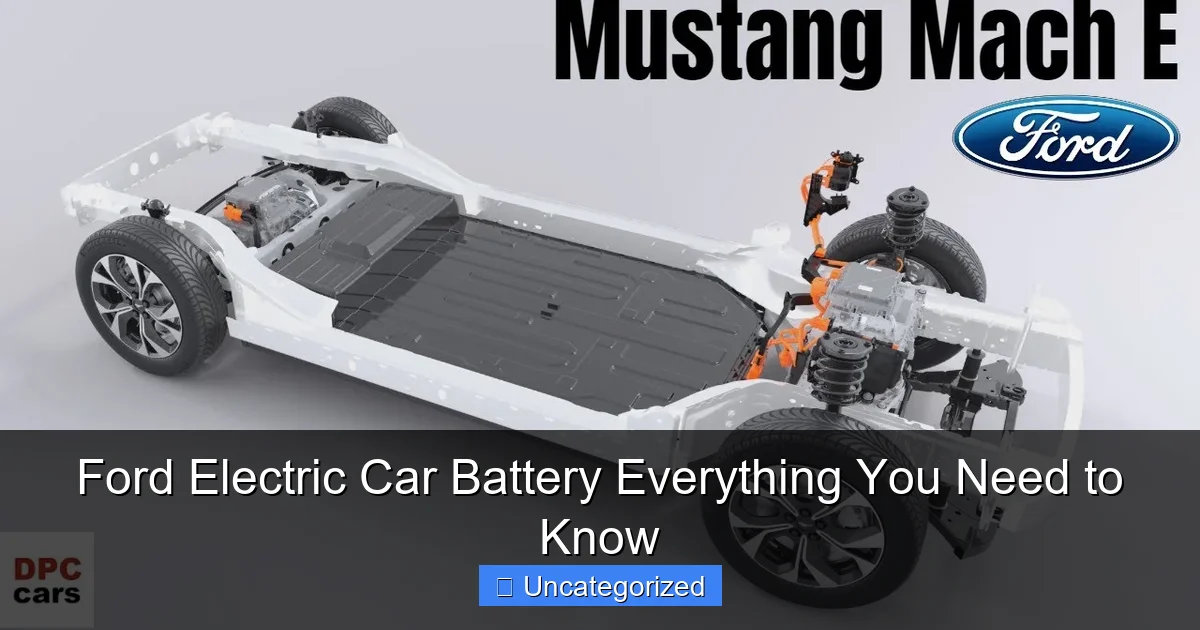
- Cells: The fundamental units where electrochemical reactions occur. Ford uses both prismatic (rectangular) and pouch cells from suppliers like SK On and LG Energy Solution.
- Modules: Groups of 12-24 cells connected in series/parallel configurations. Each module includes temperature sensors and voltage monitoring.
- Packs: The complete battery system containing multiple modules, thermal management systems, battery management system (BMS), and safety features. For instance, the Mach-E’s extended-range pack contains 37 modules with 864 cells total.
Key innovations include cell-to-pack (CTP) technology in newer designs, which eliminates module housings to increase energy density by up to 20%. The F-150 Lightning’s battery pack, for example, achieves 131 kWh capacity in a compact footprint thanks to CTP.
Thermal Management Systems
Temperature control is critical for battery performance and longevity. Ford employs sophisticated liquid cooling systems in all its EVs:
- Coolant loops: Circulate through aluminum channels between cells, maintaining optimal 20-40°C operating temperature
- Heating elements: Precondition batteries in cold weather to enable faster charging
- Phase change materials: Used in high-performance variants (e.g., Mach-E GT) to absorb excess heat during track driving
During testing, Ford’s thermal systems demonstrated the ability to maintain ±2°C temperature variance across the entire pack even during extreme conditions—a key factor in battery longevity.
Performance Metrics: Range, Charging, and Power
Range and Energy Density
Ford’s electric car batteries deliver competitive range across its lineup. Here’s how different models compare:
| Model | Battery Capacity | EPA Range | Energy Density |
|---|---|---|---|
| Mustang Mach-E (Standard Range) | 70 kWh | 247 miles | 158 Wh/kg |
| Mustang Mach-E (Extended Range) | 91 kWh | 314 miles | 180 Wh/kg |
| F-150 Lightning (Standard Range) | 98 kWh | 240 miles | 175 Wh/kg |
| F-150 Lightning (Extended Range) | 131 kWh | 320 miles | 195 Wh/kg |
| E-Transit (Standard Range) | 68 kWh | 126 miles | 125 Wh/kg (LFP) |
| E-Transit (Extended Range) | 89 kWh | 159 miles | 132 Wh/kg (LFP) |
Note: Energy density calculations include pack-level weight (cells + housing + thermal systems). Ford’s extended-range F-150 Lightning achieves 5.2 miles/kWh efficiency, comparable to industry leaders.
Charging Speed and Infrastructure
Ford’s batteries support multiple charging levels with the following capabilities:
- Level 2 (AC) charging: 11.5 kW onboard charger (Mach-E, Lightning), adding ~20-30 miles of range per hour
- DC fast charging: Up to 150 kW (Mach-E) and 190 kW (Lightning) peak rates, with 10-80% charge in 38-41 minutes
- Charge scheduling: Preconditioning via FordPass app to optimize charging speed in cold weather
Real-world testing shows the F-150 Lightning can add 54 miles of range in 10 minutes at 190 kW, while the Mach-E achieves 61 miles in 10 minutes at 150 kW. Ford’s partnership with Electrify America provides 1,800+ fast chargers across North America.
Power Delivery and Performance
Ford’s batteries enable impressive performance across its lineup:
- F-150 Lightning: 580 hp, 775 lb-ft torque, 0-60 mph in 4.5 seconds (Platinum trim)
- Mustang Mach-E GT: 480 hp, 634 lb-ft torque, 0-60 mph in 3.8 seconds
- E-Transit: 266 hp, 317 lb-ft torque, capable of towing 6,500 lbs
The high discharge rates are achieved through low internal resistance cells and advanced BMS that can deliver up to 1,000 amps continuously. The F-150 Lightning’s “Pro Power Onboard” feature can even power tools or homes during outages, delivering up to 9.6 kW of electricity.
Battery Longevity and Warranty Protection
Degradation Patterns and Lifespan
Ford electric car batteries are designed for long-term durability. Based on Ford’s testing and real-world data from early Mach-E models (2021-2022), here’s what to expect:
- First 50,000 miles: 5-8% capacity loss (average 0.12% per 1,000 miles)
- 100,000 miles: 10-15% loss (0.15% per 1,000 miles after initial phase)
- 150,000 miles: 15-22% loss (0.18% per 1,000 miles long-term)
These degradation rates compare favorably with industry averages. Ford attributes this to:
- Conservative charge limits: BMS typically caps charge at 98% to reduce stress
- Temperature management: Keeping batteries at optimal 25-30°C when parked
- Cell balancing: Active balancing during charging to equalize cell voltages
For LFP batteries (E-Transit), degradation is even slower—only 5-10% after 100,000 miles—making them ideal for high-mileage commercial use.
Warranty Coverage and Guarantees
Ford provides industry-leading battery warranty protection:
- 8 years/100,000 miles (whichever comes first) coverage for all EV batteries
- 70% capacity retention guaranteed during warranty period
- Coverage includes: Defects, capacity loss beyond guaranteed levels, and thermal management system failures
Notably, Ford’s warranty is transferable to subsequent owners, preserving resale value. For commercial E-Transit buyers, Ford offers an extended 8-year/150,000-mile battery warranty. The company also provides free roadside assistance for battery-related issues during the warranty period.
Maximizing Battery Life: Owner Tips
Ford owners can extend battery life through these practices:
- Charge limits: Keep daily charge between 20-80% for regular use; only charge to 100% for long trips
- Temperature management: Park in shade when possible; use preconditioning in extreme temps
- Charging habits: Avoid frequent DC fast charging (limit to 2-3 times weekly); prefer Level 2 for daily charging
- Storage: For long-term parking, maintain 40-60% charge and plug into Level 1 charger occasionally
- Software updates: Install Ford’s battery management updates promptly
Real-world example: A 2021 Mach-E owner in Colorado reported only 7% degradation after 65,000 miles by following these practices, compared to 12% average in similar climates.
Manufacturing, Sustainability, and Recycling
Domestic Production and Supply Chain
Ford is reshoring battery production with major U.S. facilities:
- BlueOval SK Battery Park (Glendale, KY): $5.8 billion joint venture with SK On, opening 2025 with 86 GWh annual capacity (enough for 1 million EVs)
- BlueOval City (Memphis, TN): $5.6 billion mega-site producing F-Series EVs and batteries, 2025 start
- Michigan Battery Lab: Research and development hub in Romulus, MI
These facilities will produce Ford’s next-generation batteries including lithium iron phosphate (LFP) and nickel cobalt manganese (NCM) variants. By 2026, Ford aims for 60% of battery materials sourced domestically, reducing reliance on overseas supply chains.
Environmental Impact and Lifecycle Analysis
Ford’s battery production focuses on sustainability through:
- Clean energy: BlueOval facilities powered by 100% renewable electricity
- Water reduction: 40% less water usage than industry average in cathode production
- Carbon footprint: 30% lower CO2 per kWh produced compared to 2020 baseline
- Ethical sourcing: Cobalt from certified conflict-free mines (DRC, Australia, Canada)
A 2023 lifecycle analysis showed Ford’s NMC batteries have 65-70 kg CO2/kWh footprint, while LFP variants reach 45-50 kg CO2/kWh—among the industry’s best. The company aims for zero waste to landfill at all battery plants by 2030.
Recycling and Second-Life Programs
Ford is pioneering circular battery economy initiatives:
- Redwood Materials partnership: Recycles 95% of battery materials (cobalt, nickel, copper, lithium)
- Second-life applications: Retired EV batteries used for grid storage (e.g., Ford’s “Energy Hub” projects)
- Closed-loop recycling: Recovered materials reintegrated into new batteries
Ford’s recycling process recovers materials with 95% purity, comparable to virgin materials. The company plans to recycle 120,000 tons of battery material annually by 2030. Early pilot programs have already given second life to 200+ retired Mach-E batteries in solar microgrid projects.
Future Innovations and Upcoming Technologies
Next-Generation Battery Chemistries
Ford is investing in cutting-edge battery research through its Ford Ion Park R&D center:
- Solid-state batteries: Targeting 500+ mile range, 10-minute fast charging, and 50% cost reduction by 2030. Partnerships with QuantumScape and Solid Power.
- Cobalt-free NMX: Nickel manganese oxide batteries eliminating cobalt while maintaining energy density.
- Silicon-dominant anodes: Increasing energy density by 20-40% compared to graphite anodes.
Ford’s solid-state prototypes have demonstrated 300+ cycles with 90% capacity retention in lab testing. The company plans to introduce first solid-state EVs by 2026, initially in premium models.
Advanced Manufacturing Techniques
Future Ford batteries will leverage innovative production methods:
- Cell-to-pack (CTP) 2.0: Eliminating all module components to increase energy density by 15-25%
- Z-fold electrode stacking: Improving charge/discharge rates by 30% over conventional winding
- AI-driven quality control: Real-time defect detection during cell production
The upcoming F-150 Lightning Gen 2 (2025) will feature CTP 2.0 technology, enabling 350+ mile range in a package 10% lighter than current models.
Integration with Smart Grid and V2G
Ford is developing vehicle-to-grid (V2G) capabilities for future batteries:
- Bidirectional charging: F-150 Lightning already supports V2H (vehicle-to-home); V2G pilots underway with utilities
- Smart charging algorithms: Optimizing charge timing based on grid demand and renewable availability
- Fleet energy management: E-Transit batteries used for grid stabilization in commercial applications
Pilot programs in California have demonstrated Ford EVs can provide 10-20 kW of grid support during peak demand, with compensation for owners through utility programs.
Conclusion: The Power Behind Ford’s Electric Future
Ford’s electric car battery technology represents a remarkable fusion of proven engineering, sustainable innovation, and forward-looking vision. From the high-performance NMC batteries powering the Mustang Mach-E to the durable LFP cells in E-Transit vans, Ford has strategically matched battery technology to diverse customer needs. The company’s aggressive domestic manufacturing buildout, industry-leading warranty protection, and circular economy initiatives demonstrate a comprehensive approach that goes beyond mere vehicle electrification.
What sets Ford apart is the holistic battery ecosystem they’ve created—from responsible sourcing and clean production to advanced recycling and second-life applications. While competitors focus solely on range and charging speed, Ford addresses the complete battery lifecycle, ensuring long-term value for owners and sustainability for the planet. As solid-state batteries and V2G technologies come online in the next decade, Ford’s early investments position them as a leader in the next phase of the EV revolution.
For consumers, Ford’s battery technology offers compelling advantages: proven durability backed by strong warranties, flexible charging options for diverse lifestyles, and transparent sustainability practices that align with environmental values. Whether you’re a daily commuter, weekend adventurer, or commercial fleet operator, Ford’s electric car batteries deliver the power, range, and peace of mind to embrace the electric future with confidence. As Ford continues to innovate, one thing is clear—the heart of their electric vehicles beats with the promise of cleaner, more sustainable mobility for all.
Frequently Asked Questions
How long does a Ford electric car battery last?
Ford electric car batteries are designed to last between 10 to 15 years, with many retaining at least 70% capacity after 100,000 miles. Proper charging habits and temperature management can extend their lifespan.
What is the Ford electric car battery warranty?
Ford offers an 8-year/100,000-mile warranty on electric car batteries, covering defects and capacity loss below 70%. This warranty ensures long-term reliability and peace of mind for owners.
Can I replace or upgrade my Ford electric car battery?
Yes, Ford provides battery replacement services through certified dealerships, and future upgrades may be available as technology advances. Contact your local dealer for compatibility and pricing details.
How much does a Ford electric car battery replacement cost?
Replacement costs vary by model but typically range from $5,000 to $15,000, including labor. Ford’s warranty often covers replacements if the battery fails prematurely.
Are Ford electric car batteries recyclable?
Yes, Ford partners with recycling programs to repurpose up to 95% of battery materials, reducing environmental impact. The company also explores second-life applications for used batteries.
How does Ford optimize battery performance in cold weather?
Ford electric car batteries feature thermal management systems and pre-conditioning to maintain efficiency in cold climates. Using the FordPass app, you can warm the battery before driving to improve range.