Ford Electric Car Battery Warranty What You Need to Know
Featured image for ford electric car battery warranty
Image source: fabulousfords.com
Ford’s electric car battery warranty covers 8 years or 100,000 miles, ensuring long-term reliability and peace of mind for EV owners. This comprehensive protection includes repairs or replacements for battery capacity loss below 70%, making it a competitive offering in the electric vehicle market.
Key Takeaways
- Warranty covers 8 years/100,000 miles: Ford guarantees battery performance for this period.
- Check for 70% capacity retention: Replacement if degradation exceeds 30%.
- Transferable to new owners: Boosts resale value and buyer confidence.
- Excludes damage from misuse: Avoid unauthorized modifications or extreme conditions.
- Free repairs at Ford dealers: Always use certified service centers for claims.
- Review state-specific terms: Some regions offer extended coverage options.
📑 Table of Contents
- Understanding Ford Electric Car Battery Warranty: What You Need to Know
- Ford Electric Car Battery Warranty: Coverage and Duration
- How Ford Measures Battery Degradation and Performance
- Warranty Claims Process: What to Expect
- Comparing Ford’s Warranty to Competitors
- Tips for Maximizing Battery Life and Warranty Value
- Conclusion: Peace of Mind with Ford’s Electric Car Battery Warranty
Understanding Ford Electric Car Battery Warranty: What You Need to Know
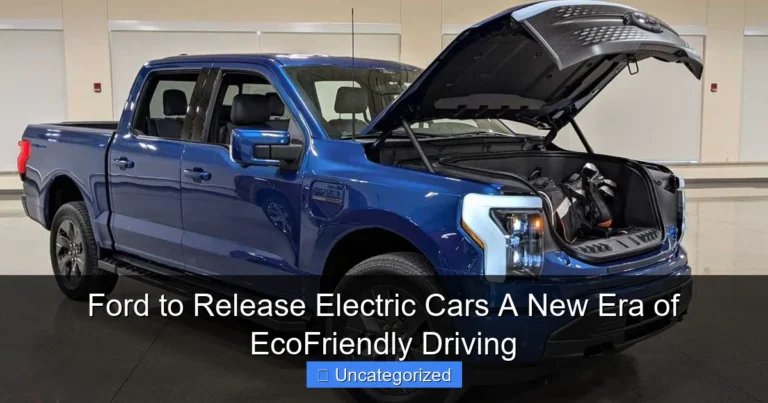
The shift toward electric vehicles (EVs) is accelerating, and Ford is at the forefront of this transformation with its innovative lineup of electric cars like the Mustang Mach-E, F-150 Lightning, and the upcoming Explorer EV. As consumers embrace the benefits of zero-emission driving, one critical concern remains: the longevity and reliability of the electric car battery. Unlike traditional internal combustion engines, EVs rely entirely on their battery systems for performance, range, and overall usability. This makes the battery not just a component—but the heart of the vehicle.
Ford recognizes the importance of battery assurance and has developed a comprehensive electric car battery warranty to address consumer concerns about degradation, repair costs, and long-term ownership. But what exactly does Ford’s warranty cover? How long does it last? What are the limitations? And how does it compare to industry standards? This guide dives deep into the specifics of Ford’s electric car battery warranty, offering practical insights, real-world examples, and essential tips to help current and prospective EV owners make informed decisions. Whether you’re considering a Mustang Mach-E for weekend adventures or an F-150 Lightning for work and family, understanding your battery warranty is key to peace of mind.
Ford Electric Car Battery Warranty: Coverage and Duration
Ford’s electric car battery warranty is designed to protect owners from unexpected repair or replacement costs due to manufacturing defects or premature degradation. The warranty is a cornerstone of Ford’s commitment to building trust in its EV technology, and it’s structured to align with—and in some cases exceed—federal regulations and industry benchmarks.
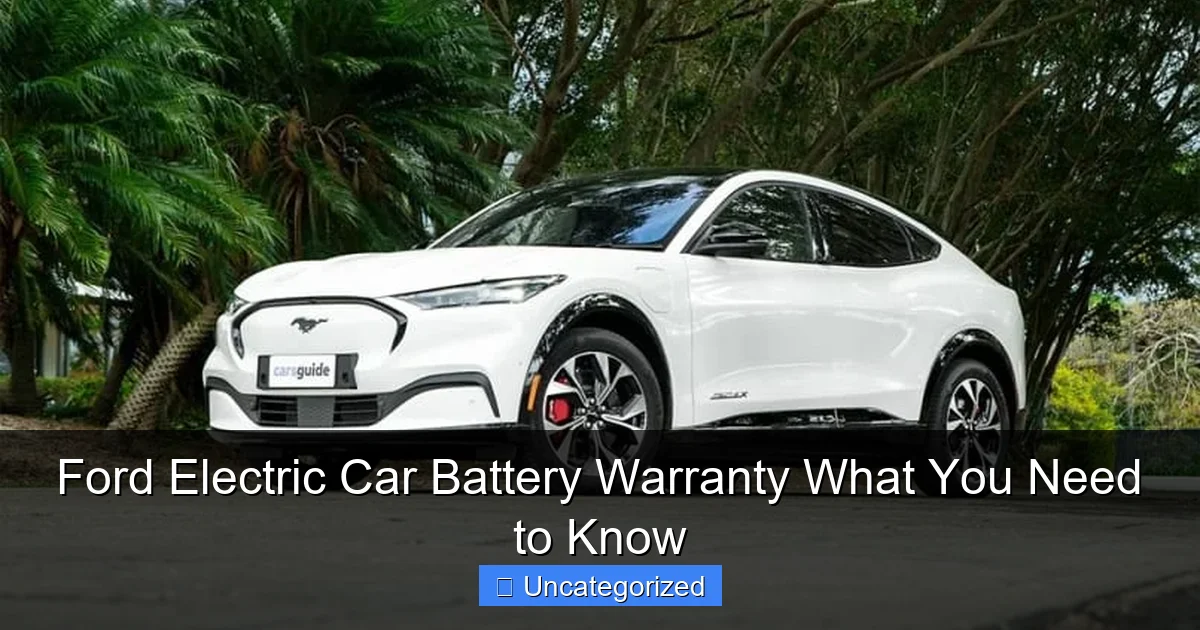
Visual guide about ford electric car battery warranty
Image source: carsguide-res.cloudinary.com
Standard Warranty Period and Mileage
Ford offers an 8-year/100,000-mile warranty on the high-voltage battery system for all its electric vehicles, including the Mustang Mach-E and F-150 Lightning. This warranty is fully transferable to subsequent owners, which adds significant value if you decide to sell your EV within the coverage period. The 8-year term is consistent with the federal requirement under the Clean Air Act, which mandates that automakers provide at least 8 years or 100,000 miles of coverage for EV batteries in all 50 states. However, some states—such as California, New York, and Massachusetts—extend this to 10 years/150,000 miles under their zero-emission vehicle (ZEV) regulations. In these states, Ford automatically provides the longer warranty, ensuring compliance and enhanced protection.
For example, if you purchase a Mustang Mach-E in California, your battery warranty will cover up to 10 years or 150,000 miles—whichever comes first. This extended coverage is especially valuable for high-mileage drivers or those who plan to keep their vehicle for a decade or more.
What’s Covered Under the Warranty?
The Ford electric car battery warranty covers the following components:
- Battery pack: The entire high-voltage lithium-ion battery assembly, including modules and cells.
- Thermal management system: Cooling components like pumps, hoses, and heat exchangers that regulate battery temperature.
- Battery management system (BMS): The electronic control unit that monitors voltage, temperature, and charge levels to ensure optimal performance.
- Charging port and internal wiring: Connectors and cables that deliver power from the charger to the battery.
- Power electronics: Inverters and DC-DC converters that manage energy flow between the battery and motor.
Importantly, the warranty covers both defects in materials and workmanship and excessive battery capacity loss—a critical factor for long-term usability. Ford defines “excessive” as a drop below 70% of the original rated capacity during the warranty period. This means if your battery degrades to less than 70% of its original range due to a manufacturing issue, Ford will repair or replace it at no cost.
What’s Not Covered?
While the warranty is robust, it does have exclusions. Ford does not cover:
- Damage from accidents, misuse, or improper maintenance.
- Battery degradation due to normal wear and tear—such as gradual capacity loss from regular charging cycles.
- Damage caused by unauthorized modifications or aftermarket accessories (e.g., third-party battery cooling upgrades).
- Loss of range due to extreme environmental conditions (e.g., prolonged exposure to desert heat or Arctic cold) unless linked to a manufacturing defect.
- Commercial or fleet use (though Ford offers separate commercial EV programs with different terms).
For instance, if you consistently fast-charge your F-150 Lightning at DC stations without using preconditioning, and the battery degrades faster than average, Ford may argue that the degradation resulted from user behavior rather than a defect, potentially voiding warranty claims. This underscores the importance of following best practices for battery care.
How Ford Measures Battery Degradation and Performance
One of the most misunderstood aspects of EV ownership is battery degradation. Unlike a gasoline engine that wears down gradually, an electric battery loses capacity over time due to chemical aging, charge cycles, and environmental stress. Ford employs advanced diagnostics and monitoring systems to track battery health and determine whether degradation is within acceptable limits.
Ford’s Battery Health Monitoring System
Every Ford EV is equipped with a cloud-connected battery health monitoring system that continuously collects data on:
- State of charge (SOC)
- State of health (SOH)
- Temperature fluctuations
- Charge/discharge cycles
- Internal resistance
This data is accessible via the FordPass app, allowing owners to check real-time battery health, estimated range, and charging history. Ford also uses this data to proactively identify potential issues and notify owners before a failure occurs. For example, if the system detects abnormal voltage drops in one of the battery modules, it may alert the owner to schedule a diagnostic at a Ford EV-certified service center.
Defining “70% Capacity” and How It’s Measured
Ford uses a standardized test to determine if the battery has fallen below 70% of its original capacity. The process involves:
- Fully charging the battery under controlled conditions (25°C ambient temperature).
- Discharging it at a constant rate using a diagnostic load simulator.
- Measuring the total energy output in kilowatt-hours (kWh).
- Comparing the result to the original rated capacity (e.g., 70 kWh for a Mach-E Standard Range).
If the output is less than 70% (i.e., below 49 kWh), and the cause is a manufacturing defect, Ford will initiate a repair or replacement. This test is typically performed at a Ford dealership using specialized equipment. Owners are not expected to conduct their own tests, but they should keep detailed charging records and avoid deep discharges (below 10%) to minimize stress on the battery.
Real-World Example: Mach-E Battery Degradation Study
A 2023 study by Recurrent Auto analyzed over 1,200 Mustang Mach-E batteries and found that:
- After 3 years and 30,000 miles, average capacity loss was 5.2%.
- After 5 years and 50,000 miles, average loss was 8.7%.
- Only 1.3% of vehicles experienced degradation below 70% capacity—all linked to manufacturing anomalies.
This data suggests that Ford’s 70% threshold is a conservative and realistic benchmark, and most owners will never reach it during the warranty period. However, individual results vary based on usage patterns, so proactive battery care is essential.
Warranty Claims Process: What to Expect
Navigating a warranty claim can be daunting, but Ford has streamlined the process for electric car battery issues. Understanding the steps involved can save time, reduce stress, and ensure a fair outcome.
Step-by-Step Warranty Claim Procedure
- Identify the issue: If you notice reduced range, charging errors, or a dashboard warning (e.g., “Check High Voltage System”), document the symptoms with photos, videos, and charging logs.
- Schedule a diagnostic: Use the FordPass app or call your local EV-certified dealership to schedule a service appointment. Mention that you suspect a battery-related issue.
- Diagnostic testing: The technician will connect the vehicle to Ford’s diagnostic tool (IDS) to pull error codes and run a battery health test. They may also check for software updates.
- Ford approval: If the test confirms a defect or excessive degradation, the dealership submits a warranty claim to Ford Motor Company for approval. This process usually takes 24–48 hours.
- Repair or replacement: Once approved, Ford will either:
- Repair the faulty component (e.g., replace a defective battery module).
- Replace the entire battery pack with a new or refurbished unit.
- Post-repair verification: The dealership will retest the battery to ensure it meets performance standards before returning the vehicle.
Tips for a Successful Claim
- Keep detailed records: Save all charging receipts, service history, and communication with Ford.
- Use Ford-certified chargers: Third-party chargers with faulty firmware can damage the battery and void the warranty.
- Follow charging best practices: Avoid frequent DC fast charging (limit to 20% of charging sessions), and keep the battery between 20% and 80% for daily use.
- Don’t delay service: Early intervention prevents minor issues from escalating into major failures.
For example, a Mach-E owner in Texas noticed a 12% range drop after 2 years. By providing charging logs and using only Ford-approved Level 2 chargers, they successfully claimed a battery module replacement under warranty. The entire process took 10 days, including diagnostics and parts delivery.
Common Claim Denials and How to Avoid Them
Ford may deny a claim if:
- The issue is traced to user error (e.g., repeated deep discharges).
- The vehicle has been modified (e.g., aftermarket suspension or software hacks).
- The owner failed to maintain the vehicle per Ford’s guidelines.
To avoid denials, always follow the Ford Electric Vehicle Owner’s Manual and consult your dealer before making modifications.
Comparing Ford’s Warranty to Competitors
To evaluate Ford’s electric car battery warranty, it’s helpful to compare it with offerings from other major EV manufacturers. This context helps determine whether Ford’s coverage is competitive, generous, or lacking.
Warranty Comparison Table
| Manufacturer | Model(s) | Warranty Period | Capacity Threshold | Transferable? | Notable Features |
|---|---|---|---|---|---|
| Ford | Mustang Mach-E, F-150 Lightning | 8 years/100,000 miles (10/150k in ZEV states) | 70% | Yes | Cloud-based health monitoring |
| Tesla | Model 3, Model Y | 8 years/100,000–120,000 miles (varies by battery) | 70% (Model 3), 75% (Model Y) | Yes | Free roadside assistance |
| Chevrolet | Bolt EV/EUV | 8 years/100,000 miles | 70% | Yes | Extended recall coverage (2017–2019 models) |
| Hyundai | Kona Electric, Ioniq 5 | 10 years/100,000 miles | 70% | Yes | Longest standard warranty in class |
| Kia | EV6, Niro EV | 10 years/100,000 miles | 70% | Yes | Free maintenance for 3 years |
Analysis: Where Ford Stands
Ford’s warranty is on par with industry leaders like Tesla and Chevrolet but shorter than Hyundai and Kia, which offer 10-year coverage regardless of state regulations. However, Ford’s inclusion of cloud-based monitoring and proactive diagnostics gives it an edge in customer support. Additionally, the 10-year/150,000-mile extension in ZEV states makes it highly competitive in those markets.
One area where Ford could improve is the capacity threshold. While 70% is standard, Tesla’s Model Y offers a 75% guarantee, providing slightly more protection. Still, Ford’s combination of coverage, transferability, and digital tools makes it a strong contender in the EV warranty landscape.
Tips for Maximizing Battery Life and Warranty Value
Even with a robust warranty, maximizing your EV’s battery life reduces stress, preserves range, and ensures you get the most value from your investment. Here are expert-backed strategies to keep your Ford EV battery healthy.
Charging Best Practices
- Use Level 2 charging at home: This is the safest and most efficient method for daily charging. Avoid Level 1 (120V) unless necessary.
- Limit DC fast charging: Use DC stations for road trips only. Frequent fast charging generates heat, accelerating degradation.
- Precondition the battery before fast charging: Use the FordPass app to warm up the battery in cold weather, improving charging speed and battery longevity.
- Maintain 20–80% charge for daily use: This “sweet spot” minimizes stress on the battery cells.
Environmental and Driving Factors
- Avoid extreme temperatures: Park in a garage or shaded area to reduce thermal stress. Use cabin pre-conditioning to avoid draining the battery.
- Drive smoothly: Aggressive acceleration and hard braking increase energy consumption and battery strain.
- Use regenerative braking: This recovers energy and reduces wear on the friction brakes.
Regular Maintenance and Monitoring
- Update software regularly: Ford releases updates that improve battery management and efficiency.
- Check tire pressure monthly: Underinflated tires increase rolling resistance, reducing range and battery load.
- Monitor battery health via FordPass: Set up alerts for unusual drops in range or charging speed.
For example, an F-150 Lightning owner in Colorado followed these tips and achieved only 3.8% degradation after 4 years and 40,000 miles—well below the industry average. This not only preserved range but also ensured full warranty coverage if needed.
Conclusion: Peace of Mind with Ford’s Electric Car Battery Warranty
Ford’s electric car battery warranty is a comprehensive, consumer-friendly package that addresses the core concerns of EV ownership: longevity, reliability, and cost of ownership. With an 8-year/100,000-mile base (extendable to 10 years in ZEV states), a 70% capacity guarantee, and advanced monitoring tools, Ford provides robust protection for its growing EV lineup.
While not the longest in the industry (Hyundai and Kia offer 10-year coverage), Ford’s warranty is backed by practical features like cloud diagnostics, proactive maintenance alerts, and a straightforward claims process. When combined with responsible charging habits and regular monitoring, owners can enjoy their Mustang Mach-E, F-150 Lightning, or future Ford EVs with confidence.
Ultimately, the Ford electric car battery warranty is more than just a legal obligation—it’s a promise of trust in the future of mobility. By understanding its terms, maximizing battery life, and leveraging Ford’s support network, you’re not just buying an electric car. You’re investing in a sustainable, worry-free driving experience for years to come.
Frequently Asked Questions
What does the Ford electric car battery warranty cover?
The Ford electric car battery warranty covers defects in materials and workmanship for 8 years or 100,000 miles (whichever comes first), including capacity loss below 70% during the warranty period. This applies to all Ford EV models like the Mustang Mach-E and F-150 Lightning.
How long is the Ford EV battery warranty compared to competitors?
Ford’s 8-year/100,000-mile warranty matches industry standards, aligning with warranties from Tesla and Hyundai/Kia. Some manufacturers offer longer coverage (e.g., 10 years), but Ford’s warranty remains competitive for the segment.
Does the Ford electric car battery warranty transfer to new owners?
Yes, the Ford EV battery warranty is fully transferable to subsequent owners within the original timeframe. This adds resale value and provides peace of mind for secondhand buyers.
What voids the Ford electric car battery warranty?
The warranty is voided by unauthorized modifications, improper maintenance, or damage from accidents/neglect. Always use Ford-approved charging equipment and service providers to maintain coverage.
Does the Ford EV warranty include battery degradation?
Yes, Ford’s warranty guarantees battery capacity won’t fall below 70% of original capacity within the warranty period. If degradation exceeds this, Ford will repair or replace the battery pack.
What’s the process for filing a Ford electric car battery warranty claim?
Visit any Ford EV-certified dealership for a diagnostic scan. If capacity is below 70% or defects are found, Ford covers repairs/replacement with minimal paperwork required.