Ford Electric Car Charging Network Expands Access for Drivers
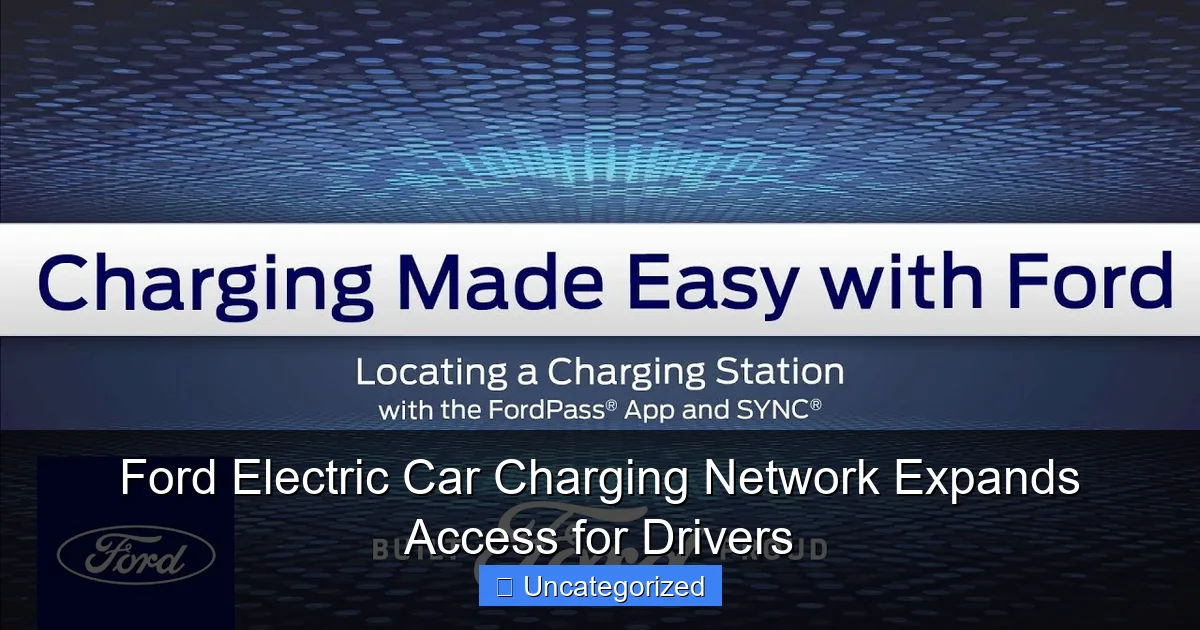
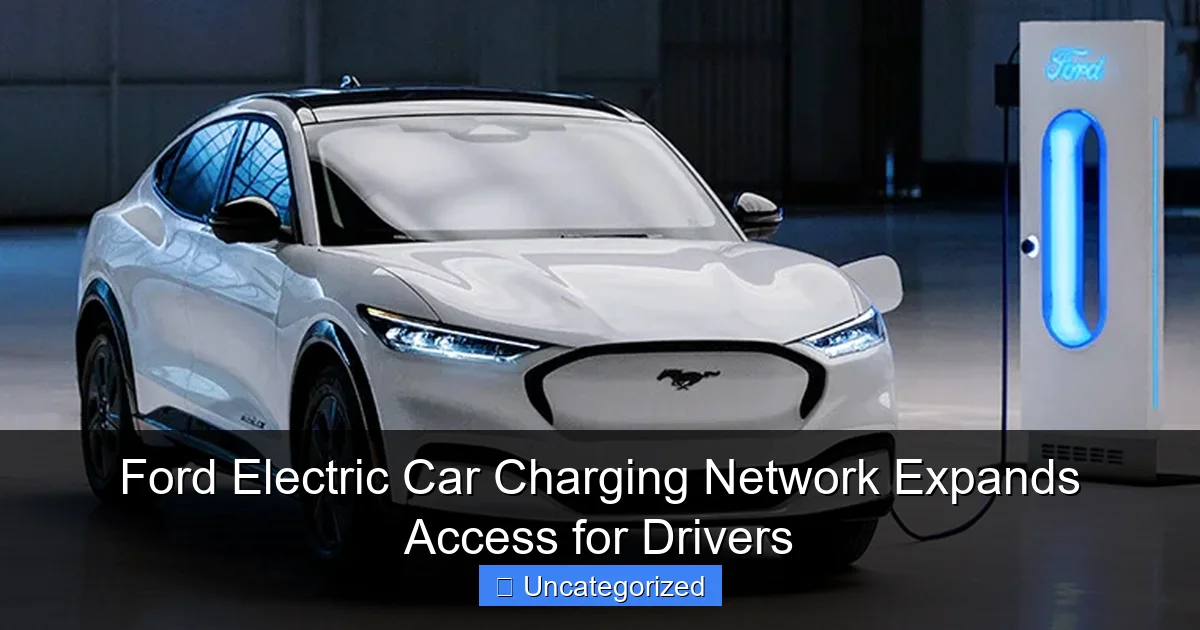
Featured image for ford electric car charging network
Image source: i.ytimg.com
Ford is revolutionizing EV ownership by significantly expanding its electric car charging network, giving drivers seamless access to over 15,000 fast chargers across North America. New partnerships with Electrify America and other providers ensure faster, more reliable charging at high-traffic locations, reducing range anxiety and boosting convenience for Ford EV owners.
Key Takeaways
- Expanded access: Ford drivers now reach more charging stations nationwide.
- Seamless integration: Use FordPass app to locate and pay for charging easily.
- Faster charging: Network includes high-speed DC fast chargers for quick top-ups.
- Partnered infrastructure: Collaborates with major networks like Electrify America.
- Real-time updates: Check charger availability and status via in-dash navigation.
- Cost savings: Enjoy reduced rates at select partner charging stations.
📑 Table of Contents
- Ford Electric Car Charging Network Expands Access for Drivers
- 1. The Evolution of Ford’s Charging Ecosystem
- 2. Partnerships with Major Charging Networks
- 3. Ford’s Proprietary Charging Innovations
- 4. Real-World Charging Scenarios and Practical Tips
- 5. The Future of Ford’s Charging Network: What’s Next?
- 6. Data and Performance: A Look at the Numbers
- Conclusion
Ford Electric Car Charging Network Expands Access for Drivers
In the rapidly evolving landscape of electric vehicles (EVs), one of the most pressing concerns for drivers has always been charging accessibility. Range anxiety—the fear of running out of power before reaching a charging station—has long been a psychological barrier to widespread EV adoption. Ford, a company with a century-long legacy in automotive innovation, is stepping up to address this challenge head-on. With the expansion of its Ford electric car charging network, the automaker is transforming how EV owners experience long-distance travel and daily commutes. This strategic move not only enhances the ownership experience for current Ford EV drivers but also signals Ford’s commitment to leading the electric mobility revolution.
As of 2024, Ford’s charging infrastructure has grown exponentially, integrating seamlessly with a vast network of third-party charging providers while also introducing proprietary enhancements. The FordPass Power My Trip feature, real-time charger availability, and partnerships with major charging networks like Electrify America, ChargePoint, and EVgo are just the beginning. Whether you’re driving a Mustang Mach-E, F-150 Lightning, or the upcoming electric Explorer, Ford is ensuring that charging is no longer a bottleneck. This blog post dives deep into how Ford’s charging ecosystem is expanding, what it means for drivers, and how you can leverage this network to maximize your EV experience.
1. The Evolution of Ford’s Charging Ecosystem
Ford’s journey into the EV charging space began with a clear vision: to make electric vehicle ownership as convenient and stress-free as driving a traditional internal combustion engine (ICE) vehicle. Unlike some competitors that rely solely on proprietary networks or fragmented third-party integrations, Ford has adopted a hybrid approach—blending its own innovations with strategic partnerships to deliver a comprehensive charging experience.
Visual guide about ford electric car charging network
Image source: lp-auto-assets.s3.amazonaws.com
From Pilot Programs to Nationwide Expansion
Ford’s initial charging initiatives were limited to pilot programs and select urban markets. However, with the launch of the Mustang Mach-E in 2020 and the F-150 Lightning in 2022, the company accelerated its charging infrastructure development. By 2023, Ford had already integrated over 120,000 charging ports across North America into its FordPass app, with plans to exceed 150,000 by the end of 2024. This includes Level 2 (AC) and DC fast charging stations from Electrify America, ChargePoint, EVgo, Blink, and others.
The expansion is not just about quantity—it’s about quality. Ford has prioritized high-power DC fast charging (up to 350 kW) in high-traffic corridors, ensuring that drivers can recharge their vehicles in under 40 minutes for a 10–80% charge on compatible models. For example, the F-150 Lightning can gain up to 54 miles of range in just 10 minutes at a 350 kW station.
Integration with FordPass: A Seamless Digital Experience
The FordPass app is the central hub for accessing the Ford electric car charging network. It allows drivers to:
- Locate nearby charging stations in real time
- Filter by charger type (Level 2, DC fast, CCS, etc.)
- Check station availability and pricing
- Initiate and pay for charging sessions
- Receive notifications when charging is complete
One standout feature is FordPass Power My Trip, which automatically plans your route with charging stops based on your vehicle’s current range, destination, and preferred charging speed. For instance, if you’re driving from Chicago to Detroit in a Mustang Mach-E (247 miles range), the app will suggest the optimal charging stop in Kalamazoo, MI, with estimated arrival and departure times, charger availability, and even nearby amenities like restrooms and restaurants.
2. Partnerships with Major Charging Networks
Ford’s strategy hinges on collaboration. Rather than building its own standalone charging network—a costly and time-intensive endeavor—Ford has forged strategic alliances with established charging providers to deliver instant scale and reliability.
Electrify America: The Cornerstone of Fast Charging
Ford’s partnership with Electrify America is one of the most significant in the industry. As part of the agreement, Ford EV drivers receive:
- 12 months of complimentary 30-minute DC fast charging sessions at Electrify America stations
- Discounted rates after the first year
- Access to over 800 charging locations with more than 3,500 individual chargers
Electrify America’s network is particularly strong along major interstates, including I-5, I-95, I-75, and I-10, making cross-country travel feasible. For example, a road trip from Seattle to San Diego in a Ford F-150 Lightning can now be completed with just three charging stops, each lasting 20–30 minutes.
ChargePoint and EVgo: Expanding Urban and Suburban Coverage
While Electrify America excels in long-haul travel, ChargePoint and EVgo bolster Ford’s presence in cities and suburbs. ChargePoint, with over 200,000 Level 2 and DC fast chargers globally, is ideal for overnight or workplace charging. EVgo, with a focus on high-traffic urban areas, offers 350 kW fast charging in cities like Los Angeles, New York, and Atlanta.
Ford drivers can use the same FordPass app to access all three networks without needing separate accounts or payment methods. This unified experience is a game-changer for EV adoption, eliminating the “charging app fatigue” that plagues many drivers today.
Regional and Municipal Collaborations
Beyond national partners, Ford is working with regional utilities and municipal governments to expand charging in underserved areas. For example, in partnership with Duke Energy in North Carolina, Ford is installing 1,000 new charging ports in rural communities. Similarly, in California, Ford supports the state’s goal of 250,000 public chargers by 2025 through funding and infrastructure planning.
3. Ford’s Proprietary Charging Innovations
While partnerships provide scale, Ford is also investing in proprietary technologies to differentiate its charging experience and enhance driver convenience.
Ford Charge Station: Home and Fleet Solutions
For home charging, Ford offers the Ford Charge Station, a 48-amp Level 2 charger compatible with all Ford EVs. Key features include:
- Wi-Fi connectivity for remote monitoring and scheduling
- Load management to avoid circuit overloads
- Weatherproof design for indoor or outdoor installation
- Smart charging that aligns with off-peak electricity rates
For fleet operators, Ford’s Ford Pro Charging solution provides centralized management, real-time diagnostics, and energy analytics. A logistics company using 50 F-150 Lightning trucks, for instance, can schedule overnight charging during low-demand hours, reducing electricity costs by up to 30%.
Plug & Charge Technology
Ford is rolling out Plug & Charge across its EV lineup, a feature that allows drivers to simply plug in—no app, no card, no payment required. The vehicle authenticates itself with the charger, and billing is handled automatically through the driver’s FordPass account. This technology is currently supported at Electrify America and select EVgo stations, with plans to expand to ChargePoint by late 2024.
Vehicle-to-Grid (V2G) and Bidirectional Charging
One of Ford’s most futuristic innovations is bidirectional charging, available on the F-150 Lightning. With the Ford Charge Station Pro and a home energy storage system (sold separately), the truck can:
- Power your home during outages (up to 10 kW output)
- Feed electricity back into the grid during peak demand
- Serve as a mobile power source for camping or job sites
For example, a homeowner in Texas could use their F-150 Lightning to power essential appliances during a blackout, reducing reliance on generators. Ford estimates that bidirectional charging could save homeowners up to $1,000 annually on electricity bills.
4. Real-World Charging Scenarios and Practical Tips
Understanding the Ford electric car charging network is one thing—using it effectively in real life is another. Below are practical scenarios and tips to help drivers maximize efficiency and convenience.
Daily Commuting: Home Charging as Your Primary Source
For most drivers, home charging is the backbone of EV ownership. Here’s how to optimize it:
- Install a Level 2 charger if you drive more than 30 miles per day. A full overnight charge (8–12 hours) is usually sufficient.
- Use scheduling in the FordPass app to charge between 10 PM and 6 AM, taking advantage of lower electricity rates.
- Monitor battery health—avoid charging to 100% daily. Instead, keep the battery between 20% and 80% for longevity.
Example: A Mustang Mach-E owner in Denver commutes 40 miles daily. They charge at home overnight using the Ford Charge Station, starting at 11 PM when electricity costs drop to $0.08/kWh. Their monthly charging cost: under $25.
Weekend Road Trips: Planning with FordPass Power My Trip
Longer trips require planning, but Ford’s tools make it easy:
- Enter your destination in the FordPass app and let Power My Trip suggest charging stops.
- Check charger availability before departure—avoid arriving at a busy or out-of-service station.
- Pack a portable Level 1 charger as a backup for rural areas.
Example: A family drives from Phoenix to Flagstaff (140 miles) in a Mach-E. The app suggests a 20-minute charge at a ChargePoint station in Sedona, where they can stretch their legs and grab lunch. Total trip time: 3 hours 15 minutes (including charging).
Cross-Country Travel: Leveraging Electrify America’s Network
For epic journeys, Electrify America’s high-speed chargers are your best friend:
- Plan stops every 200–250 miles to maintain a buffer.
- Use the 30-minute free charging sessions strategically—don’t wait until the battery is below 10%.
- Download offline maps in the FordPass app in case of poor connectivity.
Example: A road trip from Dallas to Denver (850 miles) in an F-150 Lightning requires four charging stops. With 350 kW charging, each stop adds ~150 miles of range in 25 minutes. Total travel time: ~14 hours (including charging).
5. The Future of Ford’s Charging Network: What’s Next?
Ford isn’t resting on its laurels. The automaker has ambitious plans to further expand and innovate its charging ecosystem through 2025 and beyond.
Expansion to 200,000+ Charging Ports by 2025
Ford aims to double its accessible charging network by 2025, reaching 200,000+ public ports across North America. This includes:
- 10,000 new DC fast chargers
- 50,000 Level 2 chargers in multi-family housing complexes
- 1,000 ultra-fast 500 kW chargers in high-demand corridors
The expansion will focus on rural and underserved areas, ensuring equitable access for all drivers.
AI-Powered Predictive Charging
Ford is testing AI algorithms that predict charger availability and traffic patterns. The Smart Charging Assistant will suggest optimal charging times and locations based on:
- Historical usage data
- Weather conditions
- Local events (e.g., concerts, sports games)
For example, the system might advise a driver to charge earlier than planned if a major concert is expected to increase demand at nearby stations.
Sustainability and Renewable Integration
Ford is committed to making its charging network carbon-neutral. Initiatives include:
- Solar-powered charging stations in partnership with SunPower
- Participation in green energy programs (e.g., Electrify America’s renewable energy credits)
- Recycling of old EV batteries into energy storage systems
By 2030, Ford aims for all public charging sessions to be powered by 100% renewable energy.
6. Data and Performance: A Look at the Numbers
To understand the scale and effectiveness of Ford’s charging network, consider the following data:
| Metric | Value (2024) | Projection (2025) |
|---|---|---|
| Total Public Charging Ports Accessible | 150,000+ | 200,000+ |
| DC Fast Charging Stations (350 kW) | 3,500 (Electrify America) | 5,000+ |
| Ford Charge Stations (Home) | 120,000+ sold | 200,000+ |
| Plug & Charge Availability | Electrify America, EVgo (partial) | All major networks |
| Average Charging Time (10–80%) | 38 minutes (350 kW) | 30 minutes (500 kW) |
| Bidirectional Charging Enabled Vehicles | F-150 Lightning | All Ford EVs by 2026 |
These figures highlight Ford’s aggressive growth and technological leadership. The integration of high-speed charging, smart home solutions, and renewable energy sets a new benchmark in the EV industry.
Conclusion
The expansion of the Ford electric car charging network represents more than just infrastructure growth—it’s a fundamental shift in how drivers perceive and experience electric mobility. By combining strategic partnerships, cutting-edge technology, and user-centric design, Ford is eliminating the biggest hurdle to EV adoption: charging anxiety.
From the convenience of FordPass Power My Trip to the revolutionary potential of bidirectional charging, Ford is not just keeping pace with the EV revolution—it’s leading it. Whether you’re a daily commuter, a weekend adventurer, or a long-haul traveler, Ford’s charging ecosystem is designed to keep you moving with confidence and ease.
As the network grows to 200,000+ ports and integrates AI, renewable energy, and ultra-fast charging, the future of Ford EVs looks brighter than ever. For drivers, this means more freedom, lower costs, and a seamless transition to a sustainable, electric future. The road ahead is charged—and Ford is lighting the way.
Frequently Asked Questions
How does the Ford electric car charging network work?
The Ford electric car charging network provides drivers access to thousands of charging stations across North America, including DC fast chargers and Level 2 options. FordPass app integration allows users to locate, start, and pay for charging sessions seamlessly.
Where can I find Ford electric car charging stations?
Ford’s charging network includes stations at dealerships, public locations, and via partnerships with networks like Electrify America and ChargePoint. Use the FordPass app or in-vehicle navigation to find nearby stations in the Ford electric car charging network.
Is charging free with a Ford electric vehicle?
Some Ford EVs come with limited complimentary charging sessions at partner stations, such as 250 kWh at Electrify America. After the free period, charging costs vary by location and network, with payment handled through the FordPass app.
Can I use the Ford charging network with other EVs?
While the Ford electric car charging network is optimized for Ford EVs, many stations (e.g., CCS-compatible fast chargers) support non-Ford electric vehicles. Check connector compatibility and pricing via the FordPass app before use.
How fast is charging on Ford’s network?
Charging speed depends on the station type: DC fast chargers can add up to 80% charge in 30–45 minutes, while Level 2 chargers take several hours. The FordPass app displays real-time speed and availability for each station.
Does Ford offer home charging solutions?
Yes, Ford provides the Connected Charge Station (Level 2, 240V) for home installation, enabling faster charging than a standard outlet. The FordPass app also lets you monitor and schedule home charging sessions.