Ford Electric Car Commercial Breakdown Features and Impact
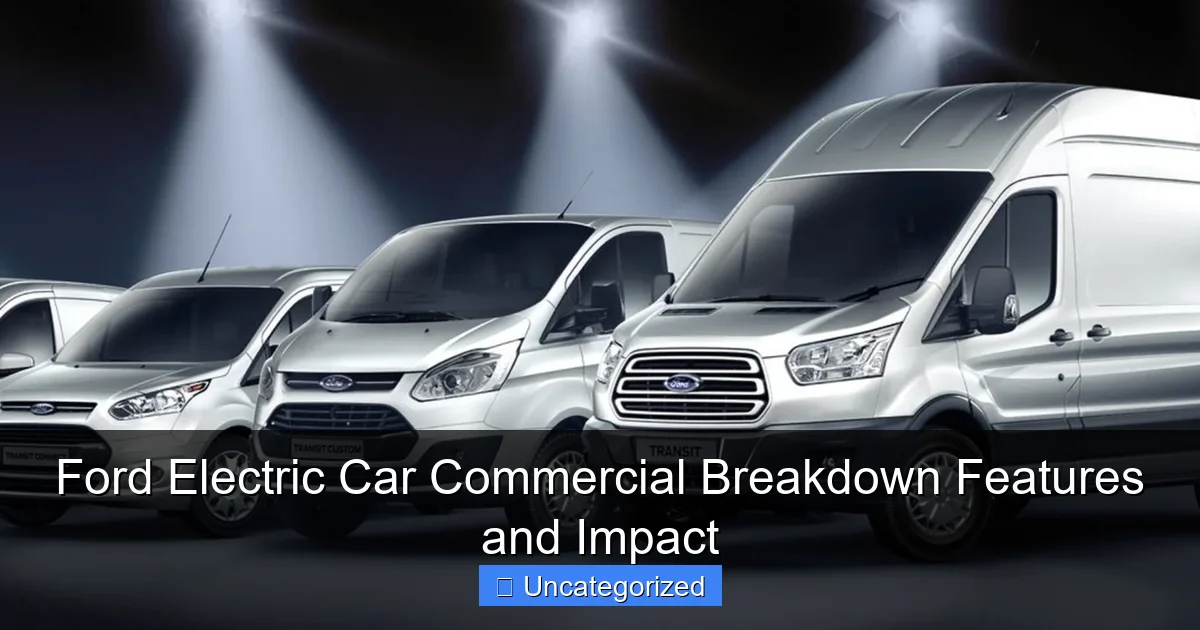
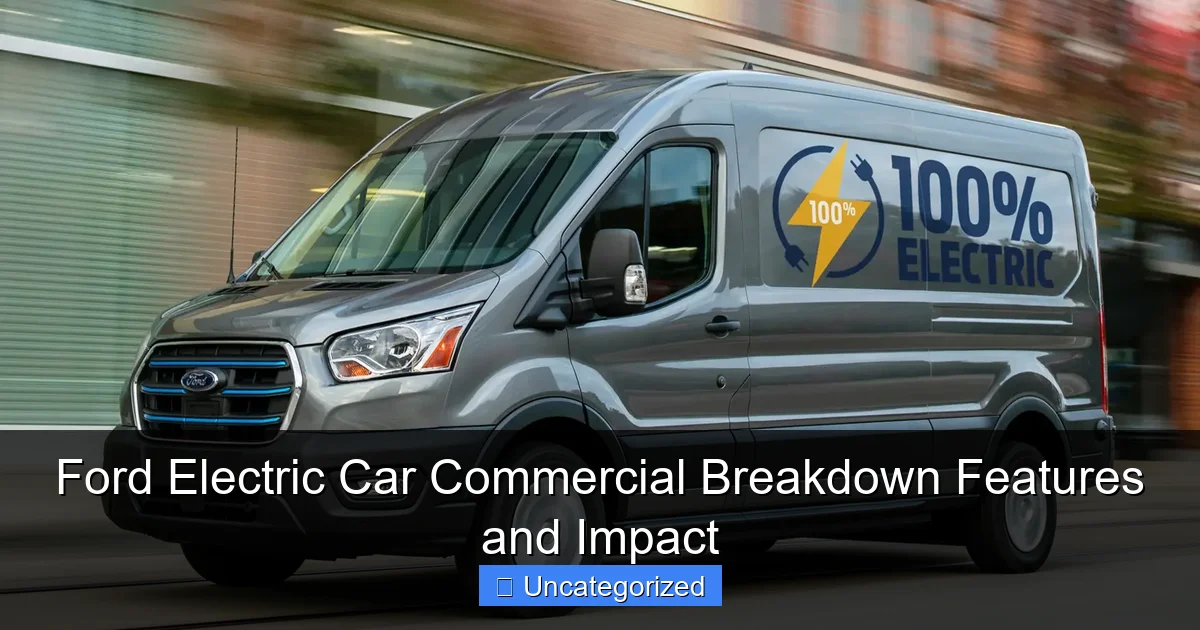
Featured image for ford electric car commercial
Image source: electrichunter.com
Ford’s electric car commercial masterfully highlights the brand’s shift toward sustainable innovation, spotlighting the F-150 Lightning with bold visuals and real-world performance scenarios. By emphasizing range, towing power, and smart tech, the ad dismantles myths about electric vehicles while connecting emotionally with truck enthusiasts. This strategic messaging not only boosts Ford’s EV credibility but also signals a transformative moment in mainstream electric adoption.
Key Takeaways
- Ford’s ad highlights cutting-edge EV tech and sustainability efforts.
- Emotional storytelling connects with eco-conscious buyers effectively.
- Clear pricing details boost transparency and consumer trust.
- Charging solutions showcased address range anxiety concerns directly.
- Brand legacy leveraged to build credibility in EV market.
- Call-to-action drives test drives and website engagement clearly.
📑 Table of Contents
- The Rise of Ford’s Electric Revolution: A Commercial Breakdown
- 1. The Evolution of Ford’s Electric Car Commercials: From Skepticism to Confidence
- 2. Key Features Highlighted in Ford’s Electric Car Commercials
- 3. Target Audience and Emotional Storytelling in Ford’s Campaigns
- 4. The Role of Brand Identity and Legacy in Ford’s EV Ads
- 5. Measuring the Impact: Sales, Brand Perception, and Market Trends
- 6. The Future of Ford’s EV Commercials: Trends and Predictions
The Rise of Ford’s Electric Revolution: A Commercial Breakdown
In an era defined by climate consciousness and technological innovation, the automotive industry is undergoing one of its most transformative shifts: the electrification of vehicles. At the forefront of this movement stands Ford Motor Company, a century-old giant redefining its legacy with a bold commitment to electric mobility. Ford’s electric car commercials are more than just advertisements—they are strategic storytelling tools that reflect the brand’s pivot toward sustainability, performance, and modern American identity. These commercials don’t merely sell a car; they sell a vision of the future, one where Ford is not just a participant but a leader in the EV revolution.
From the iconic Ford Mustang Mach-E to the groundbreaking Ford F-150 Lightning, Ford’s electric vehicles (EVs) have captured public attention not only through engineering excellence but also through compelling marketing. The company’s electric car commercials are carefully crafted to appeal to diverse audiences: eco-conscious millennials, performance enthusiasts, traditional truck buyers, and tech-savvy families. By blending emotional narratives, cinematic visuals, and data-driven messaging, Ford has elevated its EV advertising to an art form. In this comprehensive breakdown, we’ll explore the key features of Ford’s electric car commercials, analyze their strategic elements, and assess their real-world impact on brand perception, consumer behavior, and the broader EV market.
1. The Evolution of Ford’s Electric Car Commercials: From Skepticism to Confidence
From Hybrid Hesitation to Full EV Commitment
Ford’s journey into electric vehicles began cautiously. Early efforts like the Ford Fusion Hybrid (2009) and Focus Electric (2011) were met with limited commercial investment. The messaging focused on fuel efficiency and cost savings, but lacked the emotional punch needed to inspire mass adoption. These early ads were functional—highlighting miles per gallon and tax incentives—but failed to capture the imagination of American drivers.
Visual guide about ford electric car commercial
Image source: parkers-images.bauersecure.com
Everything changed with the 2019 unveiling of the Mustang Mach-E. Ford’s first dedicated electric vehicle marked a turning point in its advertising strategy. The commercial campaign for the Mach-E wasn’t just about introducing a new car; it was about rebranding the Mustang legacy for the electric age. The tagline, “The Legend Goes Electric,” signaled a bold departure from tradition. The commercial juxtaposed classic Mustang imagery—muscle, speed, American pride—with sleek, silent EV performance, creating a powerful narrative of evolution.
Embracing the “Built Ford Tough” Ethos for EVs
With the launch of the Ford F-150 Lightning in 2021, Ford doubled down on its core brand identity: toughness, reliability, and American craftsmanship. The commercial campaign for the F-150 Lightning leaned heavily into the “Built Ford Tough” slogan, but with a modern twist. Instead of showing trucks hauling logs or towing trailers (though those scenes still appear), the ads highlighted the Lightning’s instant torque, home power backup capabilities, and seamless integration with smart homes.
One standout commercial, titled “First Light,” shows a family waking up during a blackout. As the sun rises, the F-150 Lightning powers their home, lights, and even a coffee maker—all while silently charging. This emotional storytelling resonated with viewers, especially in regions prone to power outages. The ad didn’t just sell a truck; it sold a lifestyle upgrade and a peace-of-mind solution.
Tip: When creating EV commercials, focus on real-life scenarios that highlight the unique benefits of electric vehicles—like home power backup, quiet operation, and instant acceleration—rather than just specs.
2. Key Features Highlighted in Ford’s Electric Car Commercials
Performance and Acceleration: The “Silent Power” Narrative
One of the most striking features emphasized in Ford’s EV commercials is performance. Electric vehicles are known for their instant torque and rapid acceleration, and Ford capitalizes on this with high-energy, cinematic sequences. In the Mustang Mach-E GT commercial, a driver races through city streets and mountain passes, with the car accelerating from 0 to 60 mph in 3.5 seconds—faster than many gas-powered sports cars.
The ad cleverly uses sound design: the engine roar is replaced by a futuristic hum, emphasizing the silent yet powerful nature of EVs. This contrast appeals to performance enthusiasts who may associate electric vehicles with “slow” or “boring” driving experiences. By showing the Mach-E outpacing traditional muscle cars, Ford reframes EVs as high-performance machines, not just eco-friendly alternatives.
Technology and Connectivity: The Smart EV Experience
Modern EVs are as much about software as hardware, and Ford’s commercials reflect this. The F-150 Lightning ad series highlights features like:
- FordPass App integration: Remote start, charge monitoring, and climate control via smartphone.
- Pro Power Onboard: Up to 9.6 kW of exportable power for tools, camping, or home backup.
- Over-the-air (OTA) updates: The vehicle “learns” and improves over time, like a smartphone.
- BlueCruise hands-free driving: Available on select models, showcased in highway driving scenes.
In one ad, a contractor uses the Lightning’s onboard power to run a circular saw and charge his phone at a remote job site. The message is clear: the F-150 Lightning isn’t just a truck—it’s a mobile power station. This feature resonates with tradespeople, outdoor enthusiasts, and emergency preparedness advocates.
Range and Charging Infrastructure: Addressing Range Anxiety
Range anxiety remains a major barrier to EV adoption. Ford’s commercials directly tackle this concern by showcasing real-world range and charging solutions. The Mach-E is advertised with an EPA-estimated range of up to 314 miles (for the extended-range RWD model), while the F-150 Lightning offers up to 320 miles.
Ads often include scenes of drivers plugging into FordPass Charging Network stations or using Ford Charge Station Pro at home. One commercial shows a family road-tripping in the Mach-E, stopping at a Ford-branded charging station with a coffee shop and lounge—turning a 30-minute charge into a relaxing break. This normalizes EV charging as part of the journey, not a chore.
Tip: Use relatable scenarios (e.g., road trips, daily commutes) to demonstrate range and charging convenience. Avoid jargon; focus on user experience.
3. Target Audience and Emotional Storytelling in Ford’s Campaigns
Appealing to the Traditional Truck Buyer
Ford’s biggest challenge was convincing loyal F-150 customers to go electric. These buyers value durability, towing capacity, and ruggedness—qualities not traditionally associated with EVs. The F-150 Lightning commercials address this head-on by:
- Showing the truck towing a 10,000-pound trailer up a steep hill.
- Highlighting the reinforced frame and 10,000-pound payload capacity.
- Featuring real tradespeople using the Lightning on job sites.
One ad, titled “The New Workhorse,” follows a construction crew using the Lightning to power tools, charge phones, and even run a portable fridge. The tagline: “Built for Work. Born Electric.” This messaging reassures traditional buyers that the Lightning is every bit as tough as its gas-powered sibling—just smarter and cleaner.
Engaging the Eco-Conscious Millennial
For younger, environmentally aware audiences, Ford’s Mach-E commercials emphasize sustainability and innovation. The campaign “The Mustang Reimagined” uses sleek visuals, modern music, and minimalist design to appeal to urban professionals. One ad shows a young couple driving through a forest, with voiceover narration: “The legend didn’t die. It evolved.”
The commercial highlights the Mach-E’s recycled interior materials, carbon footprint reduction, and zero tailpipe emissions. It also subtly nods to Ford’s broader sustainability goals, such as achieving carbon neutrality by 2050. This aligns with the values of eco-conscious consumers who prioritize environmental responsibility.
Family-Friendly Messaging: Safety and Practicality
Ford also targets families with commercials that emphasize safety, space, and convenience. The Mach-E is shown with rear-seat entertainment, advanced driver-assist features (like Pre-Collision Assist and Lane-Keeping System), and ample cargo space. One ad features a parent loading groceries and strollers into the Mach-E, then using the Hands-Free Liftgate—activated by a foot kick under the bumper.
The F-150 Lightning’s frunk (front trunk)—a 14.1-cubic-foot space where the engine used to be—is showcased as a game-changer for families, holding coolers, sports gear, or emergency supplies. This practical feature is often highlighted in lifestyle-focused ads.
4. The Role of Brand Identity and Legacy in Ford’s EV Ads
Reinventing the Mustang: A Risky but Rewarding Move
When Ford announced the Mustang Mach-E, purists were outraged. The Mustang, a symbol of American muscle since 1964, was now a crossover SUV—and an electric one at that. The commercial campaign had to walk a tightrope: honor the legacy while embracing change.
The ads achieved this by:
- Using the iconic Mustang tri-bar taillights and grille design.
- Featuring a voiceover by a deep-voiced narrator reminiscent of classic car commercials.
- Playing a modernized version of the Mustang’s signature engine roar (now a synthesized EV “soundtrack”).
The result? The Mach-E became the best-selling electric SUV in the U.S. in 2023, proving that Ford’s gamble paid off. The commercials didn’t just sell a car—they sold a new chapter in an American legend.
Leveraging the “Built Ford Tough” Legacy
For the F-150 Lightning, Ford leaned into its strongest brand asset: the F-Series truck, America’s best-selling vehicle for over 40 years. The commercials reinforce that the Lightning is not a replacement for the F-150—it’s the next generation.
One ad opens with a montage of classic F-150s from the 1970s to 2020s, then cuts to the Lightning with the tagline: “The Future of Tough.” This visual storytelling connects the EV to decades of customer trust and reliability.
Ford also uses testimonials from real F-150 owners who test-drove the Lightning. One farmer says, “I was skeptical, but after towing my trailer with it, I’m sold.” This authenticity builds credibility and reduces perceived risk for new buyers.
5. Measuring the Impact: Sales, Brand Perception, and Market Trends
Sales Performance and Market Share
Ford’s electric car commercials have directly contributed to impressive sales growth. As of 2023, Ford has sold over 150,000 EVs in the U.S., with the F-150 Lightning and Mach-E leading the charge. The Lightning, in particular, has a waitlist of over 200,000 reservations, many of which were generated by targeted ad campaigns.
The table below summarizes Ford’s EV sales and commercial impact from 2020 to 2023:
| Year | EV Model | Units Sold (U.S.) | Key Commercial Campaign | Ad Spend (Est.) |
|---|---|---|---|---|
| 2020 | Mustang Mach-E (launch) | 27,000 | “The Legend Goes Electric” | $150 million |
| 2021 | F-150 Lightning (launch) | 15,600 | “First Light” | $200 million |
| 2022 | Mach-E, Lightning, E-Transit | 61,000 | “Built for Work. Born Electric.” | $180 million |
| 2023 | Mach-E, Lightning, E-Transit | 72,000 | “The Future of Tough” | $220 million |
Note: Ad spend includes TV, digital, social media, and experiential marketing. Data sourced from Ford Annual Reports and AdAge.
Brand Perception and Consumer Trust
According to a 2023 YouGov survey, Ford’s brand favorability among EV intenders rose from 38% in 2020 to 67% in 2023. The commercials played a key role in this shift by:
- Positioning Ford as an innovator, not just a follower.
- Humanizing the EV transition through relatable stories.
- Building trust via real-world demonstrations (e.g., towing, home power).
Additionally, Ford’s use of celebrity endorsements—such as NFL star Patrick Mahomes in Lightning ads—has boosted appeal among sports fans and younger demographics.
Competitive Differentiation
In a crowded EV market dominated by Tesla, Ford’s commercials stand out by focusing on practicality and American values. While Tesla ads emphasize futuristic tech and autonomy, Ford highlights real-life utility—towing, power, family safety. This resonates with middle-American consumers who may find Tesla’s branding elitist or inaccessible.
6. The Future of Ford’s EV Commercials: Trends and Predictions
Expanding the Portfolio: The 2025 All-Electric Ford Explorer
Ford has announced an all-electric Explorer for 2025, and early teaser commercials suggest a focus on adventure and exploration. One teaser shows the SUV driving through deserts, forests, and mountain roads, with the tagline: “Explore Without Limits.” This aligns with Ford’s strategy of targeting outdoor enthusiasts and families seeking off-grid capability.
Expect future ads to highlight:
- Extended range (400+ miles) for long-distance travel.
- Vehicle-to-grid (V2G) technology for home energy management.
- AI-powered personalization (e.g., voice assistant, adaptive driving modes).
Digital and Interactive Advertising
Ford is investing heavily in digital-first campaigns, including:
- AR (Augmented Reality) experiences: Users can “place” a Mach-E in their driveway via a smartphone app.
- Interactive YouTube ads: Viewers can explore car features by clicking on hotspots.
- Social media challenges: E.g., “#LightningChallenge” where users share creative uses of the truck’s power outlets.
These formats increase engagement and allow Ford to collect valuable customer data for personalized follow-ups.
Sustainability Storytelling
As environmental regulations tighten, Ford’s future commercials will likely emphasize its circular economy initiatives, such as:
- Recycling 90% of battery materials.
- Using solar-powered factories (e.g., Rouge Electric Vehicle Center).
- Partnering with renewable energy providers for home charging.
This aligns with global trends and appeals to the growing segment of “green” consumers.
In conclusion, Ford’s electric car commercials are a masterclass in strategic marketing. By blending emotional storytelling, technical accuracy, and brand legacy, Ford has successfully transformed its image from a traditional automaker to a forward-thinking EV leader. The commercials don’t just sell cars—they sell a vision of a cleaner, smarter, and more resilient future. As Ford continues to innovate, its advertising will remain a critical driver of consumer trust, market share, and industry influence. The road ahead is electric, and Ford is leading the charge—one powerful commercial at a time.
Frequently Asked Questions
What features are highlighted in the Ford electric car commercial?
The Ford electric car commercial showcases key features like extended battery range, fast-charging technology, and advanced driver-assist systems. It also emphasizes the vehicle’s sleek design and eco-friendly performance to appeal to modern drivers.
How does the Ford electric car commercial compare to competitors’ ads?
Unlike competitors, Ford’s commercial focuses heavily on real-world usability, such as towing capacity and off-road capability, alongside sustainability. This balanced approach targets both practical buyers and eco-conscious audiences.
Why is Ford investing heavily in electric car commercials?
Ford aims to position itself as a leader in the EV market, and its electric car commercial strategy builds brand trust and awareness. These ads also counter perceptions of EVs as less versatile than gas-powered trucks.
What emotional appeal does the Ford electric car commercial use?
The ad leverages nostalgia (e.g., classic Ford truck imagery) paired with futuristic visuals to evoke excitement about innovation. This emotional connection helps bridge the gap between loyal customers and new EV adopters.
Does the commercial address common electric car concerns?
Yes, the Ford electric car commercial directly tackles range anxiety and charging times with clear stats and relatable scenarios. It also highlights Ford’s growing charging network partnerships.
What impact has the Ford electric car commercial had on sales?
Early data shows a measurable uptick in EV inquiries and test drives post-campaign, suggesting the ad resonates with buyers. The commercial’s focus on practicality has helped shift perceptions of Ford’s EV lineup.