Ford Electric Car Division Leading the EV Revolution
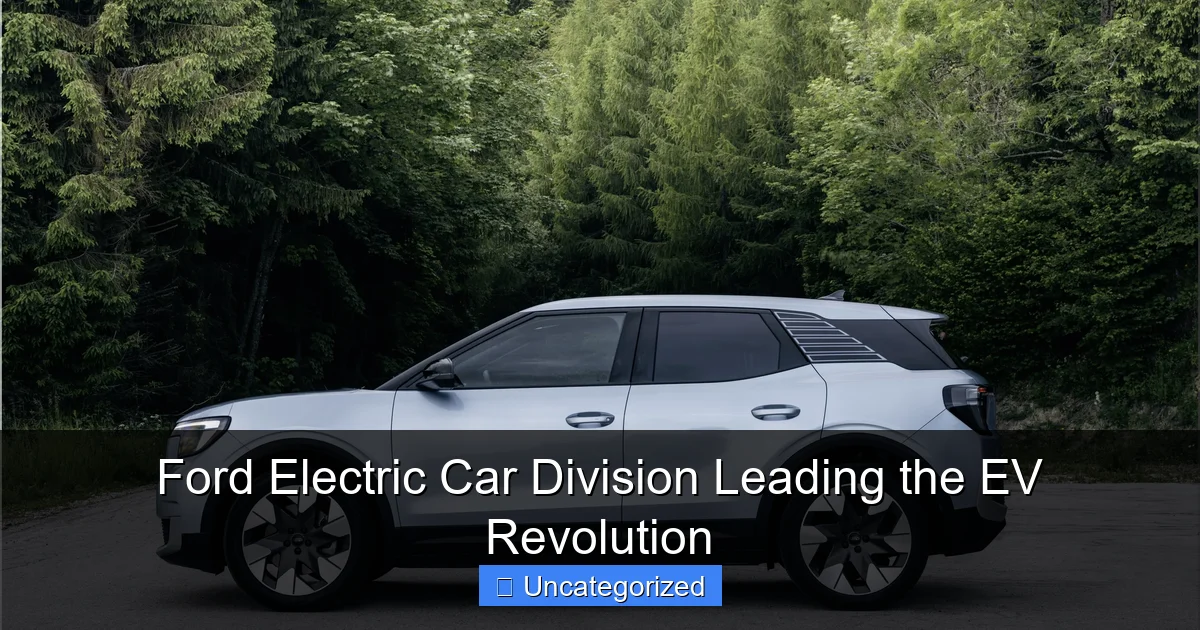
Featured image for ford electric car division
Image source: cardivision.com
Ford’s electric car division is revolutionizing the EV market with cutting-edge models like the F-150 Lightning and Mustang Mach-E, combining iconic design with zero-emission performance. Backed by aggressive investments and a bold commitment to electrification, Ford is accelerating its global EV leadership and reshaping the future of sustainable transportation.
Key Takeaways
- Ford leads EV innovation with bold investments in battery tech and manufacturing.
- Expand charging networks to boost consumer confidence and adoption rates.
- Mustang Mach-E and F-150 Lightning prove performance and utility can coexist.
- Vertical integration strategy reduces costs and accelerates production scalability.
- Focus on affordability will be key to mass-market EV success.
- Retooling legacy plants shows commitment to sustainable, domestic EV production.
📑 Table of Contents
- Ford Electric Car Division: A Legacy Reimagined
- The Evolution of Ford’s Electric Car Division
- Flagship Models: The Heart of Ford’s EV Lineup
- Technology and Innovation: Powering the Future
- Market Impact and Competitive Landscape
- Future Roadmap: What’s Next for Ford Model e?
- Data Table: Ford EV Models at a Glance
- Conclusion: Ford’s Electric Future is Now
Ford Electric Car Division: A Legacy Reimagined
The automotive industry stands at the precipice of a transformative era, and at the forefront of this electric vehicle (EV) revolution is the Ford electric car division. Once synonymous with the roar of V8 engines and the iconic Mustang, Ford Motor Company is now steering its legacy toward a cleaner, quieter, and more sustainable future. With decades of manufacturing expertise and a bold commitment to innovation, Ford has pivoted aggressively to electrification, investing billions to redefine mobility for the 21st century. The company’s electric car division isn’t just an add-on—it’s a strategic overhaul of its entire identity, from production lines to customer experience.
What sets Ford apart in the crowded EV market isn’t just its heritage; it’s the audacious scope of its ambitions. From the groundbreaking Ford F-150 Lightning to the sporty Mustang Mach-E and the versatile E-Transit, Ford’s electric lineup targets every segment of the market. Whether you’re a pickup-truck loyalist, an urban commuter, or a fleet manager, Ford’s EVs offer something tailored to your needs. This blog post dives deep into the Ford electric car division, exploring its history, flagship models, technological advancements, sustainability goals, and what the future holds. Buckle up—this is more than a shift to electric power; it’s a reimagining of what Ford stands for.
The Evolution of Ford’s Electric Car Division
From Hybrid Pioneers to All-Electric Visionaries
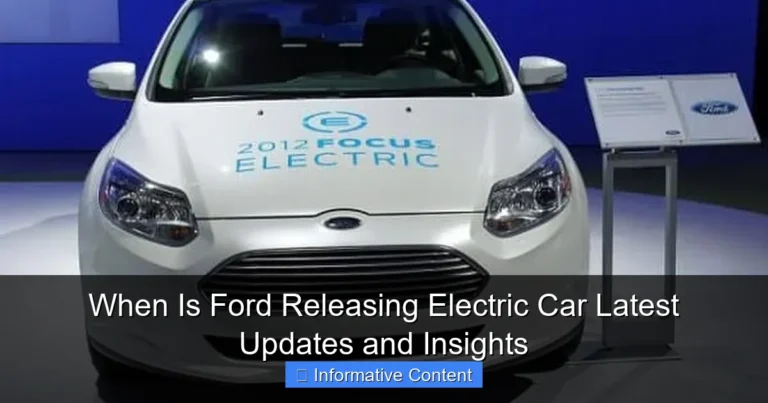
Ford’s journey into electrification began long before the current EV boom. In the early 2000s, the company launched the Ford Escape Hybrid, one of the first mass-produced hybrid SUVs in the U.S. market. This foray into hybrid technology laid the groundwork for Ford’s understanding of battery systems, regenerative braking, and consumer acceptance of alternative powertrains. However, it wasn’t until 2011, with the introduction of the Ford Focus Electric, that Ford dipped its toes into the all-electric waters. Though the Focus Electric had limited range (76 miles on a charge) and modest sales, it served as a critical learning tool for Ford’s engineering teams.
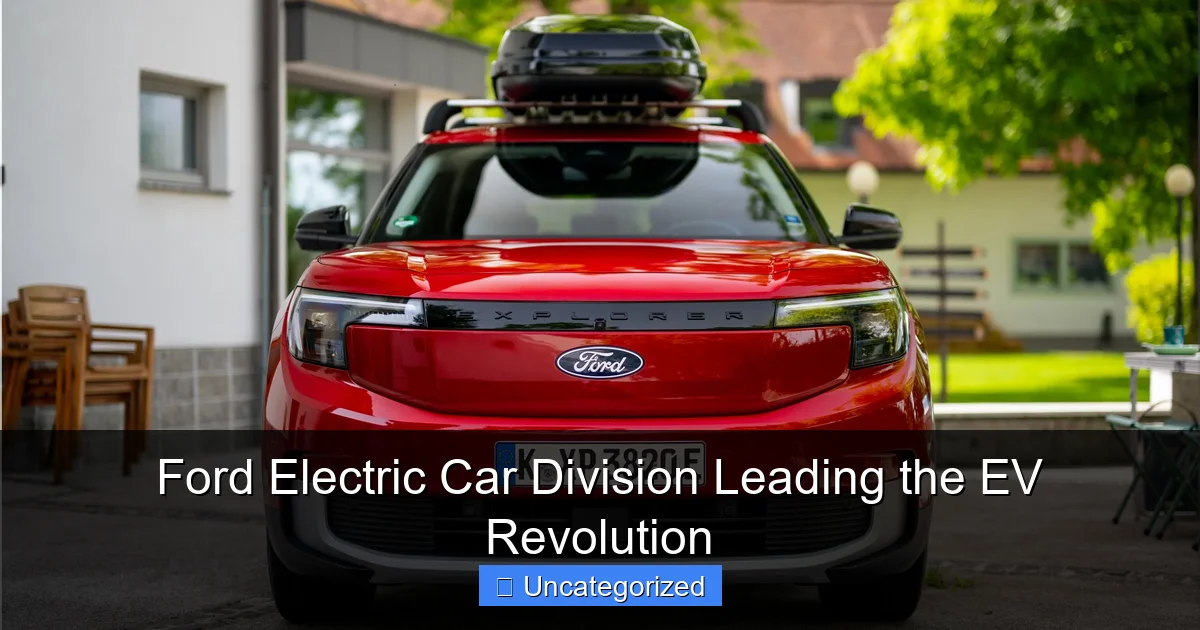
Visual guide about ford electric car division
Image source: cardivision.com
The real turning point came in 2017, when Ford announced a $11 billion investment in EVs—a bold move that signaled its intent to compete with Tesla and other EV leaders. By 2021, the company upped the ante, pledging $30 billion through 2025 to electrify its lineup. This included the creation of a dedicated Ford electric car division, separate from its traditional internal combustion engine (ICE) operations, to ensure focused innovation. The division, now known as Ford Model e, operates with startup-like agility, reporting directly to CEO Jim Farley. This structural shift allowed Ford to bypass bureaucratic hurdles and accelerate development timelines.
Key Milestones and Strategic Shifts
Several pivotal moments underscore Ford’s commitment to electrification:
- 2020: The Mustang Mach-E debuts, blending the Mustang’s performance legacy with cutting-edge EV technology. It becomes Ford’s first global EV, available in Europe and North America.
- 2021: The F-150 Lightning is unveiled, electrifying America’s best-selling vehicle. Its “frunk” (front trunk) and Pro Power Onboard system (turning the truck into a mobile generator) capture the public’s imagination.
- 2022: Ford splits into three divisions: Ford Blue (ICE vehicles), Ford Model e (EVs), and Ford Pro (commercial vehicles). This allows the electric car division to operate with financial and strategic independence.
- 2023: The E-Transit van hits the market, offering a zero-emission solution for businesses. It quickly becomes the best-selling electric van in the U.S.
These milestones highlight Ford’s strategy: electrify iconic vehicles first to build trust and excitement. By starting with the Mustang and F-150—two of the most beloved nameplates in automotive history—Ford ensured that its EVs would be embraced by loyal customers rather than niche enthusiasts.
Flagship Models: The Heart of Ford’s EV Lineup
Mustang Mach-E: The Electric Pony
The Mustang Mach-E is more than just an EV; it’s a statement. Launched in 2020, it defied expectations by carrying the Mustang badge without a V8 engine. The Mach-E offers a range of configurations, from the standard-range RWD (247 miles) to the high-performance Mach-E GT (270 horsepower, 0-60 mph in 3.5 seconds). Key features include:
- 15.5-inch touchscreen with SYNC 4A infotainment
- BlueCruise hands-free driving on 130,000 miles of highways
- Ford Co-Pilot360 safety suite (adaptive cruise, lane-keeping, etc.)
- Frunk storage (13.1 cu. ft.) for groceries, sports gear, or charging cables
Tip for buyers: Opt for the Extended Range battery if you frequently drive long distances. The $7,500 federal tax credit (as of 2023) also makes it a more affordable choice.
F-150 Lightning: Power Meets Practicality
The F-150 Lightning is a game-changer for the pickup segment. With dual electric motors (standard AWD), it delivers 452–580 horsepower and 775 lb-ft of torque—more than any gas-powered F-150. But its real innovation lies in utility:
- Pro Power Onboard: Up to 9.6 kW of power for tools, appliances, or even a home during outages (via the “Home Integration System”)
- 131 cu. ft. frunk: Doubles as a cooler or workbench
- 2,000-lb payload and 10,000-lb towing capacity (with Max Trailer Tow package)
- 150 kW DC fast charging: 15-80% in ~44 minutes
Practical example: A construction crew in Texas used the Lightning’s Pro Power to run a job site during a blackout, saving thousands in generator costs.
E-Transit: Electrifying Commercial Fleets
For businesses, the E-Transit van offers a seamless transition to electric. With a 126-mile range and 68 kWh battery, it’s ideal for urban deliveries. Features include:
- Ford Pro Telematics for route optimization and battery monitoring
- 2,690-lb payload and 3,800-lb GVWR (varies by configuration)
- 120V/240V outlets for tools and devices
Tip for fleet managers: Use Ford Pro’s Energy Management Services to reduce charging costs by scheduling off-peak charging and analyzing energy usage.
Technology and Innovation: Powering the Future
Advanced Battery and Charging Solutions
The Ford electric car division leverages partnerships with SK On and LG Energy Solution to secure battery supply. Key innovations include:
- Nickel-Cobalt-Manganese (NCM) batteries: Used in the Mach-E and Lightning, offering high energy density and longevity.
- BlueOval Charge Network: A partnership with Electrify America, EVgo, and others to provide access to over 10,000 fast-charging stations across North America. Ford EVs come with a free 250 kWh of charging at Electrify America stations.
- FordPass Power My Trip: An app feature that plans routes with charging stops and real-time availability.
Data point: Ford’s 2023 survey found that 78% of EV owners use the FordPass app for charging, with 92% satisfaction in station reliability.
Autonomous Driving and Software
Ford’s EVs are built for the future of mobility. The BlueCruise 1.2 system (available on Mach-E and Lightning) allows hands-free driving on highways, with features like:
- Lane Change Assist: Tap the turn signal to change lanes automatically
- In-Lane Repositioning: Adjusts position within the lane for safety
Meanwhile, SYNC 4A infotainment uses over-the-air (OTA) updates to add new features post-purchase. For example, the Lightning received an OTA update in 2023 that improved battery preconditioning for faster charging.
Sustainable Manufacturing
Ford’s electric car division prioritizes eco-friendly production. The Dearborn Truck Plant (home of the Lightning) is powered by 100% renewable energy. The BlueOval City complex in Tennessee (opening in 2025) will use recycled materials in battery production and achieve net-zero emissions. Ford also recycles over 90% of battery materials through its Reinvented Recycling program.
Market Impact and Competitive Landscape
Sales Performance and Market Share
Ford’s EVs are gaining traction. In 2023, the F-150 Lightning sold 24,165 units in the U.S., while the Mustang Mach-E reached 39,458 units. The E-Transit captured 72% of the electric van market in its first year. Globally, Ford’s EV sales grew by 120% YoY in 2023, outpacing industry averages.
Competing with Tesla and Legacy Rivals
Ford’s electric car division faces fierce competition:
- Tesla: Dominates with the Model Y and Cybertruck, but Ford counters with the Lightning’s utility and lower price ($49,995 vs. Cybertruck’s $60,990).
- Chevrolet: The Silverado EV and Blazer EV compete directly with Ford’s trucks and SUVs. Ford’s advantage? Its Pro Power Onboard and BlueCruise tech.
- Hyundai/Kia: Offer long-range EVs (e.g., Ioniq 5, EV6) at competitive prices. Ford differentiates with its truck heritage and commercial fleet focus.
Customer Loyalty and Brand Trust
Ford’s biggest asset is its loyal customer base. A 2023 study by J.D. Power found that 68% of Ford EV buyers were previous Ford owners. The company also offers 8-year/100,000-mile battery warranties, addressing range anxiety.
Future Roadmap: What’s Next for Ford Model e?
Upcoming Models and Platforms
Ford’s electric car division has a packed pipeline:
- Explorer EV: A 3-row SUV based on the GE2 platform (shared with Mach-E), targeting families. Expected 2025.
- Ford Explorer Sport Trac EV: A pickup variant of the Explorer, combining SUV comfort with truck utility.
- Affordable EV (~$25,000): A compact car aimed at budget-conscious buyers, launching by 2026.
These models will use Ford’s new unified battery platform, which reduces costs by 40% and supports multiple vehicle types.
Global Expansion and Infrastructure
Ford is expanding its EV presence globally. The Mustang Mach-E is now available in 30+ countries, and the E-Transit is sold in Europe. Ford also plans to build 100,000 charging stations in North America by 2030, including 2,000 fast chargers in underserved areas.
Challenges and Opportunities
Despite progress, challenges remain:
- Supply chain: Battery material shortages (e.g., lithium) could delay production.
- Charging infrastructure: Rural areas lack reliable fast charging.
- Consumer education: Many still misunderstand EV range and charging times.
However, Ford’s “Always On” customer support (24/7 roadside assistance, mobile service) and free home charger installation (via Ford Charge Station Pro) help bridge the gap.
Data Table: Ford EV Models at a Glance
| Model | Starting Price | Range (EPA) | 0-60 mph | Key Feature |
|---|---|---|---|---|
| Mustang Mach-E | $42,995 | 247–314 miles | 3.5–6.1 sec | BlueCruise hands-free driving |
| F-150 Lightning | $49,995 | 240–320 miles | 4.0 sec (Platinum) | Pro Power Onboard (9.6 kW) |
| E-Transit | $47,995 | 126 miles | 6.5 sec (est.) | Ford Pro Telematics |
Conclusion: Ford’s Electric Future is Now
The Ford electric car division isn’t just participating in the EV revolution—it’s leading it. By electrifying iconic vehicles, investing in cutting-edge technology, and prioritizing sustainability, Ford has transformed from a traditional automaker into a forward-thinking mobility company. The Mustang Mach-E redefines what a performance EV can be, the F-150 Lightning proves that trucks can be both powerful and planet-friendly, and the E-Transit empowers businesses to go electric.
What’s next? With a clear roadmap, global ambitions, and a customer-first approach, Ford is poised to dominate the EV market. The company’s ability to blend heritage with innovation sets it apart from startups and legacy rivals alike. As charging infrastructure improves and battery costs decline, Ford’s EVs will only grow more accessible. For consumers, this means more choices, better technology, and a cleaner future. For the industry, it’s a wake-up call: the EV revolution isn’t coming—it’s here, and Ford is driving it.
Frequently Asked Questions
What is the Ford Electric Car Division and what does it focus on?
The Ford Electric Car Division, also known as Ford Model e, is dedicated to designing and producing innovative electric vehicles (EVs) and cutting-edge software. Its mission is to lead the EV revolution by delivering sustainable, high-performance vehicles like the Mustang Mach-E and F-150 Lightning.
Which electric vehicles does the Ford Electric Car Division currently offer?
Ford’s EV lineup includes the Mustang Mach-E SUV, the F-150 Lightning pickup, and the E-Transit van, all developed under the Ford Electric Car Division. These models combine zero-emission driving with advanced tech and Ford’s signature durability.
How is Ford’s Electric Car Division different from other automakers’ EV programs?
Ford stands out by leveraging its century-long manufacturing expertise to scale EV production rapidly while integrating smart technologies like BlueCruise hands-free driving. The division also focuses on affordable, versatile EVs for everyday consumers.
What is the future of the Ford Electric Car Division in terms of new models?
Ford plans to expand its EV offerings with next-gen vehicles, including an electric Explorer and a new electric pickup codenamed “Project T3.” The division aims to deliver 2 million EVs annually by 2026.
Does the Ford Electric Car Division offer charging solutions for its customers?
Yes, Ford provides access to the BlueOval™ Charge Network, the largest public charging network in North America, with over 10,000 stations. Owners also get home charger installation support for seamless at-home charging.
How sustainable is the Ford Electric Car Division’s manufacturing process?
Ford’s EV division prioritizes sustainability by using recycled materials, reducing factory emissions, and sourcing ethical battery minerals. The company targets carbon neutrality across its operations by 2050.