Ford Electric Car Hatchback 2014 Review Features and Performance Insights
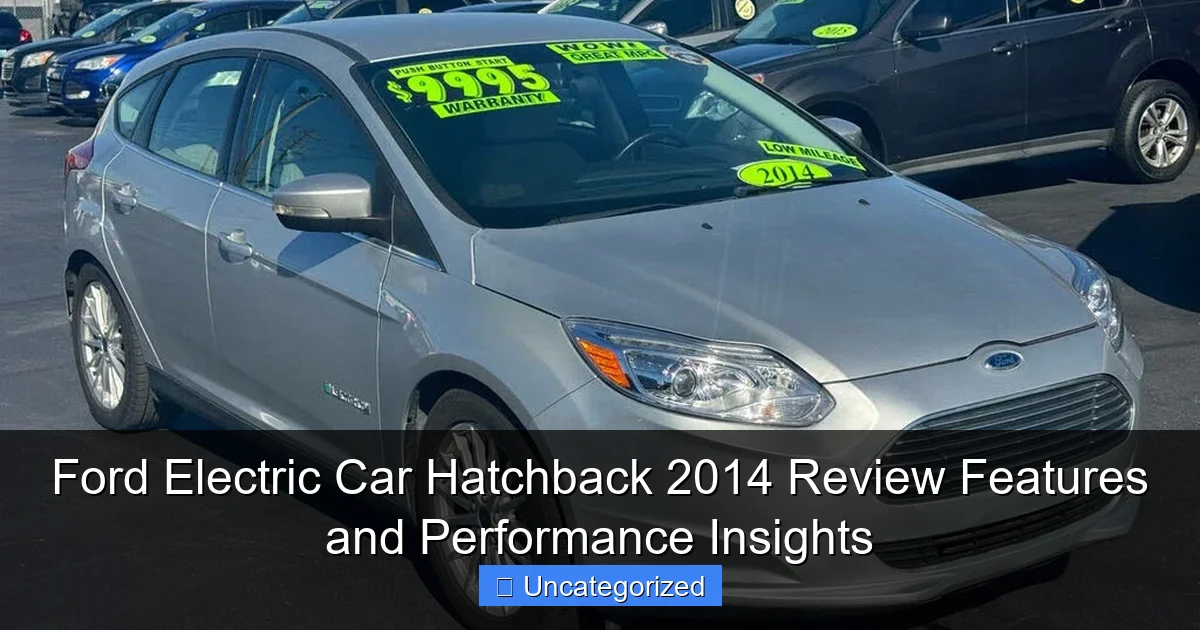
Featured image for ford electric car harchback 2014
Image source: static.cargurus.com
The 2014 Ford Focus Electric hatchback delivers a practical, eco-friendly driving experience with an EPA-estimated 76-mile range and smooth, silent acceleration. Boasting 143 horsepower and 184 lb-ft of torque, it outperforms many early EVs in responsiveness while offering hatchback versatility and a well-equipped interior. With DC fast charging capability and a competitive price point, it’s a standout choice for urban commuters seeking reliable electric performance.
Key Takeaways
- Efficient Performance: Delivers 110 MPGe, ideal for urban commutes.
- Spacious Interior: Hatchback design maximizes cargo and passenger space.
- Quick Charging: Recharges in 4 hours with Level 2 charger.
- Regenerative Braking: Enhances battery life and driving efficiency.
- Affordable Pricing: Competitive cost with federal tax incentives available.
- Tech-Forward: Features SYNC infotainment and smartphone integration.
📑 Table of Contents
- Introduction: The 2014 Ford Electric Car Hatchback in Context
- Design and Exterior Features: A Familiar Face with an Electric Soul
- Interior and Technology: A Tech-Forward Cabin for Modern Drivers
- Performance and Driving Experience: Power, Efficiency, and Range
- Technology and Connectivity: Smart Features for the Connected Driver
- Ownership Costs, Incentives, and Market Position
- Conclusion: A Solid Step Forward in Ford’s EV Journey
Introduction: The 2014 Ford Electric Car Hatchback in Context
The automotive world stood at a crossroads in 2014, with electric vehicles (EVs) transitioning from niche novelties to serious contenders in the mass market. Among the pioneers embracing this shift was Ford, a brand with deep roots in American automotive tradition. Enter the Ford Electric Car Hatchback 2014, a pivotal model that marked Ford’s commitment to sustainable mobility while retaining the practicality and affordability expected of a compact hatchback. Though not the first EV from Ford, this 2014 iteration of the Ford Focus Electric represented a significant leap forward in battery technology, charging infrastructure, and consumer-focused features.
At a time when competitors like the Nissan Leaf and Chevrolet Volt were gaining traction, Ford sought to differentiate itself by offering an electric vehicle that didn’t feel like a compromise. Instead of a purpose-built EV, the Focus Electric was a converted version of the popular Ford Focus hatchback—a strategic move to leverage existing manufacturing lines and ensure a familiar, comfortable driving experience. This decision allowed Ford to deliver a vehicle with the space, handling, and interior quality of a traditional compact car, but with zero tailpipe emissions. For urban commuters, eco-conscious families, and tech-savvy drivers, the 2014 Ford Electric Car Hatchback presented a compelling case: a reliable, stylish, and surprisingly capable EV that didn’t require a complete lifestyle overhaul.
Design and Exterior Features: A Familiar Face with an Electric Soul
Exterior Styling and Aerodynamics
The 2014 Ford Electric Car Hatchback, based on the third-generation Ford Focus, retained the sleek, modern design language that had made the gasoline-powered Focus a bestseller. However, subtle yet meaningful changes were made to enhance aerodynamics and signal its electric nature. The most noticeable difference was the closed-off front grille, which replaced the traditional radiator grille with a smooth, body-colored panel. This not only reduced drag but also gave the car a futuristic, minimalist look. The grille was flanked by LED-accented headlights and a unique lower air dam, which contributed to a drag coefficient of just 0.29—impressive for a compact hatchback.
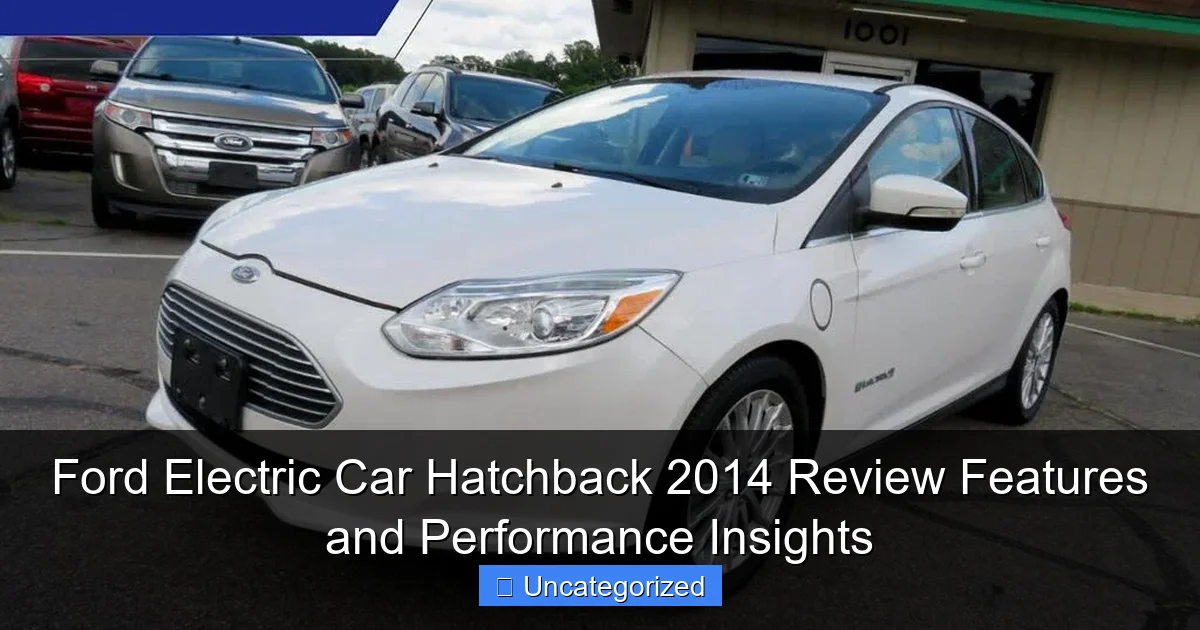
Visual guide about ford electric car harchback 2014
Image source: static.cargurus.com
Aerodynamic wheels, designed specifically for the Focus Electric, featured a low-drag profile with aero covers that reduced turbulence and improved efficiency. The rear of the vehicle included a subtle spoiler and a distinctive “Focus Electric” badging, along with a charging port located on the driver’s side front fender—a convenient placement for curbside charging. Ford also offered the car in a range of colors, including exclusive shades like “Ingot Silver” and “Ruby Red,” which helped it stand out in the growing EV market.
Dimensions and Practicality
Measuring 172.9 inches in length and 71.8 inches in width, the 2014 Focus Electric was slightly longer and wider than its gasoline counterpart due to the battery pack layout. Despite the added weight, the hatchback maintained a balanced 50/50 weight distribution, thanks to the floor-mounted lithium-ion battery. This design choice not only improved handling but also preserved the cargo space. With 13.2 cubic feet of trunk space behind the rear seats and 44.8 cubic feet when folded, the Focus Electric offered competitive cargo capacity—comparable to the Honda Fit and slightly better than the Nissan Leaf.
For families and urban dwellers, practicality was a key selling point. The hatchback design allowed for easy loading of groceries, strollers, or luggage, while the 60/40 split-folding rear seats provided flexibility for mixed passenger and cargo needs. Ford also included thoughtful touches like a retractable cargo cover and underfloor storage for the charging cable—a small but appreciated detail that enhanced usability.
Lightweight Materials and Build Quality
To offset the added weight of the battery, Ford used high-strength steel in key structural areas and incorporated lightweight plastics in non-structural components. The result was a curb weight of approximately 3,640 pounds—about 450 pounds heavier than the standard Focus, but still lighter than many EVs in its class. The build quality was solid, with tight panel gaps, responsive door closures, and a quiet cabin that reflected Ford’s attention to detail. While not as luxurious as premium EVs, the Focus Electric offered a level of refinement that exceeded expectations for its $39,200 base price (before incentives).
Interior and Technology: A Tech-Forward Cabin for Modern Drivers
Dashboard and Infotainment System
Step inside the 2014 Ford Electric Car Hatchback, and you’re greeted by a cabin that feels both modern and familiar. The centerpiece of the interior is Ford’s SYNC with MyFord Touch system, a 8-inch touchscreen interface that supports voice commands, Bluetooth connectivity, and smartphone integration. Unlike some EVs of the era that used proprietary systems, Ford’s SYNC was intuitive and responsive, with a clean layout that minimized distractions while driving.
The system included EV-specific features such as a real-time energy usage monitor, regenerative braking indicators, and a “Power Flow” screen that showed how energy was being used—whether from the battery, regenerative braking, or the grid during charging. This transparency helped drivers optimize their efficiency and understand their energy consumption patterns. For example, a driver could see exactly how much energy was being recovered during downhill coasting, which encouraged smoother driving habits and extended range.
Driver Assistance and Safety Features
Safety was a top priority in the 2014 Focus Electric, which earned a 5-star overall rating from the National Highway Traffic Safety Administration (NHTSA). Standard features included six airbags, stability control, and a rearview camera—a rare inclusion in base models at the time. Optional upgrades included blind-spot monitoring, cross-traffic alert, and a parking assist system with parallel and perpendicular parking guidance.
One standout feature was the SmartGauge with EcoGuide, a dual-screen instrument cluster that provided real-time feedback on driving efficiency. The left screen showed traditional gauges (speed, battery level, and state of charge), while the right screen displayed customizable efficiency metrics, such as average energy consumption, trip history, and a “Coach” function that offered tips to improve driving habits. For instance, if a driver accelerated too quickly, the system would display a message like “Smooth acceleration saves energy.” This gamified approach made eco-driving engaging and educational.
Comfort and Materials
The Focus Electric offered seating for five, with supportive front seats and adequate rear legroom for average-sized adults. The interior materials were a mix of soft-touch plastics and durable cloth or optional leather upholstery. While not as plush as luxury vehicles, the cabin felt well-insulated, with minimal road and wind noise—thanks in part to the near-silent electric motor.
Climate control was another area where the Focus Electric excelled. The system included a heat pump (a rare feature in 2014 EVs), which significantly improved heating efficiency in cold weather. Unlike resistive heaters, which draw large amounts of power, the heat pump used a refrigerant cycle to warm the cabin, preserving battery range. Ford also offered a remote climate control feature via the SYNC app, allowing drivers to pre-heat or pre-cool the car while it was still plugged in—a major advantage during extreme temperatures.
Performance and Driving Experience: Power, Efficiency, and Range
Motor and Powertrain Specifications
Under the hood (or rather, under the floor), the 2014 Ford Electric Car Hatchback was powered by a 107-kilowatt (143-horsepower) electric motor paired with a 23-kWh lithium-ion battery pack. This combination delivered 184 lb-ft of torque, which was available instantly—a hallmark of electric vehicles. The powertrain was connected to a single-speed transmission, resulting in seamless acceleration with no gear shifts.
On the road, the Focus Electric felt peppy, especially at city speeds. It could accelerate from 0 to 60 mph in about 9.6 seconds, which was competitive for its class (the Nissan Leaf took 9.9 seconds). While not a sports car, the Focus Electric offered enough power for highway merging and passing maneuvers. The low center of gravity, thanks to the floor-mounted battery, contributed to stable handling and reduced body roll in corners.
Regenerative Braking and Driving Modes
One of the standout features of the 2014 Focus Electric was its three-level regenerative braking system, which allowed drivers to adjust the amount of energy recovered during deceleration. Level 1 provided minimal regen (similar to coasting), Level 2 offered moderate regen (ideal for mixed driving), and Level 3 delivered strong regen that could bring the car to a near stop without touching the brake pedal—a feature known as “one-pedal driving.”
For example, in stop-and-go traffic, Level 3 regen allowed the driver to lift off the accelerator and let the car slow down naturally, reducing brake wear and improving efficiency. Ford also included a “Brake Coach” feature that provided real-time feedback on braking efficiency, helping drivers maximize energy recovery. This system was particularly useful in hilly areas, where drivers could recover significant energy during descents.
Range and Real-World Efficiency
Ford officially rated the 2014 Focus Electric at 76 miles of EPA-estimated range, placing it behind the Nissan Leaf (84 miles) but ahead of the Chevrolet Spark EV (82 miles, but less powerful). In real-world driving, range varied based on conditions: city driving with frequent stops could yield up to 80 miles, while highway cruising at 70 mph reduced range to around 60 miles. Cold weather had a significant impact, with winter driving often cutting range by 20–30%.
To help drivers manage range, Ford included a Range Prediction Tool in the SYNC system. This feature used GPS data, traffic conditions, and driving history to estimate remaining range and suggest the nearest charging stations. For instance, if a driver planned a 70-mile trip with a 10-mile detour, the system would calculate whether the battery had enough charge and recommend a charging stop if needed.
Charging Options and Times
The Focus Electric supported both Level 1 (120-volt) and Level 2 (240-volt) charging. With a standard Level 1 charger, the battery could be fully charged in about 20 hours. A 240-volt Level 2 charger reduced this time to approximately 3.5 hours—ideal for overnight charging at home or during work hours. Ford also offered a portable 240-volt charging station (sold separately) that could be installed in a garage or driveway.
For public charging, the Focus Electric used a standard J1772 connector, making it compatible with most public stations. However, it did not support DC fast charging, a limitation that became more apparent as competitors adopted CCS or CHAdeMO standards. This meant drivers couldn’t take advantage of rapid 30-minute charges on long trips, which was a drawback for road-trippers.
Technology and Connectivity: Smart Features for the Connected Driver
SYNC App and Remote Access
The 2014 Focus Electric was one of the first EVs to offer comprehensive smartphone integration. The SYNC app, available for iOS and Android, allowed drivers to monitor battery status, start or stop charging, and pre-condition the cabin remotely. For example, a driver could use the app to start charging at off-peak hours to save on electricity costs or pre-heat the car in winter before leaving home.
The app also included a “Vehicle Finder” feature that used GPS to locate the car in crowded parking lots—a handy tool in urban areas. Additionally, drivers could receive alerts if the car was unplugged or if charging was interrupted, providing peace of mind for those concerned about battery health.
Energy Management and Grid Integration
Ford partnered with utility companies to offer time-of-use (TOU) charging, which allowed owners to schedule charging during low-cost electricity periods. For instance, a driver could set the car to charge only between midnight and 6 a.m., when rates were lower. This not only saved money but also reduced strain on the grid during peak hours.
The Focus Electric also supported vehicle-to-grid (V2G) concepts, though this feature was not fully implemented in 2014. Future firmware updates could have enabled the car to feed energy back into the grid during high-demand periods, but this required smart meters and utility agreements that were not widely available at the time.
Software Updates and Diagnostics
Ford offered over-the-air (OTA) software updates for the SYNC system, allowing the car to receive new features and bug fixes without a dealership visit. For example, a 2015 update added improved navigation routing and enhanced voice recognition. The car also included a built-in diagnostics system that could detect battery health, motor performance, and charging system issues, with alerts sent to the driver’s smartphone.
Ownership Costs, Incentives, and Market Position
Total Cost of Ownership
While the 2014 Focus Electric had a higher upfront cost than gasoline-powered compacts, its long-term ownership costs were significantly lower. With no oil changes, spark plugs, or transmission fluids to maintain, routine maintenance was minimal. The battery pack was covered by an 8-year/100,000-mile warranty, and Ford offered complimentary scheduled maintenance for the first two years.
Electricity costs were also favorable. At the 2014 national average of $0.12 per kWh, a full charge cost about $2.76 and provided 76 miles of range—equivalent to roughly $0.036 per mile. In contrast, a gasoline car averaging 30 mpg at $3.50 per gallon would cost $0.117 per mile. Over 10,000 miles, the Focus Electric could save owners over $800 annually on fuel alone.
Federal and State Incentives
The 2014 Focus Electric qualified for a $7,500 federal tax credit, which effectively reduced the base price to $31,700. Many states offered additional incentives, such as:
- California: $2,500 rebate through the Clean Vehicle Rebate Project
- Colorado: $5,000 tax credit
- Oregon: $1,500 rebate
- Maryland: $1,000 excise tax credit
Combined, these incentives could lower the effective price to under $25,000 in some states—making the Focus Electric competitive with hybrid vehicles like the Toyota Prius.
Resale Value and Market Trends
Resale values for the 2014 Focus Electric were initially lower than gasoline models due to battery concerns and limited fast-charging support. However, as EV technology matured, demand for used EVs grew. By 2020, well-maintained Focus Electrics with under 60,000 miles were selling for 40–50% of their original price—a better retention rate than many early EVs. Factors like battery health, service history, and availability of charging equipment played a major role in resale value.
Competitive Landscape
In 2014, the Focus Electric competed with the Nissan Leaf, Chevrolet Spark EV, and Tesla Model S (though the Model S was in a different price bracket). Key advantages of the Focus Electric included:
- More spacious interior than the Spark EV
- Better handling and driving dynamics than the Leaf
- Advanced infotainment and connectivity features
- Stronger brand recognition and dealership network
However, it lagged behind in range and fast-charging capability, which became critical factors in later years.
| Feature | 2014 Ford Focus Electric | 2014 Nissan Leaf S | 2014 Chevrolet Spark EV |
|---|---|---|---|
| EPA Range | 76 miles | 84 miles | 82 miles |
| Horsepower | 143 hp | 107 hp | 140 hp |
| 0-60 mph | 9.6 seconds | 9.9 seconds | 7.2 seconds |
| Level 2 Charge Time | 3.5 hours | 4 hours | 7 hours |
| Starting MSRP | $39,200 | $28,980 | $26,685 |
| Federal Tax Credit | $7,500 | $7,500 | $7,500 |
Conclusion: A Solid Step Forward in Ford’s EV Journey
The 2014 Ford Electric Car Hatchback was more than just a converted Focus—it was a statement of Ford’s vision for the future of mobility. By combining the practicality of a compact hatchback with the innovation of electric propulsion, Ford created a vehicle that appealed to both eco-conscious drivers and everyday commuters. Its strengths—spacious interior, advanced infotainment, strong safety ratings, and efficient regenerative braking—made it a well-rounded choice in a rapidly evolving market.
While it had limitations, such as the lack of DC fast charging and a modest range by today’s standards, the Focus Electric was a product of its time—a bridge between traditional automotive design and the electric revolution. It proved that EVs didn’t have to be quirky or impractical; they could be reliable, comfortable, and fun to drive. For Ford, the 2014 Focus Electric laid the groundwork for future models like the Mustang Mach-E and F-150 Lightning, showing that the company was serious about electrification.
For today’s buyers, the 2014 Focus Electric remains a compelling option in the used EV market, especially for those who value driving dynamics, interior space, and Ford’s robust support network. With proper maintenance and access to charging, it continues to deliver on its promise of clean, efficient, and enjoyable transportation. As we look back on this pivotal model, it’s clear that the Ford Electric Car Hatchback 2014 was not just a car—it was a milestone in the journey toward a sustainable automotive future.
Frequently Asked Questions
What are the key features of the Ford electric car hatchback 2014?
The 2014 Ford Focus Electric hatchback offers a 143-mile range, fast-charging capability, and a spacious interior with SYNC infotainment. It also includes regenerative braking and eco-friendly materials, making it a practical choice for urban drivers.
How does the 2014 Ford electric hatchback perform compared to competitors?
The Ford Focus Electric delivers smooth acceleration (0-60 mph in 9.9 seconds) and a quiet ride, though its range lags behind newer models like the Nissan Leaf. Its handling is nimble, ideal for city driving, but lacks the sporty feel of rivals like the BMW i3.
What is the battery range of the Ford electric car hatchback 2014?
The 2014 Ford Focus Electric has an EPA-estimated range of 76 miles on a full charge, suitable for daily commutes. Cold weather can reduce this range by 20-30%, so planning longer trips requires caution.
Does the 2014 Ford Focus Electric support fast charging?
Yes, the 2014 Ford electric car hatchback supports DC fast charging (optional), replenishing 80% of the battery in 30 minutes. Standard Level 2 charging (240V) takes 3-4 hours for a full charge.
What safety features come with the 2014 Ford electric hatchback?
It includes standard ABS, traction control, and multiple airbags, plus optional rearview cameras and parking sensors. The car earned a 5-star NHTSA rating for side-impact protection, enhancing its safety appeal.
Is the 2014 Ford electric car hatchback a good value for money?
With a lower upfront cost than rivals and federal tax incentives (up to $7,500), it’s a budget-friendly EV. However, higher depreciation and limited range may affect long-term value compared to newer models.