Ford Electric Car Interior Features and Design Review
Featured image for ford electric car interior
Image source: images.caricos.com
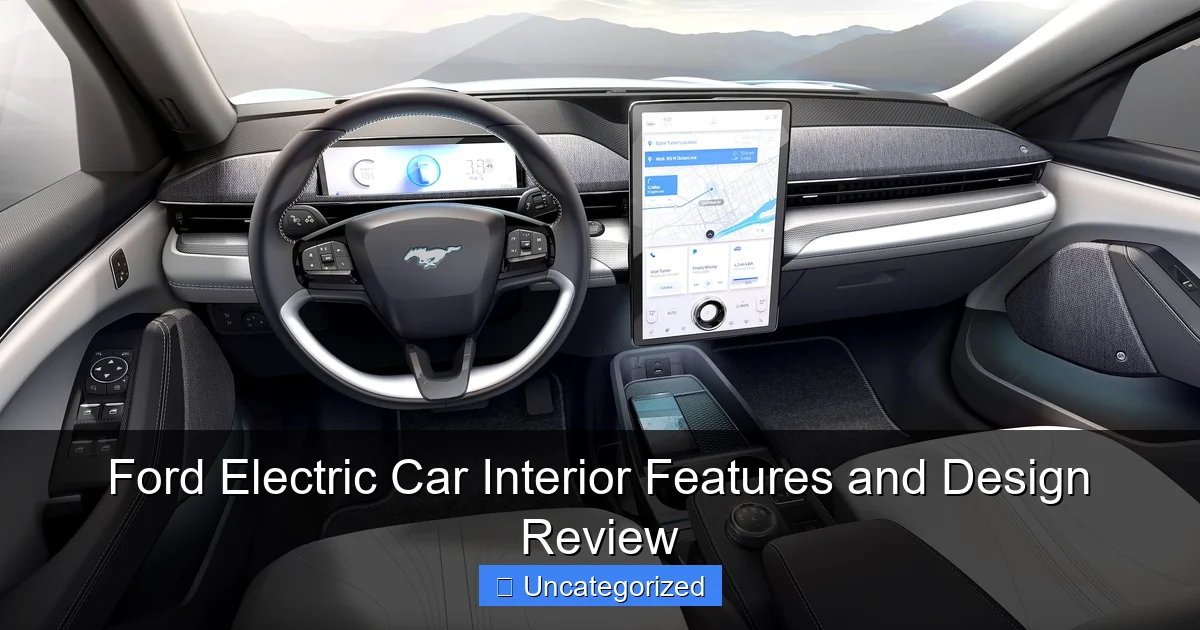
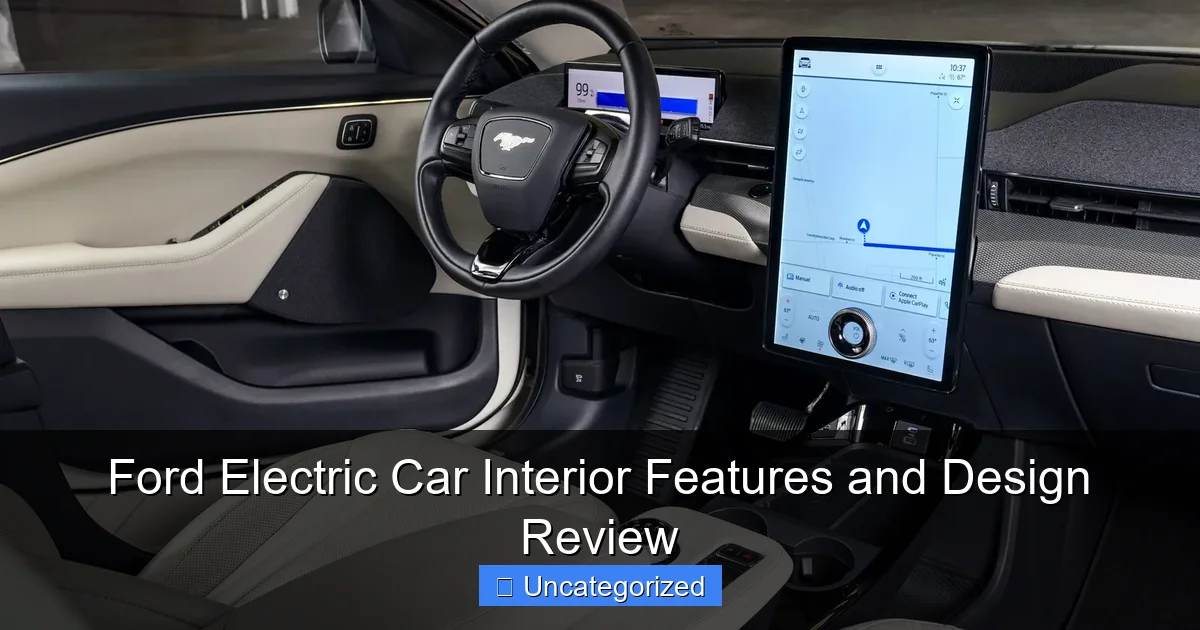
The Ford electric car interior blends cutting-edge tech with premium comfort, featuring a minimalist dashboard dominated by a massive 15.5-inch touchscreen and customizable ambient lighting. Ergonomic seating and sustainable materials create a refined, eco-conscious cabin, while advanced noise insulation ensures a whisper-quiet ride. Every detail, from the intuitive SYNC 4A system to the spacious rear legroom, is engineered for a seamless, luxurious driving experience.
Key Takeaways
- Spacious cabin: Ample legroom and smart storage solutions enhance comfort.
- Premium materials: High-quality, sustainable upholstery elevates interior appeal.
- Advanced infotainment: Large touchscreen with intuitive Ford SYNC 4 system.
- Quiet ride: Excellent noise insulation for a serene driving experience.
- Customizable lighting: Adjustable ambient lights set the perfect mood.
- Ergonomic design: Thoughtful layout reduces driver fatigue on long trips.
📑 Table of Contents
- Ford Electric Car Interior Features and Design Review
- 1. Modern Design Philosophy: Minimalism Meets Functionality
- 2. Advanced Technology and Infotainment
- 3. Comfort and Ergonomics: Designed for Long Drives
- 4. Storage and Practicality: More Than Just a Pretty Face
- 5. Sustainability and Eco-Friendly Materials
- 6. Comparison Table: Ford Electric Models Interior Features
Ford Electric Car Interior Features and Design Review
The electric vehicle (EV) revolution is in full swing, and Ford has emerged as a major contender in the race to dominate the future of mobility. While the Ford electric car interior might not be the first thing that comes to mind when discussing EVs, it’s a critical component that defines the ownership experience. From the sleek dashboard of the Mustang Mach-E to the minimalist cabin of the F-150 Lightning, Ford is redefining what an American automaker’s interior can be in the electric age. Gone are the days of utilitarian plastics and cramped layouts. Today, Ford’s electric vehicles blend modern design, cutting-edge technology, and practical functionality in a way that appeals to both tech-savvy urbanites and traditional truck lovers.
What makes the Ford electric car interior stand out is its ability to balance innovation with familiarity. Unlike some EV startups that go full minimalist with touchscreens and hidden controls, Ford retains tactile buttons, intuitive layouts, and a driver-centric approach. This thoughtful design philosophy ensures that even first-time EV drivers feel at home. Whether you’re navigating city streets in the E-Transit or towing a boat with the F-150 Lightning, the cabin remains a sanctuary of comfort, connectivity, and convenience. In this comprehensive review, we’ll explore the standout features, design elements, and practical considerations that define the Ford electric car interior experience.
1. Modern Design Philosophy: Minimalism Meets Functionality
Clean Lines and Premium Materials
Ford’s electric vehicles embrace a modern design language that emphasizes clean lines, uncluttered surfaces, and high-quality materials. Unlike the cluttered dashboards of older models, the Ford electric car interior uses soft-touch plastics, real aluminum trim, and available leather upholstery to elevate the ambiance. For example, the Mustang Mach-E Premium features a stitched leather dashboard, ambient lighting, and a floating center console that gives the cabin an open, airy feel. The use of sustainable materials is also on the rise—some trims include recycled plastics and soy-based foam in the seats, aligning with Ford’s broader environmental goals.
Visual guide about ford electric car interior
Image source: media.wired.com
Even the base models avoid the “cheap EV” trap. The F-150 Lightning XLT includes a soft-touch upper dash, dual-zone climate control, and a 12-inch digital instrument cluster—features typically reserved for higher trims in ICE (internal combustion engine) trucks. Ford’s designers have clearly prioritized a premium feel without inflating the price tag unnecessarily.
Driver-Centric Layout
One of the most notable aspects of the Ford electric car interior is its driver-focused cockpit. The steering wheel is positioned to offer excellent visibility, and the center stack is angled slightly toward the driver. This design choice enhances usability, especially when interacting with the touchscreen or climate controls while driving.
For example, the Mustang Mach-E places the 15.5-inch vertical touchscreen in the center of the dashboard, but it’s positioned so that the driver can glance at it without taking their eyes far from the road. The physical volume knob at the bottom of the screen is a welcome touch—many EVs eliminate all buttons, but Ford recognizes that drivers still prefer tactile feedback for frequently used functions. This balance between digital and analog is a hallmark of Ford’s interior design.
Open and Airy Ambience
Thanks to the absence of a traditional transmission tunnel (in most models), Ford’s electric vehicles offer a flat floor, creating more legroom and a sense of openness. The F-150 Lightning, despite being a full-size pickup, feels surprisingly spacious inside due to this design. The panoramic glass roof (available on higher trims) further enhances the airy feel, flooding the cabin with natural light and reducing the claustrophobic sensation that can come with enclosed cabins.
Additionally, the use of lighter color palettes—such as the Mustang Mach-E’s “Light Space Gray” or “Black Onyx” interiors—helps amplify the sense of space. Ford also offers customizable ambient lighting with multiple color options, allowing drivers to set the mood for their drive.
2. Advanced Technology and Infotainment
SYNC 4A: The Brains of the Cabin
At the heart of every Ford electric car interior is the SYNC 4A infotainment system. This next-generation platform is a significant leap from older SYNC versions, offering faster processing, cloud connectivity, and over-the-air (OTA) updates. The system is powered by a custom-built processor that supports split-screen functionality, voice commands via Alexa Built-In, and seamless smartphone integration.
For instance, the Mustang Mach-E’s 15.5-inch touchscreen is not only large but also highly responsive. It supports pinch-to-zoom, swipe gestures, and split-screen views—perfect for viewing navigation on one side and media on the other. The system also learns your preferences over time, suggesting frequently visited destinations or adjusting climate settings based on your habits.
Digital Instrument Cluster and Head-Up Display
Ford’s electric vehicles come equipped with a fully digital 12-inch instrument cluster (or larger on higher trims). This customizable display shows speed, battery range, energy flow, and navigation directions. In the F-150 Lightning, the cluster can even display real-time towing data, such as trailer weight and brake status.
Higher trims, like the Mustang Mach-E GT, include a color head-up display (HUD) that projects key information—speed, speed limit, turn-by-turn directions—onto the windshield. This reduces the need to look down at the instrument panel, improving safety during high-speed driving. The HUD is especially useful at night or in bright sunlight, where traditional displays can be hard to read.
Smartphone Integration and Connectivity
All Ford EVs support wireless Apple CarPlay and Android Auto, eliminating the need to fumble with USB cables. The SYNC 4A system also includes wireless charging, available on most trims. The F-150 Lightning features a large wireless charging pad in the center console, capable of charging two smartphones simultaneously.
Ford’s FordPass Connect system allows remote control of the vehicle via smartphone app. You can start the climate system, check battery status, lock/unlock doors, and even locate your vehicle in a crowded parking lot. For example, if you’re returning from a hike and your car is parked in a remote trailhead, the FordPass app can guide you back using GPS.
OTA Updates and Future-Proofing
Unlike traditional vehicles that require dealership visits for software updates, Ford’s EVs receive OTA updates that improve functionality, fix bugs, and add new features. For instance, Ford recently pushed an update that enhanced the Mustang Mach-E’s navigation system to include more detailed charging station information, including real-time availability and plug compatibility.
This future-proofing ensures that your Ford electric car interior doesn’t become outdated after a few years. Instead, it evolves with new capabilities—much like a smartphone.
3. Comfort and Ergonomics: Designed for Long Drives
Seating and Adjustability
Comfort is a top priority in the Ford electric car interior. The seats in models like the Mustang Mach-E and F-150 Lightning are engineered for long-distance driving. The front seats offer 10-way power adjustment (with memory on higher trims), lumbar support, and available heating and ventilation. The Lightning Platinum even includes massaging front seats—a rare feature in the pickup truck segment.
Rear passengers aren’t forgotten either. The Mustang Mach-E offers 38.1 inches of rear legroom, while the F-150 Lightning provides 43.6 inches—more than enough for adults. The flat floor design also means three passengers can sit comfortably in the back without the dreaded “center hump.”
Climate Control and Air Quality
Ford’s EVs come with dual-zone automatic climate control, but higher trims offer tri-zone systems (e.g., F-150 Lightning Lariat). The system includes a cabin air filter and optional heated and ventilated seats. Some models also feature a “Clean Air” mode, which uses sensors to detect pollutants and automatically activates the air purifier.
For example, if you’re driving through a smoggy city, the system will close the recirculation flap and activate the filter to keep the cabin air clean. This is particularly useful for allergy sufferers or those with respiratory conditions.
Noise Insulation and Ride Comfort
Electric vehicles are naturally quieter than ICE vehicles, but Ford goes the extra mile with sound-deadening materials. The Mustang Mach-E uses acoustic glass on the front windows, while the F-150 Lightning includes additional insulation in the firewall and doors. The result is a cabin that’s whisper-quiet at highway speeds.
Combined with the smooth, instant torque of the electric motors, this creates a serene driving experience. For long road trips, the quiet cabin reduces driver fatigue and enhances overall comfort. Tip: If you’re sensitive to high-frequency sounds (like tire noise), consider opting for the available premium audio system, which includes active noise cancellation.
4. Storage and Practicality: More Than Just a Pretty Face
Frunk: The Front Trunk Revolution
One of the biggest advantages of EVs is the frunk (front trunk). With no engine under the hood, Ford has turned this space into a practical storage area. The Mustang Mach-E’s frunk offers 4.7 cubic feet of space—enough for a weekend bag or groceries. The F-150 Lightning takes it further with a massive 14.1-cubic-foot frunk, which is even drainable and includes a 110V outlet. That means you can use it as a cooler or a worksite power station.
Tip: The Lightning’s frunk can power tools, lights, or even a small refrigerator—perfect for camping or tailgating. Just plug in your device and go.
Interior Storage Solutions
Ford’s electric cars are packed with clever storage solutions. The Mustang Mach-E includes a large center console with a sliding cover, a glovebox, and door pockets with bottle holders. The F-150 Lightning adds a lockable under-seat storage bin and a rear center armrest with cup holders.
The E-Transit cargo van offers even more flexibility, with modular shelving, tie-down points, and a flat load floor. For delivery drivers or tradespeople, this interior is a game-changer.
Cargo Capacity and Flexibility
The Mustang Mach-E offers 29.7 cubic feet of cargo space behind the rear seats, expandable to 59.7 cubic feet with the seats folded. The F-150 Lightning has 52.8 cubic feet in the bed, plus the frunk and interior storage. The Lightning also features a fold-flat rear seat, which creates a level load floor for larger items.
Pro Tip: Use the FordPass app to remotely open the frunk or tailgate—handy when your hands are full.
5. Sustainability and Eco-Friendly Materials
Recycled and Renewable Materials
Ford is committed to sustainability, and it shows in the Ford electric car interior. The Mustang Mach-E uses seat fabrics made from recycled plastic bottles, while the F-150 Lightning incorporates soy-based foam in the seats and recycled plastics in the door panels. The floor mats are made from recycled rubber, and some trims offer a vegan leather option.
These materials don’t sacrifice durability or comfort. In fact, the recycled fabric seats in the Mach-E are just as soft and supportive as traditional leather.
Energy Efficiency and Thermal Management
The interior design also supports energy efficiency. For example, the panoramic glass roof includes a heat-reflective coating to reduce cabin temperature in summer, lowering the load on the air conditioning system. The seats in higher trims are ventilated, which helps maintain comfort without overusing the HVAC system.
Additionally, the HVAC system uses heat pump technology (on most trims), which is more efficient than resistive heating and extends battery range in cold weather.
6. Comparison Table: Ford Electric Models Interior Features
| Feature | Mustang Mach-E (Select) | Mustang Mach-E (Premium) | F-150 Lightning (XLT) | F-150 Lightning (Platinum) | E-Transit (Cargo Van) |
|---|---|---|---|---|---|
| Infotainment Screen | 15.5″ Vertical Touchscreen | 15.5″ Vertical Touchscreen + SYNC 4A | 12″ Touchscreen | 15.5″ Touchscreen + SYNC 4A | 12″ Touchscreen |
| Digital Cluster | 10.2″ | 12″ | 12″ | 12″ | 10.2″ |
| Wireless Charging | Yes | Yes (Dual) | Yes | Yes (Dual) | Yes |
| Seat Material | Cloth | ActiveX (Vegan Leather) | Cloth | Leather-Trimmed | Cloth |
| Frunk Size (cu ft) | 4.7 | 4.7 | 14.1 | 14.1 | 12.4 |
| Rear Legroom (in) | 38.1 | 38.1 | 43.6 | 43.6 | 37.0 |
| Head-Up Display | No | Yes (GT Trim) | No | Yes | No |
| Heated/Ventilated Seats | Heated (Front) | Heated & Ventilated (Front) | Heated (Front) | Heated & Ventilated (Front + Rear) | Heated (Front) |
The Ford electric car interior is a masterclass in balancing innovation, comfort, and practicality. Whether you’re drawn to the sporty elegance of the Mustang Mach-E or the rugged versatility of the F-150 Lightning, Ford has crafted cabins that feel both futuristic and familiar. The use of premium materials, intuitive technology, and thoughtful storage solutions ensures that every journey is enjoyable—whether it’s a daily commute or a cross-country road trip.
What sets Ford apart is its commitment to accessibility. Unlike some luxury EVs that prioritize form over function, Ford’s interiors are designed for real-world use. The SYNC 4A system is easy to navigate, the seats are comfortable for long drives, and the frunk adds a level of practicality that ICE vehicles simply can’t match. As Ford continues to expand its electric lineup—including the upcoming Explorer EV and Bronco EV—we can expect even more innovation in interior design.
In conclusion, the Ford electric car interior is not just a space to sit—it’s a dynamic, connected, and sustainable environment that enhances the driving experience. For anyone considering an EV, Ford’s cabins offer a compelling blend of American craftsmanship and cutting-edge technology. It’s clear that when it comes to electric vehicles, Ford isn’t just playing catch-up—it’s setting the pace.
Frequently Asked Questions
What makes the Ford electric car interior stand out from competitors?
The Ford electric car interior blends premium materials, ergonomic design, and intuitive tech like the SYNC® 4A infotainment system. Its minimalist layout and spacious cabin offer a refined, driver-focused experience.
Does the Ford electric car interior include sustainable materials?
Yes, Ford uses eco-friendly materials like recycled plastics and vegan leather in its electric car interiors. This commitment to sustainability enhances comfort while reducing environmental impact.
How user-friendly is the infotainment system in Ford’s electric car interior?
The SYNC® 4A system features a large touchscreen, voice commands, and seamless smartphone integration. Its responsive interface and over-the-air updates ensure a hassle-free experience.
Is the Ford electric car interior spacious for passengers and cargo?
Ford’s electric car interior offers generous legroom and headspace, with a flat floor for added comfort. The frunk (front trunk) and rear cargo area provide ample storage.
What advanced safety features are integrated into the Ford electric car interior?
The interior includes Ford Co-Pilot360™ with features like adaptive cruise control and lane-keeping assist. These systems are seamlessly integrated into the dashboard for easy access.
Can I customize the ambient lighting in the Ford electric car interior?
Yes, Ford offers multi-color ambient lighting that lets you personalize the cabin’s mood. The settings can be adjusted via the infotainment system or mobile app.