Ford Electric Car Power Control Tips for Maximum Efficiency
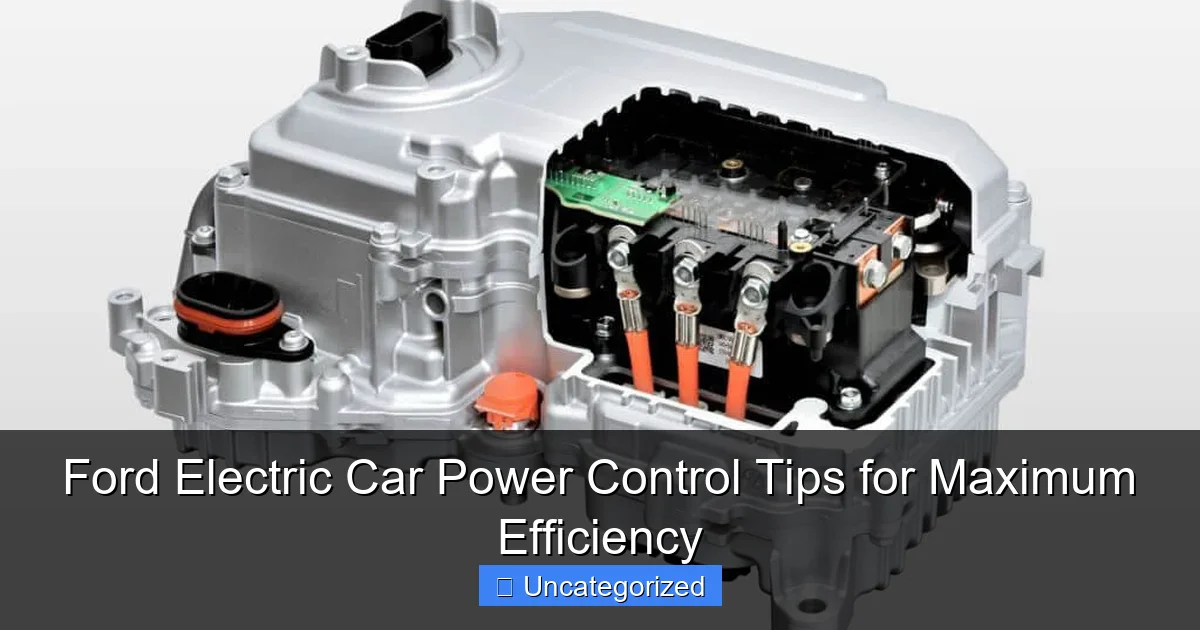
Featured image for ford electric car power control
Image source: precisionevr.com
Mastering power control in your Ford electric car unlocks peak efficiency and extended range. By leveraging features like regenerative braking, Eco mode, and smart climate control settings, drivers can significantly reduce energy waste and maximize battery performance. Simple adjustments to driving habits and power usage deliver big savings—without sacrificing comfort or power.
Key Takeaways
- Optimize regenerative braking: Maximize energy recovery by using higher regen settings in city driving.
- Precondition the battery: Warm or cool the battery while charging to improve efficiency.
- Use Eco mode: Activate Eco mode to reduce power consumption and extend range.
- Limit rapid acceleration: Smooth driving preserves battery life and boosts efficiency.
- Schedule off-peak charging: Charge during low-demand hours to reduce strain on the grid.
- Monitor tire pressure: Keep tires properly inflated to minimize rolling resistance and energy loss.
📑 Table of Contents
- Ford Electric Car Power Control Tips for Maximum Efficiency
- Understanding Ford’s Power Management System
- Optimizing Regenerative Braking for Efficiency
- Mastering Climate Control and Energy Use
- Driving Habits That Maximize Efficiency
- Charging Strategies for Long-Term Battery Health
- Conclusion: Take Control of Your Ford EV’s Power
Ford Electric Car Power Control Tips for Maximum Efficiency
The automotive world is shifting gears, and Ford is at the forefront of the electric revolution. With the launch of models like the Mustang Mach-E, F-150 Lightning, and E-Transit, Ford has proven that electric vehicles (EVs) can deliver performance, utility, and sustainability—all without compromising the brand’s rugged American identity. But owning an electric Ford isn’t just about driving a zero-emission vehicle; it’s about mastering the nuances of power control to get the most out of every kilowatt-hour (kWh). Unlike traditional gas-powered cars, where fuel efficiency is largely managed by the engine, EVs put significant control in the driver’s hands. From regenerative braking to energy consumption settings, every decision impacts your range, battery health, and overall efficiency.
Whether you’re a new Ford EV owner or considering making the switch, understanding how to control your vehicle’s power systems is essential. This guide dives deep into the Ford electric car power control ecosystem, offering practical, data-driven tips to maximize efficiency, extend battery life, and reduce charging costs. We’ll explore how Ford’s intelligent power management systems work, how to leverage them effectively, and how small behavioral changes can lead to big gains in range and performance. From pre-conditioning your cabin while plugged in to mastering regenerative braking, this comprehensive guide will help you unlock the full potential of your Ford EV.
Understanding Ford’s Power Management System
How Ford EV Power Systems Work
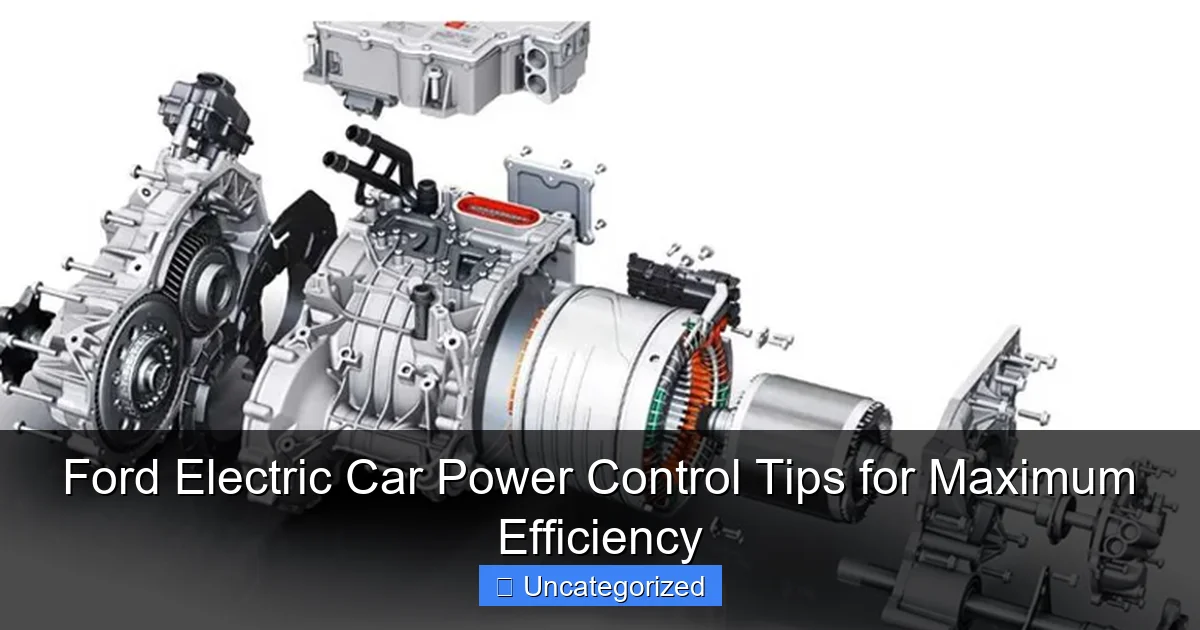
At the heart of every Ford electric vehicle is a sophisticated power management system designed to balance performance, efficiency, and battery longevity. Unlike internal combustion engines (ICE), which rely on mechanical linkages and fuel injection, EVs use a network of sensors, inverters, and software algorithms to control energy flow. Ford’s system—known as the Powertrain Control Module (PCM)—coordinates the battery, electric motor, thermal management system, and regenerative braking to optimize every joule of energy.
Visual guide about ford electric car power control
Image source: evmechanica.com
The PCM constantly monitors driving conditions, battery temperature, state of charge (SoC), and driver inputs. It adjusts torque delivery, regen intensity, and cabin climate control in real time. For example, when you accelerate gently, the system prioritizes efficiency by minimizing energy draw. But when you floor the pedal, it unleashes peak power from the motor. This dynamic control is what gives Ford EVs their responsive yet efficient character.
Key Components of Ford’s Power Control Architecture
- Battery Management System (BMS): Monitors cell voltage, temperature, and SoC to prevent overcharging, deep discharging, and thermal runaway.
- Inverter: Converts DC power from the battery into AC for the motor, adjusting frequency and amplitude to match driving demands.
- Onboard Charger: Manages AC charging rates (Level 1 and Level 2) and ensures safe, efficient energy transfer.
- Regenerative Braking Module: Captures kinetic energy during deceleration and converts it back into stored electricity.
- Thermal Management System: Uses liquid cooling and heating to maintain optimal battery temperature, crucial for efficiency and longevity.
For instance, in the F-150 Lightning, the BMS ensures that battery temperature stays within 20–30°C (68–86°F) during fast charging. If the battery gets too hot, the system automatically reduces charging speed to prevent damage. Similarly, during cold weather, the thermal system preheats the battery before fast charging to improve ion mobility and reduce charging time.
FordPass App and Remote Power Management
Ford enhances power control through the FordPass app, which allows remote access to critical energy functions. You can:
- Start or stop charging
- Set charging schedules to take advantage of off-peak electricity rates
- Precondition the cabin while the car is still plugged in (saving battery for driving)
- Monitor real-time energy consumption and driving efficiency
Pro Tip: Use the “Charge Settings” feature in FordPass to schedule charging for overnight (e.g., 11 PM to 6 AM), when electricity demand is low and rates are cheaper. This not only saves money but also reduces strain on the grid.
Optimizing Regenerative Braking for Efficiency
What Is Regenerative Braking?
Regenerative braking is one of the most powerful tools for Ford electric car power control. When you lift off the accelerator or apply the brakes, the electric motor reverses its function and acts as a generator, converting kinetic energy back into electricity. This energy is stored in the battery, effectively extending your range. Ford EVs offer multiple regen levels, allowing drivers to customize the experience.
In models like the Mustang Mach-E and F-150 Lightning, you can choose between:
- Standard Regen: Moderate energy recovery, similar to engine braking in ICE vehicles.
- One-Pedal Driving (High Regen): Strong deceleration when you lift off the accelerator, allowing you to stop without touching the brake pedal in many situations.
How to Use One-Pedal Driving Effectively
One-pedal driving isn’t just about convenience—it’s a major efficiency booster. When used correctly, it can recover up to 20% of your total energy consumption in city driving. Here’s how to master it:
- Smooth Acceleration and Deceleration: Instead of sudden bursts of speed, accelerate gently and lift off early to allow regen to do the work.
- Anticipate Traffic Flow: Watch ahead and lift off the accelerator when you see brake lights or stop signs. This maximizes energy recovery.
- Use the Brake Pedal Only When Necessary: Rely on regen for most stops. Only use the friction brakes for emergency stops or when coming to a complete halt.
- Adjust Regen Sensitivity: In the Mustang Mach-E, you can toggle between “Low” and “High” regen in the drive settings. Choose “High” for city driving and “Low” for highway cruising.
Real-World Example: A driver in Chicago using one-pedal driving in stop-and-go traffic reported a 15% increase in effective range compared to standard regen. Over a 20-mile commute, that’s an extra 3 miles of range—enough to avoid a midday charge.
Regen and Battery Longevity
Contrary to myth, regenerative braking doesn’t harm your battery. In fact, it reduces wear on friction brakes and helps maintain a more consistent charge state, which is beneficial for lithium-ion batteries. However, frequent high-intensity regen events (e.g., aggressive one-pedal driving in hilly terrain) can cause slight thermal buildup. Ford’s thermal management system compensates by cooling the battery during and after regen cycles.
Tip: If you’re driving downhill for long stretches (e.g., mountain passes), use the “Low” regen setting to prevent excessive energy buildup and potential overheating. You can also manually apply the brakes periodically to balance regen and friction braking.
Mastering Climate Control and Energy Use
The Hidden Energy Drain: Cabin Heating and Cooling
One of the biggest misconceptions about EVs is that they’re immune to range loss in extreme weather. In reality, cabin climate control can reduce range by 20–40% in cold or hot conditions. Unlike gas cars, which use waste engine heat for warmth, EVs must generate heat electrically—using precious battery power. The same applies to air conditioning, which relies on energy-intensive compressors.
Ford EVs use heat pump systems in most models (e.g., F-150 Lightning, Mustang Mach-E GT), which are 3–4 times more efficient than resistive heaters. A heat pump captures ambient heat from outside air and transfers it into the cabin, using far less energy. However, below -10°C (14°F), even heat pumps become less effective, and resistive heating kicks in.
Pre-Conditioning: The Efficiency Game-Changer
The most effective way to save energy is to precondition your cabin while the car is still plugged in. This means heating or cooling the interior using grid power instead of battery power. Ford’s system allows you to:
- Set a departure time in the FordPass app
- Automatically start cabin conditioning 30–60 minutes before you leave
- Maintain a comfortable temperature without draining the battery
Example: If you leave for work at 8 AM, set preconditioning for 7:30 AM. By the time you get in, the cabin is warm, and your battery remains at 100% for driving.
Smart Climate Settings and Seat Heaters
To further reduce energy use:
- Use Seat and Steering Wheel Heaters: These consume far less energy than cabin heaters. Warming your body directly is more efficient than heating the entire cabin.
- Set Climate to “Eco” Mode: This limits fan speed and temperature extremes, prioritizing efficiency over comfort.
- Use “Auto” Climate Control: Ford’s system learns your preferences and adjusts output dynamically, avoiding energy waste.
- Park in the Shade or Use a Sunshade: Reduces cabin temperature by up to 20°F in summer, cutting AC load.
Data Point: A study by AAA found that using seat heaters instead of cabin heat can save up to 17% in winter range. For a 250-mile range EV, that’s an extra 42.5 miles.
Driving Habits That Maximize Efficiency
Smooth Acceleration and Speed Management
Electric motors deliver instant torque, which makes acceleration fun—but inefficient. The faster you accelerate, the more power you draw from the battery. Ford EVs display real-time energy use on the instrument cluster or center screen, helping you monitor your driving efficiency.
Efficiency Tips:
- Accelerate gently—aim for 0–30 mph in 5–7 seconds.
- Maintain a steady speed on highways (65–70 mph is ideal for most Ford EVs).
- Use cruise control or adaptive cruise control (available on F-150 Lightning and Mach-E) to reduce speed fluctuations.
- Avoid sudden braking—anticipate stops and coast when possible.
Example: A Mach-E driver who switched from aggressive to smooth driving increased their average efficiency from 3.2 mi/kWh to 4.1 mi/kWh—a 28% improvement.
Route Planning and Energy-Saving Modes
Ford’s navigation system includes EV-specific route planning that factors in elevation, traffic, and charging stations. It can also suggest the most efficient route based on your battery level.
- Use “Eco Route”: This option prioritizes flatter terrain and slower speeds for maximum range.
- Enable “Energy Assist”: Shows real-time efficiency feedback, including regen opportunities and optimal speed zones.
- Check Weather and Terrain: Cold weather, headwinds, and hills reduce efficiency. Plan accordingly.
Pro Tip: On long trips, use Ford’s “Charge Station Routing” to automatically find DC fast chargers and calculate charging times based on your battery level and speed.
Tire Pressure and Aerodynamics
Underinflated tires increase rolling resistance, which forces the motor to work harder. Ford recommends checking tire pressure monthly and maintaining it at the level listed on the driver’s door jamb (typically 35–38 psi for EVs).
Additionally:
- Remove roof racks when not in use—they increase drag and reduce range by up to 10%.
- Keep windows closed at highway speeds to maintain aerodynamic efficiency.
- Use low-rolling-resistance tires if available (e.g., Michelin Energy Saver).
Charging Strategies for Long-Term Battery Health
When and How to Charge for Efficiency
Charging isn’t just about topping up—it’s about managing battery chemistry. Lithium-ion batteries degrade faster when kept at 100% or 0% for long periods. Ford recommends:
- Daily Charging: Keep SoC between 20% and 80% for daily use.
- Full Charging Only When Needed: Charge to 100% only for long trips.
- Use Level 2 Charging at Home: 240V charging is faster and more efficient than Level 1 (120V).
Fast Charging Considerations:
- DC fast charging (e.g., Ford’s BlueOval network) is great for long trips but should be limited to 10–20% of total charging.
- Fast charging generates heat, which can accelerate battery degradation if done frequently.
- Use Ford’s “Charge Speed” settings to limit DC charging to 80% when possible.
Data Table: Optimal Charging Practices by Scenario
| Scenario | Recommended SoC Range | Charging Speed | Frequency | Efficiency Tip |
|---|---|---|---|---|
| Daily Commuting | 20% – 80% | Level 2 (7–11 kW) | Nightly | Use scheduled charging in FordPass |
| Weekend Errands | 30% – 70% | Level 2 | Every 2–3 days | Precondition while plugged in |
| Long Road Trip | 10% – 90% | DC Fast (150 kW max) | As needed | Use Ford’s Charge Station Routing |
| Winter Driving | 40% – 80% | Level 2 | Daily | Preheat battery before fast charging |
Smart Charging and Grid Integration
Ford is integrating smart charging features that allow your EV to communicate with the grid. With Ford’s upcoming “Intelligent Power” program, your car can:
- Charge during off-peak hours automatically
- Feed energy back to the grid during peak demand (vehicle-to-grid, or V2G)
- Participate in utility incentive programs
This not only improves efficiency but also supports renewable energy adoption. For example, your F-150 Lightning could charge at night when solar and wind production is high, reducing your carbon footprint.
Conclusion: Take Control of Your Ford EV’s Power
Mastering Ford electric car power control is about more than just driving an EV—it’s about becoming an active participant in energy management. From leveraging regenerative braking and smart climate control to adopting efficient driving habits and intelligent charging strategies, every decision you make impacts your vehicle’s performance, range, and long-term health.
The beauty of Ford’s EV ecosystem is that it empowers you with tools and insights to optimize every kilowatt-hour. Whether you’re using the FordPass app to schedule charging, engaging one-pedal driving for city efficiency, or preconditioning your cabin on a cold morning, these small actions add up to significant gains. Over time, they can save you hundreds of dollars in energy costs, extend your battery’s lifespan, and reduce your environmental footprint.
As Ford continues to innovate—with features like V2G, advanced thermal management, and AI-driven energy optimization—the future of electric driving looks brighter than ever. But the foundation of efficiency starts with you. By applying the tips in this guide, you’re not just driving a Ford EV; you’re driving it smarter, cleaner, and more efficiently than ever before. So plug in, power up, and take control—your battery (and your wallet) will thank you.
Frequently Asked Questions
How does Ford electric car power control improve energy efficiency?
Ford’s power control systems optimize energy use by intelligently managing battery output, regenerative braking, and climate control. This ensures every kilowatt-hour is used effectively, extending your driving range.
Can I adjust the power control settings on my Ford EV for better performance?
Yes, many Ford electric cars offer driving modes (like Eco, Normal, or Sport) that adjust power delivery, throttle response, and energy recovery. Selecting “Eco” mode maximizes efficiency by limiting peak power and enhancing regenerative braking.
What is regenerative braking in Ford electric cars, and how does it relate to power control?
Regenerative braking captures energy during deceleration, feeding it back into the battery. Ford’s power control system automatically balances this feature to reduce grid charging needs while maintaining smooth driving dynamics.
Why does my Ford EV’s power output feel limited in cold weather?
Cold temperatures temporarily reduce battery efficiency, prompting Ford’s power control system to restrict output to protect cells. Preconditioning the battery while plugged in helps restore full power faster.
How can I monitor Ford electric car power control in real-time?
Use the FordPass app or your vehicle’s touchscreen to track energy flow, battery status, and power usage. These tools provide insights into how power control systems are optimizing efficiency during your drive.
Does frequent fast charging affect Ford EV power control systems?
Occasional fast charging won’t harm the system, but overuse may trigger thermal management protocols that temporarily limit power. Ford’s power control software prioritizes battery health to ensure long-term performance.