Ford Electric Car Problems Top Issues and How to Fix Them
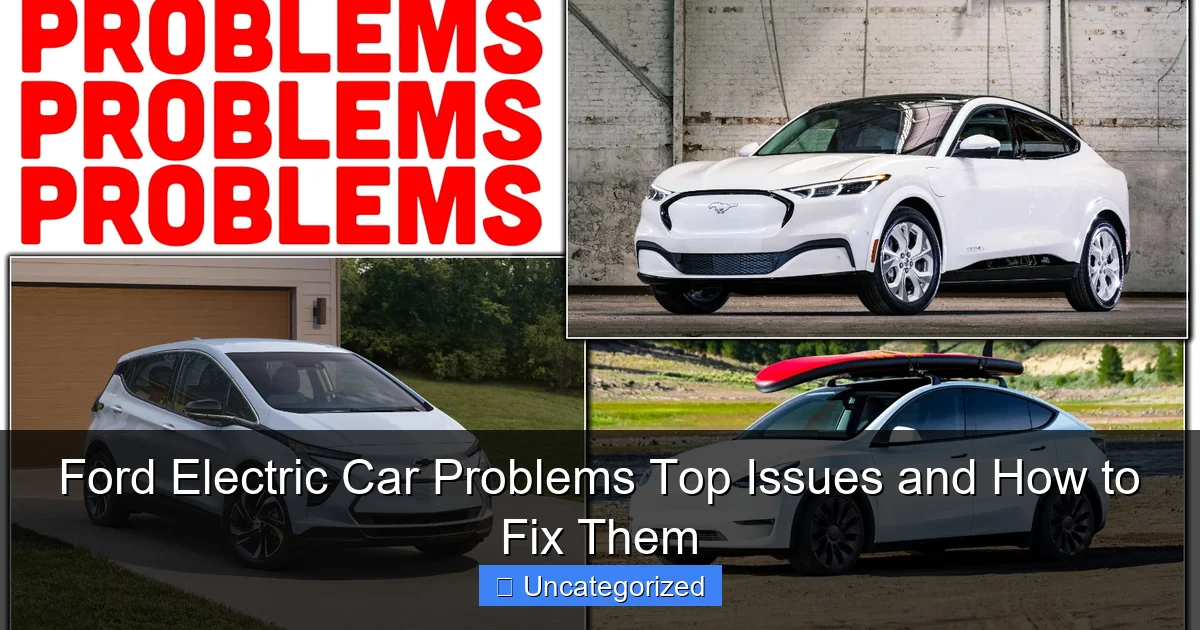
Featured image for ford electric car problems
Image source: images-stag.jazelc.com
Ford electric car problems often center around battery performance, software glitches, and charging inconsistencies—issues that can impact reliability and user experience. Common fixes include updating vehicle software, recalibrating the battery management system, and using Ford’s certified charging stations to prevent damage. Proactive maintenance and staying informed on recall notices are key to keeping your Ford EV running smoothly.
Key Takeaways
- Check software updates: Many Ford EV issues are resolved via free OTA updates.
- Monitor battery health: Use FordPass to track degradation and charging patterns.
- Precondition in cold weather: Boosts efficiency and reduces range loss.
- Verify charging compatibility: Use certified chargers to avoid port or battery damage.
- Reset infotainment: Power cycle the system to fix glitches or lagging screens.
- Inspect 12V battery: Weak auxiliary batteries cause startup and accessory failures.
📑 Table of Contents
- The Rise of Ford Electric Vehicles and Common Challenges
- 1. Battery Degradation and Range Anxiety
- 2. Charging Infrastructure and Compatibility Issues
- 3. Software Glitches and Infotainment Bugs
- 4. Build Quality and Manufacturing Defects
- 5. Thermal Management and HVAC Challenges
- 6. Resale Value and Long-Term Reliability Concerns
- Data Table: Ford Electric Car Problems Summary
- Conclusion: Navigating the Road Ahead
The Rise of Ford Electric Vehicles and Common Challenges
Ford Motor Company, a century-old icon of American automotive innovation, has made significant strides in the electric vehicle (EV) market with models like the Ford Mustang Mach-E, Ford F-150 Lightning, and the E-Transit van. As part of its $50 billion electrification strategy, Ford is betting big on a future powered by batteries rather than gasoline. However, despite their cutting-edge technology and aggressive push into the EV space, Ford electric car problems have emerged as a growing concern for owners and potential buyers alike. From software glitches to charging infrastructure challenges, these issues are not just minor inconveniences—they can impact safety, convenience, and overall ownership satisfaction.
While Ford’s EVs offer impressive range, performance, and advanced features, the transition from internal combustion engines to fully electric platforms is not without growing pains. Early adopters have reported a range of Ford electric car problems, including battery degradation, charging inconsistencies, software bugs, and build quality concerns. These issues are particularly critical as Ford aims to compete with industry leaders like Tesla and emerging EV brands. Understanding these challenges—and how to address them—is essential for current owners, prospective buyers, and fleet managers considering Ford’s electric lineup. This comprehensive guide dives deep into the top Ford electric car problems, offering practical solutions, expert insights, and real-world examples to help you make informed decisions.
1. Battery Degradation and Range Anxiety
One of the most frequently reported Ford electric car problems centers around battery performance and range degradation over time. While Ford advertises EPA-estimated ranges of up to 320 miles for the F-150 Lightning and 314 miles for the Mach-E GT, real-world experiences often fall short—especially under adverse conditions.
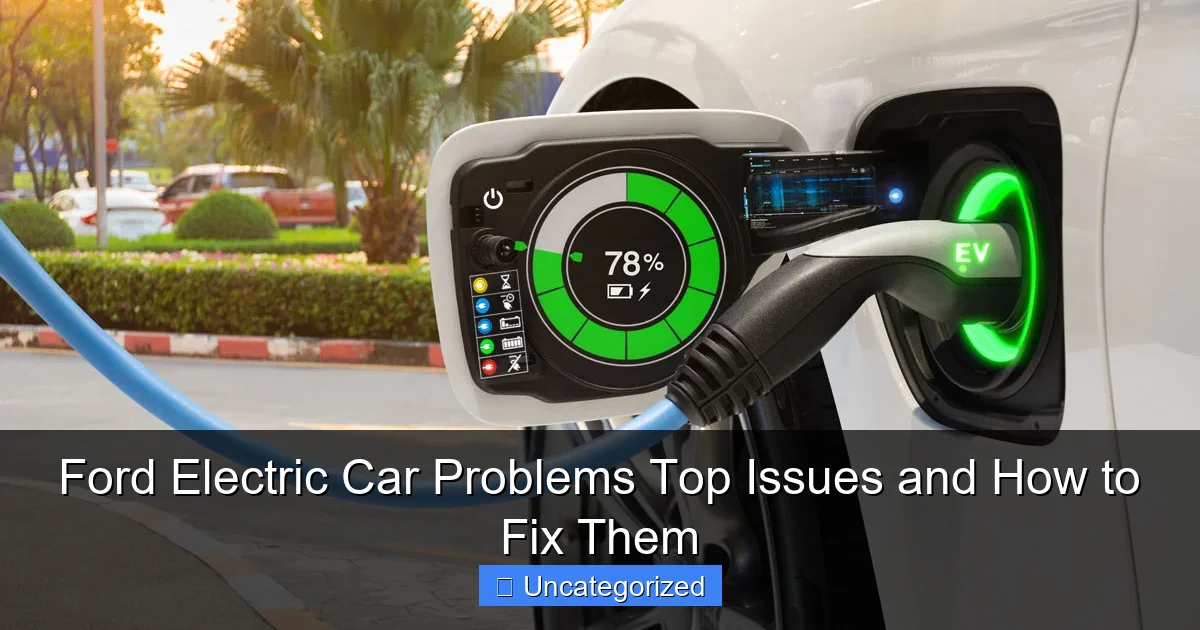
Visual guide about ford electric car problems
Image source: finesportscar.com
Understanding Battery Degradation
Battery degradation refers to the gradual loss of a battery’s capacity to hold a full charge. For Ford EVs, this issue manifests in two key ways:
- Calendar aging: Batteries degrade over time, regardless of usage, due to chemical breakdowns in lithium-ion cells.
- Cycling degradation: Repeated charging and discharging—especially fast charging—accelerates wear.
According to data from Recurrent Auto, Ford EVs show an average battery health retention of 92% after 20,000 miles, which is competitive but not industry-leading. In cold climates, this figure can drop further due to reduced efficiency in lithium-ion chemistry.
Real-World Range Variability
Range anxiety remains a significant concern. For example, a 2023 Ford F-150 Lightning with the extended-range battery may deliver only 250–270 miles in winter conditions due to:
- Increased energy use for cabin heating
- Slower battery charging in low temperatures
- Reduced regenerative braking efficiency
Tip: Use Ford’s BlueOval Charge Network and pre-condition your vehicle while plugged in to minimize energy loss. Pre-conditioning warms the battery and cabin using grid power, preserving battery charge for driving.
How to Extend Battery Life
To combat Ford electric car problems related to battery health, follow these best practices:
- Limit DC fast charging: Use Level 2 (240V) charging for daily use and reserve fast charging for long trips.
- Maintain charge between 20% and 80%: Avoid full charges (100%) unless needed for a long drive.
- Use FordPass app scheduling: Program charging to complete just before departure, reducing time spent at high states of charge.
- Park in moderate temperatures: Avoid leaving the car in extreme heat or cold for extended periods.
Ford’s battery warranty covers 8 years or 100,000 miles (whichever comes first), with a 70% capacity guarantee—providing some peace of mind, but proactive care is still essential.
2. Charging Infrastructure and Compatibility Issues
Charging is the backbone of EV ownership, and Ford electric car problems often stem from inconsistent charging experiences. While Ford has partnered with Electrify America and built its BlueOval Charge Network, users still encounter compatibility issues, slow charging speeds, and network reliability concerns.
Charging Speed Variability
Ford’s EVs support DC fast charging, but actual speeds vary significantly. For example:
- Mustang Mach-E (Standard Range): Up to 115 kW peak charging
- F-150 Lightning (Extended Range): Up to 150 kW peak charging
However, many users report that charging rarely reaches peak rates. A 2023 Consumer Reports test found that the Mach-E averaged only 85–95 kW on Electrify America stations, dropping below 50 kW after the battery reached 60%. This “taper” is normal but frustrating for time-sensitive drivers.
Network Compatibility and Authentication
One of the most common Ford electric car problems is difficulty connecting to third-party charging networks. Issues include:
- Authentication failures via FordPass app
- Incorrect pricing or session initiation
- Stations not appearing in Ford’s navigation system
Example: A Ford owner in Denver reported that the FordPass app failed to initiate a charge at a ChargePoint station despite correct credentials. The issue was resolved only after contacting Ford Support and manually activating the session through the ChargePoint app.
Solutions and Workarounds
To minimize charging headaches:
- Use Plug & Charge: Enable this feature in FordPass for seamless authentication at Electrify America and select ChargePoint stations.
- Update vehicle software: Ford frequently releases updates that improve charging compatibility. Check for updates monthly via FordPass.
- Carry a backup charging app: Download apps like PlugShare, ChargePoint, or Electrify America to manually start sessions if FordPass fails.
- Pre-plan trips with Ford’s Trip Planner: It accounts for charging stops, station availability, and estimated charge times.
Ford is also rolling out a CCS-to-NACS adapter in 2024, allowing access to Tesla Superchargers—a major improvement for long-distance travel.
3. Software Glitches and Infotainment Bugs
Modern EVs rely heavily on software, and Ford electric car problems often involve glitches in the SYNC 4A infotainment system, driver assistance features, and over-the-air (OTA) update mechanisms.
Infotainment System Crashes
The SYNC 4A system, while feature-rich, has been plagued by:
- Random reboots or freezes
- Unresponsive touchscreen (especially in cold weather)
- Delayed voice command recognition
- Bluetooth connectivity drops
Real-world case: A Mach-E owner in Michigan reported that the screen froze during a winter drive, disabling climate control and navigation. The system rebooted after 10 minutes, but the incident raised safety concerns.
Driver Assistance Feature Limitations
Ford’s BlueCruise hands-free driving system (available on 2023+ models) has received mixed reviews. While it works well on mapped highways, users report:
- Frequent disengagements due to “driver inattention” alerts
- Difficulty activating in poor weather
- Overly cautious lane-keeping behavior
Unlike Tesla’s Autopilot, BlueCruise requires periodic hand contact, which some find intrusive. A 2023 IIHS study noted that Ford’s system had a 22% higher disengagement rate than Tesla’s in highway scenarios.
Fixing Software Issues
To resolve Ford electric car problems related to software:
- Restart the system: Hold the power button for 10 seconds to reboot SYNC 4A.
- Clear Bluetooth cache: Delete paired devices and re-pair in Settings > Bluetooth.
- Update software regularly: Ford pushes OTA updates every 6–8 weeks. Enable “Auto Update” in FordPass.
- Reset BlueCruise: Turn off the feature, restart the vehicle, then re-enable it to recalibrate sensors.
- Contact Ford Support: Persistent bugs may require a dealership visit for a master reset or module replacement.
Ford has acknowledged these issues and released multiple software updates in 2023–2024 to improve stability and responsiveness.
4. Build Quality and Manufacturing Defects
Despite Ford’s manufacturing expertise, early production runs of EVs have revealed quality control lapses—a notable shift from the brand’s traditionally strong build reputation.
Common Build Issues
Owners have reported:
- Misaligned body panels (doors, fenders, liftgates)
- Water leaks in the frunk (front trunk) or cabin
- Faulty door handles (especially on Mach-E)
- Defective interior trim or stitching
- HVAC system noises (rattling or whistling)
Example: A 2022 F-150 Lightning owner in Texas noticed water pooling in the frunk after a heavy rain. The issue was traced to a missing seal around the charging port cover—a manufacturing defect covered under warranty.
Recall and Service Campaigns
Ford has issued several recalls for EVs, including:
- 2023 Mach-E: Software update for battery management system (BMS) to prevent overheating.
- 2022–2023 F-150 Lightning: Replacement of faulty 12V auxiliary battery cables.
- 2021–2022 Mach-E: Inspection and repair of rear seat belt pretensioners.
These recalls highlight the complexity of scaling EV production quickly.
How to Address Build Quality Problems
To minimize the impact of Ford electric car problems related to manufacturing:
- Inspect the vehicle thoroughly at delivery: Check panel gaps, seals, and interior fit.
- Report issues immediately: Use the FordPass app to log defects and request service.
- Schedule a pre-delivery inspection (PDI): Many dealers offer free PDI checks for new EVs.
- Monitor NHTSA and Ford recall databases: Stay updated on safety campaigns.
Ford has improved quality in 2023–2024 models, but vigilance is still advised.
5. Thermal Management and HVAC Challenges
Efficient thermal management is critical for EV performance, and Ford electric car problems often involve HVAC systems that strain battery life or fail in extreme temperatures.
HVAC System Inefficiency
Ford’s EVs use a heat pump in most trims, but users report:
- Slow cabin heating in cold weather
- Reduced efficiency at temperatures below -10°C (14°F)
- Excessive energy consumption, cutting range by 20–30%
Tip: Use seat and steering wheel heaters instead of full cabin heating. They use less energy and warm you directly.
Battery Thermal Management
The battery cooling system can struggle in hot climates. Overheating may trigger:
- Reduced charging speeds
- Power limitations during driving
- System warnings in the instrument cluster
Ford’s liquid-cooled battery system is generally reliable, but prolonged fast charging in high temperatures can push it to its limits.
Optimizing Thermal Performance
To mitigate thermal-related Ford electric car problems:
- Pre-condition the cabin while plugged in: Use FordPass to schedule heating/cooling before departure.
- Park in the shade or garage: Reduces cabin and battery temperature.
- Use Eco mode in extreme weather: Limits HVAC output to conserve range.
- Monitor battery temperature via FordPass: Check for unusual heat patterns after charging.
6. Resale Value and Long-Term Reliability Concerns
While Ford EVs are relatively new, early data suggests potential challenges with resale value and long-term reliability compared to established competitors.
Depreciation Trends
According to iSeeCars 2023 data, Ford EVs depreciate faster than Tesla models:
- Ford Mustang Mach-E: 38% depreciation after 3 years
- Ford F-150 Lightning: 32% depreciation after 2 years (limited data)
- Tesla Model Y: 28% depreciation after 3 years
Factors include rapid technological changes, battery health uncertainty, and competition from new EV models.
Long-Term Reliability Indicators
J.D. Power’s 2023 U.S. Electric Vehicle Experience Ownership Study ranked Ford below average in:
- Charging satisfaction
- Infotainment usability
- Service experience
However, Ford scores well in vehicle performance and driving dynamics.
Protecting Your Investment
To maximize resale value and reliability:
- Keep maintenance records: Use FordPass to log all services.
- Follow battery care guidelines: Document charging habits and health checks.
- Consider extended warranty: Ford offers a 5-year/60,000-mile EV-specific plan.
- Stay updated on software: A well-maintained, updated vehicle is more attractive to buyers.
Data Table: Ford Electric Car Problems Summary
| Issue | Affected Models | Frequency | Warranty Coverage | Recommended Fix |
|---|---|---|---|---|
| Battery Degradation | All (Mach-E, Lightning, E-Transit) | High | 8 yrs/100k mi (70% capacity) | Limit fast charging, maintain 20–80% charge |
| Charging Inconsistencies | All | Medium-High | 2 yrs/24k mi (charging equipment) | Use Plug & Charge, update software |
| Software Glitches | SYNC 4A models (2021+) | Medium | 3 yrs/36k mi (infotainment) | Reboot, update OTA, contact support |
| Build Quality Defects | 2021–2023 Mach-E, Lightning | Medium | 3 yrs/36k mi (bumper-to-bumper) | Inspect at delivery, report promptly |
| HVAC Efficiency | All | Low-Medium | 5 yrs/60k mi (HVAC system) | Pre-condition, use seat heaters |
Conclusion: Navigating the Road Ahead
Ford’s electric vehicles represent a bold step into the future, combining American engineering with modern EV technology. However, the Ford electric car problems discussed in this guide—battery degradation, charging inconsistencies, software bugs, build quality issues, thermal management, and resale value—highlight the challenges of rapid electrification. These are not deal-breakers, but they demand awareness, proactive maintenance, and a willingness to adapt.
The good news? Ford is actively addressing these concerns through software updates, improved manufacturing processes, and expanded charging partnerships. For owners, the key is to stay informed, follow best practices, and leverage Ford’s warranty and support systems. With proper care, Ford EVs can deliver reliable, enjoyable performance for years to come. As the EV landscape evolves, Ford’s commitment to innovation suggests that today’s problems may well become tomorrow’s solutions—making these vehicles not just a purchase, but a partnership in the electric revolution.
Frequently Asked Questions
What are the most common Ford electric car problems?
The most frequently reported issues include battery drain, charging port malfunctions, and software glitches affecting the infotainment system. Many of these can be resolved with dealer updates or firmware patches.
Why does my Ford electric car lose charge when parked?
This Ford electric car problem is often caused by the vehicle’s auxiliary systems (like climate control or software updates) drawing power. Try enabling “Deep Sleep” mode or checking for background processes in the FordPass app.
How do I fix charging port issues on my Ford EV?
If your charging port won’t open or connect, first check for obstructions or ice buildup. A reset via the FordPass app or a dealership visit for recalibration may fix persistent Ford electric car problems.
Are Ford electric car software updates reliable?
While updates aim to improve performance, some users report bugs like touchscreen freezes or navigation errors. Always install updates via Wi-Fi and report recurring issues to Ford Support for resolution.
Can cold weather worsen Ford electric car problems?
Yes, cold temperatures reduce battery efficiency and may trigger error messages. Pre-conditioning the battery while plugged in and using scheduled charging can mitigate these issues.
Why is my Ford EV’s range lower than advertised?
Range varies based on driving habits, terrain, and climate. Ford electric car problems like aggressive acceleration or using high-powered accessories can further reduce range—check tire pressure and drive modes for optimization.