Ford Electric Car Repossession What You Need to Know

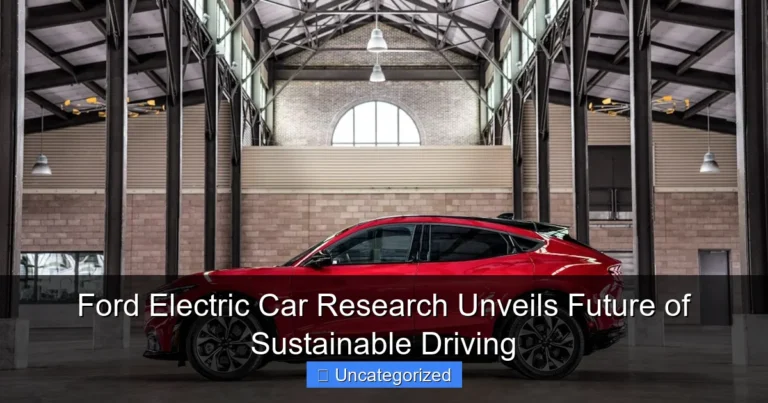
Featured image for ford electric car repossession
Image source: carzdaily.ca
Ford electric car repossession can occur if you default on your loan or lease, just like with any financed vehicle—despite the eco-friendly branding. Understanding your contract terms, state laws, and Ford’s specific repossession policies is crucial to protect your rights and avoid unexpected loss of your EV. Stay informed to prevent repossession and explore options like payment plans or buyouts before it’s too late.
Key Takeaways
- Understand your lease terms: Review contracts to avoid unexpected repossession triggers.
- Communicate early with lenders: Proactively discuss payment issues to explore solutions.
- Repossession impacts credit: Late payments and repossession can lower your credit score.
- Know state repossession laws: Legal procedures vary—research protections in your area.
- EV-specific concerns matter: Charging access and battery health may affect resale value.
- Act fast post-repossession: Redeem or reinstate loans quickly to reclaim your vehicle.
📑 Table of Contents
- The Rise of Ford Electric Cars and the Reality of Repossession
- Understanding Ford Electric Car Repossession: How It Works
- Ford Credit’s Repossession Process: What to Expect
- Preventing Ford Electric Car Repossession: Proactive Strategies
- Ford EV Repossession and Your Credit Score
- Legal Rights and Recourse for Ford EV Owners
- Conclusion: Protect Your Ford EV Investment
The Rise of Ford Electric Cars and the Reality of Repossession
As the automotive world shifts toward sustainability, Ford has positioned itself at the forefront of the electric revolution with models like the Mustang Mach-E, F-150 Lightning, and the upcoming Ford Explorer Electric. These vehicles represent more than just a technological leap—they symbolize a cultural and economic transformation in how we view personal transportation. With federal tax incentives, state rebates, and aggressive marketing campaigns, Ford electric vehicles (EVs) have become increasingly accessible to middle-class consumers. However, this accessibility comes with a caveat: as more Americans finance these high-tech machines, the risk of Ford electric car repossession has quietly risen alongside sales.
While repossession is not unique to electric vehicles, the dynamics of EV financing—longer loan terms, higher upfront costs, and rapidly evolving technology—create unique challenges. Unlike traditional gasoline-powered cars, Ford EVs often come with premium price tags, sometimes exceeding $50,000 even after incentives. When buyers face financial hardship, the consequences of defaulting on a loan can be severe, including the loss of a vehicle that may still be under warranty and loaded with advanced features. Understanding the nuances of Ford electric car repossession—from the legal process to prevention strategies—is essential for current and prospective owners. This guide explores the critical aspects of repossession, offering actionable insights to protect your investment and avoid losing your electric dream car.
Understanding Ford Electric Car Repossession: How It Works
Repossession is a legal process lenders use to reclaim vehicles when borrowers default on their auto loans. While the core mechanics are similar across all vehicle types, Ford electric car repossession involves specific considerations due to the vehicle’s technology, financing structure, and resale market. Let’s break down how the process unfolds and what sets it apart.

Visual guide about ford electric car repossession
Image source: thebasispoint.com
The Legal Framework and Timeline
In most U.S. states, lenders can repossess a vehicle as soon as a borrower misses one payment, though many wait until two or three payments are overdue. The Uniform Commercial Code (UCC) governs auto repossessions, allowing lenders to reclaim collateral without a court order—provided they do so without breaching the peace. This means repo agents cannot use physical force, break into garages, or threaten homeowners.
- Day 1–30: Missed payment triggers automated reminders and phone calls from Ford Credit or the financing bank.
- Day 31–60: Account enters “delinquent” status. Late fees may apply, and credit reporting begins.
- Day 61–90: Lender may send a “Notice of Default” and begin repo proceedings. This is the critical window for negotiation.
- Day 90+: Repo agent locates and takes the vehicle. In some cases, GPS tracking (standard in Ford EVs) accelerates this step.
Example: Sarah, a 32-year-old nurse, financed a 2023 Mustang Mach-E for $58,000. After losing her job, she missed three payments. Ford Credit initiated repossession at Day 75, using the car’s built-in GPS to locate it at her sister’s house. The vehicle was repossessed without incident, but Sarah was still liable for the remaining balance after the auction.
Why Ford EVs Are High-Risk for Repossession
Several factors make Ford electric cars more vulnerable to repossession compared to traditional models:
- Higher Loan Amounts: The average Ford EV costs $55,000–$75,000, leading to larger monthly payments. A $70,000 loan at 6% interest over 72 months equals ~$1,150/month.
- Longer Loan Terms: To make payments affordable, buyers often choose 84-month (7-year) terms, increasing exposure to financial shocks.
- Technology Depreciation: EVs lose value faster than gas cars. A 2022 Mach-E may lose 40% of its value in three years, leaving owners “upside down” (owing more than the car’s worth).
- Tax Credit Complications: The $7,500 federal EV tax credit is often applied at purchase, reducing monthly payments. If the buyer later sells or defaults, they may still owe the full loan balance despite the initial discount.
Tip: Use Ford’s Loan-to-Value (LTV) Calculator to estimate your equity position. If LTV exceeds 100%, you’re at higher repossession risk if market values drop.
Ford Credit’s Repossession Process: What to Expect
Ford Credit, the financing arm of Ford Motor Company, handles most EV loans and leases. Understanding their repossession protocol can help you anticipate next steps and protect your rights.
Communication and Notices
Ford Credit typically follows a structured communication path:
- Automated Calls: Starting 5 days after a missed payment, using AI voice systems.
- Emails and Letters: Sent at 15, 30, and 45 days delinquent. These include payoff quotes and hardship program applications.
- Certified Notice of Default: Mailed at ~60 days. This legally documents the lender’s intent to repossess.
Pro Tip: Save all correspondence. If Ford Credit fails to send a required notice (e.g., in states like California), you may have grounds to challenge the repossession in court.
GPS Tracking and Repo Tactics
All Ford EVs come with embedded GPS for remote diagnostics, over-the-air updates, and—critically—repo tracking. This technology allows lenders to:
- Pinpoint the vehicle’s location in real time.
- Disable certain features (e.g., climate control) as a “nudge” to contact the lender.
- Prevent remote start in some cases (though full immobilization is rare without a court order).
Example: In 2023, a Ford F-150 Lightning owner in Texas reported that his truck’s infotainment system displayed a message: “Please contact Ford Credit. Your account is delinquent.” While the vehicle remained drivable, the psychological pressure was significant.
Action Step: If you’re struggling, do not hide the car. Repo agents often work with local law enforcement, and hiding a vehicle may be considered fraud, voiding any right to redemption.
Post-Repo: Auction and Deficiency Balances
After repossession, Ford Credit typically sells the vehicle at a wholesale auction within 30–60 days. Key outcomes:
- Surplus: If the auction price exceeds the loan balance, you receive the difference (minus fees).
- Deficiency Balance: If the sale price is lower, you owe the gap. For example, a $60,000 loan on a car auctioned for $40,000 leaves a $20,000 deficiency.
- Collection Actions: Ford Credit may sell the deficiency to a third-party collector or sue you in small claims court.
Real-World Case: A 2022 study by the National Consumer Law Center found that 68% of repossessed EVs had deficiency balances, compared to 52% for gas vehicles, due to faster depreciation.
Preventing Ford Electric Car Repossession: Proactive Strategies
Prevention is far more effective—and less stressful—than dealing with repossession. Here are proven strategies to stay ahead of financial trouble.
1. Refinance or Loan Modification
If you’re facing temporary hardship, contact Ford Credit immediately. They offer:
- Forbearance: Temporary payment reduction or pause (3–6 months). Interest may still accrue.
- Loan Extension: Lower monthly payments by extending the term (e.g., from 72 to 84 months).
- Refinancing: Switch to a lower-interest loan with another lender. Credit unions often offer better rates than Ford Credit.
Example: Mark, a teacher, refinanced his Mach-E loan from 6.5% to 4.2% APR, saving $180/month. He avoided default and kept the car.
Tip: Apply for modification before missing a payment. Lenders are more flexible with early intervention.
2. Trade-In or Voluntary Surrender
If you can’t afford the car, consider:
- Trade-In: Sell the EV to a dealership (e.g., CarMax, Carvana). If the sale price covers the loan, you walk away debt-free. If not, you pay the difference.
- Voluntary Surrender: Return the car to Ford Credit. This avoids a “repossession” mark on your credit report (though it still reports as “settled for less”).
Data Point: A 2023 J.D. Power survey showed 41% of Ford EV owners who voluntarily surrendered vehicles had better credit recovery than those who faced involuntary repossession.
3. Lease Takeover or Buyout
If you’re in a lease, explore:
- Lease Transfer: Find someone to take over your lease via sites like Swapalease.com. Ford Credit must approve the new lessee.
- Buyout Option: Purchase the car at the lease’s end. If the buyout price is below market value, you can resell it for profit.
Caution: Lease transfers require a $300–$500 fee, and the new lessee must qualify with Ford Credit.
4. Leverage Incentives and Grants
Use available programs to reduce costs:
- State Rebates: California’s Clean Vehicle Rebate Project (CVRP) offers up to $7,500 for low-income buyers.
- Utility Discounts: Many providers (e.g., PG&E, Duke Energy) offer EV charging discounts or free home charger installations.
- Tax Credits: Re-evaluate eligibility for the federal tax credit (income limits: $150K single, $300K joint).
Ford EV Repossession and Your Credit Score
A repossession can devastate your credit, but the impact varies based on timing, recovery actions, and credit history.
Credit Damage Timeline
| Stage | FICO Score Impact | Recovery Time |
|---|---|---|
| First missed payment | -30 to -50 points | 1–2 years |
| Account charged off | -70 to -100 points | 3–4 years |
| Repossession reported | -100 to -150 points | 7 years (from first delinquency) |
| Deficiency balance in collections | -50 to -80 additional points | 7 years (from collection start) |
Note: Repossessions remain on credit reports for seven years from the date of first delinquency, per the Fair Credit Reporting Act (FCRA).
Rebuilding Your Credit Post-Repo
Recovery is possible with disciplined steps:
- Pay Off Deficiency Balances: Settle or pay the full amount. Ford Credit may agree to a 50% reduction if paid in lump sum.
- Use Secured Credit Cards: Build positive history with low-limit cards (e.g., Discover Secured, Capital One Secured).
- Monitor Credit Reports: Dispute inaccuracies via AnnualCreditReport.com. Ensure the repossession is removed after seven years.
- Limit New Credit Applications: Avoid multiple hard inquiries, which lower scores.
Success Story: After repossessing his Lightning, David paid the $12,000 deficiency in 18 months and secured a 680 FICO score within three years using a secured card and credit-builder loan.
Legal Rights and Recourse for Ford EV Owners
Repossession laws vary by state, but all borrowers have fundamental rights under federal and state statutes.
Federal Protections
- Fair Debt Collection Practices Act (FDCPA): Prohibits harassment, false threats, or repo agents entering homes without consent.
- Consumer Credit Protection Act: Caps wage garnishment for deficiency balances at 25% of disposable income.
- Right to Redemption: You may reclaim the car by paying the full loan balance plus repo fees, typically within 10–14 days.
Example: In Ohio, a repo agent knocked on a homeowner’s door and demanded the keys. When refused, they broke into the garage. The homeowner sued under FDCPA and won $15,000 in damages.
State-Specific Rules
- California: Requires a 10-day “right to cure” notice before repossession. Lenders must sell the car in a “commercially reasonable” manner.
- New York: Bans deficiency judgments for loans under $25,000.
- Texas: Allows “strict foreclosure” (keeping the car without sale) if the lender notifies you and you don’t object.
Action Step: Consult a local consumer attorney. Many offer free consultations for repossession cases. Legal aid societies (e.g., Legal Services Corporation) may provide free help.
Challenging a Repossession
You may have grounds to sue if:
- The lender failed to send required notices.
- Repo agents breached the peace (e.g., used force, entered a locked garage).
- The vehicle was sold below market value without proper appraisal.
Data: A 2022 study found that 12% of repossession lawsuits succeeded due to procedural errors by lenders.
Conclusion: Protect Your Ford EV Investment
Owning a Ford electric car is an exciting step into the future of transportation, but it comes with financial responsibilities. Ford electric car repossession is a complex process influenced by high vehicle costs, rapid depreciation, and advanced tracking technology. However, with proactive planning, open communication with lenders, and knowledge of your rights, you can avoid the pitfalls of default.
Remember: Act early. If you’re struggling, contact Ford Credit before missing a payment. Explore refinancing, lease transfers, or voluntary surrender as alternatives to repossession. Protect your credit by understanding the long-term impact and taking steps to rebuild. And if repossession occurs, know your legal recourse—from redemption rights to suing for improper procedures.
The electric revolution shouldn’t end in a repo lot. By staying informed and taking control of your financial journey, you can keep your Ford EV on the road and your credit on track. The road ahead is electric—make sure you’re ready for the ride.
Frequently Asked Questions
What happens if I default on my Ford electric car loan?
If you default on your Ford electric car loan, the lender may initiate repossession after missed payments (typically 30–90 days late). The process follows state laws, and you’ll receive notices before the vehicle is repossessed.
Can I surrender my Ford electric car to avoid repossession?
Yes, voluntary surrender is an option to avoid the stress of involuntary Ford electric car repossession. However, you’ll still owe any remaining balance after the sale, minus proceeds from the lender.
How does repossession affect my credit score?
A Ford electric car repossession can significantly lower your credit score (by 100+ points) and remain on your report for 7 years. It may also limit future financing options.
What fees are associated with Ford electric car repossession?
You may be charged repossession fees, storage costs, legal fees, and auction expenses. These are added to the remaining loan balance, increasing the total amount you owe.
Can I reclaim my repossessed Ford electric car?
Some states allow you to reclaim the vehicle by paying the full past-due amount plus fees. Contact your lender immediately to explore this option, as timelines vary by state.
Will I owe money after my Ford electric car is repossessed?
Yes, if the auction sale doesn’t cover the full loan balance and fees, you’ll owe the “deficiency balance.” Lenders may pursue legal action to collect this amount.